

At 70°F and 45% relative humidity, condensation forms when the inside glass falls below its 48°F dew point, so the cure is either warming the glass or lowering indoor humidity. At 70°F and 50% relative humidity, the dew point rises to about 50.5°F, making even mildly cold window surfaces sweat.
At 7 a.m. in Boise, the thermometer may read 18°F while water runs down the kitchen glass and collects on the sill. That sight often leads homeowners to blame the window immediately, but condensation on inside of windows is usually a moisture-and-temperature problem, not proof that the entire window has failed.
Treasure Valley winters make the difference easy to see. Cold overnight air chills the pane, while cooking, showers, breathing, laundry, and humidifiers add water vapor indoors. Once the glass surface drops below the room's dew point, the vapor becomes liquid. The steps below help you determine whether you need a towel, a humidity adjustment, a sealed-glass repair, or replacement windows.
Table of Contents
- Why Idaho Windows Fog on Cold Mornings
- The Two Variables Behind Every Foggy Window
- Diagnosing Surface Moisture Versus a Failed Window
- Quick Fixes to Clear Condensation This Week
- Setting the Right Indoor Humidity for Treasure Valley Winters
- When Condensation Means Your Insulated Glass Unit Has Failed
- Long-Term Solutions That Keep the Inside Pane Warm
- Choosing the Right Path for Your Home
Why Idaho Windows Fog on Cold Mornings
A Boise, Meridian, Eagle, Nampa, or Caldwell home can feel comfortable indoors while its windows become cold enough to collect water. The room temperature tells you how warm the air feels, but it doesn't tell you how warm the glass surface is. That surface may be several degrees colder than the air near the center of the room, especially on older wood-framed windows, untreated single-pane glass, aging double-pane units, and frames with thermal weak spots.
The governing rule is simple: condensation begins when the inside glass is colder than the indoor air's dew point. At 70°F and 45% relative humidity, the dew point is 48°F. Any interior glass or frame surface below 48°F can collect moisture, even though the thermostat still reads a pleasant 70°F. At 70°F and 50% relative humidity, the dew point rises to about 50.5°F, so a window only mildly colder than the room can start sweating. These thresholds are documented in window condensation guidance from FPUC.
Why the Treasure Valley makes the problem visible
When overnight temperatures drop into the teens or single digits, the inside surface of lower-performing glass can fall below that threshold. Cold-air inversions can also hold moisture close to the ground, while tightly sealed winter homes retain the vapor produced by daily life. The result is familiar across the valley, from a north-facing picture window in Eagle to an older bathroom window in Caldwell.
Historical building-science guidance from the National Research Council of Canada has recognized interior-window condensation as a common winter complaint, particularly in buildings using humidification. That history matters because it frames the issue correctly. Foggy glass is often a normal physics and moisture-control problem, not automatically a defect in one product.
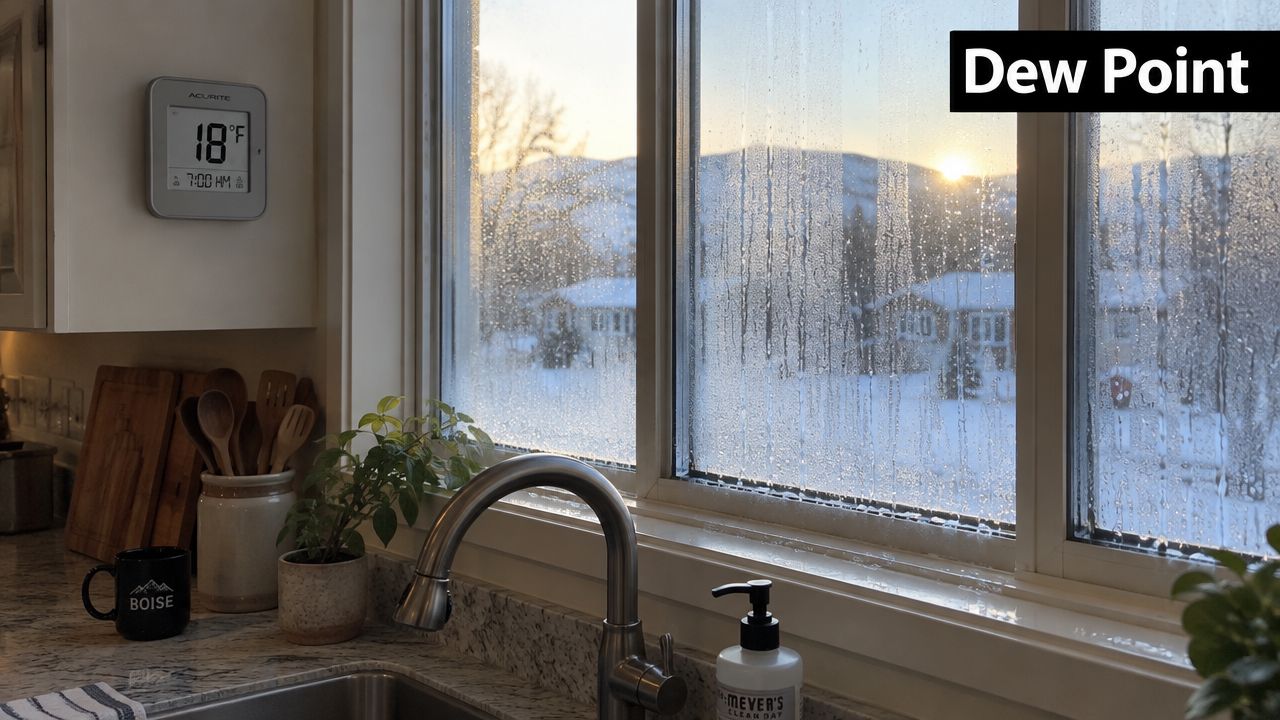
A surface just a few degrees below the dew point can visibly fog. If it falls below 32°F, the moisture can freeze instead of forming droplets. Once you understand that relationship, every practical fix follows the same logic: reduce the moisture in the air, warm the glass, or address a failed sealed unit.
The Two Variables Behind Every Foggy Window
Every interior condensation event comes down to two variables: indoor moisture and inside-pane surface temperature. Room humidity establishes the dew point. The window's construction, frame, orientation, shading, air movement, and outdoor temperature determine whether the glass stays above or falls below that point.
A cold drink offers a useful analogy. A glass of iced water doesn't create water on its outside surface. Moisture from the surrounding air condenses because the glass is cold enough to sit below the air's dew point. Your window behaves the same way. Cooking, showers, breathing, laundry, and unvented dryers add vapor to the room, then cold glass gives that vapor a place to become liquid.

Use dew point as your decision rule
The numbers show why a small humidity change can alter the outcome. At 70°F and 40% relative humidity, the dew point is about 44°F. At 70°F and 30% relative humidity, it falls to about 37°F. At 70°F and 50% relative humidity, it rises to about 50.5°F. A modest change in indoor humidity can therefore move the condensation threshold by more than 10°F, as shown in this condensation reference manual.
That gives you a practical test. If your indoor humidity is moderate but the glass is extremely cold, the window's surface temperature may be the limiting factor. If the glass is reasonably warm but the home is humid, ventilation and moisture control deserve attention first.
Practical rule: To stop fog, either lower the dew point or raise the inside-pane temperature.
Better insulated glazing, insulated frames, and improved air circulation increase the temperature margin between the room-side glass and the dew point. Lower humidity creates the same margin from the opposite direction. Guidance from YourHome's condensation resource describes this relationship and explains why insulation and insulated glazing help keep interior surfaces warmer.
Diagnosing Surface Moisture Versus a Failed Window
Before ordering replacement windows, identify where the moisture is. A homeowner in Boise may see the same milky appearance on an old wood picture window and a newer vinyl unit, but the repair can be completely different.
Step one, locate the moisture
Run a clean finger or cloth across the room-facing side of the glass. Surface condensation wipes away because it sits on the interior pane. It often appears as droplets, fog, or frost on cold mornings and can be concentrated near the edges, corners, or north-facing glass.
Moisture trapped between the panes behaves differently. You can't wipe it from either the room side or the exterior side because it sits inside the sealed insulated glass unit. A failed seal can leave haze, streaks, or deposits that remain after the weather changes.
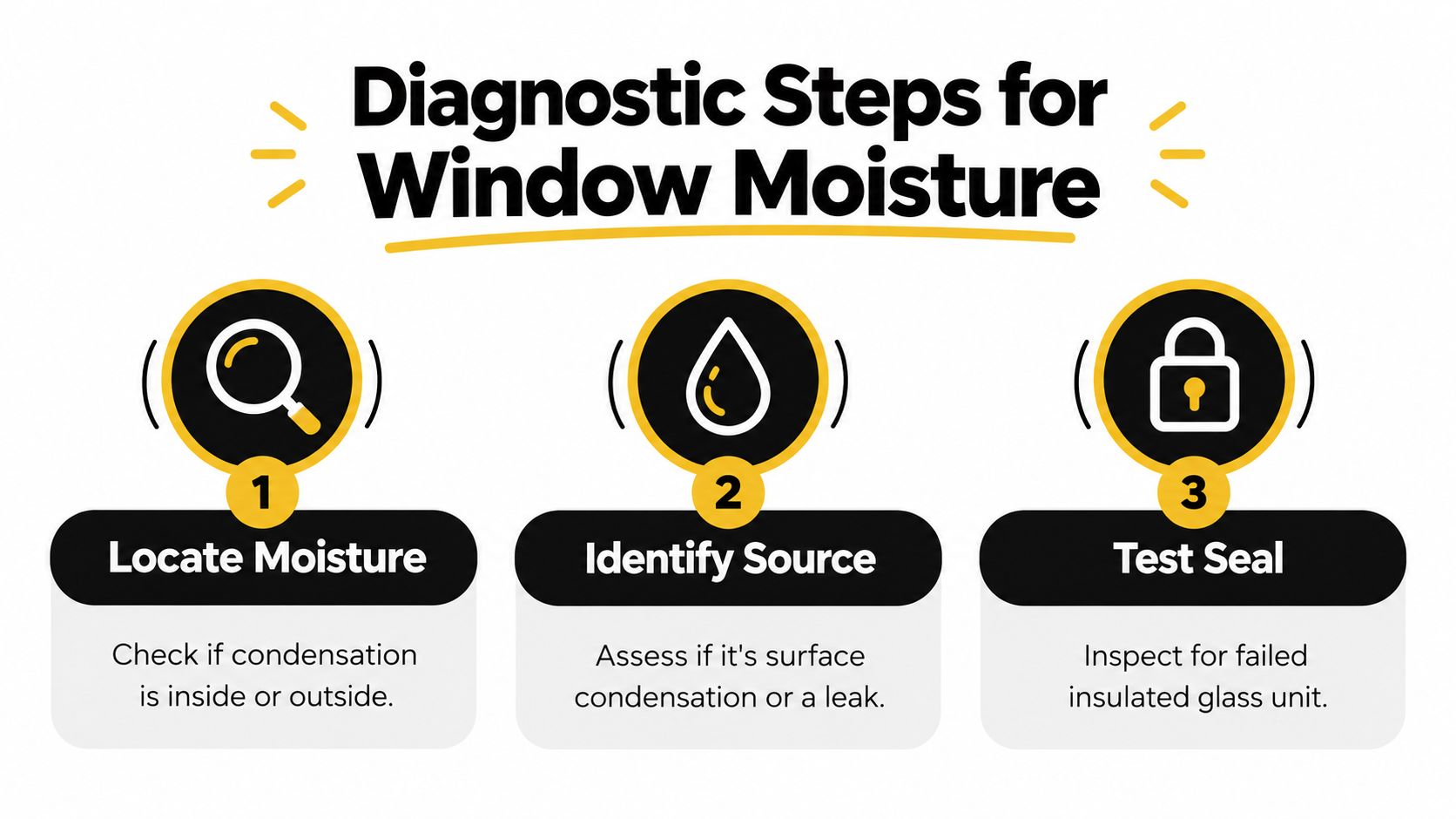
Step two, watch the timing
Room-side condensation usually follows cold nights, showers, cooking, or other moisture-producing activity. It may clear after sunrise as the pane warms and indoor air circulates. A sealed-unit failure typically shows persistent haze or mineral streaking that doesn't disappear when the room warms.
Step three, inspect the visual clues
Look for white calcium-like blooming, a milky film around the edges, or moisture that cycles inside the sealed space as the weather changes. Those signs point toward a compromised insulated-glass seal rather than ordinary room humidity.
Also check the sill, frame, and surrounding wall. Water that appears only on the glass during cold weather usually indicates condensation. Water concentrated on the frame, wall, or sill after rain suggests a separate drainage, flashing, caulking, or installation issue. This distinction matters because humidity changes won't repair water entering around the rough opening.
Quick Fixes to Clear Condensation This Week
Start with the changes that cost little and reveal useful information. If the glass improves after you control indoor moisture, you've learned that the home's humidity load was part of the problem. If heavy condensation continues despite a lower dew point, the pane may be too cold.
Use exhaust fans correctly. Run the bathroom fan during showers and the kitchen fan while cooking, then keep them running for a period afterward. Confirm that the dryer vent exhausts outdoors rather than into an attic or crawlspace. Moisture that stays inside eventually finds the coldest surface.
Give warm air access to the pane. Open blinds and curtains on cold Treasure Valley mornings. A closed curtain can create a pocket of cold air beside the glass, while open coverings let room air circulate across the surface.
Exchange air briefly. Crack a window for 10 to 15 minutes when outdoor conditions are dry enough for a quick moisture exchange. This works best as a short burst, not as leaving a window open all day and wasting heat.
Use a dehumidifier where moisture collects. Place one in the dampest room, often a basement bedroom, bathroom-adjacent space, or laundry area. Aim for 35% to 40% relative humidity when conditions require active control, and verify the reading with a separate hygrometer.
Check the furnace humidifier. If your system has one, lower its set point to 20% to 25% during severe cold and watch the windows. A humidifier setting designed for comfort can still push the dew point above what older glass can tolerate.
Don't treat the towel as the repair. Wipe the sill to protect the finish, then remove the moisture source or increase the glass temperature.
Setting the Right Indoor Humidity for Treasure Valley Winters
A typical family of four can release over 2.5 gallons of water vapor per day through breathing, cooking, bathing, and laundry, according to the American Society of Home Inspectors' explanation of window condensation. In a tightly closed Boise home, that moisture doesn't vanish. It remains in the indoor air until ventilation removes it or a cold surface pushes it to the dew point.
The right target depends on both indoor conditions and the window surface. General guidance says indoor relative humidity should generally stay below 60%, with 30% to 50% commonly preferred and closer to 30% to 40% in winter, as outlined in humidity-control guidance for interior window condensation.
The table below is a practical starting point for Treasure Valley homeowners. It isn't a guarantee for every window because pane temperature, frame design, air movement, and shading vary.
| Outdoor Temperature (°F) | Max Indoor RH (%) | Likely Result Above Target |
|---|---|---|
| 10 | 25 to 30 | Older or colder glass may fog or frost |
| 30 | 35 to 40 | Condensation becomes more likely on weak spots |
The key mistake is treating one humidity number as suitable for every winter morning. A level that feels comfortable during milder weather may create condensation during a Boise freeze because the glass loses heat faster than the room air does.
How to measure instead of guessing
Pick up a hygrometer and place it in the room with the worst condensation. Record the reading at 6 a.m. for a week, along with the outdoor temperature and which windows are wet. Then adjust exhaust-fan use, dehumidifier operation, or humidifier output until the reading fits the current cold-weather conditions.
For more preparation steps before the next cold spell, review this guide to preparing your Boise home windows for winter. The objective isn't to make the home uncomfortably dry. It's to keep the dew point low enough for your actual glass surfaces.
When Condensation Means Your Insulated Glass Unit Has Failed
Three moisture patterns appear repeatedly in Treasure Valley homes, and each calls for a different response.
| What you see | Where it appears | Likely cause | Appropriate response |
|---|---|---|---|
| Beads or frost | Room-side pane | Indoor humidity meeting cold glass | Lower humidity, improve air movement, assess window performance |
| Persistent haze | Between panes | Failed insulated-glass seal | Replace the IGU or the complete window |
| Ice crystals | Between panes during winter | Slow seal leak | Schedule an inspection and plan the appropriate glass repair |
Surface moisture forms on the room-side pane, wipes away, and often tracks cold spots such as picture-window edges or north-facing glass. It responds to humidity control, exhaust-fan use, open coverings, and warmer glazing. It doesn't automatically mean the sealed unit has failed.
Between-pane fog stays inside the glass assembly. If you see a permanent haze, mineral streaks, or a milky edge film that remains in mild weather, the insulating seal has likely lost integrity. Humidity control won't clear moisture trapped inside the unit because the problem is within the sealed glass.
Between-pane ice crystals can signal a slower leak. The appearance may change with outdoor temperature, but the moisture still sits inside the insulated space rather than on a surface you can wipe.
For a closer look at the warning signs and repair choices, see this guide to window seal failure in Boise. A sound frame may allow an IGU replacement, while a warped, drafty, damaged, or original builder-grade frame may justify replacing the complete window.
A cost-conscious rule is to look at the whole group of windows, not only the foggiest pane. If more than one IGU has failed, or the frames also show drafts and distortion, a complete replacement may provide a more coherent long-term solution than repairing isolated glass units one at a time.
Long-Term Solutions That Keep the Inside Pane Warm
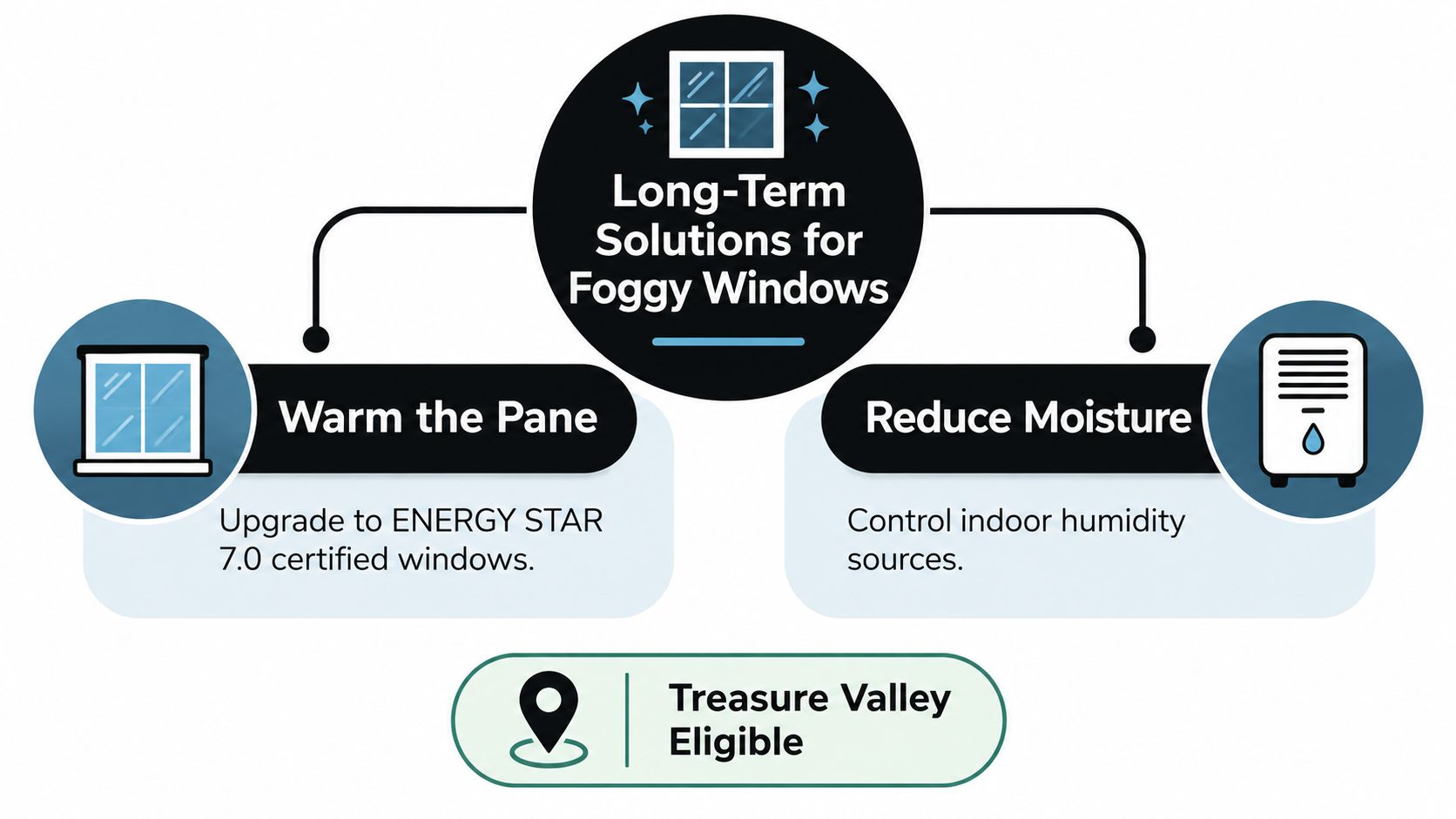
Permanent improvement comes from changing one of the two conditions that create condensation. You can reduce indoor moisture at its source, or you can raise the interior glass temperature so the pane stays above the dew point during cold weather. Most successful projects address both.
Energy-efficient replacement windows can improve the temperature side of the equation through insulated glazing, Low-E coatings, gas fills, warm-edge spacers, and better-insulated frames. ENERGY STAR's residential windows guidance also emphasizes that interior condensation can result from humid indoor air meeting cold glass and doesn't necessarily prove that a window has failed.
What the specifications tell you
Ask for the performance information rather than choosing by appearance alone.
- U-factor describes how readily a window conducts heat. A lower U-factor generally indicates stronger insulating performance.
- SHGC, or solar heat gain coefficient, describes how much solar heat passes through the window. The suitable choice depends on orientation, shading, and the home's heating and cooling needs.
- Air leakage indicates how much uncontrolled air movement occurs through the assembly. Lower leakage can improve comfort, but installation quality still matters.
- Frame and spacer design affect the temperature of the glass edge, where condensation often starts first.
For Treasure Valley homes, options may include ClimaTech Low-E coatings, argon gas fills, warm-edge spacer systems, and triple-pane construction. ENERGY STAR 7.0 certified windows can be selected for the region's mixed climate conditions. These features keep the interior pane closer to room temperature and create a larger margin between the glass and the dew point.
Don't rely on an unverified promise that every replacement will add a particular number of degrees. The actual result depends on the existing window, glass size, frame, orientation, installation, indoor humidity, and outdoor temperature. A professional should measure the existing condition and explain the expected performance of the proposed assembly.
Installation completes the system
Even high-performance glass can't overcome uncontrolled moisture or a poorly sealed rough opening. Proper interior caulking, insulated frames, weatherstripping, and balanced whole-house ventilation help keep the assembly dry and comfortable. A heat-recovery ventilator may be appropriate in a tightly sealed home when the main issue is stale, humid indoor air.
If triple-pane construction is under consideration, compare how it may affect the inside-pane temperature, frame depth, weight, and installation details. This overview of triple-pane windows for Idaho winters can help frame that conversation. The correct choice is the one that matches the home's dew-point conditions, existing frames, ventilation, and budget.
Choosing the Right Path for Your Home
Use the moisture pattern and the measured humidity to choose the next step. Don't jump from a wet sill straight to full replacement, but don't keep wiping the same window indefinitely when the glass has a failed seal or the frame is deteriorating.
Start with the least disruptive remedy
If condensation wipes away and returns only on cold mornings, begin with humidity control. Lower indoor humidity toward 35% when the weather demands it, run bathroom fans during and after showers, operate the kitchen exhaust while cooking, open coverings for airflow, and confirm that the dryer vents outside.
Next, inspect the supporting details. Weatherstripping, interior caulking, storm windows, and better air circulation can reduce cold spots. A heat-recovery ventilator may help a tightly sealed home that retains too much moisture, but it should be selected and balanced for the building rather than installed as a guess.
Move to glass or window replacement when the evidence points there
If fog stays between panes during mild weather, the insulated glass unit has failed. If the frame remains straight, dry, and serviceable, an IGU replacement may be enough. If several units have failed, the frame is warped, or drafts remain, a complete replacement deserves comparison.
If every window streams water despite modest indoor humidity, the glass surfaces may be too cold for the home's winter conditions. At that point, measured dew-point readings, frame assessment, and product performance data are more useful than another round of towels or improvised ventilation.
A free in-home consultation can help homeowners in Boise, Eagle, Meridian, Nampa, and Caldwell compare these paths. C & C Windows & Doors can evaluate the window condition, discuss ENERGY STAR 7.0 options, and provide a written quote based on the home rather than on condensation alone.
Decision test: Wipeable moisture points first to humidity and surface temperature. Unwipable moisture between panes points to a sealed-unit problem. Water around the wall or frame after rain calls for leak investigation.
C & C Windows & Doors offers free in-home consultations, custom measurements, and replacement windows and patio doors designed for Treasure Valley conditions. Visit C & C Windows & Doors to schedule an assessment and find out whether your foggy windows need humidity control, IGU repair, or a complete upgrade.