For products installed in 2026, the federal Energy Efficient Home Improvement Credit for windows is no longer available under the current framework. The former credit covered 30% of qualifying costs, up to $600 for exterior windows and skylights, but 2025 was the last year for eligible window installations.
That answer surprises many Treasure Valley homeowners because old contractor pages and tax articles still repeat the previous rules. The practical question now isn't whether you can claim a federal window credit on a 2026 installation. You can't under the current framework. The better question is how to document a late-2025 project, find Idaho and utility opportunities, and choose a window upgrade that still earns its keep through comfort, durability, and energy performance.
Table of Contents
- What Really Changed for the Window Replacement Tax Credit in 2026
- How the Federal 25C Window Credit Worked From 2022 Through 2025
- State, Utility, and Manufacturer Incentives Still Available in 2026
- Verifying ENERGY STAR Performance and Reading Certification Documents
- A Treasure Valley Homeowner's Path From Estimate to Installation
- Filing Form 5695 and Claiming Any Remaining Credit
- Planning Ahead and Avoiding Common 2026 Mistakes
What Really Changed for the Window Replacement Tax Credit in 2026
The federal Section 25C window credit ended for products purchased and installed after December 31, 2025, according to current IRS guidance on the Energy Efficient Home Improvement Credit. That means a window project installed in Boise, Meridian, Eagle, Nampa, or elsewhere in the Treasure Valley during 2026 doesn't qualify for the former federal window credit merely because the quote was signed earlier or the windows were ordered before the deadline.
Many online articles mislead homeowners. They still advertise a 30% credit as if the old federal window benefit automatically applies to every 2026 project. It doesn't. The IRS states that qualifying windows had to be purchased and installed by the end of 2025, and the statute limits the aggregate credit for exterior windows and skylights to $600 for a taxpayer in a taxable year under the prior rules, as reflected in 26 U.S.C. Section 25C.
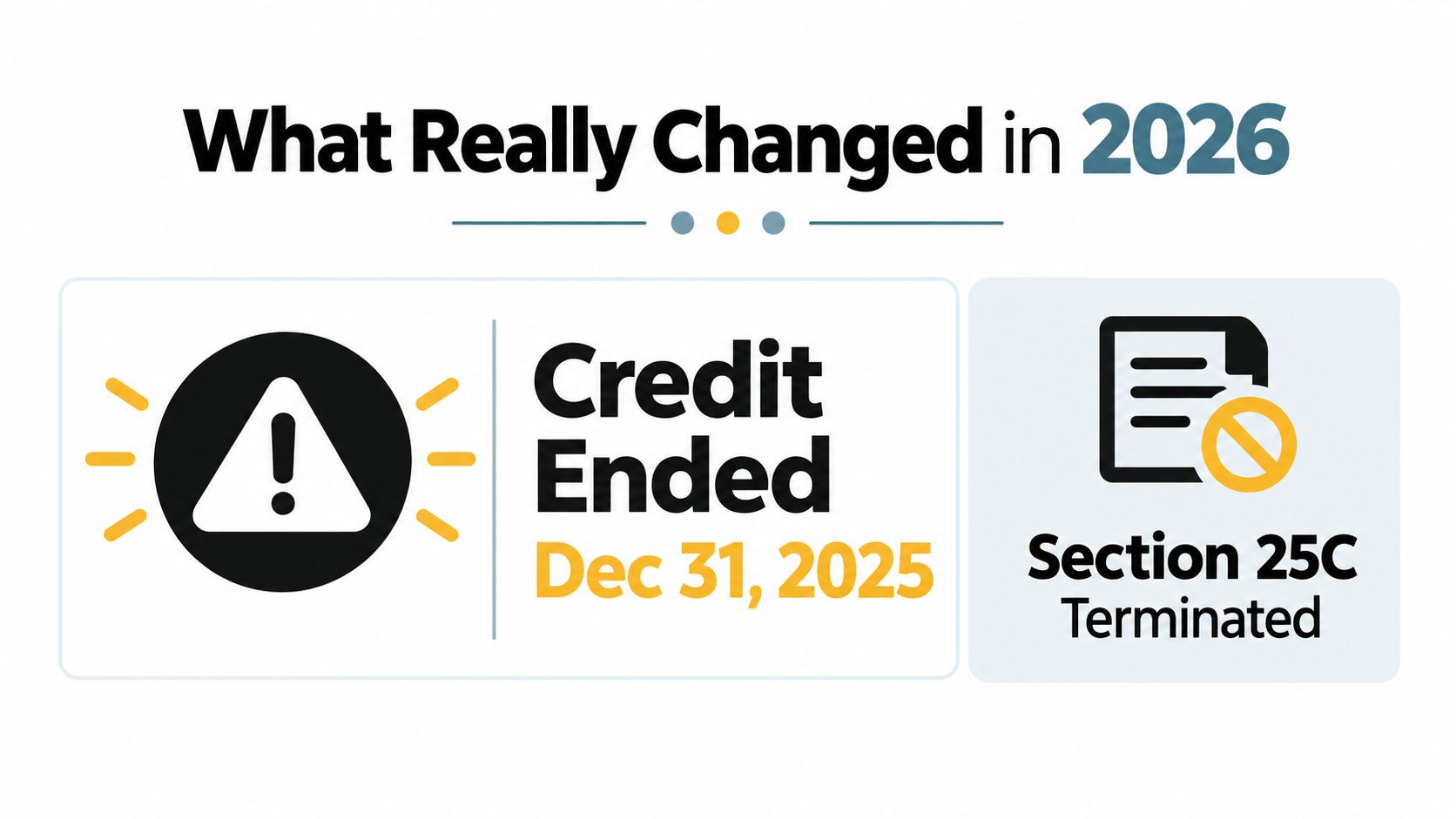
The honest status for Treasure Valley projects
There isn't an automatic extension in the current framework. Unless Congress changes the law, a 2026 installation remains outside the federal window credit. Don't let an outdated estimate make the decision for you, and don't treat a line reading “federal tax credit” as money you can safely subtract from the project price.
Three other paths deserve attention:
- Idaho programs: State tax treatment may help qualifying energy improvements, but eligibility and filing rules need confirmation before purchase.
- Utility programs: Idaho Power and Rocky Mountain Power may offer changing efficiency or weatherization incentives, depending on service territory and program requirements.
- Manufacturer promotions: Brands such as Pella, Andersen, and Marvin periodically support dealer promotions. These are purchase incentives, not federal tax credits, and availability varies.
The rest of this guide separates the expired federal benefit from incentives that may still exist. It also explains which documents matter for late-2025 installations, how to read performance labels, and how to build a clean project file. That distinction protects you from budgeting around a credit that no longer applies.
How the Federal 25C Window Credit Worked From 2022 Through 2025
Understanding the old rules helps if your windows were installed and placed in service before the deadline. The IRS says the improvement had to be made to an existing home in the United States, claimed for the year of installation, and reported with Form 5695 and the IRS claiming instructions.
The structure changed over time:
- In 2022, IRS materials described a 30% credit with a $500 lifetime maximum.
- From 2023 through 2025, the credit became 30% of qualifying costs, subject to an overall annual cap of $1,200, with up to $600 for exterior windows and skylights.
- Windows had to meet ENERGY STAR Most Efficient requirements, not merely a general efficiency claim.
The annual cap applied across eligible building-envelope improvements. Other categories, including certain heat-pump equipment, followed separate rules and caps. Don't combine those categories casually on a worksheet, because the product type determines which limitation applies.
Documentation mattered as much as performance
For a late-2025 claim, save the manufacturer certification statement, product information sheet, itemized invoice, and evidence showing when the improvement was placed in service. The invoice should distinguish qualifying product costs from labor, and the product paperwork should identify the exact models rather than describing them as “energy efficient.”
The credit was nonrefundable. It could reduce federal tax liability, but it wasn't designed to create a refund beyond the taxpayer's liability. The IRS also requires taxpayers to use the form for the year the improvement was installed, not the year the homeowner finally gathers paperwork.
| Program Year | Credit Rate | Annual Cap | Performance Threshold | Key Documentation |
|---|---|---|---|---|
| 2022 | 30% | $500 lifetime maximum | Qualifying federal efficiency requirements | Certification statement, invoice, product records |
| 2023 through 2025 | 30% | $1,200 overall annual cap, with $600 for windows and skylights | ENERGY STAR Most Efficient requirements | Certification statement, product information, itemized invoice, place-in-service evidence |
| 2026 | Not available for qualifying window installations under the current framework | Not applicable to 2026 window installations | Not applicable | Keep project records for other applicable programs |
The important filing distinction is simple. A window installed before the deadline is evaluated under the rules for that installation year. A window installed in 2026 isn't brought back under the old credit because the contract, deposit, or estimate originated earlier.
State, Utility, and Manufacturer Incentives Still Available in 2026
The federal window credit is gone, but that doesn't mean every 2026 savings path disappeared. Treasure Valley homeowners should work through incentives by source, because each program can have a different administrator, eligibility test, and application deadline.
Start with Idaho and the utility
Idaho has offered state tax treatment for qualifying residential energy improvements, including certain insulation and window upgrades. That isn't the same as a stand-alone Idaho window rebate, and homeowners shouldn't assume every replacement window qualifies. Confirm the current rule with the Idaho State Tax Commission or a tax professional before treating a state deduction as part of your budget.
Idaho doesn't currently operate a universal, stand-alone window rebate program for every Treasure Valley homeowner. Utility territory matters. Idaho Power and Rocky Mountain Power may publish efficiency or weatherization offers, but program terms can change, and a window may need to be part of a broader audit or home-performance package. Check the current program directly before ordering.
A useful starting point is this Idaho Power window rebate guide, then verify the active offer with the utility serving your address.
Promotions are different from tax credits
Manufacturers and dealers sometimes reduce the purchase price through seasonal promotions. Pella, Andersen, and Marvin are examples of brands that may appear in dealer offers, including package pricing, contractor pricing, or mail-in promotions. Availability isn't guaranteed, and a promotion may have restrictions on product lines, timing, or installation.
| Incentive Source | Typical Savings | Eligibility | Where to Confirm |
|---|---|---|---|
| Idaho state tax treatment | Varies by qualifying improvement and taxpayer situation | Confirm qualifying window and filing rules | Idaho State Tax Commission or tax professional |
| Idaho Power | Program-dependent | Idaho Power service territory and current program requirements | Current Idaho Power program terms |
| Rocky Mountain Power | Program-dependent | Rocky Mountain Power service territory and current program requirements | Current Rocky Mountain Power program terms |
| Manufacturer promotion | Varies by brand and promotion | Participating dealer, product line, and promotional dates | Manufacturer and dealer quote |
| Federal Section 25C window credit | $0 for 2026 window installations | Not available under the current framework | Current IRS guidance |
Don't ask an installer to promise a utility rebate before the utility confirms it. Ask for the program name, qualifying product criteria, required forms, and submission deadline in writing. That turns a vague “you may get money back” statement into a decision you can evaluate.
Verifying ENERGY STAR Performance and Reading Certification Documents
The label on the showroom sample isn't enough. Before you write a check, ask for the exact performance documentation for the window model, glass package, and configuration being quoted.
Two ENERGY STAR distinctions matter. The standard ENERGY STAR Certified label confirms that a product meets the applicable program requirements for its climate zone. ENERGY STAR Most Efficient identifies a higher-performance tier and was the relevant designation for the former federal window credit. A standard ENERGY STAR label alone didn't automatically establish eligibility for that credit.
Read the NFRC data, not just the sales language
The manufacturer's specification sheet or NFRC label should show the values that describe how the unit performs:
- U-factor: Lower values indicate stronger resistance to heat flow.
- SHGC: This shows how much solar heat enters through the glass.
- Air leakage: This helps evaluate how tightly the window controls unwanted air movement.
- Visible transmittance: This indicates how much visible light passes through the glazing.
The exact configuration matters. A window family can have different ratings depending on frame material, sash design, glass package, spacer, and size. Ask the installer to identify the quoted configuration rather than handing you a generic brochure.
For practical guidance on selecting efficient products for Idaho conditions, review this energy-efficient windows guide for Idaho.
Three document problems that create trouble
A missing NFRC sticker is the first warning sign. A generic marketing brochure in place of a manufacturer certification statement is the second. An invoice that lacks model numbers is the third, because it makes it difficult to connect the installed units to the performance documents.
A complete certification packet should identify the brand, model, performance criteria, and taxpayer or property information required by the relevant program. Save digital copies, and take photographs of labels before the installer removes packaging. If the manufacturer provides an online portal, screenshot the NFRC and certification records and place them in the permanent project folder.
A Treasure Valley Homeowner's Path From Estimate to Installation
A good window project begins before anyone removes a sash. One Treasure Valley homeowner starts with a free in-home estimate, not with a tax form. The installer examines each opening, checks the existing frame and sill, records measurements, and identifies whether the project calls for insert replacement or more extensive frame work.
The conversation then turns to glass. A Low-E coating can improve control of heat transfer, argon fills can support the insulating package, and triple-pane glass may make sense where comfort or sound reduction matters more than the lowest initial price. The right choice depends on the home's existing conditions, the opening, and the homeowner's budget, not on a generic “energy efficient” label.
Practical rule: Choose the window configuration first, then verify the paperwork for that exact configuration. Never choose a product because a similar model appeared on an old tax-credit list.
What happens on installation day
The crew protects flooring and furniture with drop cloths, follows a planned removal sequence, and checks the opening before setting the replacement unit. Insulation with low-expansion foam helps seal the perimeter without putting unwanted pressure on the frame.
Interior trim comes next. Exterior caulking uses a compatible sealant selected for the surrounding materials and exposure. The final walkthrough gives the homeowner a chance to operate every unit, inspect the finish, and ask about cleaning, hardware, and warranty registration.
For a more detailed description of the sequence, see what to expect from a window installation.
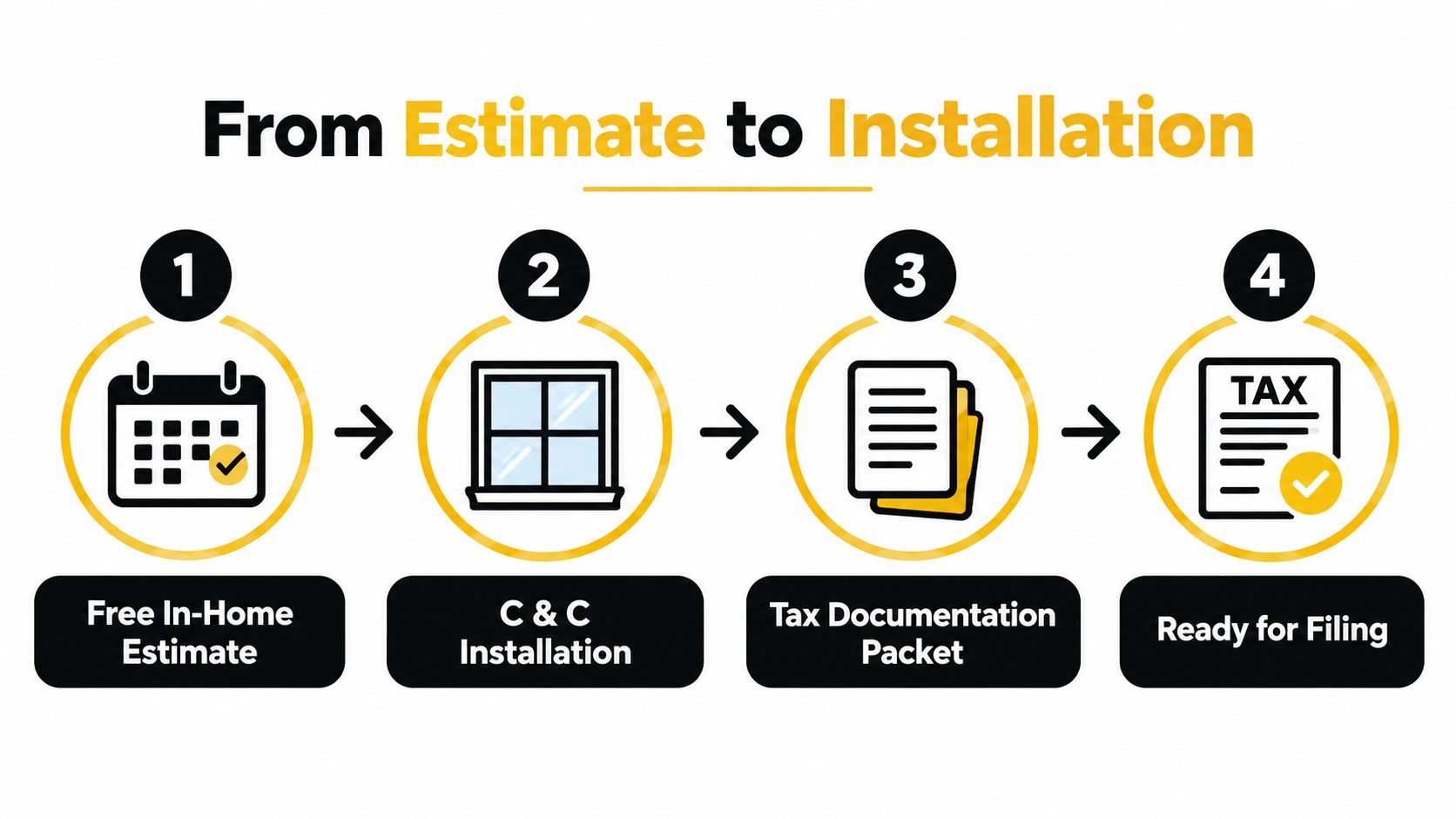
The handoff that protects the homeowner
At completion, the homeowner should receive more than a receipt. The project packet should include saved NFRC stickers, a manufacturer certification statement where applicable, an invoice separating labor and materials, the place-in-service or completion date, and warranty registration confirmation delivered by email.
C & C Windows & Doors provides free in-home consultations, custom measurements, and documentation support as part of its replacement-window process. The homeowner still needs to review the final records and consult a tax professional for tax filing decisions, but a clean packet makes that conversation much easier.
Filing Form 5695 and Claiming Any Remaining Credit
Form 5695 still matters for homeowners who completed qualifying work before the federal window-credit deadline or who are claiming another eligible residential energy credit under the rules for the applicable tax year. The IRS explains that the credit is claimed for improvements placed in service during the installation year, using Form 5695, Residential Energy Credits.
A 2026 filing date doesn't automatically mean a 2026 installation. Someone filing a 2025 return during 2026 may still be addressing a qualifying project completed in 2025. Someone who installed windows during 2026 can't use Form 5695 to revive the expired federal window benefit.
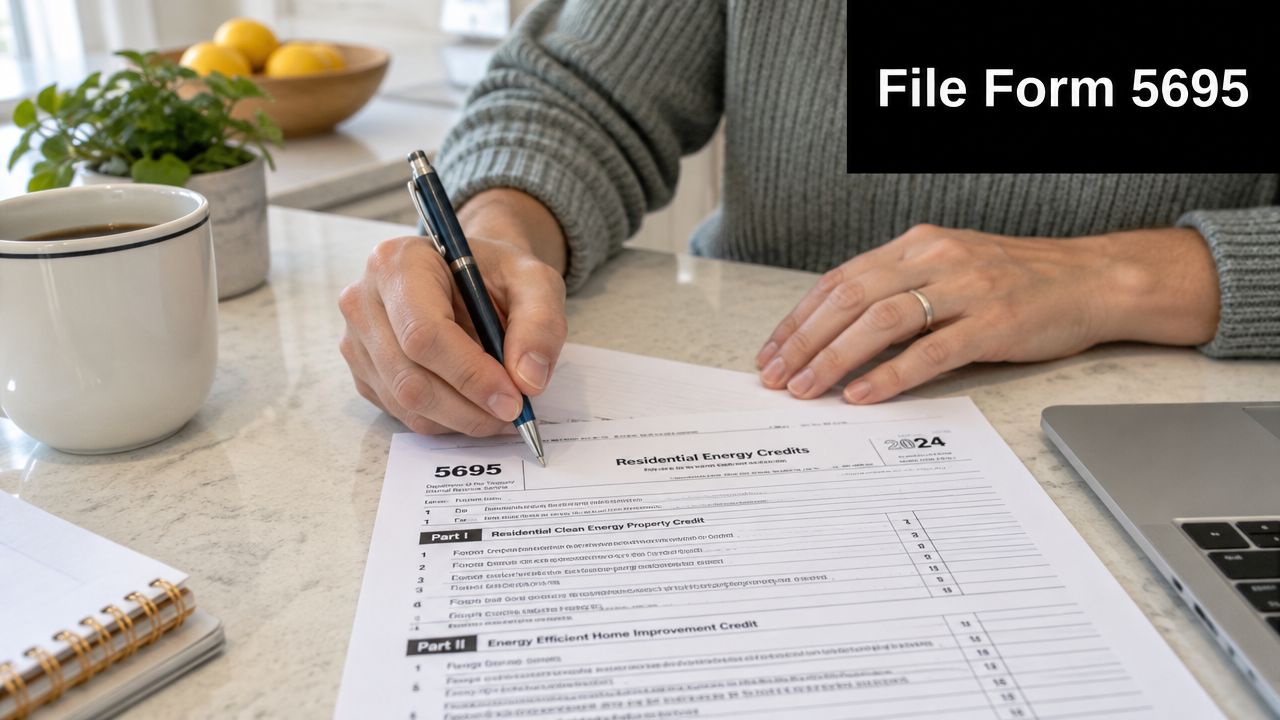
Use the form for the correct tax year
For an eligible pre-deadline installation, gather the invoice, manufacturer certification, product information, and evidence of the placed-in-service date. Enter only qualifying costs under the applicable instructions. Don't include labor when the rule limits the credit to the qualifying property, and don't assume a contractor discount changes the eligible-cost calculation.
The familiar historical calculation was 30% of qualifying costs, with the overall building-envelope annual limit of $1,200 and the separate $600 limit for exterior windows and skylights, as described by the IRS. Those figures explain older filings, but they don't authorize a credit for a 2026 window installation.
Common filing errors
- Double-counting labor: Use the invoice breakdown and applicable IRS instructions to separate eligible property from installation charges.
- Missing product identification: Manufacturer records should connect the claimed item to its exact model and required certification.
- Confusing a rebate with a credit: A dealer or utility rebate may affect the cost basis or program rules. Don't assume it can be ignored.
- Using the wrong installation year: The IRS ties the claim to when the improvement was placed in service.
- Filing without professional review: If several energy improvements, deductions, or credits interact with your broader tax situation, ask a tax professional to review the return.
Carryforward treatment also depends on the specific credit and tax-year instructions. Don't transfer an unused window amount into a later year without confirming that the applicable IRS rules allow it.
Planning Ahead and Avoiding Common 2026 Mistakes
The safest 2026 window plan has three phases. Treat paperwork as part of the installation, not as an afterthought.
Before purchase
Confirm the product's ENERGY STAR status and determine whether the quoted configuration carries the performance designation required by the program you're pursuing. Request the manufacturer certification number or statement before signing, and ask for an invoice that separates materials, labor, discounts, and any rebate.
Check your utility territory and ask whether an audit, weatherization package, preapproval, or inspection is required. If an offer needs approval before installation, applying afterward may leave you with a beautiful project that doesn't qualify for the incentive.
During installation week
Photograph each window label while it's still accessible. Retain the NFRC stickers, record the model numbers, and ask for a signed completion document showing the installation or placed-in-service date.
The installation file should include:
- Product records: Model numbers, NFRC labels, glass package, and certification documents.
- Financial records: Itemized invoice, payment confirmation, rebates, and promotional discounts.
- Completion records: Signed completion certificate, final walkthrough notes, and warranty registration.
- Program records: Utility approval, state paperwork, or insurer documentation if applicable.
After the crew leaves
Submit utility paperwork promptly, follow the program's stated deadline, and keep the complete project file for the period recommended by your tax professional. Store digital copies in more than one location, especially if you expect to sell the home or need to document an insurance-hardening improvement later.
The most common Treasure Valley mistakes are predictable:
- Assuming the federal window credit still applies to a 2026 installation.
- Claiming labor without checking the applicable rule.
- Treating a rebate and a tax credit as interchangeable.
- Failing to verify whether income, tax-liability, or adjusted-gross-income limits affect the claim.
- Accepting a generic product sheet instead of documentation for the installed model.
- Waiting until filing season to discover that the completion date is unclear.
Questions homeowners still ask
Can unused window-credit amounts be carried forward? Don't assume they can. Carryforward rules depend on the specific credit and the applicable tax-year instructions, so confirm the answer for your return with a tax professional.
Does marriage change the combined limit? Filing status can affect how a taxpayer applies credit limits, but marriage doesn't create permission to claim an expired 2026 window credit. Review the applicable return and household eligibility with a tax professional.
Does Idaho offer a 2026 window-specific deduction? Idaho may provide tax treatment for qualifying energy improvements, but that isn't the same as a universal window rebate. Confirm current eligibility and documentation requirements before relying on it.
Schedule a consultation before committing to a product or assuming an incentive applies. The right window package, complete certification file, and confirmed utility or state pathway matter more than an outdated federal-credit line on an estimate.
C & C Windows & Doors offers free in-home consultations, custom measurements, energy-efficient window and patio-door options, and meticulous installation across the Treasure Valley. Visit C & C Windows & Doors to plan your 2026 replacement project around verified documentation and incentives that exist.