You wake up in Boise before sunrise, step onto a cold floor, and walk past the living room window. The furnace is already running again. The air near the glass feels colder than the rest of the room, and the bottom corners of the window have that familiar winter moisture that makes the sill look tired by February.
That's the moment most Treasure Valley homeowners start asking about triple pane windows Idaho winters. Not because they want a fancier window, but because they're tired of the same pattern every winter. Drafty glass. Uneven room temperatures. Condensation that keeps coming back. Heating bills that feel higher than the comfort you're getting in return.
In Idaho, the issue isn't just whether a window opens and closes. It's how that window performs when temperatures stay below freezing, the wind picks up, and your home has to hold heat for long stretches. That's where triple-pane windows can move from “nice upgrade” to “practical fix,” especially in homes with large glass areas, older frames, or rooms that never feel settled in winter.
Table of Contents
- That Idaho Winter Morning Feeling You Know Too Well
- Why an Extra Pane of Glass Is a Game-Changer
- Beyond Warmth The Other Ways Triple Pane Upgrades Your Home
- Decoding Window Specs for a Treasure Valley Climate
- Calculating the Real Cost and Payback in Idaho
- Why Flawless Installation Is Non-Negotiable
- Make Your Home a Haven This Winter and Beyond
That Idaho Winter Morning Feeling You Know Too Well
If you've lived through a few Treasure Valley winters, you already know the pattern. The cold isn't always dramatic, but it lingers. A room can be technically heated and still feel uncomfortable if the glass is pulling warmth out of the space.
That's why people notice the problem first in the places they live. The chair by the picture window. The breakfast nook that feels chilly before the sun comes up. The bedroom on the north side that never seems to catch up, even when the thermostat says everything is fine.
Older double-pane units can still be decent windows, but plenty of Idaho homes have aging glass packages, worn seals, or frames that were never installed tightly enough in the first place. In those homes, winter comfort problems show up in a few predictable ways:
- Cold downdrafts near the window: You feel air movement even when the window is closed.
- Interior condensation: Moisture gathers on the inside glass or at the sash edges.
- Uneven room temperatures: The furnace keeps running, but the room still feels off.
- Glass that feels cold up close: You avoid sitting near the window in January.
A homeowner usually doesn't ask for triple-pane because of the label. They ask because one or two rooms never feel right in winter.
That's an important distinction. Window performance isn't abstract in Idaho. It shows up in comfort first, then in energy use, then in long-term wear around the opening. If a window leaves the inside surface too cold, you don't just lose heat. You also make the room less usable.
Triple-pane windows make sense when they solve those real symptoms. They aren't automatically the right answer for every opening in every home. But when you're dealing with repeated cold-weather discomfort, especially around larger glass areas, they're often the first upgrade that changes how the room feels on a January morning.
Why an Extra Pane of Glass Is a Game-Changer
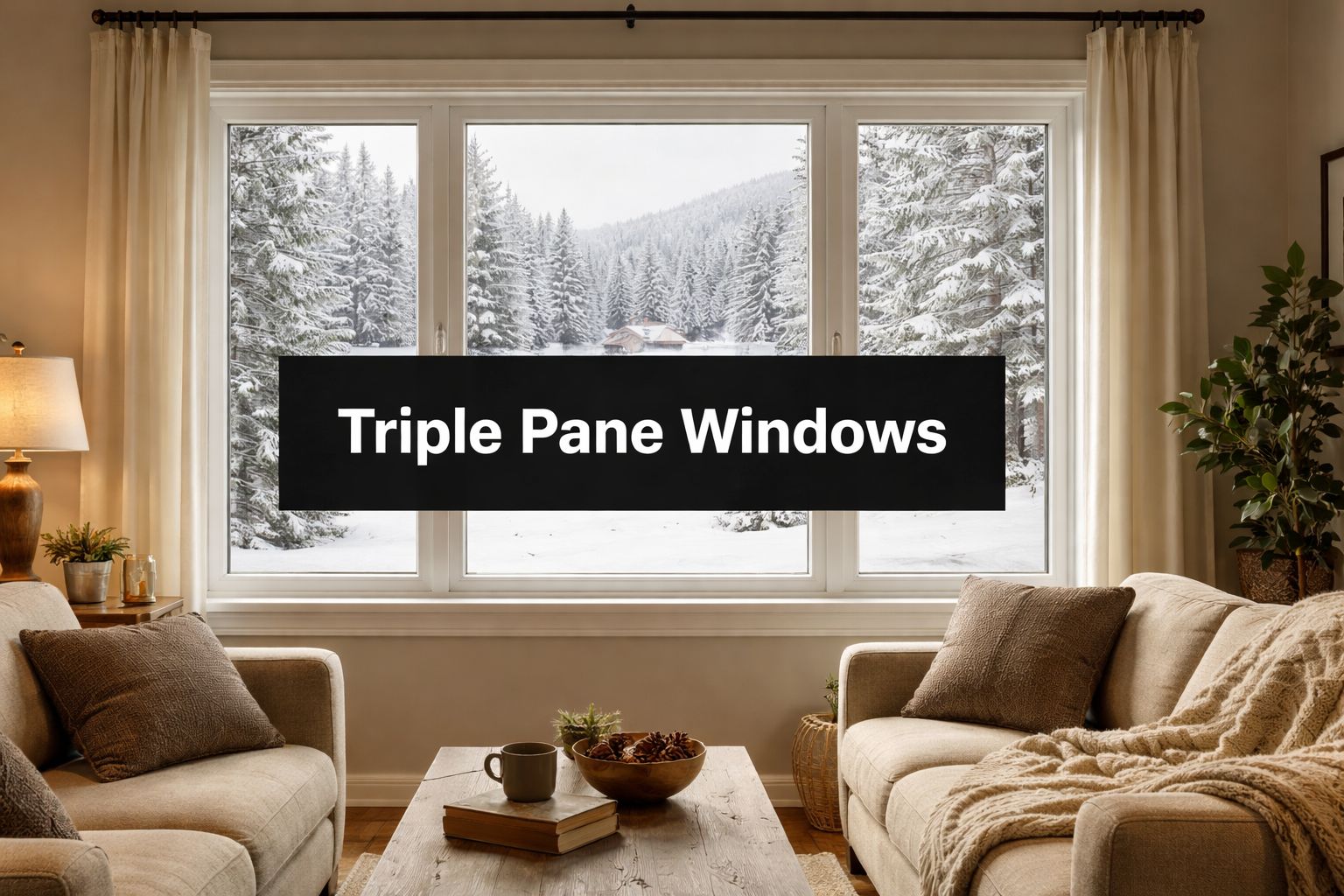
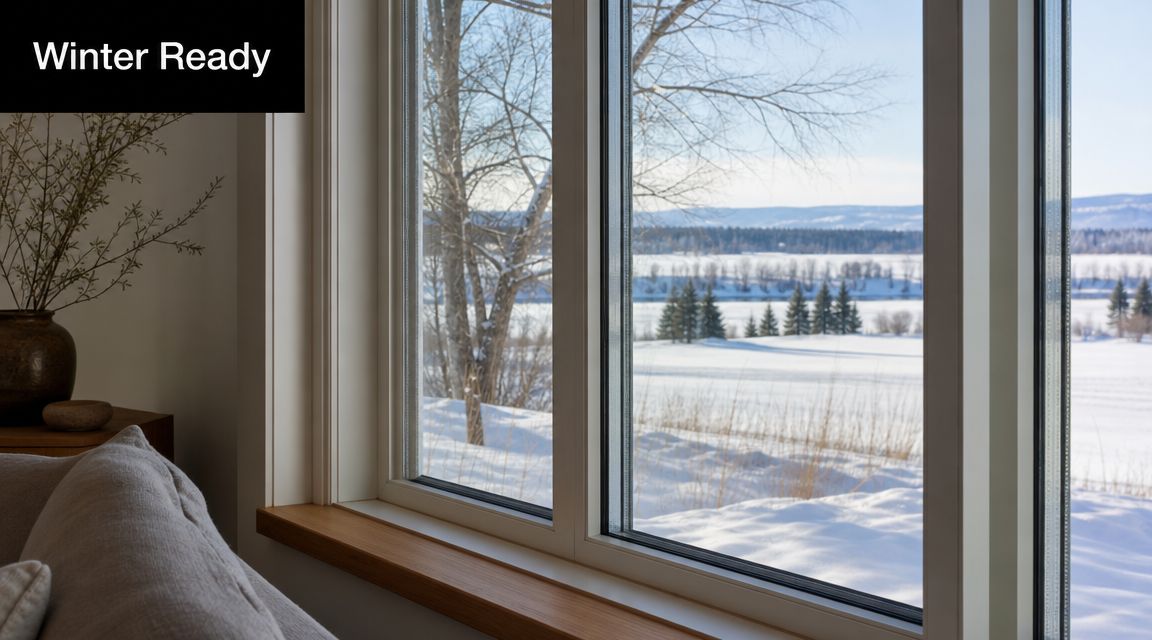
A triple-pane window works like adding another insulated layer between your home and the cold. Instead of two panes with one insulating space, you get three panes and two insulating cavities. That extra chamber slows heat transfer more effectively than standard double-pane construction, which is why triple-pane units are consistently treated as the higher-performance option for cold climates in this cold-climate window guidance.
What the third pane actually changes
Consider winter clothing. A light jacket may be enough on a cool fall day. In an Idaho cold snap, you want layers that trap heat and cut the chill before it reaches your body. Triple-pane windows do the same thing at the glass line.
For Idaho winters, industry guidance commonly recommends looking for a U-factor of 0.30 or lower, and notes that high-quality triple-pane windows can go well below that threshold, which helps rooms feel warmer and more stable during prolonged freezing weather. That same guidance ties the benefit directly to the added insulation that matters when temperatures stay below freezing for long stretches.
The practical result is easy to understand once you've stood next to both types of glass in winter. Better-insulated glass keeps the interior surface warmer. A warmer interior glass surface means less radiant chill, fewer cold spots near the opening, and less of that “draft” sensation that often comes from air cooling and dropping off the glass.
Why this matters more in Idaho than in mild climates
Boise and the Treasure Valley aren't the coldest places in the country, but this is still a heating-dominant winter climate. Homes spend long stretches trying to hold indoor warmth against below-freezing outdoor temperatures. That's when the performance gap between ordinary glass and better-insulated glass becomes noticeable.
Triple-pane windows aren't magic. They won't fix every comfort issue by themselves, and they won't outperform a badly sealed installation. But in the right house, with the right glass package and frame, they do something standard windows often can't. They make the room feel settled.
Practical rule: If your biggest complaint is winter discomfort near the glass, focus on insulation performance first. Cosmetics won't solve that problem.
There's also a big difference between “double-pane” and high-performance double-pane. A good double-pane unit with low-E coating and gas fill can still be a strong option in some Treasure Valley homes. But when the priorities are winter comfort, reduced condensation, and more stable room temperatures near large windows, triple-pane is often the better fit.
That's a significant advantage. It's not just lower heat loss on paper. It's a house that feels less reactive to the weather outside.
Beyond Warmth The Other Ways Triple Pane Upgrades Your Home
Warmth gets most of the attention, but it's not the only reason homeowners choose triple-pane glass. The upgrade changes how the house sounds, how the window behaves on cold mornings, and how hard your heating system has to work during the roughest parts of the day.
A quieter house feels different right away
Triple-pane assemblies can significantly improve acoustic performance, which is one of the most underrated reasons people end up loving them after installation, according to this PNNL building-science resource. If you live near a busier road, a school route, or a neighborhood where early traffic carries more than you'd like, that extra layer of separation can make indoor spaces feel calmer.
Noise control matters even more in rooms where people expect rest. Bedrooms, offices, and front living rooms tend to show the difference fastest. The improvement isn't only about loud sounds. It's also about reducing the constant background noise that makes a home feel less settled.
For homeowners comparing options in surrounding communities, it helps to see how replacement projects are approached in nearby areas like Star window replacement planning.
Condensation control is a real durability issue
Triple-pane windows are also valued because the inside glass surface stays warmer than lower-performing windows in winter. That warmer interior surface helps reduce condensation and the moisture problems that come with it.
When condensation becomes a routine winter issue, the damage isn't limited to a foggy view. Moisture can affect sills, trim, paint, and sometimes the wall area around the opening. Over time, homeowners end up treating the symptom while the window keeps creating the same cold-surface condition.
A lot of people think of window condensation as a minor annoyance. In practice, it's often a warning sign that the interior glass temperature is too low for the indoor humidity conditions in the room.
Peak winter comfort matters in the early morning
The same PNNL material reports that triple-pane windows can reduce peak energy demand by 17% during winter morning peaks. That matters in Idaho because cold mornings are exactly when furnaces cycle hard and comfort complaints usually show up first.
Here's where that shows up in daily life:
- Less cold downdraft at daybreak: The area near the window feels less harsh when the house is recovering overnight heat loss.
- Warmer interior glass temperature: People notice this in breakfast areas, living rooms, and larger fixed windows.
- Less strain at the toughest hours: The home feels more even when outdoor temperatures are lowest.
If you're replacing windows mainly because the house is noisy, damp at the glass, or uncomfortable before sunrise, triple-pane can solve more than one problem at once.
Decoding Window Specs for a Treasure Valley Climate
Most homeowners don't need to become window engineers. They do need to know how to read the label well enough to spot the difference between a decent sales pitch and a better-performing window.
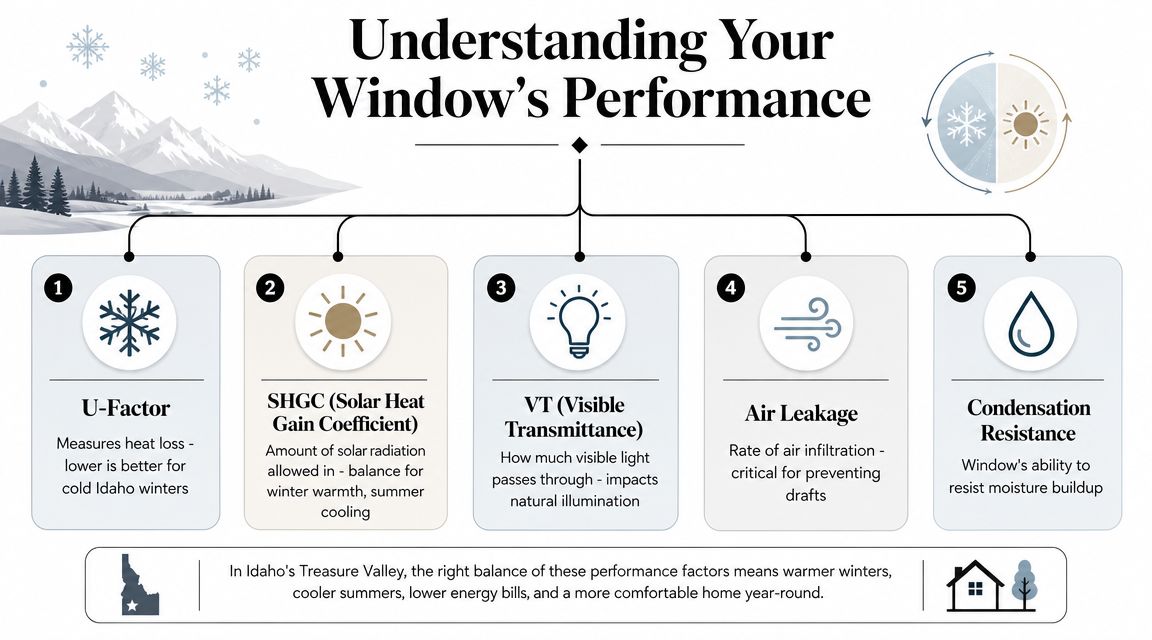
The most important number for Idaho winters is U-factor. If you remember one thing, remember this: lower is better. U-factor measures how much heat moves through the window assembly. In a cold climate, that's the number tied most directly to winter insulation performance.
Start with U-factor
A good way to think about U-factor is like a golf score. Lower wins. For severe winter performance, cold-climate guidance commonly targets around 0.25 or lower, and that same guidance describes triple-pane windows as the “gold standard” because they materially reduce interior condensation and improve interior glass-surface temperature in cold climates, as noted in this cold-climate performance discussion.
That doesn't mean every Boise home needs the absolute lowest U-factor available. It means you should match the rating to the problem you're trying to solve. If you have large north- or west-facing glass, recurring winter condensation, or rooms with persistent cold discomfort, lower U-factor deserves top billing.
Then look at SHGC and the rest of the label
After U-factor, look at SHGC, or Solar Heat Gain Coefficient. This tells you how much solar radiation the window allows in. In Treasure Valley homes, that number matters because you're balancing two different goals. You want useful winter daylight and some seasonal warmth, but you don't want the glass turning into a summer heat source on the wrong exposure.
The rest of the label matters too:
- Visible Transmittance: This tells you how much natural light comes through. Higher light transmission can make a room feel better, but not if it comes at the cost of poor thermal performance.
- Air Leakage: A great glass package can still disappoint if the unit leaks air.
- Condensation Resistance: Helpful when you're comparing products for winter moisture behavior.
- Low-E coatings and gas fill: These aren't decorative upgrades. They're core parts of how high-performance windows control heat transfer.
If you want a simple buying filter, start with these questions:
- Is the U-factor low enough for Idaho winter comfort goals?
- Does the SHGC fit the window's orientation?
- Is the window package using low-E and insulated gas fill?
- Is the frame stable enough to support the glass performance?
- Will the installer treat air sealing as part of the system, not an afterthought?
Typical Window Performance in an Idaho Climate
| Feature | Standard Double-Pane | High-Performance Triple-Pane (e.g., Mezzo w/ ClimaTech) |
|---|---|---|
| Glass layers | Two panes with one insulating space | Three panes with two insulating spaces |
| Winter insulation priority | Can be solid when well-built | Better suited for stronger cold-weather performance |
| U-factor target for Idaho buyers | Needs close review | More likely to reach very low cold-climate ratings |
| Interior glass temperature | Cooler in hard winter conditions | Typically warmer in winter conditions |
| Condensation resistance | Better than older glass, but varies | Stronger option where winter moisture is a concern |
| Comfort near large glass | Depends heavily on exposure and build quality | Usually better for big openings and colder rooms |
| Cost | Lower upfront | Higher upfront |
The label tells you what the window can do. Installation determines whether your house ever feels that benefit.
Calculating the Real Cost and Payback in Idaho
Triple-pane windows cost more. That part shouldn't be softened or hidden. The right way to evaluate them isn't “Are they cheap?” It's “What problem are they solving in this house, and how long will I own the result?”
What the upgrade usually costs in relative terms
The cleanest verified benchmark is this: market commentary cited by PNNL says triple-pane windows cost about 30% to 50% more than double-pane equivalents, with a typical payback of 12 to 18 years, as summarized in PNNL's overview of triple-pane savings and costs.
That same source says homeowners in cold regions are often told to expect roughly 8% to 15% lower heating bills, with some estimates reaching 25% to 40% heating savings in especially harsh winter conditions. It also cites a PNNL evaluation where triple-pane windows saved an average of 12% on heating use and 28% on cooling over two ten-week test periods in a 1,500-square-foot home.
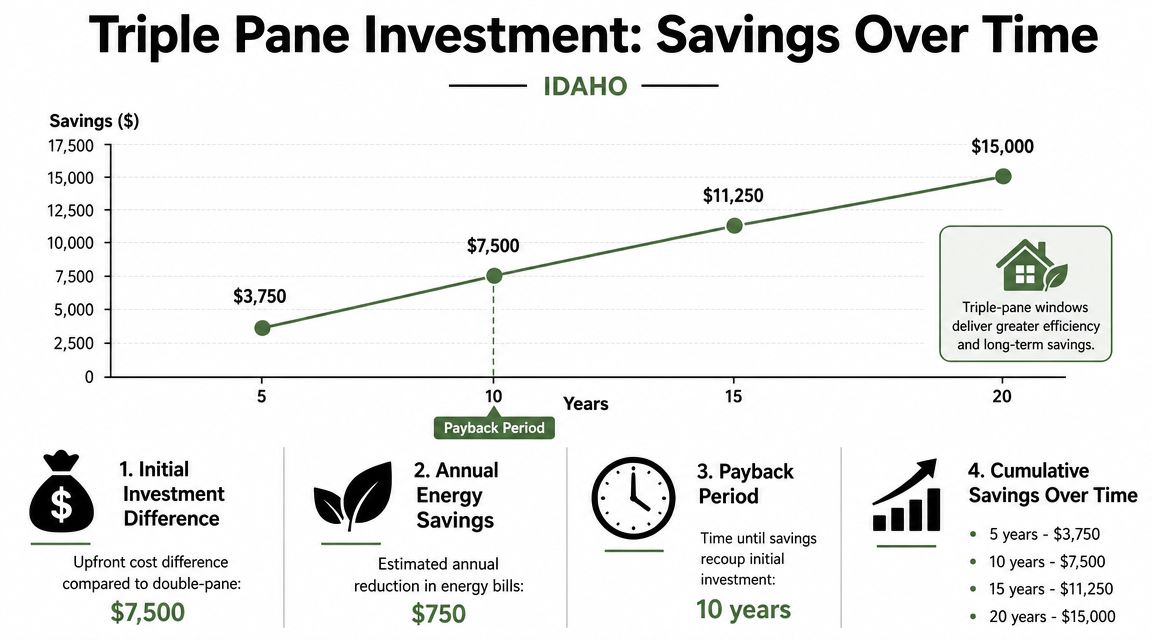
The infographic above is only a visual aid. It is not a verified local pricing model for Boise or the Treasure Valley.
How to think about payback in Treasure Valley homes
Most Boise-area homeowners make the mistake of treating payback like a simple utility-bill spreadsheet. In reality, the math depends on several home-specific factors:
- Window exposure: North- and west-facing glass often make winter discomfort more obvious.
- Window size: Large picture windows can justify better glass faster than small secondary openings.
- Existing condition: If the current windows have weak seals, poor installation, or cold-frame issues, the upgrade matters more.
- Heating demand: Homes that run hard in winter feel the comfort gain more clearly.
- Length of ownership: The longer you stay, the easier it is to justify a premium product.
Industry guidance also notes an important nuance in this discussion of whether triple-pane windows are needed. Triple-pane is often most impactful in northern climates, but many homes can still perform very well with high-quality double-pane units that include low-E coatings and insulated gas fills. That's exactly why blanket advice is weak advice.
A smart Treasure Valley approach usually looks like this:
- Put triple-pane where winter discomfort is concentrated.
- Don't ignore air sealing and frame quality.
- Don't assume every opening in the house needs the same package.
- Weigh comfort and condensation control alongside bill savings.
If you're trying to budget a replacement project, a local Boise window replacement cost calculator is a useful starting point for organizing scope before you compare glass packages.
Cost reality: Triple-pane makes the most sense when you value long-term comfort, moisture control, and better winter performance, not just the fastest possible payback.
Why Flawless Installation Is Non-Negotiable
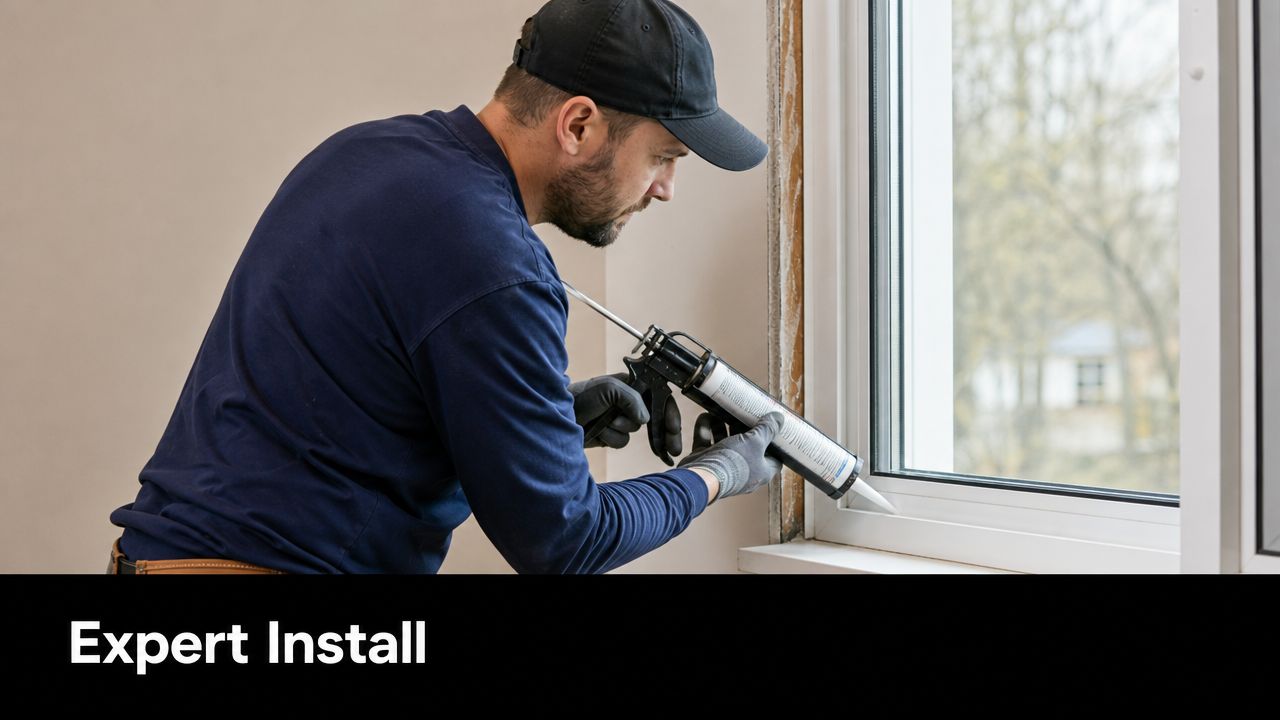
A high-performance window can underperform fast if the opening is measured poorly, shimmed badly, or sealed like an afterthought. That's why the installation crew matters just as much as the glass package.
In the field, the best installations are boring in the best way. The crew shows up on time. Measurements are already dialed in. Floors and nearby finishes are protected. The old unit comes out without chewing up the opening, and the new window goes in square, level, and sealed.
What good installation looks like on site
Homeowners should expect a few things every time:
- Accurate custom measurement: Not close enough. Exact.
- Air and water sealing: The perimeter has to be treated as part of the window system.
- Operational testing: The sash should move correctly, lock correctly, and seat correctly.
- Clean finish work: Trim, sealant lines, and exterior details should look intentional.
- Debris-free cleanup: A good crew leaves the area ready to use.
For homeowners who want a local benchmark for what professional service standards should look like, it helps to review what a Treasure Valley window company should provide before, during, and after installation.
Where good windows fail
Most window failures blamed on “bad windows” are often installation failures in disguise. Air leaks around the frame get described as drafty glass. Moisture intrusion gets blamed on the product. Operation problems get blamed on hardware when the underlying issue is an out-of-square opening.
That's especially important with triple-pane units because they're built for better performance. If the installer doesn't protect that performance at the perimeter, you can pay for premium glass and still feel disappointment the first cold week of winter.
A homeowner doesn't need fancy language to judge this. Stand near the completed window on a cold morning. Look at the seal lines. Check the trim. Open it, close it, lock it. Good installation feels tight, smooth, and finished.
Make Your Home a Haven This Winter and Beyond
For Idaho homes, triple-pane windows are usually worth serious consideration when winter comfort is the primary problem you're trying to solve. They make the biggest sense in rooms with large glass areas, colder exposures, recurring condensation, and that familiar early-morning chill that never seems to go away.
The smartest decision isn't automatically “buy the highest spec.” It's matching the window package to the house. In some Treasure Valley homes, a strong double-pane window with low-E and gas fill will do the job well. In others, especially where comfort and condensation are constant complaints, triple-pane is the upgrade that finally changes how the room feels.
That's the practical takeaway on Triple pane windows Idaho winters. Focus on low U-factor, don't ignore orientation, and treat installation as part of the product. If you get those three things right, you're not just replacing windows. You're making winter in your home quieter, steadier, and easier to live with.
If you want a local opinion on whether triple-pane is the right fit for your Boise-area home, schedule a free in-home consultation with C & C Windows & Doors. Their factory-trained team serves the Treasure Valley with custom measurements, energy-efficient replacement windows, meticulous installation, and same-day estimates.