
If you're looking at window replacement in Boise, Meridian, Eagle, or Nampa, there's a good chance you're dealing with the same question I hear all the time. You want fresh air in the evening, but you don't want to invite in rain, winter drafts, or a bad fit for the room. That gets even more important in the Treasure Valley, where one part of the year is dry heat and another part is cold wind and frost.
Awning windows solve a very specific problem well. They let you vent a space while keeping better weather protection than a lot of other operable styles. But they aren't the right answer everywhere. In Idaho homes, they shine in some openings and create headaches in others.
Table of Contents
- Why Awning Windows Are a Smart Choice for Idaho Homes
- Understanding Awning Window Design and Operation
- Awning Windows vs Other Popular Window Styles
- Maximizing Energy Performance for Idaho's Climate
- How Awning Windows Handle Idaho Weather
- Smart Placement and Installation in Your Home
- Finding a Certified Window Installer in the Boise Area
Why Awning Windows Are a Smart Choice for Idaho Homes
A common Treasure Valley scenario goes like this. It's warm in the evening, a summer shower rolls through, and you'd still like to move air through the house without spotting the sill, wetting the drywall, or shutting everything tight. That's where awning windows make practical sense.
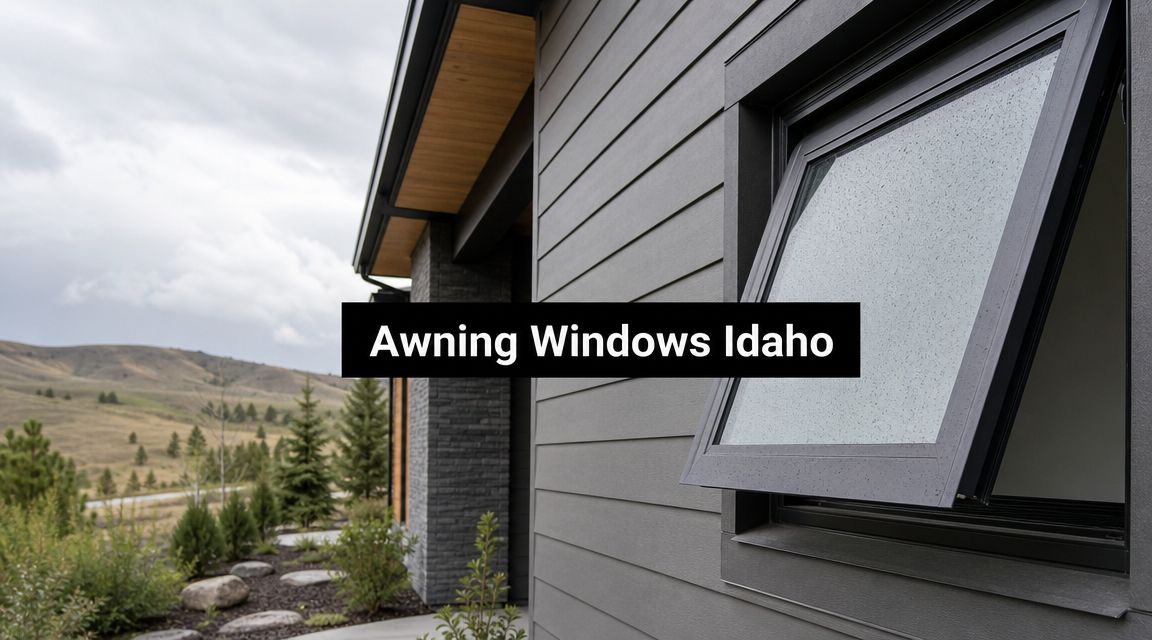
Their top-hinged design creates a canopy effect. That shape is why this style is known for venting in wet weather. Andersen notes that awning windows allow fresh air in even when it's raining, and that the single-sash design creates fewer opportunities for air leakage because the hardware pulls the sash tightly into the frame for a better seal. For Idaho homeowners, that's a useful combination of ventilation and weather protection.
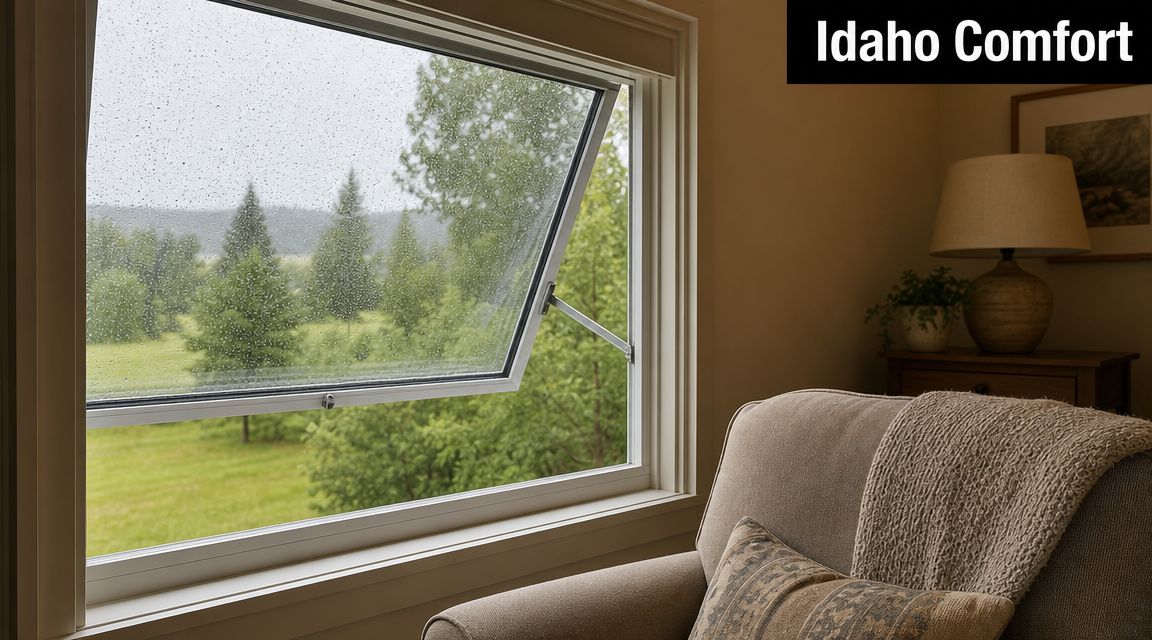
In the field, that usually translates into better comfort in the rooms that need controlled airflow the most. Bathrooms. Kitchens. Basements. Laundry spaces. Small openings beside larger fixed glass. These aren't usually windows people choose just for looks. They choose them because they solve a room-by-room problem.
Practical rule: If your priority is usable ventilation during unsettled weather, awning windows are often a better fit than a window that has to be shut the second rain starts.
This style is also gaining traction beyond Idaho. The Future Market Insights awning window market projection says the global awning window market is projected to grow from USD 852.3 million in 2025 to USD 1,225.7 million by 2035, at a 3.7% CAGR, and says 62% of the market is residential. That lines up with what homeowners are looking for now: better sealing, better weather performance, and smarter energy choices.
Awning windows Idaho buyers should think about them as a performance tool, not a one-size-fits-all style. Used in the right spots, they work hard. Used in the wrong spots, they become an awkward compromise.
Understanding Awning Window Design and Operation
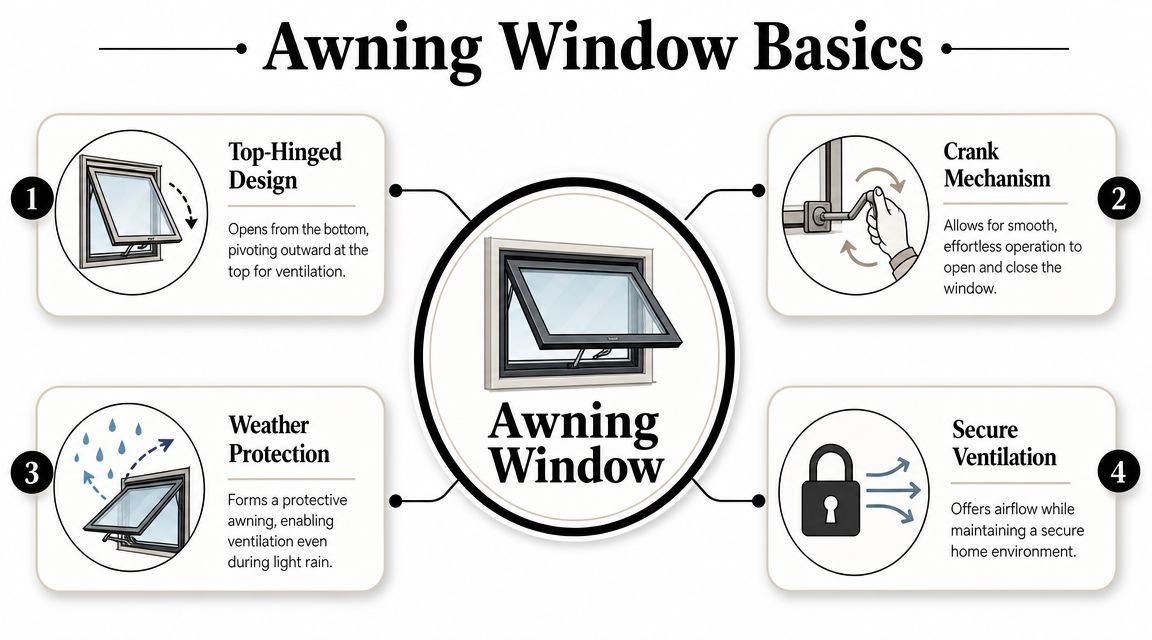
An awning window is hinged at the top and opens outward from the bottom. Most operate with a crank, though some configurations use other hardware. The easiest way to think about it is a small roof built into the sash. Open it, and the glass helps shield the opening beneath it.
That top hinge changes how the window behaves in daily use. It doesn't open like a door. It doesn't slide. It tips out from the bottom, which is why it works well where you want ventilation without a wide swinging panel at standing height.
How the sash actually works
When the unit closes, the sash is pulled back into the frame. On a well-built unit, that closing action matters as much as the opening action. Tight hardware, even pressure, and a properly aligned frame all affect whether the window seals cleanly or turns into a draft source after a few seasons.
A few practical points matter here:
- Crank operation helps in hard-to-reach spots. Over a kitchen sink or a countertop, you can still open and close the unit without leaning over a sash that slides up or out.
- The opening is controlled. You can crack it for a little airflow or open it wider when conditions allow.
- Screens stay on the interior side in many setups. That can make cleaning and upkeep simpler for some homeowners.
If an awning window feels stiff or doesn't pull in square at the corners, don't ignore it. Operability problems usually become seal problems.
Where the size range makes sense
This style is usually compact, and that tells you where it belongs. According to Thompson Creek's standard awning window sizing guide, awning windows are typically wider than they are tall, with common widths ranging from 2 to 4 feet and heights from 1.5 to 3.5 feet. The same source lists common residential widths such as 24, 30, 36, 42, and 48 inches paired with heights like 18, 24, 30, 36, or 42 inches.
That compact profile is why they show up in:
- Bathrooms, where privacy and ventilation matter more than a huge viewing area
- Basements, where openings are often shorter or set higher in the wall
- Kitchens, especially above sinks
- Accent ventilation zones, such as under a larger picture window
They're usually not the first style I'd reach for when a homeowner wants a broad living-room view and a lot of open-air flow from one operable unit. They can be part of that design, but usually not the star of it.
Awning Windows vs Other Popular Window Styles
Homeowners rarely compare awning windows in isolation. Instead, the question is whether this style beats a casement, double-hung, or slider for the room you're upgrading. In Idaho, the answer depends less on trend and more on what the opening needs to do in January, in July, and during spring wind.
Where awning windows win
Awning windows do their best work when you want controlled ventilation, strong sealing, and rain tolerance in a smaller opening. They also fit places where furniture, counters, or privacy concerns limit your options.
Casement windows are the usual alternative when a homeowner wants an outward-opening unit with a tight seal. The difference is scale and use. Casements often make more sense in primary living spaces where a bigger opening and more direct airflow matter. If you're comparing those two styles closely, this guide on casement windows for Idaho homes is worth reviewing alongside your floor plan.
Double-hung windows fit a lot of traditional homes, but they generally don't give you the same rain-friendly venting advantage as an awning. Sliders are easy to use and can work well in wider openings, but they tend to be chosen more for convenience and sightline preferences than for weather-tight performance.
For Treasure Valley remodels, I usually steer homeowners toward awning windows when the room needs targeted ventilation. I steer them away when they expect one compact unit to ventilate a large main living area like a full casement can.
Window Style Comparison for Idaho Homes
| Window Style | Ventilation | Weather Seal (Air/Water) | Best For | Cleaning |
|---|---|---|---|---|
| Awning | Controlled airflow, can stay open during light rain | Strong when properly built and installed, especially because the sash closes tightly into the frame | Bathrooms, kitchens, basements, smaller accent vents | Generally manageable, especially in smaller sizes |
| Casement | Wide opening and strong airflow | Typically very good when closed | Living rooms, bedrooms, larger operable openings | Usually straightforward, depending on access |
| Double-hung | Flexible but less direct airflow | Varies by build and installation | Traditional elevations, common bedroom and whole-home replacements | Familiar to most homeowners |
| Slider | Good for broad horizontal openings | Practical, but style choice is often driven by layout more than rain performance | Wider rooms, patios, openings with exterior clearance limits | Often easy because of simple operation |
A few trade-offs deserve plain language:
- For main-room ventilation: Casement often has the edge because it opens larger.
- For wet-weather venting: Awning has the edge because of the canopy-style opening.
- For compact spaces: Awning usually fits better than bulkier operable styles.
- For rooms needing a larger emergency opening: Awning often isn't the right pick.
If you're deciding room by room, don't choose one style for the whole house just to keep things simple. Idaho homes usually perform better when the window style matches the use of the space.
Maximizing Energy Performance for Idaho's Climate
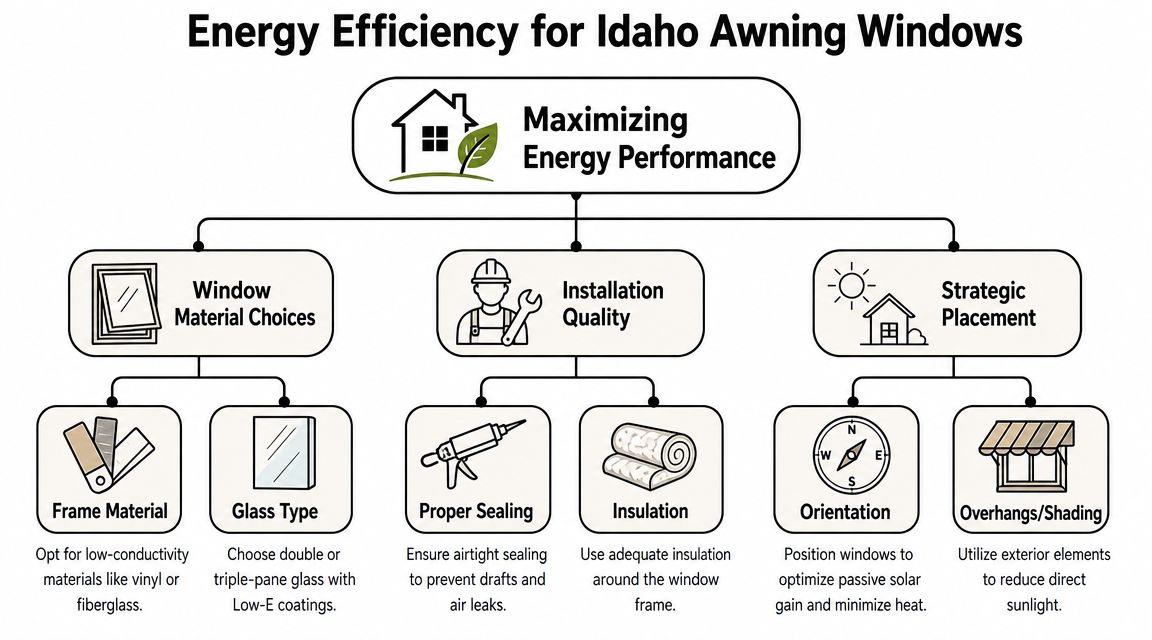
Awning windows can perform well in Idaho, but style alone doesn't lower heating and cooling load. The glass package, frame quality, and installation do the heavy lifting. That's the part many homeowners don't hear early enough.
A top-hinged unit with poor glass is still a poor-performing window. A well-built awning with the right glazing package can be a strong part of an energy-focused replacement plan, especially in homes that deal with cold winter mornings and hot summer afternoons.
What numbers matter in Idaho
For Idaho buyers, the useful specs to ask about are U-factor, SHGC, and air leakage. In plain terms:
- U-factor tells you how readily the window lets heat move through it. Lower is better.
- SHGC tells you how much solar heat the glass lets in. Lower can help reduce unwanted summer heat gain.
- Air leakage matters because drafts don't care how nice the brochure looks.
According to this Idaho energy-efficiency window guide, upgrading from single-pane to ENERGY STAR 7.0 certified triple-pane windows can reduce annual heating and cooling costs by 12% to 33%. The same source says a high-performance Idaho window should have a U-factor of 0.30 or lower and an SHGC of 0.40 or lower.
A separate Idaho-focused performance page notes that buyers should also look for low air leakage, with one cited target of 0.3 or less for high-efficiency results, along with low U-factor and ENERGY STAR-certified configurations. That guidance appears in Pure Energy Window's awning window overview.
Glass package first, style second
Low-E coatings, argon or krypton gas fills, and insulated frames aren't buzzwords. They affect daily comfort. In winter, they help slow heat loss. In summer, they help reduce heat gain through the glass.
That doesn't mean every Idaho home needs the same package. In some homes, double-pane with a strong Low-E package makes sense. In others, especially older homes replacing single-pane units, triple-pane is worth serious consideration.
If you're shopping materials, homeowners often compare frame options with broader replacement choices like vinyl replacement windows in Idaho. The main thing is to keep the conversation grounded in performance, not just appearance.
A few buying questions cut through the noise:
- What's the actual U-factor for this exact configuration?
- What's the SHGC, and is it right for this side of the house?
- What's the air leakage rating?
- Is the listed performance for the whole unit, not just center-of-glass?
A good awning window in Idaho should feel uneventful in winter. No cold wash down the glass, no obvious draft at the corners, no need to stuff a towel at the stool.
How Awning Windows Handle Idaho Weather
Idaho homeowners don't ask abstract questions. They ask whether a window will whistle in a January wind, leak during a blowing storm, or become a maintenance problem after a few freeze-thaw cycles. That's the right way to look at awning windows.
The core strength of this style is how the sash closes. According to this awning window product overview, modern awning windows are designed to be highly energy-efficient because the single sash presses tightly into the frame, creating fewer opportunities for air leakage. In a place with major temperature swings, that design advantage matters.
Rain, wind, and winter air leakage
For rain, awning windows are usually more forgiving than many homeowners expect. The top hinge and outward bottom opening help shield the opening. That's useful in spring and summer when you want air movement without babysitting the weather.
Wind is more nuanced. In a sheltered bathroom opening, an awning window can be a strong fit. In an exposed wall that gets hit hard by weather, the quality of the unit and the installation become more important than the style label. A square frame, proper flashing, and a clean seal package matter more than sales language.
What I look for in real projects is simple:
- Hardware that pulls the sash in firmly
- A frame that doesn't rack under seasonal movement
- A sill and drainage design that moves water out
- An installation that doesn't leave the perimeter doing all the work
Snow load and main-room expectations
Homeowners also ask about snow. In most Boise-area and Treasure Valley applications, the bigger issue isn't roof-like snow load sitting on the glass. It's how the unit handles cold weather, moisture, and repeated opening-and-closing over time. If an awning window is tucked under an eave or installed in a protected wall area, that helps. If it's exposed, the details matter more.
For main living rooms, I'd be careful. Awning windows can work as part of a larger combination, especially under or beside fixed glass. But if your goal is a big open feel, broad view, and a lot of ventilation from one main opening, an awning usually isn't the first choice. It's better as an accent vent than as the primary operating window in a major living space.
Use awning windows where their strengths matter. Don't force them into a role better handled by a larger operable style.
That distinction saves homeowners from disappointment. A window can be a great product and still be the wrong product for the room.
Smart Placement and Installation in Your Home
Placement is where good window planning either comes together or goes sideways. Awning windows Idaho homeowners usually end up happiest with them when the room has a clear ventilation need, a smaller opening, or a hard-to-reach location.
Best places to use them
This style is a natural fit in a few parts of the house.
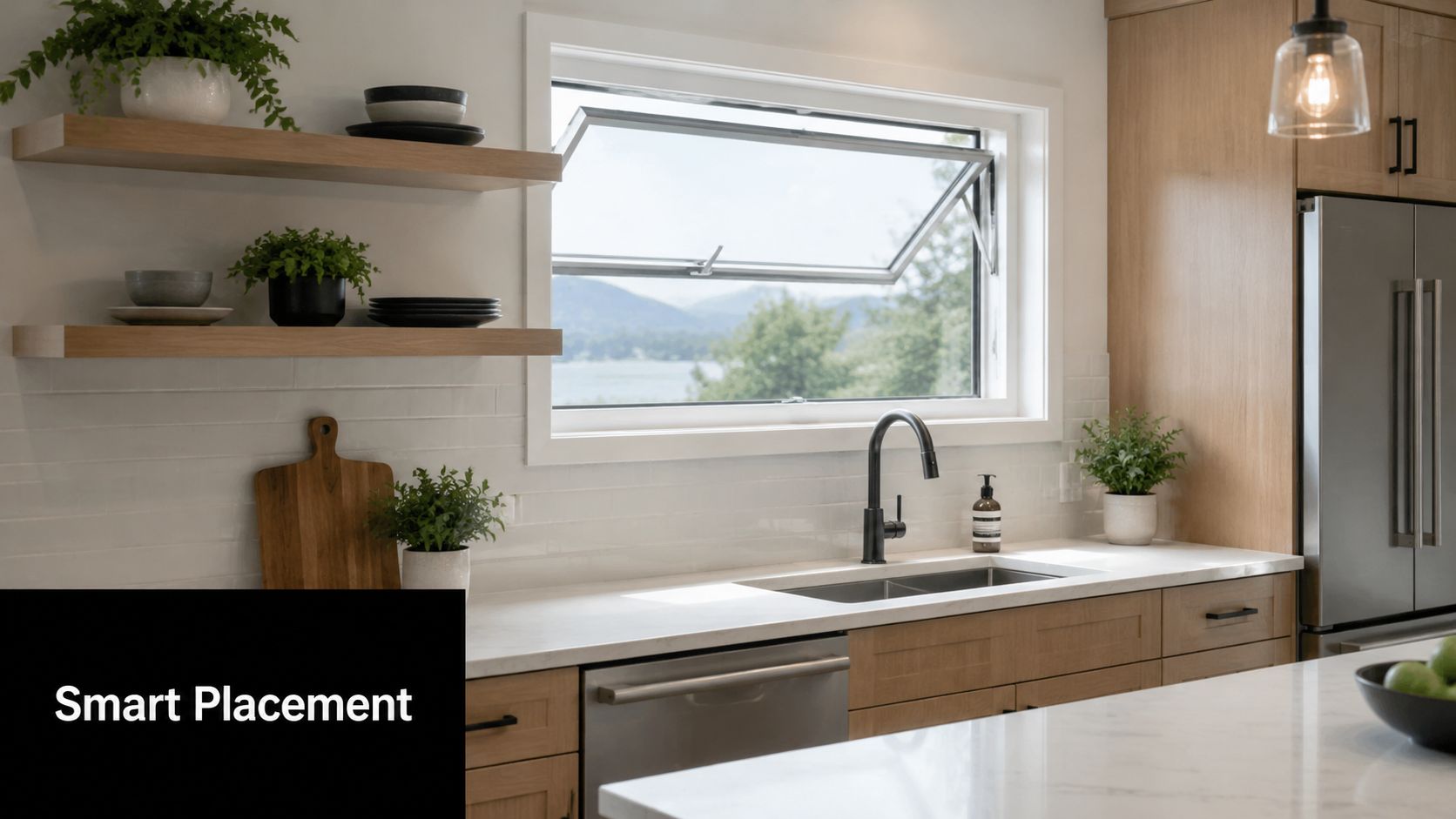
- Above a kitchen sink: The crank operation is useful when the counter is in the way and you still want airflow while cooking.
- Bathrooms: You get ventilation and privacy without needing a big operable opening at eye level.
- Basements: Compact sizing helps in shorter wall sections.
- Higher wall placements: They can bring in air where a larger swinging sash would be awkward.
That compact, higher-wall use isn't accidental. As noted in this outward-opening awning window guide, because awning windows swing outward, they can create an obstruction, so placement near walkways, patios, and driveways needs careful thought. The same source notes that's one reason they're often smaller and placed higher on walls.
Where not to install them
This is the part too many homeowners don't hear soon enough. There are places where awning windows don't make sense.
Avoid them or reconsider them in these situations:
- Near tight exterior walkways: The sash can project into usable space.
- Beside patios or decks with regular foot traffic: Open windows and moving people don't mix well.
- Where emergency egress is a concern: Bedroom escape requirements often call for a different window strategy.
- In furniture-heavy rooms: If the room needs a large accessible opening, an awning can feel undersized and inconvenient.
- Low wall locations facing driveways or active side yards: The swing path can become a practical nuisance.
A clean installation matters just as much as choosing the right opening. The rough opening has to be prepared correctly, the unit has to be set square, and the exterior details have to manage water instead of trapping it. A nice-looking interior trim job won't fix a poor install.
Finding a Certified Window Installer in the Boise Area
The right installer saves you from the problems homeowners tend to blame on the window itself. Drafts at the frame, sash binding, water intrusion, and premature hardware wear often come back to measurement, fit, shimming, sealing, and finish work.
When you're vetting a Boise-area installer, look for a few things:
- Factory training: The crew should know the product line they're installing.
- Local experience: Treasure Valley homes have their own layout patterns, weather exposure, and retrofit quirks.
- Clear labor warranty coverage: Product-only protection isn't enough.
- A room-by-room recommendation process: Good installers don't push the same style into every opening.
- Recent local project history: Boise, Meridian, Eagle, Nampa, and nearby cities all have different home ages and construction details.
If you're replacing windows in the Boise area, it's worth reviewing what a full-service window replacement process in Boise, Idaho should look like before signing anything. One local option is C & C Windows & Doors, a Boise-based installer that offers factory-trained replacement work, custom measurement, and energy-focused window packages for Treasure Valley homes.
The best decision usually comes from an in-home evaluation, not from comparing product photos online.
If you're sorting through awning windows for an Idaho home and want practical guidance on where they make sense, where they don't, and what to look for in the actual window package, talk with C & C Windows & Doors. They provide in-home consultations for Treasure Valley homeowners who want the right fit for the room, the climate, and the way the home is used every day.