
If you're in Boise and you've started noticing one room that never stays comfortable, a window that sticks every season, or glass that looks foggy no matter how often you clean it, you're probably not dealing with a small nuisance anymore. In this valley, windows take a beating from hot summer sun, winter cold, wind, and repeated freeze-thaw cycles. What works fine in a mild climate often doesn't hold up here.
That’s why window replacement boise idaho isn’t just about curb appeal or picking a nicer frame color. It’s about choosing a window system that can handle Idaho weather without warping, leaking air, or losing its seal a few years down the road. The right choice lowers comfort complaints first. The energy savings and resale benefits come after that.
Table of Contents
- Why Boise Homes Need More Than Just Standard Windows
- How Much Does Window Replacement Cost in Boise
- What Window Technologies Best Handle Idaho's Climate
- What Are Boise's Energy Code Requirements for Windows
- Should I Repair My Windows or Replace Them
- What to Expect During the Window Replacement Process
- How to Choose a Reputable Window Installer in Boise
Why Boise Homes Need More Than Just Standard Windows
A lot of Boise homeowners call about drafts first. Then the conversation usually turns into something bigger. The bedroom over the garage is too hot in summer. The living room windows sweat in winter. One sash drags. Another won’t lock cleanly. Those problems rarely show up one at a time.

Boise homes need more than standard builder-grade windows because the climate asks more from them. Summer heat pushes materials to expand. Winter cold pulls them back. Wind finds weak seals fast. If the frame and sash aren’t built for those swings, the unit starts losing the tight fit it had when it was new.
Idaho weather exposes weak windows fast
The biggest mistake I see in local homes is assuming any “energy-efficient” label means the window is ready for Idaho. It doesn't. A window can look good in a showroom and still struggle once it faces a full season of sun on one side of the house and freezing overnight temperatures a few months later.
That’s especially true on older homes and remodels where the original openings aren’t perfectly square anymore. In those homes, the difference between a decent result and a lasting one comes down to frame stability, seal quality, drainage design, and careful installation.
Standard windows often fail in Boise for mechanical reasons, not just cosmetic ones. They lose shape, lose seal, and then lose comfort.
Historic homes make this even more obvious. If you’ve looked at historic home window upgrade examples in Boise, you can see how much window performance affects both appearance and daily livability when the original structure has character but the old units no longer do their job.
Comfort is usually the first sign
Most homeowners start shopping because the house feels off. One room is noisy. Another has a constant chill. Afternoon sun turns the west side into a different climate zone. Those are practical comfort signals, not small annoyances.
A good replacement window for Boise should do three things well:
- Hold its shape through seasonal swings: If the sash shifts, everything else starts going wrong.
- Control heat movement: Not just in January, but during intense summer exposure too.
- Stay sealed over time: A window that performs well only when it's new isn't a good value.
That’s the lens worth using for every decision that follows. Price matters. Style matters. But in Boise, climate resilience is what separates a short-term improvement from a lasting upgrade.
How Much Does Window Replacement Cost in Boise
A Boise homeowner usually calls after the first real cold snap or after a week of triple-digit heat, when one room suddenly feels harder to live in than the rest of the house. The first question is fair. What does replacement cost here?
For a standard replacement project in Boise, the price usually falls into a broad middle range, then moves up or down based on the window type, frame material, glass package, and how much correction the opening needs. National cost guidance from Modernize's window replacement cost overview is useful for setting expectations, but local pricing often shifts once an installer sees the condition of the existing frame and how square the opening still is.
What drives the price in Boise
In the field, I see five cost drivers matter most:
- Window size and style: A basic vinyl single-hung costs less than a larger slider, picture window, or specialty shape.
- Installation method: Insert replacements usually cost less than full-frame work, but they are not the right choice for every opening.
- Frame and sash condition: If there is moisture damage, movement, or old trim issues, labor goes up because the installer has to correct the opening before the new unit goes in.
- Glass package: Upgraded Low-E coatings, better spacer systems, and stronger insulated glass units raise the price, but they also do more to handle Boise heat and winter cold.
- Exterior and interior finish work: Trim repairs, paint touch-up, insulation, disposal, and site protection all affect the final quote.
That last part gets missed a lot.
A cheap bid can look fine on paper and still leave out insulation around the frame, exterior sealing details, disposal, or interior finish work. In Boise, those details matter because a window that is slightly out of alignment or poorly sealed is more likely to develop air leakage and seal stress as the seasons swing from dry summer heat to freezing winter mornings.
Typical budget ranges homeowners actually see
Many Boise projects land in one of these buckets:
| Project type | Typical cost pattern |
|---|---|
| Basic insert replacement | Lower initial price if the existing frame is solid and square |
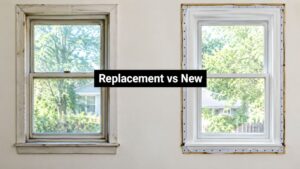
| Full-frame replacement | Higher cost, but often the better long-term fix when the old frame is failing |
| Premium climate-focused upgrade | Higher upfront cost for stronger frame construction and better glass performance |
The right comparison is scope, not just price. If one contractor is quoting insert replacements and another is quoting full-frame replacement with trim correction, those are different jobs.
If you want to compare options by material and operating style, it helps to review window products built for replacement projects in Boise homes before you start lining up bids.
Why the lowest bid often becomes the expensive one
Boise homes put windows through real expansion and contraction cycles. That means a low-cost unit with weaker frame construction or a basic insulated glass package may look acceptable at install day and still give you trouble later. I see that show up as sash drag, failed seals, condensation between panes, and frames that no longer sit quite right after a few seasons.
That is why replacement cost should be judged over time, not only at signing.
A higher quote does not automatically mean better work. But if that quote includes better structural stability, better sealing methods, and the right installation approach for the opening, it can be the better value for an Idaho house.
If you’re budgeting for window replacement in Boise, Idaho, start with the type of work your home needs, then adjust for style, material, and long-term climate durability.
What Window Technologies Best Handle Idaho's Climate
Step into a Boise home in January and stand next to a builder-grade window. Then do the same in late July on the west side of the house. The problem is not just energy loss. Idaho windows have to survive repeated expansion, contraction, intense sun, winter cold, and dry conditions that expose weak frames and marginal seals.
Glass package matters more than most homeowners think
Homeowners often start with color, grille pattern, or whether they want a slider or double-hung. Daily comfort is usually decided by the glass package.
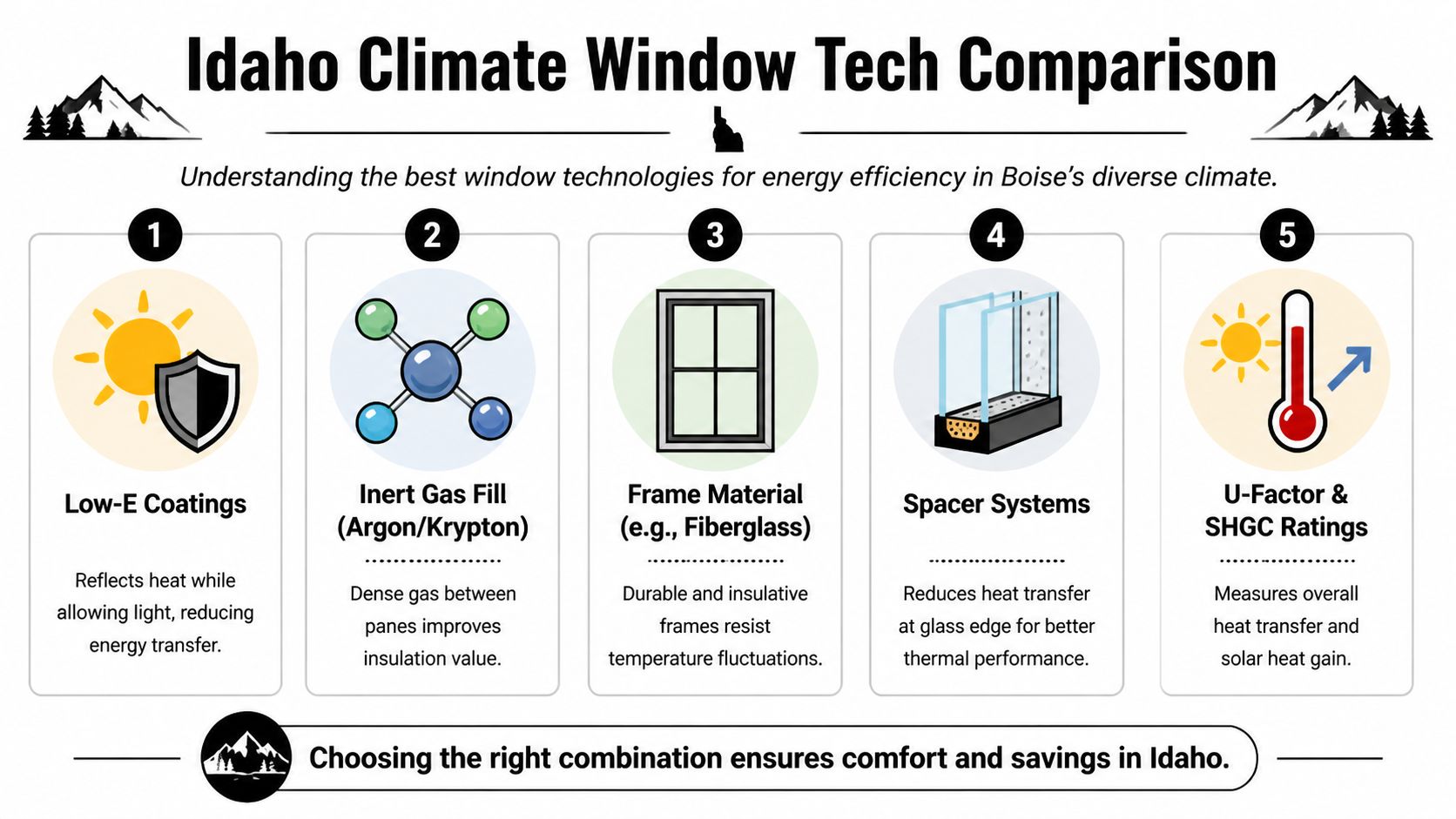
Low-E coating reflects part of the sun’s heat and slows indoor heat loss during winter. Argon gas fill reduces heat transfer between the panes. In Boise, those two features usually belong together because the house has to handle both cold mornings and strong summer sun.
Orientation matters too. South and west exposures take more solar load, so the wrong glass can leave a room bright but uncomfortable. A better glass package helps keep those rooms usable without forcing the HVAC system to keep correcting for the window.
Frame strength decides whether performance lasts
This is the part many window articles miss. Good glass helps on day one. A stable frame is what keeps that performance in place after years of Idaho weather.
Boise homes go through real temperature swings, and that movement stresses the sash, corners, and insulated glass seal. When a frame expands too much in summer or stiffens up in winter, small alignment problems start showing up. The sash drags. The lock gets harder to line up. Air starts slipping through the weatherstripping. In worse cases, the insulated glass seal fails and you get haze or moisture between panes.
That is why frame material and sash construction matter so much in this market. Vinyl can perform well, but thinner vinyl units tend to move more. Composite-reinforced designs and better-built fiberglass or premium vinyl frames usually hold their shape better over time. For homeowners comparing options, it helps to review replacement window styles and performance options for Idaho homes with frame construction in mind, not just appearance.
If the frame will not stay square, the rest of the window starts losing ground with it.
Window Performance Features for Boise Homes
| Feature | What It Is | Primary Boise Benefit |
|---|---|---|
| Low-E coating | Microscopically thin coating on the glass | Reduces winter heat loss and helps limit summer heat gain |
| Argon gas fill | Insulating gas sealed between panes | Slows heat transfer better than air |
| Composite-reinforced sash | Strengthened operating portion of the window | Helps the window hold alignment through seasonal temperature swings |
| Triple-pane glass | Three panes instead of two | Improves comfort in colder rooms and can reduce outside noise |
| True sloped sill | Drainage-focused sill design | Moves water away from the opening during rain and snow events |
What works and what usually disappoints
The best Boise window setups usually have four things in common. The frame stays stable. The glass package is selected for the exposure, not treated like a generic upgrade. The sill and drainage path are designed to shed water cleanly. The unit comes with NFRC labels so you can compare real performance numbers.
The weak setups usually fail in predictable ways. Thin frames shift. Basic glass packages leave hot and cold spots near the window. Insert replacements get used in openings where the old frame is already out of shape, so the new unit inherits the same problems.
Triple-pane glass can be worth it in the right house, but not every home needs it. I recommend looking hardest at rooms where people sit near the glass, north-facing elevations, and homes exposed to wind. In other rooms, a well-built dual-pane window with the right Low-E coating and a stable sash can be the better value.
In Boise, the best window technology is the combination that keeps its shape, protects the seal, and stays weather-tight after years of heat, cold, and sun. That is climate resilience. And it is what separates a window that looks good at install from one that still performs five or ten Idaho seasons later.
What Are Boise's Energy Code Requirements for Windows
January cold settles in, the furnace keeps cycling, and the room by the glass still feels chilly. In Boise, that usually means the window is doing the minimum, not performing well for our climate. Code sets the legal baseline, but local weather is harder on windows than the baseline suggests.
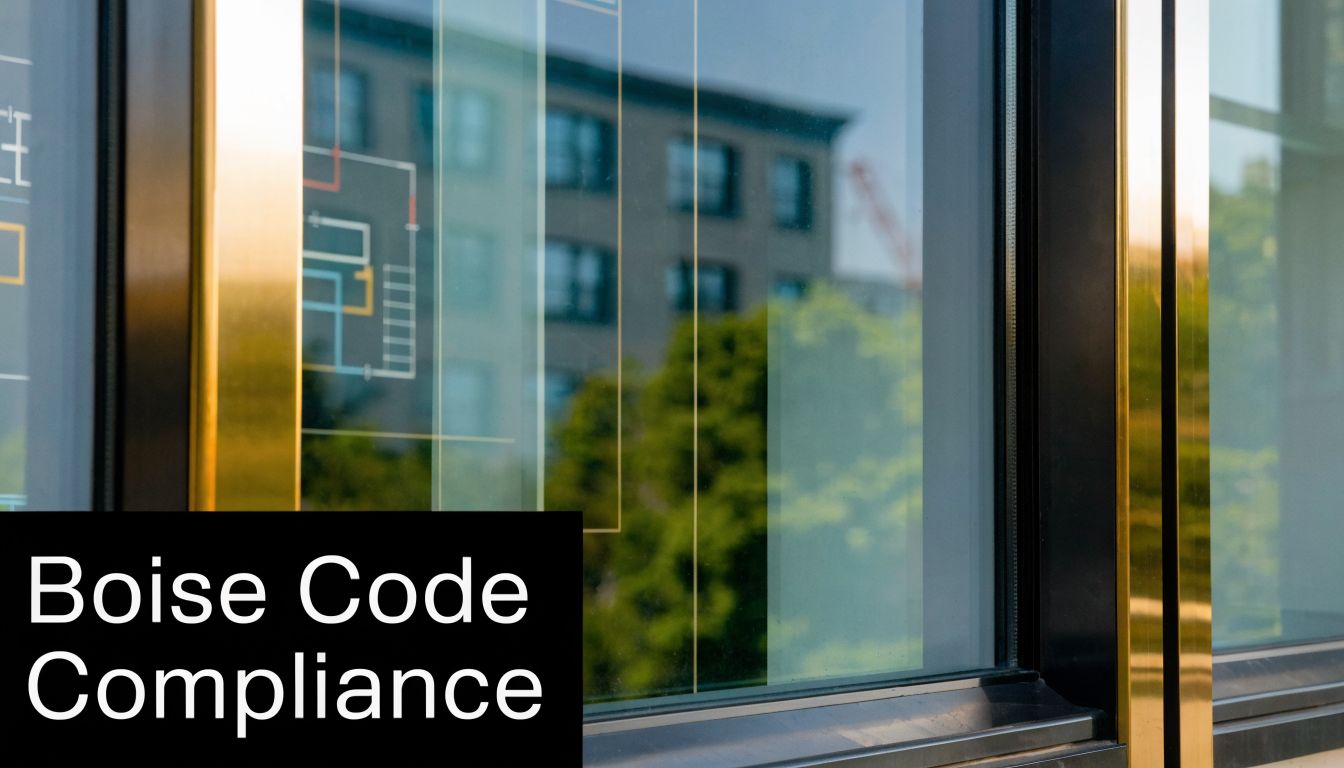
Boise is in IECC Climate Zone 5. For replacement windows, that means the common targets are a maximum U-factor of 0.30 and a maximum SHGC of 0.40 under the 2018 energy code framework used by Idaho jurisdictions, as outlined in the International Energy Conservation Code climate zone map and fenestration tables from the ICC.
Understanding the Code Numbers
Homeowners do not need to memorize the code book. They do need to know what the labels mean before they sign a contract.
- U-factor measures how much heat moves through the whole window. Lower numbers hold interior heat better in winter.
- SHGC, or Solar Heat Gain Coefficient, measures how much solar heat comes through the glass. Lower numbers help control overheating on sunny exposures.
In Boise, both matter because our windows deal with cold snaps, summer afternoon sun, and big seasonal swings. A window can pass code and still be a poor fit for a west-facing family room or a windy north side.
Code compliance is the floor
I tell homeowners to treat code as the starting point, not the finish line. The code is written to set minimum efficiency. It does not account for the rooms in your house that get punished by glare, cold downdrafts, or repeated expansion and contraction.
That last point gets missed in a lot of window advice. In Idaho, strong sun followed by freezing temperatures puts stress on frames, spacers, and seals. If the unit barely meets the number on paper but uses a less stable frame or a weaker glass package, it may satisfy inspection and still be more prone to seal failure or shape changes over time.
What to ask for before you buy
Ask for the NFRC label on the exact window being quoted. That label gives you the tested U-factor and SHGC for that specific product, not a general sales claim.
Also ask one practical question: how does this window hold up after years of Boise heat, cold, and direct sun? A good answer should cover frame material stability, glass package, and installation method. If the conversation stays vague and never gets to ratings or durability, keep shopping.
For many Boise homes, the best choice is a window that beats code by a useful margin and is built to stay square and weather-tight through repeated temperature swings. That is how you get compliance, comfort, and better long-term resilience from the same project.
Should I Repair My Windows or Replace Them
Not every bad window needs full replacement. Some do. The hard part for homeowners is knowing which problem belongs in which category.
A good rule is to separate glass-only issues, hardware issues, and whole-window performance issues. If the problem is isolated and the frame is still solid, repair can make sense. If the frame is failing, the seal is gone, or the window no longer operates correctly as a unit, replacement is usually the better long-term move.
When repair still makes sense
Repair is often reasonable when the core structure of the window is still in good shape.
- Single cracked pane in an otherwise sound unit: If the frame is square and the seal system is intact, targeted glass repair may solve it.
- Worn hardware or balance problems: Some sticking, drifting, or locking issues come from parts that can be serviced.
- Minor exterior trim or caulk deterioration: If water hasn’t damaged the opening and the window itself is still performing, maintenance may buy more time.
These are usually the situations where a repair contractor can restore function without asking you to replace the whole assembly.
When replacement is the better call
Replacement becomes the smart option when the problem points to system failure, not a small defect.
| Repair may work | Replacement usually makes more sense |
|---|---|
| One broken pane | Fog between panes from seal failure |
| Minor hardware issue | Frame movement or visible warping |
| Isolated trim or caulk problem | Chronic drafts and recurring comfort complaints |
| Window still opens and locks properly | Sash won't align, lock, or stay weather-tight |
Foggy insulated glass is a common turning point. Once moisture is trapped between panes, the seal has failed. At that point, the unit isn’t performing as designed anymore.
Another major clue is repeated seasonal trouble. If the window works in one season and fights you in another, the frame may be moving with temperature changes. That’s especially common in older Boise units that have been through years of expansion and contraction.
Repair makes sense when you're fixing a part. Replacement makes sense when the window has stopped functioning as a system.
If you’re planning to sell, replacement also tends to make more sense than patchwork repairs on visibly aging windows. Buyers notice old seals, rough operation, and inconsistent appearance right away. Even if the repair is technically possible, it may not be the wise use of money if the whole unit is near the end of its useful life.
What to Expect During the Window Replacement Process
Most homeowners worry about two things before a window project starts. How disruptive will it be, and what will the house look like when the crew leaves? A professional replacement process should answer both concerns before installation day arrives.
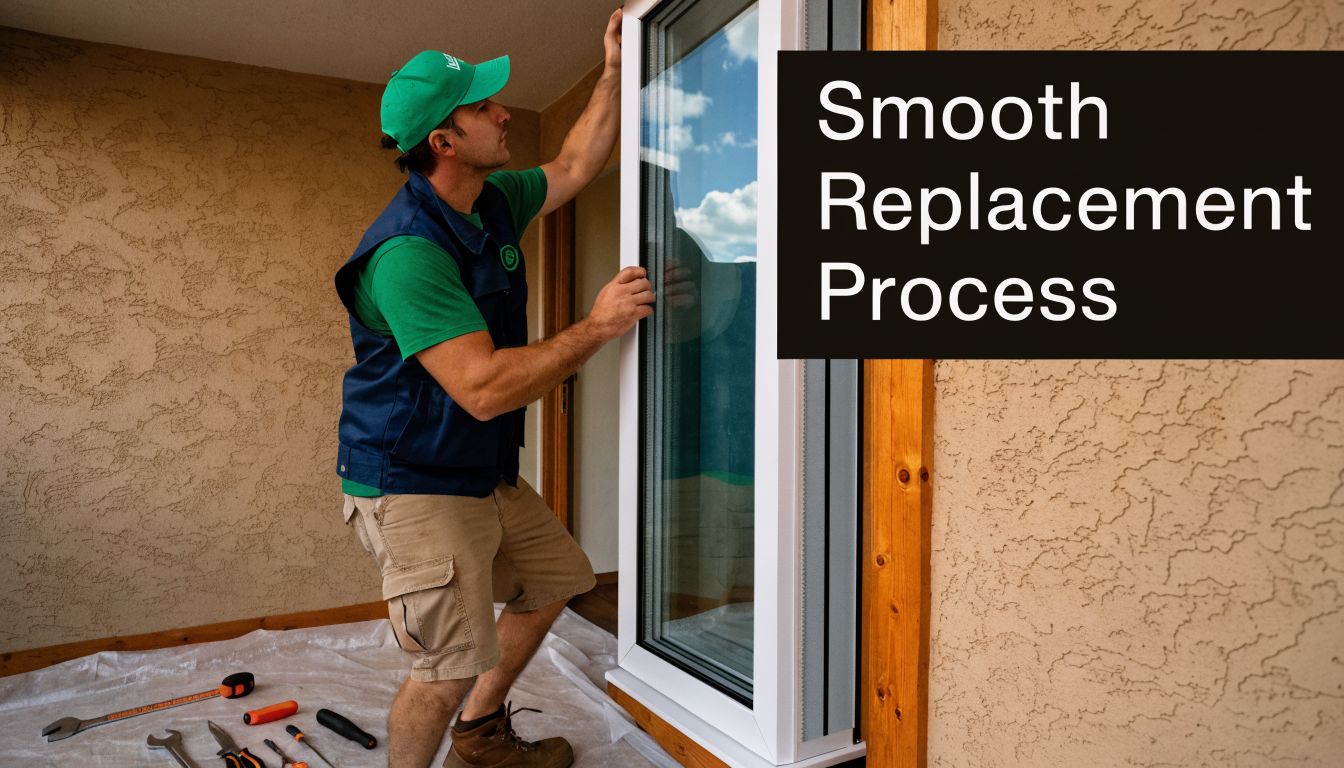
Before installation day
It starts with an in-home visit. The installer checks the existing windows, looks for signs of frame movement or water issues, confirms which openings are good candidates for insert replacement and which may need full-frame work, and takes precise measurements.
This is the stage where good contractors earn their keep. They’re not just counting windows. They’re checking for the reasons old windows failed in the first place.
A solid pre-install process usually includes:
- Room-by-room review: Which spaces have the worst comfort issues, noise, or sun exposure.
- Measurement of each opening: Older Boise homes often vary more than homeowners expect.
- Discussion of operation styles: Double-hung, casement, picture, and sliding windows all solve different problems.
- Scope clarification: Interior trim, exterior finish, disposal, and cleanup should all be addressed up front.
If you want a realistic sense of how finished projects come together, it helps to browse recent Boise-area window replacement projects and compare homes similar to yours.
What happens during installation
On installation day, the crew should protect floors, nearby furnishings, and work areas before the first unit comes out. Then they remove the old window carefully, inspect the opening, make any needed corrections, install the new unit level and square, insulate and seal the perimeter, and complete interior and exterior finishing.
The homeowner experience should feel organized, not chaotic. You should know which rooms are being worked on, what access the crew needs, and what the plan is if they uncover hidden damage around an opening.
A clean install matters almost as much as the window itself. Good crews protect the home, keep the opening weather-tight, and don't leave the final adjustment to chance.
After installation, there should be a walkthrough. The crew should show you how each window operates, how locks engage, and what maintenance is worth doing over time. They should also leave the space clean enough that you’re not dealing with nails, scraps, stickers, and dust after they drive away.
The best window projects feel boring in the best possible way. Clear schedule. Careful removal. Precise installation. Good cleanup. No surprises.
How to Choose a Reputable Window Installer in Boise
A Boise homeowner usually notices the installer problem after the first hard season. Summer heat hits the west side of the house, winter moisture finds a small gap, and a window that looked fine in the bid stage starts showing the same trouble you were trying to get rid of in the first place. Stiff operation. Drafts. Early seal failure. Sometimes frame movement.
That is why installer selection matters so much in Idaho. Our weather exposes weak measuring, poor shimming, rushed insulation, and sloppy exterior sealing faster than milder climates do. If a company talks only about brands and pricing, that is a warning sign. The primary job is fitting the right window to the condition of the opening and the exposure of the home.
What to check before you sign anything
Look for an installer who can inspect the house, diagnose the opening, and explain the trade-offs clearly. Older Boise homes often have settled or out-of-square openings. Newer homes can still have harsh UV exposure, large temperature swings, and sides of the house that take wind-driven weather year after year. A good contractor should explain why one room may need a different approach than another.
Use this checklist when comparing companies:
- Local experience: They should understand how freeze-thaw cycles, dry summer heat, and strong sun affect seals, frames, and expansion.
- Clear scope of work: The quote should state whether the job is insert replacement or full-frame replacement, and why that method fits the opening.
- Product fluency: They should explain frame materials, glass packages, spacers, and operation styles in plain language, not sales jargon.
- Installation standards: Ask how they handle flashing, insulation at the perimeter, shimming, fastening, drainage, and final adjustment.
- Warranty clarity: You should know what the manufacturer covers, what the installer covers, and who handles service if something goes wrong.
Pay close attention to the answers.
A reputable installer will tell you where a lower-cost option is perfectly reasonable and where it is likely to create trouble later. In Boise, that often comes down to whether the existing frame is stable enough to keep, whether sun exposure calls for a stronger frame material, and whether the current opening shows signs of moisture damage or movement. Those details affect long-term performance more than a polished sales pitch.
Why installation quality affects resale
Good installation supports resale because buyers notice windows that operate smoothly, close tightly, and show no signs of moisture trouble or patchwork trim work. Appraisers and inspectors may not give a line-item premium for every upgrade, but poor workmanship can raise questions fast.
For a broader view of resale, the annual Cost vs. Value report published by Remodeling is one of the more widely cited sources homeowners and real estate professionals use to compare replacement project payback. It does not mean every Boise home will see the same return, but it does reinforce a practical point. Buyers respond better to window work that looks durable and finished, not rushed.
That is where replacement method matters. An insert can be a smart choice when the old frame is sound, square, and dry. A full-frame replacement often makes more sense when the existing frame has movement, rot, failed exterior trim integration, or old sealing details that are already breaking down. In those cases, covering the problem instead of correcting it can leave you with continued air leakage, future water entry, or a new window set into a weak shell.
Choose the contractor who solves the problem, explains the trade-offs, and is willing to say no to the wrong shortcut.
If you want expert help from a local team that understands Idaho climate performance, C & C Windows & Doors offers free in-home consultations, custom measurements, and meticulous replacement window installation across Boise and the Treasure Valley. If your current windows are drafty, warped, fogged, or underperforming, reach out for a no-pressure estimate and get clear guidance on the right fix for your home.