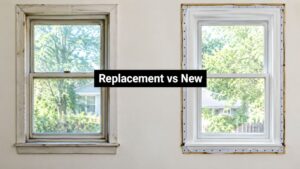

If you're in Kuna and one room in the house never feels right, too hot in summer, drafty in winter, louder than it should be, your windows are usually part of the problem. A lot of homeowners wait until a seal fails or a sash sticks. By then, you're not choosing from a position of strength. You're reacting.
A good Window contractor Kuna ID search shouldn't end with the first ad, the lowest bid, or the nicest brochure. In Kuna, the right choice depends on whether the installer understands Treasure Valley weather swings, current replacement standards, proper flashing, and how to fit a modern unit into an older opening without creating water, air, or noise problems later.
Table of Contents
- Why Is Now the Right Time to Replace Your Kuna Home's Windows
- Where to Find Trustworthy Local Window Installers
- What Critical Questions Should You Ask Every Contractor
- How Do You Compare Window Replacement Quotes Accurately
- What Should Happen on Installation Day
- How to Secure Your Investment with Warranties and Financing
Why Is Now the Right Time to Replace Your Kuna Home's Windows
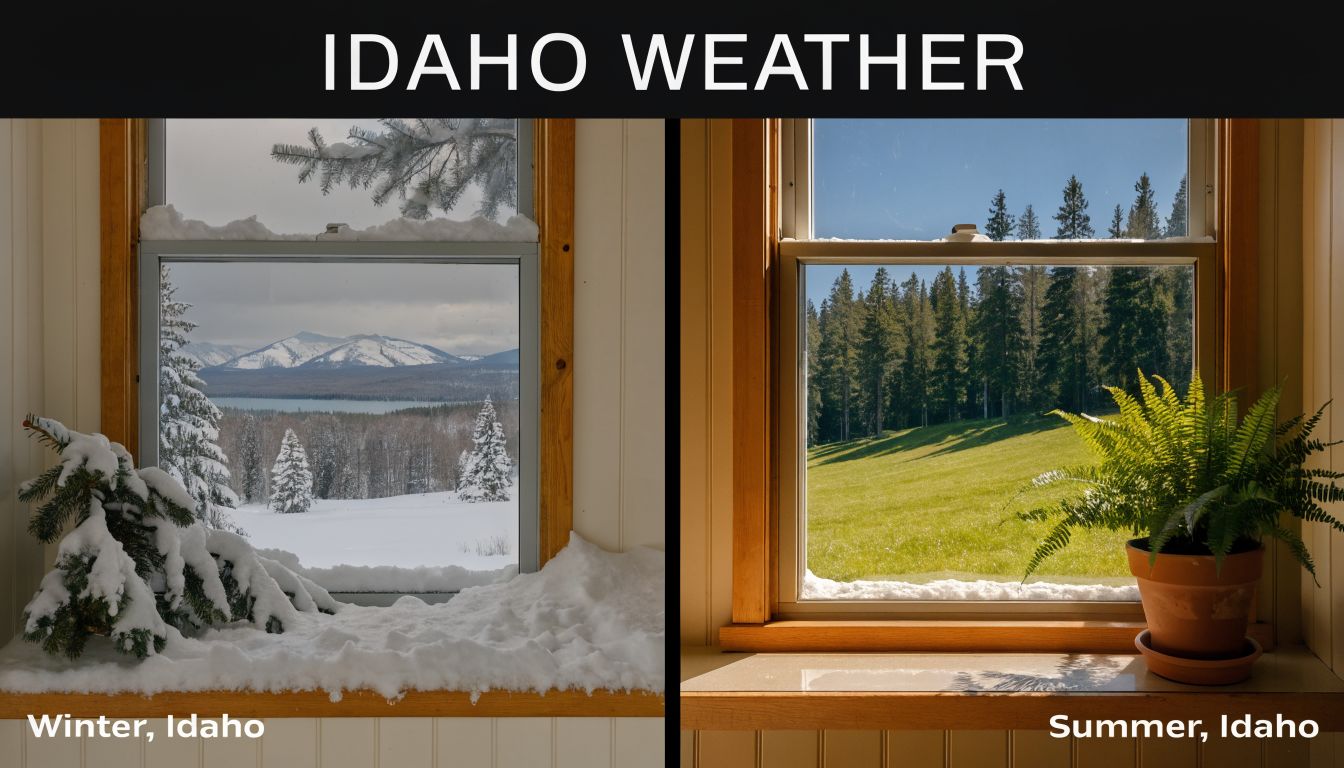
The usual Kuna pattern is easy to recognize. Summer hits, the west-facing rooms heat up fast, and the A/C runs longer than it should. Winter comes next, and the same house has cold glass, edge drafts, and rooms that never quite hold temperature.
Kuna weather punishes weak windows
Old aluminum units, builder-grade vinyl, failed insulated glass, and sloppy retrofit work all show up fast in Idaho's climate. Kuna isn't mild. A window that was "fine" in another region may not be fine here once it deals with hot sun, cold snaps, dust, wind, and freeze-thaw cycles.
What makes now a practical time to act is that replacement isn't just about comfort anymore. Idaho's glass and glazing contractor industry has expanded at an average annual rate of 5.8% from 2021 to 2026, and Ada County saw over 10,000 single-family building permits issued between 2021 and 2024, according to Idaho glass and glazing industry data from IBISWorld. That growth tracks with what homeowners already feel on the ground. More homes, more remodels, and more attention on efficiency.
A stronger replacement window can help solve several problems at once:
- Heat control: Low-E glass and better frame design help reduce solar gain in rooms that cook in the afternoon.
- Cold-weather comfort: Better air sealing matters just as much as the glass package when January hits.
- Operation: New units should lock, tilt, slide, or crank without a fight.
- Appearance: Tired windows age a house from the street faster than most owners realize.
Practical rule: If you're noticing temperature imbalance, visible seal failure, or hard operation in several openings, you're usually past the "repair one and wait" stage.
Replacement is also a resale move
In Kuna, replacement windows often make the house feel cared for before a buyer reads a single line of the listing. Cleaner sightlines, matching finishes, and tighter installation all improve curb appeal. Buyers notice that.
The bigger point is timing. In a growing market, visible upgrades that affect comfort and maintenance usually carry more weight than cosmetic touches that look good for photos but don't fix everyday living. Windows sit right in that sweet spot. They change how the home looks, sounds, and performs.
That doesn't mean every house needs the most expensive package on the market. It does mean waiting too long can get expensive in the wrong way. Once moisture intrusion, trim damage, or repeated seal failure enters the picture, the project often expands beyond the glass and frame.
Where to Find Trustworthy Local Window Installers
A lot of bad hiring decisions start the same way. The homeowner searches "Window contractor Kuna ID," clicks the top sponsored result, fills out a form, and gets passed around to whoever bought the lead. That process can produce a decent installer, but it can also produce a polished salesperson with little local field depth.
Start offline before you start online
The best shortlist usually starts with homes, not ads. Ask neighbors in Kuna subdivisions similar to yours who replaced windows recently. Ask what the crew did when they found a rough opening issue. Ask whether cleanup was solid. Ask whether the final invoice matched the proposal.
Those answers tell you more than star ratings do.
A contractor who works in Kuna regularly should already understand common Treasure Valley conditions like sun exposure on west elevations, dust, trim wear, and the need for proper drainage details. They should also be comfortable discussing replacement options for older openings versus full tear-out work.
The contractor you want doesn't just talk about glass. They talk about opening condition, water management, and how the new unit ties into the wall.
Build a shortlist the smart way
Once you have a few names, verify them like you're hiring someone to cut into your exterior envelope, because that's exactly what you're doing.
Use this checklist:
- Confirm Idaho licensing and insurance: Ask for current documentation, not verbal reassurance.
- Ask who does the actual installation: Some companies sell the job and subcontract the fieldwork to whoever is available.
- Look for local project photos: Not showroom images. Real homes in Kuna or nearby neighborhoods.
- Ask how they handle measurement: Good installers don't guess. They measure carefully and talk through trim, stool, jamb depth, and condition.
- Check whether they understand nearby project types: If you want a broader sense of regional replacement work, this Boise window replacement overview is useful for seeing the kind of project scope and product discussions that serious Treasure Valley installers should be comfortable with.
A trustworthy local installer usually sounds a little less slick and a lot more specific. They can explain why one frame material fits a certain wall exposure better. They can tell you when an insert replacement is appropriate and when it isn't. They don't get irritated when you ask for proof.
One more thing. If every answer circles back to "lowest price," keep moving. Cheap window jobs often look acceptable on day one. The problems show up later when air leaks, water gets where it shouldn't, or hardware starts failing early.
What Critical Questions Should You Ask Every Contractor
A sales rep can sound polished in your living room and still leave you with a drafty install, trim gaps, or a sill that starts taking on water two winters from now. The questions you ask are what expose the difference.
Questions that expose real expertise
Start with direct questions, then pay attention to how specific the answers are. Good contractors do not need to dance around basic job details.
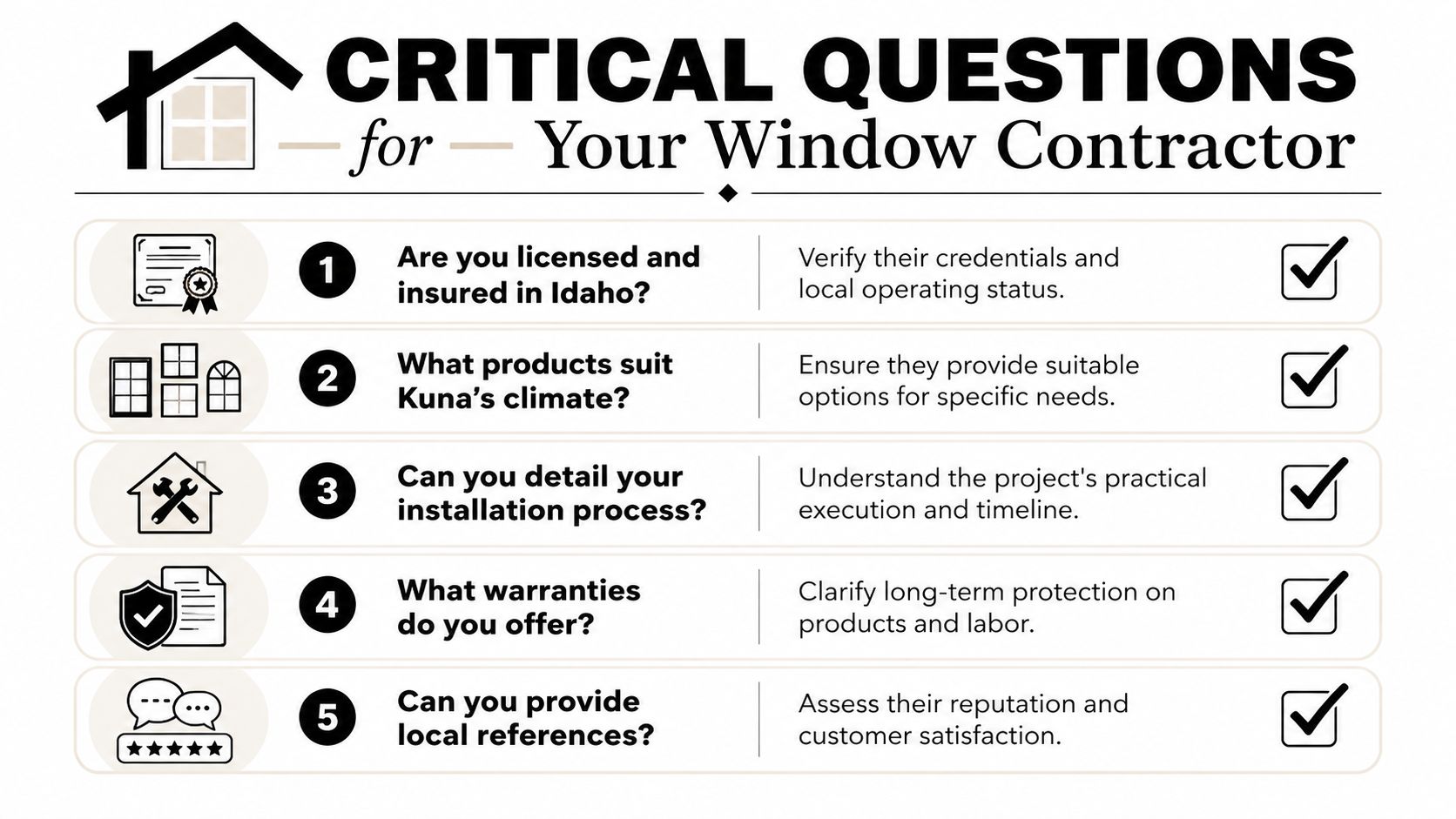
Are you licensed and insured in Idaho?
A qualified contractor answers this fast and can show proof. Ask for current documentation, including liability coverage and workers' comp if they have a crew.What window specs are you recommending for Kuna, and why?
Local knowledge is essential here. Kuna gets hot, dry summers, cold snaps, wind, dust, and plenty of sun exposure on west-facing walls. A contractor should be able to explain U-factor, solar heat gain, air leakage, and whether the window line they sell meets current performance expectations, including ENERGY STAR 7.0 options where appropriate. If they can only repeat a brand pitch, keep asking.Will this be an insert replacement or a full-frame job?
There is no one-size-fits-all answer. Inserts save interior trim and usually cost less, but they only make sense if the existing frame is solid, square, and dry. Full-frame replacement costs more and takes longer, but it is often the right call when there is rot, movement, failed flashing, or bad work from an earlier install.How do you handle water management and flashing?
This question matters in every part of the Treasure Valley. You want to hear how they inspect the sill, how they flash the opening, what sealants they use, and how they leave a path for water to drain out instead of trapping it behind trim or cladding.Who will install the windows?
Ask whether the crew is in-house or subcontracted. Then ask how long that crew has worked together and who is responsible if there is damage, a sizing mistake, or a callback. The company selling the job should not get vague here.How do you measure the opening before ordering?
A careful installer talks about more than width and height. They should mention jamb depth, out-of-square conditions, stool and apron details, drywall returns, exterior trim, and whether the old frame shows signs of movement or moisture.
Answers that should make you pause
Some replies sound confident until you know what to listen for.
"All windows are basically the same."
They are not. Vinyl thickness, spacer system, weatherstripping, glass package, hardware, and frame design all affect how the unit performs in Kuna's temperature swings."We don't need to worry much about code on a replacement job."
Wrong. Replacement work still has performance standards, and the installer should be comfortable discussing current requirements and manufacturer instructions."We install them the same way on every house."
That usually means they're not thinking about the opening in front of them. A 1990s Kuna subdivision home, an older Boise bench property, and a newer stucco exterior do not get approached the same way."We'll sort out the details after you sign."
That is how homeowners end up arguing over trim scope, glass upgrades, disposal, or who is paying for hidden repairs.
Ask one more question than feels polite. A solid contractor will answer it without getting defensive.
The best conversations are plain and detailed. You should hear where an insert makes sense, where full-frame is worth the extra money, and what product changes are smart for sun exposure, wind, or street noise. That is the standard.
How Do You Compare Window Replacement Quotes Accurately
Most homeowners compare quotes by looking at the bottom line first. That's understandable, but it's where a lot of bad decisions begin. Window quotes only mean something if the product, scope, and installation details are actually comparable.
What belongs in a usable quote
A real quote should tell you what you're buying, not just what you're paying.
Look for these items:
- Window type and operation: Double-hung, casement, slider, picture, or another style.
- Frame material: The quote should state what the frame is made of, not hide it behind a brand line.
- Glass package: Low-E, dual-pane, Argon-filled, or upgraded glazing should be clearly written.
- Exterior and interior trim scope: If trim work is excluded, that needs to be obvious.
- Installation method: Insert, pocket, or full-frame replacement changes labor and results.
- Disposal and cleanup: Old units, broken glass, packaging, and debris should be addressed.
- Warranty terms: Product and labor should be separated so you know who stands behind what.
In the Pacific Northwest, replacement windows can yield 68-72% cost recouped upon resale, and Treasure Valley homeowners often report 20-30% energy cost reductions after installing modern dual-pane, Argon-filled units, according to regional Kuna replacement window data from EcoWatch. That doesn't mean every higher quote is better. It means the quote with the best long-term value often isn't the cheapest one on paper.
Comparing Window Quotes Side-by-Side
| Quote Item | Contractor A (Budget Bid) | Contractor B (Value Bid) |
|---|---|---|
| Product description | Basic wording, limited specs | Clear model, operation, and glass details |
| Measurement process | Brief site visit | Detailed field measure and opening review |
| Installation scope | Vague labor line | Specific install method and trim scope |
| Glass package | Unclear on coatings or gas fill | States Low-E and insulated glass details |
| Water management details | Not listed | Flashing and sealing approach explained |
| Cleanup | Not mentioned | Removal and debris cleanup included |
| Warranty | Short or unclear | Product and labor terms written plainly |
| Change-order risk | Higher because details are thin | Lower because scope is defined |
A budget bid usually leaves room for surprises. That's how the low number happens. Missing trim, added rot repair, limited sealant work, or downgraded hardware often show up later.
A stronger quote usually feels boring in a good way. It spells things out. It gives you fewer chances to misunderstand what you're buying.
If two bids are far apart in price, don't ask which one is cheaper. Ask which scope is missing from the cheaper one.
One useful trick is to mark up both quotes line by line. Circle anything vague. Underline anything excluded. Then ask each contractor to answer the same written questions. That forces a cleaner apples-to-apples comparison and exposes who actually knows their scope.
What Should Happen on Installation Day
A good install day should feel organized, not chaotic. You shouldn't have to guess who's in charge, where the old windows are going, or whether the crew is protecting the house.
What a professional crew does first
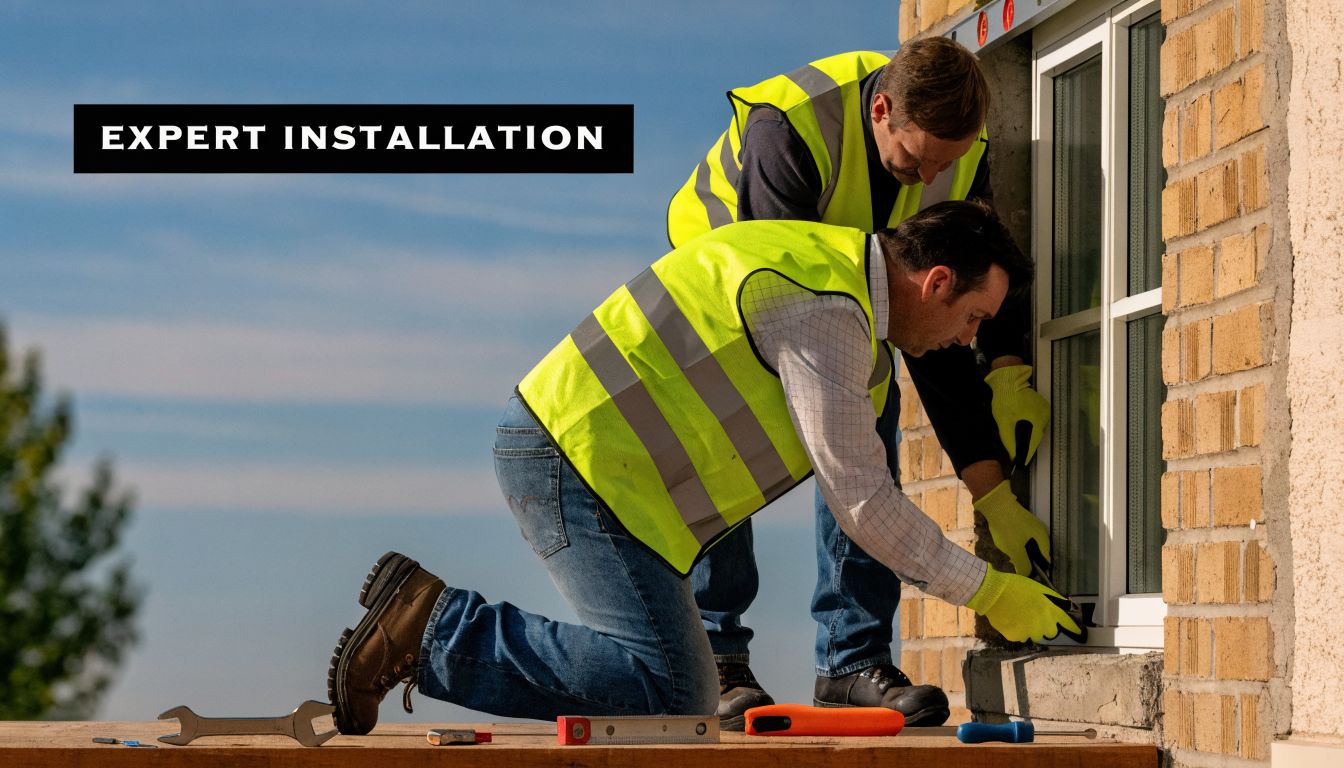
The crew should arrive, confirm the work order, protect floors and nearby furnishings, and stage tools without turning your home into a jobsite mess. Then they remove one unit at a time unless the job plan calls for something different.
Once the old unit is out, the rough opening needs a real inspection. This isn't the part to rush. The installer should check whether the opening is sound, reasonably square, and ready to receive the new unit properly. If something is off, they should tell you before covering it up.
Technical standards matter here. A professional installation should hit a U-factor of 0.30 or lower for Zone 5B, use flashing tape per AAMA 2400, and rely on quality sealing practices that prevent common failure points like gas leakage from poorly sealed panes, as outlined in these installation standards for energy-efficient window work.
That standard shows up in the small details:
- Opening prep: Old sealant, damaged shims, and loose debris get removed.
- Placement: The new window is set, shimmed, and checked so it operates correctly.
- Fastening: The frame is secured without twisting it out of shape.
- Sealing: Gaps are sealed carefully, not buried under a sloppy bead of caulk.
If you want to see the kind of finish level and field execution a polished crew aims for, these replacement window and door project examples are a useful benchmark.
What quality looks like before the crew leaves
By the end of the day, the sash should move cleanly. Locks should engage without forcing them. Sightlines should look even. Interior stops and trim should be neat. Outside, sealant lines should be consistent and purposeful, not smeared everywhere.
A proper walkthrough matters. The lead installer or project manager should show you operation, point out any punch-list items, and explain cure time or follow-up if needed.
Good installation work isn't just about getting the unit in the wall. It's about leaving the opening dry, stable, square, and serviceable for years.
Cleanup is part of the install, not a bonus. Old glass, screws, packaging, and dust should leave with the crew. If the house is left dirty, it usually tells you something about how carefully the rest of the work was handled too.
How to Secure Your Investment with Warranties and Financing
The install isn't really finished until you know what protects you afterward. That's where a lot of homeowners relax too early. They assume "lifetime warranty" means everything is covered forever, and that isn't always true.
Know what the warranty actually covers
There are usually two buckets of protection.
The first is the manufacturer warranty. That often covers parts of the window itself, such as frame components, insulated glass, or hardware, subject to terms and exclusions. The second is the labor warranty from the installing contractor. That's the one that matters when the unit is fine but the install wasn't.
Ask for both in writing. Then read them.
Focus on these points:
- Who handles service calls: You don't want to play middleman between installer and manufacturer.
- What's excluded: Glass breakage, screen damage, finish issues, and labor are often treated differently.
- Whether coverage transfers: This can matter if you sell the home.
- How claims are made: Good companies have a clear process. Weak ones get vague fast.
Financing matters too, but only after the scope and product are right. Monthly payment talk can distract people from checking what they are buying. A cleaner way to think about it is this: first choose the right project, then decide how to pay for it.
If you're reviewing frame and glass options before signing, this replacement window and patio door product overview shows the kind of spec-level information a serious homeowner should expect to see when comparing choices.
Red flags that still catch homeowners
A lot of rip-offs aren't dramatic. They're subtle. The salesperson sounds confident. The quote looks tidy. The details are just thin enough to hurt you later.
Watch for these signs:
- Pressure to sign today: Good work doesn't require panic.
- No clear labor warranty: If they avoid the topic, expect trouble on callbacks.
- Vague product naming: If you can't tell what line or glass package you're getting, slow down.
- No written scope for trim, cleanup, or disposal: That's where surprise charges often live.
- Dismissive answers about Kuna conditions: Local experience should show up in the recommendations.
- Big promises with thin paperwork: Verbal assurances don't fix failed installs.
A solid contractor helps you understand the project without making you feel cornered. That's usually the best sign of all. They know what works. They know what doesn't. And they don't need shortcuts to win the job.
If you're ready to talk with a local team that knows Treasure Valley homes, C & C Windows & Doors offers free in-home consultations, custom measurements, energy-efficient replacement windows and patio doors, debris-free installation, and clear warranty support for homeowners in Kuna and across the Boise area.