
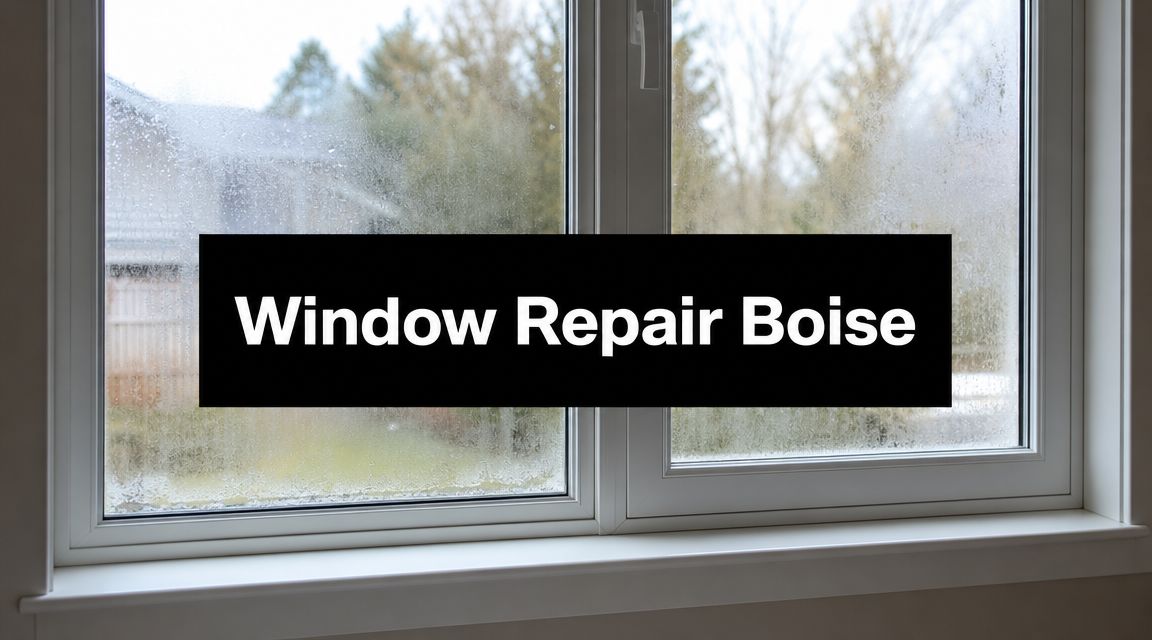
You notice it in the morning light first. One window looks hazy no matter how often you clean it. By late afternoon, the glass still has that cloudy band or fogged look trapped inside the panes, and the room near that window never feels quite as steady as the rest of the house.
That's usually the moment homeowners start searching for answers about window seal failure in Boise. In the Treasure Valley, this problem is common enough that it shouldn't surprise you, but it also shouldn't be ignored. A failed seal doesn't always mean the whole window has to go. It does mean the insulated glass unit has lost the airtight performance it was built to deliver.
Table of Contents
- Is Fog Inside Your Windows? Understanding Seal Failure
- Telltale Signs Your Window Seals Have Failed
- Why Boise's Climate Is Tough on Window Seals
- Temporary Fixes vs Permanent Replacement A Cost Comparison
- Choosing the Right Replacement Windows for the Treasure Valley
- Schedule Your Free Boise Window Inspection Today
Is Fog Inside Your Windows? Understanding Seal Failure
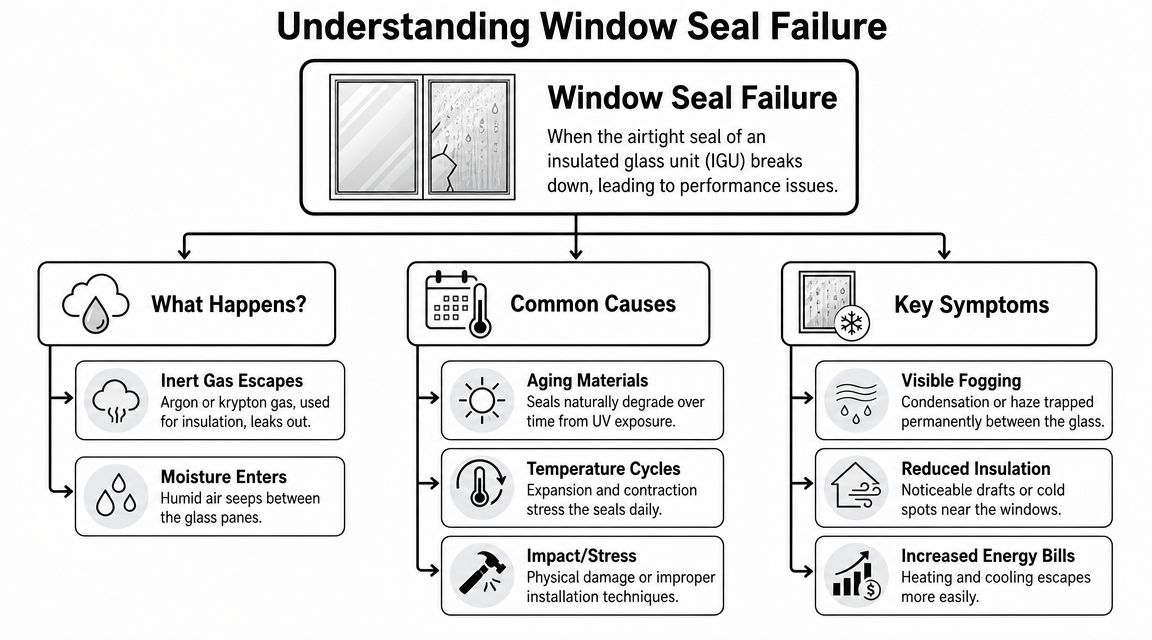
When fog or condensation shows up between the panes of a double-pane window, the issue usually isn't surface moisture. It's a failure inside the insulated glass unit, often called an IGU. That unit is built with two panes of glass, a spacer system around the perimeter, sealants that keep the assembly airtight, and insulating gas such as argon held in the cavity.
A simple way to think about it is a thermos. A thermos works because its sealed space slows heat transfer. A double-pane window works the same way. Once that sealed edge breaks down, the system can no longer reliably hold the gas fill or keep moisture out.
What seal failure actually means
Window seal failure is primarily a loss-of-integrity problem in the spacer and seal system between panes. Once that seal is compromised, the IGU can no longer reliably retain inert gas, and moisture can enter the cavity. That leads to fogging between panes, comfort loss that can feel like a draft, and reduced thermal performance, as explained in this technical overview of underlying causes of window seal failures.
This is different from exterior caulk around the frame. Recaulking the outside of a window can help with air or water around the opening, but it doesn't rebuild the failed sealed chamber inside the glass.
Practical rule: If the haze is trapped inside the glass and you can't wipe it off from either side, the problem is almost never solved by cleaning products or a bead of caulk.
Why Boise homeowners run into this
In Boise, pressure changes and weather swings put extra strain on the seal line. The same technical explanation linked above notes that elevation and weather swings can make pressure-related stress more relevant because pressure differences across the sash add mechanical strain to the sealed edge.
That matters because a window can look mostly intact from a few feet away while the insulated portion has already stopped performing as intended. Homeowners often spot the same kind of issue first on an entry door with glass inserts or sidelights too, especially in sun-heavy exposures. If that sounds familiar, it helps to look at the entire opening, not just the pane. Related work like professional door installation in Nampa often overlaps with the same weather-exposure and comfort concerns.
Telltale Signs Your Window Seals Have Failed
Most homeowners don't need special tools to spot a failed seal. You just need to know what to look for, and what to ignore.
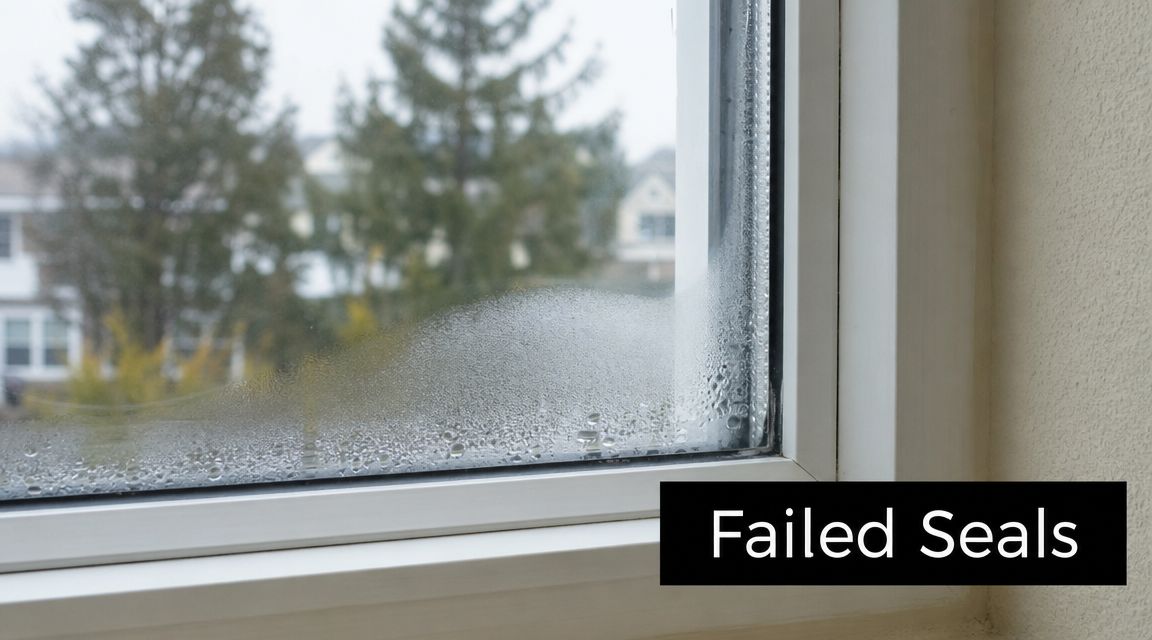
The clearest symptom is condensation or fogging between panes, not on the room side of the glass. Quality window seals generally last about 10 to 20 years, but once the seal is breached, simple cleaning or recaulk work won't restore the gas barrier. In that situation, the more durable fix is usually glass-pack or window replacement, according to this homeowner guide on how to spot broken window seals.
Signs that point to a failed IGU
- Fog that won't wipe away: Clean the inside surface. Clean the outside surface. If the haze remains, it's likely inside the sealed unit.
- A milky or dirty look in one area: Failed seals don't always fog the whole pane evenly. You may see a corner haze, a band near the spacer, or a cloudy patch that shifts with humidity and temperature.
- Mineral staining inside the glass unit: Moisture can leave residue after repeated condensation cycles inside the cavity.
- Visual distortion: Some failed units develop a slightly warped or wavy appearance when you look through them at an angle.
What is not usually seal failure
Interior condensation on the room side of the glass during cold weather is a different issue. That usually points to indoor humidity meeting a cold surface. Exterior dew on the outside pane can also happen on certain mornings and doesn't mean the glass has failed.
A quick homeowner check helps separate the two:
- Wipe the room-side glass. If the moisture disappears, it was surface condensation.
- Check the outdoor side. Morning dew outside can clear on its own.
- Look again at midday. If the fog is still trapped inside, the insulated unit is the likely culprit.
If the moisture lives inside the window instead of on the window, you're dealing with the glass unit, not housekeeping.
Secondary comfort clues
Seal failure doesn't always announce itself visually first. Some people notice a room that feels harder to heat in winter or less comfortable on summer afternoons long before they notice the haze. Others catch it because one window looks dull beside the others.
That's why Window seal failure Boise searches often start with visibility concerns and end with a comfort discussion. The glass may still be standing, but it isn't doing the insulation job it was built for.
Why Boise's Climate Is Tough on Window Seals
Boise isn't a gentle window environment. The Treasure Valley puts insulated glass through repeated cycles of heat, light, and pressure, and those cycles work the sealed edge every day.
A lot of homeowners assume seal failure means poor workmanship or a bad product from day one. Sometimes that's true. Often, though, the bigger story is exposure. Even a properly made window ages faster when the local environment keeps pushing it through expansion, contraction, and high sun.
Daily temperature swings stress the sealed edge
Boise homes can warm up quickly in direct sun and cool off sharply after sunset. That repeated movement matters because glass, spacer materials, and sealants don't all respond to temperature in exactly the same way. As the unit heats and cools, those components expand and contract, and the edge seal has to absorb that motion.
Over time, that repeated stress can weaken the system. Homeowners usually experience the result as a gradual problem, not a dramatic one. One season the glass looks fine. Another season, a faint haze starts showing up on cold mornings or after a run of hot afternoons.
High sun and UV add another layer of wear
Boise's bright conditions and strong sun exposure are hard on seal materials. South-facing and west-facing windows usually take the brunt of it. The frame may still look acceptable from the yard, but the perimeter seal on the glass has been baking for years.
South and west exposures usually tell the truth first. If only a few windows in the house are fogging, start by looking at the ones that handle the harshest afternoon sun.
This is one reason generic replacement recommendations often miss the mark in the Treasure Valley. The local issue isn't just insulation on paper. It's how the whole window package holds up after years of UV and thermal cycling.
Elevation and pressure changes matter too
Boise's elevation adds a pressure component many homeowners never think about. As noted earlier, pressure differences across the sash can add mechanical strain to the seal line. In practical terms, that means the sealed unit isn't just dealing with sunlight and temperature. It's also dealing with pressure-related stress over time.
That combination is why window seal failure in Boise often shows up sooner on builder-grade glass and why one-size-fits-all products don't always age well here. The smarter approach is to choose a replacement window or glass package that's meant to handle high-desert conditions, not just pass a basic sales pitch.
Temporary Fixes vs Permanent Replacement A Cost Comparison
You notice the fog, wipe the glass, and realize the haze is inside the unit. The next question is always cost. Homeowners want to know whether a short-term repair buys enough time, or whether spending more now avoids paying twice.
The practical answer depends on what has failed. Some services improve the look of the glass. Others replace the insulated glass unit itself. Full window replacement deals with the glass, sash, frame condition, and operation in one project. Those are very different levels of work, and they should not be priced or judged the same way.
Industry cost ranges often put minor repair attempts around $150 to $400 per window, while IGU-only replacement may run about $180 to $520. Many double-pane seals are also commonly expected to last 15 to 25 years, though Boise homes can fall short of that range because heat, sun exposure, and wide temperature swings put more stress on the unit over time, as summarized in this overview of window seal failure signs, causes, and repair costs.
What each option really does
De-fogging or moisture-removal services are mostly cosmetic. They can clear the view for a while, but they do not restore the original sealed chamber or bring back lost insulating gas. For a rental, a home sale, or a short holding period, that may be an acceptable trade-off. For long-term performance, it usually is not.
IGU-only replacement is often the best value if the frame is still solid and the sash works the way it should. You keep the existing window structure and replace the failed insulated glass portion. In Boise, that can be a smart middle path when the problem is isolated to the glass and the rest of the unit has held up well.
Full replacement makes more sense when fogged glass is only part of the story. If the window is drafty, hard to lock, out of square, or showing frame wear, replacing only the glass can leave the bigger problems in place. Homeowners comparing those choices can get a clearer framework from this guide on when to replace windows vs repair them.
Comparing solutions for failed window seals
| Solution | What you get | Estimated Cost (Per Window) | How long it usually makes sense |
|---|---|---|---|
| De-fogging or cosmetic moisture removal | Better visibility, limited performance improvement | Varies by service and window condition | Short-term, mainly appearance-based |
| Minor repair approach | Limited benefit if the insulated seal has already failed | $150 to $400 | Often short-lived once the seal system is compromised |
| IGU-only replacement | New insulated glass while keeping a sound frame and sash | $180 to $520 | Good long-term value if the surrounding window is still in good shape |
| Full window replacement | New glass, sash, frame-related performance, and operation | Varies by product, size, and installation conditions | Usually the longest-lasting option when the whole unit is aging |
How to make the right call
Look at the whole opening, not just the condensation.
- Choose IGU replacement when the rest of the window is healthy. If the frame is square, the sash moves properly, and you are not feeling drafts, replacing the glass unit is often the sensible repair.
- Choose full replacement when problems stack up. Fogging plus air leakage, sticking hardware, soft frames, or repeated service calls usually means the assembly is near the end of its useful life.
- Treat cosmetic fixes as temporary by definition. They may improve the appearance, but they do not fully restore the original thermal performance.
In Boise, this decision carries more weight than it might in a milder climate. A generic short-term fix can look cheaper on paper, but if the unit still has to handle strong sun, altitude-related pressure changes, and sharp day-to-night swings, the lower upfront price does not always hold up. The goal is not just to clear the glass. It is to choose the option that will still make sense after a few more Treasure Valley summers and winters.
Choosing the Right Replacement Windows for the Treasure Valley
A Boise homeowner usually notices the difference in the hardest parts of the day. The west-facing room heats up fast in July. The glass feels cold on a winter morning. If full replacement is the right call, the next step is choosing a window that can hold up under Treasure Valley conditions instead of just looking good on a sample board.
Boise puts more stress on a window than many homeowners expect. Strong sun, higher elevation, and wide day-to-night temperature swings all put pressure on the glass unit, sash, and frame. That is why product selection needs to focus on how the window is built and how it will perform here over time.
Features that matter in Boise homes
Start with the sash and frame. Reinforced construction helps the operating parts stay aligned as materials expand and contract through the seasons. That matters in homes with long sun exposure, especially on south and west elevations.
Glass package comes next. Low-E coatings help control solar heat gain, which is a practical concern in Boise summers. Argon-filled insulated glass improves thermal performance, but only if the unit is well made and properly installed. Homeowners often compare price first, but the coating package and overall glass build usually have more impact on comfort than a small difference in upfront cost.
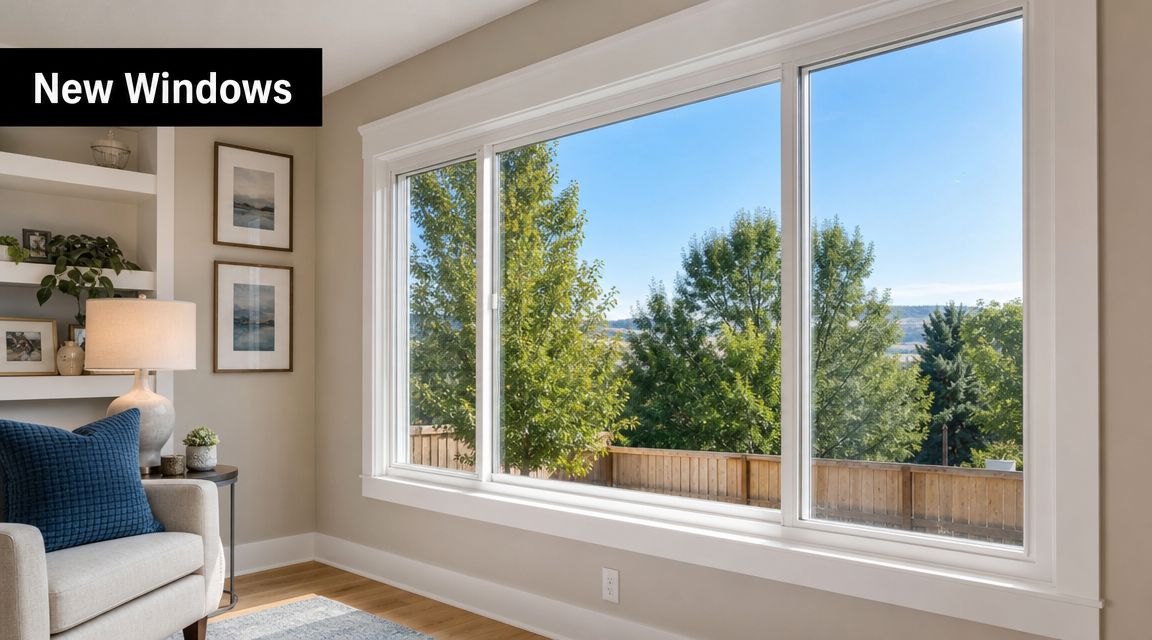
Water management also deserves a close look. A sloped sill helps move water out instead of letting it sit in the track area. Good locking hardware and a tight sash fit improve everyday operation and help limit air leakage, which homeowners tend to notice first on windy winter days.
How to compare replacement options
Generic replacement windows can work in some mild climates. Boise is less forgiving. A window that handles UV exposure, pressure changes, and repeated temperature swings well is usually a better long-term choice than a basic package built to hit a low price point.
That does not mean one brand solves every job. It means asking better questions. For custom replacement windows and doors in Boise, look for options with reinforced sashes, an appropriate Low-E coating, argon-filled insulated glass, and drainage details that fit our climate. Mezzo windows are one example that include those features, with optional triple-pane glass depending on the home, exposure, and budget.
A practical selection checklist
Use this checklist when comparing full replacement options after seal failure:
- Glass package: Ask which Low-E coating is included and whether the insulated glass is argon filled.
- Sash and frame stability: Look for reinforced construction that can stay aligned through hot afternoons and cold mornings.
- Drainage design: Check for a true sloped sill and a design that moves water away from the assembly.
- Hardware and operation: Open and close the unit. It should lock cleanly and move without binding.
- Installation approach: Custom measurements and careful fitting matter as much as the window itself.
- Warranty details: Read what is covered on both the product and the labor.
The right replacement window should fit the house, the exposure, and the budget. In some Boise homes, that means a straightforward double-pane unit with the right coating. In others, especially where rooms take heavy afternoon sun or outside noise is a complaint, spending more for upgraded glass can make sense.
Schedule Your Free Boise Window Inspection Today
If you're seeing fog between panes, don't wait for it to sort itself out. Failed seals rarely reverse course, and Boise weather won't give the glass an easier workload next season.
A quick inspection usually answers the important questions. Is this a single failed glass unit in an otherwise healthy window? Or is the whole assembly showing its age? Once you know that, the repair-versus-replace decision gets much easier.
For homeowners dealing with Window seal failure in Boise, the practical next step is simple. Have a local window professional inspect the glass, sash, and frame together, then get a clear recommendation based on condition instead of guesswork.
If your windows are fogging between panes or the house feels less comfortable near older glass, C & C Windows & Doors can provide a free in-home consultation, custom measurements, and a clear recommendation for repair or replacement in Boise and the Treasure Valley.