
If you're in Nampa staring at foggy glass on a cold morning, or standing near a west-facing window in August wondering why the room feels hotter than the thermostat says, your windows are probably doing more work against your house than for it. That's common in older Treasure Valley homes. Drafts, cold interior glass, uneven room temperatures, and rising utility bills usually point back to the same weak spot.
Windows matter more here than many homeowners expect. Nampa gets real winter cold, strong sun, and big seasonal swings. The right replacement windows can make a house feel tighter, quieter, and easier to heat or cool. The wrong specs can leave you with expensive new windows that still underperform.
This guide focuses on what works for energy-efficient windows in Nampa, ID, including the ratings that matter, the styles worth considering, and the local rebate steps many homeowners miss until it's too late.
Table of Contents
- Why Nampa Homeowners Are Upgrading Their Windows
- Understanding Your Window Performance Ratings
- Finding the Best Window Style for Your Home
- Calculating Your Investment and Energy Savings
- How to Secure Nampa Utility Rebates for Your Windows
- What to Expect During Your Window Installation
- Why C & C Windows Is Your Trusted Nampa Partner
Why Nampa Homeowners Are Upgrading Their Windows
A lot of window projects start the same way. A homeowner notices condensation, then a draft, then one room that never feels right no matter what the HVAC system is doing. In winter, the glass feels cold enough to change the whole room. In summer, the afternoon sun pours through and the AC keeps chasing the heat.
That discomfort isn't just annoying. It usually means the windows are leaking energy. ENERGY STAR-certified windows reduce nationwide heating and cooling energy bills by an average of up to 13% compared to non-certified products, and heat gain and loss through windows accounts for 25% to 30% of total residential heating and cooling energy use, according to ENERGY STAR window guidance.
In Nampa, that hits harder because homes need to handle two different jobs well. They have to hold indoor heat during freezing weather, and they also have to block strong solar gain when summer sun beats on south and west walls.
The comfort problem usually shows up before the bill does
Many homeowners first notice the lived-in problems, not the energy waste.
- Cold zones near the glass: You can feel it most in bedrooms, living rooms, and breakfast nooks.
- Hot afternoon rooms: West-facing rooms often become the test case for whether a window package was chosen well.
- Noise and draft complaints: Older glass and tired seals rarely improve with caulk alone.
- Condensation patterns: Persistent interior moisture on glass often points to poor thermal performance.
Old windows rarely fail in one dramatic moment. Most of them fail gradually, and the house starts adapting around them.
Why replacement makes sense in this climate
In a milder climate, a homeowner might get away with average-performing windows. In Nampa, average specs often lead to average results. The homes that feel best year-round usually have window packages chosen for cold-weather insulation first, then tuned for summer sun exposure.
That's why energy-efficient windows aren't just about lowering bills. They change how the house feels when you're sitting next to the glass, opening a bedroom in the morning, or trying to keep the family room comfortable through a long August evening.
Understanding Your Window Performance Ratings
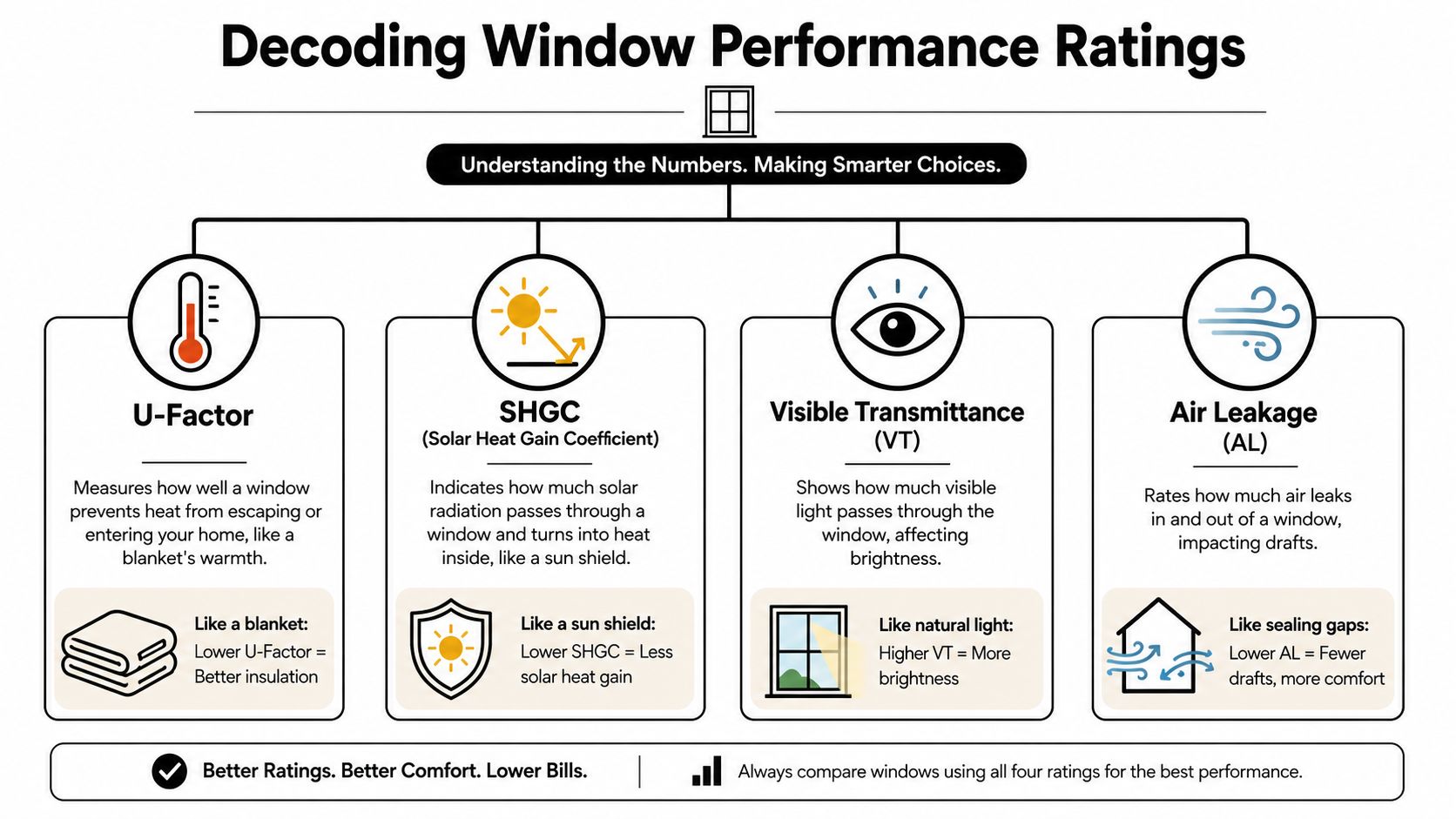
Window labels can look technical, but the important ratings are easier to understand when you connect them to what you feel inside the house. In Nampa, the main question is simple. Does the window hold heat in winter and block unwanted solar heat in summer?
What U-factor really tells you
U-factor measures how much heat passes through the window. Lower is better. It's comparable to the insulation value for the entire window unit, not solely the glass.
For Nampa, the optimal U-factor is 0.27 or lower to meet Northern climate zone standards and maximize winter heat retention, and upgrading from single-pane units can reduce annual heating and cooling costs by 12% to 33%, according to this Idaho window performance guide.
That's why I tell homeowners not to get distracted by appearance first. A pretty frame with weak thermal numbers is still a weak window in January.
A good next step is comparing options against a cold-climate buying standard like this Idaho energy-efficient windows guide, which helps sort cosmetic upgrades from real performance upgrades.
Why SHGC matters in western Idaho
SHGC, or Solar Heat Gain Coefficient, tells you how much solar radiation passes through a window and becomes heat inside the home. Lower SHGC means the window blocks more of that heat.
In western Idaho, this matters most on south and west-facing glass. The verified local guidance is clear. For south and west-facing windows in Western Idaho, SHGC should be below 0.25 to block summer solar gain during peak heat events, as explained in this regional window selection resource.
That number matters because homeowners often focus only on winter performance. Then summer arrives and the family room overheats by late afternoon.
Practical rule: In Nampa, low U-factor handles the cold. Controlled SHGC handles the sun. You need both.
How glass packages work together
A strong cold-climate window isn't one feature. It's a package.
According to Natural Resources Canada's window efficiency publication, energy-efficient windows use double- or triple-glazing, sealed insulating glass units, Low-E coatings, and inert gas fills such as argon or krypton, and air leakage for windows and sliding glass doors must be at or below 270 under the NFRC standard.
For Idaho conditions, the local guidance gets more specific. Triple-pane vinyl windows with Low-E coatings and argon gas fills are technically required rather than optional upgrades for Idaho's climate, and argon plus Low-E works as a dynamic thermal barrier in both winter and summer, as described in the earlier regional sources.
Here's the practical breakdown:
| Rating or feature | What it means in the home | What works best in Nampa |
|---|---|---|
| Low U-factor | Less indoor heat escapes through the window | 0.27 or lower is the target |
| Low SHGC on sunny exposures | Less unwanted summer heat enters the room | Below 0.25 on south and west-facing windows |
| Low-E coating | Reflects heat where you want it | Helps in both winter and summer |
| Argon gas fill | Slows heat transfer between panes | Improves overall thermal performance |
| Triple-pane construction | Adds another insulating barrier | Better suited to Idaho temperature swings |
If a quote leaves out these details, ask for the NFRC label and the full glass package. That label tells you much more than a showroom display ever will.
Finding the Best Window Style for Your Home
Window style changes more than the look of the house. It affects ventilation, sealing pressure, cleaning access, and how the unit performs after years of opening and closing. In Nampa, the best style is usually the one that fits both the room and the exposure.
How style affects performance
Casement windows are often the strongest performer when weather sealing matters most. Because they close against a compression seal, wind pressure can help the sash seal tighter. That makes them a smart fit for exposed sides of the home where drafts are a recurring complaint.
Picture windows usually offer the cleanest thermal performance because they don't open. No moving sash means fewer places for air to leak. If the goal is maximum glass and a tighter shell, fixed units do that well.
Double-hung windows are popular because they're familiar, easy to use, and fit many home styles. Sliding windows can also work well where a horizontal opening makes more sense, especially in rooms with wider wall space.
Matching the room to the window
The room often tells you what style makes sense faster than a brochure does.
- Living rooms and front elevations: Picture windows work well where you want light and a broad view, especially when paired with operable units nearby for ventilation.
- Bedrooms: Double-hung and casement windows are both practical choices, depending on how important easy operation versus tighter sealing is to you.
- Kitchens over counters: Sliders can be convenient where reaching over a sink makes a crank or lift action easier than a vertical sash.
- Bathrooms and utility areas: Smaller operable windows can prioritize privacy and airflow over expansive glass area.
Frame design matters too. Narrower sightlines can make the glass area feel more open, while reinforced sash construction helps the unit stay square and operate smoothly over time. Good hardware and proper drainage details also matter more than homeowners think. A strong-looking window that doesn't shed water correctly or maintain a tight seal won't stay impressive for long.
A style decision should always answer three questions. How does it seal, how does it ventilate, and how will it live in that room every day?
Calculating Your Investment and Energy Savings
The biggest mistake homeowners make is judging replacement windows only by the initial quote. That number matters, but it doesn't tell the whole story. In Nampa, the better question is what the old windows are costing you in comfort, efficiency, and daily use.
What savings can look like locally
For homes in the Boise-area climate zone, which aligns with Nampa, the local savings estimates are useful. Replacing single-pane windows with ENERGY STAR-certified double-pane Low-E windows in a typical 2,000 sq ft Boise-area home can save $300 to $500 annually, while upgrading to triple-pane Low-E windows with argon gas fill can save $500 to $700 annually, according to this Boise-area energy savings breakdown.
That kind of range helps homeowners make a practical comparison between a baseline upgrade and a more complete cold-climate package.
If you want to think through the utility side in more detail, this article on whether new windows save money on heating bills in Idaho is a helpful companion.
Better windows usually pay you back in more than one way. The bill is one part. The room that finally feels usable is the other.
How to judge value beyond the quote
The cheapest proposal often leaves out the features that matter most in Idaho. A lower-grade package may still look new and clean on day one, but the critical test comes during the first hard freeze and the first hot stretch of summer.
Here's how I'd weigh value:
| What to compare | Why it matters |
|---|---|
| Glass package | Triple-pane, Low-E, and argon affect year-round thermal performance |
| NFRC ratings | This confirms the actual tested performance, not just sales language |
| Installation approach | A good window can underperform if the opening isn't sealed correctly |
| Frame and sash construction | Durability affects long-term operation and air tightness |
| Warranty coverage | Strong labor and product backing reduces future risk |
Homeowners also tend to notice secondary gains that don't show up neatly on a quote sheet. Rooms often feel more even. Outside noise tends to drop. The HVAC system doesn't have to work as hard to keep up with weak glass and drafty frames.
That's why window replacement is best viewed as a home performance upgrade, not just a finish upgrade.
How to Secure Nampa Utility Rebates for Your Windows
Rebates sound simple until you try to claim them. Many generic window guides, however, fall short on this practical aspect. They mention money may be available, but they don't explain the actual mechanics. In Nampa, the details matter.
Who may qualify
For some Nampa homeowners, Avista utility rebates may be available at $50 to $200 per window, but the program has specific rules. The verified requirements include existing homes only, primary heating through Avista electric or gas, and minimum annual usage of 4,000 kWh or 120 therms, based on Avista's Idaho single-family window rebate requirements.
That means not every household qualifies automatically, even if the windows themselves qualify.
The paperwork that trips people up
The most common rebate mistakes are procedural, not technical. A homeowner chooses good windows, installs them, and then misses the paperwork details that secure the rebate.
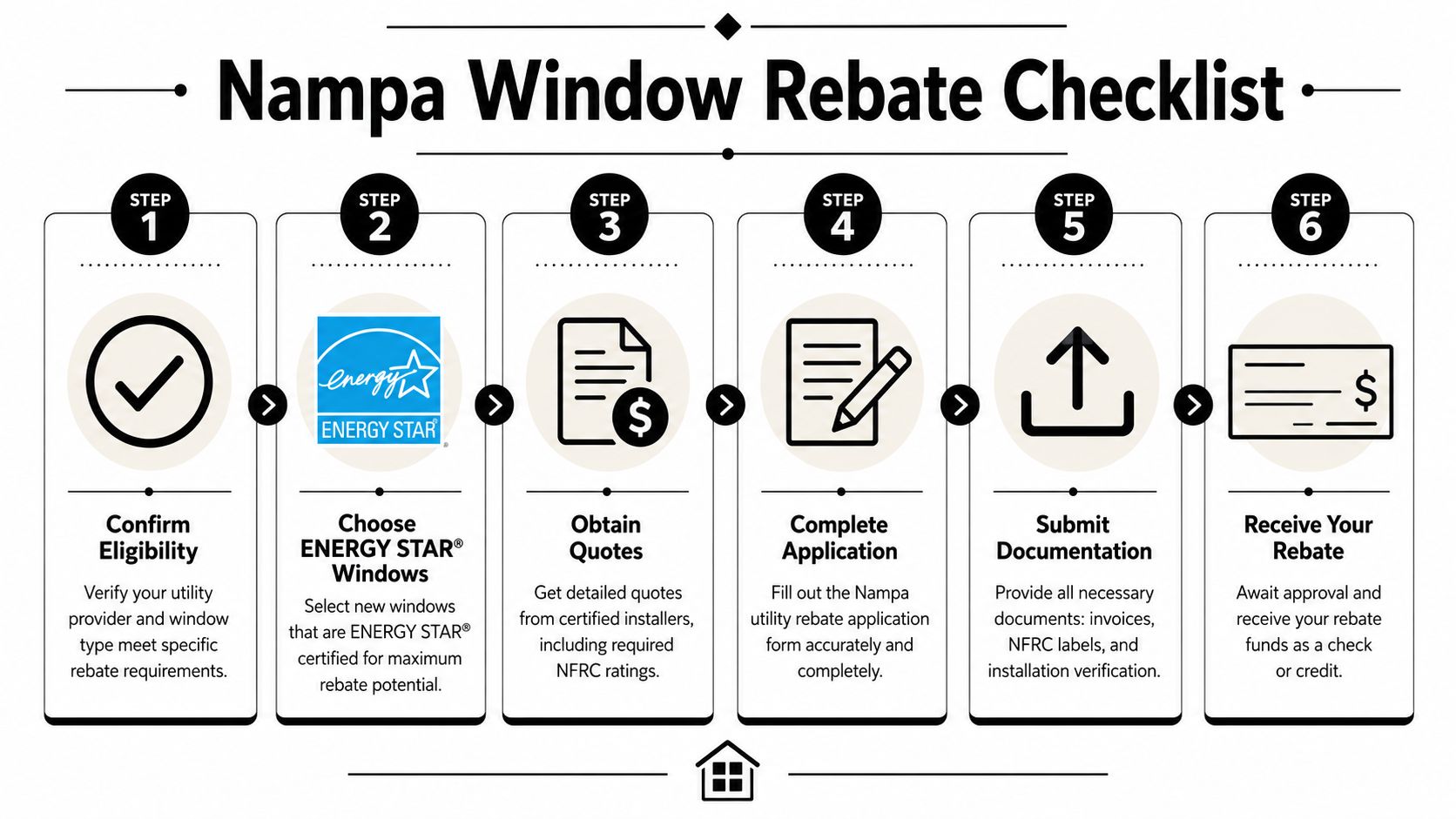
The biggest one is timing. Applications must be submitted within 120 days of installation, and they need final invoices proving U-factors, not rough estimates or vague product descriptions, according to the same Avista rebate page.
Here's the simplest way to stay on track:
- Confirm the utility and home type first. Make sure the home is existing, not new construction, and verify that your primary heating setup fits the program.
- Ask for the NFRC-rated performance details up front. Don't wait until after installation to find out whether the quoted windows meet the needed threshold.
- Require a final invoice with U-factor documentation. Many jobs often go sideways at this stage. Estimates often don't contain the detail the rebate office wants.
- Submit fast after installation. Don't let the paperwork sit in a kitchen drawer until the deadline passes.
The rebate is often lost after a successful installation, not before it. Missing documents are the usual reason.
A practical rebate checklist for homeowners
Use this short checklist before you sign and again before you submit:
- Check provider eligibility: Confirm you're served under the rebate program tied to the install.
- Review the final product specs: Make sure the ordered windows match the performance level discussed at quote time.
- Save the right invoice: Keep the final, paid invoice with model details and U-factor information.
- Submit within the deadline: Don't rely on memory. Put the date on your calendar as soon as installation is complete.
Rebates shouldn't be treated like a bonus surprise. They should be handled as part of the project plan from the beginning.
What to Expect During Your Window Installation
A good installation feels organized, not chaotic. Homeowners usually worry about two things. How disruptive the work will be, and whether the crew will leave a mess behind. A professional process answers both before the first old window comes out.
Before installation day
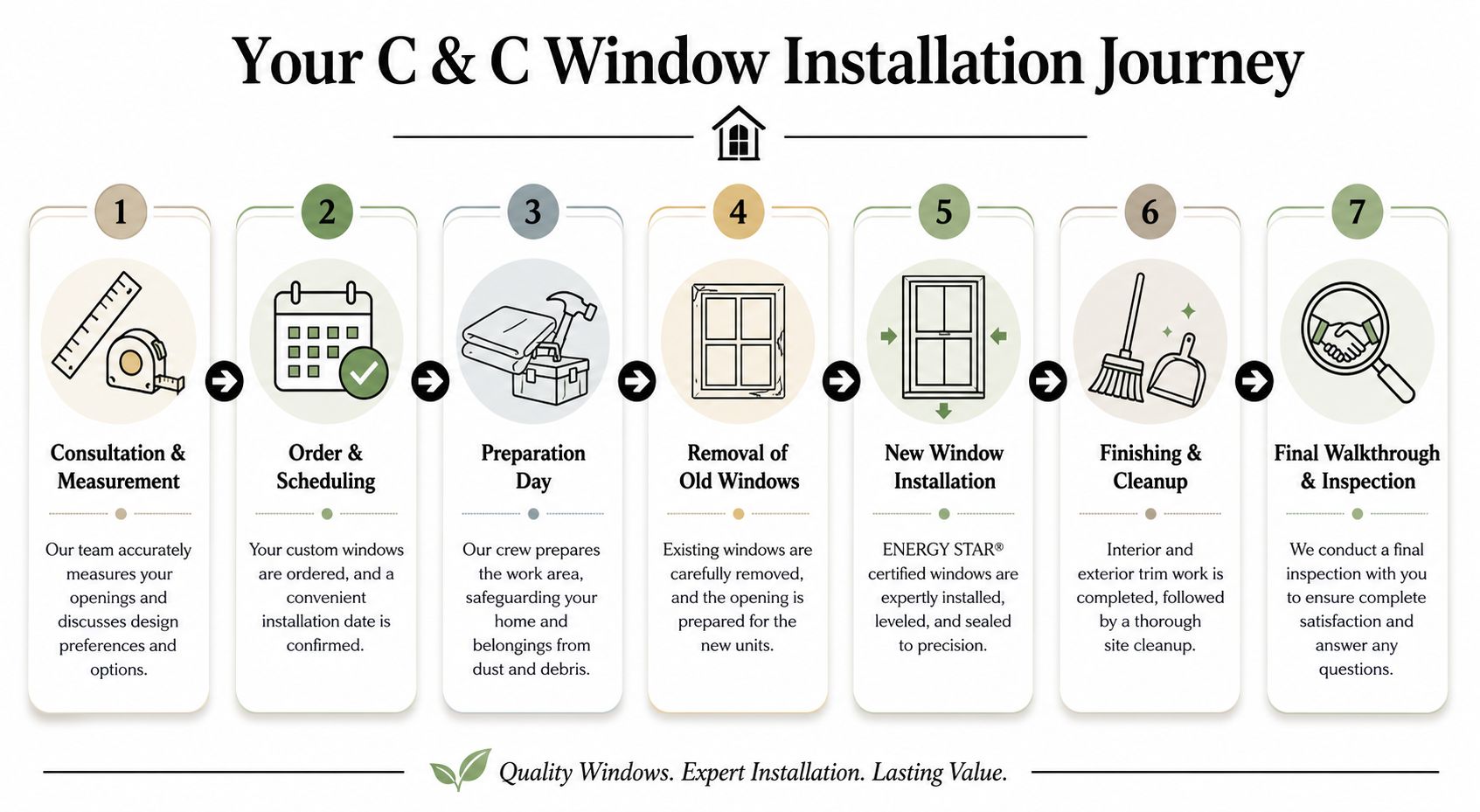
The process should start with careful measuring, not guesswork. Each opening needs to be checked precisely because replacement windows have to fit the existing structure cleanly. Good installers also use this stage to confirm style choices, glass package, hardware, and any trim or finish details.
Scheduling should be clear. You should know when the materials are expected, when the crew is arriving, and what rooms need to be accessible.
What happens in the home
On installation day, the work area should be protected first. Floors, nearby furniture, and traffic paths need attention before tools come out. The old window is removed carefully, the opening is inspected, and the new unit is set, leveled, and sealed.
Installation quality matters most. Even a well-built replacement window can lose performance if the opening is out of square, the sealing is rushed, or the trim work hides a sloppy fit.
A clean process usually includes:
- Protection at the start: Drop cloths, contained work zones, and attention to nearby finishes.
- Careful removal: Old units come out without unnecessary damage to interior or exterior surfaces.
- Precise setting and sealing: The new unit needs to sit square, operate smoothly, and seal consistently.
- Daily cleanup habits: Crews who clean as they go usually install with more discipline overall.
What a good final walkthrough includes
At the end, the crew should walk the windows with you. Open them. Lock them. Check the screens, hardware, and trim. Ask about maintenance and cleaning. If there's a sticker or label with performance information you need for rebate paperwork, make sure you know what to save.
Good installation work shows up in small things. Smooth sash movement, even reveals, tight locks, clean trim lines, and a home that doesn't feel like a jobsite after the crew leaves.
The best projects feel uneventful in the right way. They're measured well, installed carefully, and wrapped up without loose ends.
Why C & C Windows Is Your Trusted Nampa Partner
A good window company in Nampa should do more than sell glass and frames. It should help you choose products that make sense for cold mornings, hot afternoon sun, and the payback you can expect in this part of Idaho.
That local judgment is what homeowners are really hiring. C & C Windows & Doors works with Treasure Valley homes every day, so the recommendations are tied to common conditions here, not a national sales script. South and west exposures need different attention than a shaded north side. Older openings often need more inspection and tighter measuring than homeowners expect. Rebate paperwork also trips people up, especially when labels and product details are missing after installation.
C & C handles the project with that full picture in mind. The company offers factory-trained installation, custom measurement, clean jobsite habits, and window options built for Idaho weather, including narrowline frames, composite-reinforced sashes, Low-E glass, argon-filled insulated glass, and triple-pane upgrades where the added cost makes sense.
That last part matters. Triple-pane is not the right answer for every house. In some Nampa homes, a well-made double-pane unit with the right glass package is the smarter buy. In others, especially where rooms run cold in winter or face strong road noise, the upgrade can improve comfort enough to justify the investment.
Homeowners who want a closer look at the company's service approach can review this window replacement company in Nampa, ID page.
A reliable installer should also explain the paperwork side in plain language. If a product label, NFRC rating, or manufacturer documentation is needed for a utility rebate, that should be identified before the old windows are gone. That saves time, avoids claim problems, and gives you a clearer record of what was installed.
If your windows are drafty, hard to lock, or making certain rooms harder to heat and cool, work with a team that knows how Idaho homes behave season to season. The goal is simple. Better comfort, fewer temperature swings, and windows that perform the way they were sold.