
Yes, new windows can save real money on heating bills in Idaho. Many homeowners report savings in the $25 to $60 per month range, and replacing old single-pane windows with efficient models can save about $126 to $465 per year, with the biggest payoff usually showing up in colder homes with the worst existing windows.
If you're in Boise, Meridian, Eagle, Nampa, or anywhere else in the Treasure Valley, you already know the pattern. Winter hits, the furnace runs constantly, and one room still feels cold no matter how high you set the thermostat. Then the utility bill shows up, and suddenly those drafty old windows don't feel like a small issue anymore.
In Idaho, this isn't just a comfort problem. It's a heat-loss problem. Our winters are cold enough that weak windows punish you every month, and our hot summers mean the same glass can work against you again when cooling season arrives. If you're asking whether new windows are worth it, the honest answer is simple: they often are, especially if your current windows are old, leaky, or single-pane.
Table of Contents
- The Winter Bill Shock An Idaho Homeowner's Dilemma
- The Real Cost of Old Windows in an Idaho Climate
- How Modern Energy Efficient Windows Work
- Calculating Your Potential Savings and ROI in Idaho
- Beyond the Glass What Else Affects Your Energy Bills
- Take the Next Step to a Warmer Idaho Home
The Winter Bill Shock An Idaho Homeowner's Dilemma
You open the bill at the kitchen table. The heat has been running for weeks, the bedrooms near the north side of the house still feel chilly, and someone in the family has already started avoiding the seat next to the window because it feels cold. That's a normal Idaho winter story.
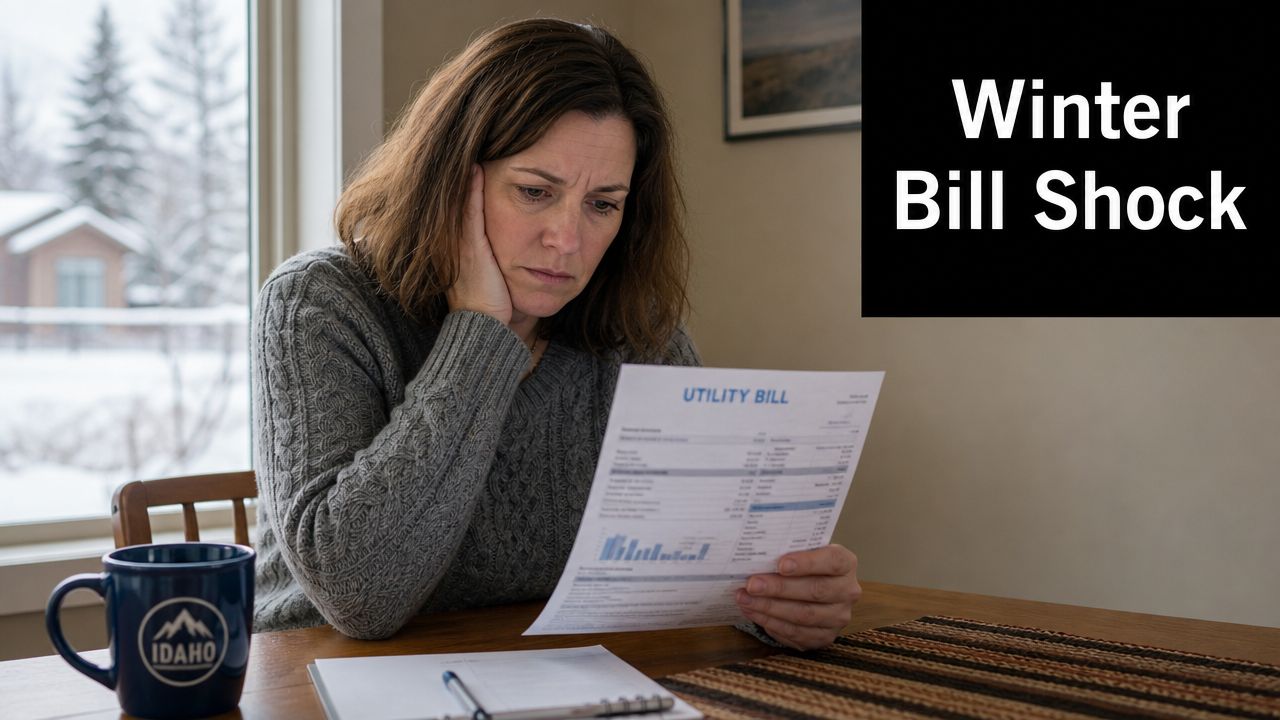
A lot of homeowners blame the furnace first. Sometimes that's fair. But just as often, the house is bleeding heat around old glass, worn seals, and frames that stopped doing their job years ago. If you're seeing drafts, condensation, or cold spots near the windows, start there. If this sounds familiar, high heating bills in Boise may be tied to failing windows.
The heating bill isn't the first warning
Homeowners typically notice comfort problems before they notice energy waste.
- Cold rooms near windows: You feel it most in the morning and at night.
- Thermostat creep: Someone keeps bumping the temperature up because the house never feels settled.
- Uneven comfort: One room is warm, another feels like a garage.
- Condensation on the glass: That's often a sign the window isn't insulating well enough.
Those aren't minor annoyances. They're signals that your heating system is compensating for weak spots in the building envelope.
Practical rule: If your home feels drafty even when the furnace is running normally, don't assume you need more heat. You may need better windows.
Why this hits Idaho homeowners so hard
Treasure Valley homeowners deal with both winter heat loss and summer solar gain. That means old windows don't just cost money in January. They can work against you for much of the year. In real life, that makes replacement easier to justify than people think.
The biggest savings usually show up when you're replacing windows that are obviously outdated. If you've got old single-pane units, aluminum frames, or windows that no longer seal tightly, you're not debating a cosmetic upgrade. You're deciding whether to keep paying a comfort penalty every season.
The Real Cost of Old Windows in an Idaho Climate
Old windows cost Idaho homeowners in two places. On the utility bill, and in how the house feels every morning and every evening.
In the Treasure Valley, that problem shows up fast. January cold pushes heat out through weak glass and loose frames. July sun turns the same windows into hot spots that make your AC work harder. Old windows are not a small efficiency problem here. They are a year-round drain.
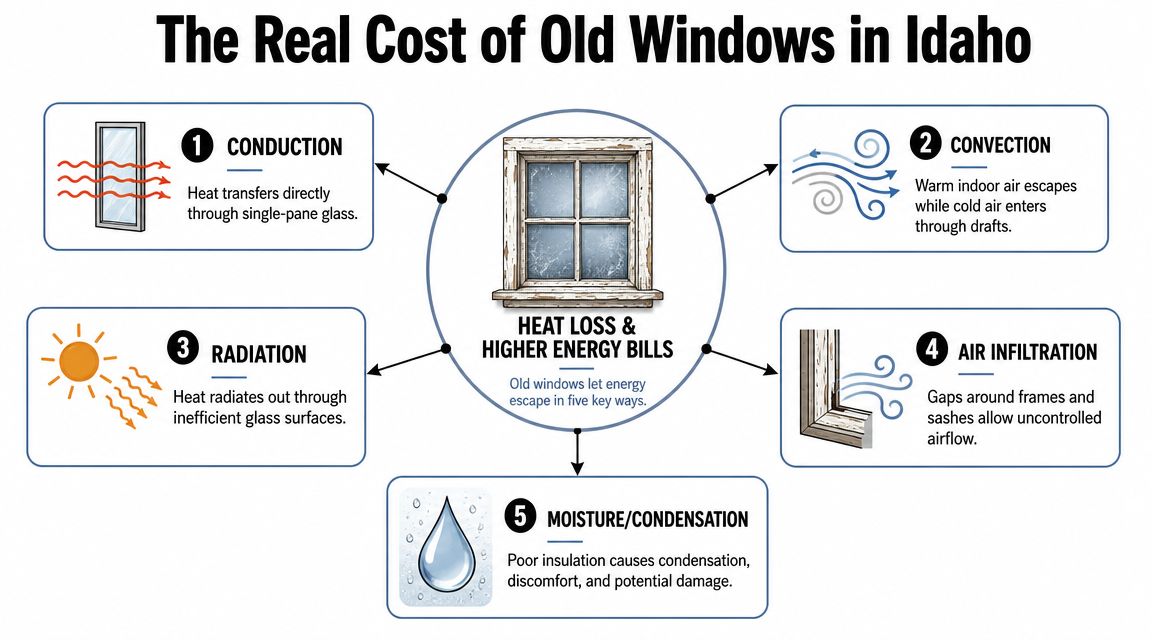
Why old windows cost more in Idaho
Single-pane glass is the biggest offender, especially in older Boise, Meridian, Nampa, and Caldwell homes. It does very little to slow heat transfer. If the frame has warped, the seal has failed, or the weatherstripping is shot, you are also paying for outside air slipping in around the sash.
That combination is what drives the monthly bill up. Your furnace runs longer in winter because the room loses heat faster. Your cooling system runs longer in summer because solar heat comes through the glass more easily. Idaho homeowners feel both sides of that problem, which is why national window advice needs local translation here.
A good rule is simple. If you have old single-pane units, aluminum frames without a thermal break, or windows that rattle in the wind, those windows are past the point of being a cosmetic issue.
Where the money goes
Older windows usually waste energy in four ways:
- Heat moves through the glass too easily. Older glass does not insulate well.
- Air leaks around the frame and sash. Small gaps add up during long heating season stretches.
- Indoor heat radiates toward cold glass in winter. That is why rooms near old windows feel uncomfortable even with the thermostat set normally.
- Solar heat pushes in during summer. West-facing and south-facing rooms in the Treasure Valley usually show this first.
Condensation is another clue. If you regularly see moisture on the glass in winter, the window is struggling to hold interior surface temperature. That often points to poor insulating performance, failing seals, or both.
If your furnace seems to be working fine but the house still feels cold near the windows, the windows are a likely cause.
For Idaho homeowners comparing options, specs start to outweigh style. A 2026 guide to energy-efficient windows for Idaho homes will help you sort out which upgrades are worth paying for in our climate.
Replacing bad windows will not erase every utility problem in the house. But if your current units are outdated and drafty, they are very often one of the biggest reasons your home costs more to heat and cool than it should.
How Modern Energy Efficient Windows Work
Modern replacement windows don't save money because of marketing language. They save money because the whole unit is built to slow heat transfer and control air leakage. That's what matters in Idaho.
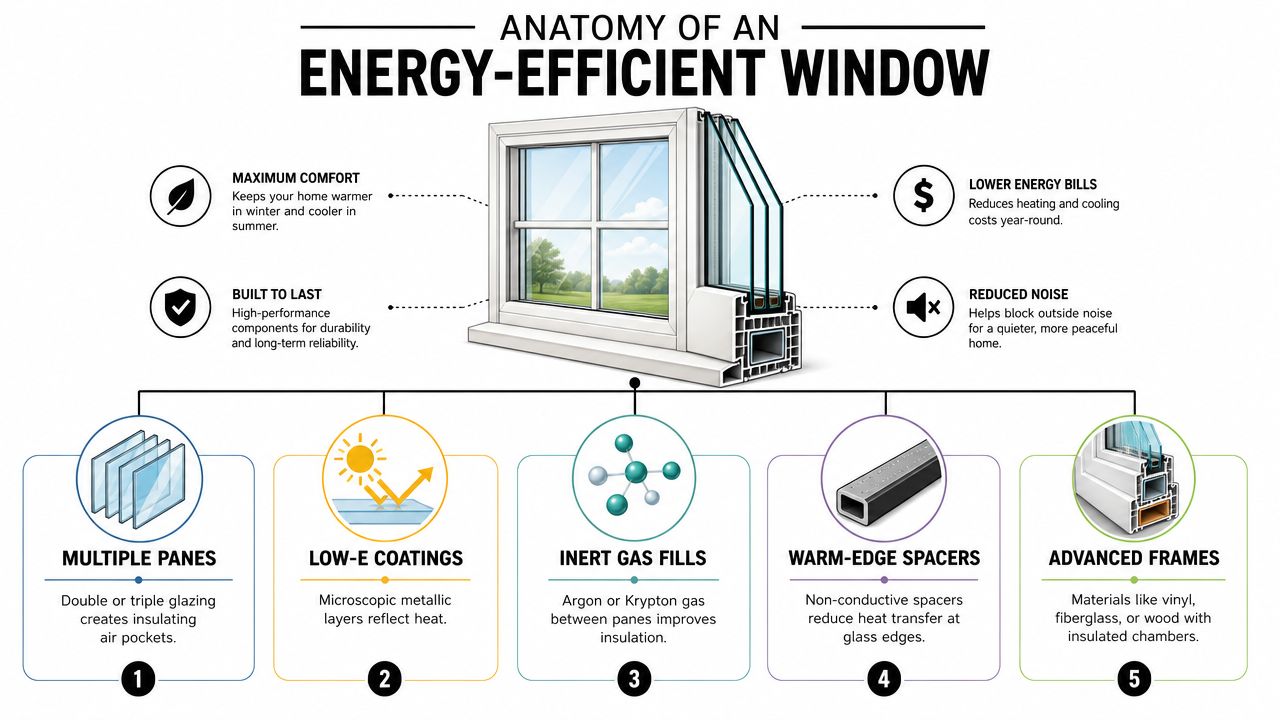
The three features that matter most
First, you want multiple panes. Double-pane glass creates an insulating space that slows heat movement better than old single-pane units. In colder parts of Idaho or in especially exposed homes, triple-pane can make sense too, especially for north-facing rooms or large glass areas.
Second, you want an inert gas fill between the panes. The DOE specifically recommends gas-filled, low-e windows in cold climates. That gas layer helps the window resist heat loss better than plain air space.
Third, you want a low-e coating. This thin coating reflects heat in a controlled way. In winter, it helps keep indoor heat from escaping too easily. In summer, it helps manage solar heat gain so your cooling system isn't doing extra work.
What to ask for in Idaho
If you're shopping windows for the Treasure Valley, don't get distracted by style first. Start with performance.
Ask for these things:
- A low U-factor: That's the number tied to how well the window resists heat loss.
- Low-e glass: This is one of the most important upgrades for Idaho's swing between winter cold and summer heat.
- Gas-filled insulated glass: Especially relevant for heating season.
- Whole-unit performance ratings: Not just glass-package claims.
If you want a local example, energy-efficient window options designed for Idaho homes often combine low-e coatings, Argon gas fills, and upgraded frame construction because that's the package that fits this climate.
What matters most: A window should be judged by measurable thermal performance, not by how impressive the brochure sounds.
Frame design matters too. A good glass package can underperform if the frame leaks air or conducts too much heat. That's why smart homeowners don't buy windows as isolated pieces of glass. They buy a complete system.
Calculating Your Potential Savings and ROI in Idaho
Your January gas bill shows up. The living room still feels cold near the glass. That is the moment Idaho homeowners stop asking whether new windows are a nice upgrade and start asking whether they will pay off.
Here is the straight answer. They can, but the return depends heavily on what is in your walls right now. The U.S. Department of Energy puts the biggest savings on homes replacing single-pane windows with ENERGY STAR models. Homes replacing older double-pane clear glass windows usually save less on utility bills, even if comfort improves a lot. You can review the DOE ranges in its replacement window savings estimates.
Start with the window you have now
Use the national ranges as a starting point, then read them through an Idaho lens.
| Original Window Type | New Window Type | Estimated Annual Savings |
|---|---|---|
| Single-pane windows | ENERGY STAR windows | $126 to $465 per year |
| Older double-pane clear glass windows | ENERGY STAR windows | $27 to $134 per year |
For Treasure Valley homes, that usually means this: old single-pane windows offer the clearest energy case. Older double-pane windows are more of a comfort and performance decision unless they are failed, drafty, or badly installed.
Idaho sits in the middle of two real pressures. We heat for long stretches in winter, and we run air conditioning hard in summer. That makes generic national savings numbers more useful here than in milder climates, but you still need to be realistic. A Boise ranch with worn single-pane aluminum sliders has a very different payback than a Meridian home that already has decent double-pane vinyl windows from the early 2000s.
How to estimate payback without fooling yourself
Keep the math simple.
- Identify your current windows. Single-pane, older double-pane clear glass, or something newer.
- Use the DOE range as a baseline. Single-pane replacements usually have the strongest bill-saving upside.
- Compare that to local project pricing. For Boise-area numbers, look at window replacement costs in Boise, Idaho.
- Factor in comfort and problem-solving. If a bedroom is always cold, the nursery has condensation, or the west side of the house bakes in July, that value is real.
That last point matters.
A lot of Idaho homeowners make the mistake of judging windows like a pure spreadsheet purchase. That misses the point. If your existing windows are leaking air, sweating in winter, or making rooms hard to heat evenly, the project is doing more than trimming the bill. It is fixing a home-performance problem.
My advice is simple. If you have failing single-pane windows, replacing them is usually easy to justify. If you already have older double-pane windows, prioritize the worst rooms and worst exposures first. South and west-facing rooms that overheat in summer, or north-facing rooms that stay cold in winter, often give you the most noticeable return.
In Idaho, the best window ROI usually comes from a mix of lower utility use, fewer drafts, more even room temperatures, and less furnace and AC strain. Energy savings alone do not tell the whole story.
Beyond the Glass What Else Affects Your Energy Bills
New windows help. But windows aren't a magic wand. If the attic is under-insulated, the doors leak, or the HVAC system is struggling, your bill may stay higher than you hoped.
ENERGY STAR-linked guidance reports that homeowners replacing old windows with certified energy-efficient models lower heating and cooling costs by an average of 13% nationwide, with many saving $25 to $60 per month, or about $510 per year, according to this summary of ENERGY STAR-linked savings guidance. That's a useful benchmark, but real homes don't perform in isolation.
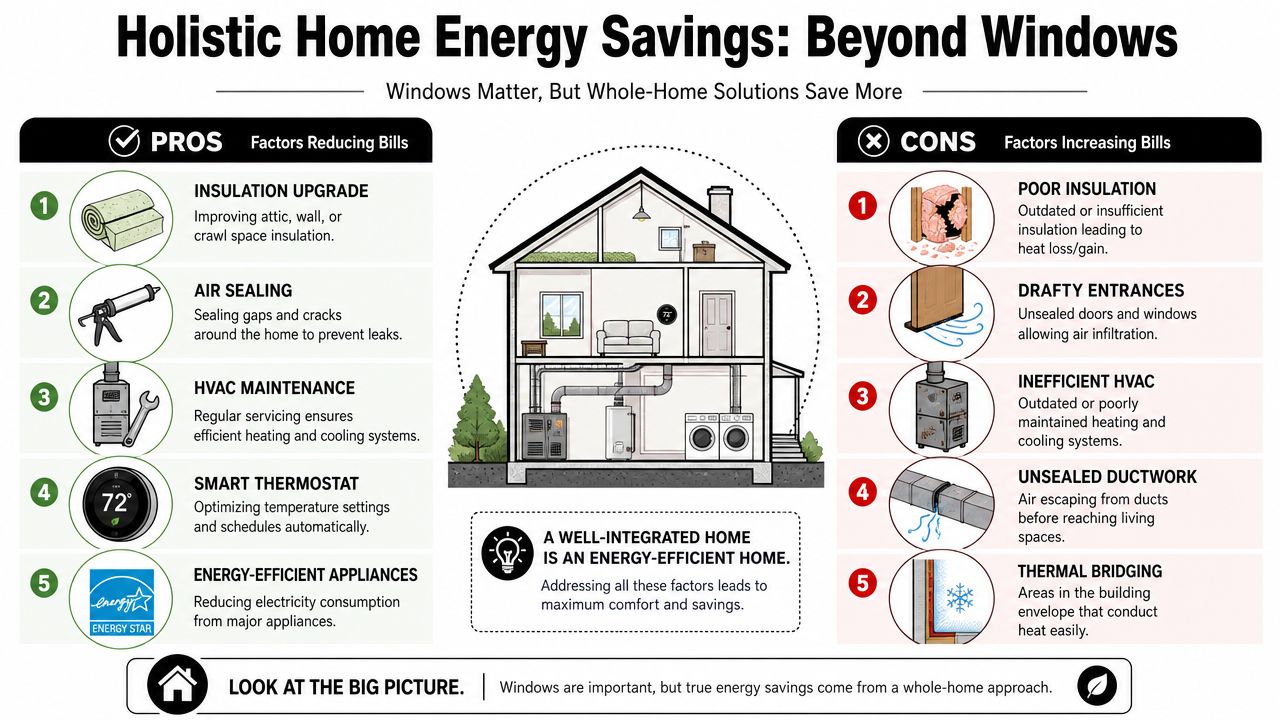
Windows are part of the system
I've seen homeowners replace windows and still feel disappointed because another weak point was doing just as much damage.
Check these areas too:
- Attic insulation: If heat is pouring out the top of the house, windows can't solve that alone.
- Air sealing: Gaps around doors, penetrations, trim, and framing can keep drafts alive.
- HVAC condition: A tired furnace or poorly tuned system can wipe out some of the benefit.
- Duct leakage: If heated air isn't reaching the room properly, comfort suffers no matter how good the glass is.
- Thermostat habits: Settings and schedules still affect what you pay each month.
Installation decides whether the numbers show up
A quality window can underperform if the installer leaves gaps, skips proper insulation around the opening, or doesn't square and seal the unit correctly. In such cases, many homeowners get burned. They buy an efficient product and never get the full result.
That's why I care as much about installation detail as the window spec itself. The frame-to-wall connection has to be sealed correctly. The opening has to be prepared correctly. The finished unit has to operate and lock tightly.
Good windows lower heat loss. Good installation makes that performance real in the house you actually live in.
If your home has several issues at once, tackle the biggest leaks first. But if the windows are visibly failing, drafty, or outdated, replacing them is often one of the most practical energy upgrades you can make because it improves both comfort and operating cost at the same time.
Take the Next Step to a Warmer Idaho Home
So, do new windows save money on heating bills in Idaho? Yes. For many homeowners, they do. The savings are most convincing when you're replacing old single-pane windows, dealing with obvious drafts, or living in rooms that never stay comfortable in winter.
My recommendation for Idaho homeowners
If you're serious about cutting heat loss, focus on the features that matter in this climate:
- Low-e glass
- Gas-filled insulated units
- A low U-factor
- Professional installation that seals the opening properly
Don't buy based on appearance alone. Don't assume every double-pane window performs the same. And don't let a salesperson distract you with vague promises instead of actual performance ratings.
When to move now instead of later
Replace sooner rather than later if any of these sound familiar:
- You still have single-pane windows
- You feel drafts near the sash or frame
- You see recurring condensation
- Some rooms stay cold even with the heat running
- Your furnace seems to run constantly in winter
Those are practical signs, not marketing talking points. In Idaho, they usually mean the windows are costing you money already.
If your existing windows are older double-pane clear glass, the decision is more nuanced. The energy savings may be more modest, but the comfort, noise, and usability improvements can still justify the upgrade, especially in the rooms that bother you most.
The smart next move is simple. Get your current windows evaluated, identify what type you have, and ask for a savings estimate grounded in performance ratings and your home's layout. That's how you make a good decision without guessing.
If you're ready to get real numbers for your home, schedule a consultation with C & C Windows & Doors. A local in-home evaluation can show you which windows are costing you the most, what features fit Idaho's climate, and whether replacement makes sense now or should be phased in room by room.