
Most homeowners ask a simple question: does window replacement increase home value? The short answer is yes, but the number that matters depends on how you define return. If you only care about resale, the benchmark is lower than many people expect. If you care about comfort, lower drafts, and years of use in a Boise home, the value picture gets stronger.
One of the clearest benchmarks comes from Remodeling Magazine's Cost vs. Value data, summarized by Opendoor's review of window replacement ROI. That summary places vinyl window replacement at about 68.5% national ROI and wood window replacement at about 61.2%. That should reset expectations right away. Windows usually help value. They usually don't return every dollar at closing.
For Treasure Valley homeowners, that distinction matters. A family selling soon should judge windows one way. A homeowner staying put through Boise summers and cold snaps should judge them another way. Those are not the same calculation.
Table of Contents
- The Real Answer to Window Replacement ROI
- How ROI for New Windows Is Actually Measured
- Five Factors That Maximize Your Window ROI
- Calculating Your Potential Return in the Treasure Valley
- The Hidden Value Beyond a Simple ROI Number
- So Is Window Replacement a Smart Move for You
The Real Answer to Window Replacement ROI
Regarding window replacement ROI does it increase home value, the honest answer is this: yes, but not in one clean, universal percentage.
In real projects, homeowners usually combine two different returns without realizing it. The first is immediate resale value. That's the amount a buyer may recognize in the home's price or appeal when you list it. The second is long-term owner value, which shows up through improved comfort, lower maintenance headaches, and possible energy savings over the years you stay in the house.
That difference matters a lot in Boise and across the Treasure Valley. If your current windows are drafty, hard to lock, fogged, or visibly worn, replacing them can help your home show better and remove buyer objections. If you plan to stay, the payoff often has less to do with a single resale figure and more to do with day-to-day living in a house that feels tighter, quieter, and easier to manage.
Practical rule: Don't ask only, "Will I get my money back?" Ask, "Do I need this project to pay back at sale, or do I want years of use first?"
A lot of national content compresses everything into one headline number. That's where homeowners get tripped up. A resale benchmark is useful, but it doesn't tell the whole story for someone who isn't moving soon.
In my experience with Treasure Valley homes, the smartest decision starts with timeline. Selling soon calls for disciplined choices that improve appearance, function, and buyer confidence without overbuilding for the neighborhood. Staying long term opens the door to better performance upgrades because you'll be the one enjoying them.
How ROI for New Windows Is Actually Measured
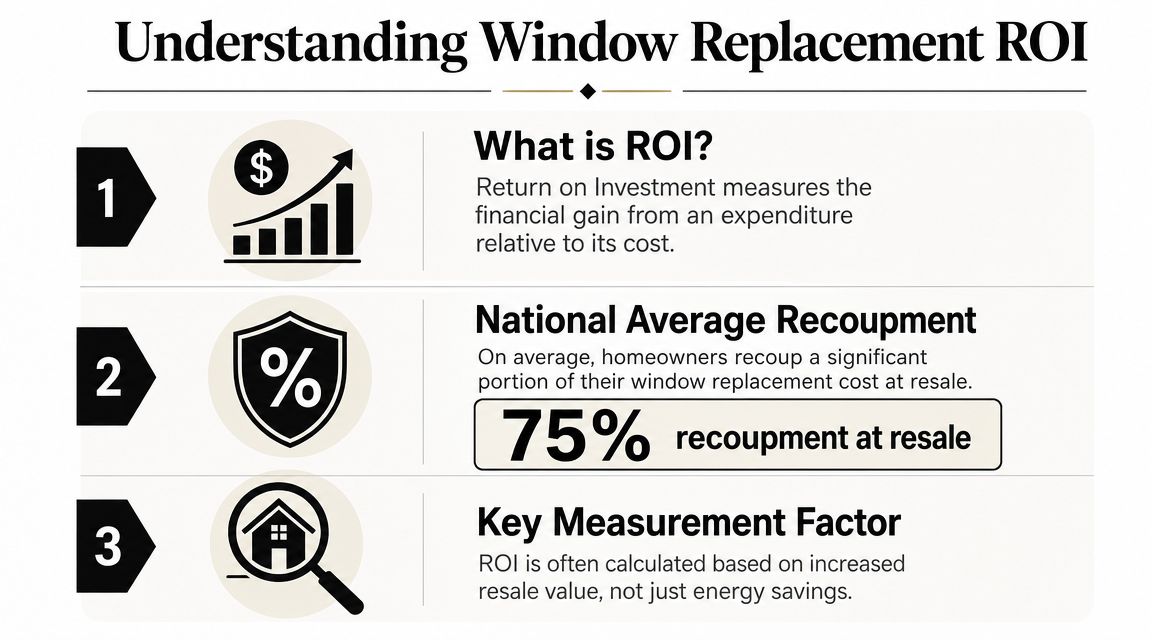
Window ROI gets measured in two different ways in the field, and mixing them is what causes confusion. Appraisers and buyers tend to focus on market value. Homeowners who plan to stay should also look at reduced upkeep, comfort, and utility performance over time.
Market value is usually judged by condition, not by a perfect payback formula
In a resale setting, new windows rarely add dollar-for-dollar value. What they do best is remove visible problems that drag offers down. Fogged glass, peeling frames, failed seals, windows that stick, and locks that do not work cleanly all signal deferred maintenance to buyers.
That matters in Boise because buyers notice function fast during a showing. They open a sash. They look for condensation between panes. They check whether the home feels drafty near larger openings. If the windows feel worn out, the house can read as higher-risk, even when the rest of the property is in decent shape.
So the practical measurement is usually simple. Do the new windows help the home show better, support the asking price, and reduce negotiation pressure after inspection? In many cases, that is how value shows up.
Appraisers and buyers look at windows differently
Appraisers usually do not assign a line-item value for each new window. They look at the home's overall condition, effective age, and how it compares with similar nearby sales. New windows can support a stronger condition rating, especially if the old set was clearly failing, but they are still one piece of the house.
Buyers are less formal, but often more emotional. Clean sightlines, smooth operation, lower outside noise, and a house that feels maintained can improve confidence. That confidence affects how long a home sits, how hard buyers negotiate, and whether window defects come up again during inspection.
Those are real financial effects, even if they do not appear as a neat line on a spreadsheet.
Long-term ROI is measured at your house, not in a national average
Owner value depends on how bad the current windows are and how long you will keep the home. Replacing builder-grade units that still work reasonably well is a different decision from replacing drafty, sun-beaten windows in a west-facing Boise home that gets hammered in summer.
That is why I tell homeowners to run the math from their own starting point. Compare project cost, expected years in the home, likely maintenance savings, and whether improved glass packages make sense for your exposure and comfort goals. If you need local budget ranges before doing that math, this guide to window replacement costs in Boise, Idaho gives you a better starting point than a generic national estimate.
A clean ROI number sounds nice. In practice, window value is measured through resale support, buyer confidence, and the years of use you get before you ever list the house.
Five Factors That Maximize Your Window ROI
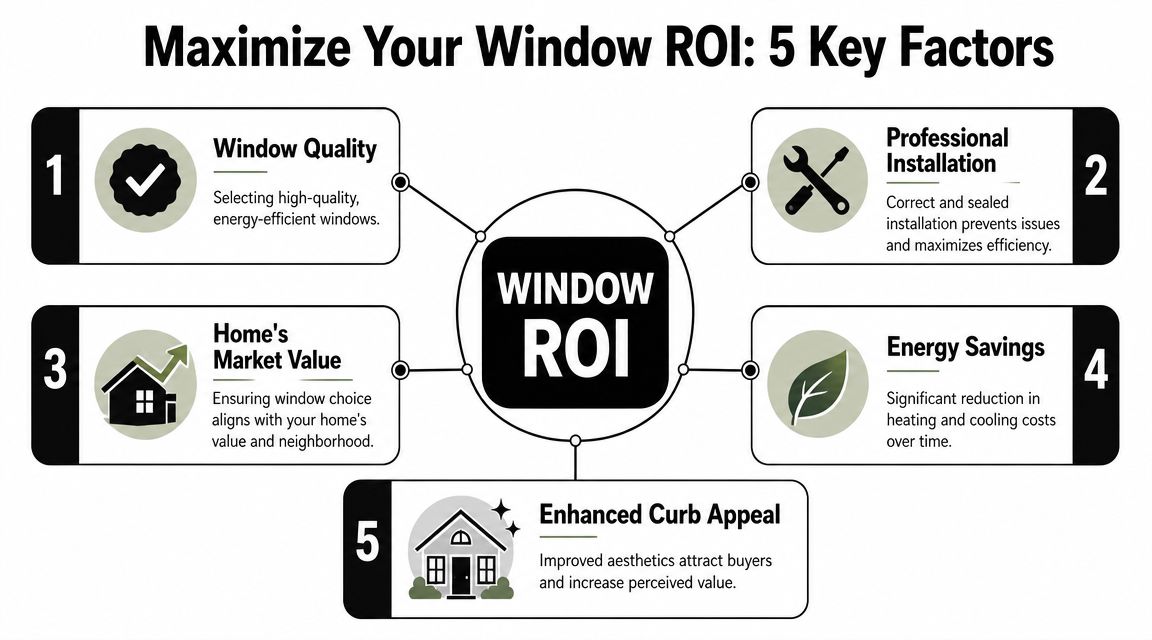
The biggest mistake I see is treating all window replacements like they produce the same return. They don't. The details drive the result, and some choices protect value much better than others.
What moves the return up or down
A useful warning comes from This Old House's discussion of window ROI. It notes that most coverage gives a headline range such as 61% to 85% ROI, but that many articles blend resale value, utility savings, and maintenance savings together. That's exactly why homeowners end up confused. The money that comes back at sale isn't always the same as the value you realize over time.
Here are the factors that make the biggest difference in practice:
Window material and performance
Vinyl often lands in a stronger resale benchmark than wood in the national data cited earlier. Beyond material, the practical issue is whether the unit fits Idaho conditions. Features such as Low-E glass, Argon gas fills, and triple-pane options can make more sense for owners planning to stay longer because they prioritize performance over a fast resale calculation.Curb appeal from the street
Buyers notice windows before they discuss brands or glass packages. If the existing units look worn, cloudy, mismatched, or dated, the home starts the showing process at a disadvantage. Clean sightlines and consistent style usually help more than chasing flashy upgrades.Installation quality
A good window installed poorly can lose a lot of its value. Air leaks, bad trim work, sloppy sealing, and drainage problems don't just hurt performance. They also create the kind of workmanship concerns buyers pick up on quickly.
Choices that usually hold value better
The next two factors are where many Boise homeowners either protect their investment or dilute it.
Current home condition
Replacing windows that are clearly failing is often easier to justify than replacing windows that are merely older. If frames are deteriorated, operation is poor, or seals have failed, new windows solve a visible problem. Buyers tend to respond better when an upgrade removes a known issue instead of adding a feature they didn't ask for.Local market fit
In the Treasure Valley, the best ROI usually comes from matching the window package to the home's price point, style, and neighborhood expectations. Overspending can hurt just as much as under-improving. If you want a practical budgeting reference, this guide on window replacement cost in Boise, Idaho is a good starting point before you compare product levels.
The best window ROI usually comes from fixing the right problem with the right product, not from buying the most expensive option available.
That last point matters more than people think. A homeowner focused on resale should usually choose durable, attractive, efficient windows that look right on the home. A homeowner focused on long-term ownership has more room to prioritize comfort upgrades that may not fully show up in a resale percentage.
Calculating Your Potential Return in the Treasure Valley
The best way to judge this project is to separate two common homeowner situations. One owner plans to list soon. The other plans to stay put and enjoy the house.
The sell soon scenario
If you're likely to sell in the near future, the cleanest way to evaluate windows is with resale-first math. Realtor.com's overview of replacement window value says market-facing summaries commonly report homeowners recover about 70% to 80% of replacement-window costs, with some sources citing up to 85% in stronger cases. That same summary notes that if a homeowner invests $15,000, a 70% recovery rate implies about $10,500 in added resale value.
That doesn't mean every Treasure Valley seller should spend that amount. It means you should think like this:
| Homeowner goal | Main question | Best lens |
|---|---|---|
| Sell soon | Will buyers pay more or hesitate less? | Resale recoupment |
| Stay long term | Will the house feel better and cost less to live with? | Long-term value |
For a Boise seller, replacing visibly bad windows can help in three ways at once. It improves photos, strengthens first impressions during showings, and removes one of the common deferred-maintenance concerns buyers notice right away. Even when the project doesn't return every dollar at closing, it can still support a cleaner sale.
The stay and save scenario
If you're keeping the home, resale is only part of the story. In this regard, many national articles fall short. They flatten a long-term ownership decision into a resale percentage and leave out the lived value of the upgrade.
A longer-term owner should ask:
- Are the current windows hurting comfort? Drafts, hot rooms, and cold spots matter every season.
- Are the current windows creating maintenance issues? Sticking operation, seal failures, and worn frames don't fix themselves.
- Will efficiency upgrades matter to your daily use of the home? If yes, your return isn't limited to what an appraiser or buyer sees.
For Treasure Valley homeowners, this is the better frame: resale value may recover part of the cost later, while the rest of the value is captured while you live there. If that sounds less tidy than a single percentage, that's because it is.
For homeowners focused on utility performance, this article on whether new windows save money on heating bills in Idaho is worth reading alongside a resale analysis. It helps separate monthly-use benefits from sale-day recovery.
A short ownership timeline usually favors modest, market-appropriate choices. A long ownership timeline gives better windows more time to prove their worth.
The Hidden Value Beyond a Simple ROI Number
There are good reasons homeowners replace windows even when they know the resale return won't hit every dollar. The house feels different after the right installation.
Benefits buyers notice and owners feel
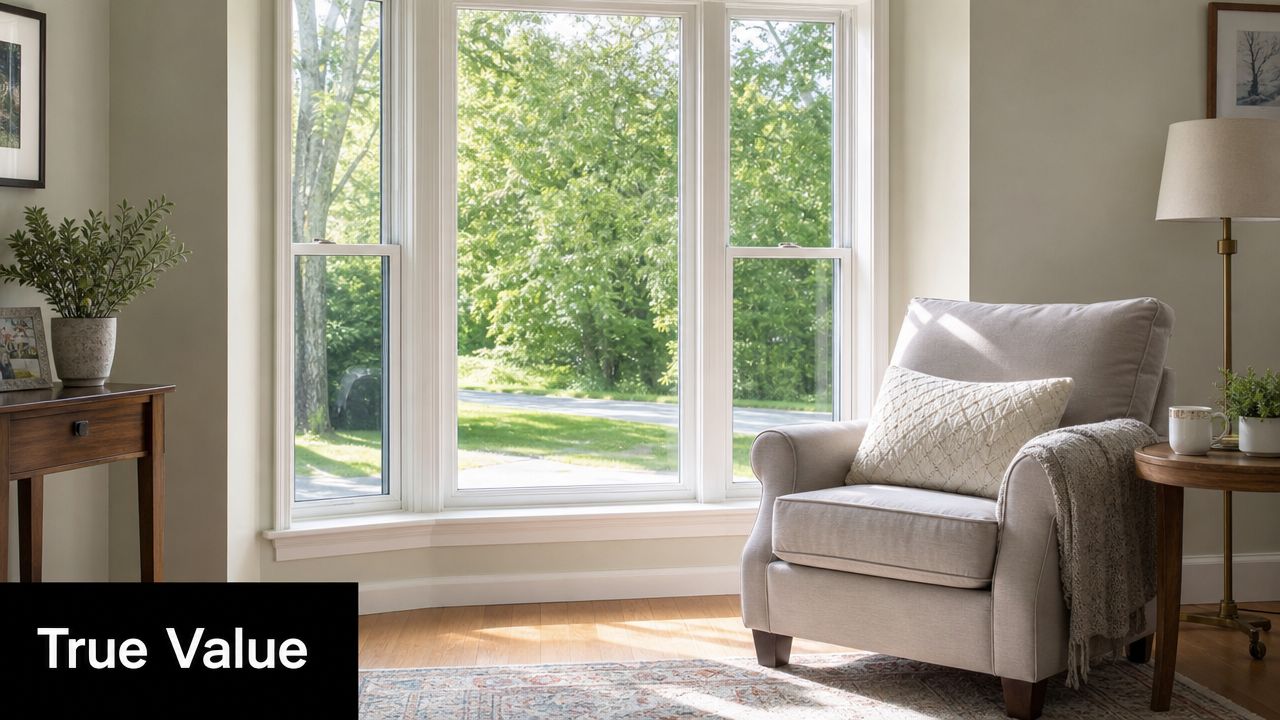
The first hidden value is comfort. Draft reduction changes how a room gets used. Homeowners stop avoiding the seat near the window in winter. Rooms that ran too warm in summer often feel more balanced. That kind of improvement doesn't fit neatly into a resale formula, but it matters.
The second is noise control. In growing parts of Boise, Meridian, Eagle, and nearby communities, outside sound is a real quality-of-life factor. Better glass packages and tighter installation can make interior spaces feel calmer, especially in bedrooms, front living areas, and street-facing rooms.
Other value points are less obvious until you've lived with bad windows for a while:
- Lower maintenance burden that comes with easier-clean surfaces and smoother operation
- Better light quality when old fogged glass is replaced
- Improved security feel from stronger locks and better-functioning windows
- Reduced wear on interiors because the home envelope performs more consistently
A window project often earns its keep by making the home easier to live in, not just easier to sell.
Why risk reduction matters too
Homeowners also underestimate the value of reducing future problems. Poorly performing windows can contribute to ongoing frustration, repeated service calls, trim wear, and moisture concerns around openings. Replacing failing units can be less about chasing ROI and more about stopping a known issue from dragging on.
If your house already feels uncomfortable in winter, this local look at high heating bills in Boise and whether windows are to blame can help you decide whether the problem is cosmetic, functional, or both.
Financing and warranty coverage belong in this conversation too. A project that protects the work, reduces risk, and spreads upfront cost can be a smarter decision than waiting while old windows keep underperforming.
So Is Window Replacement a Smart Move for You
Replace your windows if the project solves a real problem you can already see or feel in the house. In Boise, that usually means rooms that run cold in winter, hot in summer, windows that stick or will not lock well, failed seals, visible wear, or a home that looks dated enough to hurt buyer perception.
A simple way to decide is to run through four questions:
- Are your current windows costing you comfort every season?
- Are there functional failures, like fogging between panes, drafts, rot, or hard operation?
- Will the house hit the market soon, with windows that make the exterior or interior feel older than the rest of the property?
- Are you planning to stay long enough to benefit from lower utility waste and better day-to-day performance?
If you answered yes to one or two, it is worth pricing out the project. If you answered yes to three or four, replacement usually makes financial sense.
The key is to match the window package to your goal. Homeowners selling soon should avoid overbuilding. A solid, well-installed product that fits the price point of the neighborhood usually gives a better outcome than paying for premium upgrades buyers may not fully value. Homeowners staying put can justify more, because the return comes from two places: resale value later and years of lower energy loss, fewer operational issues, and a house that feels better every day.
That split matters in the Treasure Valley. National ROI averages flatten everything into one percentage, but your decision is really about two timelines. Immediate resale ROI asks what buyers in your part of Boise, Meridian, Eagle, Nampa, or Caldwell will recognize and pay for. Long-term ROI asks how much poor-performing windows are costing you month after month in comfort, efficiency, and avoidable frustration.
If you are still on the fence, get the house evaluated instead of relying on a national average or a neighbor's project. A good local assessment should tell you which windows need replacement, which product level fits the home, and whether your likely return is mostly resale-driven, savings-driven, or both.
If you're in Boise or anywhere in the Treasure Valley and want a clear, no-pressure assessment, C & C Windows & Doors offers free in-home consultations, custom measurements, same-day estimates, and expert guidance on replacement windows built for Idaho homes. That gives you a practical cost-benefit view based on your budget, your timeline, and your home's actual condition.