
If your heating bill jumped this winter and the rooms by the windows feel colder than the thermostat says they should, your suspicion makes sense. In Boise, that usually shows up the same way. Cold glass, a little air movement around the sash, a back bedroom that never feels as warm as the hallway, and bills that seem too high for how carefully you're already using the heat.
But “high heating bills in Boise, are your windows to blame?” only has a good answer if you diagnose the house in the right order. Sometimes the glass is the problem. Sometimes it's the frame, the failed seal, the install, or air leakage somewhere else in the home. The expensive mistake is guessing.
Table of Contents
- Your DIY Window Inspection Checklist
- Is It Just the Windows? Spotting Other Energy Vampires
- Understanding Modern Window Technology for the Boise Climate
- Connecting Window Performance to Your Heating Bill
- Choosing Your Upgrade Path from Sealing to Replacement
- Frequently Asked Questions About Boise Window Upgrades
Your DIY Window Inspection Checklist
A lot of homeowners are right to look at the windows first. You spend time near them every day, so comfort problems show up there early. The good news is that you can learn a lot in one evening without taking anything apart.
Start with the windows in the coldest rooms, not the windows that look the oldest. The room that feels uncomfortable is usually giving you the best clues.
Start with the rooms that feel wrong
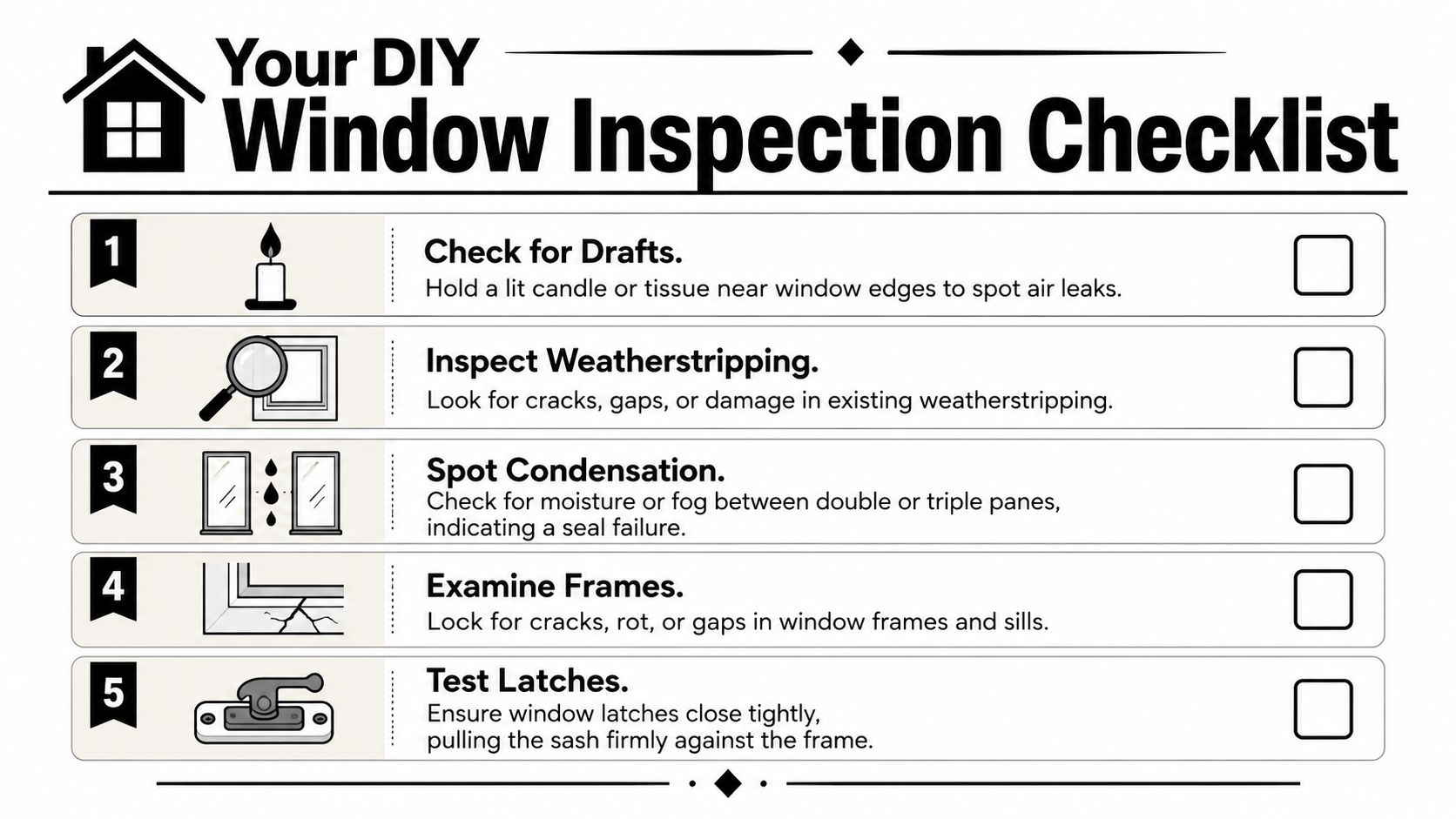
Walk the house early in the morning or after sunset when the temperature difference is more obvious. Put the back of your hand near the glass, then move it around the frame, sash, and stool area.
Here's what each clue usually tells you:
- Cold glass across the whole pane often points to weak insulating performance.
- A narrow stream of cold air at the edge usually means air leakage around the sash, weatherstripping, or frame.
- One room that feels much colder than the rest can mean that room has a window problem, but it can also mean the room is losing heat elsewhere.
Then look closely.
- Condensation between panes is a classic sign of seal failure.
- Cracked caulk, visible gaps, or brittle weatherstripping suggest leakage paths that may be fixable.
- Locks that don't pull the sash tight often leave small but meaningful air gaps.
Use simple tests that show real leakage
The fastest visual test is the smoke or tissue test. On a cold day, close the window, turn off fans if possible, and hold a light tissue or a smoking incense stick near the edges. If the smoke pulls sideways or the tissue flutters in one small area, air is getting in there.
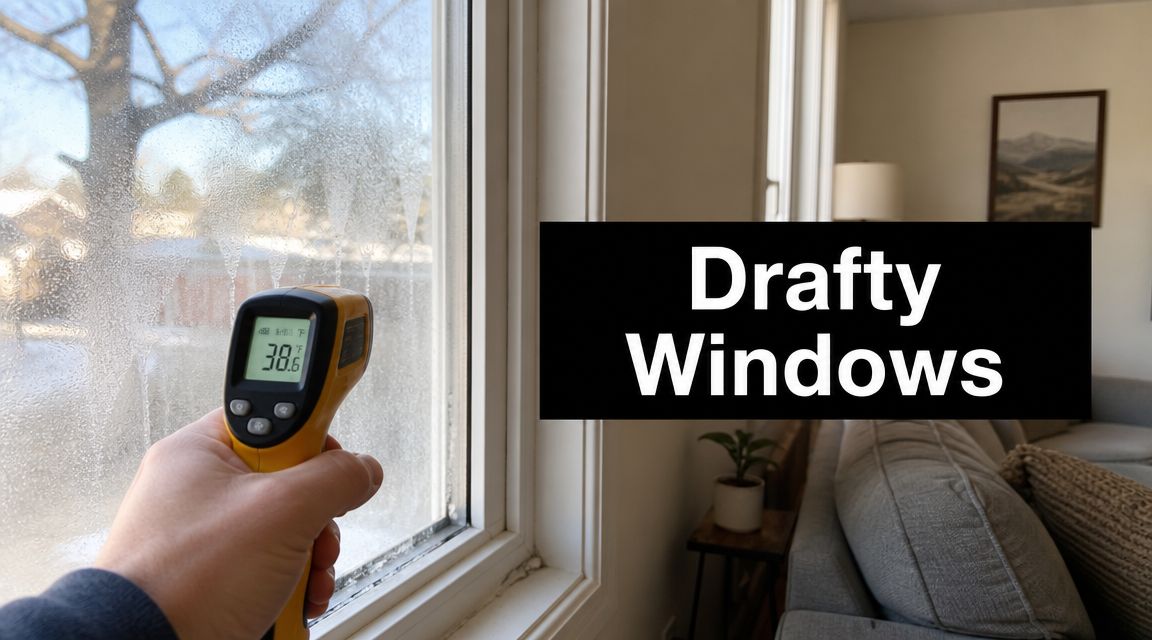
If you own an infrared thermometer, use it as a comparison tool, not a courtroom exhibit. Check the center of the glass, then the edge of the frame, then the wall area beside the unit. You're looking for obvious temperature differences from one spot to another. A dramatic cold band around the perimeter often tells you more than the center of the glass.
Practical rule: If you can feel a draft without using a tool, you already know you have an air leakage problem. The test just helps you locate it.
A latch test matters more than people think. Open and close the sash fully, lock it, then try pressing lightly against the meeting rails. If the sash still shifts easily, the window may not be pulling tight enough to seal.
For a broader list of physical warning signs, this guide on signs your windows need replacing in Idaho is a useful companion to your own inspection.
Know what your results actually mean
Not every failed test means “replace everything.” That's where homeowners often overspend.
Use this quick read:
| What you found | What it often means | First next step |
|---|---|---|
| Draft only at small edge gaps | Localized air leakage | Check weatherstripping, latch fit, caulk condition |
| Fog or moisture between panes | Seal failure in insulated glass | Have the unit evaluated |
| Cold glass but no obvious draft | Older or lower-performing glazing | Compare upgrade options |
| Frame movement, rot, or visible separation | Structural or installation problem | Professional assessment |
| Multiple issues on the same window | Window system is failing, not just one part | Price repair versus replacement |
One more thing matters. A window can have decent glass and still waste money if the frame leaks or the installation was sloppy. That's why a DIY check is best used as a filter. It helps you separate small maintenance problems from situations where a professional assessment isn't optional.
Is It Just the Windows? Spotting Other Energy Vampires
Some homes lose heat through the windows. Some lose it everywhere. If you stop at the glass, you can end up fixing the wrong thing.
That's especially true in older Boise-area homes where comfort complaints come from a mix of weak insulation, loose doors, attic bypasses, and aging window assemblies.
The house works as a system
This is the part many people miss. High heating bills are often not caused by the window glass alone; drafty frames, failed seals, poor installation, and whole-house air leakage can dominate losses. The U.S. Department of Energy notes that windows typically account for only a portion of total residential heat loss. A homeowner can spend on new windows and still see disappointing savings if attic insulation, rim joists, or weatherstripping are the bottlenecks, as summarized in this Boise-focused article on hidden costs of cheap window installation.
That doesn't mean windows don't matter. It means the right diagnosis matters first.
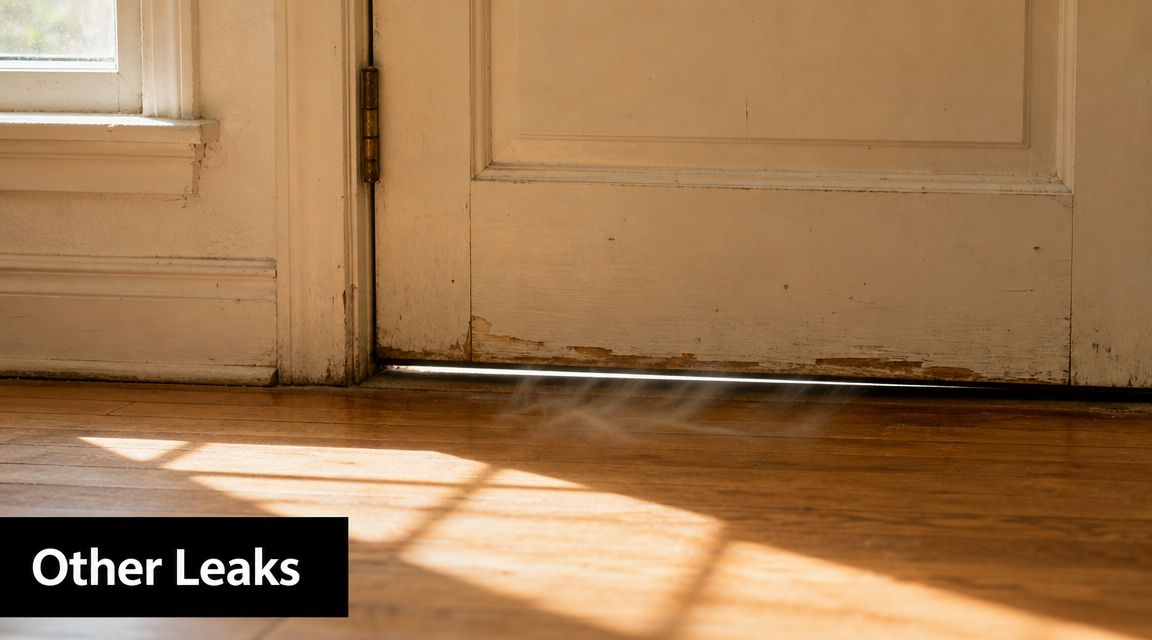
If the attic is leaking air and the front door has daylight under it, new glass alone won't fix the comfort problem you're paying for.
Quick checks beyond the windows
Before you decide the windows are the whole story, do a short house walk.
- Check the attic access point. If the hatch or pull-down stairs feel cold around the perimeter, that opening may be leaking a surprising amount of warm air.
- Look at exterior doors. If you see light at the threshold or feel movement around the jamb, that's heated air leaving the house.
- Inspect baseboards and trim on exterior walls. Small gaps can add up, especially in older homes.
- Pay attention to recessed lights, plumbing penetrations, and wiring penetrations. These hidden bypasses often connect conditioned space to unconditioned areas.
- Stand near rim joists in basements or crawlspace transitions. If those areas feel noticeably colder, they can be part of the problem.
A quick comparison helps:
| Area | Typical clue | What happens if it's leaking |
|---|---|---|
| Windows | Cold glass, drafts, condensation | Local discomfort and room-by-room heat loss |
| Attic | Uneven room temperatures, cold ceilings | Warm air escapes upward fast |
| Doors | Light under threshold, obvious draft | Constant infiltration |
| Rim joists | Cold floors, chilly lower walls | Heat loss at the perimeter |
| Wall and ceiling penetrations | Hard-to-locate drafts | Hidden air leakage |
When homeowners ask whether high heating bills in Boise mean their windows are to blame, the honest answer is often “partly.” If the symptoms are isolated around the windows, that's one thing. If the whole house feels leaky, look wider before spending big.
Understanding Modern Window Technology for the Boise Climate
Once you know the windows are contributing, the next step is understanding what improves performance. A lot of marketing around windows sounds technical but doesn't tell you what matters on a cold Boise morning.
The useful terms are the ones that affect heat loss, air tightness, and long-term performance.
What the important labels mean
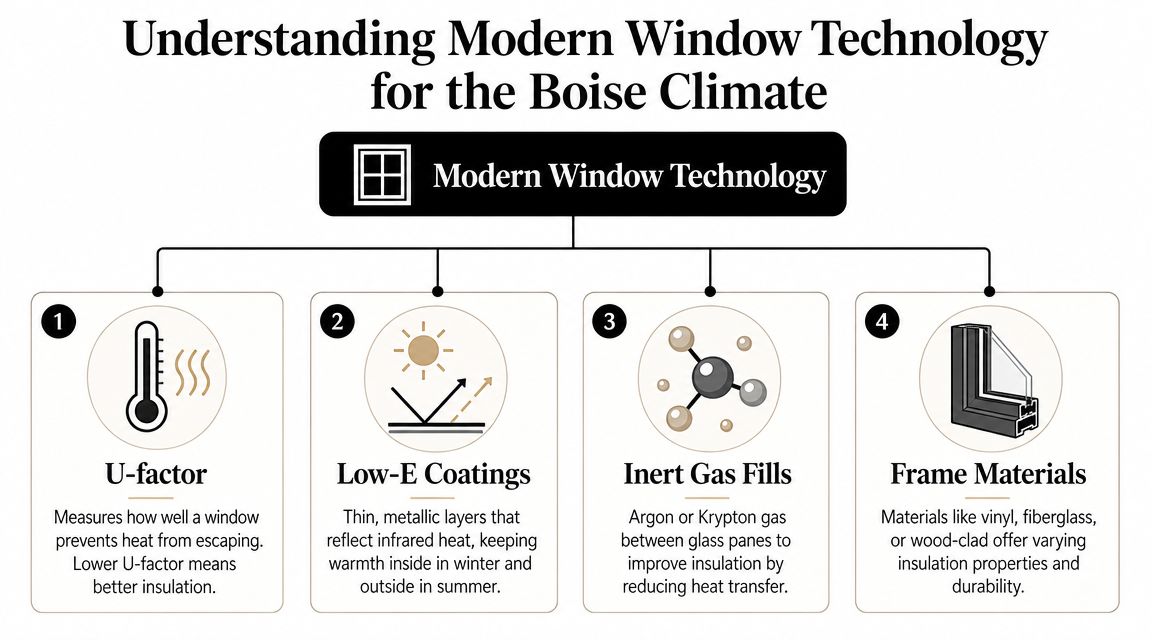
U-factor is one of the first numbers I'd look at for a Boise winter. It measures how well a window resists heat flow. Lower is better. One Boise guide recommends a U-factor of 0.30 or lower for Boise winters and notes that for a typical 2,000-square-foot Boise home with 15 windows, upgrading from single-pane to double-pane Low-E windows typically saves $300 to $500 annually, while triple-pane can raise that to $500 to $700 per year according to this Boise energy-efficiency window guide.
Think of U-factor as the insulation rating you can feel.
Low-E coatings are thin, nearly invisible layers on the glass that help reflect heat. In winter, that helps keep indoor heat from escaping as quickly. Homeowners sometimes assume all double-pane windows perform about the same. They don't.
Gas fills, such as argon, sit between panes and reduce heat transfer better than plain air. This isn't the flashy feature people notice, but it's part of why a modern insulated unit feels different standing next to it.
What matters most in a Boise winter
Frame quality matters too. A good glass package installed in a weak frame doesn't deliver what it should. The spacer system, sash design, and how tightly the operable parts compress against weatherstripping all affect real-world comfort.
Here's the practical version:
- Single-pane glass loses heat fast and usually feels cold to the touch.
- Double-pane Low-E is often the value point for many homes.
- Triple-pane makes more sense where comfort near the window matters a lot, or where exposure is harsh.
For homeowners comparing options, this overview of triple-pane windows for Idaho winters can help clarify where the extra glass is worth it and where it may be more than you need.
Modern window performance isn't one feature. It's the glass package, the frame, the spacer system, and the install working together.
If you remember one thing, remember this. Don't shop by “double-pane” alone. Shop by the full performance package that fits Boise's climate and the specific room you're trying to fix.
Connecting Window Performance to Your Heating Bill
You see it every Boise winter. The thermostat is set where it always is, the furnace keeps running, and one side of the room still feels cold. Then the power bill shows up.
That gap between what you pay and how the house feels is often where window problems show themselves.
Why wasted heat costs more now
Idaho Power filed for a general rate increase of $199.1 million, or 13.09%, and said that if approved, the change would not take effect until at least January 2026. In that same filing, the average Idaho residential customer using 900 kWh per month was projected to see a bill increase of about $21.66 per month, according to Idaho Power's general rate case announcement.
For a homeowner, the takeaway is simple. If your windows leak heat, higher utility rates make that weakness more expensive every month.
I tell Boise homeowners to separate two questions. First, is the house expensive to heat? Second, does the house feel comfortable for what you are spending? If the answer is no, windows belong on the suspect list.
How window problems show up on the bill
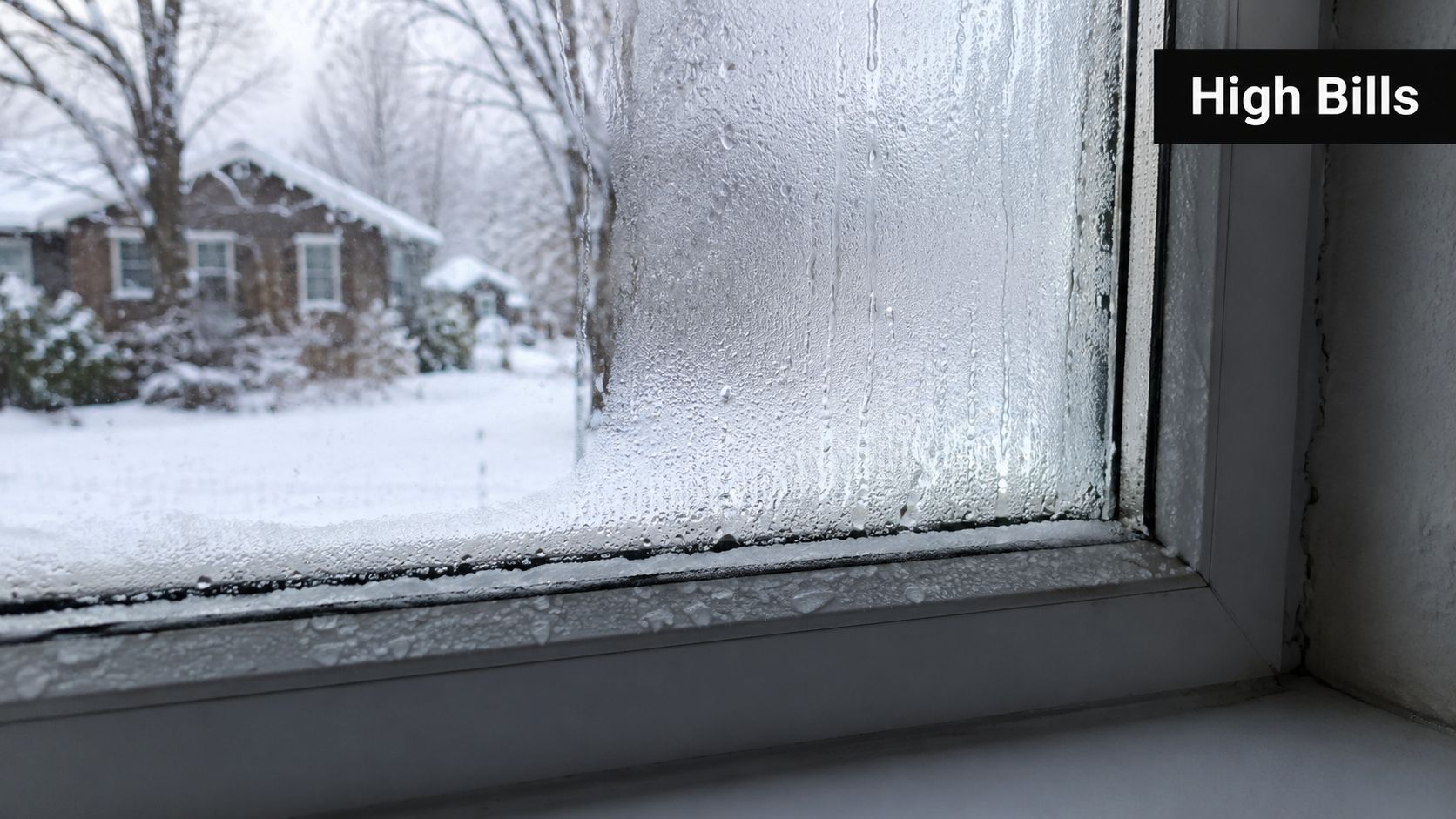
Windows affect heating costs in two main ways. Air leakage lets warmed indoor air escape and pulls cold outside air in. Heat transfer through cold glass and weak frames makes the furnace replace lost warmth even when the window is closed tight.
That second problem gets missed all the time. A window can feel drafty because the glass surface is cold, even if there is no obvious whistle or moving air. The room still feels uncomfortable, and the heating system still works harder.
Use this practical test:
- Pull a few winter bills. Look for months where usage jumps but comfort does not improve.
- Match those bills to specific rooms. Bedrooms over garages, west-facing living rooms, and older additions often show problems first in Boise homes.
- Check whether the issue is isolated or house-wide. One bad room points to a local window or insulation problem. Several rooms with the same symptoms can point to older windows throughout the house.
- Decide whether the problem is fixable or stacked. If you have drafts, cold glass, condensation, and sticky operation together, patching one item rarely solves the full problem.
A simple way to connect symptoms to cost
| What you notice | What is probably happening | Likely effect on heating cost |
|---|---|---|
| You avoid sitting near the window | Glass surface is too cold | Heat loss and comfort loss, even with the system running |
| You feel air movement at the sash or trim | Air leakage at operable parts or installation gaps | Furnace runs longer to maintain set temperature |
| One room never catches up | Window performance is weaker than the rest of the house | More energy gets used in that zone without solving comfort |
| Fogging between panes | Insulated glass seal has failed | Window insulating value drops |
| Caulk and weatherstripping keep failing | Age, movement, or poor installation is catching up | Ongoing repair costs with limited savings |
That last point matters. Homeowners often ask whether they should keep sealing and adjusting or stop putting money into old units. If you are weighing that decision, this guide on when to repair windows and when replacement makes more sense will help frame it.
When a professional assessment is worth it
A DIY inspection can tell you a lot. It cannot always tell you how much of the bill is tied to the windows versus attic insulation, duct leakage, or a hard-working furnace.
Professional evaluation makes sense when the signs line up. High winter bills, persistent cold rooms, visible seal failure, recurring condensation, or multiple windows that no longer close and compress properly usually mean the problem has moved past basic maintenance.
That is the point where you stop guessing. You identify whether the money is being lost at the glass, the sash, the frame, the install, or somewhere else in the house. That is how you get from "my bill is high" to a fix that matches the problem.
Choosing Your Upgrade Path from Sealing to Replacement
After a Boise homeowner figures out which windows feel cold, leak air, or show seal failure, the next question is practical. What fix is enough, and what fix is just throwing more money at an aging unit?
In my experience, the right path usually falls into three categories. Tune and seal it. Repair specific parts. Replace the whole unit because the window has moved past economical repair.
When a repair is enough
A lot of windows do not need immediate replacement.
If the frame is still solid, the sash lines up correctly, and the insulated glass has not failed, a targeted repair can restore a fair amount of performance. New weatherstripping, fresh perimeter caulk, hardware adjustment, or replacing worn balances can tighten up a window that still has good bones.
A repair candidate usually checks most of these boxes:
- The frame is stable with no rot or soft spots
- The sash opens, closes, and locks without force
- The glass is clear, with no fogging between panes
- The air leak is coming from one identifiable spot
- The unit is not near the end of its service life
That last point matters. A 25-year-old window with several small problems often turns into a yearly repair project.
When replacement is the smarter move
Replacement starts to make more sense when the problem is built into the window, not sitting on the surface. Failed insulated glass, warped frames, repeated condensation issues, recurring drafts after prior repairs, and installation defects usually fall in that category.
Research summarized in this article on whether your windows might be to blame for a high energy bill found that in climate zones 3 through 8, retrofit glazing improvements over single-pane windows were cost effective, with SIR values of 1.2 to 3.2, source-energy savings averaging 16% to 19%, and simple payback in the 11 to 14 year range.
That lines up with what Boise homeowners see in older houses with original single-pane units. The bill comes down some, but the bigger difference is usually comfort. Rooms stop feeling cold around the perimeter, and the furnace does not have to run as long to recover.
Use this table as a quick sorting tool:
| Condition of existing window | Better path |
|---|---|
| Minor leakage at trim or sash contact points | Seal and adjust |
| Hardware issue, solid frame, good glass | Repair |
| Fogging or moisture between panes | Evaluate replacement |
| Rot, movement, or chronic air leakage | Replace |
| Older single-pane window with several comfort complaints | Replace or major retrofit |
If you are trying to sort out that line, this guide on when to replace windows vs repair them gives a useful side-by-side breakdown.
Why installation quality decides whether the upgrade pays off
In such situations, good product choices get wasted.
Homeowners sometimes focus on glass package alone and miss the opening itself. I have seen expensive replacement windows installed into out-of-square frames with gaps at the perimeter, little insulation around the opening, and sloppy exterior sealing. On paper, the window was an upgrade. In the house, the room still felt cold.
Installation details decide whether the performance you paid for shows up in January. Proper measurement, square placement, insulation around the frame where appropriate, air sealing, and sound trim and flashing work all matter.
Professional assessment is usually required when you find any of the following:
- Frame damage or visible separation at the opening
- Repeated moisture staining or water entry
- Openings that are out of square
- Clear signs of poor past installation
- Several windows failing in different ways across the house
At that point, the job is not just choosing glass. The job is figuring out whether the loss is coming from the sash, the frame, the rough opening, or the way the window was installed. A local company such as C & C Windows & Doors can assess whether sealing, selective replacement, or full replacement makes sense based on the condition of the opening itself.
The right upgrade path is the one that fixes the main source of heat loss and holds up through a Boise winter.
Frequently Asked Questions About Boise Window Upgrades
How do I know if my windows are really causing the high bill?
Start with symptoms that show up at the window itself. Drafts at the frame, fogging between panes, cold glass, and rooms that stay uncomfortable even when the heat is running all point in that direction. If the whole house feels leaky, you may need a broader home assessment.
What kind of first-year savings are realistic?
It depends on what you have now. If you're replacing older single-pane units, Boise-focused guidance says Energy Star certified windows can save $125 to $465 per year depending on climate zone, and for a typical Boise home discussed earlier, double-pane Low-E and triple-pane upgrades can save more than that depending on the setup already in place. The exact outcome depends on the existing window, installation quality, and the rest of the building shell.
Are new windows worth it in an older Treasure Valley home?
Often, yes. Older homes commonly have a mix of air leakage, aging frames, and lower-performing glass. The key is not assuming the windows are the only issue. When they are a major weak point, replacement can improve comfort as much as cost control.
How long does a whole-home replacement take?
That depends on the number of windows, access, trim conditions, and whether any openings need corrective work. A contractor should give you a specific installation schedule after measuring and inspecting the existing openings.
Should I try sealing first?
If the problem is minor and localized, yes. If you have seal failure, chronic drafts, or deteriorated frames, sealing is often just a short-term patch.
If you're trying to figure out whether your high heating bills are really tied to failing windows, C & C Windows & Doors offers Boise-area homeowners in-home evaluations, custom measurements, and replacement options built around Idaho's climate. It's a practical next step when you want a clear answer before spending money on the wrong fix.