
If you're sitting in a Boise living room in January with the thermostat turned up, but the chair by the window still feels cold, you're not imagining it. The same house can feel completely different in July, when one west-facing room gets so warm in late afternoon that everyone avoids it until sunset. That's a common Treasure Valley pattern, especially in homes with older windows or patio doors.
A lot of homeowners assume this is just part of living in a four-season, high-desert climate. It isn't. In many cases, the problem isn't your furnace or air conditioner. It's the glass, the frame, the weatherstripping, and the way the whole window system handles heat, sunlight, and air leakage.
Boise Custom Windows and Doors sits right in the middle of that conversation because this isn't just about looks or curb appeal. The company has a documented Boise-area history, a founder-led construction background, and a service focus that includes replacement windows, doors, expansions, and new openings for homeowners across Boise and the Treasure Valley, as described on the Boise Custom Windows and Doors website. For a homeowner, the bigger question is simpler: what do modern windows change in daily life?
Table of Contents
- Tired of Drafty Winters and Hot Summers in Boise
- Understanding Low-E Glass and Modern Window Technology
- How Window Performance Is Measured for the Boise Climate
- The Real-World Benefits Energy Savings and Home Comfort
- Choosing Your Custom Window and Door Package
- How to Choose a Reputable Boise Window Installer
- Frequently Asked Questions About New Windows and Doors
Tired of Drafty Winters and Hot Summers in Boise
On a January morning in Boise, the thermostat may say 70, but the chair by the window still feels chilly. In July, that same room can turn stuffy by late afternoon, especially on the west side of the house when the sun has been beating on the glass for hours. That mismatch confuses a lot of homeowners because the HVAC system seems to be running, yet the room never feels settled.
In Boise's high-desert climate, windows and doors do more than let in light. They act like a filter between your living space and a year of sharp weather swings. Winter brings cold air and radiant heat loss. Summer brings intense sun, dry heat, and long bright afternoons. If the glass, frame, and seals are outdated, your home feels every bit of that swing, and your heating and cooling equipment has to work harder to keep up.
Older windows usually show their age in a few predictable ways. You may feel a cool draft near the glass, notice rooms that heat up too fast in summer, or see certain areas of the house stay uncomfortable no matter how often the thermostat changes. Worn weatherstripping, aging seals, and older glass packages often play a bigger role than homeowners expect.
Practical rule: If one room is always colder or hotter than the rest of the house, check the windows and doors in that room before assuming the furnace or air conditioner is the main problem.
Boise homes add another layer to the decision. A shaded North End home, a newer Meridian build with broad sun exposure, and a foothills property that catches more wind do not all need the same window package. The right choice depends on orientation, elevation, shade, and how each room is used day to day. A bedroom that stays cold on winter nights has a different comfort problem than a great room that overheats every summer afternoon.
That is why replacing windows is not just about "energy efficiency" in the abstract. It is about reducing the cold-wall effect in winter, limiting harsh solar heat in summer, and making the temperature near the window feel closer to the temperature in the middle of the room. Homeowners researching options for colder weather performance often start with triple-pane windows designed for Idaho winters, especially for exposed rooms or homes where winter comfort is a constant complaint.
Good window choices can lower energy use, but the first change many Boise homeowners notice is simpler. The house feels more even, less drafty, and easier to keep comfortable through all four seasons.
Understanding Low-E Glass and Modern Window Technology
On a Boise January morning, you can stand a few feet from an older window and feel chilly even with the heat running. In July, that same spot can feel like a sun lamp by late afternoon. Modern window technology is built to calm down those swings.
Low-E glass is a big part of that change.
Why the glass matters more than most people think
Low-E stands for low emissivity. The name sounds technical, but the job is simple. The glass gets an extremely thin coating that reflects certain kinds of heat energy while still letting daylight pass through.
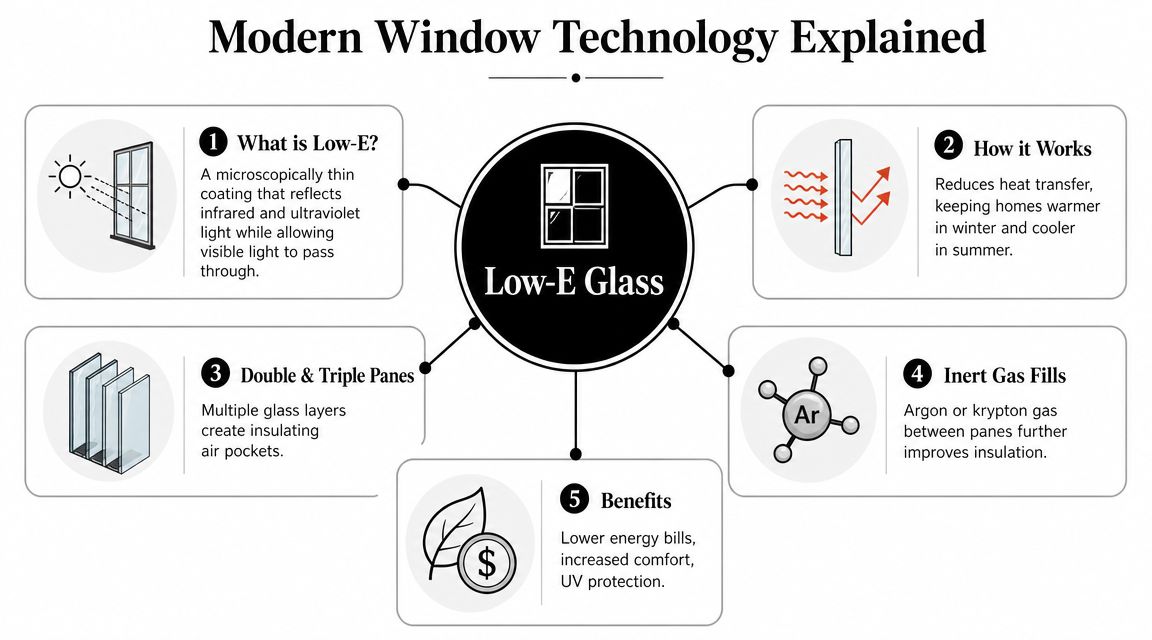
Glass without that coating acts more like an open lane for heat. Low-E glass works more like a traffic officer. In winter, it helps keep furnace-heated warmth from radiating outward too quickly. In summer, it helps limit how much solar heat comes through the glass and builds up in the room.
That matters in Boise because our climate asks windows to do two jobs well. We get cold winter nights, strong summer sun, dry air, and plenty of bright days. A window that performs well in a mild coastal climate may not solve the same comfort problems here, especially on west-facing rooms that bake in summer or bedrooms that feel cold before sunrise.
Homeowners hear terms like Low-E, argon, spacer, and triple-pane and often assume they are separate upgrades. They work more like layers in a winter jacket. One layer helps, but the full system is what changes how the room feels.
Here is the plain-English version:
- Low-E coating manages radiant heat.
- Double or triple panes add insulating layers.
- Argon gas fill slows heat transfer better than regular air.
- Warm-edge spacers and strong seals reduce heat loss around the edges, where many older windows struggle most.
What double-pane and triple-pane really mean
A double-pane window has two sheets of glass with a sealed space between them. A triple-pane unit adds a third sheet and a second sealed space. More layers usually mean better resistance to outdoor temperature swings, but that does not mean every Boise home needs triple-pane in every opening.
Placement matters.
A north-facing bedroom, a windy foothills exposure, and a large west-facing living room often benefit more from higher-performing glass than a smaller shaded window on the south side. That is why homeowners comparing cold-weather comfort often look at triple-pane windows for Idaho winters when certain rooms stay uncomfortable no matter how often the thermostat runs.
The space between panes matters too. Many well-built windows use argon gas because it slows heat movement better than ordinary air. You never see that feature after installation, but you can notice it on a cold evening when the inside glass surface feels less icy and the room feels steadier near the window.
Low-E coatings also come in different versions. Some are designed to welcome more of the sun's warmth. Others are designed to block more of it. That choice affects comfort just as much as efficiency. In Boise, the right coating often depends on the home's orientation, the amount of summer sun each room gets, and whether the homeowner is trying to solve winter chill, summer overheating, or both.
A good modern window is a system, not a single feature. The glass, the gas fill, the spacer, the frame, and the seal all work together. If one part is weak, the whole unit performs more like a mediocre cooler than a high-performing one.
That is also why larger glass areas deserve extra attention. Big picture windows, sliding doors, and custom openings can bring in beautiful light, but they also have more surface area for heat gain and heat loss. In Boise's four-season climate, the technology choice directly affects whether those big openings feel pleasant year-round or turn into the hottest and coldest spots in the house.
How Window Performance Is Measured for the Boise Climate
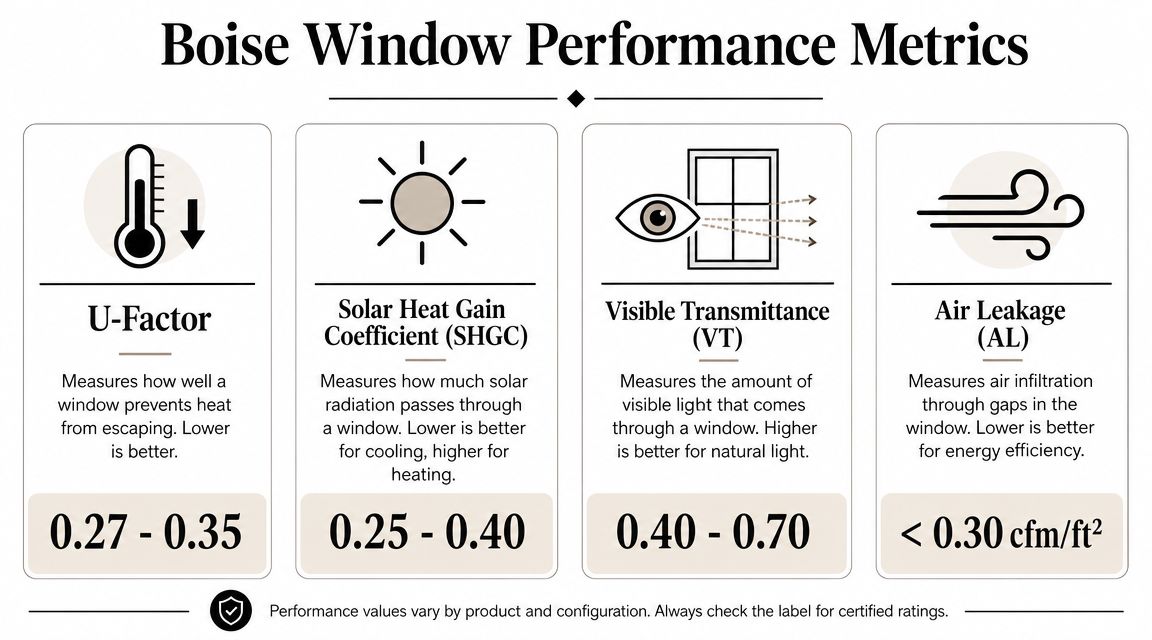
Window labels can feel like a wall of abbreviations. For Boise homeowners, two ratings do most of the heavy lifting when you're trying to understand how a window will behave through the year: U-Factor and Solar Heat Gain Coefficient, usually shortened to SHGC.
U-Factor and why winter comfort starts there
U-Factor measures how well a window resists heat loss. Lower is better. If you're tired of that chilled-air feeling near the glass on a cold morning, this is one of the first ratings to pay attention to.
In Boise, winter discomfort often isn't just outdoor temperature. It's the combination of cold glass surfaces, air movement near the window, and the body's tendency to sense radiant heat loss. That's why older windows can make a room feel cooler even when the thermostat says the air temperature is fine.
When you compare options, think of U-Factor as your insulation number for the whole window system, not just the center of the glass. A better-performing unit can help the inside surface of the glass stay closer to the room's temperature. That reduces the cold-wall effect people complain about every winter.
SHGC and the summer sun problem
SHGC tells you how much solar heat passes through the window. This matters a lot in Boise because we get strong sun, clear skies, and rooms that can heat up quickly, especially on the west and south sides of a house.
A lower SHGC generally means the window blocks more solar heat. That can help in bright summer conditions. But there isn't one perfect number for every room. A shaded north-facing bedroom doesn't face the same problem as a west-facing family room with a big picture window and no exterior shade.
Here's a simple way to think about climate matching:
| Rating | What it affects | In Boise it matters because |
|---|---|---|
| U-Factor | Heat loss | Winters expose weak insulation fast |
| SHGC | Solar heat entering the room | Summer sun can overheat rooms by afternoon |
| Air Leakage | Draft potential | Wind and worn seals make comfort uneven |
| Visible Light | Daylight | You want light without turning the room into a greenhouse |
If a room is sunny but uncomfortable, don't focus only on the amount of glass. Focus on how that glass is rated.
Boise's climate rewards balance. Homeowners usually want natural light, winter insulation, and summer control without making the house feel dark. That's why the right answer often depends on orientation, room use, and glass area instead of one blanket choice for the whole house.
The Real-World Benefits Energy Savings and Home Comfort
On a January morning in Boise, the thermostat might say 70, but the chair by the window can still feel like the wrong place to drink coffee. In July, that same room can turn bright and stuffy by late afternoon. That gap between the thermostat reading and how the room feels is where better window and door choices make a daily difference.

What the savings can look like
Utility savings matter, but they need context. According to ENERGY STAR's savings estimates for replacing windows, homeowners can save about $101 to $583 per year when replacing single-pane windows with certified models, and about $27 to $197 per year when replacing double-pane clear glass windows.
That range is wide for a reason. A shaded single-story home with decent existing windows will not behave like a two-story house with older glass, large west-facing rooms, and long afternoon sun. Boise's climate tends to expose weak spots in both seasons, so the payoff often shows up most clearly in rooms that run cold in winter or overheat in summer.
Money is only part of the value decision. If the house feels steadier from room to room, and your furnace or air conditioner does not have to work as hard to chase temperature swings, that improvement matters every day.
Comfort changes you notice without looking at a utility bill
Comfort improvements are often easier to notice than the monthly bill. Homeowners usually describe the change in plain language. The bedroom feels less chilly before sunrise. The family room stays usable at 5 p.m. The spot next to the glass no longer feels like a separate climate zone.
A window upgrade can improve comfort in a few specific ways:
- Less winter chill near the glass: Better-insulated glass and tighter frames help reduce the cold-surface effect that makes nearby seating uncomfortable.
- Lower summer heat buildup: Solar-control options can cut down on the intense sun load that hits many Boise homes on west and south exposures.
- Fewer temperature swings from room to room: The house often feels more even, instead of having one room that is always too hot or too cold.
- Reduced fading: Many modern glass packages block a meaningful amount of UV radiation that can wear on floors, rugs, and furniture.
- Quieter interior spaces: Multiple panes, better seals, and tighter installation can soften outside noise from streets, neighbors, and yard equipment.
That last point surprises people. A good window package works a bit like a better insulated cooler. It slows unwanted heat movement, but it also creates a tighter barrier against air and sound. In Boise, where winter cold snaps and strong summer sun both put pressure on the house, that added control often matters more than a simple sales claim about efficiency.
Doors deserve the same attention. Large glass openings can be one of the biggest comfort variables in a room, especially if they face afternoon sun or catch winter drafts. If you are evaluating that part of the house too, this guide to sliding patio door replacement in Boise explains what to look for in glass, weatherstripping, and overall performance.
The best upgrade usually feels boring in the best way. The room just starts feeling normal, morning to night.
Choosing Your Custom Window and Door Package
The right package depends on where the opening sits, how the room is used, and what bothers you most right now. If your main complaint is winter chill, your priorities may differ from someone who's fighting harsh west sun in a great room.
Matching glass packages to the way you live
A useful first decision is double-pane or triple-pane. Both can be strong options. The better choice depends on your house and your tolerance for temperature swings, outside noise, and budget.
Here is a practical comparison table for Boise homes.
Window Performance Options for Boise Homes
| Window Option | Winter Insulation (U-Factor) | Summer Heat Blocking (SHGC) | Best For |
|---|---|---|---|
| Double-pane Low-E | Lower U-Factor is generally better for winter comfort | Balanced SHGC helps manage sun without making rooms feel dim | Many standard replacement projects |
| Triple-pane Low-E | Typically stronger insulation than double-pane configurations | Can be paired with solar-control glass for demanding exposures | Colder rooms, larger openings, homeowners prioritizing comfort |
| Double-pane with solar-control emphasis | Solid insulation with stronger focus on sunlight management | Lower SHGC is often useful for bright west and south exposures | Rooms that overheat in summer |
| Triple-pane for premium performance | Highest comfort-focused package in many lineups | Useful where both cold winters and intense summer sun matter | Main living spaces and larger custom openings |
Notice what's missing from that table: exact one-size-fits-all ratings. That's intentional. The right spec depends on the manufacturer, the frame, and the orientation of the window.
Styles and door choices that affect daily use
Style changes performance too, though not always in the way homeowners expect.
- Casement windows close tightly and are often a smart fit where draft control matters.
- Double-hung windows are familiar and versatile, especially in bedrooms and traditional elevations.
- Picture windows don't open, which can make them useful for big views and daylight where ventilation isn't needed.
- Sliding windows work well in spaces where a projecting sash would get in the way.
Doors deserve the same attention. A large slider or bi-fold opening can transform a room, but the hardware, sill design, weatherstripping, and glass package all affect how comfortable that opening feels in January and July. Homeowners comparing configurations can review practical patio door considerations in this guide to sliding patio door replacement in Boise.
One Boise-based option in this category is C & C Windows & Doors, which offers Mezzo replacement windows with composite-reinforced sashes, Low-E glass packages, argon gas fills, and styles such as double-hung, casement, picture, and sliding windows, along with sliding and bi-fold patio doors. Those details matter because frame strength, sash design, drainage, and locking hardware all shape the day-to-day experience just as much as the glass itself.
When you're narrowing choices, bring it back to real use:
- Cold bedroom over the garage: prioritize insulation and air sealing.
- Bright family room with late-day sun: look closely at solar control.
- Big backyard opening: balance glass area, door function, and weather performance.
- Street-facing office or nursery: ask about packages that also improve sound control.
How to Choose a Reputable Boise Window Installer
A Boise installation crew can make the difference between a room that feels steady year-round and one that still swings from chilly in January to overheated in August. The window itself matters, but installation is what turns lab-tested performance into real comfort inside your home. If the fit is off, the air sealing is sloppy, or the exterior weatherproofing is rushed, you can end up paying for good glass and getting mediocre results.
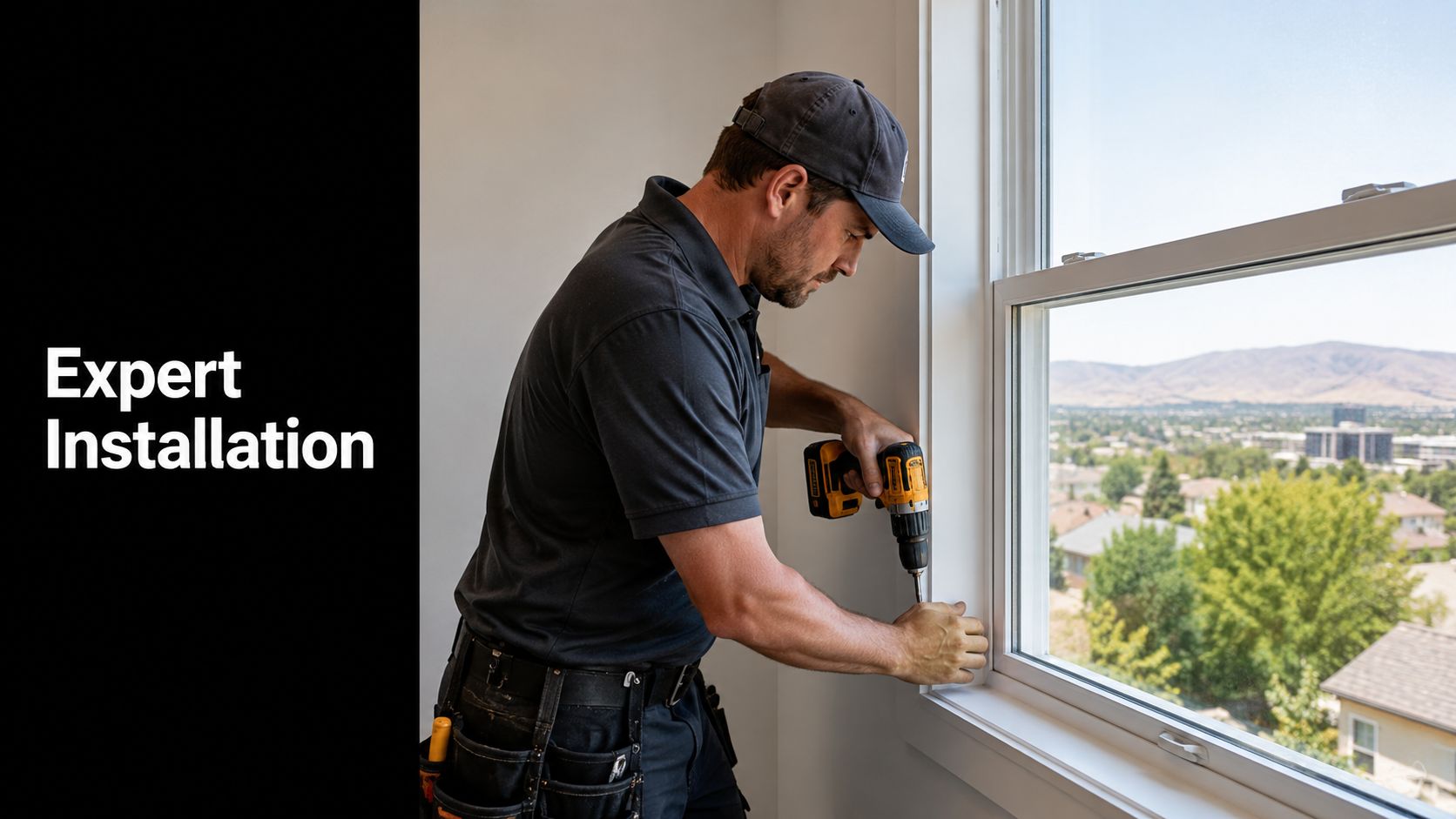
Boise's high-desert climate makes those details easier to notice. Dry summer heat, cold winter mornings, strong sun, and wind all test the edges of a window opening. A small measurement error can leave a sash harder to operate. A missed sealing step can create a draft near the chair by the window. Poor flashing or drainage planning can let water go where it should not.
Questions worth asking before you sign anything
A good installer should explain the process the same way a good mechanic explains a repair. Plain language. Clear sequence. No vague answers.
Ask questions like these:
- Who takes the final measurements? Custom windows have very little tolerance for guesswork.
- How is the old unit removed without damaging surrounding trim or siding? The removal method affects the finished result.
- What air sealing materials do you use around the frame? This helps you understand how the installer plans to control drafts in winter and heat gain in summer.
- How do you handle exterior flashing and water management? Water control is just as important as insulation.
- Who handles cleanup and disposal? Care during the last hour of the job usually reflects care during the first hour.
- What warranty applies to the installation labor? Product coverage and workmanship coverage are different.
If you want a practical example of what to look for, this overview of a local Treasure Valley window company shows the kind of information a homeowner should be able to get before agreeing to a project.
What a reputable installer looks like in practice
Look for consistency more than polish. An installer should measure carefully, explain why a certain replacement method fits your home, and connect product choices to Boise conditions instead of repeating generic energy-saving claims.
That is one reason homeowners often prefer working with established local companies such as C & C Windows & Doors. The useful signal is not hype. It is whether the company can walk you through consultation, measurement, installation, and follow-up service in a way that makes technical details easier to understand. If a contractor can explain why one room needs better solar control and another needs tighter air sealing, you are probably talking to someone who understands how windows behave in real houses.
Local experience also helps because Boise-area homes vary a lot. An older home may have settling, out-of-square openings, or trim details that require extra care. A newer home may have large glass areas that amplify afternoon heat. A qualified installer should be able to spot those conditions, explain the tradeoffs, and set realistic expectations before the order is placed.
One more practical check helps. Read the proposal closely. You want to see what is included, what materials are used, who is responsible for finishing details, and how service issues are handled later. If the paperwork is vague and the explanations stay vague, keep looking.
A trustworthy installer leaves you with fewer question marks, lower odds of comfort problems, and a better chance that your new windows will perform the way they were designed to in Boise.
Frequently Asked Questions About New Windows and Doors
Do new windows help with outside noise
They often do. Multi-pane glass, tighter seals, and better overall construction can reduce how much outside sound enters the room. Homeowners usually notice this most in bedrooms, offices, and street-facing rooms.
How long does a replacement project take
The timeline depends on how many openings are involved, whether the units are standard replacements or custom sizes, and whether the project includes trim or structural changes. A careful installer should explain the sequence clearly, from consultation and measurement to ordering, installation, and cleanup.
Are patio doors worth upgrading if the old one still opens
Sometimes yes. A door can still slide and still be underperforming. If you feel drafts, see condensation issues, or avoid sitting near the opening in extreme weather, the problem may be comfort and energy performance rather than basic function.
What does a lifetime limited warranty usually mean
It usually refers to defined coverage on the product and, in some cases, the labor, but the exact terms matter. Ask what components are covered, what isn't, whether coverage transfers, and who handles service if something needs attention later.
Should every window in the house use the same glass package
Not always. Many homes benefit from matching the glass package to the room's exposure and use. The sunnier and more demanding the location, the more important it is to choose thoughtfully.
If you're weighing window or patio door replacement in the Treasure Valley, C & C Windows & Doors is one local option to contact for an in-home consultation, custom measurements, and a detailed look at glass packages built for Boise's four-season climate.