
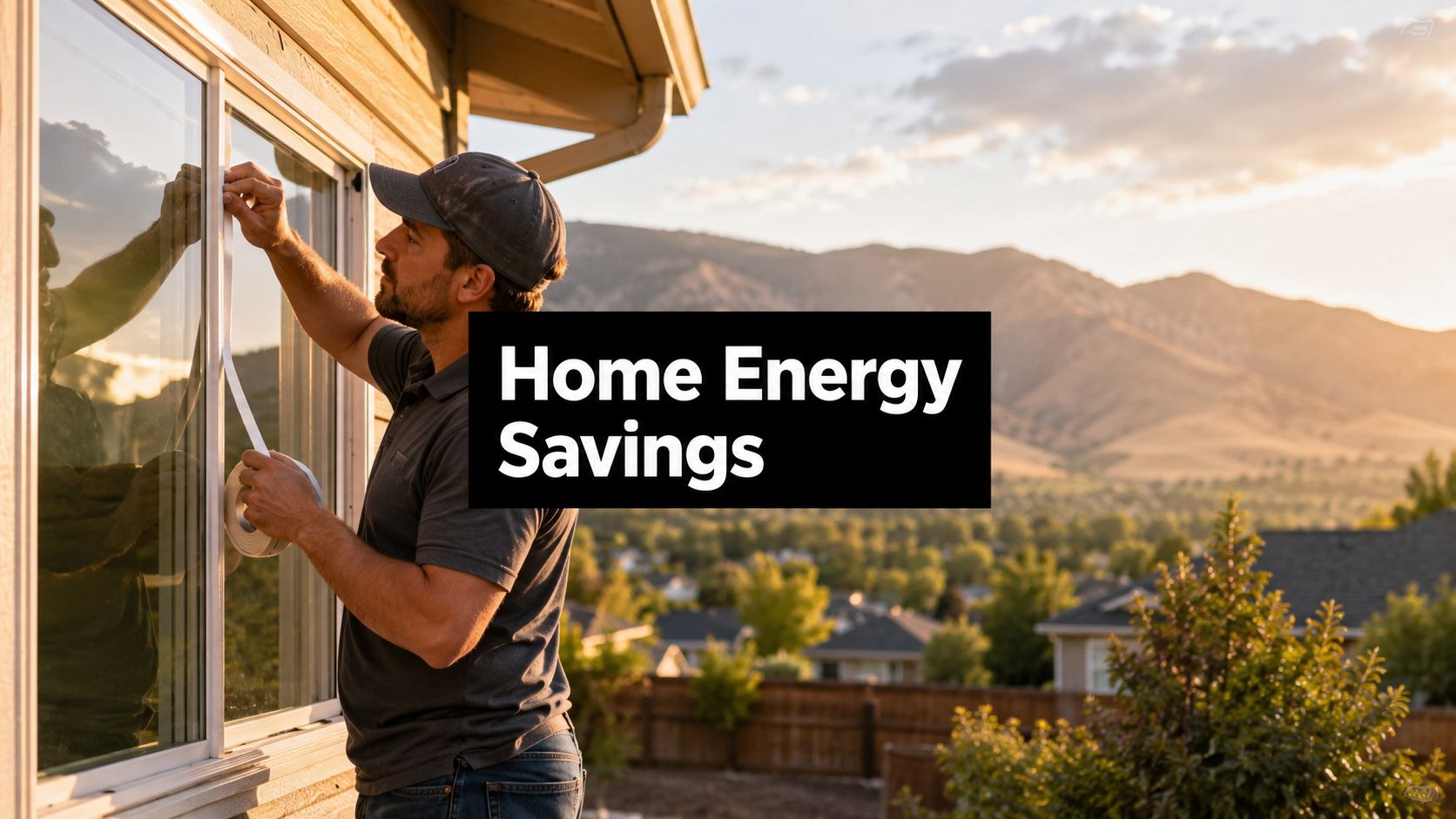
If you live in Boise, Meridian, Eagle, or anywhere else in the Treasure Valley, you probably know the pattern. A cold snap hits, the furnace runs nonstop, and the gas bill lands higher than expected. Then summer rolls in, the west-facing rooms heat up by late afternoon, and the AC seems to chase comfort instead of delivering it.
Most homeowners start with the usual list: swap bulbs, adjust the thermostat, unplug a few devices. Those steps help. But they usually don't fix the main problem. In Idaho homes, the biggest energy losses often happen at the shell of the house, especially around windows, doors, and other leakage points where conditioned air escapes and outside air gets in.
That's why the order of operations matters. For real home energy savings in the Treasure Valley, start with the building envelope, then evaluate window and door performance, then fine-tune HVAC and daily-use systems. The payoff is a house that feels steadier in January and far less punishing in July.
Table of Contents
- Beyond Obvious Energy Tips for Idaho Homes
- Your First Priority Is Sealing the Building Envelope
- Upgrading Windows and Doors for Treasure Valley Weather
- Optimizing Your HVAC and Water Heating Systems
- Smart Choices in Lighting Appliances and Daily Habits
- Accessing Local Rebates and Incentives for Your Upgrades
Beyond Obvious Energy Tips for Idaho Homes
A lot of Treasure Valley homeowners have already done the obvious things. The porch lights are LED. The thermostat is set responsibly. The furnace filter gets changed often enough. Yet the house still has one bedroom that's colder than the rest in winter, or one great room that turns into a greenhouse in summer.
That mismatch usually points to a building problem, not a habit problem. If air is leaking through old window frames, worn door seals, attic penetrations, or rim joists, your HVAC system has to keep replacing comfort that never stays put. Changing lightbulbs won't solve that.
The pattern is clear in energy guidance too. The EPA estimates that homeowners who seal air leaks and add insulation can save an average of 15% on heating and cooling costs, and windows and doors are primary targets for air leakage. In Idaho, improved residential energy codes are estimated to create statewide annual energy savings of 46,436 MMBtu, which underscores how much performance comes from a tighter, better-insulated home envelope, according to the Idaho field study report from Energy Codes.
Why the first move matters more than the easy move
A common mistake is chasing the most visible upgrade first instead of the most effective one. Homeowners often buy a new smart device, replace a few fixtures, or start adjusting schedules, while the house is still leaking at the edges.
That's backwards.
If the envelope is weak, every mechanical system works harder. The furnace runs longer in winter. The AC cycles longer on hot afternoons. Some rooms overshoot while others lag. Comfort gets inconsistent, and people compensate by pushing the thermostat further.
Practical rule: If your house feels drafty, uneven, or noisy near windows and doors, start with leakage and thermal performance before spending time on small electrical savings.
A better priority list for Treasure Valley homes
Use this order when you want the biggest return on effort:
- Seal uncontrolled air leaks around windows, doors, attic bypasses, and foundation connections.
- Assess window and door condition to decide whether repair-level sealing is enough or replacement is the smarter move.
- Tune HVAC operation so the system matches the improved envelope.
- Clean up lighting, appliance use, and daily habits for steady incremental savings.
That sequence fits local conditions. Treasure Valley homes deal with cold winter nights, hot summer afternoons, strong sun exposure, and large seasonal swings. A house that leaks in both directions pays for it year-round.
Your First Priority Is Sealing the Building Envelope
Air sealing is the fastest place to start because it tackles waste at the source. According to the ENERGY STAR air sealing methodology, the most technically effective step for immediate energy savings is air sealing, yielding an average 15% reduction in heating and cooling costs. The same guidance warns about a real Idaho issue: over-sealing without verifying ventilation can increase indoor humidity by 10–20% in cold winters.
Before you buy replacement products, find out where the house is leaking.
Where Treasure Valley homes usually leak
Start on a windy day or when there's a noticeable temperature difference between indoors and outdoors. Move room by room and pay attention to the spots where materials meet.
The usual trouble areas include:
- Window and door perimeters: Look for brittle caulk, visible gaps, loose trim, and worn weatherstripping.
- Attic access points: Hatches and pull-down stairs often leak more than homeowners expect.
- Recessed lights and ceiling penetrations: Openings for lights, bath fans, and wiring can connect conditioned rooms to unconditioned attic space.
- Foundation sill plates and rim joists: These are common hidden leakage zones in older homes.
- Plumbing and cable penetrations: Small utility openings add up fast.
If you want a more structured inspection process, a home energy audit in Boise can help identify what's worth sealing first and what likely needs a larger upgrade.
If you can feel moving air, see daylight, or notice dust patterns collecting near trim lines, you've found a place where the house is losing control of temperature.
A practical sealing workflow
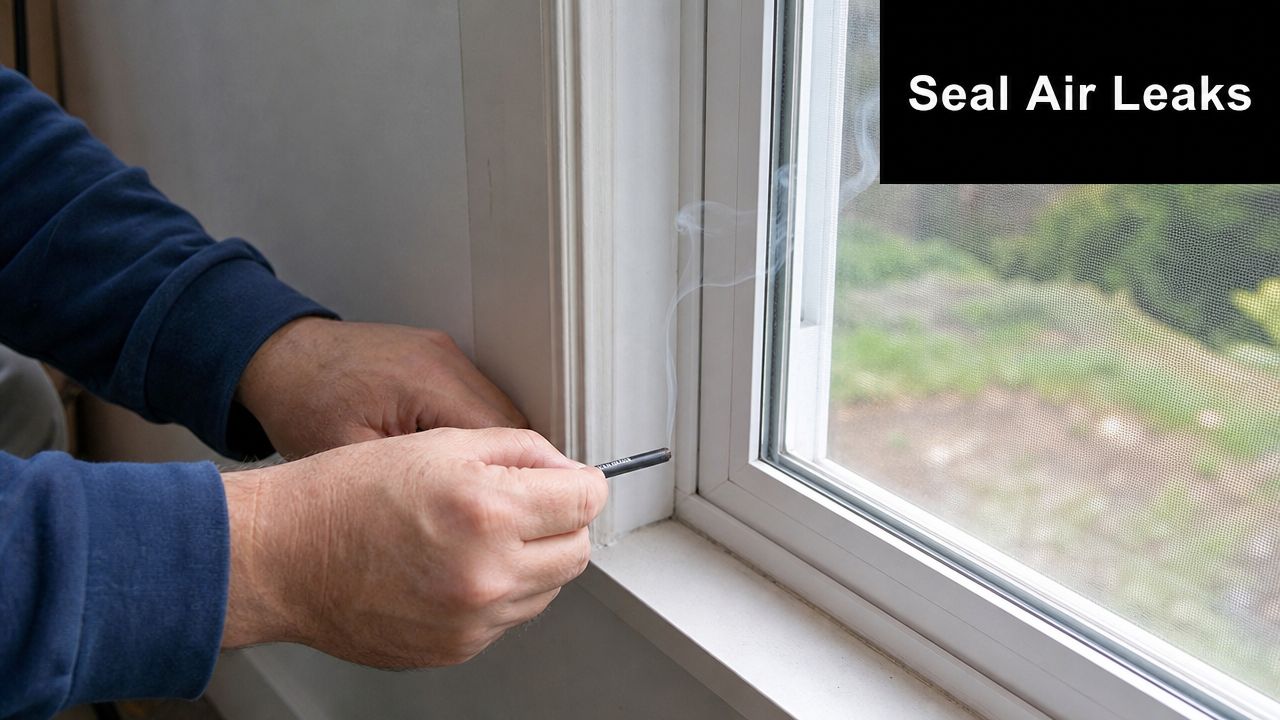
The simplest field test is still useful. Use your hand, a smoke pencil, or even an incense stick near suspect areas. If smoke pulls sideways or flickers sharply, air is moving.
Then work in this order:
- Seal small stationary gaps with caulk. This works well where trim meets wall and where fixed joints have opened up.
- Use low-expansion foam at larger hidden gaps. That's often the right choice around rough openings and utility penetrations.
- Replace weatherstripping on operable parts. Doors, sliding units, and double-hung windows need compressible seals that still allow smooth movement.
- Check the attic side if possible. A lot of leakage visible around windows downstairs also has a matching bypass above.
A short comparison helps:
| Area | Best first fix | DIY-friendly | When to call a pro |
|---|---|---|---|
| Trim gaps | Caulk | Yes | If movement or rot is present |
| Door edges | Weatherstripping | Yes | If the slab is misaligned |
| Window perimeter leaks | Caulk or foam, depending on gap | Sometimes | If the frame has failed or glass seal issues exist |
| Attic bypasses | Air sealing plus insulation correction | Sometimes | If access is difficult or widespread |
Don't seal blindly
Sealing is good. Trapping moisture isn't.
In winter, Treasure Valley homes can develop condensation issues when leaks are closed without checking how the house handles ventilation and humidity. That doesn't mean you should avoid sealing. It means you should seal deliberately. If windows already sweat heavily, bathrooms hold moisture, or the house feels stuffy after basic sealing work, bring in a professional who can look at ventilation as part of the fix.
A tighter house performs better. A balanced house performs better and lasts longer.
Upgrading Windows and Doors for Treasure Valley Weather
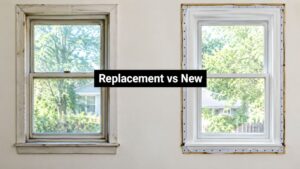
Air sealing buys you immediate improvement, but some windows are past the point where caulk and weatherstripping can solve the problem. In the Treasure Valley, older single-pane units and aging double-pane windows often struggle with both winter heat loss and intense summer solar gain. When seals fail, frames warp, or glass performance is outdated, replacement stops being cosmetic and starts being practical.
Modern window packages address more than drafts. They manage heat transfer, reduce hot spots, and help the HVAC system keep pace with Boise-area weather swings.
When sealing is no longer enough
A few signs usually make the decision clearer:
- The glass feels cold in winter or radiates heat in summer even after perimeter sealing.
- You see fogging between panes, which points to seal failure in insulated glass.
- Locks, sliders, or sashes no longer close tightly, so weatherstripping can't do its job.
- Rooms with large west-facing glass overheat regularly, especially in Meridian and Eagle neighborhoods with strong afternoon exposure.
For homeowners comparing options, this guide to energy-efficient windows in Idaho for 2026 gives a useful overview of what to evaluate before replacing old units.
What window specs actually matter
Not every “efficient” window performs the same in Idaho conditions. The specifications matter.
According to the cited Idaho-climate guidance, replacing windows with ENERGY STAR 7.0-compliant units featuring Low-E coatings and Argon gas fills delivers a verified 10–20% annual savings on heating and cooling in Idaho's climate, with a critical U-factor ≤0.30 and SHGC ≤0.25 for strong summer performance, as explained in this ENERGY STAR window performance discussion.
Here's what those terms mean in plain language:
- Low-E coating: A microscopically thin coating that helps reflect heat in useful ways, reducing unwanted heat transfer through the glass.
- Argon gas fill: Insulating gas between panes that improves thermal performance compared with plain air.
- U-factor: How readily the window lets heat move through it. Lower is better.
- SHGC: Solar heat gain coefficient. Lower values help on hot summer exposures by blocking more unwanted sun-driven heat.
For Treasure Valley homes, that combination matters most on windows that get prolonged afternoon sun or on homes where older glass creates obvious perimeter discomfort.
A modern window doesn't just stop a draft. It changes how the glass itself behaves on a hot or cold day.
Installation quality changes the result
Many window projects often underperform. A strong product installed poorly still leaks, binds, or drains incorrectly. The frame-to-wall connection, flashing details, and cleanliness of the installation all matter because the opening has to stay part of the home's air barrier and water management system.
That's also why product design details matter. Composite-reinforced sashes, true sloped sills for drainage, and debris-free installation practices are worth paying attention to. C & C Windows & Doors installs replacement windows and patio doors built for Idaho conditions, including narrowline frame options, Low-E insulated glass with Argon, and ENERGY STAR 7.0-compliant packages. That matters if you want the upgrade to improve comfort instead of replacing old units with newer-looking ones.
A quick decision guide helps:
| Condition | Likely best move |
|---|---|
| Minor perimeter leakage, frame in good shape | Seal and weatherstrip |
| Failed insulated glass or persistent fogging | Replace |
| Warped sash, poor locking, chronic drafts | Replace |
| Overheating from sun exposure despite basic sealing | Upgrade to better glass package |
| Water intrusion concerns at sills or frame edges | Professional inspection before any cosmetic fix |
If the house still feels uneven after sealing, windows and doors are the next place to look. In many Treasure Valley homes, that's where comfort is won or lost.
Optimizing Your HVAC and Water Heating Systems
Once the envelope performs better, mechanical systems stop fighting the house quite so hard. That changes the value of maintenance. A clean, tuned HVAC system in a leaky home still wastes energy. A clean, tuned system in a tightened home usually feels more responsive and more stable.
This part is less about gadgets and more about making equipment operate the way it was meant to.
Get more from the equipment you already have
Start with the simple checklist most homeowners can handle safely:
- Replace or clean filters on schedule: A dirty filter restricts airflow and makes heating or cooling less consistent.
- Keep outdoor equipment clear: Remove leaves, dust, and debris around the unit so it can reject heat properly.
- Check supply and return vents: Furniture, rugs, and closed-off rooms can throw off airflow balance.
- Use thermostat schedules that match occupancy: Treasure Valley weather swings make schedule control more useful than constant manual adjustment.
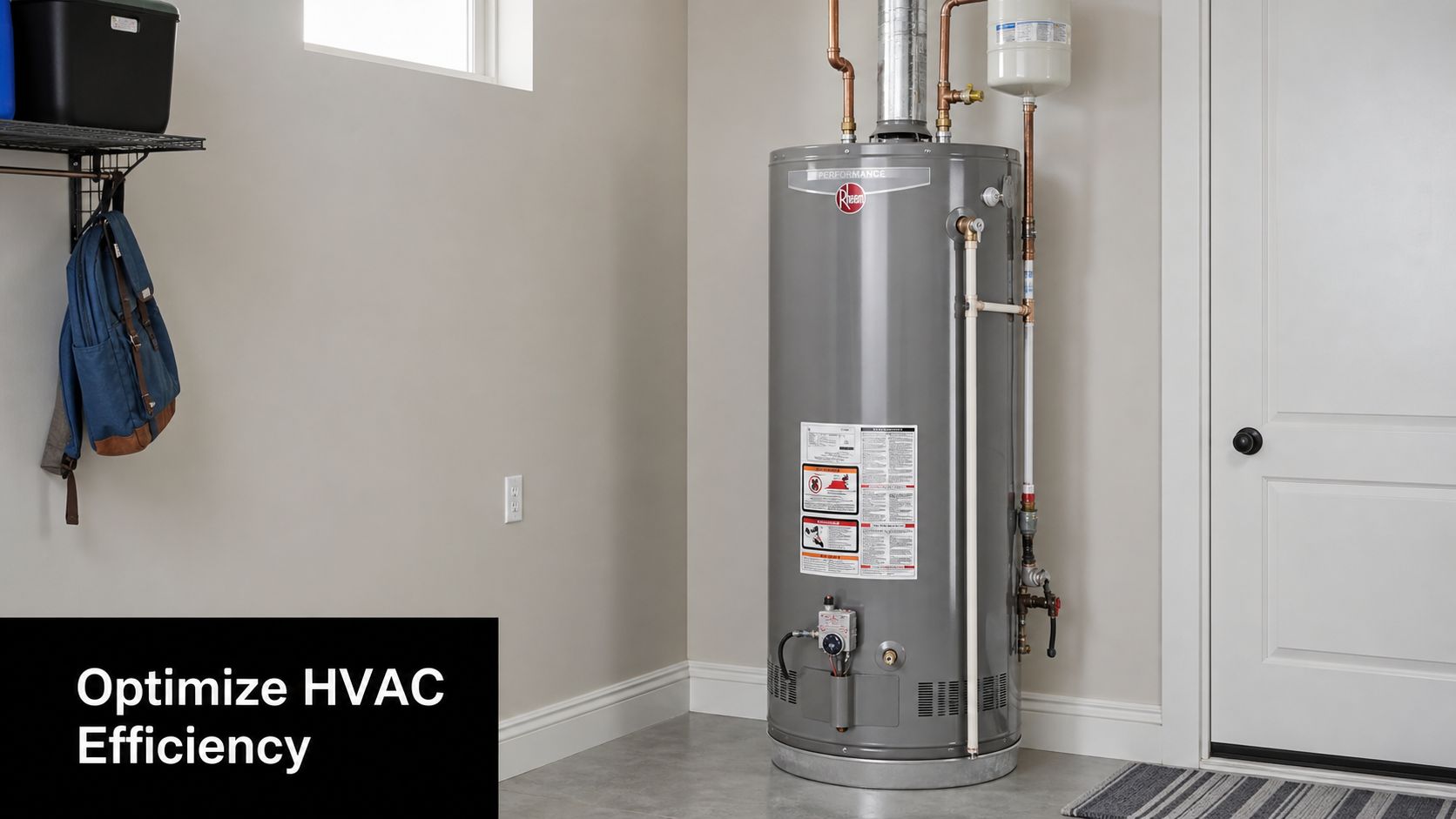
- Inspect water heater surroundings: Look for leaks, corrosion, or heat loss from exposed hot-water piping.
The same logic applies to water heating. If the tank and hot-water pipes lose heat to an unconditioned garage or utility area, you pay to reheat water you never used. Pipe insulation, tank insulation where appropriate, and a sensible temperature setting can all help reduce unnecessary runtime.
The homes with the lowest energy waste usually aren't the ones with the fanciest controls. They're the ones where the shell and the equipment are working together.
When a heat pump upgrade makes sense
Some households in the Treasure Valley still rely on older electric heat systems that are expensive to run or uneven in performance. In those cases, replacement may be worth considering after the envelope has been tightened.
For qualifying projects, Idaho heat pump rebate information notes that Idaho Power offers $400–$800 rebates for ducted air-source heat pumps replacing electric heat in existing homes, and up to $800 for new construction, with an additional $2,000 rebate when replacing an electric forced-air furnace.
That doesn't mean every home should jump straight to a heat pump. The better sequence is to reduce leakage first, improve window performance where needed, and then size and select mechanical upgrades based on the improved load of the house. Otherwise, homeowners risk paying for equipment before fixing the conditions that made the old system struggle.
Smart Choices in Lighting Appliances and Daily Habits
This is the part most energy articles start with. In practice, it works better as cleanup work after the envelope and major systems get attention.
Small actions still matter. They just matter more when the house isn't bleeding comfort.
Small habits that support bigger upgrades
Think of these as steady background improvements:
- Use ceiling fans by season: In summer, airflow should help occupants feel cooler. In winter, a gentler setting can help redistribute warm air without creating a draft.
- Wash laundry in cold water when appropriate: That reduces demand on water heating.
- Run dishwashers with full loads: Fewer cycles usually beats partial-load convenience.
- Close blinds on intense afternoon sun: This is especially useful on west-facing rooms that heat up before dinner.
- Turn off lighting where daylight is already doing the job: Not glamorous, but it works.
One useful mindset shift helps here. Don't ask whether each small habit will transform the bill on its own. Ask whether it supports the larger goal of reducing unnecessary runtime throughout the house.
Choose convenience that reduces waste
Lighting upgrades still make sense when older fixtures are in regular use. Pay attention to brightness and fit, not just wattage. A bulb that's too dim gets replaced quickly. A bulb with the right output tends to stay in service and deliver the intended savings.
Electronics deserve attention too. TVs, chargers, gaming systems, office gear, and kitchen accessories keep drawing power whenever they stay in standby mode. Smart power strips can simplify that without requiring everyone in the house to remember a shutdown routine.
Intermountain Gas also points homeowners toward practical basics such as sealing drafts around windows and doors with weatherstripping or caulk and adjusting thermostats by 5–8 degrees Fahrenheit to lower energy consumption, according to the Intermountain Gas residential energy-efficiency rebate page.
These habits won't fix failed windows or attic leakage. They do help preserve the gains once the high-impact work is done.
Accessing Local Rebates and Incentives for Your Upgrades
Cost stops a lot of good projects before they start. That's understandable. The better approach is to price the work after you've checked which incentives apply, not before.
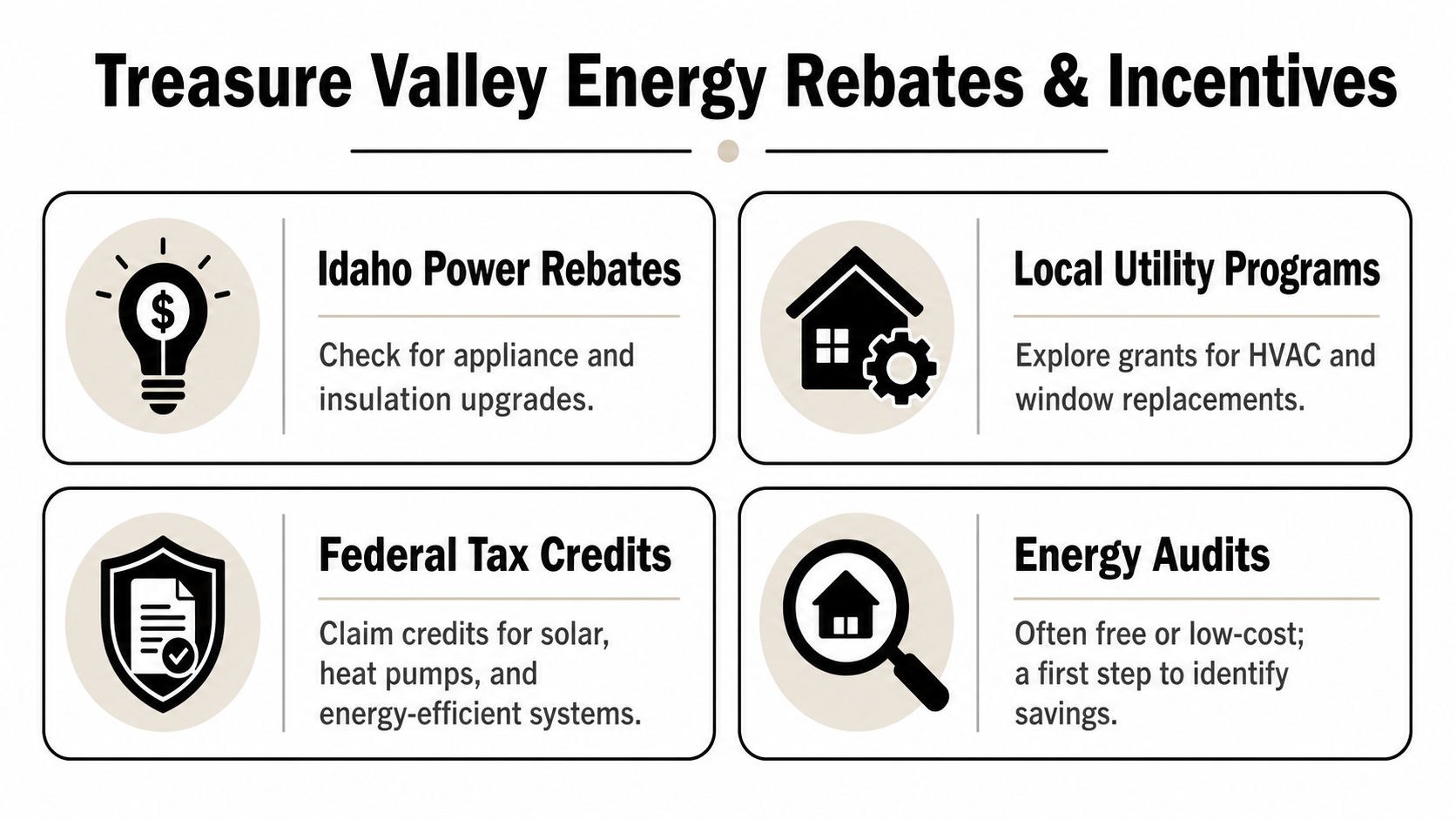
For Treasure Valley homeowners, the most useful programs usually fall into three buckets: federal tax credits, Idaho whole-house rebate programs, and utility-specific rebates tied to equipment or efficiency upgrades.
The incentives worth checking first
For many households, the starting point is the federal Energy Efficient Home Improvement Credit. The U.S. Treasury notes that this credit provides up to $1,200 annually for qualifying improvements such as insulation and efficient windows and doors, and the same announcement also notes that Idaho Power offers up to $100 cash back for installing an ENERGY STAR certified smart thermostat. The Treasury announcement also references estimated average annual utility bill savings of $175 for households implementing energy-efficient upgrades. You can review those details in the U.S. Treasury announcement on home energy credits.
For deeper retrofits, Idaho's whole-house rebate structure can be more substantial. The Idaho Office of Energy and Mineral Resources incentive page states that the Home Energy Performance Based Whole-House Rebate provides $2,000 for retrofits reducing energy use by 20% and up to $4,000 for retrofits saving 35% or more, with maximum rebates doubling for low- and moderate-income homes.
If your project includes windows, this Idaho window replacement tax credit guide for 2026 is a practical place to compare the paperwork side of federal credits with project planning.
How to approach incentive stacking carefully
Homeowners often assume every rebate can be combined automatically. Sometimes that works. Sometimes it doesn't. Program rules can differ by utility, equipment type, income qualification, and whether the improvement is part of a whole-house package or a single product replacement.
Use this checklist before signing a contract:
- Confirm product eligibility: Window packages, HVAC equipment, and controls may need to meet specific standards.
- Check timing rules: Some programs require pre-approval, while others apply only after installation.
- Separate tax credits from point-of-sale rebates: They reduce cost in different ways and often require different documentation.
- Ask for model and performance documentation: That matters if you plan to claim a credit later.
- Keep all invoices and manufacturer information: Missing paperwork is one of the easiest ways to lose an otherwise valid incentive.
Incentives help most when they support the right project, not when they pressure you into the wrong one.
For home energy savings in the Treasure Valley, the strongest path is usually straightforward: seal the house, upgrade weak windows or doors when repair no longer makes sense, tune mechanical systems, and then use available credits and rebates to lower the net cost of doing the work properly.
If your home has persistent drafts, overheated rooms, aging window seals, or comfort problems that basic caulking hasn't fixed, C & C Windows & Doors can help you evaluate whether repair, air sealing, or full window replacement makes the most sense for your Treasure Valley home.