
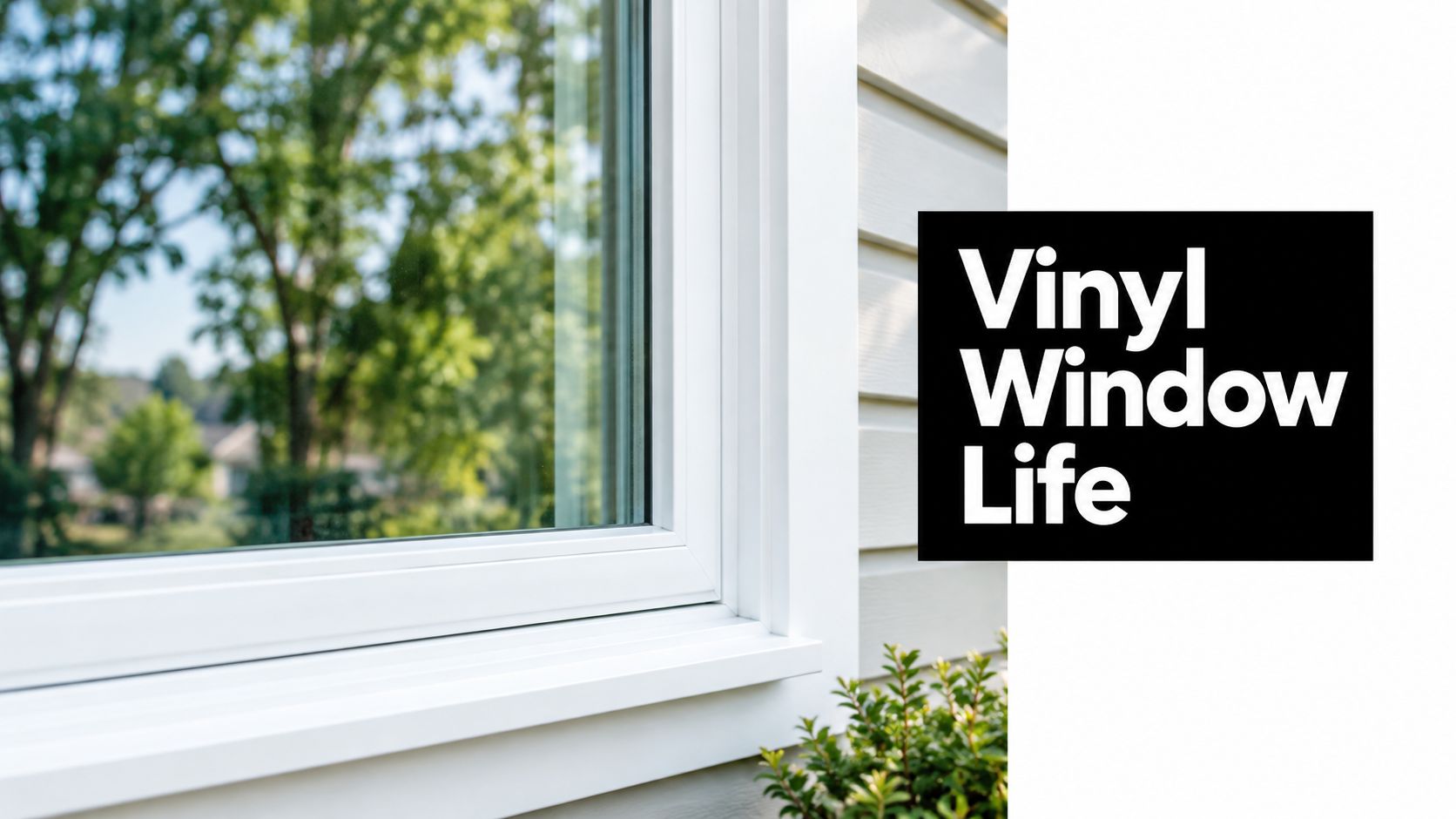
Quality vinyl windows typically last 20–40 years, while premium units may reach 35–50+ years and budget products may last 15–25 years. Climate, installation quality, materials, and maintenance determine where your windows land in that range.
You notice the problem on an ordinary Treasure Valley morning. One room feels colder than the others, a pane looks cloudy between the glass, or a window that once opened easily now sticks. The question isn't whether the window is old. You're deciding whether a repair can restore comfort or whether the entire unit is approaching the end of its useful life.
For Boise-area homeowners, the general lifespan is only a starting point. Idaho sun, dry conditions, and repeated temperature changes can place more stress on seals and moving parts than a national average suggests. A well-built window installed square and protected from water may perform for decades, while a lower-quality unit or poorly fitted replacement can develop problems much sooner.
The practical answer is reassuring. Vinyl windows are usually a multi-decade investment, not a short-term product. Their lifespan affects indoor comfort, air leakage, maintenance planning, energy performance, and the appearance of your home. It also helps you decide whether a foggy pane needs a glass-unit repair or whether widespread drafts, failed hardware, and frame deterioration call for replacement.
Table of Contents
- Introduction Why Vinyl Window Lifespan Matters for Your Home
- How Long Vinyl Windows Really Last by Quality Tier
- What Determines How Long Your Vinyl Windows Will Last
- How Climate and Installation Change Lifespan in Idaho
- Simple Maintenance That Extends Vinyl Window Life
- Signs It Is Time to Replace Your Vinyl Windows
- Choosing Long Lasting Vinyl Windows With Confidence
Introduction Why Vinyl Window Lifespan Matters for Your Home
A homeowner may start with one foggy window in the living room. The glass still lets in light, the frame looks intact, and replacement feels premature. Then a draft appears around a bedroom sash, the lock becomes difficult to operate, and several rooms feel less comfortable during the same cold spell. At that point, “How long do vinyl windows last?” becomes a practical home-maintenance question rather than casual research.
Vinyl windows are commonly reported to last about 20 to 40 years, with the lower end more likely under extreme weather exposure and the upper end more likely when the product is high quality and well maintained, according to this vinyl window lifespan guide. That range describes the product category, not a guarantee for every installation.
Practical rule: A window's age tells you when to inspect it. Its symptoms tell you what needs attention.
Treasure Valley homes can experience strong sun, dry air, and sharp shifts between hot and cold conditions. Those stresses don't necessarily destroy the frame first. In many cases, the insulated-glass seal, weatherstripping, drainage path, or hardware shows trouble before the vinyl structure becomes unusable.
That distinction matters because a failed glass seal may be repairable without replacing the entire frame. A sash that binds might need adjustment, lubrication, or an installation inspection. By contrast, widespread fogging, persistent air leakage, cracked vinyl, or visible distortion may indicate that several parts of the window system are aging together.
This guide separates the broad lifespan range into quality tiers, then connects the timeline to construction, installation, Idaho exposure, and care. You'll also learn which warning signs deserve a service visit and which suggest replacement planning. The goal isn't to make you replace a window based on its birthday. It's to help you understand what your windows are telling you.
How Long Vinyl Windows Really Last by Quality Tier
A vinyl window can last for decades, but “vinyl” alone does not predict its service life. Two windows may perform the same basic job while differing in frame design, PVC compound, glass seals, hardware, and installation. The comparison is similar to refrigerators: shared function does not mean equal materials, insulation, or durability.
Industry guidance commonly places vinyl window life in the 20–40 year range, while warranties have historically often covered 20–30 years, according to this history of vinyl windows. Use those figures for planning, not as an expiration date. A warranty defines coverage. The installed window's real lifespan depends on how its parts handle sunlight, temperature changes, moisture, and daily use.
Quality shifts the likely timeline. Premium products may reach roughly 35–50 years when they use virgin PVC compounds with UV stabilizers, fusion-welded corners, multi-chamber frames, durable weatherstripping, and quality hardware. Entry-level products with thinner extrusions, mechanical fasteners, basic weatherstripping, or lower-grade vinyl may begin showing problems in about 15–25 years. The frame is only one part of the system, so a seal or hardware problem can appear before the vinyl itself looks worn.
Vinyl Window Lifespan by Quality Tier
| Quality Tier | Typical Lifespan | Construction Clues | Planning Implication |
|---|---|---|---|
| Entry-level | 15–25 years | Basic weatherstripping, thinner profiles, mechanical corner fasteners | Inspect earlier and plan for repairs or replacement sooner |
| Standard quality | 20–40 years | Sound frame design, dependable seals, and competent installation | Treat the windows as a multi-decade asset |
| Premium | 35–50+ years | Virgin PVC, UV stabilizers, welded corners, multi-chamber frames, quality hardware | Higher-quality construction may support a longer replacement cycle |
These ranges are planning guides, not promises. A well-installed standard window can outlast a premium product fitted into a wet, out-of-square opening. An entry-level window exposed to strong afternoon sun may reach the lower end of its range even when its frame still appears acceptable.
For Treasure Valley homes, inspect the parts that age first: glass seals, weatherstripping, hardware, and sash movement. Idaho sun and temperature swings can shorten the practical timeline, while careful installation can help preserve it. Compare frame corners, sash rigidity, glass clarity, and written warranty terms. Ask which parts are designed for the conditions around your home, rather than relying on the word “premium.”
What Determines How Long Your Vinyl Windows Will Last
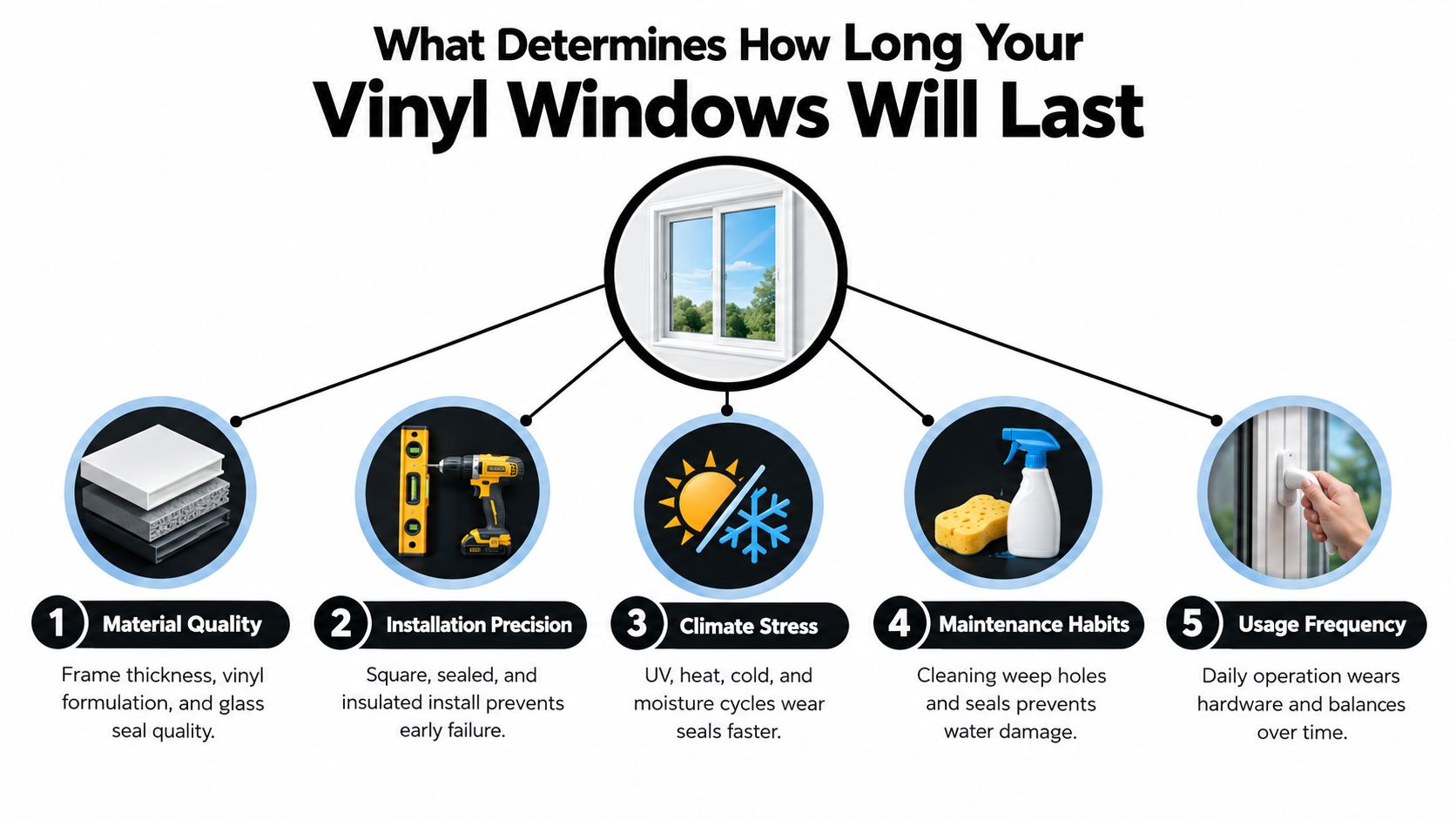
A vinyl window rarely reaches the end of its useful life because of one failure alone. Material quality, installation precision, climate stress, maintenance habits, and usage frequency interact. A sound frame can still leak when the opening has gaps, while careful cleaning cannot correct a sash installed out of square.
Check the seals first
In a Treasure Valley home, glass seals and weatherstripping often deserve the earliest attention. Failed glass seals allow moisture between panes, causing fogging and reducing insulation while the vinyl frame may remain structurally sound. Weatherstripping can flatten, tear, or lose contact, allowing drafts around a sash. A sunny south-facing room may expose these parts to more heat and daily expansion than a shaded room.
Then check drainage
Water needs a clear path out of the frame. Open weep holes help remove rain and condensation, but dirt, paint, or debris can block them. Standing water increases stress on seals and can expose the surrounding opening to moisture. This is a practical inspection point after dusty Idaho weather or seasonal storms.
Hardware comes next
Locks, balances, hinges, tracks, and operators experience wear based on how often the window is used. A frequently opened kitchen window or patio door faces more mechanical demand than a fixed picture window. Stiff operation may indicate worn hardware, sash movement, or pressure from an installation that is not square. Forcing the handle can turn a small adjustment into a larger repair.
Installation sets the system's starting condition. Accurate measuring, proper shimming, insulation around gaps, water management, and even fastening pressure help the sash and frame work together. A slightly twisted frame may operate poorly from the first day and place extra stress on seals and locks.
Use this priority order during an inspection:
- Glass seals and weatherstripping: Look for fogging, drafts, tears, or flattened contact.
- Drainage: Confirm that weep holes remain open.
- Hardware and movement: Notice binding, loose locks, or failed balances.
- Frame and opening: Check for bowing, cracking, or signs of water exposure.
This approach separates an aging component from a whole-window failure. In many cases, replacing a seal, clearing drainage, or servicing hardware can extend useful life, while widespread frame distortion points toward replacement.
How Climate and Installation Change Lifespan in Idaho
The generic answer to how long vinyl windows last doesn't fully answer a Treasure Valley homeowner's question. The more useful question is, how long will these windows last at this opening, with this exposure, and this installation?
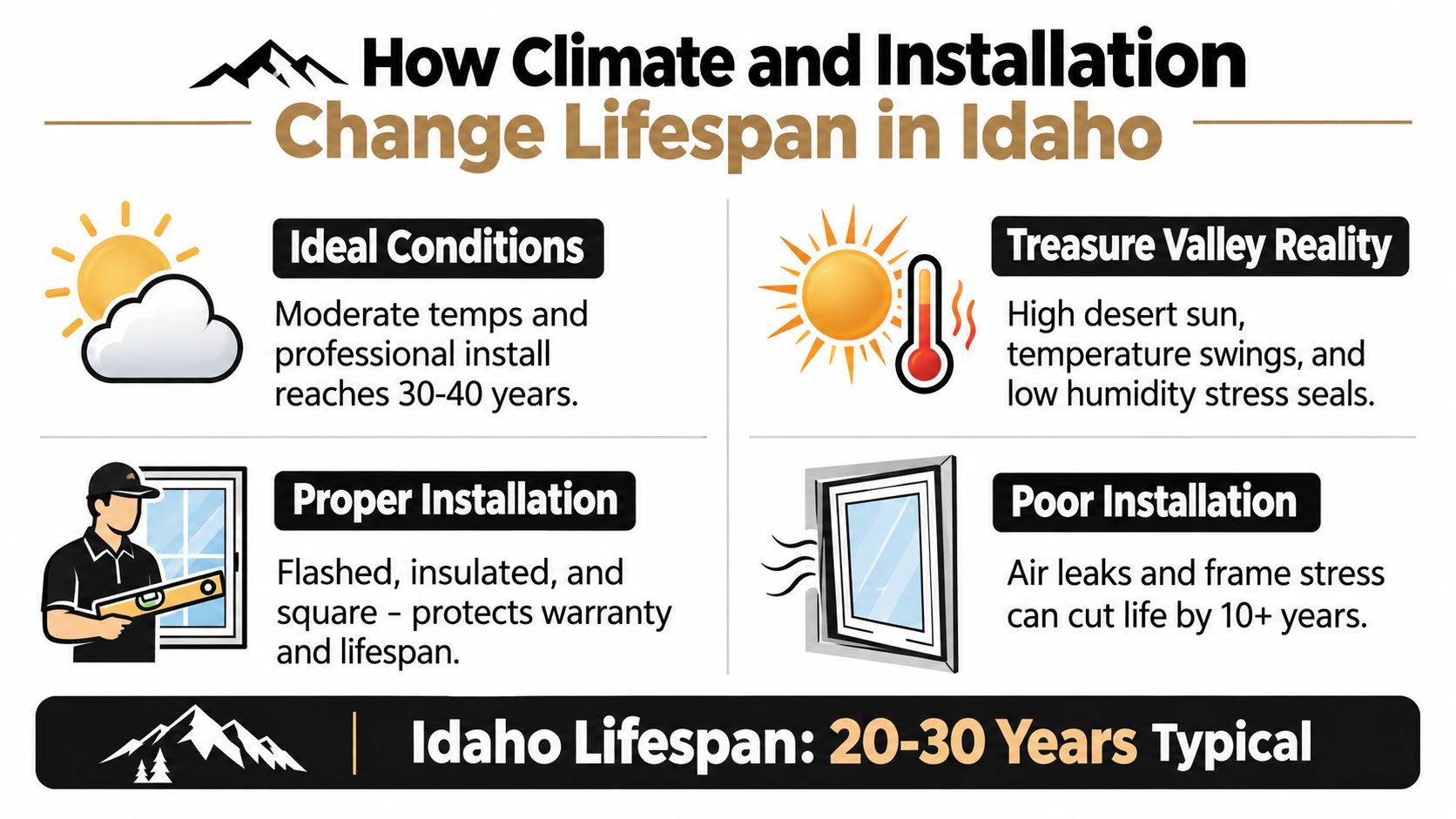
High-desert sun can accelerate PVC degradation over time. Ultraviolet exposure affects polymer chains, which can contribute to fading, brittleness, and cracking. Vinyl also expands and contracts more than some other frame materials as temperatures change. Repeated hot and cold cycles place stress on seals, corners, and dimensional tolerances, as explained in this overview of common vinyl window problems.
Hot and cold zones create different timelines
One climate comparison cites premium vinyl windows averaging about 18.3 years to first major repair in hot-humid climates and 25.7 years in colder zones, while also describing an overall lifespan of about 24–28 years for that product category. The figures appear in this climate-specific window lifespan comparison. They aren't a Boise guarantee, but they show why regional exposure changes maintenance and repair timing.
Treasure Valley conditions differ from both hot-humid and cold regions. Local homes may face intense sun, low humidity, seasonal temperature swings, and occasional moisture-management challenges. South- and west-facing windows, unshaded openings, large sashes, and poorly drained installations may experience more seal and operating stress than protected elevations.
Installation changes how climate reaches the frame
A professional installation should keep the unit square, insulate the perimeter, seal vulnerable joints, and direct water away from the opening. Poor drainage can leave moisture near seals and frame joints. Air gaps can make the window feel drafty even when the glass and frame are otherwise sound.
For homeowners comparing materials and configurations, this guide to windows suited to Idaho's climate can help frame the questions around sun exposure, thermal cycling, glass performance, and drainage. The right choice isn't just a frame label. It's a complete assembly matched to the opening and installed correctly.
Simple Maintenance That Extends Vinyl Window Life
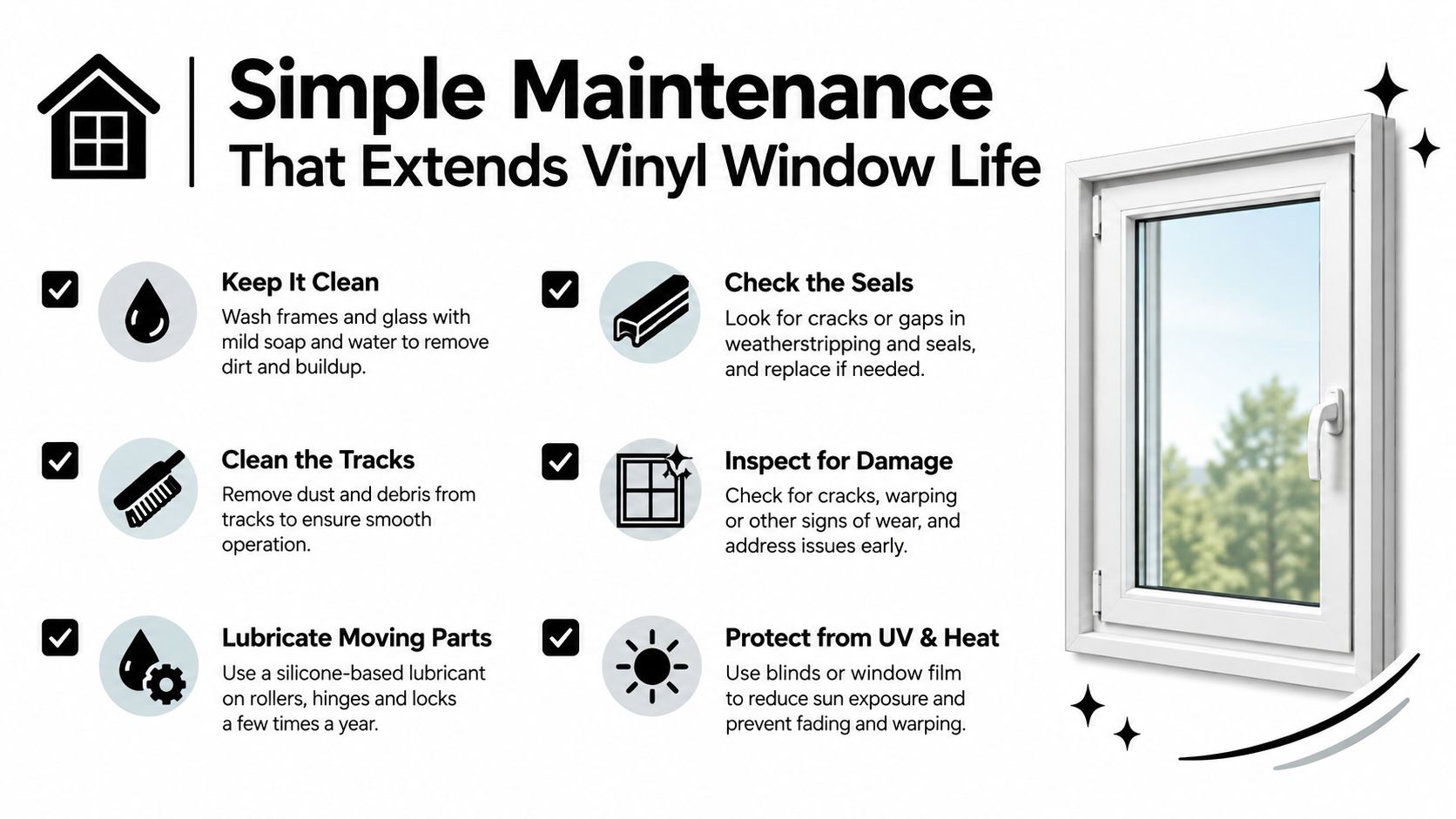
Maintenance won't turn an economy window into a premium one, but it can prevent small problems from becoming larger failures. The most useful routine focuses on glass seals, drainage, weatherstripping, tracks, and hardware, not just the visible frame.
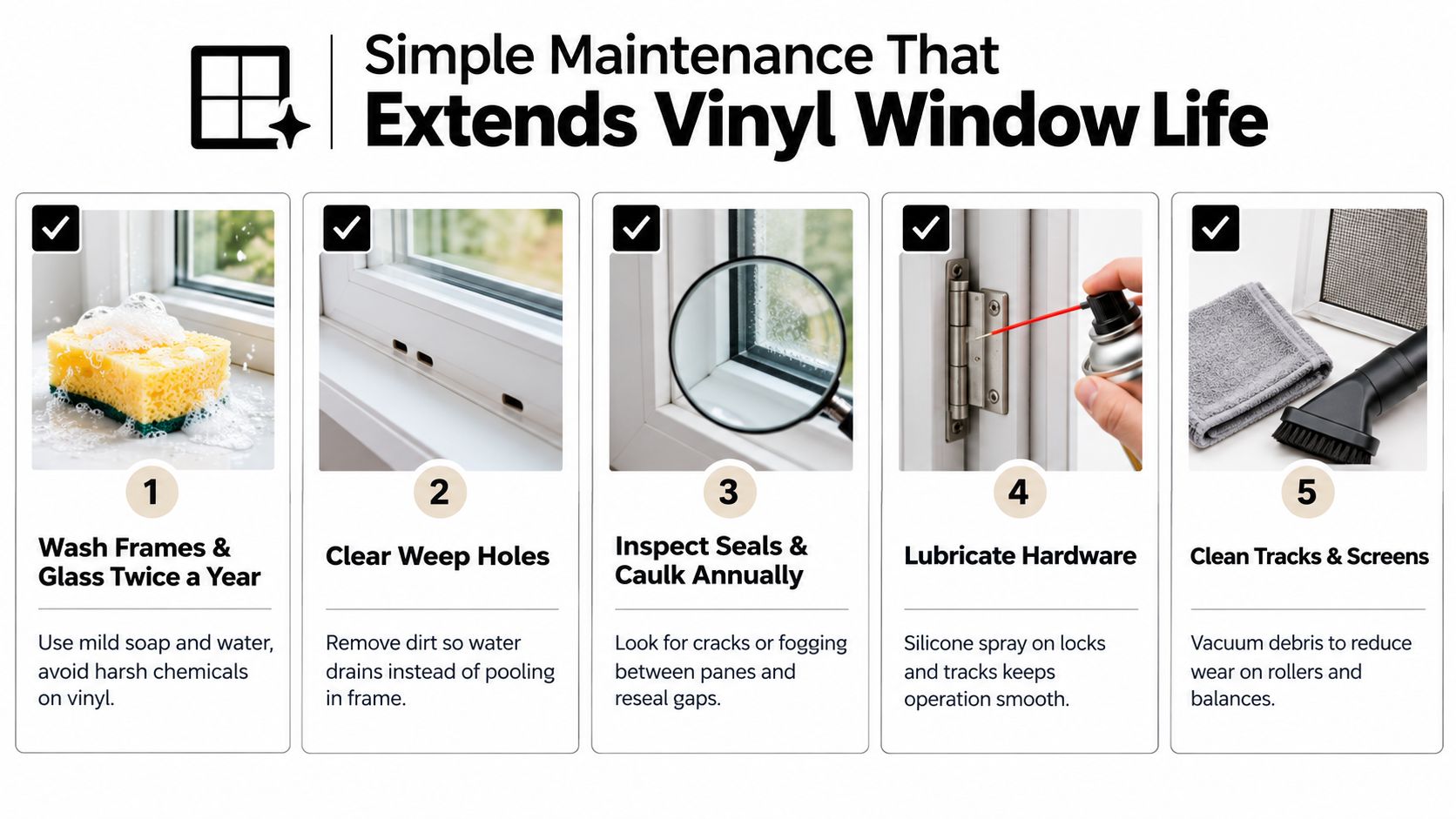
Start with a seasonal inspection. Look at the glass from different angles and check for condensation or fogging between panes. Inspect the seal around the sash and frame for gaps or damage. If moisture appears inside the insulated glass unit, cleaning the surface won't solve the problem because the failure is inside the sealed assembly.
A practical care routine
Wash gently: Clean frames and glass with mild soap and water, then rinse and dry with a soft cloth. Avoid abrasive chemicals, scouring products, and harsh tools that can damage the surface.
Clear weep holes: Find the small drainage openings along the lower frame and remove dirt, pollen, and other debris. Don't seal or enlarge them. Their job is to let water escape.
Inspect weatherstripping: Close the window and look for consistent contact around the sash. Torn, flattened, or missing weatherstripping can allow air and water through.
Lubricate moving hardware: Use a silicone-based lubricant on appropriate tracks, locks, hinges, and operators. Wipe away excess so it doesn't collect dirt.
Clean tracks and screens: Vacuum loose debris before wiping the track. Dirt can increase roller and balance wear and may make a window feel warped when the problem is obstruction.
Review exterior caulk: Look for cracking, separation, or open gaps around the outside perimeter. A failed exterior seal deserves attention before water reaches the surrounding wall.
The maintenance actions above are supported by this vinyl window inspection and care guidance. For seasonal preparation, homeowners can also use this guide to prepare Boise home windows for winter.
Cleaning is the easy part. Drainage, seals, and operation checks are what reveal whether the window is aging normally.
Don't force a stuck sash or lock. Excess pressure can damage hardware or worsen a frame-alignment problem. If a window suddenly becomes difficult to operate, note when the change began and have the product, installation, and opening evaluated together.
Signs It Is Time to Replace Your Vinyl Windows
A failed component doesn't always mean the entire window has reached the end of its life. The decision depends on what failed, how many windows show the same problem, and whether the frame and opening remain sound.
Fogging points to a glass seal problem
Condensation between panes is different from moisture on the room-side surface. It usually indicates that the insulated-glass seal no longer keeps moisture out. A glass unit may be replaceable while the frame remains serviceable, so a foggy pane deserves evaluation rather than an automatic whole-window decision.
Drafts reveal gaps in the system
Persistent air movement around a closed sash may come from worn weatherstripping, failed caulk, installation gaps, or frame distortion. Rising energy bills can have many causes, so don't assign them to the windows without checking the actual openings. A draft you can feel, especially when repeated across several windows, provides a more useful diagnostic clue.
Operation problems can have several causes
A window that sticks, rubs, or won't lock may have dirty tracks, loose hardware, a shifted sash, installation stress, or frame distortion. Check simple obstructions first, but don't force the unit. Repeated binding combined with uneven gaps, cracked corners, or visible bowing suggests a broader problem.
Surface damage signals material stress
Fading, chalking, brittleness, cracking, and corner separation deserve professional attention. Water stains around the interior trim may indicate leakage at the window or surrounding opening. The visible mark isn't always the full problem, because moisture can affect adjacent finishes and framing.
Use this guide to signs your Idaho windows need replacing when you're comparing repair and replacement. In general, an isolated glass or hardware issue may be serviceable. Replacement becomes more compelling when several windows show recurring seal failures, operation problems, air leakage, or structural deterioration.
Repair first: A sound frame with one failed glass unit or replaceable hardware may not need full replacement.
Plan replacement: Widespread symptoms, cracked or distorted frames, and recurring repairs point toward a complete window evaluation.
Choosing Long Lasting Vinyl Windows With Confidence
A long service life starts with the complete specification, not a sales label. Compare the frame compound, corner construction, chamber design, glass package, weatherstripping, hardware, installation method, and written warranty. A 20–30 year warranty benchmark aligns with the foundational planning life of standard vinyl windows, while premium construction is commonly associated with 35–50+ years of service, as summarized in the earlier quality-tier guidance.
For Idaho homes, the glass package can affect comfort as much as the frame. ClimaTech Low-E coatings help manage heat transfer and sunlight, Argon gas fills add insulating performance, and optional triple-pane glass can support ENERGY STAR 7.0 performance and reduce outside noise when specified for the project. These features don't remove the need for proper installation, drainage, or maintenance. They work as part of a balanced window system.
C & C Windows & Doors offers vinyl replacement options, including standard vinyl double-hung windows and premium Mezzo® windows, with custom measurements and installation for Treasure Valley homes. Its published service includes meticulous, debris-free installation, a lifetime limited warranty on products and labor, and same-day estimates. Those details give homeowners concrete items to verify when comparing proposals, especially the distinction between product coverage and labor coverage.
Ask every installer:
- What is covered: Confirm whether the warranty includes frames, glass seals, hardware, installation labor, and service.
- How the opening is prepared: Ask how the team checks square, insulation, flashing, drainage, and perimeter sealing.
- What fits the exposure: Discuss south- and west-facing windows, large openings, dark finishes, and glass weight.
- What happens after installation: Get care instructions and a clear process for reporting operating or seal problems.
A well-matched window, correctly installed and maintained, gives you a realistic path toward multi-decade performance. It also lets you plan repairs based on symptoms instead of replacing every unit because it has reached a certain age.
If your Boise or Treasure Valley windows feel drafty, fog between the panes, or no longer operate smoothly, schedule a professional evaluation before a small failure spreads. Visit C & C Windows & Doors to request a same-day estimate and discuss custom-measured, climate-conscious vinyl replacement windows with a lifetime limited warranty on products and labor.