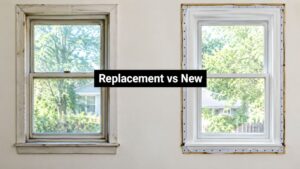

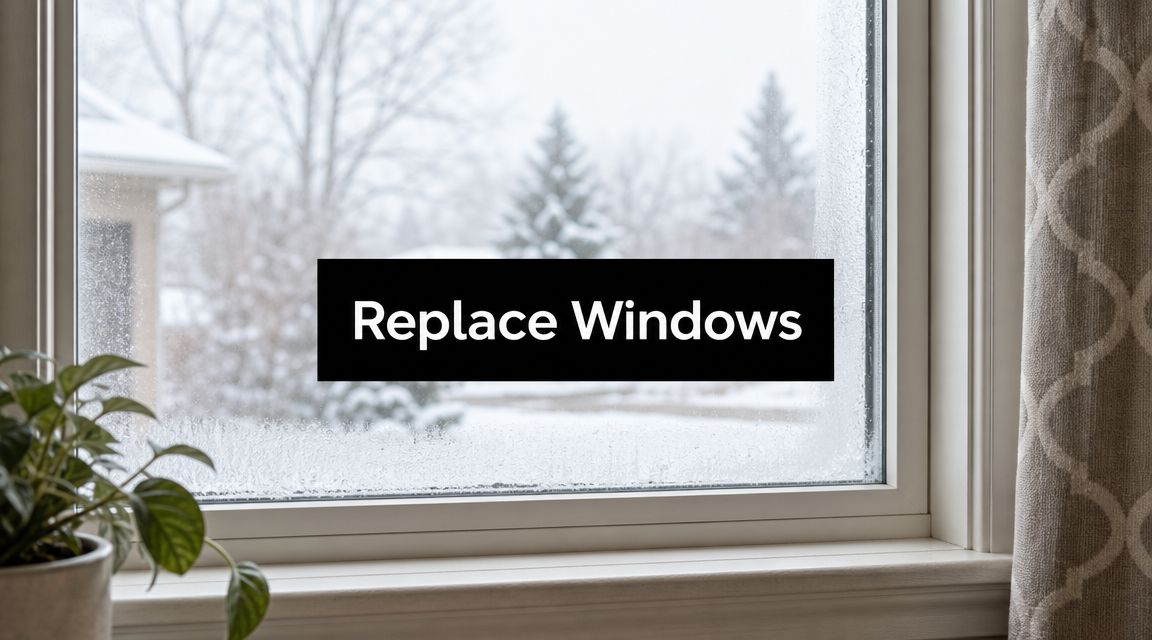
That familiar blast of cold air you feel walking past the living room window on a January morning, or the way your AC seems to run constantly in July, is common in Treasure Valley homes. A lot of homeowners assume the furnace is struggling, the insulation is thin, or the house is just “older.” In many cases, the bigger problem is sitting right in front of you.
Windows take a beating in Idaho. Winter cold, summer sun, freeze-thaw movement, wind, dust, and occasional hail all work on the sash, frame, seals, and hardware year after year. When those parts stop doing their job, you feel it fast. Comfort drops, outside noise gets louder, and moisture problems can move from annoying to expensive.
The challenge is that bad windows rarely fail all at once. They usually give you a series of warning signs first. Some can be managed for a while with maintenance. Others mean repair money is better spent on replacement.
This guide covers the most useful, real-world signs your windows need replacing in Idaho, plus what to check yourself before you schedule an estimate.
Table of Contents
- 1. Visible air leaks, drafts, and temperature inconsistencies
- 2. Visible decay, rot, and frame deterioration
- 3. Difficulty operating windows
- 4. Condensation between window panes
- 5. Increased noise infiltration from outside
- 6. Visible cracks, breaks, or damage to glass and frames
- 7. Single-pane windows and outdated thermal performance
- 7-Point Comparison: Idaho Window Replacement Signs
- Your next steps for a more comfortable, efficient Idaho home
1. Visible air leaks, drafts, and temperature inconsistencies
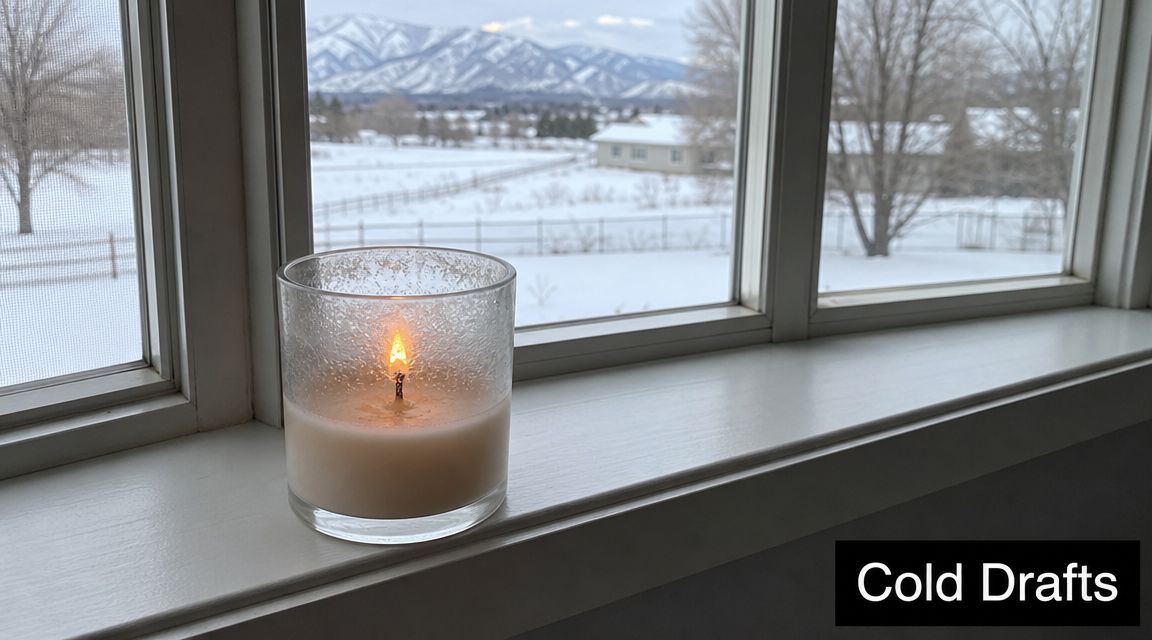
If one side of the room always feels colder than the rest of the house, pay attention. That's one of the clearest signs your windows need replacing in Idaho, especially during long heating seasons when even small leaks become constant comfort problems.
The Department of Energy notes that homes lose about 25% to 30% of their heating and cooling energy through infiltration and duct leakage, which is why drafts around closed windows shouldn't be brushed off as minor discomfort. It also recommends looking for ENERGY STAR and NFRC labels, along with low U-factor windows for colder climates. In practice, if the window system isn't controlling air leakage anymore, it's not doing its job.
What to check on a cold Idaho morning
Start simple. On a windy morning, stand near the interior perimeter of the window and move your hand slowly along the sash, stool, and side jambs. If one bedroom always feels drafty while the hallway feels fine, that difference matters.
A basic paper test helps too. Close and latch the window on a strip of paper. If the sash doesn't hold it firmly, the air seal is likely compromised. That's one reason many homeowners in colder parts of the valley start comparing triple-pane window options for Idaho winters when the drafts keep coming back.
Practical rule: If caulk or weatherstripping helps only briefly, the issue usually isn't the trim line. It's the window unit itself.
A few signs tend to show up together:
- Cold zones near the glass: You feel a temperature drop within a few feet of the opening.
- Perimeter air movement: The draft is strongest near corners, locks, or meeting rails.
- Uneven room comfort: The HVAC runs, but the room still feels harder to heat or cool than the rest of the house.
Temporary sealing has its place. If the leak is mild and the frame is still sound, seasonal maintenance can buy time. If the draft is persistent, the sash is loose, or the room temperature changes noticeably near the window, replacement usually solves more than another round of patchwork.
2. Visible decay, rot, and frame deterioration
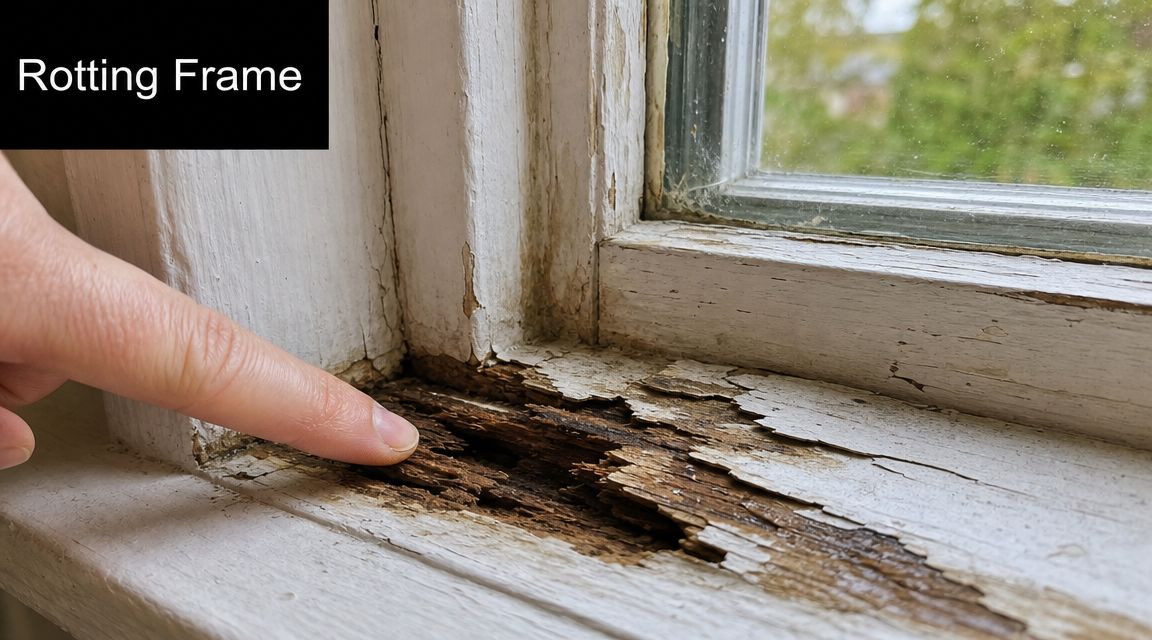
Some window problems are obvious before you ever touch the glass. Peeling paint, swollen trim, soft sill corners, dark staining, and gaps at the frame all point to the same issue. Water has been getting where it shouldn't.
This is common on older Idaho homes with long winter moisture exposure, spring runoff, roof splashback, or sun-baked sealants that have cracked over time. North-facing windows often show it first because they stay damp longer. Sills are another weak point because they collect water and debris.
When rot is more than a paint problem
Press a small screwdriver gently into suspicious wood. If the surface gives way easily, you're not looking at a cosmetic issue. The frame may already be losing structural integrity, and that often means the sash won't seal or operate correctly even if you repaint it.
Homeowners often find themselves wasting money. They repair trim, repaint, recaulk, and still end up with the same leaks and sticking sashes because the failure is deeper in the unit. A better starting point is understanding when to replace windows versus repair them, especially if the damage reaches the sill, jamb, or frame corners.
Rot at the sill rarely stays at the sill. Once water gets behind the frame, surrounding wall materials can be affected too.
Look closely for these patterns:
- Soft lower corners: Water usually sits here first.
- Warped frame lines: The sash may look slightly out of square or fail to meet evenly.
- Recurring paint failure: Fresh paint peels because moisture is still moving through the material.
If the wood is still hard and the problem is limited to exterior trim, repair may be worthwhile. If the frame has softened, separated, or started moving out of alignment, replacement is usually the cleaner and longer-lasting fix.
3. Difficulty operating windows
A window that sticks once in a while is annoying. A window that won't open smoothly, won't stay up, won't crank shut, or won't lock is telling you something more serious.
Industry guidance treats hard-to-open windows as a sign of warping or hardware failure rather than a cosmetic nuisance, and ENERGY STAR-linked guidance also notes that air leaks in windows can make heating and cooling bills 10% to 20% more expensive. In Idaho homes, failed operation and failed air sealing often show up together.
What sticky windows usually mean
Older painted wood windows may bind because of paint buildup. That's repairable in some cases. But if the sash scrapes, racks sideways, or needs shoulder pressure to close, the problem is often frame movement, worn balances, failed hardware, or long-term moisture distortion.
Casement windows tell on themselves too. If the crank works but the sash doesn't pull tight to the frame, you've lost the seal. On a double-hung unit, if the top and bottom sashes no longer meet evenly at the lock rail, the window may be out of alignment.
Here's how to test them in a useful way:
- Open every window fully: Don't stop at the easy ones. Bedrooms and frequently used windows matter most.
- Close and lock each unit: A window that closes but doesn't lock correctly still isn't sealing right.
- Listen and feel: Grinding, dragging, or a loose latch usually means the problem is mechanical, not cosmetic.
A lot of homeowners live with bad operation for years because they only use the window a few times a season. The bigger issue is safety. In a bedroom, poor operation can affect egress. In any room, a window that doesn't lock tightly can also let in air, dust, and smoke more easily.
If hardware replacement solves the issue and the frame is still square, repair can make sense. If the sash binds, leaks, and fights you every season, replacement is usually the more practical call.
4. Condensation between window panes
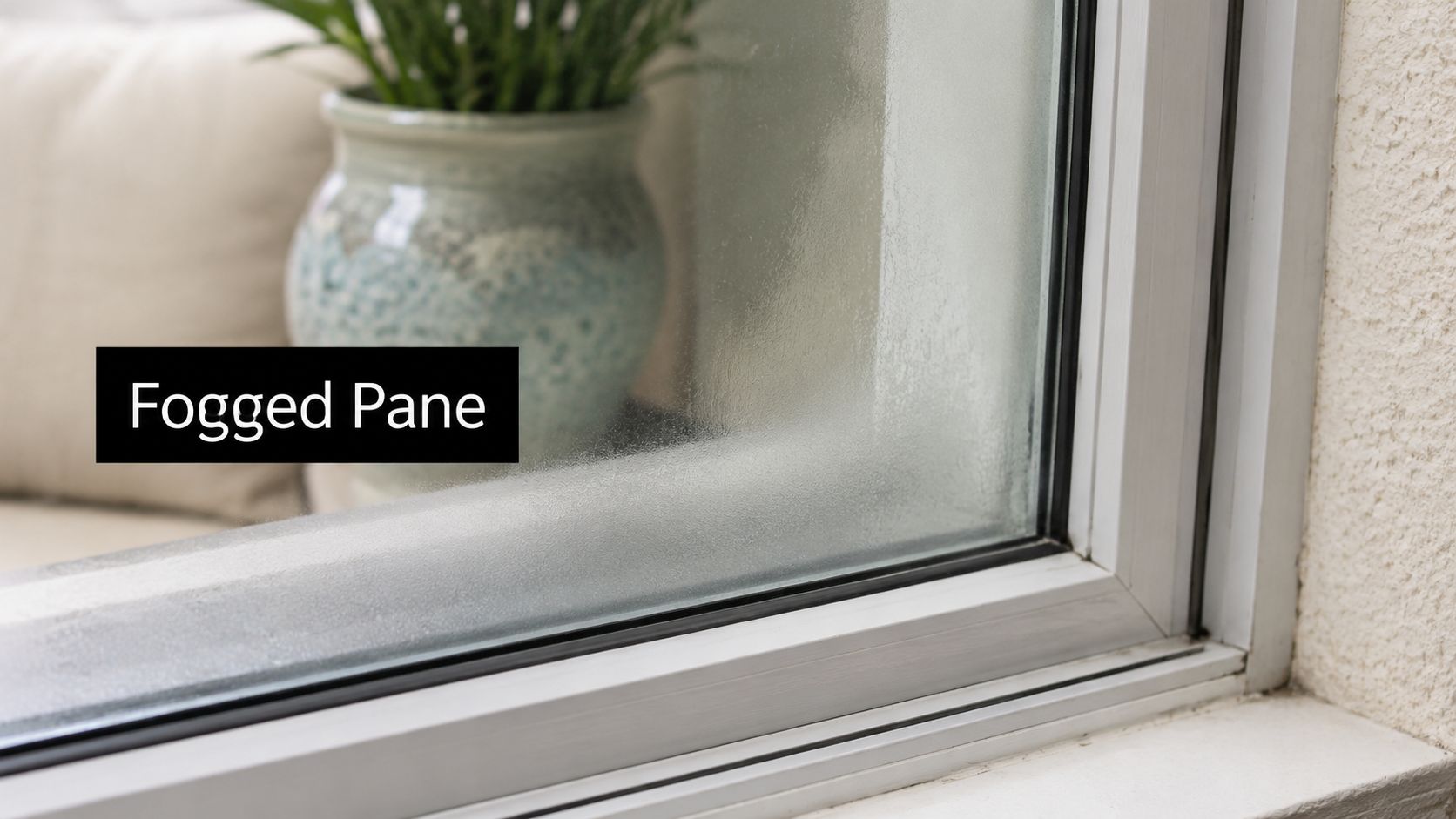
Fog or moisture trapped between panes is one of the easiest window failures to identify. Once you see it, the insulated glass unit has already lost its sealed environment.
That doesn't mean ordinary interior condensation on the room side of the glass. Bathrooms, kitchens, and cold snaps can create that even on decent windows. The problem here is haze, streaking, or droplets inside the glass assembly where you can't wipe them away.
How to tell normal moisture from seal failure
Check the window early in the morning or during a cold stretch. If the cloudiness is inside the unit and stays there no matter how much you clean the room-side glass, the seal has failed. At that point, the window isn't performing the way it was designed to.
In Idaho, that matters most in winter. You need the glass package to resist cold transfer and keep indoor comfort stable. Once the seal is gone, the unit may still “look mostly okay” from the street, but performance drops and visibility gets worse.
A few homeowners also discover seal failure while planning related exterior work, especially when replacing multiple openings or coordinating entries and glazing details with a door installer in Nampa, Idaho. That kind of project is a good time to address failed glass across the home instead of fixing one unit at a time.
If moisture is trapped between panes, no amount of wiping, dehumidifying, or film application will restore the original insulated glass performance.
Replacement becomes the right move when:
- The fogging is permanent: It doesn't clear with weather changes or cleaning.
- Multiple units show the same issue: That often points to age-related failure across the home.
- The window already has other symptoms: Drafts, sticking, and failed seals together usually mean the unit is at the end of useful service.
5. Increased noise infiltration from outside
Not every replacement decision starts with an energy bill. Sometimes the first thing homeowners notice is sound. The house feels louder than it used to, or a room never really settles down even with the windows shut.
This comes up a lot in the Treasure Valley now. More traffic, more nearby construction, and denser neighborhood activity mean older windows get exposed in a hurry. If your home is near a busier road, an expanding subdivision, or open land where wind carries sound, weak windows can make the indoors feel less livable.
Why this matters in the Treasure Valley
Energy Trust of Oregon notes that major symptoms such as draftiness, moisture accumulation, or damaged frames point toward replacement, while milder issues may be managed temporarily with sealing measures like caulking or film in its guidance on signs your windows may need to be replaced. Noise often belongs in that same practical conversation. If the unit is old, leaky, and already struggling, replacing it usually does more than trying to “soundproof” around it.
Another point that gets overlooked is indoor air quality. Andersen notes that damaged or outdated windows can let in insects, allergens, and even wildfire smoke in its article on reasons to replace windows. For Idaho homeowners, that can matter just as much as outside noise during smoky stretches or dusty wind events.
A quick real-world test works well here. Stand in the room during the loudest part of the day. If traffic hiss, barking dogs, or construction noise drops sharply when you press against the sash or lock side, the seal probably isn't doing much anymore.
- Road-facing bedrooms: These usually reveal the problem first at night.
- Home offices: Poor acoustic sealing becomes obvious on calls.
- Rooms exposed to smoke or dust: If you can smell outside conditions quickly, the window may be leaking more than sound.
Some people can live with a little extra noise. Others can't, especially in bedrooms or workspaces. When the window is also drafty or outdated, replacement addresses several quality-of-life issues at once.
6. Visible cracks, breaks, or damage to glass and frames
This one is straightforward. If the glass is cracked, chipped, or broken, or the frame itself is split or bent, the window needs immediate attention.
Idaho weather can be rough on exterior materials. Hail, flying debris, wind-driven branches, and repeated temperature swings all put stress on glass and frame corners. Older units are more vulnerable because seals are already tired and materials have less flexibility left in them.
Damage rarely stays cosmetic for long
A hairline crack might seem minor, especially if the pane is still intact. But glass damage tends to spread with thermal movement. A small frame split can also open a path for water, air, and dirt long before it looks dramatic from across the room.
The other issue is security. A compromised lock area or damaged sash rail doesn't just affect appearance. It changes how tightly the window closes and how well it resists forced entry or weather exposure.
What to do first:
- Photograph the damage clearly: Include interior and exterior views if you can do that safely.
- Note the likely cause: Storm impact, settlement, accidental hit, or long-term wear all matter during evaluation.
- Avoid makeshift fixes that trap water: Temporary patching can help with immediate safety, but it shouldn't become the long-term plan.
If the problem is limited to one pane in an otherwise healthy, newer unit, glass replacement may be possible. If the frame is damaged, the sash is distorted, or the opening already had seal and operation issues, full replacement is usually more efficient than piecemeal repair.
Broken glass is the obvious problem. The less obvious problem is what the impact did to the sash, spacer, and frame alignment.
7. Single-pane windows and outdated thermal performance
Sometimes there isn't a dramatic failure. The windows are just old technology, and they were never built for the way Idaho homeowners expect a house to perform now.
That matters because most windows last 15 to 50 years depending on material, which makes age one of the clearest replacement benchmarks for older homes according to Pella's replacement guidance. Once a window is into that range and showing repeated drafts, fogging, noise, or condensation issues, replacement usually makes more sense than continuing to nurse it along.
Why older glass struggles in Idaho homes
Single-pane windows are still out there in older Boise-area housing, and many early double-pane units are missing the efficiency features homeowners now expect. Even if the frame doesn't look terrible, older glass packages usually have a hard time controlling cold transfer, heat gain, and comfort near the opening.
That shows up in ordinary ways. The couch by the window feels cold in January. The west-facing room overheats in late afternoon. You keep the blinds closed because the space never feels balanced.
If you're trying to decide whether old windows are “bad enough” to replace, look at the whole pattern instead of one symptom:
- Age plus recurring discomfort: Old units that repeatedly create hot or cold spots are strong candidates.
- Age plus missing modern features: If the windows predate today's common low-e coatings and improved glazing, you'll usually notice the difference after replacement.
- Age plus multiple minor failures: A little draft, a little noise, and a little condensation often add up to one clear answer.
Financing and warranty terms start to matter. Homeowners don't always want to replace every unit at once, and that's reasonable. Prioritize the worst-performing elevations first, then compare product details carefully, especially installation scope, labor coverage, and long-term warranty language.
7-Point Comparison: Idaho Window Replacement Signs
| Issue / Indicator | Implementation Complexity 🔄 | Resource Requirements ⚡ | Expected Outcomes ⭐ / 📊 | Ideal Use Cases 💡 | Key Advantages |
|---|---|---|---|---|---|
| Visible Air Leaks, Drafts, and Temperature Inconsistencies | Low–Medium, simple tests and weatherstripping; full replacement if seals fail 🔄🔄 | Moderate, weatherstripping, insulating upgrades or new windows ⚡⚡ | ⭐⭐⭐⭐, improved comfort; 📊 ~15–30% energy savings with ENERGY STAR upgrades | Older windows with noticeable drafts, high energy bills, interior cold spots 💡 | Immediate comfort gains; clear energy-waste signal |
| Visible Decay, Rot, and Frame Deterioration | High, frame replacement and possible wall repairs; may require structural prep 🔄🔄🔄 | High, carpentry, composite/vinyl frames, flashing and moisture remediation ⚡⚡⚡ | ⭐⭐⭐⭐, restored structural integrity; 📊 prevents progressive water damage | Windows with soft wood, peeling paint, water stains, north-facing exposures 💡 | Stops water intrusion, prevents mold/insulation damage, improves curb appeal |
| Difficulty Operating Windows (Sticking, Jamming, Misalignment) | Medium, hardware repair/adjustment or full sash/frame replacement 🔄🔄 | Moderate, new hardware, adjustment tools or replacement windows ⚡⚡ | ⭐⭐⭐⭐, safer, smoother operation; 📊 improves egress and security metrics | Frequently used windows, egress/bedroom windows, sticking sashes 💡 | Enhances safety, accessibility and reliable locking |
| Condensation Between Window Panes (Failed Seals) | Low–Medium, seal failure often requires sealed-unit or full window replacement 🔄🔄 | Moderate, glass unit replacement or new insulated windows ⚡⚡ | ⭐⭐⭐⭐, restored clarity and thermal performance; 📊 longer-term gas-fill insulation | Persistent internal fogging or visible trapped moisture between panes 💡 | Definitive sign of seal loss; restores insulating gas and clarity |
| Increased Noise Infiltration from Outside | Medium–High, upgrade to multi/tri-pane or acoustic glass plus precise installation 🔄🔄🔄 | High, premium glazing, better frames and professional install ⚡⚡⚡ | ⭐⭐⭐⭐, notable noise reduction; 📊 typical 30–50% reduction with triple-pane/acoustic options | Homes near highways, airports, construction or high-traffic corridors 💡 | Improves sleep, privacy and overall quality of life |
| Visible Cracks, Breaks, or Damage to Glass and Frames | Low (identification) to Medium (replacement/boarding), urgent action recommended 🔄🔄 | Moderate, replacement glass/frames, possible temporary boarding ⚡⚡ | ⭐⭐⭐⭐⭐, immediate safety and security restoration; 📊 prevents further structural loss | Impact-damaged, hail-affected, or visibly cracked windows needing prompt repair 💡 | Removes safety hazard, restores security and prevents escalation |
| Single-Pane Windows and Outdated Thermal Performance | Medium–High, whole-window replacement recommended for best ROI 🔄🔄🔄 | High, full window replacements, Low-E coatings, Argon/Krypton fills ⚡⚡⚡ | ⭐⭐⭐⭐, major energy and comfort gains; 📊 typical 15–30% energy savings, strong resale ROI | Homes built pre-1990 or with single-pane windows, high heating/cooling costs 💡 | Largest long-term efficiency gains, increased home value and potential rebates |
Your next steps for a more comfortable, efficient Idaho home
If you recognized your house in more than one of these sections, don't ignore it for another season. Windows usually don't get cheaper to live with as they age. Drafts become bigger comfort problems, moisture issues spread, hardware gets less reliable, and small frame defects tend to turn into larger repair conversations.
The good news is that you don't have to guess your way through the decision. Start by identifying which windows are causing the most trouble. Bedrooms with drafts, fogged living room glass, stuck kitchen windows, and any opening with visible rot or cracked components should go to the top of the list. A room-by-room walkthrough is often enough to show whether you're dealing with isolated repair items or a broader replacement project.
For Treasure Valley homeowners, the question isn't just whether the windows are old. It's whether they still control air leakage, moisture, operation, and comfort the way they should in an Idaho climate. When they don't, replacement usually pays off in ways you feel every day, even before you think about curb appeal.
It also helps to be practical about scope. You don't always need to replace every window at once. If the budget is tight, start with the north-facing bedrooms, the loudest street-facing rooms, or any window with failed seals, frame damage, or safety concerns. That phased approach works well when it's planned instead of reactive.
If you want a local opinion on what's repairable and what isn't, C & C Windows & Doors offers free in-home consultations in the Treasure Valley. According to the company information provided, they install replacement windows and patio doors, offer same-day estimates, provide a lifetime limited warranty on products and labor, and have financing available through Synchrony. That combination is useful when you're comparing immediate needs against a larger whole-home plan.
The main thing is to act before another Idaho winter or summer pushes a borderline window into complete failure. Once the seals, frame, and operation are all slipping at the same time, replacement stops being an upgrade and starts being overdue.
If your home is showing several of these signs your windows need replacing in Idaho, C & C Windows & Doors can help you sort out what's worth repairing, what should be replaced now, and which options make sense for your home and budget.