
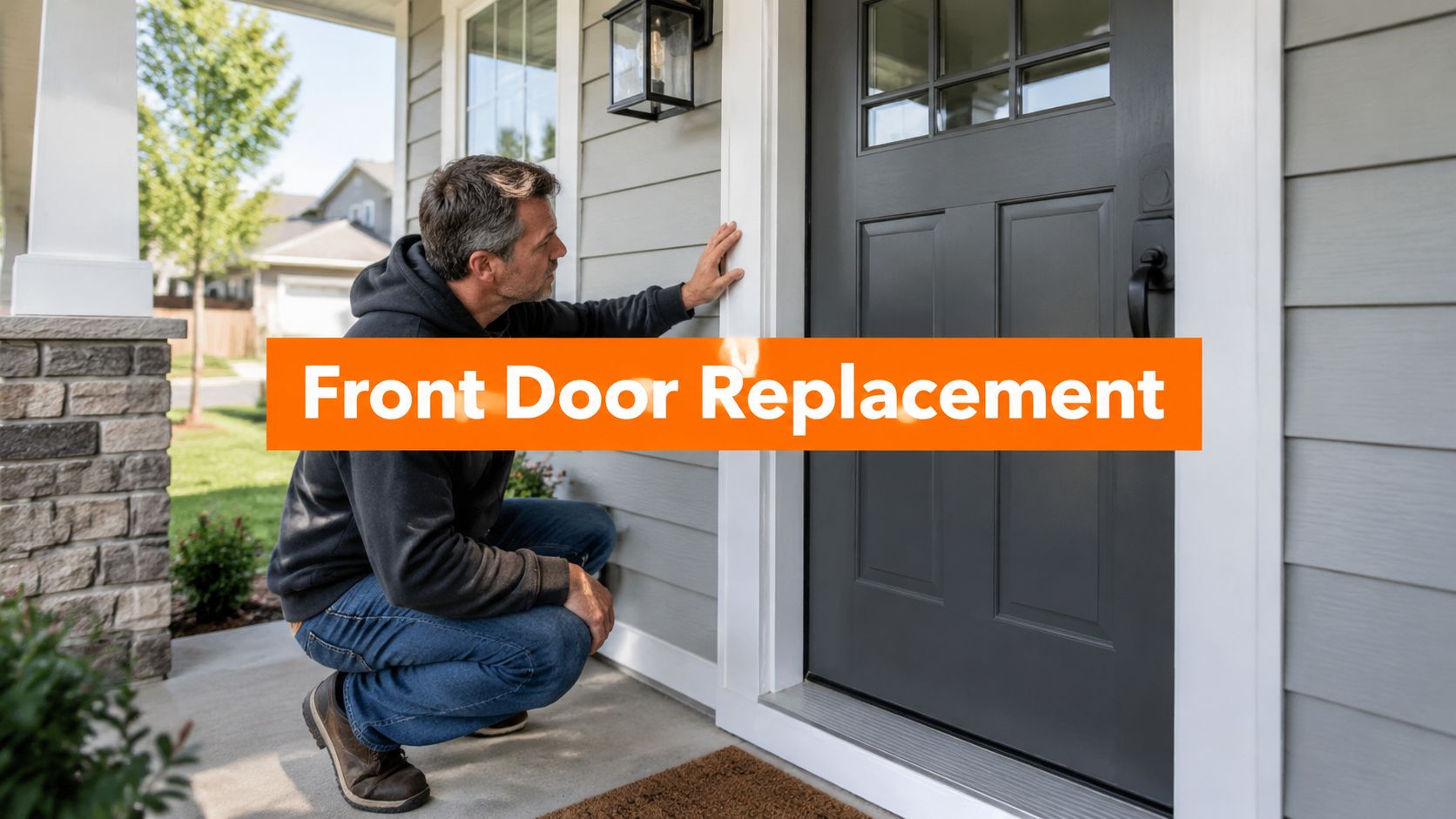
You're standing inside your Nampa entryway on a cold morning, feeling a draft at your ankles while the front door sticks against the frame. At the same time, you're looking at the exterior and wondering whether a new door could improve curb appeal before you list, refinance, or settle into the house for years. That combination of comfort, appearance, security, and resale value is why front door replacement in Nampa deserves more planning than choosing a color from a showroom sample.
A successful project starts with the opening, not the slab. You'll need to assess the existing frame, decide which performance metrics matter in Idaho's climate, compare installed pricing, verify incentive rules, and understand when Nampa requires a permit. The installation itself matters just as much as the product because a well-rated door can underperform if the sill, jambs, insulation, or exterior seal are handled poorly.
Table of Contents
- Why Front Door Replacement Matters for Nampa Homes
- How to Assess Your Current Door and Define Your Goals
- Choosing the Right Door Material Style and Energy Performance
- What Front Door Replacement Costs in Nampa and How Incentives Work
- Permits Preparation and What Happens on Installation Day
- Choosing Your Installer and Protecting Your Investment Long Term
Why Front Door Replacement Matters for Nampa Homes
A homeowner preparing a Nampa property for sale might first notice the faded finish and dated glass. After opening and closing the door a few times, the more important problems usually become obvious: daylight at a corner, a loose threshold, a latch that needs to be lifted into place, or cold air moving around the frame. A replacement can address the visible issue, but the true value comes from correcting the complete entry system.
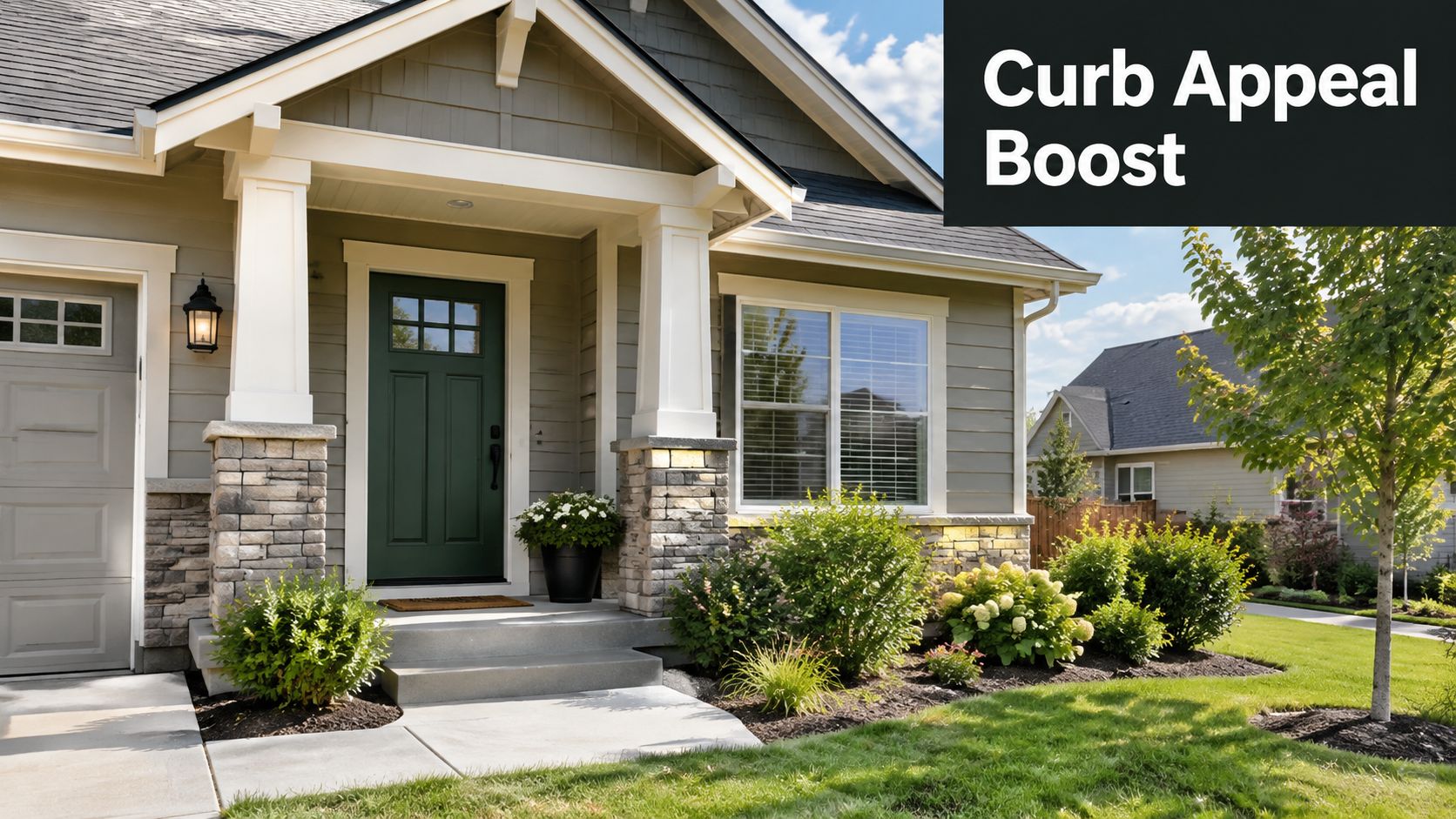
Nampa's resale environment gives this project useful context. Recent Nampa housing market data from Redfin places the city's median home sale price at about $424,000 over the last three months, with homes selling in around 32 days. The same market data records 702 homes sold in July, compared with 611 a year earlier, while prices were rising 2.1% year over year. Those conditions make a front entry a practical place to invest before a listing, because buyers notice the door before they evaluate many interior details.
The city also has a substantial owner-occupied base. One Nampa housing profile estimates 66.3% owner-occupied households, with a median home price of $340,945. That points to two different project motivations. Sellers may want a clean visual upgrade, while long-term owners may care more about lower drafts, better sound control, dependable locking, and protection from weather.
Repair or replace
Repair makes sense when the slab is sound, the frame remains square, and the problem is limited to adjustable hinges, worn weatherstripping, a damaged sweep, or a replaceable lockset. Replacement becomes more sensible when the frame has rot, the threshold is failing, the door has warped, or repeated adjustments haven't stopped air and water intrusion.
Nampa's typical household size is 2.8 people, according to the same local housing profile. That matters less as a design statistic than as a reminder that the front door serves everyday traffic. It needs to close reliably, tolerate frequent use, and provide a practical barrier against weather, noise, and security concerns.
Field rule: Choose the project goal before choosing the door. A beautiful slab won't solve a crooked opening or a leaking threshold.
The right sequence is straightforward. Inspect the current assembly, define the performance target, compare materials and glass, price the installed scope, check permits and incentives, then judge the completed work by operation and air sealing. Style still matters, but in Idaho it works best as the final layer over a sound, climate-appropriate entry system.
How to Assess Your Current Door and Define Your Goals
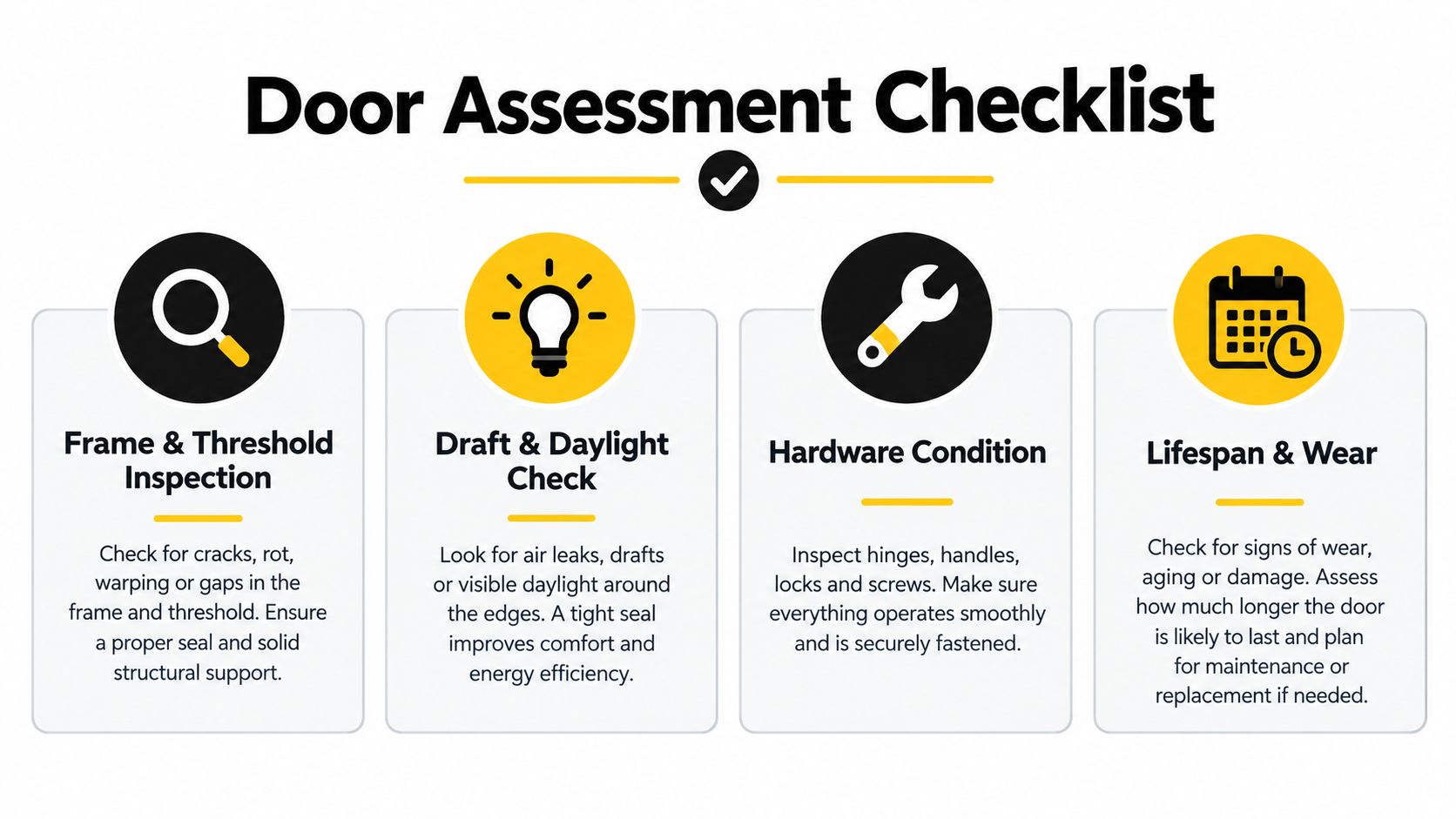
Start with a fifteen-minute inspection before contacting installers. Open the door slowly and watch whether the slab rubs at the head, hinge side, or latch side. A door that binds may have a frame problem, hinge movement, settlement, or moisture damage, and replacing only the slab won't necessarily correct it.
Inspect the frame and threshold
Run your hand along the interior trim and lower corners. Soft wood, staining, swollen casing, or a musty smell can point to moisture entry. Look at the threshold from both sides, especially where it meets the jambs, because a failed corner seal can let water and air bypass an otherwise good door.
Check the frame with the door closed. The gaps should look reasonably consistent from top to bottom. If the reveal narrows sharply at one corner, photograph it rather than trying to force an adjustment. An installer needs to know whether the opening is out of square before preparing a quote.
Find drafts and daylight
Turn off entry lights during daylight and ask someone to stand outside while you inspect the perimeter from indoors. Visible light at the head, jamb, or threshold indicates a sealing problem. On a cold or windy day, slowly move a tissue around the perimeter. Movement doesn't prove the slab is defective, but it does identify where the air barrier needs attention.
Listen as well as feel. A hollow sound, street noise, or hallway noise passing easily through the entry may push you toward a denser slab, improved perimeter seals, or less glass.
Check hardware and security
Operate the lock, deadbolt, hinges, and closer without lifting or pushing the slab. A deadbolt that doesn't extend smoothly can reflect poor alignment rather than a bad lock. Note whether the strike plate is loose, whether screws have pulled out, and whether the hinges show sag.
Your notes should identify the priority:
- Comfort: Record drafts, cold trim, and temperature differences near the entry.
- Noise: Note traffic, neighborhood activity, or sound transfer through glass.
- Security: Check latch alignment, deadbolt movement, hinge exposure, and frame strength.
- Appearance: Photograph faded finish, cracked panels, outdated glass, and damaged trim.
- Durability: Look for swelling, rot, splitting, corrosion, or repeated sticking.
Measure and photograph before requesting quotes
Measure the visible slab width and height, but treat those numbers as preliminary. The rough opening, jamb depth, sill condition, trim, and header determine the actual replacement scope. Take photos from both sides, including the full wall around the door, the threshold close-up, each hinge area, and the latch-side reveal.
Don't remove trim to measure the rough opening unless you understand how to protect the water and air barriers. Send the photos with your needs list and ask whether the quote includes removal, disposal, frame preparation, flashing, insulation, exterior sealing, interior trim work, hardware, and final adjustment. That process prevents a low initial price from turning into a series of change orders.
Choosing the Right Door Material Style and Energy Performance
A door that looks right at the showroom can still perform poorly on a Nampa entry. Material, glass area, frame construction, sill sealing, and installation all affect drafts, maintenance, security, and service life. Choose the complete door system, not only the slab.
Steel suits homeowners who want a rigid, secure-feeling entry with a controlled budget. It can dent, and damaged paint or coating should be repaired promptly to limit corrosion. Fiberglass handles temperature swings and moisture well, can imitate wood grain convincingly, and usually needs less finish maintenance. Wood brings natural detail and can be refinished, but it requires closer attention to finish condition, exposure, and moisture.
| Material | Best For | Energy and Durability Notes | Maintenance Level |
|---|---|---|---|
| Steel | Security-minded upgrades and straightforward modern styles | Rigid and durable, but dents and finish damage need repair; performance depends on the complete rated assembly | Low to moderate |
| Fiberglass | Wood appearance with easier upkeep | Resists many common moisture and temperature concerns; pair with a rated frame and properly sealed sill | Low |
| Wood | Traditional homes and custom architectural details | Natural material with strong visual character, but finish quality and exposure control affect service life | Moderate to high |
Glass changes both appearance and performance. A full-lite door brings more daylight into the entry, while exposing more glass than a windowless slab. Smaller lites reduce that exposed area. Privacy glass allows daylight without making the foyer fully visible from the street. Ask for the complete door rating rather than relying on descriptions such as insulated or energy efficient.
Read the Idaho performance numbers
Nampa sits in an Idaho climate zone where performance should guide the selection before decorative features. ENERGY STAR guidance for Northern Climate Zone markets such as Idaho sets a maximum U-factor of 0.27 for certification. Its higher-tier Most Efficient designation uses a U-factor of 0.20 or lower, as summarized in this Idaho climate-zone door guidance. U-factor measures heat transfer through the door. Lower values indicate less transfer.
For a higher-performance specification, the NFRC and ENERGY STAR metric guidance identifies these limits:
- A windowless door must meet U-factor ≤ 0.21.
- A glazed door up to half-lite must meet U-factor ≤ 0.27 and SHGC ≤ 0.30.
- A door with more than one-third glass must meet U-factor ≤ 0.32 and SHGC ≤ 0.30.
- Air leakage must be ≤ 0.5 cfm/ft² for swinging doors and ≤ 0.3 cfm/ft² for sliding doors.
SHGC measures how much solar heat enters through the glass. In a Treasure Valley home, that number helps balance winter comfort against unwanted summer heat. Air leakage deserves equal attention. Independent guidance describes ENERGY STAR-certified exterior doors as about 15% more efficient than conventional doors, but that advantage can be lost when the frame perimeter and sill are poorly sealed.
Use energy-efficient front-door options as a starting point for comparing specifications. Ask for the NFRC label, certified climate zone, U-factor, SHGC when glass is present, and air-leakage rating. The installation must protect those ratings. A high-performance door with an unsealed frame is still a leaky entry.
Match the specification to the goal
- Choose steel when rigidity, security, and a restrained design matter most.
- Choose fiberglass when you want wood character with less finish maintenance.
- Choose wood when architectural authenticity justifies the additional upkeep.
- Limit glass when heat loss, privacy, or security takes priority.
- Select a low U-factor and low air-leakage unit when comfort and incentive eligibility matter more than decorative glass.
Hardware belongs in the performance review as well. A secure deadbolt, reinforced strike area, adjustable hinges, and correctly aligned latch improve daily operation. No lock can make up for a weak or poorly fastened frame, so include structural fastening through the jamb in the installation scope. That detail supports both security and consistent weather sealing over time.
What Front Door Replacement Costs in Nampa and How Incentives Work
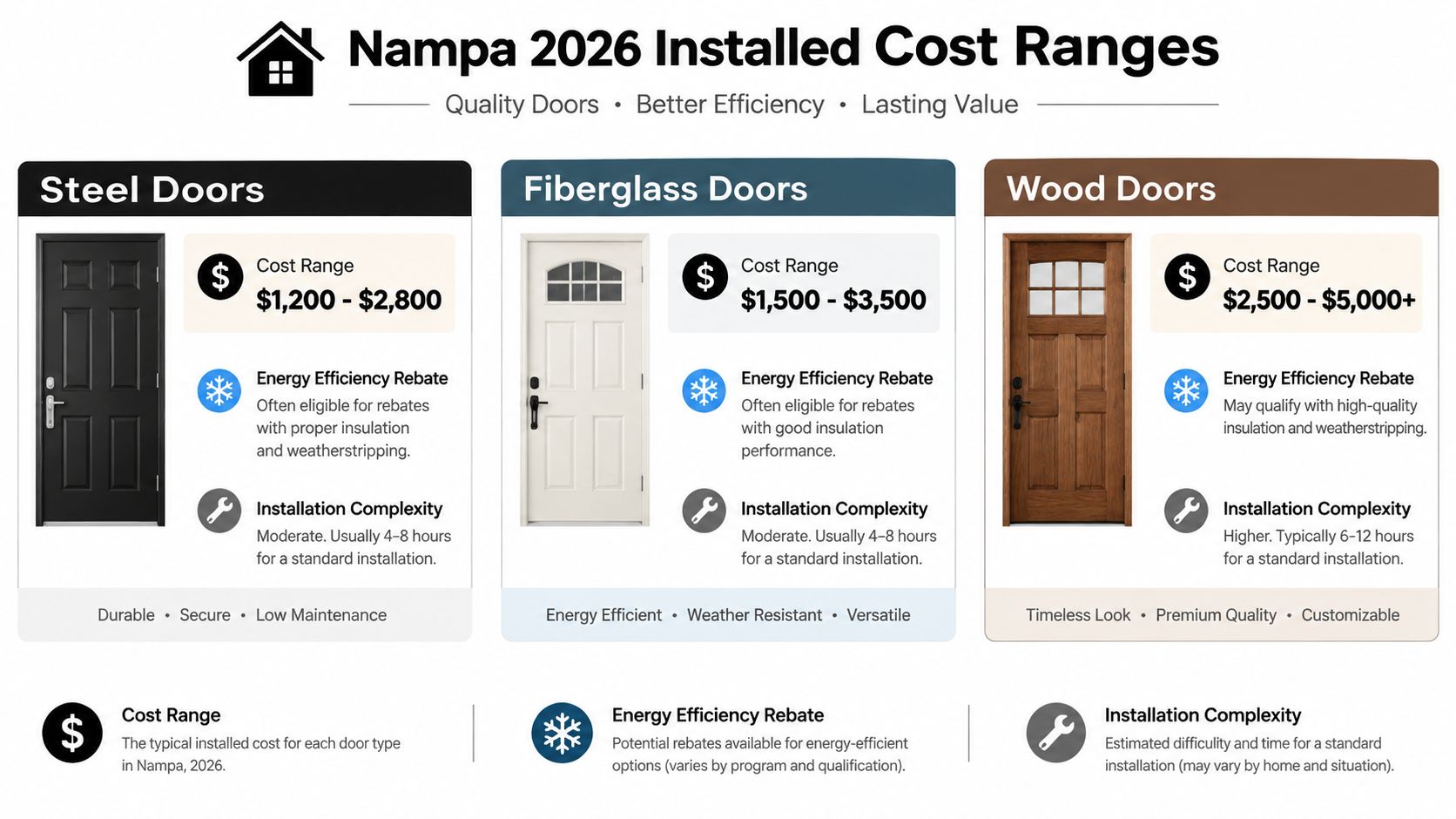
A basic slab swap and a complete insulated entry-system upgrade are different jobs, so Nampa pricing covers a wide range. 2026 estimates place exterior-door replacement at about $480 to $2,420, with a typical project near $1,160, according to this Nampa exterior-door pricing reference. These figures provide planning context, not a guaranteed proposal.
Your written quote should account for the conditions found at the opening. Door material, glass area, jamb depth, sidelites, transom windows, hardware, trim, threshold repairs, structural work, disposal, and permit administration can all change the total. Exterior flashing and interior finish repairs also matter. A proposal that omits those items cannot be compared fairly with one that includes a complete weather-managed installation.
Calculate the installed value
The lowest quote may cover only removal and placement. Ask the installer to identify the exact door model, frame material, glass configuration, U-factor, air-leakage rating, sill treatment, structural fasteners, insulation, exterior sealant, interior trim, hardware, disposal, labor warranty, and permit responsibility.
A higher installed price can make sense when the replacement solves a specific problem, such as drafts, uneven temperatures near the entry, noise, weak security, or worn curb appeal. The 2025 Cost vs. Value summary reports that steel entry-door replacement recoups about 216% of cost nationally, while garage-door replacement recoups about 268%. Those figures are national, not a guaranteed Nampa resale result, but they show why an entry door can retain value beyond its appearance.
Verify incentives before ordering
The federal exterior-door tax credit is capped at $250 per door and requires ENERGY STAR certification, according to the ENERGY STAR exterior-door tax-credit guidance. Confirm certification before purchasing and keep the required documentation. Insulated glass or a foam core alone does not establish eligibility.
Avista's exterior-door rebate is scheduled to change from $100 to $20 effective March 1, 2026, according to ENERGY STAR's incentive timing reference. Verify utility territory and current program rules before signing. Eligibility may depend on the product, installation date, and paperwork.
Budget from the net project cost, not the advertised door price. Require a written explanation of which incentives are included, who submits forms, whether the quote assumes a standard opening, and how damaged framing would be handled after removal. Incentive rules can affect which door you order and when the project should proceed.
Permits Preparation and What Happens on Installation Day
The first administrative question is whether the project changes the opening. Nampa's official Residential FAQ says a permit is required when replacing windows or door openings reduces or enlarges the opening, or when the work requires structural modification to the header. A same-size replacement may follow a different path, but the installer should confirm the scope with the city rather than guessing.
One local permit resource describes typical review times of roughly 5 to 18 calendar days and commonly two inspections, while also distinguishing City of Nampa work inside city limits from Canyon County work outside them, as outlined in this Nampa exterior-door permit reference. Treat those figures as planning guidance, not a guarantee. The official city process and Citizen Self Service portal remain the right places to verify the current requirement.
Prepare the house
Clear furniture, rugs, wall décor, and plants from the entry and the crew's path. Remove alarm-system instructions from the old door, secure pets, and decide where the replacement door should be staged. If the entry has an overhang, that helps, but the crew still needs room to protect flooring and move the old assembly out without damaging adjacent trim.
Before installation, confirm the door swing, handing, lock height, glass privacy level, color, casing profile, and threshold finish. A written pre-installation review catches ordering mistakes while the product is still unopened.
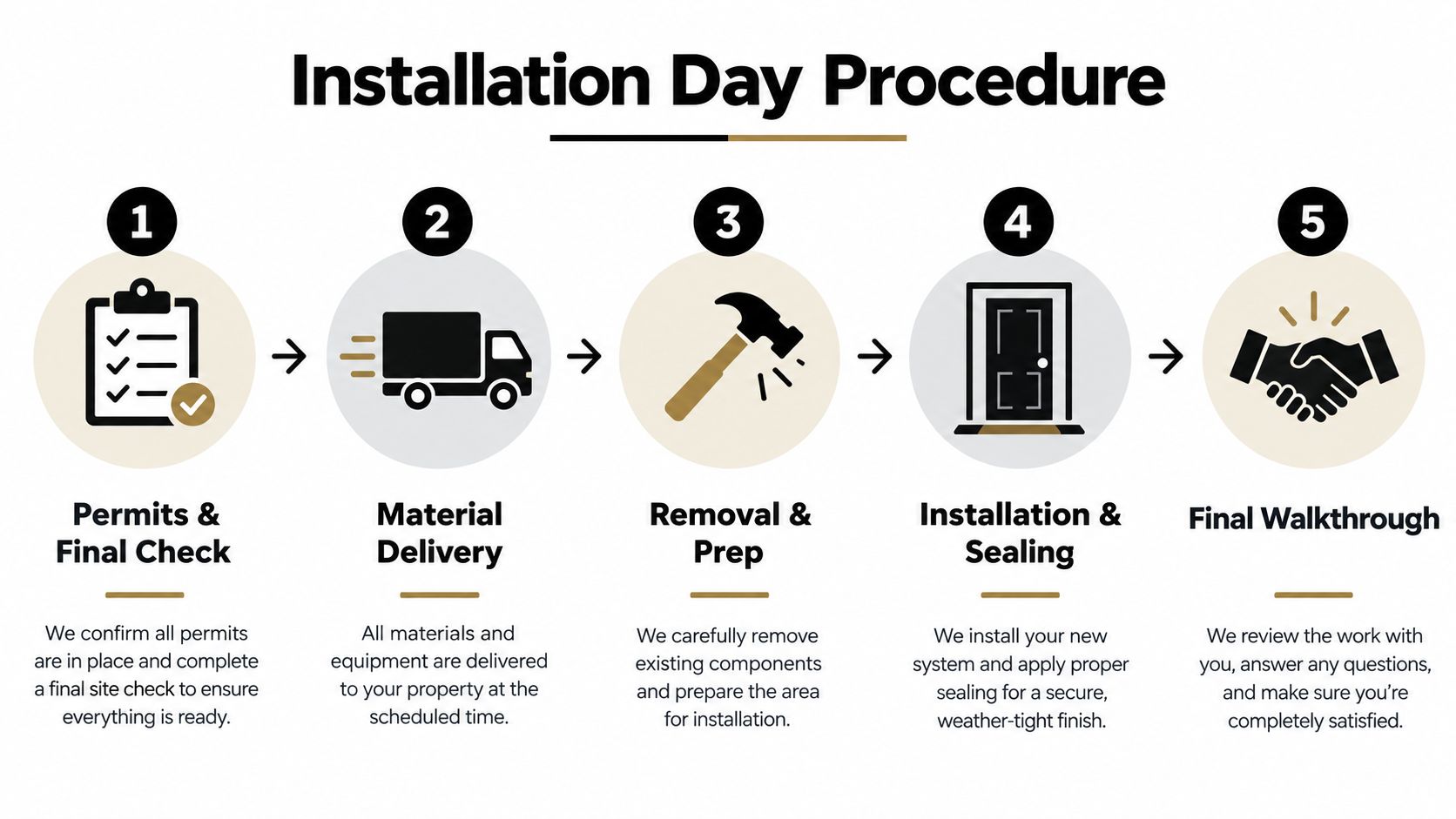
Follow the installation sequence
A careful replacement typically follows this order:
- Confirm the opening. The installer checks measurements, wall conditions, sill support, and the relationship between the frame and finished flooring.
- Remove the old assembly. Trim and fasteners come out with care so surrounding siding, drywall, and flooring aren't unnecessarily damaged.
- Prepare and protect the opening. The sill is cleaned and evaluated. A continuously flashed sill helps direct incidental water outward instead of allowing it into the wall.
- Set and fasten the new frame. The installer places the unit, checks plumb and level, and uses shims to maintain a consistent reveal. Structural fastening through the jamb keeps the frame from shifting under repeated use.
- Insulate and seal. Low-expansion foam or suitable insulation fills the perimeter gap. Exterior caulking and interior air sealing complete the barrier.
- Adjust and test. The slab should swing freely, meet the weatherstripping evenly, latch without force, and lock without lifting or pulling.
The sequence protects the door's rated performance. ENERGY STAR specifically emphasizes that installation quality affects heat loss and air leakage, so don't judge the work by the slab alone. The frame-to-wall connection is where many field failures begin.
For additional context on professional entry-door work, review this entry-door installation resource and ask your installer to explain which parts of the process apply to your Nampa opening.
Before sign-off: Test the door from inside and outside. Check every lock, inspect the sill corners, look for daylight, and run your hand around the perimeter for uncontrolled air movement.
Complete the walkthrough
Confirm that debris is removed, trim is secure, sealant is continuous, and the door doesn't contact the threshold or frame. Ask for care instructions for the finish, warranty documents, product ratings, permit information, and inspection status where applicable.
Don't paint or stain immediately unless the manufacturer's instructions allow it. Keep the threshold clear of grit, clean the weatherstripping with a soft cloth, and call for service if the door develops binding, uneven compression, water entry, or a lock alignment problem.
Choosing Your Installer and Protecting Your Investment Long Term
A reliable proposal should make the installer's process visible. Look for custom measurement, a written opening assessment, product-specific performance data, clear responsibility for permits, and separate descriptions of product and labor warranties. Factory training matters because modern door systems depend on correct flashing, shimming, fastening, and sealant compatibility, not just carpentry skill.
Ask these questions before choosing:
- Who measures the opening? A salesperson's slab estimate isn't the same as a field measurement that accounts for jamb depth, sill, trim, and header conditions.
- What does the warranty cover? Confirm the duration, exclusions, finish coverage, hardware coverage, and whether labor is included.
- What happens if hidden damage appears? The contract should explain how rot, framing defects, or threshold repairs are priced and approved.
- How is financing handled? Review the lender, terms, total repayment, promotional conditions, and whether incentives are counted before or after financing.
- Who handles closeout? Ask whether the installer coordinates inspection documentation and provides product records.
A lifetime limited warranty can be useful, but it isn't unlimited protection. It may cover qualifying product defects for the original owner while excluding impact damage, improper maintenance, unauthorized alterations, or normal finish wear. Read the actual terms and keep the invoice, model information, incentive paperwork, and installation photos together.
For a local comparison point, C & C Windows & Doors describes a Treasure Valley installation process built around factory-trained crews, custom measurements, free in-home consultations, same-day estimates, debris-free work, a lifetime limited warranty on products and labor, and financing through Synchrony. Those are proposal elements to compare against any installer, not substitutes for reviewing the specific contract.
Long-term care is simple but consistent. Clean the finish with products approved by the manufacturer, keep the sill drainage path clear, inspect exterior sealant when seasons change, and adjust hardware before a small alignment issue becomes frame damage. If drafts or water return after installation, document the location with photographs and contact the installer promptly.
The clearest next step is to request proposals using the same written scope. Give each company the same photos, priorities, door style, glass preference, and performance target, then compare the complete installed system rather than the door price alone.
C & C Windows & Doors provides Nampa homeowners with free in-home consultations, custom measurements, same-day estimates, and professional entry-door replacement focused on Idaho comfort and dependable sealing. Visit C & C Windows & Doors to request a consultation and compare a complete front-door replacement plan for your home.