
A cold draft runs along the floor beside the sofa. The handle takes two hands to move, the glass looks cloudy, and the backyard appears through a permanent haze. In many Boise homes, a sliding patio door that once made indoor-outdoor living easy eventually becomes a source of discomfort, noise, air leakage, and frustration.
The right replacement decision starts with more than glass appearance. Boise falls in IECC climate zone 5B, with about 5,300 annual heating degree days and 700 cooling degree days, so winter heat loss deserves particular attention in this heating-dominant market. ENERGY STAR's degree-day guidance helps explain why a door that feels only slightly drafty can still affect comfort and heating demand.
This guide follows a practical path: identify the failure, understand whole-door performance, compare options for Boise's climate, review cost drivers, and evaluate installation quality. The central question is simple: Will the complete replacement door, as installed, deliver the performance your home needs?
Table of Contents
- Why Boise Homeowners Consider Sliding Glass Door Replacement
- How Sliding Glass Doors Work and What Fails Over Time
- Energy and Style Options That Matter in Boise
- Understanding Cost Ranges and Financing for Replacement
- What to Expect During the Replacement Process
- How to Choose a Reputable Boise Installer and Protect Your Investment
- Frequently Asked Questions About Sliding Glass Door Replacement in Boise
Why Boise Homeowners Consider Sliding Glass Door Replacement
A Boise homeowner may notice the issue on a cold morning: the room feels comfortable until someone sits near the patio door, where cold air reaches ankles and furniture. The panel may still open, yet the track feels rough, the lock misses its strike, or flattened weatherstripping leaves visible gaps. These signs point to more than an inconvenient door. They suggest that the moving panel, frame, seals, or installation joint may no longer work as one system.
Fogging between panes signals a different failure. Moisture trapped inside an insulated glass unit generally means the seal between the glass layers has broken. Wiping the room-facing surface cannot remove the haze because the moisture is inside the sealed assembly.
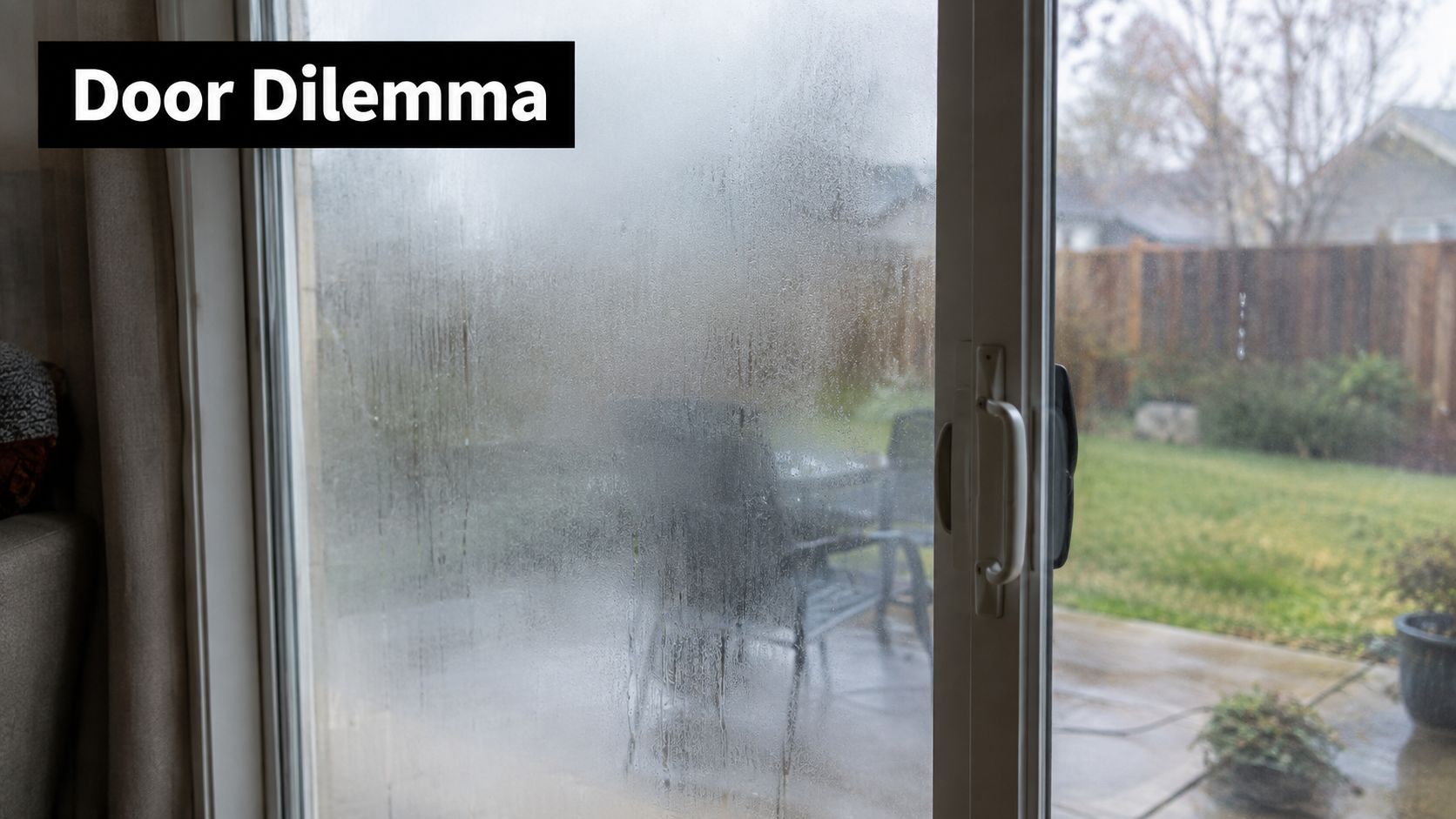
Signs repair may no longer be enough
Repair remains reasonable when the trouble is limited to a dirty track, a worn roller, or hardware that needs adjustment. Replacement deserves consideration when several components have declined together:
- Persistent drafts: Air moves around the panel after weatherstripping is adjusted.
- Recurring fogging: Condensation remains between the glass layers.
- Sticking operation: Worn rollers, damaged tracks, or a shifted frame make the panel drag.
- Weak security: The lock does not engage cleanly, or the locked panel still moves.
- Water concerns: Clogged drainage openings, standing sill water, or damage around the opening indicate a moisture problem.
Boise's heating-dominant conditions make air leakage more noticeable. Outdoor air entering around a large opening can make the floor area feel colder and require more work from the heating system. A whole-unit replacement addresses the complete performance package, including the glass, frame, sill, track, seals, and installation interface. Compare the door's whole-unit ENERGY STAR rating and its fit for Boise's climate rather than judging the upgrade by glass features alone.
Practical rule: If the door is uncomfortable, difficult to operate, and showing seal or drainage problems together, price a whole-unit replacement before paying for several isolated repairs.
The room's purpose should guide the specification. A wide patio opening may support summer gatherings, while a home office may benefit from less outdoor noise. Children and pets may make secure, easy-to-operate hardware the priority. Choose the replacement around those needs, along with verified whole-door energy performance, rather than color or grille style alone.
How Sliding Glass Doors Work and What Fails Over Time
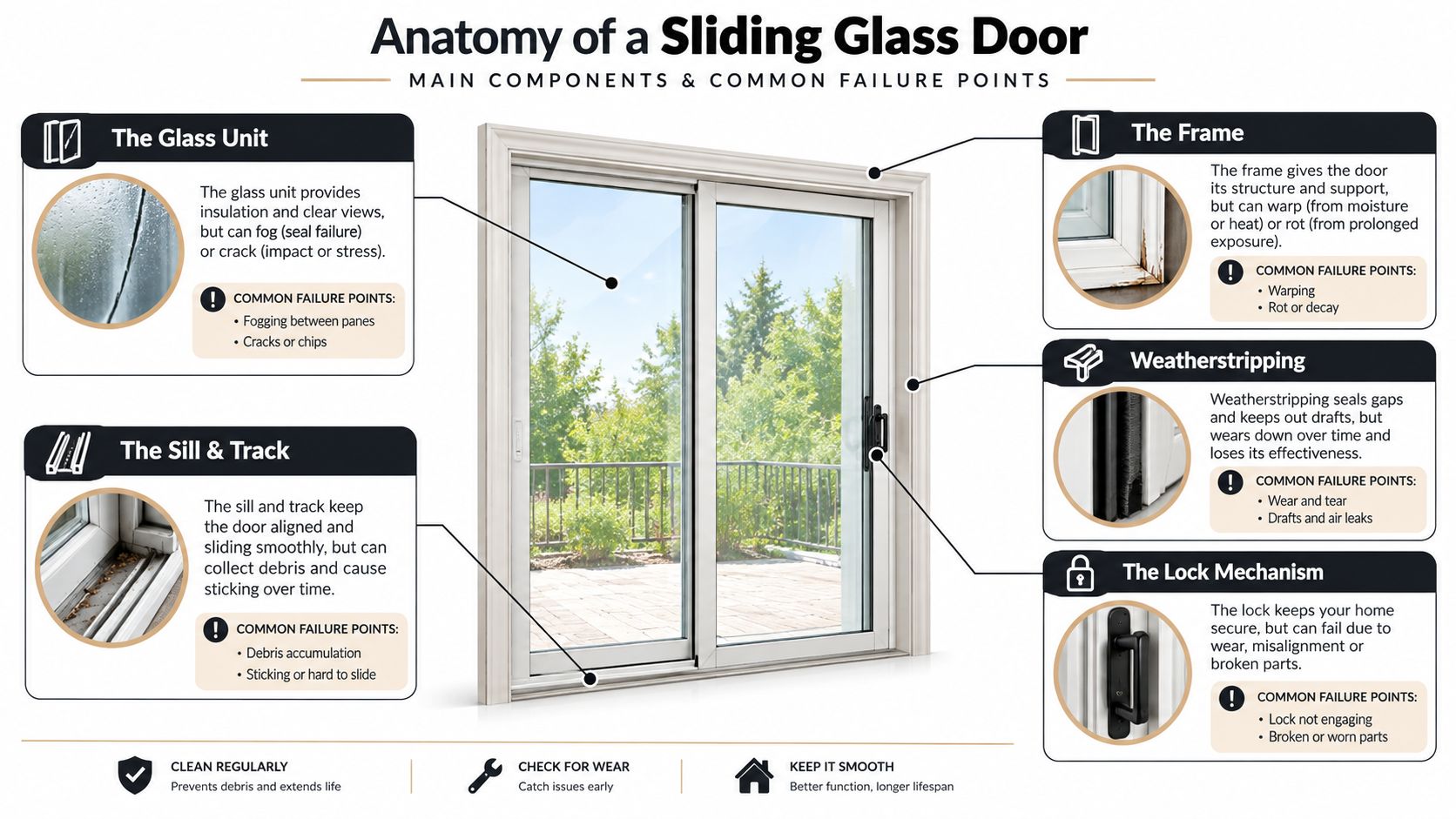
Think of a sliding glass door as a small wall section that also has to move. The glass unit controls much of the heat transfer and daylight. The frame holds that unit square, while the sill and track carry the panel and guide its movement.
Weatherstripping acts like a gasket around a refrigerator door. It needs consistent contact to limit air movement. The lock pulls the panel into position and helps maintain that contact, so a weak or misaligned lock can affect both security and sealing.
The parts that usually create trouble
Start with the glass. A failed seal can produce interior fogging, while cracked glass requires prompt attention. Sliding door glazing is treated as a hazardous location in IRC-based guidance, and the glass must be tempered. Building Code Trainer's tempered-glass guidance explains the safety-glazing requirement for glazing in sliding door panels.
Next, inspect movement. Dirt and small debris collect in the track, increasing roller resistance. If the rollers wear or the frame shifts, the panel can sag, scrape, or stop meeting the jamb evenly. That uneven contact creates a path for air and can prevent the lock from working as designed.
Why drainage belongs in the diagnosis
The sill isn't just a bottom frame. It manages water that reaches the exterior side of the door. A properly designed system directs water toward the outside through open drainage paths. Sealant applied in the wrong place can block those paths and trap moisture.
Installation guidance for sliding systems stresses that the sill pan should slope and drain outward, weep paths must remain open, and drainage channels shouldn't be sealed shut. The QuickGlide installation guide describes the relationship between sill components, end caps, sealant, and drainage.
Boise's seasonal temperature changes can expose weak points repeatedly. Water enters a small gap, freezes, expands, and later thaws. Over time, that cycle can affect surrounding trim, finishes, and the sill area. A replacement assessment should therefore examine the opening, not just the removable panel.
Energy and Style Options That Matter in Boise
A comfortable replacement depends on the complete door, not the glass package alone. The frame, spacers, seals, sill, operating panel, fixed panel, and installation all affect performance. Whole-unit U-factor, solar heat gain coefficient, and air-leakage ratings provide a clearer comparison than a label that only says low-E or insulated glass.
Boise homeowners should match those ratings to the applicable climate zone. ENERGY STAR criteria list North-Central requirements of U-factor ≤ 0.24 and SHGC ≤ 0.40 for windows, doors, and skylights in the relevant climate class. The ENERGY STAR Version 7.0 stakeholder material also discusses a Northern and North-Central sliding-door target of about U-factor ≤ 0.26. These references show why a premium-looking door may still miss the whole-unit rating that fits Boise.
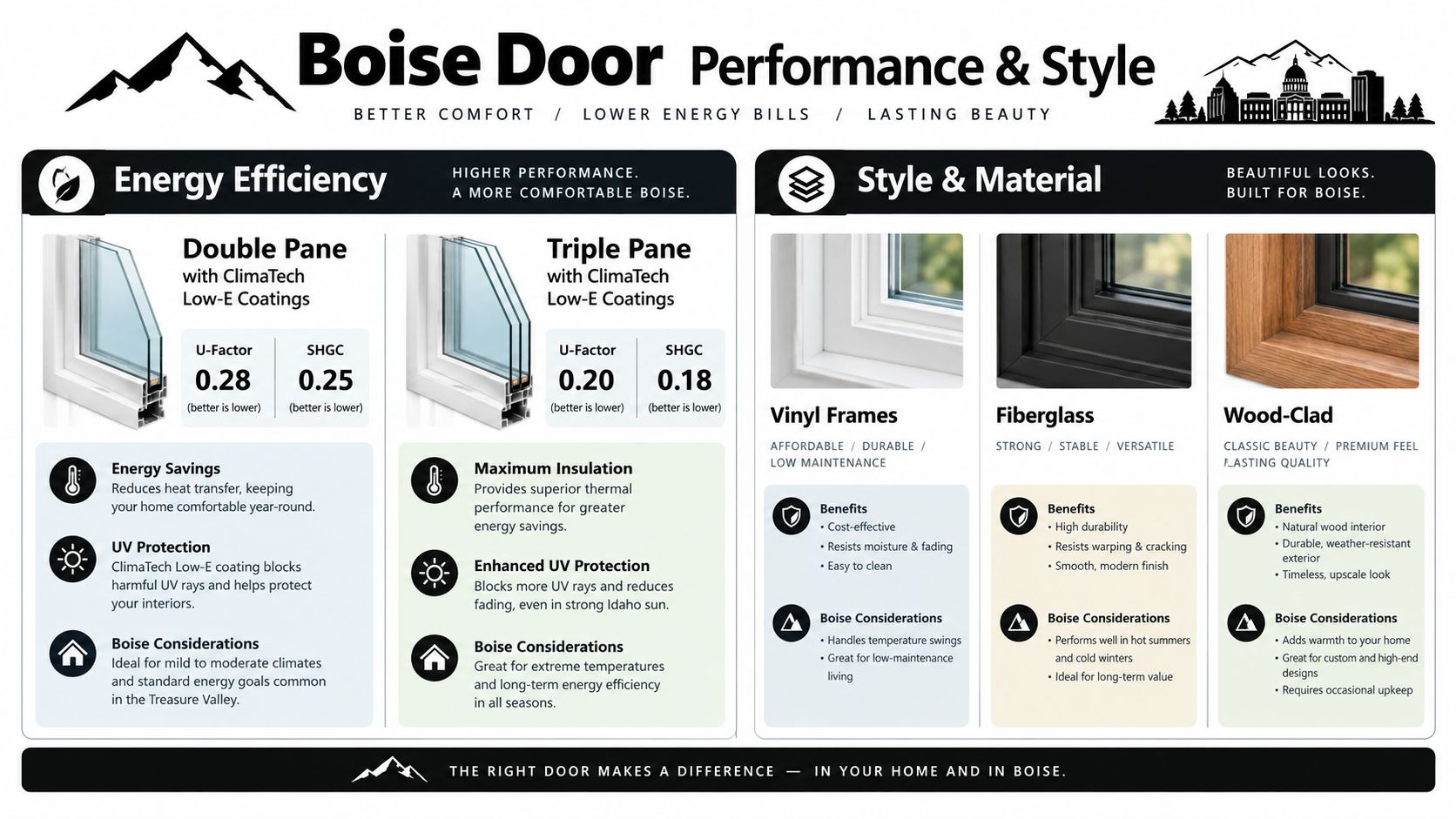
Compare the options by the problem they solve
| Option | What It Does | Best For in Boise |
|---|---|---|
| Double-pane insulated glass | Creates an insulating space between glass layers | Homes seeking a practical improvement over an older door |
| Triple-pane glass | Adds another glass layer and insulating space | Rooms with strong winter comfort or noise concerns |
| ClimaTech Low-E coating | Reduces heat loss in winter and heat gain in summer | Openings where year-round temperature control matters |
| Argon fill | Uses an insulating gas between glass layers | Homeowners comparing insulated-glass packages |
| Narrowline frame | Preserves more glass area with a slimmer visual profile | Remodels that prioritize daylight and a contemporary look |
| Composite-reinforced sash | Adds structural support to the moving panel | Larger or frequently used doors needing stable operation |
| Low-profile lock | Provides a less intrusive hardware profile with secure engagement | Busy family spaces and doors used often |
| True sloped sill | Helps direct water toward exterior drainage | Openings where water management is a priority |
Low-E is a selective metallic coating. It reflects some infrared heat while allowing visible light through, helping reduce winter heat loss and summer heat gain. Natural Resources Canada describes reductions in heat transfer of up to 30 percent in its low-emissivity glass publication. The coating improves the glass, but the whole-unit rating still determines how the assembled door performs.
Orientation changes the decision. A south- or west-facing opening may need careful SHGC selection to balance winter daylight with summer heat gain. A shaded north-facing door may benefit more from a low U-factor and strong air sealing. For another patio-door comparison, review energy-efficient patio door options from C & C Windows & Doors, then request the complete NFRC or ENERGY STAR rating for the exact configuration.
Air leakage belongs on the same specification sheet as U-factor and SHGC. ENERGY STAR materials identify a high-performance sliding-door benchmark of ≤0.3 cfm/ft². The ENERGY STAR residential windows, doors, and skylights specification explains why a replacement should be judged as a complete assembly. Ask for the certified whole-unit ratings, confirm the door fits Boise's climate requirements, and compare those performance details before paying for style features that do not address the opening's main problem.
Understanding Cost Ranges and Financing for Replacement
Sliding glass door replacement doesn't have one universal price because each opening creates a different project. A standard-size opening with sound framing and easy access is a simpler job than a large opening requiring structural correction, trim reconstruction, or extensive water-damage repair.
The main cost drivers are straightforward:
- Opening size: Larger glass areas require more material and careful handling.
- Glass package: Double-pane, triple-pane, Low-E, and gas-fill choices change the product specification.
- Frame material: Vinyl, fiberglass, composite-reinforced systems, and wood-clad designs carry different material and maintenance considerations.
- Hardware: Lock style, rollers, screens, and handles affect the package.
- Installation complexity: Existing damage, difficult access, interior finish work, and disposal add labor requirements.
Build a budget around measurable value
A sensible quote should separate the door from the work required to install it. Ask whether the proposal includes removal, disposal, sill-pan or flashing work, interior and exterior finish adjustments, screens, cleanup, and warranty terms. Two quotes can appear similar while covering different scopes.
The highest-priced package isn't automatically the best fit. A homeowner with a shaded opening may gain more from verified low U-factor and tight air sealing than from an expensive appearance upgrade. Someone facing a busy road may place more value on insulated glazing and a tight operating system, while a sun-exposed room needs careful attention to SHGC.
Budget test: Pay for features that solve a documented problem or help the complete door meet the applicable performance threshold. Don't pay a premium for a pane description without the whole-unit rating.
Energy savings should be treated as part of total ownership cost, not as a guaranteed payback promise. A better-sealed door can improve comfort and reduce conditioned-air loss, but the actual financial result depends on the home's heating system, usage, exposure, existing door condition, and installation quality.
Financing can help distribute the project cost instead of forcing a homeowner to remove necessary performance features to meet a short-term budget. Review the terms carefully, including promotional conditions and repayment requirements, through window and door financing information for Boise homeowners. Request a written proposal so you can compare the financed total, not only the monthly payment.
What to Expect During the Replacement Process
A professional replacement begins before anyone removes the old door. The installer should examine the existing unit, surrounding trim, sill condition, wall opening, drainage approach, and how the panel operates. This visit is also the time to discuss orientation, comfort complaints, security, screens, finish details, and the performance rating you want.
The project sequence
Consultation and assessment: You describe drafts, fogging, noise, sticking, water, or security concerns. The installer evaluates whether replacement is appropriate and identifies conditions that could change the scope.
Precise custom measurement: Measurements should account for the actual framed opening, not assumptions based on the old panel. The installer also checks whether the opening is square and whether surrounding materials need attention.
Manufacturing and ordering: The final product is specified by size, frame, glass, hardware, screen, color, and performance ratings. Confirm the documented U-factor, SHGC, and air-leakage information before the order is finalized.
Removal of the old door: The crew protects nearby floors and finishes, removes the existing assembly carefully, and checks for concealed damage. A door that has leaked may require additional preparation before the replacement can be set.
Installation and sealing: The sill must manage water toward the exterior, and weep paths must remain open. The installer should use compatible flashing and sealants without blocking drainage channels. Proper shimming and fastening keep the frame aligned so the weatherstripping can maintain contact.
Final inspection and cleanup: The panel should glide without scraping, the lock should engage smoothly, the screen should operate, and the drainage and seals should be visible and intact. The crew should remove debris and explain basic care.
The safety and performance checks that matter
Sliding door glazing must use tempered glass under the safety guidance cited earlier. Ask the installer to confirm the glass specification on the product documentation rather than relying on a verbal description.
Air leakage performance also depends on installation. A highly rated door can underperform if the frame is out of square, the sill is poorly supported, or the perimeter seal has gaps. Performance-class sliding-door documentation from MI Windows.pdf) uses the same 0.3 cfm/ft² leakage threshold at a 1.5 psf test pressure, linking tight sealing with both comfort and reduced noise intrusion.
Prepare by moving furniture away from the opening, clearing access to the interior and exterior, and removing fragile items from nearby shelves. Keep pets and children away from the work area until the installer confirms that the door and surrounding finishes are secure.
How to Choose a Reputable Boise Installer and Protect Your Investment
The installer influences whether the door performs like its rating. A product can have strong laboratory numbers, yet poor measurement, inadequate sill preparation, blocked drainage, or weak perimeter sealing can create drafts and water problems in the home.
Start by comparing proof, not promises. Ask who will measure, who will install, what training the crew receives, and how the company handles a service issue after installation.
A practical installer checklist
- Local experience: Look for work in Boise and the Treasure Valley, including homes with similar opening types.
- Factory training: Ask whether the installation team receives manufacturer or factory training for the products being proposed.
- Written scope: Confirm removal, disposal, flashing, sill work, trim, screens, cleanup, and warranty coverage.
- Documented ratings: Request the whole-unit NFRC or ENERGY STAR information for the exact door configuration.
- Service terms: Clarify who handles adjustments, failed hardware, seal concerns, and installation-related issues.
- Measurement process: A professional should measure the opening rather than estimate from photographs or a quick glance.
A same-day estimate can be convenient, but speed shouldn't replace inspection. A reliable proposal explains what the installer observed and separates product choices from site conditions. If a quote promises dramatic savings without reviewing the existing door, orientation, heating pattern, and whole-unit rating, treat the claim cautiously.
Protect performance after installation
Maintenance is simple but important. Keep the track free of grit, inspect weatherstripping for wear, and check that exterior drainage openings remain clear. Don't apply sealant over weep paths or alter the sill without understanding how the system drains.
Warranty language deserves close reading. Ask whether coverage applies to the product, labor, glass seals, hardware, and installation defects, and whether maintenance or registration requirements apply. C & C Windows & Doors describes a local, factory-trained service model with custom measurements, debris-free installation, same-day estimates, and a lifetime limited warranty on products and labor. Homeowners can review its Boise sliding door installation service as one local option, then compare the written scope with other proposals.
The strongest quote is the one that makes future responsibility clear. You should know who to call if the panel needs adjustment, a lock stops engaging, or a drainage concern appears after a storm.
Frequently Asked Questions About Sliding Glass Door Replacement in Boise
What season is best for replacement?
Replacement can be planned in any season, but scheduling depends on product availability, installer workload, and weather conditions at the home. A spring or summer project may feel easier because the opening is exposed for less disruptive indoor comfort, while an urgent winter replacement may be justified by severe drafts, security problems, or active water intrusion.
Will a permit usually be required?
Permit requirements depend on the scope of work and local jurisdiction. A straightforward replacement in the existing opening may be treated differently from work that changes the opening size, affects structural framing, or alters exterior conditions. Ask the installer to identify whether permits or inspections apply before work begins.
How long does installation take?
The on-site work depends on the opening, existing damage, product configuration, and finish requirements. The full project also includes measurement, ordering, manufacturing, delivery, removal, installation, inspection, and cleanup, so ask for a project-specific schedule rather than relying on a generic promise.
Can a replacement help with resale?
A clean, secure, smoothly operating patio door can improve the home's presentation and everyday usability. Buyers may also notice drafts, fogged glass, damaged trim, or a lock that doesn't work, so correcting visible and functional problems can protect the home's appeal. Resale value isn't guaranteed, and it shouldn't be the only reason to choose a premium package.
How should I judge energy payback?
Start with the complete door rating, not a glass-only claim. Boise's climate zone 5B, heating-dominant conditions, solar exposure, existing door condition, and installation quality all affect the outcome. Ask the installer to explain how the proposed U-factor, SHGC, and air-leakage values fit the opening, then compare that performance with the total project cost.
What should I bring to a consultation?
Bring photos of the interior and exterior, note when drafts or fogging appear, and identify whether the opening faces strong afternoon sun or a shaded yard. Tell the installer how often the door is used and whether noise, security, moisture, or accessibility is the primary concern. A free in-home consultation should end with a clear specification, documented measurements, and a written proposal.
C & C Windows & Doors offers free in-home consultations, custom measurements, and sliding patio door replacement for Boise and Treasure Valley homes, with performance options suited to Idaho's climate. Visit C & C Windows & Doors to request an evaluation of your existing door and discuss a whole-unit replacement that fits your comfort, drainage, security, and budget priorities.