
If you're in Boise and one room always feels colder than the rest, you're not imagining it. A lot of homeowners notice the same pattern. The furnace runs, the bill climbs, and the house still feels drafty near older windows, patio doors, attic hatches, or that back bedroom no one likes to sit in during January.
A home energy audit in Boise helps you stop guessing. Instead of throwing money at random fixes, you get a clearer picture of where your home is leaking heat, where summer air conditioning is slipping away, and which upgrades are worth doing first. In a climate with cold winters, hot dry summers, and big temperature swings, that kind of diagnosis matters.
Table of Contents
- Why Boise Homeowners Need a Home Energy Audit
- The Professional Energy Audit Process Explained
- Uncovering Common Energy Wasters in Boise Homes
- Boise Energy Audit Costs and Idaho Power Rebates
- Preparing Your Home for an Effective Energy Audit
- From Audit Report to Action The Best Upgrades
Why Boise Homeowners Need a Home Energy Audit
You notice it on a January morning in Boise. The thermostat says 70, but the bedroom near the front of the house still feels cold enough for an extra blanket. Then summer arrives, and that same part of the house heats up fast by late afternoon. The monthly bill keeps climbing, but comfort never quite catches up.
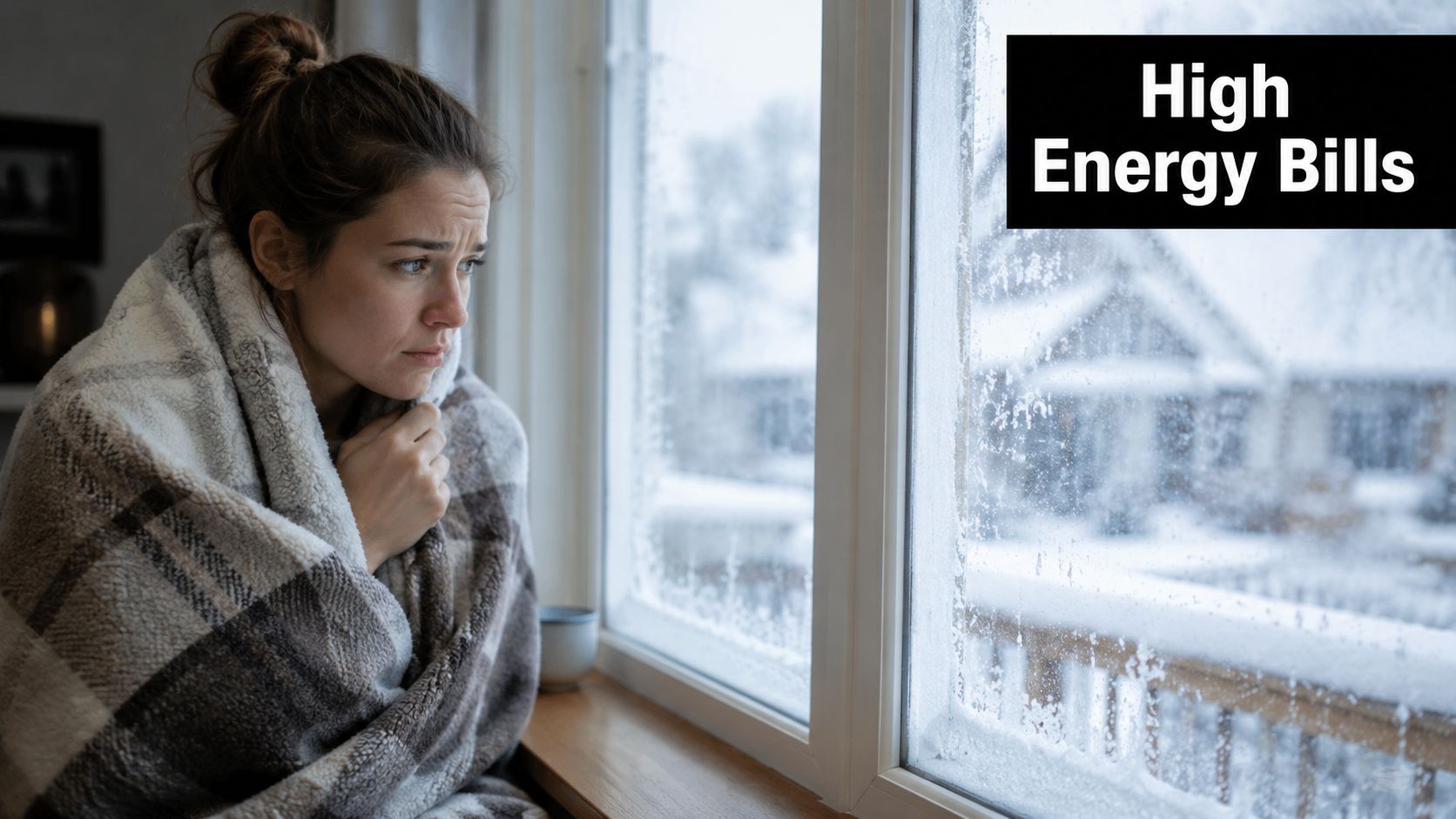
A home energy audit helps you find out why. It works like a house checkup. Instead of guessing whether the trouble comes from old windows, a leaky door, missing attic insulation, or air escaping through hidden gaps, you get a clearer picture of how the whole house is performing.
That matters in Boise because homes here have to handle both winter cold and summer heat. A house that leaks air in January usually does not stop leaking in July. The weak spots are often the same. You just feel them differently depending on the season.
Boise homeowners often suspect the exterior first, and for good reason. As noted earlier in the Boise State report, upgraded windows and doors were a commonly cited energy improvement among local homeowners. That lines up with what many people experience in real houses. If the home's outer shell is letting conditioned air out and outdoor air in, comfort drops and energy use rises.
Why guessing gets expensive
A lot of homeowners start with the visible fix. They replace weatherstripping on one door, buy thicker curtains, or adjust the thermostat schedule. Those steps can help, but they do not show whether the bigger issue is an attic bypass, a poorly sealed window frame, a worn patio door, or a duct problem feeding the room unevenly.
An audit changes the order of operations. First you diagnose. Then you improve.
That is how you avoid spending money in the wrong place. The cheapest fix is the one that solves the underlying problem the first time.
If your main goal is lower monthly bills, it also helps to pair audit findings with practical day-to-day changes. Boise homeowners can review these ways to lower electric bills in Boise while deciding which bigger upgrades to tackle first.
What an audit helps you decide
The biggest value of an audit is not the report itself. It is what you can do with it.
Once you know where heat loss or heat gain is happening, your next step gets much clearer:
- Air sealing if outside air is slipping in around penetrations, trim, or the attic plane
- Insulation improvements if the home cannot hold temperature evenly
- Window or door replacement if older units are drafty, poorly sealed, or no longer performing well
- HVAC follow-up if the equipment is working harder because the house is leaking energy
That connection between "why is this happening?" and "what should I fix first?" is the reason a home energy audit is so useful in Boise. It turns a frustrating comfort problem into a practical upgrade plan, and it helps you choose improvements that can work well with local rebate programs such as those offered through Idaho Power.
The Professional Energy Audit Process Explained
Most homeowners expect an energy audit to be a quick walk-through with a flashlight. A professional audit is more useful than that. It combines observation with testing, so the auditor isn't just spotting problem areas. They're measuring them.
What happens during the visit
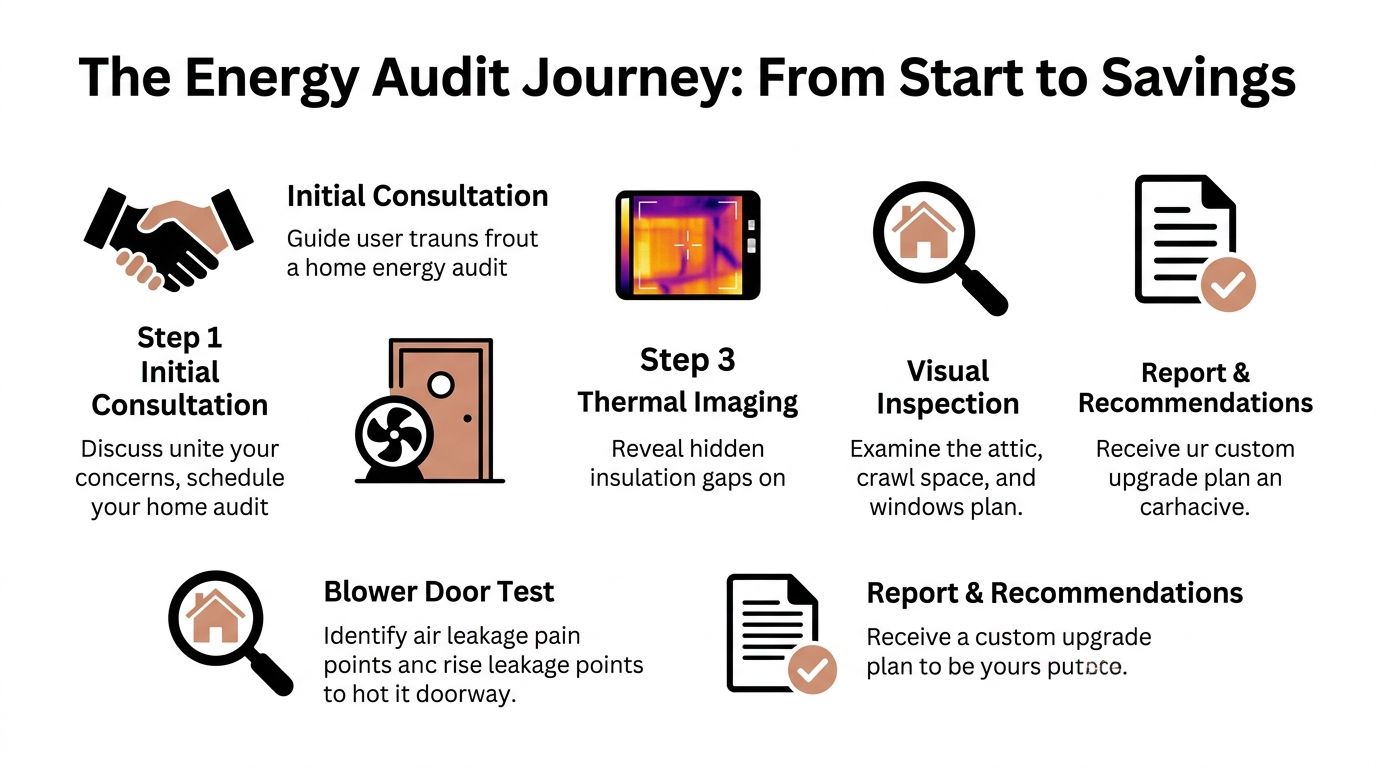
A typical appointment starts with your concerns. You might mention condensation on glass, a chilly family room, uneven temperatures, or a noisy patio door that never seems to seal tightly. That gives the auditor a place to focus, but the testing covers the whole house.
Then the auditor checks the home from top to bottom. That often includes:
- Exterior review of windows, doors, penetrations, and visible gaps.
- Interior inspection of rooms that feel uncomfortable or unusually hard to heat and cool.
- Attic and crawlspace checks for insulation, bypasses, and duct issues.
- Equipment review around the furnace, water heater, vents, and returns.
The blower door test in plain language
The most important tool in a professional audit is usually the blower door test. Think of it as temporarily turning your house into one controlled air system. The auditor places a powerful fan in an exterior doorway and changes the indoor pressure. That makes hidden leaks easier to find because outside air gets pulled through cracks and gaps that normally stay unnoticed.
According to Idaho Power's home energy audit information, a certified home energy audit in Boise uses a blower door test to quantitatively measure whole-house air leakage and identify infiltration points. That matters because unsealed air leaks can account for 25–40% of energy used for heating and cooling in typical homes.
That number catches people off guard. They often assume their furnace or AC is the main issue, when the house may be leaking conditioned air.
When the blower door is running, the house reveals where it's losing control of comfort.
What thermal imaging adds
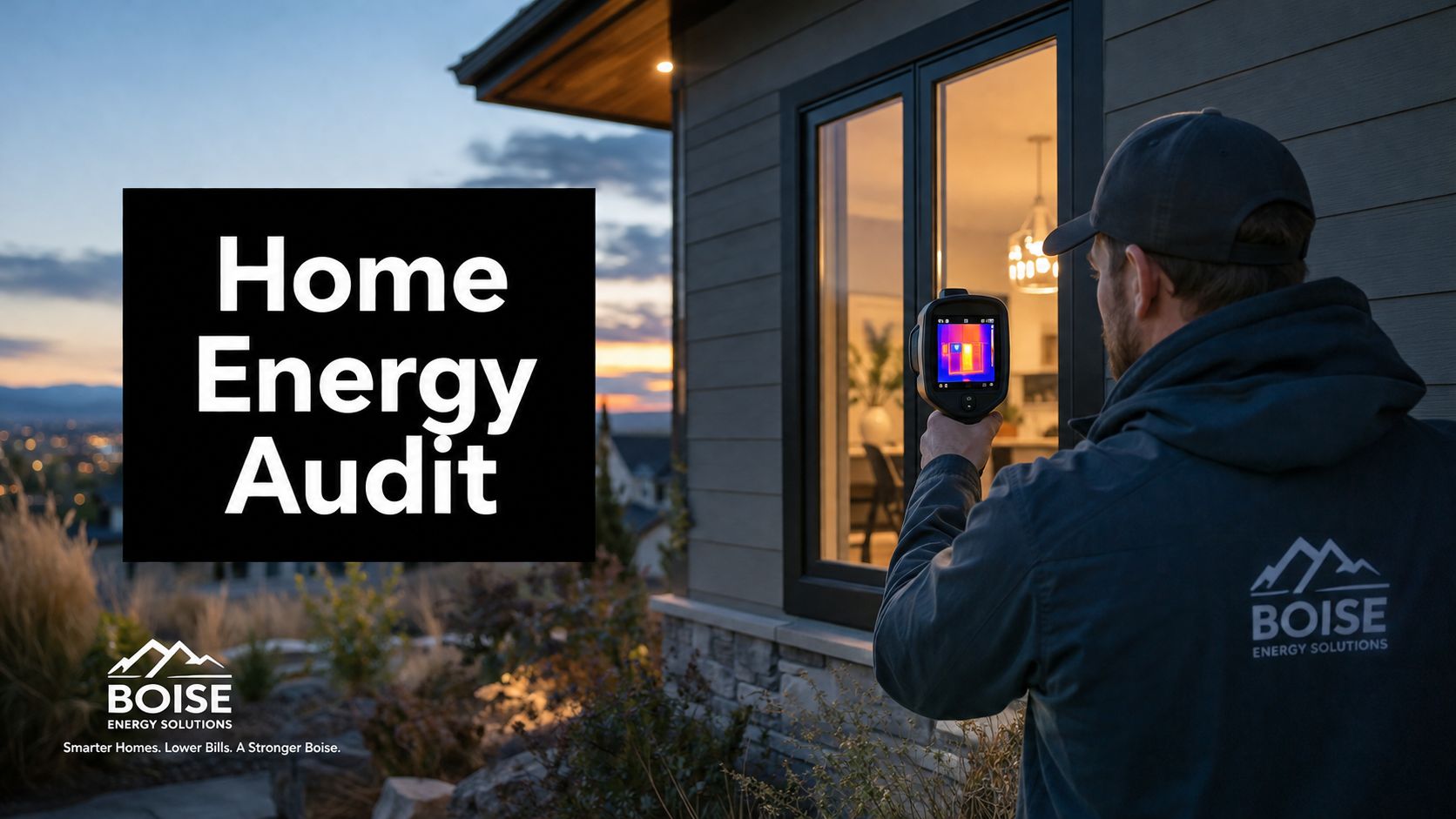
Many professional auditors also use infrared thermal imaging. This doesn't replace the blower door. It complements it. The camera helps the auditor see temperature differences across surfaces, which can reveal missing insulation, cold air pathways, and weak spots around windows and doors.
The process becomes easier to understand as a homeowner. Instead of hearing "you may have a leak in this wall," you can often see a colder pattern around a recessed light, attic hatch, or window perimeter. That's a lot easier to trust.
What you'll get at the end
A useful audit usually finishes with a written list of findings and recommended next steps. The best reports don't just list problems. They help you prioritize them.
Common recommendations often fall into these categories:
- Low-cost fixes such as targeted air sealing
- Building shell upgrades such as attic insulation improvements
- Opening upgrades such as replacement windows or doors when existing units are underperforming
- Mechanical follow-up if the HVAC system needs a separate evaluation
That report is what turns the audit from a test into a roadmap.
Uncovering Common Energy Wasters in Boise Homes
Boise homes lose energy in patterns. Some leaks are obvious, like a worn door sweep or a window you can hear whistle on a windy day. Others stay hidden for years, especially in attics, crawlspaces, and framing connections where outdoor air sneaks in without much notice.
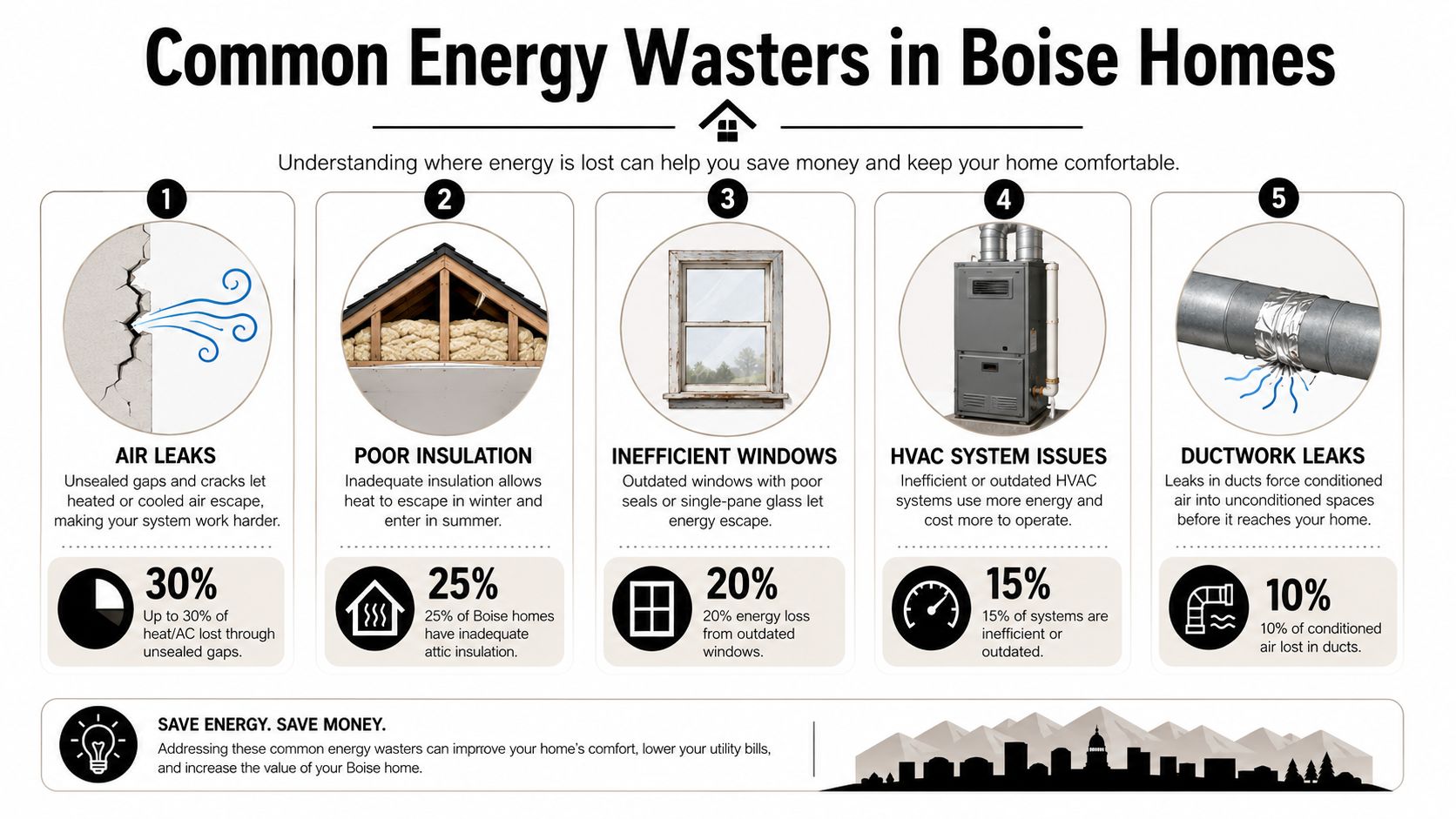
One thing confuses homeowners all the time. They feel a draft near a window and assume the glass is the only problem. Sometimes that's true. Sometimes the bigger issue is the surrounding installation, trim gaps, wall cavity movement, or a pressure imbalance caused by leakage higher up in the house.
Windows and patio doors
Older windows and sliding doors are frequent trouble spots in Boise homes. Frames can shift, weather seals wear out, and older glazing does less to slow heat transfer. In winter, that can make the room near the glass feel colder even when the thermostat setting looks normal.
You may notice:
- Cold zones near seating areas by larger glass openings
- Condensation or fogging clues that suggest performance issues
- Outdoor noise and drafts together, which often point to weak seals
Attic bypasses and top-side leaks
Warm air rises. When it escapes into the attic through unsealed openings, it pulls replacement air in from lower parts of the house. Homeowners often hear this called the stack effect. You don't need the term to understand the result. The house keeps feeding cold air in at the bottom because warm air keeps slipping out at the top.
Common attic problem points include:
- Attic hatches that don't seal tightly
- Recessed lights and ceiling penetrations around wiring or vents
- Dropped soffits and chases hidden above finished ceilings
A room can feel drafty because of an attic leak on the other side of the house. Air doesn't always misbehave where you expect.
Crawlspaces, garages, and ducts
Boise homes with ductwork running through crawlspaces, garages, or other unconditioned areas often develop comfort issues that feel random. One room gets too much air, another too little. The system runs, but comfort doesn't improve much.
This is why an audit looks beyond visible living spaces. The source of energy waste is often tucked below the floor or behind a knee wall, not right in front of you.
Insulation gaps that don't announce themselves
Insulation problems are sneaky because they're quiet. You usually don't see them until a thermal camera shows a cold patch or a hot strip where the house should be buffered from the outdoors. Missing or uneven insulation can make one part of a room feel fine and another feel off by several feet.
The takeaway is simple. Energy waste in Boise homes tends to cluster around the home's shell, hidden leaks, and transition areas. That's why testing beats guessing.
Boise Energy Audit Costs and Idaho Power Rebates
For many homeowners, the first question isn't "Should I get an audit?" It's "How much is this going to cost me?" That's reasonable. You want the information, but you also want to know whether the process makes financial sense before you schedule anything.
Idaho Power's program makes the answer a lot more approachable. In its 2024 demand-side management report, the utility states that its Home Energy Audit program completed 235 residential audits in 2024 through four certified third-party home performance specialist companies. The same report says the program generated 18,678,790 kWh in reported savings for the year.
What homeowners pay
The same Idaho Power report notes that participants pay $99 for all-electric homes and $149 for homes using gas, propane, or other fuels, compared with a full audit value of $445.
That matters because it lowers the barrier to getting a professional diagnosis. Instead of trying to self-diagnose a comfort problem and spending money in the dark, you can start with a structured evaluation at a much lower out-of-pocket cost.
| Home Fuel Type | Full Audit Value | Your Cost with Rebate |
|---|---|---|
| All-electric home | $445 | $99 |
| Gas, propane, or other fuel home | $445 | $149 |
Why the program is worth using
This kind of rebate changes the math. An audit isn't just a technical service. It's a decision-making tool. It can help you avoid replacing the wrong component first, and it can show whether your money belongs in sealing, insulation, window replacement, door replacement, or mechanical work.
A few practical points help Boise homeowners decide faster:
- It's a low-risk first step because the subsidized price is much lower than the full audit value.
- It's locally relevant because the audit is built around actual home performance issues in Idaho Power service areas.
- It's easier to act on because a formal report gives you a prioritized list instead of a pile of guesses.
If a room is uncomfortable year after year, the cheapest fix isn't always the least expensive one. The cheapest fix is the one that solves the real problem the first time.
When the cost makes the most sense
An audit is especially useful before larger home improvements. If you're already thinking about replacing windows, updating a patio door, adding insulation, or addressing seasonal hot and cold spots, the audit helps you confirm that you're targeting the right issue.
For Boise homeowners, that's the value. You're not paying just for a test. You're paying for better decisions.
Preparing Your Home for an Effective Energy Audit
You don't need to deep-clean the house before an energy audit, but a little preparation makes the visit smoother and more accurate. The auditor needs access, context, and a safe path to the areas where homes usually hide energy problems.
Start with your utility bills. You don't need a spreadsheet. Just gather recent bills so you can show whether your energy use spikes in winter, summer, or both. That pattern helps the auditor understand whether the bigger issue is heat loss, cooling loss, or uneven performance across seasons.
A simple prep checklist
Before the appointment, try to handle these basics:
- Clear access points so the auditor can reach the attic hatch, crawlspace entry, furnace area, water heater, and main exterior doors.
- Make note of problem rooms and be ready to mention where you feel drafts, temperature swings, or persistent discomfort.
- Open gates and move obstacles near exterior doors, patio doors, and larger window areas that may need closer inspection.
- Secure pets so testing equipment and open access points don't create stress or safety issues.
If your auditor gives you appliance-related instructions ahead of time, follow them closely. Some steps are tied to safety and to the blower door setup.
Why DIY checks only go so far
A lot of Boise homeowners do a basic DIY audit first. That's fine as a starting point. You might hold your hand near a window frame, use a smoke stick, or notice that one sliding door always feels colder. The problem is that home methods don't tell you enough to make a confident investment decision.
The U.S. Department of Energy guide to home energy assessments supports that distinction. DIY guides can identify windows as a possible leak zone, but they don't validate whether those methods can quantify leakage rates or detect thermal bridging. Professional assessments using blower doors and infrared cameras can identify leakage rates and thermal defects that DIY methods miss.
That matters most when you're deciding between repair and replacement.
What to tell the auditor
Bring up the things that seem small. Those clues often help more than homeowners expect.
- Mention seasonal patterns if the house feels fine in spring but rough in January or August.
- Point out specific openings like an older patio door, a master bedroom window wall, or a drafty bonus room.
- Share any winter prep you've already tried, including caulking, weatherstripping, or heavier coverings. Helpful context can also come from your own window winter prep routine in Boise.
A professional audit works best when your lived experience and the testing results line up. That's when the report becomes genuinely useful.
From Audit Report to Action The Best Upgrades
A good audit report should answer one practical question. What should you fix first to lower bills and make the house feel better in Boise's cold winters and hot summer afternoons?
The easiest way to sort the report is to treat your home like a bucket with a few different leaks. Some leaks are small and cheap to fix. Others point to parts of the house that are wearing out and no longer doing their job well. Your audit helps you separate quick fixes from upgrades that deserve a larger budget.
Start with the fixes that affect the whole house
If the audit found major air leaks, attic weak spots, or gaps between conditioned and unconditioned spaces, those items usually come first. They influence comfort in multiple rooms, and they can make every heating and cooling cycle work harder than it should.
That first round of work often includes:
- Air sealing at the leakage points found during testing
- Attic insulation fixes where insulation is thin, missing, or shifted out of place
- Basic enclosure repairs at hatches, penetrations, and transition areas
These projects are not flashy. They are often the foundation that makes later upgrades pay off.
When windows and doors deserve priority
Some audit reports point straight at the openings in the house. If the biggest comfort complaints show up near a patio door, a large window wall, or an older bedroom window, that is a strong clue. In Boise, those weak spots matter because winter drafts and summer sun both show up at the glass first.
As noted earlier, Boise homeowners often focus on windows and doors when they want to improve energy performance. That lines up with what many auditors see in the field. If the report shows air leakage around frames, poor glass performance, or room-by-room discomfort near openings, windows and doors may belong near the top of your list.
A simple rule helps here. If one room is always the room with the blanket, the space heater, or the closed blinds, the opening may be causing more of the problem than the thermostat.
How to decide between repair and replacement
An audit can identify the problem area, but you still need to choose the right level of action. Repair makes sense in some cases. Replacement makes more sense in others.
Use these questions as a filter:
- Is the discomfort strongest near the window or door? If the temperature changes as you walk toward it, that matters.
- Are the unit's parts wearing out? Drafts, failed seals, sticking operation, and frame wear all add up.
- Would a repair address the actual weakness? New weatherstripping helps some doors. It will not fix an old unit with poor thermal performance.
- Will the upgrade solve more than one problem? Lower drafts, better comfort, smoother operation, less outside noise, and improved appearance all have value.
What a high-impact upgrade looks like in Boise
When windows or patio doors rise to the top of the action list, details matter. The goal is not just new glass. The goal is a better thermal barrier, tighter air control, and a product that fits Idaho's climate.
Useful features may include:
- Low-E glass coatings that help control heat gain and heat loss
- Argon gas fills for better insulation
- Triple-pane options for homeowners who want stronger thermal performance and noise reduction
- ENERGY STAR 7.0-compliant products that meet updated efficiency targets
- Well-built frames and sills that support durability, drainage, and tighter seals
If your audit points toward building-envelope improvements, this guide to the best energy-efficient home improvements can help you compare projects in the right order.
That order matters. Idaho Power programs can help offset some qualifying efficiency work, but the biggest payoff usually comes from doing the right project at the right time. Seal the obvious leaks first. Then invest in windows and doors when the audit, the room comfort problems, and the condition of the existing units all point in the same direction.
If your audit suggests that aging windows or patio doors are part of the problem, C & C Windows & Doors is a local Treasure Valley option for homeowners who want energy-efficient replacement products built for Idaho's climate. Their team offers in-home consultations, custom measurements, and professionally installed windows and doors designed to improve comfort, reduce drafts, and support year-round efficiency.