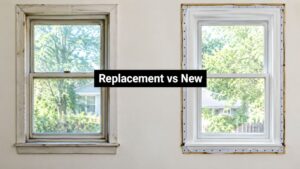


Summer in the Treasure Valley can turn an upstairs bedroom into an oven by late afternoon. Then winter arrives, the furnace runs hard, and that same room still feels chilly around the windows and exterior walls. Most homeowners I talk to aren't looking for theory. They want a smart order of operations that lowers utility bills, cuts drafts, and makes the house feel stable in every season.
That's where a lot of energy advice goes sideways. People jump straight to big-ticket upgrades because they're visible. New windows, new equipment, new finishes. Those can be worthwhile, but the best energy-efficient home improvements usually start with the parts of the house you don't show off to guests. If the attic leaks air and the insulation is underperforming, expensive upgrades often can't deliver what they should.
In Treasure Valley homes, the goal isn't just efficiency on paper. It's comfort when Boise bakes, when winter air gets dry and cold, and when one side of the house takes a beating from sun exposure. The right plan starts with the shell of the home, then moves to the components that improve comfort, appearance, and long-term value.
Table of Contents
- Your Guide to a More Comfortable and Efficient Home
- Understanding the Treasure Valley Climate Challenge
- Ranked Home Energy Upgrades for Maximum ROI
- Start Here Foundational Air Sealing and Insulation
- Upgrade Your View High-Performance Windows and Doors
- Finance Your Upgrades with Incentives and Tax Credits
- Create Your Home Energy Action Plan
Your Guide to a More Comfortable and Efficient Home
A lot of Treasure Valley homeowners land in the same spot. The house looks good, but it doesn't feel good. One room gets blasted by afternoon sun, another feels drafty in January, and the monthly bill doesn't match the comfort level you're getting.
The fix usually isn't one magic product. It's a sequence. If you spend heavily on visible upgrades before tightening the building envelope, you can end up paying premium prices for a partial result. That's why the smartest path starts with identifying where your home loses conditioned air, where the attic is underperforming, and where your windows and doors are no longer helping.
Comfort matters as much as cost
Energy upgrades aren't only about lowering bills. In real houses, homeowners notice comfort first. They notice fewer hot and cold spots, less noise from outside, steadier indoor temperatures, and rooms that become usable all day instead of only in the morning or evening.
Practical rule: If your home is uncomfortable room to room, treat that as a building-envelope problem first, not just a thermostat problem.
There's also a resale and livability angle. Buyers respond to homes that feel quiet, solid, and well cared for. They may not ask what's in the attic on day one, but they absolutely notice drafts, harsh sun, and aging windows.
What works and what usually disappoints
Some improvements consistently earn their keep. Air sealing. Insulation. Well-chosen replacement windows when the old ones are failing. Professional installation that closes gaps instead of hiding them with trim.
Other moves are less effective when they're used as a shortcut. A nicer thermostat won't fix attic bypasses. Decorative window coverings won't solve poor glass performance. Replacing one comfort complaint at a time without looking at the whole envelope often leads to frustration.
That's why this guide follows the order that makes the most sense for our four-season climate. Start with the shell. Then improve the openings in that shell. Then use available incentives to make the numbers work better.
Understanding the Treasure Valley Climate Challenge
Late August in the Treasure Valley often exposes the weak spots in a house fast. A bonus room over the garage heats up by midafternoon, the main floor feels uneven, and the cooling system runs longer than it should. A few months later, winter flips the problem. The same house feels drafty near exterior walls and windows, even with the furnace working hard.

Why our climate changes the upgrade order
Treasure Valley homes have to handle intense summer sun, dry air, cold winter nights, and wide temperature swings between seasons. That combination changes the order of operations. In a milder climate, a homeowner might replace a few windows or add a smart thermostat and feel enough improvement to stop there. Around Boise, Meridian, Eagle, and Nampa, partial fixes often leave the main problem in place.
The usual trouble spots are predictable. West-facing glass picks up heavy afternoon heat. Attics lose conditioned air through gaps around can lights, plumbing penetrations, and top plates. Older wall assemblies and rim areas often have insulation voids or air leaks that never show up until a room gets uncomfortable.
That is why the best return usually starts with the shell, not the flashiest product. If you want a practical breakdown of which home energy upgrades save the most money, start by looking at where the house is leaking air and missing insulation before pricing major replacements.
The house has to control two kinds of heat flow
In summer, the job is to slow solar heat gain and keep superheated attic air from affecting the rooms below. In winter, the job is to hold indoor heat inside and reduce cold air infiltration. One season pushes heat in. The other pulls heat out.
The same weak areas show up in both seasons:
- Attic and ceiling plane where warm air commonly escapes in winter and attic heat drives discomfort in summer
- Wall cavities and rim areas where insulation gaps lower performance
- Windows and doors where older units can draft, radiate heat, or overheat sun-exposed rooms
- Small penetrations around lights, outlets, plumbing, and vents that add up across the whole house
In Treasure Valley homes, comfort problems usually come from several smaller leaks and weak points working together.
I see homeowners blame the window because that is where they feel the draft. Sometimes they are right. Just as often, the bigger issue starts above the room in the attic or around poorly sealed framing transitions. Replacing glass before fixing those losses can improve appearance and operation, but it may not solve the temperature swing that prompted the project in the first place.
That is the local climate challenge in plain terms. The house needs to block summer heat, hold winter heat, and do both with the same envelope. Homes that perform well here usually get the basics right first, then use targeted window and door upgrades where existing units are failing.
Ranked Home Energy Upgrades for Maximum ROI
A Boise-area homeowner can spend $20,000 on new windows and still complain about a hot bonus room in July or cold floors in January. I see that happen when the big visible upgrade comes before the lower-cost work that tightens the house and steadies temperatures year-round. In the Treasure Valley, the best return usually starts with the parts of the home you do not see.
For most homes here, I'd rank upgrades by how much comfort and energy waste they address per dollar spent, not by how noticeable they are from the curb.
The upgrades that usually pay off first
Air sealing and insulation
This is the first place to invest in most Treasure Valley homes. ENERGY STAR notes that homeowners can save up to 10% on annual energy bills by sealing air leaks and adding insulation. It also improves comfort in both heating and cooling season, which matters here more than a single-season climate.Targeted window and door replacement
Windows move up the list when existing units are failing. Common triggers include broken seals, hard operation, obvious drafts, and rooms that overheat on west- and south-facing exposures. Good replacements can help, but they rarely beat attic and air leakage work on simple payback.Duct sealing and distribution corrections
This often gets overlooked, especially in homes with comfort complaints room to room. If air is leaking into an attic, crawl space, or wall cavity, the equipment has to run longer to do the same job.HVAC replacement after envelope improvements
Equipment should be evaluated after the house shell is improved. A tighter, better-insulated home may need less capacity than it does now, which can change the replacement decision and prevent overspending.Controls and smaller accessory upgrades
Thermostats, weatherstripping, and similar add-ons can help. They work best as supporting upgrades, not as the main plan for a leaky house.
That order surprises homeowners who are focused on glass first. Windows are visible every day, so they get attention fast. But if the attic is under-insulated and the house leaks at the top plate, recessed lights, hatch, or duct boots, the bigger return usually sits above the ceiling.
For a broader comparison of project priorities, this guide on which home energy upgrades will save you money is a useful companion.
Energy Improvement ROI Comparison for Treasure Valley Homes
| Improvement | Estimated Cost | Avg. Energy Savings | Est. Payback Period |
|---|---|---|---|
| Air sealing and insulation | Varies by home size and scope | Up to 10% on annual energy bills according to ENERGY STAR guidance on sealing and insulating | Often one of the shortest because it addresses multiple sources of loss at once |
| Replacement windows and skylights meeting ENERGY STAR criteria | Higher-cost project | Up to 13% on national average heating and cooling energy bills for qualifying products, per ENERGY STAR window, door, and skylight guidance | Usually longer than insulation, but can be worthwhile for comfort, operation, and long-term durability |
| Duct sealing and attic insulation tune-up | Varies | Qualitative savings and comfort improvement | Depends on current duct condition and attic access |
| HVAC replacement | Major investment | Qualitative improvement, especially after shell upgrades | Best evaluated after envelope work |
| Controls, weatherstripping, and minor sealing | Lower-cost | Qualitative gains | Often worthwhile as supporting work, not a complete strategy |
ROI tables help with prioritization, but they are still averages. A 1990s house in Meridian with leaky ducts and a thin attic package will rank differently than a newer Eagle home with decent insulation but poor-performing west-facing windows. The right sequence depends on where the house is losing heat in winter, gaining heat in summer, and forcing the HVAC system to compensate.
Start Here Foundational Air Sealing and Insulation
A January cold snap in Nampa or a run of 100-degree afternoons in Meridian exposes the same problem fast. The house feels drafty in winter, uneven in summer, and the HVAC runs longer than it should. In a lot of Treasure Valley homes, the biggest fix is not visible from the curb. It is in the attic, the crawl space, and the small gaps that let outside air move through the shell.
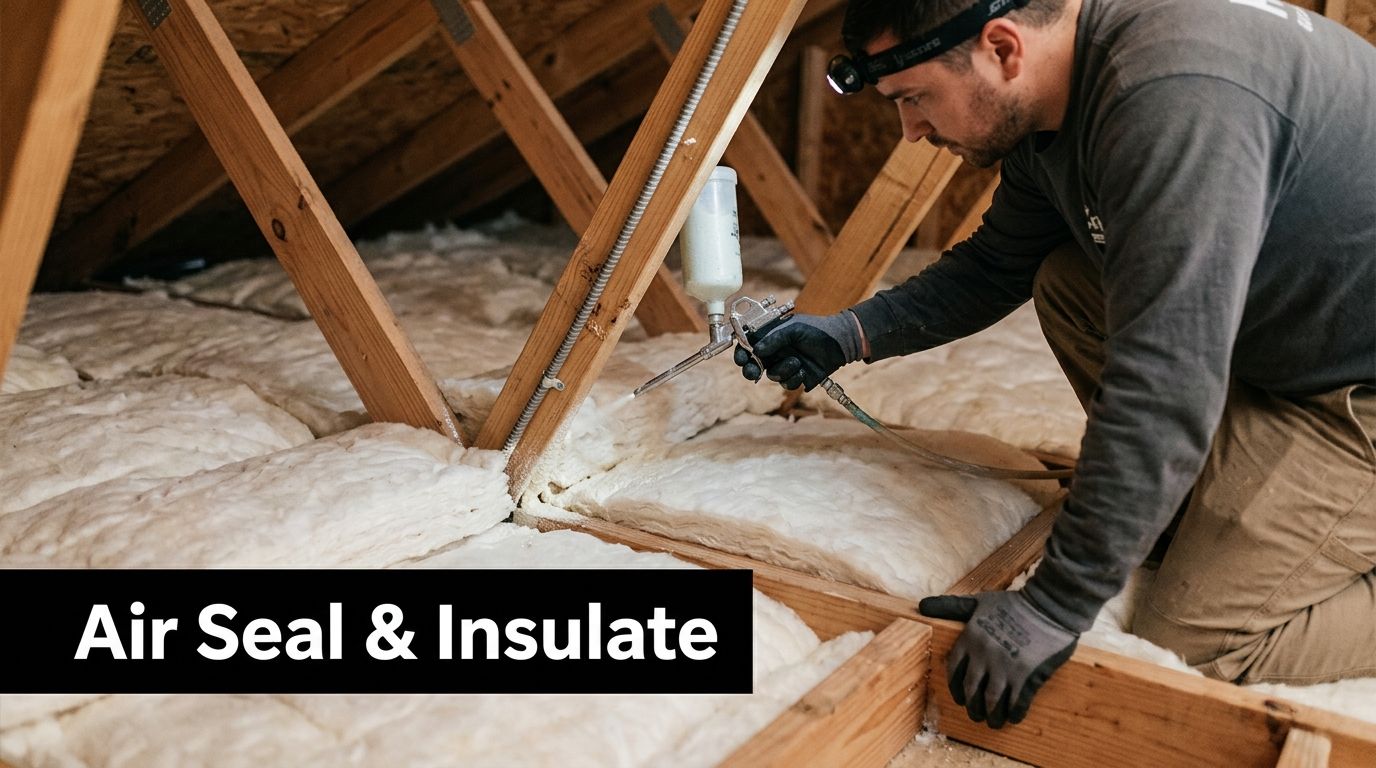
Air sealing and insulation usually deliver better value than bigger-ticket upgrades because they address the underlying load on the house. That matters in our climate. Treasure Valley homes deal with hot, dry summers, cold winter nights, wildfire smoke season, and shoulder seasons where temperatures swing hard between day and night. If the shell leaks, every later upgrade has to fight that weakness.
Where Treasure Valley homes usually lose performance
I usually check the attic first.
Older and mid-age homes across Boise, Caldwell, Kuna, and Meridian often have hidden bypasses around recessed lights, bath fan housings, plumbing penetrations, top plates, open chases, and attic access panels. Warm air escapes there in winter. Hot attic air pushes inward in summer. Even good insulation underperforms when air is moving through it.
Other problem areas show up regularly:
- Window and door perimeters with incomplete sealing behind trim
- Exterior wall outlets and switch boxes that leak during windy weather
- Attic hatches and pull-down stairs with little or no gasketing
- Duct boots and connections that lose conditioned air before it reaches the room
- Rim joists and crawl space transitions where framing details leave gaps
The order matters
Get the house tested. Seal the leakage paths. Then add or correct insulation.
That sequence is not a technicality. Insulation slows heat flow. Air sealing controls the movement carrying that heat in and out of the house. If attic bypasses, duct leaks, or rim joist gaps are still open, adding more insulation alone often leaves comfort problems behind.
An energy audit with blower door testing helps sort the obvious fixes from the expensive guesses. It also helps homeowners decide whether the next dollar belongs in the attic, the crawl space, duct sealing, or selected window work. If you want context on how window upgrades compare later in the process, this Idaho energy-efficient windows guide is more useful after the shell is under control.
What good foundational work usually includes
A solid scope often combines several smaller corrections rather than one dramatic project. In many Treasure Valley homes, that means sealing attic penetrations, weatherstripping and insulating the attic hatch, addressing duct leakage, sealing rim joists or crawl space connections where accessible, and bringing insulation levels up where they are clearly thin, missing, or poorly installed.
The trade-off is straightforward. This work is rarely as visible or exciting as new windows or equipment, but it tends to improve the whole house at once. Rooms stay more even. Drafts drop. Dust and smoke intrusion can improve when uncontrolled air pathways are reduced. The HVAC system also has an easier job because the envelope is no longer working against it.
Small DIY fixes still have a place. Caulk and weatherstripping help at obvious gaps. They just should not be mistaken for a full solution if the attic floor, duct system, or crawl space is still leaking badly.
Homeowners usually feel this category in daily comfort before they admire it as a project. That is one reason it belongs near the top of the list.
Upgrade Your View High-Performance Windows and Doors
Once the building envelope is under control, windows and doors become a much smarter investment, allowing comfort, appearance, daylight, sound control, and energy performance to start working together instead of competing.
What modern window performance actually does
Older windows usually fail in more than one way. They can leak air around the frame, allow too much solar heat through the glass, create cold-surface discomfort in winter, and transmit outside noise more easily. In Treasure Valley homes, those issues show up quickly on west-facing rooms, large picture windows, and aging sliders.
Modern window packages address those problems with specific components. Low-E glass coatings help manage solar heat and interior comfort. Argon gas fills improve insulating performance between panes. Composite-reinforced frames and better sash construction improve durability and reduce unwanted air movement. In the right application, triple-pane glass can push comfort and sound reduction further.
One window-focused option local homeowners consider is C & C Windows & Doors' guide to energy-efficient windows in Idaho, which outlines products designed for Idaho conditions, including ClimaTech Low-E coatings, argon gas fills, and optional triple-pane glass.
When replacement makes sense
Window replacement makes the most sense when the existing units are failing functionally, not just cosmetically. That includes windows that stick, won't lock properly, show seal failure, create persistent drafts, or make certain rooms uncomfortable for large parts of the day.
There's also a meaningful energy case. Upgrading to ENERGY STAR-certified replacement windows can lower household energy bills by an average of 12 percent nationwide, and drafts around windows and doors can account for up to 30 percent of a home's heat loss, according to this energy-efficient home improvements summary. In real homes, homeowners also notice quieter interiors, less fading from harsh sun, and more even temperatures near glass.
Good glass can't rescue a bad installation. The performance depends on the product and the air sealing around it.
That last point matters. A high-performance window installed poorly can underdeliver. Proper measurement, shimming, flashing details, insulation around the opening, and clean interior and exterior finishing all affect the outcome. In practice, installation quality is what turns a product spec sheet into a room that feels better.
Doors deserve attention too. A worn patio door or entry door can leak air, fight operation, and create a weak point in an otherwise improved shell. If your home has good insulation but one large glazed door still radiates heat or cold into the room, that opening can dominate comfort more than homeowners expect.
Finance Your Upgrades with Incentives and Tax Credits
A good upgrade plan isn't only about what to do. It's also about when to do it and how to reduce the net cost. Homeowners often hear broad claims about rebates and credits, then get frustrated when the actual tax treatment is narrower.
What the federal credit really covers
For windows, the headline number many people assume is usually too optimistic. The federal Energy Efficient Home Improvement Credit for windows is capped at a strict $600 total per year, and that's separate from the $2,000 cap available for heat pumps, as explained in this tax credit overview. If you're planning a large window project, that cap is useful, but it won't offset a major share of the whole job.
There's another detail that matters. For the 25C credit, windows and skylights must meet ENERGY STAR Most Efficient criteria, and eligibility is verified through the Certified Product Directory and NFRC information, according to ENERGY STAR's federal tax credit guidance for windows and skylights. Standard ENERGY STAR labeling alone isn't the same thing.
How to lower the net project cost
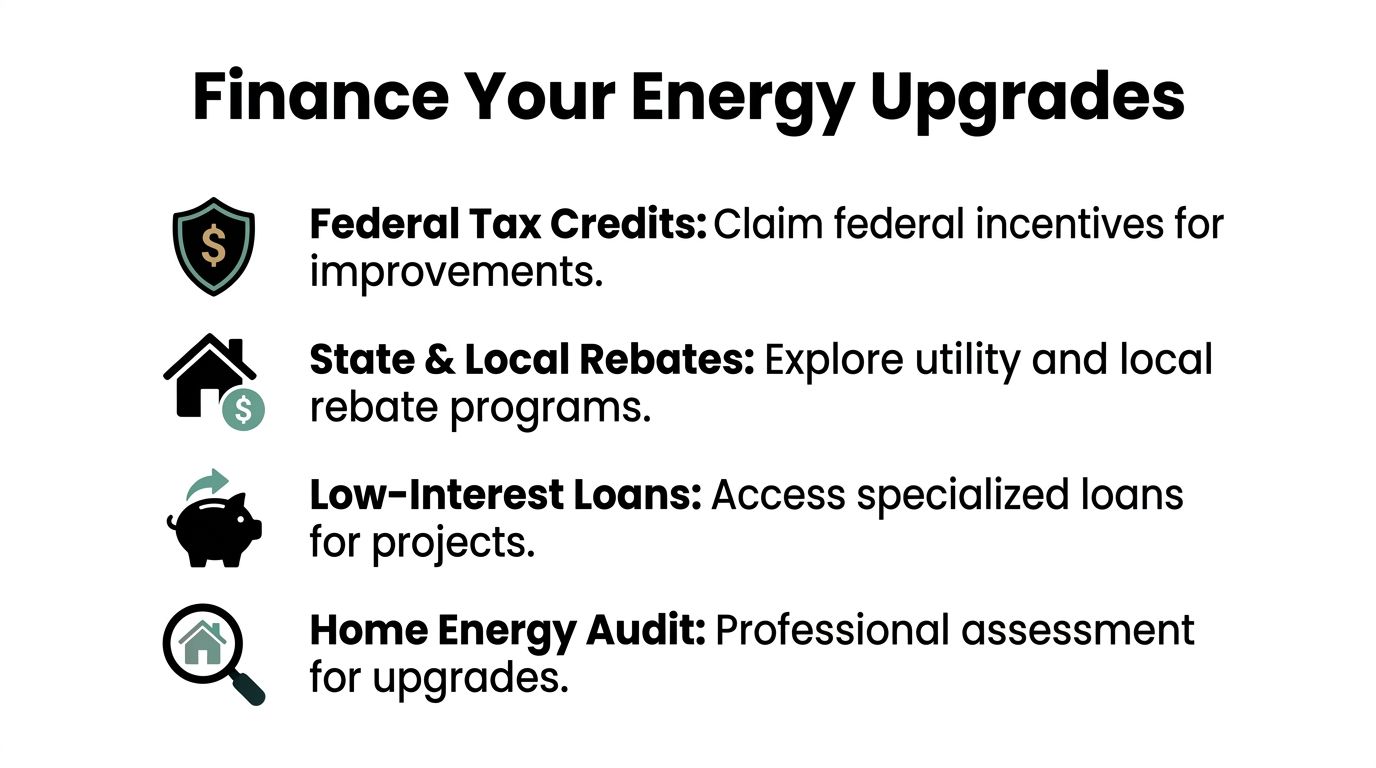
A practical financing checklist looks like this:
- Start with the tax credit rules: Confirm product eligibility before you buy, especially for windows and skylights.
- Ask about utility and local rebates: Program availability changes, so check current Treasure Valley utility offerings directly.
- Use an energy audit to prioritize spending: The audit helps you avoid putting money into the wrong project first.
- Look at financing if timing matters: Some homeowners choose to phase envelope work and window replacement instead of doing everything at once.
If you're planning multiple upgrades, staging them across tax years can help you use annual credit limits more effectively. The exact mix depends on your project list and tax situation, so it's worth confirming details with your tax professional before committing.
Some homeowners also use financing to tackle the envelope first and the windows second, especially when comfort problems are urgent. C & C Windows & Doors offers financing through Synchrony, which is one example of how a homeowner might spread the cost of replacement windows or patio doors instead of delaying the project.
Create Your Home Energy Action Plan
The cleanest plan is usually the one homeowners skip because it doesn't feel flashy. Start with diagnosis. Fix the shell. Then upgrade the visible components that still need attention. That order prevents overspending and gives each improvement a better chance to perform.
A practical order for most homes
The priority question comes up constantly. Insulation first, or windows first? In most homes, insulation and air sealing win. The “Insulation vs. Windows” priority gap is often misunderstood; data shows air sealing and attic insulation deliver a 10% immediate energy reduction, making it the most effective first step before considering a higher-cost window replacement, as noted in NYSERDA's energy-saving improvement ideas.
A simple action plan looks like this:
- Book an energy audit so you know where the losses are.
- Handle air sealing in the attic, penetrations, and obvious leakage paths.
- Upgrade insulation where the audit shows weak performance.
- Reassess comfort by room after the shell work is done.
- Replace failing windows and doors where comfort, function, and long-term value justify it.
- Evaluate HVAC after envelope improvements if comfort or equipment issues remain.
For a broader homeowner checklist, this resource on how to make your home more energy efficient can help you organize the sequence.
What you can DIY and what should stay professional
Some tasks are reasonable for a handy homeowner. Basic weatherstripping. Door sweeps. Caulking accessible trim joints. Insulating an attic hatch. Those can be worthwhile if done carefully.
Other work should stay with a trained crew:
- Energy audits and diagnostic testing because they identify hidden losses
- Whole-home air sealing plans where missed pathways reduce results
- Insulation upgrades in attics and wall systems where depth, coverage, and safety matter
- Window and door replacement because installation details determine actual performance
If you're choosing where to spend first, spend where the house is leaking, not where the brochure looks impressive.
That's the practical path for the Treasure Valley. Tighten the shell first. Upgrade windows and doors where they'll make a real difference. Use credits and financing carefully. The result is a home that feels quieter, steadier, and easier to live in all year.
If you're ready to sort out which upgrades make sense for your Treasure Valley home, C & C Windows & Doors is one local option for homeowners who want a professional evaluation of replacement windows and patio doors after addressing the foundational envelope work.