
Slash Your Energy Bills: A Treasure Valley Homeowner's Guide
Boise's hot summers and cold winters make utility bills feel like a moving target. One season you're fighting afternoon sun on west-facing glass. The next you're noticing cold air pooling near older windows and patio doors. For most Treasure Valley homeowners, the biggest savings don't come from one flashy product. They come from making the right upgrades in the right order.
A strong place to start is windows. Replacing old, drafty units with ENERGY STAR certified windows can lower household energy bills by an average of 12 percent. That's a meaningful benchmark, especially in a climate like ours where homes need both heating and cooling through the year. But windows aren't the whole story. Air leaks, weak insulation, aging doors, and outdated equipment can erase the benefit of any single upgrade.
That's why the best home upgrades that lower utility bills in the Treasure Valley should be chosen with local conditions in mind. South and west exposures take a beating in summer. North sides show problems first in winter. Older Boise homes often need envelope work before high-end equipment. Newer Meridian and Eagle homes may benefit more from targeted upgrades like patio doors, attic work, or advanced glass packages.
This guide breaks down the upgrades that matter here, where they tend to pay off, and when it makes sense to call a local specialist like C & C Windows & Doors for a closer look.
Table of Contents
- 1. Energy-Efficient Window Replacement with Low-E Coatings
- 2. Triple-Pane Windows with Argon Gas Fills
- 3. Smart Thermostats and Temperature Control Systems
- 4. Insulated Patio Doors with Thermal Breaks
- 5. Air Sealing and Weatherstripping Installation
- 6. Attic and Wall Insulation Upgrades
- 7. ENERGY STAR Certified Appliances and Equipment Replacement
- 8. Solar Window Films and Smart Glass Technology
- 9. Radiant Barriers and Reflective Roofing Systems
- 10. Energy-Efficient Lighting and LED Conversion Systems
- Top 10 Energy-Saving Home Upgrades Comparison
- Your Next Step to a More Efficient Home
1. Energy-Efficient Window Replacement with Low-E Coatings
Heat gain and heat loss at the glass are a big deal in Idaho. The U.S. Department of Energy notes that heat gain and heat loss through windows are responsible for 25% to 30% of residential heating and cooling energy use. In the Treasure Valley, that shows up fast. West-facing rooms overheat on summer afternoons, and older windows feel cold around the edges during winter inversions.
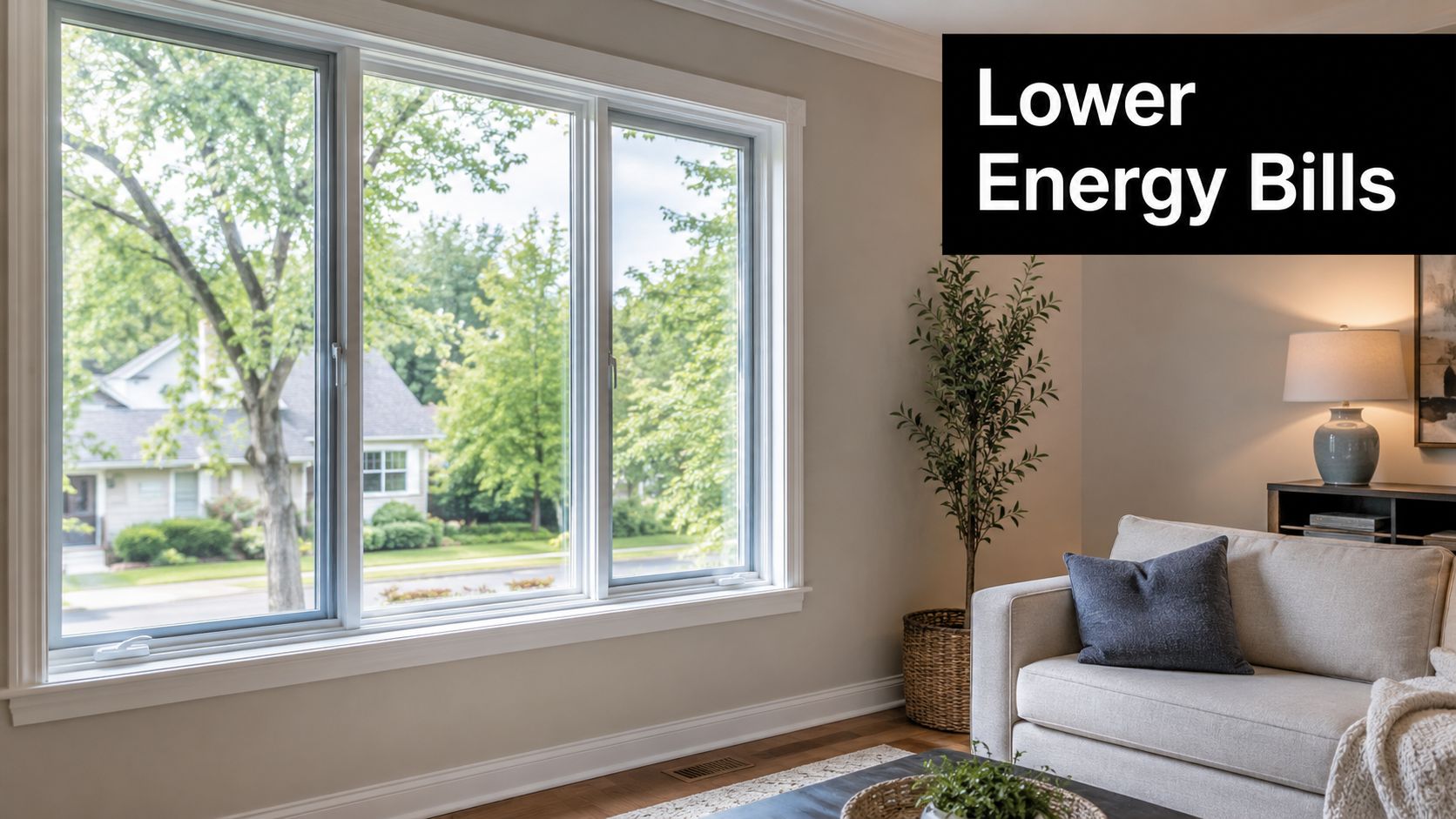
Low-E coatings help because they cut heat transfer without turning your home into a cave. You still get daylight, but you lose less indoor heat in winter and block more solar heat in summer. For Boise, Meridian, Eagle, and Nampa homes, that balance usually delivers a better return than replacing glass based on appearance alone.
What works best in Treasure Valley homes
The right window package depends on sun exposure, frame condition, and how long you plan to stay in the house. On many older Boise homes with aluminum frames or worn seals, replacing the whole unit makes more sense than trying to solve comfort problems with caulk alone. On newer homes with decent frames but weak glass packages, the priority is choosing Low-E glass tuned for our four-season climate.
C & C Windows & Doors installs windows built for Idaho conditions, including ClimaTech Low-E coatings, Argon gas fills, and optional upgrades for stronger thermal performance. If you are weighing whether standard Low-E is enough or whether the next step makes sense, their guide to triple-pane windows for Idaho winters helps clarify where higher glass performance pays off.
Practical rule: If a room is consistently uncomfortable near the window, treat that as a performance problem, not a cosmetic one.
What to look for before you buy
Window replacement pays back best when the product matches the opening and the installer handles the details well.
- Choose glass for Boise-area sun and winters: South and west exposures usually benefit most from Low-E glass that reduces summer heat gain while still supporting winter efficiency.
- Ask for the full performance numbers: U-factor matters for winter. SHGC matters for summer sun. A good contractor should explain both in plain language.
- Check the installation scope: Flashing, insulation around the opening, and air sealing at the perimeter affect comfort as much as the glass itself.
- Look at frame condition and age: If the frame is warped, drafty, or moisture-damaged, an insert-only approach may save money upfront but leave energy waste in place.
- Prioritize the worst rooms first: Bedrooms with afternoon sun, large living room windows, and older front-facing units usually show the clearest comfort gain and the fastest practical payback.
In most Treasure Valley homes, Low-E replacement windows are not the highest-ROI upgrade in every situation. Air sealing and attic insulation often beat them on pure payback. But if your existing windows are failing, drafty, or single-pane, replacement can improve bills, comfort, and resale appeal at the same time.
2. Triple-Pane Windows with Argon Gas Fills
Not every Treasure Valley home needs triple-pane windows. Some absolutely do. If you have north-facing bedrooms, upper-story rooms that get windy exposure, or a home near traffic where outside noise carries through the glass, triple-pane is often worth serious consideration.
The biggest mistake I see is treating triple-pane as a luxury add-on instead of a targeted performance tool. In Eagle foothill properties, larger homes with expansive openings, and remodels where owners plan to stay long term, the added layer can make the house feel tighter and quieter every day.
Where triple-pane earns its keep
A national average window-savings figure doesn't tell the full story in a colder inland market like ours. One of the more useful planning benchmarks is that triple-pane windows with Low-E and Argon can reduce energy loss by 30 to 50 percent, although actual utility-bill results still depend on the rest of the home envelope.
That's why I usually recommend homeowners think room by room, not just whole house. North-facing glass, bonus rooms above garages, and exposed second floors tend to reveal the clearest benefit first.
For deeper guidance on product fit, C & C's page on triple-pane windows for Idaho winters is a solid place to compare where this upgrade makes the most sense locally.
Triple-pane won't rescue a leaky house by itself. It performs best when the surrounding frame, insulation, and air sealing are done right.
Smart selection points
- Prioritize exposure: Start with north-facing and upper-floor windows if budget forces you to phase the project.
- Ask for ratings: NFRC labels help you compare U-factor, solar heat gain, and air leakage instead of buying on sales language.
- Match the frame to the glass: A high-performance insulated glass unit deserves an equally solid frame and installation approach.
- Think beyond winter: Many Boise homeowners choose triple-pane for comfort and noise control as much as pure energy savings.
If your current double-pane units are still decent, triple-pane may be a strategic upgrade, not an urgent one. If your home still has aging, drafty glass, it's much easier to justify.
3. Smart Thermostats and Temperature Control Systems
A smart thermostat doesn't fix a bad building envelope. It does help you stop paying to heat or cool an empty house. That makes it a useful supporting upgrade, especially after you've tightened the shell of the home.
This is one of the easiest home upgrades that lower utility bills because the installation is simple and the behavior change is automatic. In the Treasure Valley, where spring and fall temperatures swing quickly, better scheduling also keeps the system from running longer than necessary.

Best use cases around Boise
Smart controls make the most sense in homes with predictable routines, rental properties, and houses where owners travel often. I also like them in two-story homes where families tend to overcorrect temperatures by hand. Constant manual changes usually waste more energy than people realize.
The most effective setup is simple. Let the thermostat handle setbacks, use geofencing if your household is in and out during the day, and review the usage reports instead of guessing.
What works and what doesn't
A thermostat helps more after you improve windows, doors, and sealing, because the house holds temperature better between cycles. The American Council for an Energy-Efficient Economy found that whole-home electrification paired with envelope improvements reduced average annual energy bills from $2,680 to $2,591, which reinforces a practical point: controls matter most when the house itself is efficient.
Use these settings as a starting point, then adjust for comfort:
- Occupied winter hours: Set heating around 68°F if that's comfortable for your household.
- Away periods: Lower the setting when nobody's home instead of maintaining the same temperature all day.
- Monthly review: Watch the energy reports. They often reveal patterns like excessive overnight heating or cooling during work hours.
Smart thermostats are worth installing, but they're not a substitute for physical improvements. If your home feels drafty, fix that first.
4. Insulated Patio Doors with Thermal Breaks
Patio doors are one of the biggest weak points in many Treasure Valley homes. Homeowners usually notice the draft at the threshold, the hot glass in summer, or the cold radiant chill in winter evenings. Older aluminum doors are common offenders because the frame itself conducts outdoor temperatures inside.
A well-built replacement door with a thermal break solves a different problem than a basic cosmetic upgrade. It cuts conduction through the frame, improves weather sealing, and helps the glass package do its job.
Why patio doors deserve priority
In Boise and Meridian homes with large rear openings, patio doors can have an outsize effect on comfort because they combine glass, moving parts, and heavy sun exposure. This is especially true for south-facing sliders that take direct light in winter and shoulder seasons, then overheat rooms during summer afternoons.
C & C Windows & Doors installs insulated patio doors with performance-focused frame construction, proper weather sealing, and drainage details that matter in real homes. If you're weighing styles and layouts, their guide to sliding patio door replacement in Boise helps homeowners compare practical options.
The right patio door should feel solid at the latch, even at the threshold, and stable across seasonal temperature swings.
Good decisions and bad shortcuts
Don't assume every “energy-efficient” patio door performs the same. The details make the difference.
- Choose the right style for the space: Sliding doors are often the better fit for high-traffic family areas because they preserve floor space and seal well when installed correctly.
- Match the glass to exposure: West-facing doors benefit from stronger solar control than shaded north-facing openings.
- Insist on full installation details: Flashing, threshold support, and perimeter air sealing matter as much as the door unit itself.
If your patio door sticks, whistles in wind, or leaves the floor cold nearby, replacement can be more than a convenience upgrade. It can be part of a serious utility-bill strategy.
5. Air Sealing and Weatherstripping Installation
If I had to rank the most overlooked upgrade in Boise homes, this would be near the top. Homeowners often jump to new HVAC equipment or premium windows while conditioned air is still escaping through gaps around trim, sill plates, attic penetrations, and worn weatherstripping.
Air sealing is rarely glamorous. It's one of the smartest things you can do before spending money on major equipment.
Start here before chasing bigger equipment
The EPA reports that air sealing and insulation upgrades can reduce heating and cooling costs by up to 20 percent. In practical Treasure Valley terms, that means a tighter envelope gives every other upgrade a better chance to perform the way it should.
This is also where window installation quality becomes a real issue. A good replacement window needs careful perimeter sealing around the frame, not just a clean interior finish. C & C Windows & Doors builds that step into installation because the product can't deliver rated performance if air moves around it.
Where leaks usually hide
Older Boise homes and builder-grade subdivisions alike tend to leak in similar places.
- Window and door perimeters: Trim can look fine while the air barrier behind it has failed.
- Attic penetrations: Recessed lights, plumbing stacks, and access hatches often leak badly.
- Electrical and plumbing openings: Small gaps add up fast across the entire house.
- Operable units: Worn weatherstripping at doors and windows can leave noticeable seasonal drafts.
Field note: If one room is always harder to heat or cool than the rest of the house, assume leakage before blaming the thermostat.
For homeowners planning a bigger project, air sealing pairs especially well with window replacement and attic insulation. Done together, the results are usually much more noticeable than tackling them one at a time.
6. Attic and Wall Insulation Upgrades
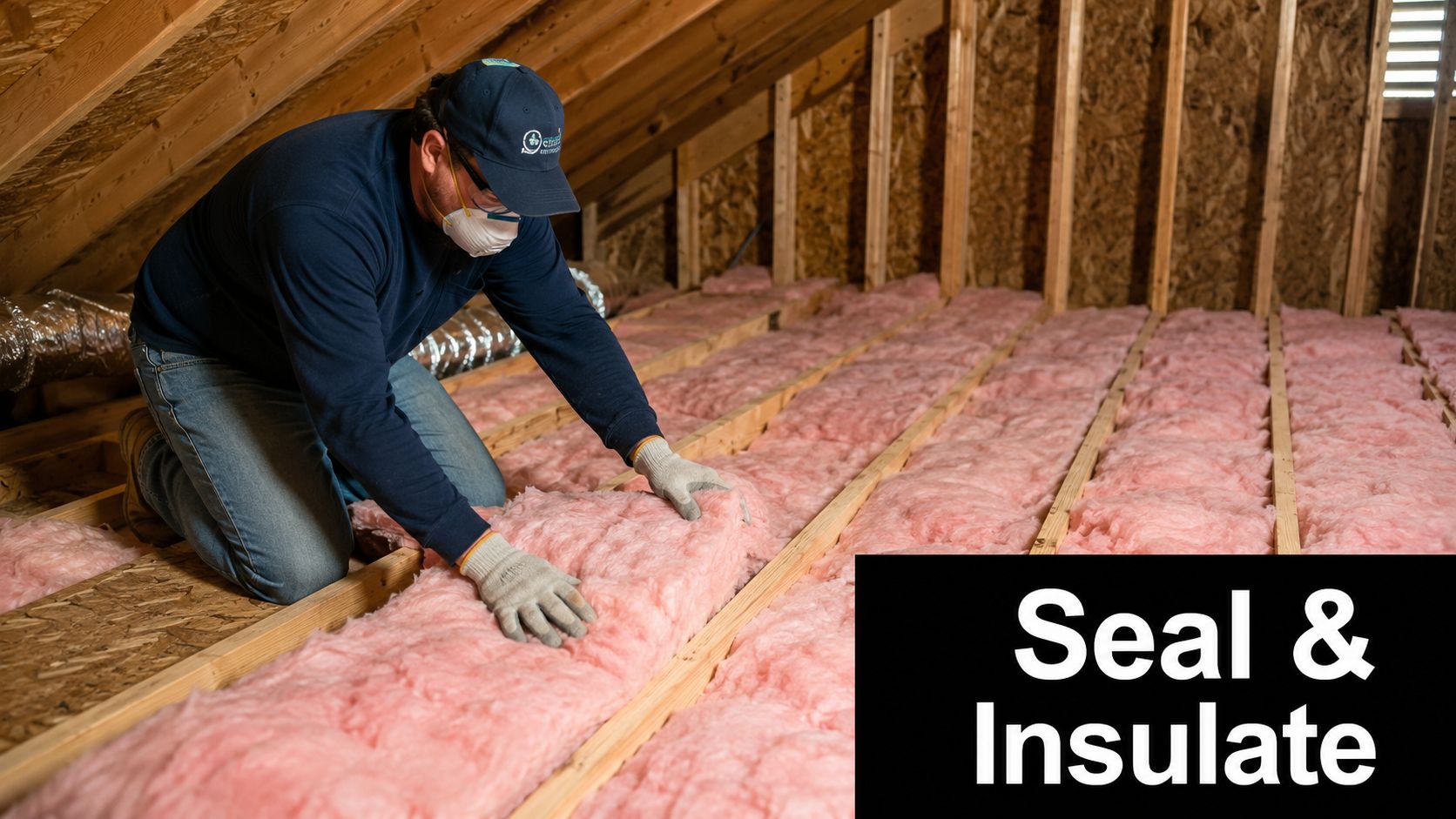
A lot of Treasure Valley homes lose comfort through the top of the house first. In winter, heat rises and escapes. In summer, attic heat pushes downward for hours after sunset. That's why insulation usually belongs near the front of the upgrade list, especially in older Boise homes and houses with bonus rooms over garages.
This is also the area where homeowners most often misjudge what they have. Insulation may exist, but it may not be enough, may be unevenly installed, or may be working against unresolved air leaks.
Why insulation usually beats windows as the first move
A point many consumer guides miss is prioritization. According to the discussion summarized in this insulation-focused review of smart home upgrades, window upgrades deliver limited savings unless the home is sealed and insulated first, and the Department of Energy guidance behind that advice recommends starting with a professional energy assessment.
That matches what works in Idaho. If the attic is under-insulated and the house leaks badly, premium windows alone won't solve the bill problem.
Good insulation strategy for Idaho homes
Insulation is most effective when it's paired with basic building-science discipline.
- Seal before insulating: Otherwise you bury leaks instead of fixing them.
- Protect ventilation paths: Attics still need proper airflow to manage moisture and heat.
- Check older materials carefully: Some existing insulation needs professional evaluation before disturbance.
- Use renovation timing wisely: Wall insulation is easiest and most cost-effective when other remodel work already opens the cavities.
Wall insulation can be worthwhile, but attic insulation usually gives homeowners the clearest first return. If your upstairs gets uncomfortably hot every summer afternoon, start there.
7. ENERGY STAR Certified Appliances and Equipment Replacement
Appliance upgrades matter, but timing matters more. I don't usually tell homeowners to replace a functioning refrigerator just to chase marginal savings. I do tell them to pay close attention to water heating and aging equipment that runs every day.
Water heating is one of the few categories where replacement can move the bill in a visible way without changing how the house looks or feels. That makes it a strong candidate after envelope upgrades are underway.
The equipment with the clearest utility impact
One of the best-documented opportunities is the heat pump water heater. According to NYSERDA's energy-saving guidance, upgrading to an ENERGY STAR certified heat pump water heater saves $200 to $550 annually on home energy costs. The same guidance notes that the EPA confirms replacing an ENERGY STAR certified water heater can save up to $300 annually.
That's substantial because water heating runs year-round, not just during peak summer or winter weather.
What to replace first
If you're trying to sequence upgrades intelligently, use this order:
- Start with the water heater: It often delivers the clearest ongoing savings among household equipment replacements.
- Watch for old, struggling units: If equipment is near the end of its useful life, replacing it proactively usually beats emergency replacement.
- Pair replacements with envelope work: Better windows, doors, sealing, and insulation reduce the load on the rest of the equipment.
For Treasure Valley homeowners, this category works best as part of a broader efficiency plan. A high-efficiency appliance in a leaky home is still doing too much work.
8. Solar Window Films and Smart Glass Technology
Some homes don't need full window replacement everywhere. They need better solar control in a few problem areas. That's where films and smart glass can make sense, especially on west-facing rooms that overheat every summer afternoon.
I see this most often in homes with large picture windows, stairwells with high glass, and remodels where owners want to keep existing units for now. It's a targeted move, not a whole-home cure.
Where these upgrades fit
Solar films are most useful when glare and seasonal heat gain are the primary complaints. Smart glass fits higher-end projects where homeowners want adjustable light control without adding shades or changing the clean look of the opening.
These upgrades work best as complements to strong windows, not substitutes for failed ones. If the existing frame leaks air or the insulated glass seal is gone, film won't fix the core problem.
For homeowners building or planning future upgrades, C & C's look at new construction window trends in the Treasure Valley for 2026 is useful for understanding how glass technology is evolving in local design.
South and west glass usually needs a different strategy than shaded north openings. Treat orientation as part of the specification, not an afterthought.
Good candidates for film or smart glass
- Hot afternoon rooms: Family rooms and offices with strong west exposure often respond well.
- Large fixed panes: These are harder to shade effectively without affecting the view.
- Selective retrofits: If only a few openings are causing discomfort, a targeted solution may be enough.
Before adding film, confirm it won't conflict with existing glass warranties. And if the room is drafty as well as hot, address air leakage first.
9. Radiant Barriers and Reflective Roofing Systems
This upgrade is climate-sensitive. In the Treasure Valley, it matters most for homes that struggle with summer attic heat, especially those with strong sun exposure on south and west roof planes. It's less about winter heating and more about reducing how much radiant heat the roof assembly dumps into the house during hot spells.
Homeowners often ask if this should happen before insulation. Usually, no. If the attic is under-insulated or leaking air, fix that first. Radiant barriers and reflective roofing tend to work better as secondary improvements or as part of a roof replacement you're already planning.
What makes sense in Idaho
A reflective roof can reduce heat gain at the source, while a radiant barrier helps in the attic by reflecting radiant heat away from living space. In foothill and open-lot settings where roof exposure is intense, that combination can improve upstairs comfort noticeably during peak summer sun.
The catch is practicality. If your existing roof still has years left and attic insulation is poor, you'll usually get more value from envelope basics first. If you're already replacing the roof, then it's smart to compare reflective options at that time.
Best use cases
- Homes with hot second floors: Especially where bedrooms sit directly below the attic.
- Large sun-exposed roof areas: South and west slopes get the strongest case for reflective materials.
- Roof replacement timing: This is the ideal moment to evaluate cool-roof products instead of adding them as a separate project later.
Radiant barriers aren't magic. They're most effective in homes that already have decent insulation, sound ventilation, and controlled air leakage.
10. Energy-Efficient Lighting and LED Conversion Systems
LED lighting is the simplest upgrade on this list, and that's exactly why it belongs here. It doesn't require demolition, custom sizing, or a contractor visit just to get started. For many households, it's the easiest way to trim waste while bigger projects are still being planned.
That said, lighting won't rescue a high utility bill on its own if the primary problem is heat loss, solar gain, or poor insulation. Think of it as a quick win, not the foundation of your efficiency plan.
Where LEDs make the most sense
The best approach is to start with the fixtures you use every day. Kitchens, living rooms, exterior lights, and hallway fixtures create the most obvious return because they run the longest. Motion sensors also make sense in bathrooms, closets, garages, and utility spaces where lights are frequently left on.
Good LED selection matters. Warm color temperatures usually feel best in living spaces, while cooler task lighting works better in work zones.
Practical upgrade advice
- Replace high-use bulbs first: Don't start with the guest room lamp that rarely gets turned on.
- Choose quality products: Better bulbs dim more smoothly and hold color more consistently.
- Add controls where waste is common: Timers and occupancy sensors help in overlooked areas.
- Dispose of older bulbs properly: Especially if you're removing fluorescent products.
Lighting is one of the few home upgrades that lower utility bills almost immediately after installation. It just has a smaller ceiling than envelope work. If your bill is very high, use LEDs as part of the plan, not the whole plan.
Top 10 Energy-Saving Home Upgrades Comparison
| Item | Implementation Complexity 🔄 | Resource Requirements ⚡ | Expected Outcomes 📊⭐ | Ideal Use Cases 💡 | Key Advantages ⭐ |
|---|---|---|---|---|---|
| Energy-Efficient Window Replacement with Low-E Coatings | Medium 🔄, full window replacement; professional install required | Moderate‑High ⚡, premium glass, certified coatings, installer certification | 15–30% energy reduction; improved comfort & UV protection 📊 ⭐⭐⭐⭐ | Whole‑home upgrades in climates with large temperature swings | Reduces heat transfer, preserves views, ENERGY STAR eligibility |
| Triple‑Pane Windows with Argon Gas Fills | High 🔄, heavier units, may need frame reinforcement; pro install | High ⚡, premium units, heavier frames, skilled labor | 25–35% heating improvement vs double‑pane; strong noise reduction 📊 ⭐⭐⭐⭐⭐ | Cold climates, noisy streets, north/upstairs exposures | Superior insulation (low U‑factor), condensation control, longevity |
| Smart Thermostats and Temperature Control Systems | Low‑Medium 🔄, device install and setup; learning/configuration | Low‑Moderate ⚡, device cost, Wi‑Fi required, app integration | 10–15% HVAC energy savings; better comfort control 📊 ⭐⭐⭐ | Occupied homes, paired with envelope improvements for max gain | Automated scheduling, remote control, energy reports |
| Insulated Patio Doors with Thermal Breaks | Medium‑High 🔄, full door replacement; precise sealing needed | Moderate‑High ⚡, insulated frames, insulated glass, pro install | 15–25% savings for homes with multiple doors; fewer drafts 📊 ⭐⭐⭐⭐ | Homes with large patio openings or frequent indoor‑outdoor use | Reduces heat loss at large openings, improves security and seals |
| Air Sealing and Weatherstripping Installation | Medium 🔄, inspection (blower door) and targeted sealing | Low‑Moderate ⚡, caulk, weatherstripping, skilled applicator | 10–15% energy reduction; immediate draft elimination 📊 ⭐⭐⭐⭐ | Older/leaky homes and before other envelope upgrades | Cost‑effective, fast payback, improves window/door performance |
| Attic and Wall Insulation Upgrades | Medium 🔄, assessment and installation; potential disruption | Moderate‑High ⚡, materials (batts/blown/spray), professional crews | 15–25% energy reduction in under‑insulated homes 📊 ⭐⭐⭐⭐ | Under‑insulated homes, attic first for highest ROI | High ROI, stabilizes indoor temps, reduces HVAC runtime |
| ENERGY STAR Certified Appliances & Equipment Replacement | Low‑Medium 🔄, remove/replace appliances; possible hookups | Moderate ⚡, appliance cost varies, rebates often available | 10–50% appliance‑specific savings; HVAC 15–25% if replaced 📊 ⭐⭐⭐⭐ | Homes with aging appliances (10+ years), water‑heater replacements | Immediate operational savings, rebates, improved reliability |
| Solar Window Films & Smart Glass Technology | Low‑High 🔄, films = simple; electrochromic = complex electrical install | Low‑High ⚡, film is affordable; smart glass is costly and electrical | 15–25% summer cooling reduction on treated areas 📊 ⭐⭐⭐ | South/west‑facing glazing or retrofit scenarios | Adds solar control, retrofit option (films), dynamic tinting (smart glass) |
| Radiant Barriers & Reflective Roofing Systems | Medium‑High 🔄, attic installation or roof replacement/coating | Moderate‑High ⚡, barrier materials cheaper; cool roofs require reroofing | 5–15% summer cooling savings; lowers peak roof temps 📊 ⭐⭐⭐ | Sunny, high‑altitude roofs; ideal when reroofing | Reduces attic temps, extends roof life, eligible rebates |
| Energy‑Efficient Lighting & LED Conversion Systems | Low 🔄, simple lamp/fixture swaps; minimal disruption | Low ⚡, bulbs/fixtures inexpensive; fast rollout | 75–80% lighting energy cut; 10–15% total household impact 📊 ⭐⭐⭐⭐⭐ | Any home or commercial property seeking quick savings | Immediate payback, long life, smart lighting integration |
Your Next Step to a More Efficient Home
Lower utility bills usually come from disciplined choices, not random upgrades. In the Treasure Valley, that means respecting how our climate stresses a house. Summer sun punishes west-facing glass and overheats attics. Winter exposes every failed seal, weak frame, and under-insulated ceiling. The homes that perform well aren't always the newest or the most expensive. They're the ones where the envelope has been tightened thoughtfully.
If you're trying to decide where to spend first, start with the upgrades that control heat flow and air leakage. Windows, patio doors, air sealing, and insulation typically change both comfort and operating cost in a way homeowners can feel every day. Quick projects like LED lighting and smart thermostats still have value, but they work best after the shell of the home is under control.
That order matters. A lot of people want to jump straight to premium glass or new mechanical equipment, but a drafty, poorly insulated house will keep wasting energy no matter how advanced the product is. A better approach is to identify the biggest weak points, fix the envelope first, then layer in control systems and equipment where they'll have the strongest effect.
This is also where local evaluation helps. Boise, Meridian, Eagle, Nampa, and the rest of the Treasure Valley share the same broad climate pattern, but homes behave differently depending on age, orientation, lot exposure, attic conditions, and the quality of previous work. A shaded North End bungalow has different priorities than a newer two-story in Meridian with a wall of west-facing glass. A foothills property with wind exposure may justify triple-pane windows in places where another home would do well with upgraded double-pane units and better air sealing.
For homeowners who want reliable results, professional installation is as important as product choice. A well-designed window or door can still underperform if the opening isn't sealed correctly, the frame isn't supported properly, or drainage details are ignored. That's why foundational upgrades aren't the place to cut corners.
If you're ready to improve comfort and lower monthly bills, the next move is a professional assessment of how your home is performing. C & C Windows & Doors offers free, no-obligation in-home consultations for Treasure Valley homeowners who want clear recommendations on windows, patio doors, and the surrounding installation details that make those upgrades pay off.
If you're ready to invest in smarter home upgrades that lower utility bills, C & C Windows & Doors can help you evaluate the biggest comfort and efficiency opportunities in your Treasure Valley home. Their local team provides free in-home consultations, custom measurements, and meticulous installation of energy-efficient replacement windows and patio doors designed for Idaho's climate.