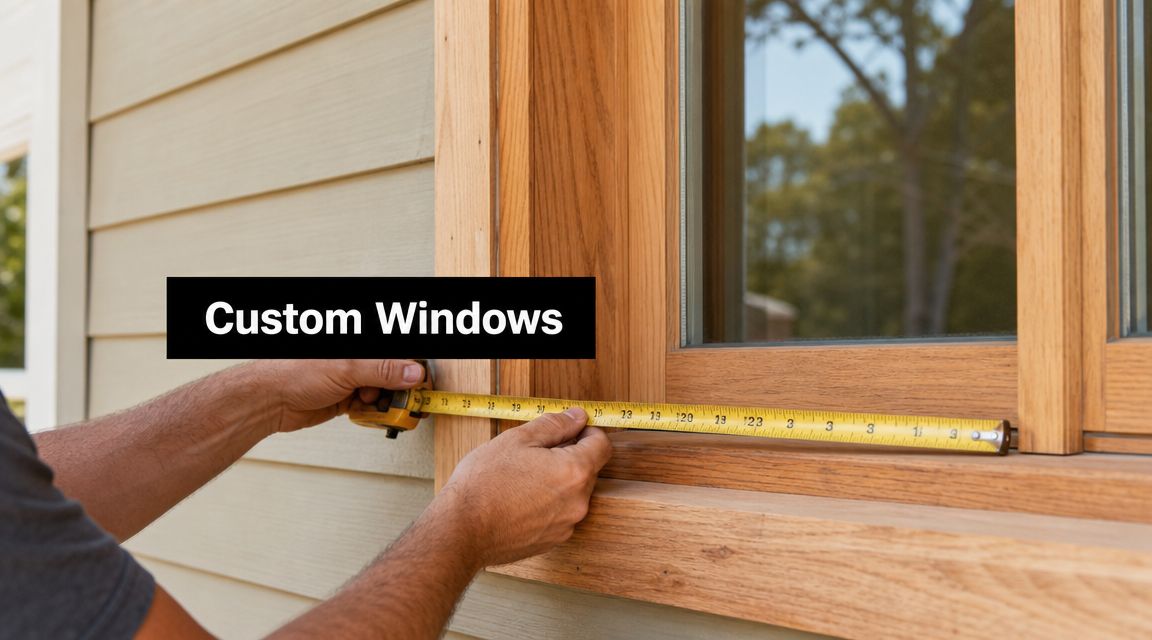
You're probably staring at one or two drafty windows right now, wondering if this is a simple swap or the start of a bigger project. That's the right question. In Boise, window replacement gets expensive fast when the opening isn't standard, the old frame has shifted, or the house has a mix of remodel-era changes layered over original construction.
Most homeowners start with the wrong assumption. They think a replacement window is a replacement window. It isn't. Custom size replacement windows in Boise make sense in some homes, but not all. Sometimes a made-to-measure insert is the smart move. Sometimes the right answer is a full-frame replacement. And sometimes the old opening needs repair before any new unit goes in.
This guide is built around that decision. Not the sales pitch. The decision.
Table of Contents
- Why Standard Windows Often Fail Boise Homes
- Exploring Your Custom Window Style Options
- Decoding Performance Upgrades for the Idaho Climate
- The Professional Measurement and Ordering Process
- How to Budget for Your Custom Window Project
- What to Expect on Installation Day and Beyond
- Frequently Asked Questions About Boise Window Replacements
Why Standard Windows Often Fail Boise Homes
A stock window works great in a stock opening. A lot of Boise homes don't have stock openings anymore.
North End houses, older bench homes, and properties that have been remodeled more than once often end up with openings that are slightly out of square, trimmed inconsistently, or shaped around design details that weren't built for modern off-the-shelf units. Even newer homes can have unusual transoms, arches, or oversized glass that pushes you into custom territory.
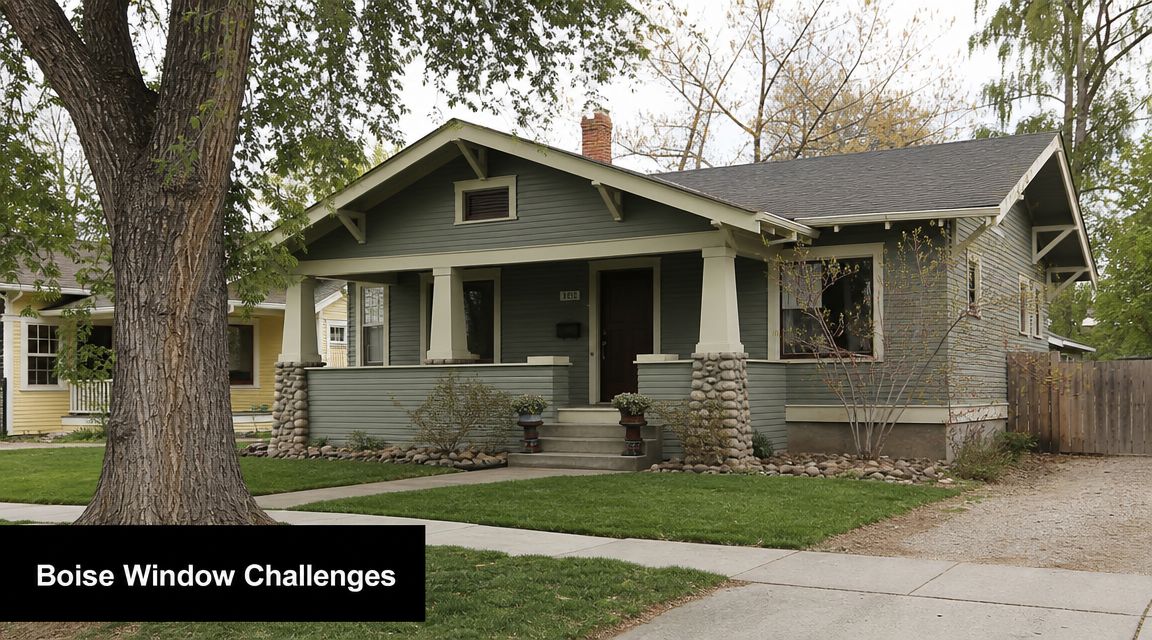
The bigger issue isn't style. It's fit. A bad fit creates the same problems over and over: air leaks, water risk, sloppy trim work, and installers having to force a product into an opening it wasn't built for. That's where homeowners get burned. They save on the unit and lose on performance.
Practical rule: If the frame is out of square, the siding detail is odd, or the opening has clear age-related movement, stop thinking “standard replacement” and start thinking “correct replacement.”
Older homes need a decision, not a default
One of the most overlooked questions in Boise is whether a custom-size replacement window is even the right fix for an older house. Neutral guidance summarized by Boise Custom Windows on ENERGY STAR considerations notes that installation quality and air leakage matter as much as the glass package itself, especially when you're dealing with out-of-square frames, rot, or failed flashing.
That point matters. If the surrounding frame is damaged, a custom insert alone may not be enough. You may need a full-frame replacement or localized rebuild work first. Homeowners hate hearing that, but it's better than installing a beautiful new window into a compromised opening.
Boise weather punishes sloppy installs
Boise doesn't let mediocre work hide for long. Hot summers, cold snaps, wind, and shoulder-season moisture all expose weak seals. If the window is even slightly wrong for the opening, you'll feel it around the sash, see it in condensation patterns, or notice trim and caulk aging badly.
Use this quick reality check:
- Drafts near the stool or jambs mean the fit or sealing may already be failing.
- Visible racking or uneven reveals suggest the opening may not be square.
- Arches, circles, and uncommon proportions usually point toward a made-to-order unit.
- Evidence of rot or staining means you should ask about structural repair before ordering glass.
Standard windows aren't bad. They're just bad when they're forced into the wrong job.
Exploring Your Custom Window Style Options
Start with the job the window needs to do. That decision comes before style, color, or brand.
A lot of Boise homeowners get pushed toward “custom” too early. Sometimes that is the right call. Sometimes a standard style in a made-to-fit size solves the problem for less money and with fewer tradeoffs. The smart move is to match the window to the room first, then decide whether the opening requires a true custom shape or just a precise replacement unit.
Choose style by how the room works
Bedrooms, guest rooms, and many front-facing elevations usually do well with double-hung windows. They look right on a wide range of Boise homes, they offer familiar operation, and they make sense when you want a traditional proportion. If that style is on your shortlist, this guide to double-hung windows in Boise, Idaho gives a useful overview of where they fit best.
Picture windows belong in rooms where light and view matter more than airflow. Living rooms, stair landings, and backyard-facing spaces are common examples. Don't force an operable unit into a spot that mainly needs glass.
Casement windows solve a different problem. They're easier to open in awkward spots, and they tend to be a practical pick over kitchen sinks, counters, or desks where pushing or lifting a sash gets old fast.
Sliding windows fit wide openings well and usually look more natural in ranch, mid-century, and contemporary homes. They're simple to use, but they should be chosen because the opening is wide and horizontal, not because they seem like the easiest option in the showroom.
Know when custom is truly necessary
Here's the distinction that gets missed on generic sales pages. A custom-size replacement window is not always the same thing as a custom window style.
If your opening is slightly unusual but still rectangular, you may only need a made-to-order size in a standard style. That is common in older Boise homes. If your home has an arch, half-round, eyebrow top, narrow sidelight-type opening, or another shape that defines the architecture, then a true custom configuration usually makes sense. That's when trying to force a stock rectangle into the space makes the house look patched together.
Use this rule of thumb:
- Standard style, custom size fits many older Boise openings that are off by an inch or two.
- Custom shape makes sense when the opening itself is part of the home's design.
- Matched sightlines and proportions matter on front elevations, especially on bungalows, Tudors, and older mixed-addition homes.
- Ventilation needs should decide operable versus fixed units before you decide anything about appearance.
Good style choices are usually predictable
Some pairings work because they solve common house problems.
- Historic-looking homes usually look better with double-hung proportions.
- Modern remodels often benefit from larger picture windows or long horizontal sliders.
- Bathrooms, kitchens, and tight ventilation areas are often better candidates for casement units.
- Feature openings near entries or stairwells often justify custom geometry because proportion matters more in those locations.
A good window choice should fix a room problem. It should improve light, airflow, access, or the look of the elevation. If it does none of those, skip it.
Frame construction matters too. Vinyl stays popular because it keeps maintenance low and usually gives Boise homeowners the best value for the money. Some product lines also offer slimmer frames and reinforced sashes, which can help if you want more glass area or a stiffer operable unit over time. That's a fit decision based on the opening, the size of the sash, and your budget. It is not a blanket upgrade every house needs.
Decoding Performance Upgrades for the Idaho Climate
A replacement window isn't just glass. It's a system. In Boise, that system needs to handle intense sun, winter cold, and day-to-night temperature swings without making the room feel uncomfortable.
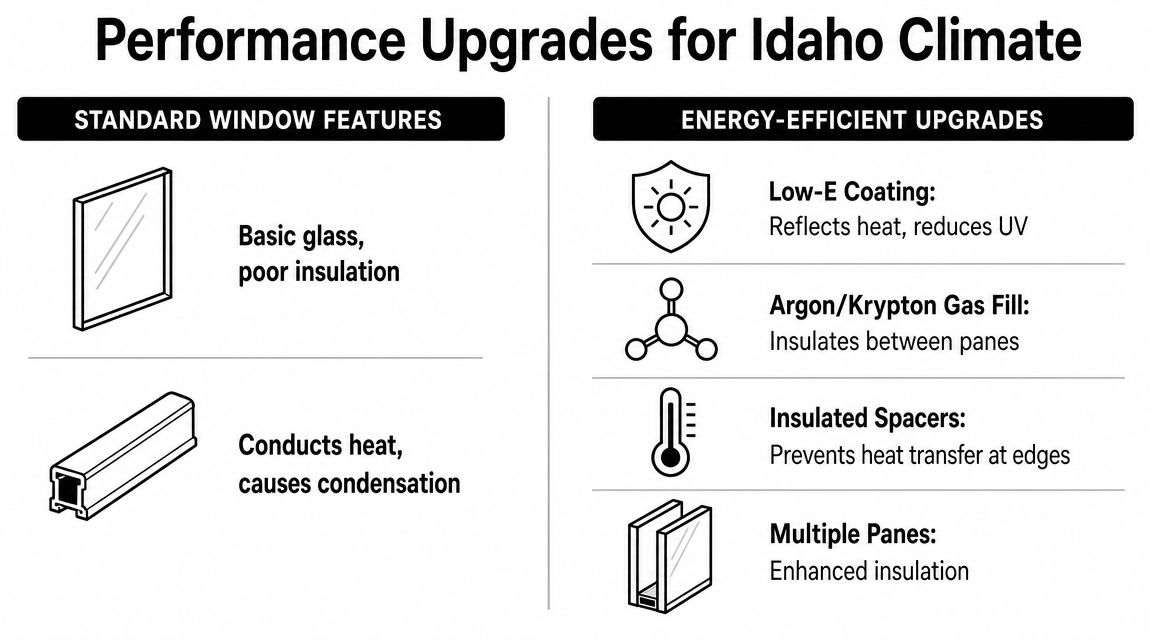
The upgrades that matter most are the ones that control heat transfer and support a better seal. The custom-window guidance from Boise notes that modern custom replacement packages are often built around Low-E coatings and gas fills, which is exactly where I'd tell a homeowner to focus first when they care about comfort and efficiency.
What Low-E and gas fill actually do
Think of Low-E coating as a filter on the glass. It helps manage how heat moves through the window. In summer, that helps reduce unwanted solar heat gain. In winter, it helps retain indoor warmth better than basic glass packages.
Argon gas fill sits between panes and slows temperature transfer. Homeowners don't need the chemistry lesson. What matters is that the window feels less reactive to outdoor conditions.
Then there's pane count. Standard dual-pane is common. Upgraded dual-pane with Low-E and gas fill is where many Boise homes land. Triple-pane can make sense when you want stronger insulation and better sound control, especially near busier roads or in exposed locations. If you're comparing whether it's worth the jump, this page on triple-pane windows for Idaho winters covers the practical tradeoffs.
The glass package matters, but only after the opening and installation method are right. Fancy glass can't rescue a bad fit.
Window Performance Package Comparison for Boise Climate
| Feature | Standard Dual-Pane | Upgraded Dual-Pane (Low-E & Argon) | Premium Triple-Pane (Low-E & Argon) |
|---|---|---|---|
| Glass makeup | Two panes | Two panes with energy-focused upgrades | Three panes with energy-focused upgrades |
| Heat control | Basic | Better resistance to heat transfer | Strongest insulation feel of the three |
| Summer comfort | More vulnerable to solar gain | Better at managing sun exposure | Best choice for rooms with harsh exposure |
| Winter comfort | Serviceable in mild conditions | Better warmth retention | Strongest cold-weather performance |
| Noise control | Basic | Improved over standard | Best option for reducing outside noise |
| Best fit | Budget-focused replacements | Most Boise households | Premium comfort and quieter interiors |
The right performance package depends on the room. West-facing rooms take more punishment. Bedrooms need comfort and quiet. Large fixed glass areas deserve more scrutiny than a small bathroom window.
Don't buy upgrades because they sound impressive. Buy the package that matches the room's exposure, your comfort expectations, and how long you plan to stay in the home.
The Professional Measurement and Ordering Process
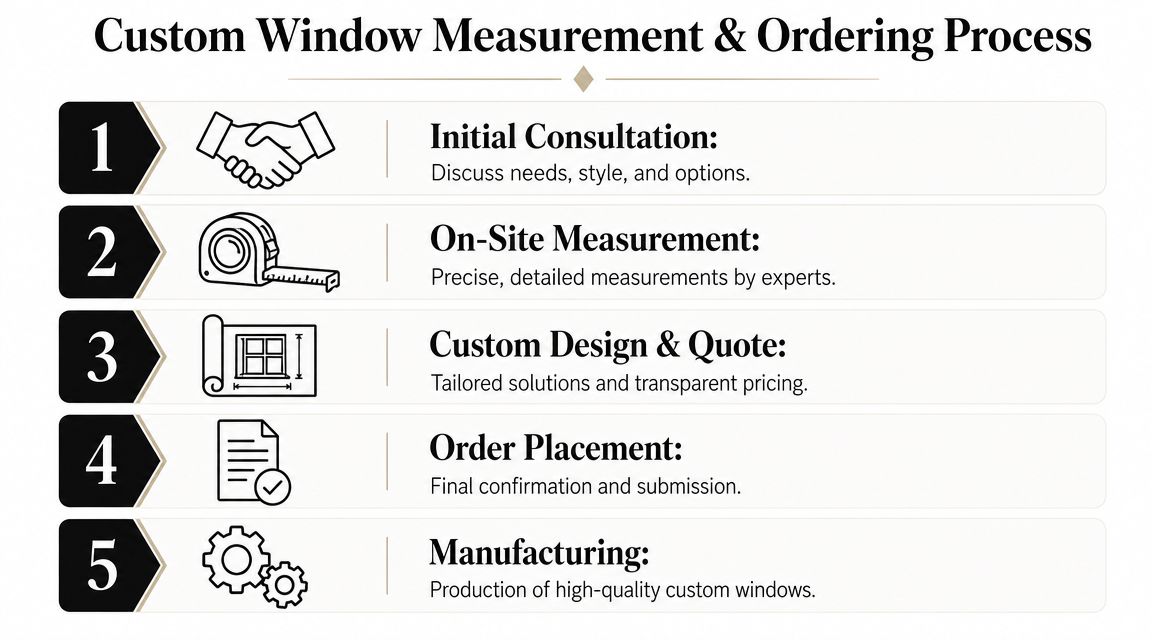
A Boise homeowner usually calls for a "custom" window after the old unit fogs, sticks, or leaks. Sometimes that opening needs a custom order. Sometimes it does not. The measurement appointment is where a good installer makes that call and saves you from buying the wrong product.
A professional is not there to grab a quick width and height and rush out the door. They are there to confirm whether the existing opening can take a standard replacement size, whether an insert will work, or whether the house needs a true custom unit or full-frame approach. That decision drives cost, lead time, and long-term performance.
What a pro measures
Old Boise homes rarely give you a perfectly consistent opening. Wood moves. Sills settle. Previous remodels leave surprises behind trim. A serious measurement visit checks the opening from several angles so the order matches the house you have, not the one you hope is there.
A pro typically checks:
- Width in three places. Top, middle, and bottom show whether the opening narrows or widens.
- Height in three places. Left, center, and right reveal sagging or uneven support.
- Diagonal measurements. These show whether the opening is square or twisted.
- Frame and sill condition. Rot, moisture damage, and loose material can rule out a simple insert replacement.
- Installation method. Insert replacements and full-frame replacements require different sizing assumptions.
If you want a clearer picture of how local contractors handle window replacement in Boise, Idaho, pay attention to whether they talk about the opening condition as much as the glass and frame.
Why the smallest verified dimension controls the order
The window is ordered from the smallest confirmed dimensions of the opening. That is the safe practice. It gives the installer room to plumb, level, shim, insulate, and seal the unit correctly.
Ordering to the largest number creates problems fast. The crew may have to force the frame into place, shave surrounding material on site, or accept a poor fit. None of those outcomes help a Boise home facing hot summer sun, winter cold, and wind-driven weather.
Small gaps are manageable. Bad sizing is not.
Field note: A window that fits correctly is easier to square, easier to flash, and more likely to stay weather-tight for years.
Ordering takes longer when the opening is truly custom
Custom ordering makes sense when the opening is out of square beyond normal adjustment, the size falls outside common stock options, or the design calls for a shape or proportion you cannot get off the shelf. In those cases, waiting longer is better than trying to force a standard unit into a bad match.
But do not let anyone label every older opening as "custom" by default. A competent measuring process separates homes that need a custom build from homes that require careful installation planning. That is the difference between spending wisely and paying extra for no real benefit.
How to Budget for Your Custom Window Project
You get a quote for one window and think, "Fine, I can handle that." Then the estimate changes after the installer finds a bad sill, sun-beaten glass on the west side, and two openings that do not match standard replacement sizes. That is how Boise window budgets go sideways.
Set the budget based on the primary decision first. Are you paying for a custom unit, or are you paying for a standard replacement in an older opening that needs careful installation? A lot of homeowners miss that distinction and spend more than they need to.
Local pricing gives you a useful baseline. According to Iron Crest Remodeling's Boise window replacement cost guide, a whole-house project in Boise often lands around 15 to 20 windows and $10,000 to $25,000 installed, or roughly $500 to $1,667 per window depending on material and installation method. That same source says a typical single window replacement can run about $600 in the area.
Build your budget around scope first
Start with the scope, not the window brochure.
A single failed unit usually calls for a single replacement. Several windows with the same age, same sun exposure, and same wear pattern usually justify a grouped project. If comfort, appearance, and operating performance are poor across the house, whole-house replacement often saves money compared with piecemeal work spread over several years.
If you need help sorting that out, this guide to window replacement in Boise, Idaho is a good starting point for comparing one-window, partial, and whole-home planning.
What actually raises the price
Custom size alone does not explain the final number. The budget usually climbs because several factors stack up at once.
Opening type comes first. If the opening needs a custom order, expect higher fabrication cost and a longer lead time. If it can take a standard-size replacement with proper shimming and trim work, protect your budget and go that route.
Window style and material come next. Large glass areas, specialty shapes, wood interiors, fiberglass frames, and upgraded hardware all cost more than a basic vinyl replacement.
Glass package matters in Boise. Do not buy the cheapest glass option for west-facing rooms, big south exposures, or spaces that already run hot in summer and cold in winter. That decision shows up on your utility bills and comfort level for years.
Opening condition changes labor fast. Rot, water damage, out-of-square framing, trim repair, and sill rebuilds are budget items, not surprises you should ignore.
My budgeting advice for Boise homeowners
Use this order of priority:
- Confirm whether custom is necessary before approving a higher-priced quote.
- Spend on glass performance where the house needs it most, especially on harsh sun exposures.
- Set aside money for hidden repair work if the home is older or the existing windows have leaked.
- Replace by problem area first if a full project is out of reach this year.
- Use financing carefully. It can help with timing, but it should not justify upgrades that do not improve comfort, durability, or fit.
Cheap windows often become expensive jobs. The correction work, callbacks, and comfort problems cost more than making the right choices the first time.
What to Expect on Installation Day and Beyond
Installation day should feel organized, not chaotic. If it feels improvised, something's off.
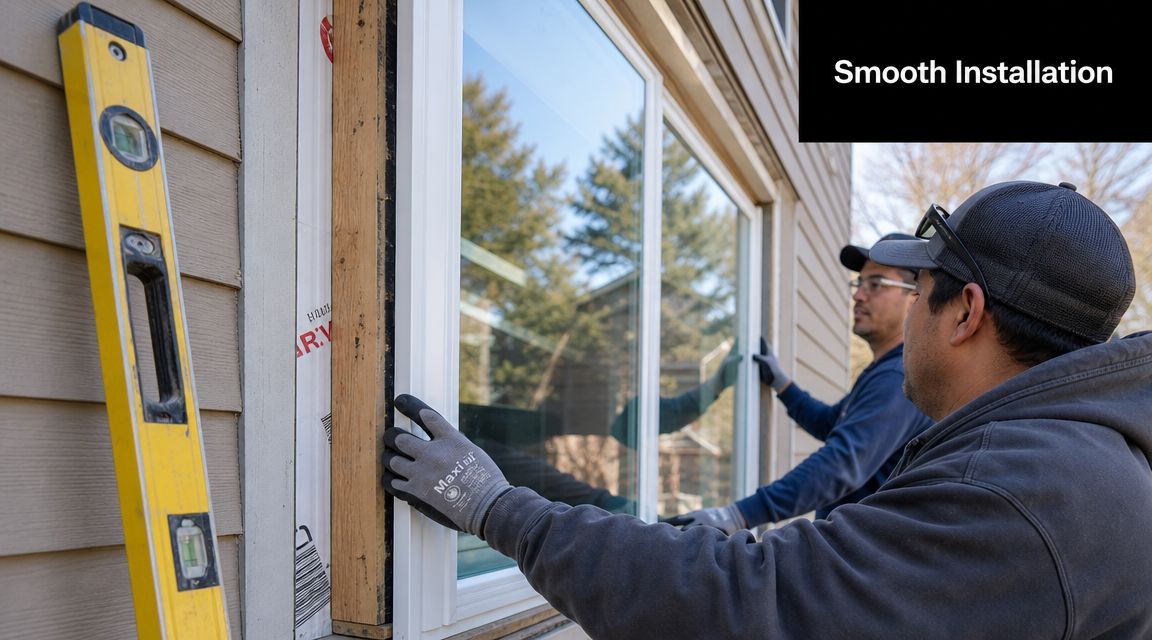
A professional crew starts by protecting floors and work areas, confirming each opening, and removing old units carefully so they don't damage surrounding trim or finishes that are staying. Then they dry-fit, shim, fasten, seal, and check operation before moving to the next opening.
How a clean installation should feel
You should see a repeatable process from window to window. Protect the space. Remove the old unit. Inspect the opening. Set the new unit. Shim and seal it correctly. Test operation. Clean up.
That's also the one place I'll name a local provider directly. C & C Windows & Doors offers factory-trained installation, custom measurements, same-day estimates, and debris-free installation practices for Treasure Valley replacement window projects. Those are the kinds of process details homeowners should ask any installer about before signing.
Look for these signs of a disciplined crew:
- Prep is deliberate. They protect surfaces and control dust.
- Operation is checked immediately. Locks, sash movement, and alignment get tested before they leave the opening.
- Site cleanup happens as they go. Debris shouldn't pile up around the house all day.
- Questions get answered on the spot. You shouldn't be guessing what changed or why.
What matters after the crew leaves
The installation isn't done when the last screw goes in. What matters next is how the window performs over time.
Open and close every unit. Learn how the locks work. Ask how to clean the glass, tracks, and frame finish without damaging seals or hardware. Keep an eye on any area that had prior moisture concerns.
A new window should feel boring in the best possible way. No draft. No sticking. No mystery about whether it sealed right.
Warranty terms matter here too. Product coverage and labor coverage aren't the same thing, and homeowners should read both. Good installation support gives you a clear path if something needs adjustment after the project wraps.
Frequently Asked Questions About Boise Window Replacements
You get one shot to order the right window. If the opening is odd, the frame is tired, or the room bakes in summer and leaks heat in January, the wrong choice costs you twice. These are the questions Boise homeowners should ask before they commit.
Do I need custom windows for an older Boise home
Older home does not automatically mean custom window.
Choose a custom unit when the opening is nonstandard, out of square, or shaped in a way a stock window will not fit without filler, trimming, or other compromises. If the surrounding frame shows rot, water damage, or movement, stop focusing on the sash size and address the opening first. In that case, a full-frame replacement or repair often makes more sense than forcing a custom insert into a bad frame.
That is the decision point many sales pages skip. The question is not "custom or standard." The key question is whether the existing opening is sound enough to reuse.
Are custom windows always more expensive
Usually, yes.
Custom units cost more because the manufacturer is building to your opening instead of pulling from common sizes. Lead times are often longer too. That extra cost can still be the better buy if it prevents on-site modification, sloppy trim work, air gaps, or a poor fit that hurts performance for the next 20 years.
Are double-hung windows still the safest choice for Boise homes
They are still a practical choice, especially for homeowners who want a familiar look that fits older Boise neighborhoods and newer subdivisions.
They are not the default best option in every room. Casement windows usually seal tighter and make more sense where you want better ventilation or stronger energy performance. Picture windows work well where you want light and a view but do not need airflow. Sliders can be fine in the right opening, but they are not my first pick if maximum airtightness is the goal.
Choose the style based on the room, not habit.
Do permits come into play for window replacement
Sometimes.
If the work stays within the existing opening, permit requirements may be simpler. If you are changing the size, altering structure, or repairing damage around the opening, permits are more likely to matter. Ask your installer how they handle permit questions in Boise, Meridian, or your specific city before you approve the order.
How do I care for new replacement windows
Keep the maintenance boring and consistent.
- Clean glass and frames with approved products so you do not damage finishes, seals, or hardware.
- Keep tracks and weep holes clear so water drains the way it should.
- Check caulk and visible seals during routine home maintenance so small issues do not turn into bigger leaks.
- Open and close the windows regularly so you catch stiffness, balance problems, or hardware issues early.
Good windows do not need constant attention. They do need occasional attention.
Is triple-pane worth it
For some Boise homes, yes.
Triple-pane makes the most sense in rooms with harsh sun exposure, cold winter discomfort, or outside noise that bothers you every day. If the budget is tight, upgraded dual-pane may be the smarter middle ground. If comfort is the priority and this is a long-term house, triple-pane is one of the few upgrades homeowners tend to notice right away and keep appreciating.
If you're weighing custom size replacement windows in Boise and want a straight answer on whether your home needs a custom unit, an insert, or a full-frame approach, schedule a consultation with C & C Windows & Doors. A good first visit should give you measurements, options, and a clear recommendation you can use.