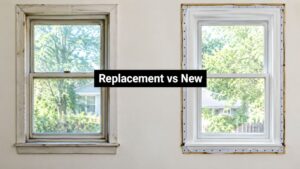

If you're standing near a bedroom window in January and you can feel the cold rolling off the glass, you're already asking the right question. In Idaho Falls, window replacement isn't just about looks. It's about stopping drafts, holding heat, keeping rooms usable, and making sure the window you buy fits our climate instead of just carrying a nice label.
A lot of pages about windows in Idaho Falls stop at styles, brands, or scheduling an estimate. That skips the part homeowners need. Which specs matter here, what code issues show up in real houses, when triple-pane is worth it, and how to think about cost when the heating season is long. That's what this guide covers.
Table of Contents
- What ENERGY STAR Means for Your Idaho Falls Home
- The Technology Inside High-Performance Windows
- Benefits Beyond Lower Energy Bills
- Navigating Idaho Falls Codes and Local Rebates
- Understanding Window Costs and Return on Investment
- Why Professional Measurement and Installation Matter
- Your Idaho Falls Window Replacement Checklist
What ENERGY STAR Means for Your Idaho Falls Home
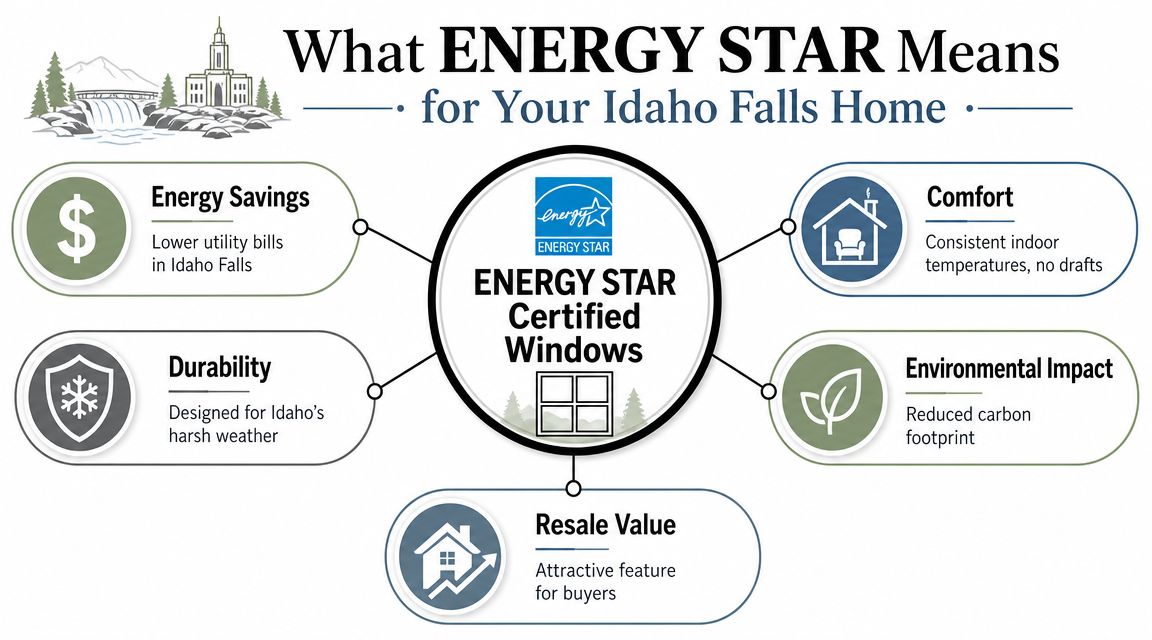
A sticker by itself doesn't keep a house warm. The value of ENERGY STAR is that it gives you a baseline for performance, but in Idaho Falls you still need to know what the label means for a cold winter morning, a sunny afternoon, and a room that never seems to stay comfortable.
For this area, the important point is climate zone. Idaho Falls falls in the Northern Climate Zone, and ENERGY STAR Version 7.0 criteria require a window U-factor of ≤ 0.22 and SHGC of ≥ 0.35 for that zone. That combination is meant to reduce heat loss while still allowing useful solar heat gain during winter.
The two numbers that matter most
U-factor tells you how much heat moves through the window. Lower is better. In real terms, a lower U-factor helps the glass and frame resist heat loss when it's cold outside and warm inside.
SHGC, or solar heat gain coefficient, tells you how much solar heat the window lets in. In our climate, that matters more than many homeowners realize. A window that admits helpful winter sun can support comfort during daylight hours instead of fighting against it.
Practical rule: For windows Idaho Falls homeowners are shopping for, don't stop at “ENERGY STAR certified.” Ask whether the unit is tuned for the Northern Climate Zone and check the actual label numbers.
How to read the label without overthinking it
When you're comparing products, keep it simple:
- Start with climate fit. If the window isn't built to meet Northern Climate Zone targets, move on.
- Check the U-factor first. That's usually the number that most directly speaks to winter heat retention.
- Then look at SHGC. In Idaho Falls, winter sun can help, especially on exposures that get good daylight.
- Ask about the full package. Frame design, glass package, spacer system, and installation all affect the result.
A lot of homeowners get distracted by frame color, hardware, or grid patterns before they lock down performance. Style matters, but comfort starts with the label. If you're comparing vinyl packages, this Idaho vinyl replacement window overview gives a useful product-level look at how efficiency features are bundled.
The main takeaway is straightforward. ENERGY STAR isn't marketing fluff when you read it correctly. In Idaho Falls, it gives you a measurable way to sort out which windows are built for our heating demands and which ones only look good in a showroom.
The Technology Inside High-Performance Windows
Good window performance comes from layers working together. No single feature carries the whole load. Glass coating, gas fill, pane count, frame design, and sash construction all matter, and if one part is weak, the window usually shows it during the first hard winter.
Low-E glass and gas fills
Low-E coating is one of the biggest upgrades in modern glass. The easiest way to think about it is this: it acts a bit like a thermos liner. It helps manage radiant heat transfer, which is a major reason older glass feels cold when you stand next to it.
Argon gas fill sits between panes and slows heat transfer better than ordinary air. You can't see it, and most homeowners will never think about it again after installation, but it plays a real role in cold-weather performance. It also helps the full insulated glass unit work more effectively as a system.
A quality package combines those features instead of treating them as add-ons. Some products also keep a slimmer sightline, so you don't sacrifice too much glass area while upgrading efficiency. If you're evaluating one specific example, this Mezzo windows review for Idaho homeowners explains how a climate-focused package can combine narrowline framing with Low-E, Argon, and optional triple-pane construction.
The best-performing window on paper still disappoints if the frame leaks air or the sash doesn't close tightly.
Double-pane vs triple-pane
Triple-pane gets talked about a lot in Idaho, and for good reason. But it isn't the automatic answer for every opening.
Some rooms benefit more than others. A large north-facing opening, a windy exposure, a bedroom where comfort matters at night, or a house with older wall assemblies often gets more noticeable benefit from a triple-pane upgrade than a small, shaded opening in a lower-priority space.
| Feature | Standard Double-Pane | Upgraded Triple-Pane (e.g., Mezzo with ClimaTech) |
|---|---|---|
| Glass construction | Two panes of glass | Three panes of glass |
| Insulating space | One sealed space | Two sealed spaces |
| Winter comfort near glass | Good | Better |
| Sound reduction | Improved over old single-pane units | Usually stronger than double-pane |
| Weight | Lighter | Heavier |
| Cost | Lower upfront | Higher upfront |
| Best fit | General whole-home replacement | Colder exposures, comfort-sensitive rooms, premium efficiency goals |
What works in practice:
- Double-pane works well when the old windows are failing badly and you want a strong efficiency improvement without pushing the budget too hard.
- Triple-pane makes sense when comfort is the priority, when outside noise is an issue, or when you want to maximize thermal performance in a cold-climate home.
- Not every room needs the same glass package. Mixed-window strategies can be smart if the house has very different exposures.
Homeowners sometimes assume triple-pane always means a dramatic visual change. It usually doesn't. The bigger difference is what you feel near the opening when the temperature drops and the furnace has to carry the load overnight.
Benefits Beyond Lower Energy Bills
The initial focus during the shopping process is savings. Comfort is typically the first aspect noticed after installation.
Old windows don't just leak energy. They change how a room feels and how you use it. A chair near the glass goes empty in winter. One bedroom runs colder than the rest of the house. Wind noise slips in during storms, and afternoon glare fades flooring and furniture faster than it should.
Comfort changes you notice right away
The biggest quality-of-life improvement is often temperature stability. Better glass packages and tighter weatherseals reduce that cold-radiation effect that makes a room feel chilly even when the thermostat says it's fine.
You also get a quieter interior. Multi-pane construction, better seals, and more solid sash design can cut down the edge off outdoor noise. That's especially noticeable in bedrooms, offices, and living spaces where outside sound tends to bounce off hard surfaces.
A few changes homeowners commonly notice:
- Less draft sensation: Air movement around the frame drops when the unit is measured and sealed properly.
- More usable space near windows: Beds, desks, and seating areas feel less exposed to cold glass.
- Better day-to-day consistency: Rooms don't swing as hard between sunny and shaded periods.
A comfortable house isn't only about furnace output. It's about reducing the weak points in the exterior shell, and windows are one of the biggest.
Why appearance still matters
Performance gets people to replace windows. Appearance is what keeps the project from looking like a downgrade.
Cleaner sightlines, better proportion, and frames that fit the house can sharpen curb appeal fast. That matters whether you're staying long term or trying to make the home easier to sell. Buyers notice windows, even if they don't know the technical specs. They read them as a signal of maintenance, efficiency, and overall care.
Good replacements also protect the feel of the house from the inside. More consistent natural light, less condensation on cold mornings, and less visual wear around failing old frames all contribute to a home feeling finished instead of patched together.
Navigating Idaho Falls Codes and Local Rebates
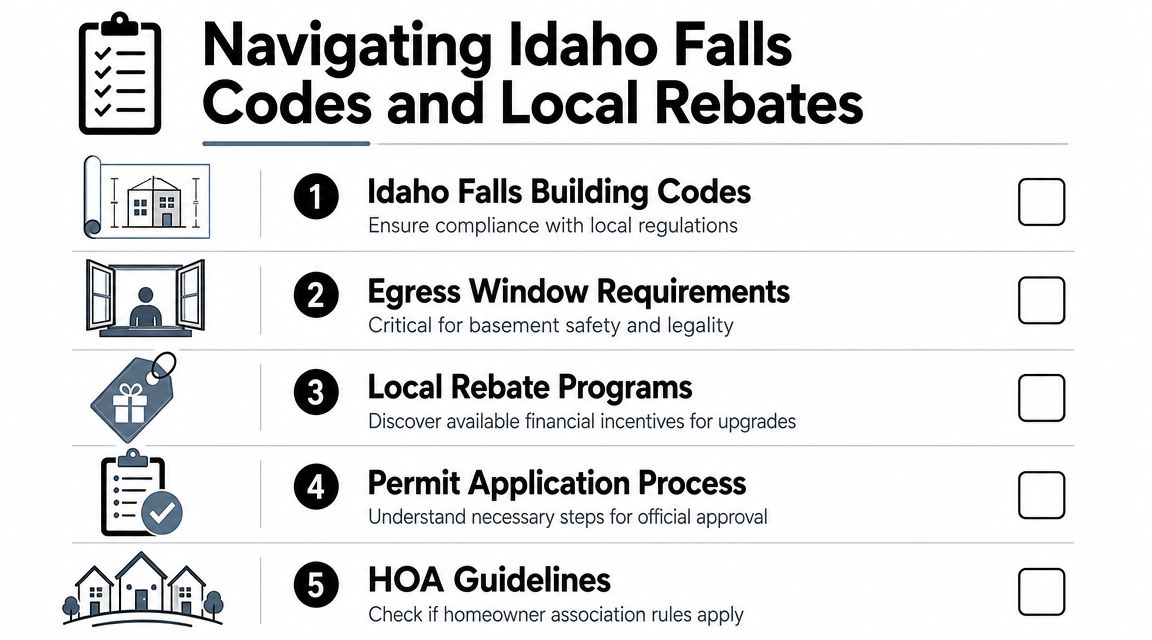
The technical part of windows Idaho Falls projects isn't always the glass package. A lot of the trouble starts with code, especially in basements. That's where rough openings, sill heights, sash operation, and window wells all have to work together, not just look close enough on a measuring tape.
Basement egress is where mistakes get expensive
For basement sleeping areas and other situations where emergency escape rules apply, the opening has to meet actual egress requirements, not just the size printed on a sales sheet. According to Idaho IRC egress window requirements, the window must provide a net clear opening of at least 5.7 sq. ft., with a sill height no more than 44 inches from the floor. The related window well must provide at least 9 sq. ft. of horizontal area.
That sounds simple until a retrofit starts. The common failure point is geometry. A window may have a rough opening that seems big enough, but the sash, frame thickness, hardware, and well projection reduce the clear opening.
When the opening is below grade, the well itself becomes part of the job. In eastern Idaho, that's not a detail you can ignore. Snow, drainage, and access all matter. A well has to allow the sash to operate fully while still handling water and debris the way a below-grade assembly should.
How to approach rebates and paperwork
Local rebate availability changes, so the practical approach is to verify current utility and program details before you order. The smart way to handle it is to build your paperwork folder early.
Use this checklist:
- Confirm eligibility first. Ask whether the program applies to replacement windows, specific performance levels, or primary residences only.
- Save product documentation. Keep labels, product literature, and your contract in one place.
- Ask about timing. Some programs require pre-approval, while others accept documents after installation.
- Check permit needs. Basement work, resized openings, and structural modifications often trigger more review than same-size replacements.
- Review HOA rules if they apply. Color, grille pattern, and exterior appearance can matter in planned communities.
A homeowner who handles rebates well usually doesn't do anything fancy. They just get organized before the install date instead of trying to recreate the file after the fact.
Understanding Window Costs and Return on Investment
Window pricing isn't a single number because the project isn't a single variable. Style, size, frame material, glass package, installation complexity, and whether you're replacing existing units or altering openings all move the final cost.
What changes the price
A fixed picture window is a different job than a large operable unit. A straightforward insert replacement is different from full-frame work where trim, flashing, and surrounding conditions need attention. Basements, older homes, and damaged framing also change labor.
Performance upgrades affect price too. So does hardware quality. So does the level of finish you're expecting inside and out.
These factors usually push the budget one direction or the other:
- Window style: Operable units generally involve more moving parts than fixed glass.
- Glass package: Higher-performance coatings and triple-pane options add cost.
- Installation method: Full-frame replacement is more involved than a basic insert.
- Condition of the opening: Rot, out-of-square framing, and trim damage create extra work.
How to think about payback in Idaho Falls
The cleanest way to evaluate return isn't to chase a generic national savings claim. It's to ask whether the upgrade solves expensive comfort problems in a city with a long heating season.
If your current windows are drafty, hard to lock, fogging between panes, or visibly worn, the return starts in several places at once. Lower heat loss. Better comfort. Less strain on occupied rooms. Fewer complaints if it's a rental. Better curb appeal if the house may be sold later.
One useful piece of context is that local search content often misses this practical decision point. The Better Business Bureau directory for Idaho Falls window installation shows how much of the local online environment is built around listings rather than homeowner decision support. That leaves many owners comparing installers before they've even decided what performance level makes sense for their house.
Financing can bridge that gap when the right product is clear but the timing is tight. Synchrony financing for windows and doors notes that homeowners often use monthly-payment options to start benefiting from energy savings right away, with utility savings often offsetting a significant portion of the payment. If you're weighing a colder-climate upgrade path, this guide to triple-pane windows for Idaho winters is a useful way to compare whether the added glass layer matches your comfort and budget goals.
The mistake is treating every window as equal and every house as equal. Return on investment depends on how bad the existing units are, where the exposures sit, and how long you plan to keep the home.
Why Professional Measurement and Installation Matter
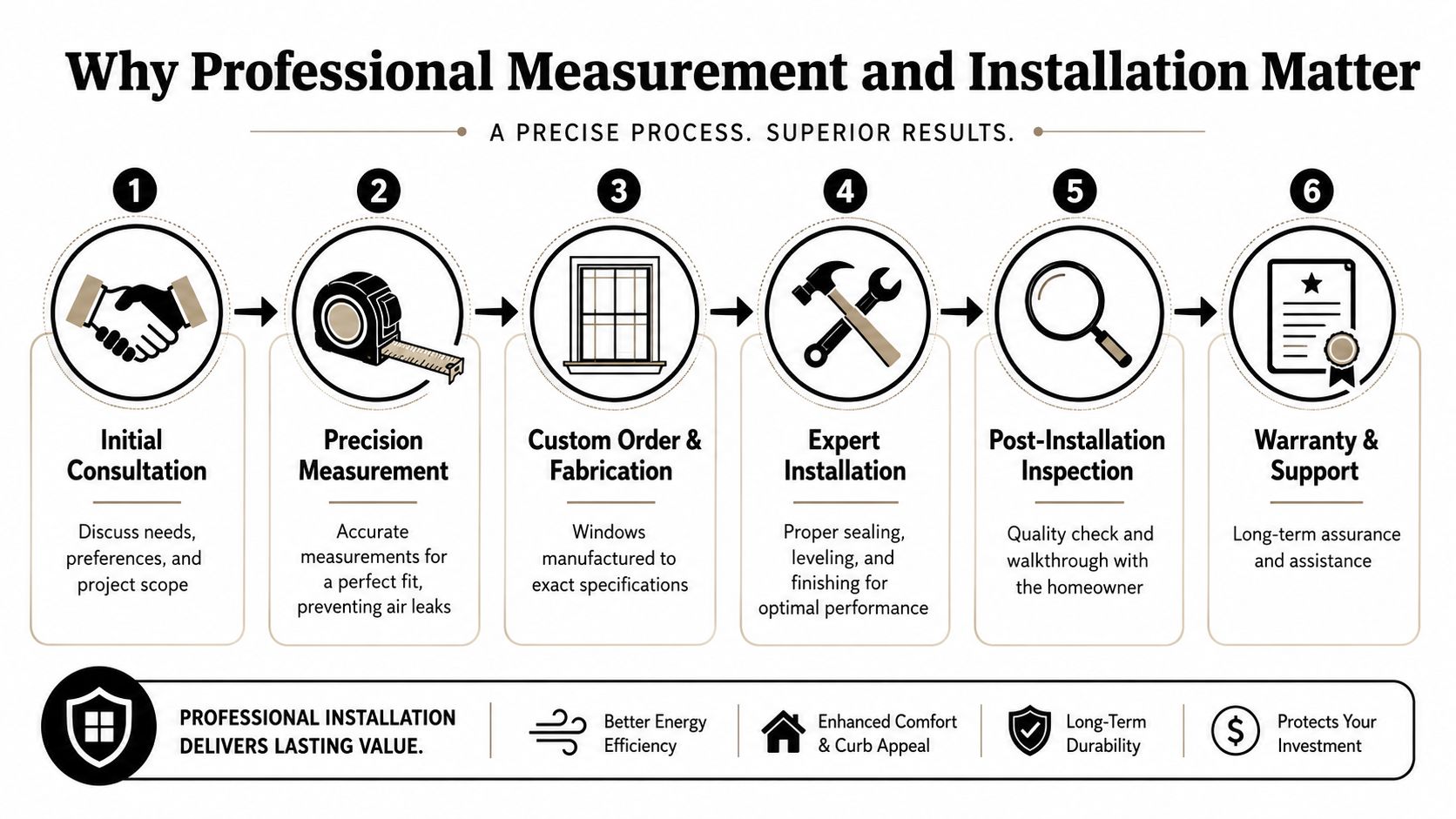
A January cold snap in Idaho Falls is a hard test for window work. If the opening is out of square, the frame is over-foamed, or the air seal is incomplete, you feel it fast. Cold air tracks along the stool, the sash gets stiff, and the glass package you paid for cannot deliver its rated performance.
That is the part many homeowners do not hear clearly enough. ENERGY STAR labels and low U-factor numbers matter, but those numbers assume the window is installed to perform as designed. In our climate, a small gap at the perimeter can wipe out a meaningful share of the benefit, especially over a long heating season.
What a precise install involves
Accurate measurement starts before anyone talks lead times. The installer needs the width, height, diagonal checks for square, jamb depth, sill condition, reveal, and frame condition. They also need to know whether the existing unit is pocket-set, fully integrated with exterior trim, or hiding older repairs. Idaho Falls homes vary a lot by age, and settled openings are common enough that rough estimates create expensive mistakes.
Removal matters too.
A careful crew protects finished surfaces, opens the wall only as much as needed, and checks for rot, insulation voids, and water staining before the new unit goes in. If the opening has problems, this is the moment to fix them. Covering them up usually shows up later as drafts, trim movement, or callbacks during the first winter.
The installation itself is a sequence, not a single step:
- Set the frame level, plumb, and square. That keeps locks aligned, reveals even, and sash movement smooth.
- Shim at the right load points. Too few shims lets the frame flex. Random shims twist it.
- Insulate the perimeter with control. Too little leaves air leakage. Too much foam can bow the jambs and affect operation.
- Seal for water and air. Interior air sealing and exterior weather management need to work together.
- Finish cleanly. Trim should complete the opening, not hide poor fitting work.
In eastern Idaho, I would add one more check. Ask how the installer handles sill slope, flashing details, and perimeter sealing on wind-exposed elevations. Freeze-thaw cycles are hard on small installation errors.
Why Idaho Falls homes need climate-specific judgment
National guidance helps narrow the product. Local installation determines whether that product pays off.
ENERGY STAR criteria are built around climate zones, but homeowners still have to translate that into real decisions for an Idaho Falls house. North and west elevations usually need tighter air sealing and closer attention to comfort complaints. Older homes with replacement layers from different decades often need more opening correction than newer subdivisions. Homes with long runs of brickmould or aging exterior trim need a plan for water control, not just a plan for glass replacement.
That matters for code and for return on investment. If a basement bedroom window changes size, egress rules can come into play. If trim or sheathing damage turns up during removal, the job may need repair work before the window can be installed correctly. If the installer skips those steps to keep the day moving, the homeowner inherits the problem.
Older homes need a different standard of care
Historic and early neighborhood housing stock deserves a measured approach. In Idaho Falls' Ridge Avenue Historic District, peak construction occurred from 1900 to 1911, and the historic record notes details such as decorative front doors, balanced window and door arrangements, and multi-paned Colonial Revival features in the area, as described in the Ridge Avenue Historic District registration form. Replacement work on these homes should protect those proportions instead of flattening them with bulky frame profiles or careless trim changes.
Good installers look at sightlines, meeting rail height, grille pattern, and exterior casing relationships before they place an order. That is not cosmetic nitpicking. It affects curb appeal, resale, and whether the new work looks like it belongs on the house.
The same standard applies in visible parts of town. Downtown Idaho Falls has civic anchors that shape how buildings are perceived, and the Museum of Idaho stands out as the state's largest history and science center, with an immersive downtown presence tied closely to local commercial history. In places where architecture is part of the setting, sloppy window replacement is easy to spot.
The important point is not the logo on the truck. It is whether the installer measures carefully, explains the trade-offs, corrects opening problems, and seals the unit in a way that matches Idaho Falls weather and the house itself.
Your Idaho Falls Window Replacement Checklist
By the time most homeowners start serious shopping, they already know something's wrong. The room is drafty, the glass is cold, the frames are tired, or the old units no longer match how they want the house to perform. The better move is to turn that frustration into a clean decision process.
Use this checklist before you sign anything:
- Inspect what the current windows are doing. Look for drafts, condensation between panes, sticking operation, soft trim, or visible frame wear.
- Decide what problem matters most. Some homes need lower heat loss first. Others need sound control, basement safety, or an exterior appearance upgrade.
- Match the product to Idaho Falls conditions. Prioritize Northern Climate Zone performance, then decide whether double-pane or triple-pane makes more sense by room.
- Review code issues early. Basement work, changed opening sizes, and below-grade conditions need more scrutiny than standard replacements.
- Ask how the installer measures and seals. A vague answer usually means a vague process.
- Look at the whole opening, not just the glass. Frame quality, sash design, hardware, and drainage details all affect long-term results.
- Confirm paperwork before installation day. Warranty terms, product documentation, and any rebate forms should be easy to locate.
- Choose windows that fit the house visually. This is especially important on older homes where proportions and grid patterns affect curb appeal.
If you do those eight things, you're ahead of most buyers. You won't just be shopping for windows in Idaho Falls. You'll be choosing a system that fits the climate, the house, and the way you live in it.
If you're ready to compare options with real measurements and climate-appropriate recommendations, C & C Windows & Doors offers free in-home consultations for homeowners who want clear guidance on replacement windows, energy performance, and installation approach before making a decision.