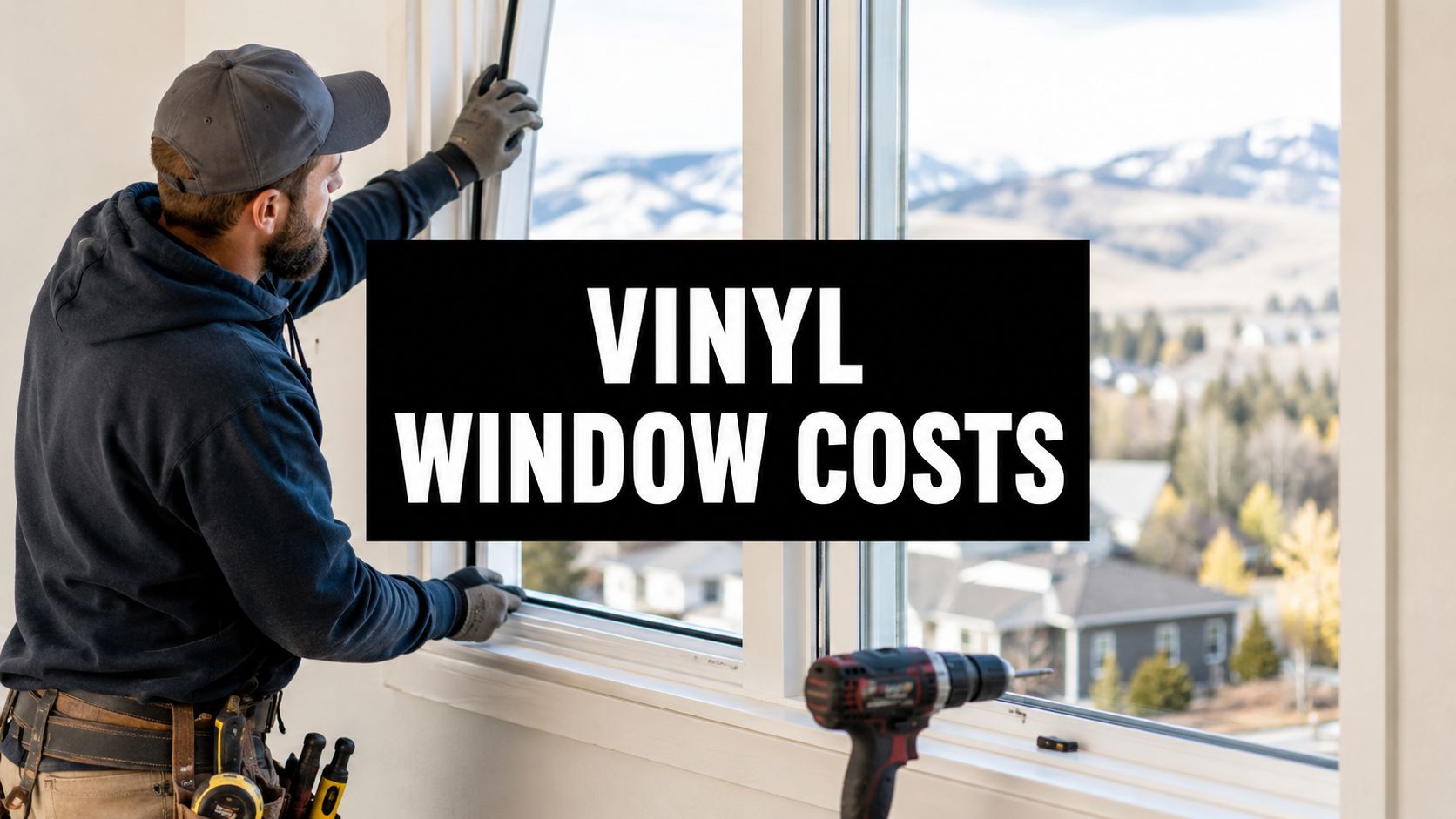
Standard vinyl double-hung windows installed in Boise typically run $400 to $800 per window, with a 10-window project landing between $3,800 and $8,000 depending on the glass package and project scope. That range is a practical starting point for Treasure Valley homeowners, but the final average cost of vinyl windows in Idaho depends on window count, installation conditions, style, and performance specifications.
You're probably looking at fogged glass, sticking sashes, rising utility bills, or a quote that seems suspiciously cheap until the installer adds trim, disposal, and glass upgrades. Idaho window pricing isn't difficult to understand once you separate the window unit from the work required to install it correctly. Vinyl is a value-engineered choice, not automatically the cheapest choice, because the right package can combine practical pricing, Idaho rebate eligibility, and better comfort through the Treasure Valley's hot summers and cold winters.
Table of Contents
- What Vinyl Windows Actually Cost in Idaho
- The Line Items Inside Every Vinyl Window Quote
- How Window Style Changes the Price Tag
- Energy Upgrades That Shift the Numbers
- Idaho-Specific Factors That Move Your Final Price
- Sample Job Estimates for Treasure Valley Homes
- Rebates, Financing, and Choosing the Right Installer
- Your Next Steps Toward an Accurate Idaho Quote
What Vinyl Windows Actually Cost in Idaho
For a standard replacement project in Boise and the upper Treasure Valley, $400 to $800 installed per vinyl window is the range I'd use for early budgeting. Standard double-hung units often sit near the lower or middle part of that range, while larger openings, upgraded glass, difficult access, and full-frame work move toward the top. The Boise-area estimate for standard vinyl double-hung windows is narrower, at $400 to $500 installed per unit, according to this Boise vinyl window pricing estimate.
Statewide pricing supports the same general picture. One 2026 Idaho estimate places the typical replacement window at $552, with a range of $276 to $1,380, and compares Idaho with a national median of $600, within ±10%, as detailed in this Idaho window replacement cost guide. That statewide figure is useful, but it shouldn't be treated as a guaranteed bid. Idaho has several distinct labor and freight markets, and the scope of your home matters more than a single statewide average.
Regional budgeting matters
Treasure Valley pricing makes a useful Idaho benchmark because Boise, Meridian, Eagle, Nampa, and nearby communities share a substantial installer and supplier network. Smaller markets such as Twin Falls and Lewiston may sometimes come in lower, while resort and higher-demand areas such as Sun Valley and Coeur d'Alene can run higher because of labor and freight conditions. Treat those geographic differences as budgeting guidance, not fixed statewide rules.
Material-only pricing is also different from a turnkey project. A standard vinyl unit may be quoted separately from removal, installation, insulation, interior trim, exterior finishing, and hauling. A full project can land anywhere from several thousand dollars to the low five figures, depending on window count and scope. For context, a broader Idaho estimate places average replacement projects around $13,800 to $20,700, while another source gives $380 to $1,100 per window and $3,800 to $11,000 for 10 windows, as shown in this Idaho replacement cost calculator.
| Idaho Region | Per Window (Low) | Per Window (High) | Typical 10-Window Project |
|---|---|---|---|
| Boise and upper Treasure Valley | $400 | $800 | $3,800 to $8,000 |
| Smaller Idaho metros | Qualitatively lower than Boise in some projects | Qualitatively lower than Boise in some projects | Depends on scope |
| Resort and higher-demand markets | Qualitatively higher than Boise in some projects | Qualitatively higher than Boise in some projects | Depends on freight and labor |
Practical rule: Use the Boise range to set expectations, then insist on an itemized quote that explains every difference.
Vinyl rarely wins by offering the lowest possible purchase price. It earns its place when the frame, glass, installation, and available utility incentives work together. That's the value-engineered decision Idaho homeowners should make.
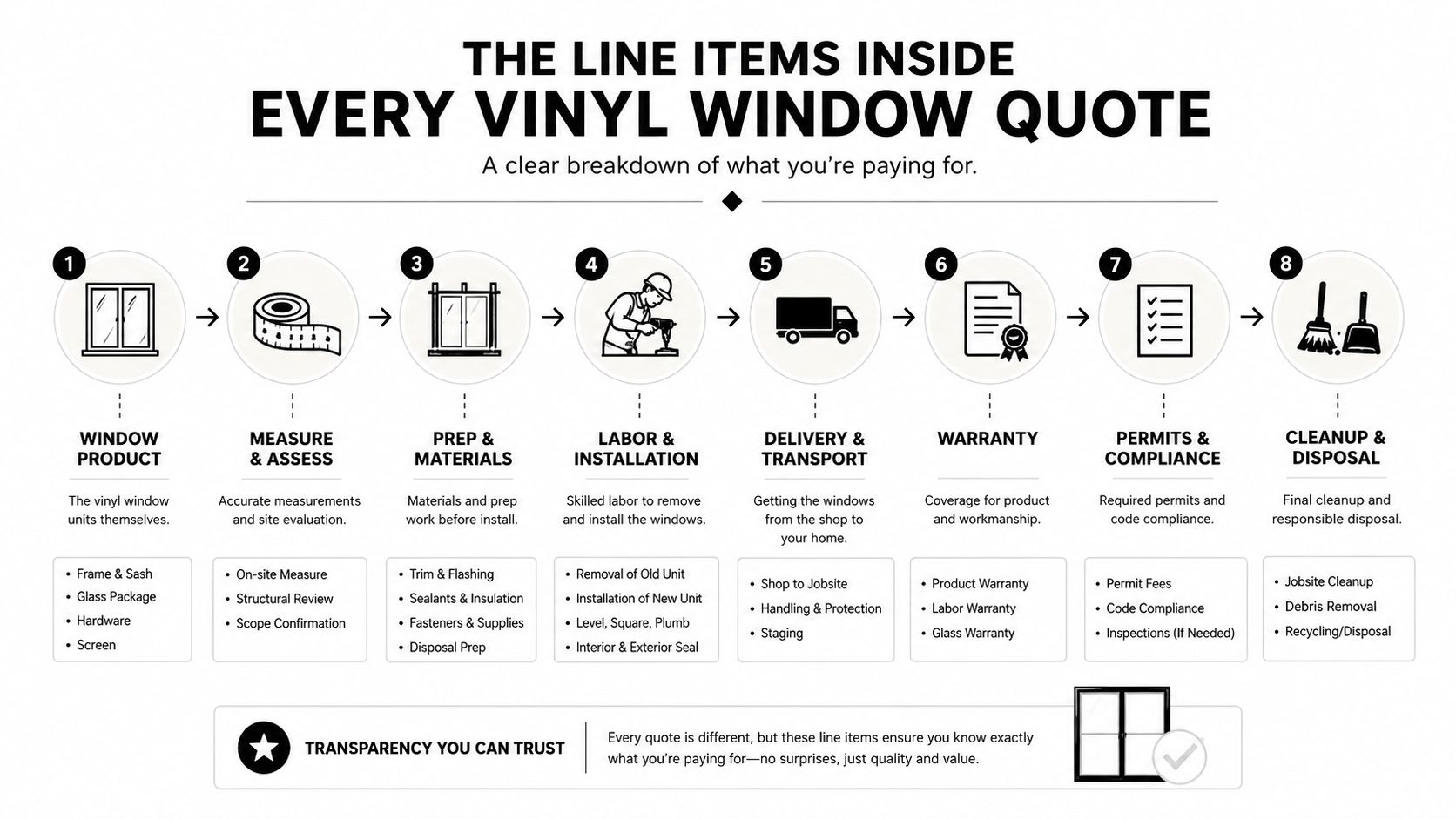
The Line Items Inside Every Vinyl Window Quote
A low advertised window price often covers only the unit. A professional replacement quote covers the opening, the old window, the surrounding finishes, and the crew's time. Standard vinyl units may account for $180 to $450 before installation, while upgraded tiers can reach $300 to $700, based on the specified project ranges.
Start with the unit, then inspect the glass
Double-pane clear glass is usually the baseline. Low-E coating can add $40 to $90 per window, argon fill can add $20 to $50, and triple-pane glass can add $120 to $250 per opening, according to the quoted Idaho replacement cost breakdown. These upgrades shouldn't appear as vague “energy package” charges. The bid should identify the glass configuration and list its price separately.
Installation in the Treasure Valley commonly runs $150 to $300 per window when removal, shimming, insulation, and interior trim work are included. That labor line is where installers account for making the new window fit the existing opening, sealing the perimeter, and leaving the interior presentable.
Look for the fees that change the final number
Disposal may appear as $25 to $50 per window or as a project charge of $200 to $400. The same quote may include additional work for exterior capping, exterior trim repair, interior paint touch-up, permits, or damaged framing. A second-story opening can add $50 to $100 per window, while lead-safe renovation procedures may apply in pre-1978 homes.
Rotted sills and damaged rough openings deserve special attention. An installer who discovers rot after removing the old unit may need to repair the framing before setting the replacement. Ask whether that work is included, excluded, or billed only after documented approval.
A fair comparison requires matching scope. Two quotes aren't comparable if one includes haul-away and interior trim while the other lists only the window itself.
How Window Style Changes the Price Tag
Window style changes more than the appearance of a room. It changes the hardware, sash construction, fabrication process, sealing method, and installation time. Standard double-hung windows establish the common Boise baseline, while fixed units generally cost less because they have no moving operating hardware.
The Idaho-specific style estimates below show how geometry and operation affect the installed price, with double-hung units around $450 to $750, casements around $475 to $800, sliders around $400 to $700, and picture windows around $350 to $650, according to this Boise window replacement service pricing guide.
| Window Style | Installed Cost (Low) | Installed Cost (High) | Best Use Case |
|---|---|---|---|
| Double-hung | $400 | $800 | Bedrooms, kitchens, and common subdivision openings |
| Casement | $500 | $950 | Tighter-sealing living areas and exposed walls |
| Slider | $450 | $900 | Wide openings and easy horizontal operation |
| Picture or fixed | $300 | $650 | Living rooms and views where ventilation isn't required |
| Specialty shape | $700 | $1,500 | Architectural openings and custom designs |
| Bay, bow, or garden | $1,500 | $4,500 | Projection windows requiring more substantial work |
Casements usually cost more than basic double-hungs because crank hardware and the operating sash require additional components. Sliders are convenient for broad openings, but multi-panel combinations can become expensive. A three-lite slider may reach $1,400 to $2,500 installed, while an opening larger than 36 by 60 inches may add $100 to $200 per window, based on the specified Idaho project ranges.
Fixed picture windows often offer the cleanest price because nothing moves. Their lack of operating hardware also reduces one potential source of air leakage, although the surrounding installation still matters.
For homeowners choosing between the two most common styles, this casement versus double-hung guide for Boise homeowners provides a useful way to compare ventilation, cleaning, operation, and appearance before requesting bids.
Energy Upgrades That Shift the Numbers
A west-facing living-room window in Meridian has a different job from a shaded north-facing bedroom window. Price the upgrade around exposure, comfort, and rebate eligibility instead of accepting a premium package on every opening. This Idaho energy-efficient window guide offers a useful reference for comparing product ratings and Treasure Valley conditions.
Read the NFRC label before approving any upgrade. Focus on U-factor for winter heat loss, solar heat gain coefficient for summer sun, and visible transmittance when daylight matters. The advertised glass package means little if the complete window misses the rating needed for the rebate or the room's exposure.
| Label item | What it tells you | Where it matters most |
|---|---|---|
| U-factor | How readily the window transfers heat | Cold rooms and north-facing openings |
| Solar heat gain coefficient | How much solar heat enters | South- and west-facing glass |
| Visible transmittance | How much daylight passes through | Living areas and shaded rooms |
| Air leakage | How much air passes through the assembly | Wind-exposed walls and comfort complaints |
Use lower U-factor ratings for rooms that feel cold beside older glass. South- and west-facing windows need a solar heat gain coefficient suited to strong afternoon sun, especially in Treasure Valley homes with large glass areas. Do not pay for the same specification throughout the house when only a few openings face the harshest exposure.
The stated Treasure Valley specifications identify a U-factor below 0.30 for a triple-pane package with two Low-E surfaces. Treat that figure as a selection target, not a guarantee. Ask for the NFRC label for the exact window, because frame, spacer, glass configuration, and operating style affect the complete rating.
Rebates can change the cost of a higher-performing window. Avista lists contractor-installed incentives of $180 per window for electric-heated homes and $45 per window for natural-gas-heated homes on qualifying products, with lower self-install rebates, on its Idaho window rebate page. Confirm the product, heating source, installation method, and paperwork requirements before ordering.
A qualifying upgrade may cost more at the start while reducing the net project price through the rebate and improving comfort where the exposure demands it. Have the installer mark each opening by direction, provide the NFRC ratings, and show which windows qualify. That is value engineering, not automatically choosing the most expensive glass.
Idaho-Specific Factors That Move Your Final Price
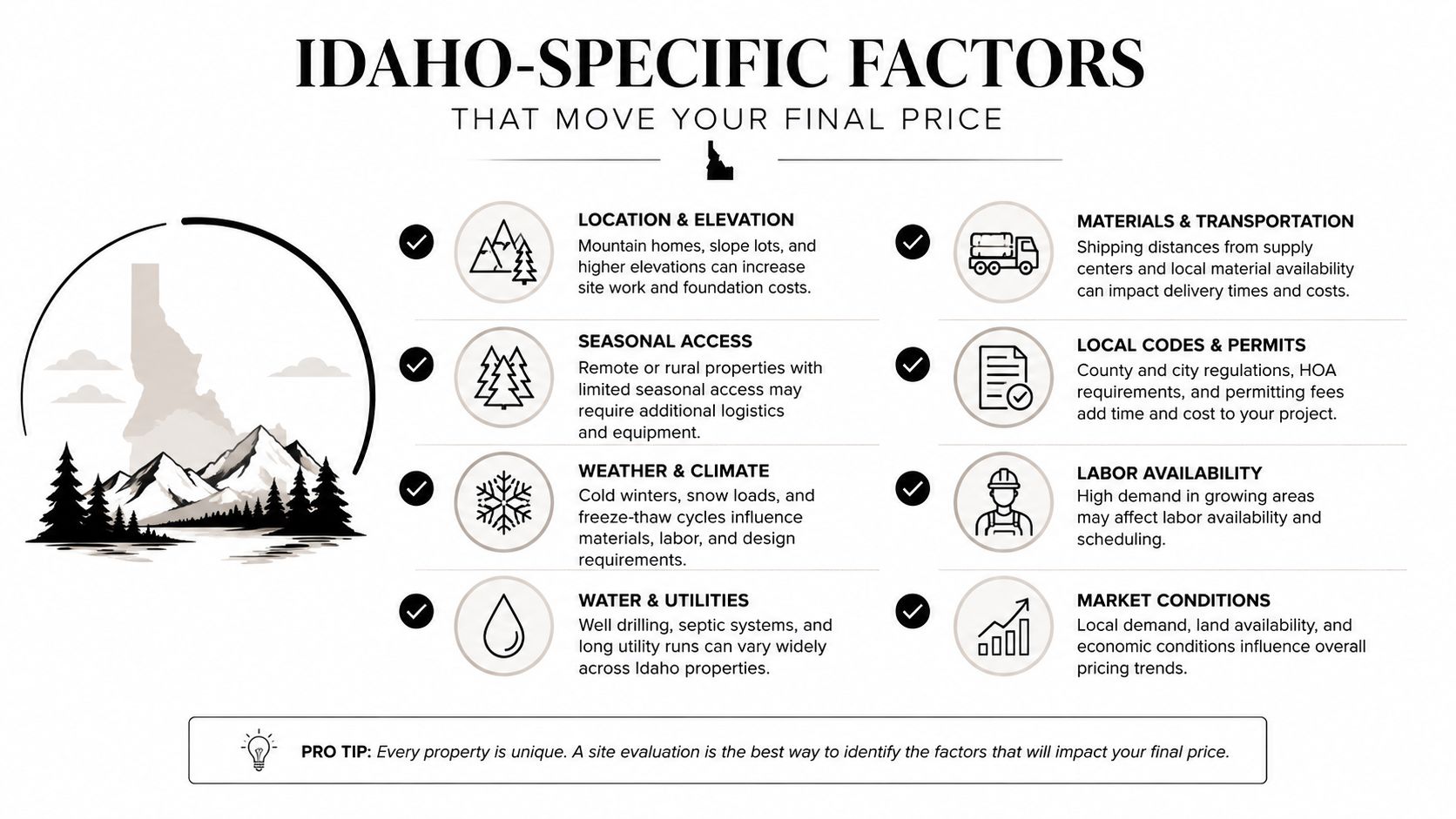
The same vinyl window can produce different project totals in Boise, Meridian, Eagle, Nampa, or a rural Idaho community. The opening condition, installer availability, municipality, and finish requirements all matter. A clean insert replacement is a different job from a full-frame tear-out with damaged sill framing.
Treasure Valley weather also influences the product discussion. Hot summers and cold winters make air sealing, weatherstripping, and glass performance important. That doesn't mean every opening needs the most expensive package. It means the quote should identify where a performance upgrade solves a real comfort problem.
Check the opening before accepting the price
Older Boise homes can contain rotted sills, failed exterior trim, or rough openings that aren't square. Specialty sizes can also take longer to manufacture and may require custom fabrication. HOA requirements in communities such as Avimor or Harris Ranch can restrict exterior colors and grille patterns, which may force a higher-priced finish or a separate approval process.
Permit requirements vary by municipality. Ask the installer whether the company handles the permit and whether that cost is included in the written bid. Don't assume a replacement window is automatically permit-free because the opening already exists.
Labor demand creates another seasonal variable. Installers often have heavier schedules during the warm construction season, so homeowners who need a specific completion date should request bids early. A winter or shoulder-season quote may be easier to schedule, but the contractor still needs to maintain proper installation standards in cold weather.
Ask before signing: “What happens if you uncover rot, damaged insulation, or a non-square opening?” The answer should describe documentation, approval, and pricing before additional work begins.
A useful quote separates product, glass, labor, disposal, trim, framing repairs, permits, and taxes. That format makes regional differences easier to understand and prevents a low unit price from hiding a large project bill.
Sample Job Estimates for Treasure Valley Homes
A project estimate becomes useful when it resembles your house. The following examples use the required window counts, specifications, and scope assumptions to show how the price can move from a basic replacement into a custom installation.
| Project Scenario | Window Count | Glass Package | Installed Cost Range |
|---|---|---|---|
| Boise North End starter home | 10 | Low-E plus argon, mostly double-hung with one picture window | $3,800 to $8,000 |
| Meridian two-story home | 15 | Triple-pane on south and west exposures, casements, sliding door replacement, trim wrap | $9,500 to $14,500 |
| Eagle custom home | 20 | Triple-pane, foam-filled frames, upgraded vinyl, wood-look interior laminate, full-frame tear-out | $18,000 to $28,000 |
The Boise example represents a relatively straightforward project. It includes standard double-hung vinyl units, basic white interiors, Low-E plus argon glass, and one large living-room picture window. The range reflects the difference between a clean replacement scope and a quote with more involved trim or installation work.
The Meridian project costs more for clear reasons. It has a second-story component, a stronger glass package on selected exposures, casements in the kitchen, a sliding glass door, and trim wrap. Combining different products in one order can improve the home, but it also requires a contractor to coordinate several installation details.
The Eagle example is a custom project rather than a basic insert replacement. Full-frame tear-out due to rot, foam-filled frames, upgraded interior finishes, and triple-pane glass create a substantially different labor and material scope.
Specialty shapes, basement egress windows, and custom exterior colors can push totals 15% to 25% above these ranges, as reflected in the supplied project assumptions. Treat these examples as budgeting tools, not promised bids. Exact measurements and opening inspections still control the final price.
Rebates, Financing, and Choosing the Right Installer
Rebates can change the economics of a vinyl replacement, but only when the product qualifies and the paperwork matches the installation. Start with the utility serving the address. Avista's Idaho program lists $180 per window for electric-heated homes and $45 per window for natural-gas-heated homes on qualifying contractor-installed products, as covered earlier.
Ask the contractor to identify the required U-factor on the actual NFRC label. Don't accept “energy efficient” as a substitute for a documented specification. The rebate application may also require an itemized invoice, proof of installation, and product information.
Compare payment routes carefully
Financing can make a project easier to manage, but the interest rate, promotional period, fees, and deferred-interest terms matter more than the monthly payment shown in an advertisement. Ask about contractor financing, home-equity lines, and Idaho Housing and Finance Association HEEL loans for income-qualified homeowners. A HELOC may offer flexibility, but it uses home equity and should be evaluated with the same care as any secured borrowing.
Federal tax-credit rules can change, so confirm current eligibility and filing requirements before counting a credit in your budget. This Idaho window replacement tax credit guide can help you identify the questions to raise with your tax professional.
Verify the installer, not just the sample window
Use a short qualification checklist:
- Registration: Check the Idaho Contractor Registration lookup.
- Insurance: Request proof of liability and workers' compensation coverage.
- References: Ask for three local references with similar replacement scopes.
- Performance labels: Require a written NFRC label for every window quoted.
- Trade involvement: Look for relevant AGCI or HBA membership, then verify the company's actual registration and insurance.
- Warranty terms: Read whether labor, glass seals, hardware, and transferability are covered.
A professional quote should explain who obtains permits, who handles disposal, how change orders work, and what the crew will repair if the rough opening is damaged.
Your Next Steps Toward an Accurate Idaho Quote
Start with a rough window count and basic measurements. You don't need contractor-grade precision, but recording width, height, operating style, floor level, and visible damage will make the first conversations more productive. Note fogged glass, sticking sashes, soft sills, and openings that face strong afternoon sun.
Then request at least three Treasure Valley quotes. Give every estimator the same project brief and ask for an itemized bid separating:
- Window units: Brand, series, frame material, color, and operating style.
- Glass package: Pane count, Low-E configuration, gas fill, and NFRC values.
- Installation: Removal, shimming, insulation, air sealing, and setting the new unit.
- Finish work: Interior trim, exterior capping, paint touch-up, and framing repairs.
- Hauling: Removal and disposal of old windows and job debris.
Ask each estimator about lead time for the specific product, whether the crew pulls permits in Boise, Eagle, Meridian, or Nampa, and whether the warranty transfers if you sell the home. Make sure every bid uses the same NFRC performance values and the same definition of interior trim repair. Otherwise, you'll compare different scopes instead of different prices.
Use the next few weeks to decide where performance matters most. A basic vinyl replacement may fit a rental or a clean, shaded opening, while Low-E, argon, or triple-pane glass may make more sense for exposed living areas and rooms with comfort complaints. Schedule before the late-spring rush if timing matters, and choose the installer who explains the work clearly rather than the one who presents the lowest first number.
C & C Windows & Doors provides free in-home consultations, custom measurements, itemized replacement quotes, and debris-free installation for Boise and Treasure Valley homeowners. To compare vinyl window packages, rebate-ready performance options, and installation scope for your home, visit C & C Windows & Doors.