
You're sitting at a kitchen table in Meridian with two window quotes in front of you. One is for double-pane vinyl. The other is for triple-pane glass. The numbers are far enough apart that the decision feels less like a product comparison and more like a wager on your home, your utility bills, and Idaho winters.
The answer to are triple pane windows worth it in Idaho depends first on what you're replacing. Triple pane is a strong recommendation when failed single-pane or poorly performing aluminum windows are coming out. It's a much harder financial decision when your existing double-pane windows still seal, operate, and keep the rooms reasonably comfortable.
Idaho's cold-window requirements, Boise's winter design conditions, noise exposure, installation quality, and warranty terms all matter. The straight answer isn't “triple pane is always better.” It's to compare the right upgrade against the right starting point.
Table of Contents
- The Decision Treasure Valley Homeowners Are Making
- What Triple Pane Windows Are
- How Idaho's Climate Changes the Math
- Energy Savings and Payback for Idaho Homes
- Triple Pane Versus Double Pane Side by Side
- When a Third Pane Does Not Fix the Noise Problem
- Choosing the Right Idaho Installer for the Job
The Decision Treasure Valley Homeowners Are Making
A homeowner in Eagle recently faced two quotes for the same ten openings: double-pane vinyl at $9,400 and triple-pane windows at $13,600. The estimator also said the added cost would not come back through energy savings alone. That advice may be accurate, but it is incomplete without knowing what the existing windows are doing.
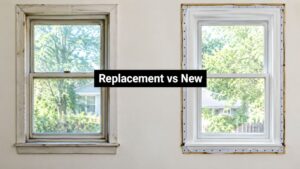
Start with the window condition. Failed single-pane aluminum units leave a large performance gap. They create drafts, cold interior glass, and greater heat loss. Replacing them with triple pane can address comfort, condensation, and noise in one project. The recommendation changes when existing double-pane windows still seal, operate, and keep rooms reasonably comfortable. Much of the insulation improvement is already in place, so the third pane has less work left to do.
Idaho is not one uniform market. Most of the state falls within ENERGY STAR's Northern window zone, where the maximum U-factor is 0.27, while southern Idaho uses a North/Central target of 0.30, according to Idaho climate and window guidance. Boise's reported 99% heating design temperature is about 16°F, so cold glass and heat loss become practical comfort concerns during winter nights.
Six questions to answer before signing
- What's the climate-zone fit? Choose a window labeled for Idaho's applicable ENERGY STAR zone, not one advertised only as “energy efficient.”
- What condition are your current windows in? Failed seals, drafts, condensation, rotted frames, and conductive aluminum all strengthen the case for replacement.
- What does the payback look like? Compare the added triple-pane cost with savings from the actual starting condition, not a theoretical new-home comparison.
- Is noise the priority? Pane count alone does not determine acoustic performance. Glass thickness, lamination, frame design, and air sealing also matter.
- Who's installing the units? Poor shimming or incomplete air sealing can limit the performance of a high-rated window.
- What does the warranty cover? Confirm coverage for labor, hardware, glass seal failure, and installation defects.
Kitchen-table rule: Triple pane earns its premium when it solves several problems at once, including failed windows, cold rooms, condensation, and noise. It is harder to justify when the only goal is lowering bills on already-good double-pane glass.
Your starting window condition should determine the recommendation. Failed single pane supports a stronger triple-pane case. Good double pane calls for a closer look at comfort, noise, and the actual added cost.
What Triple Pane Windows Are
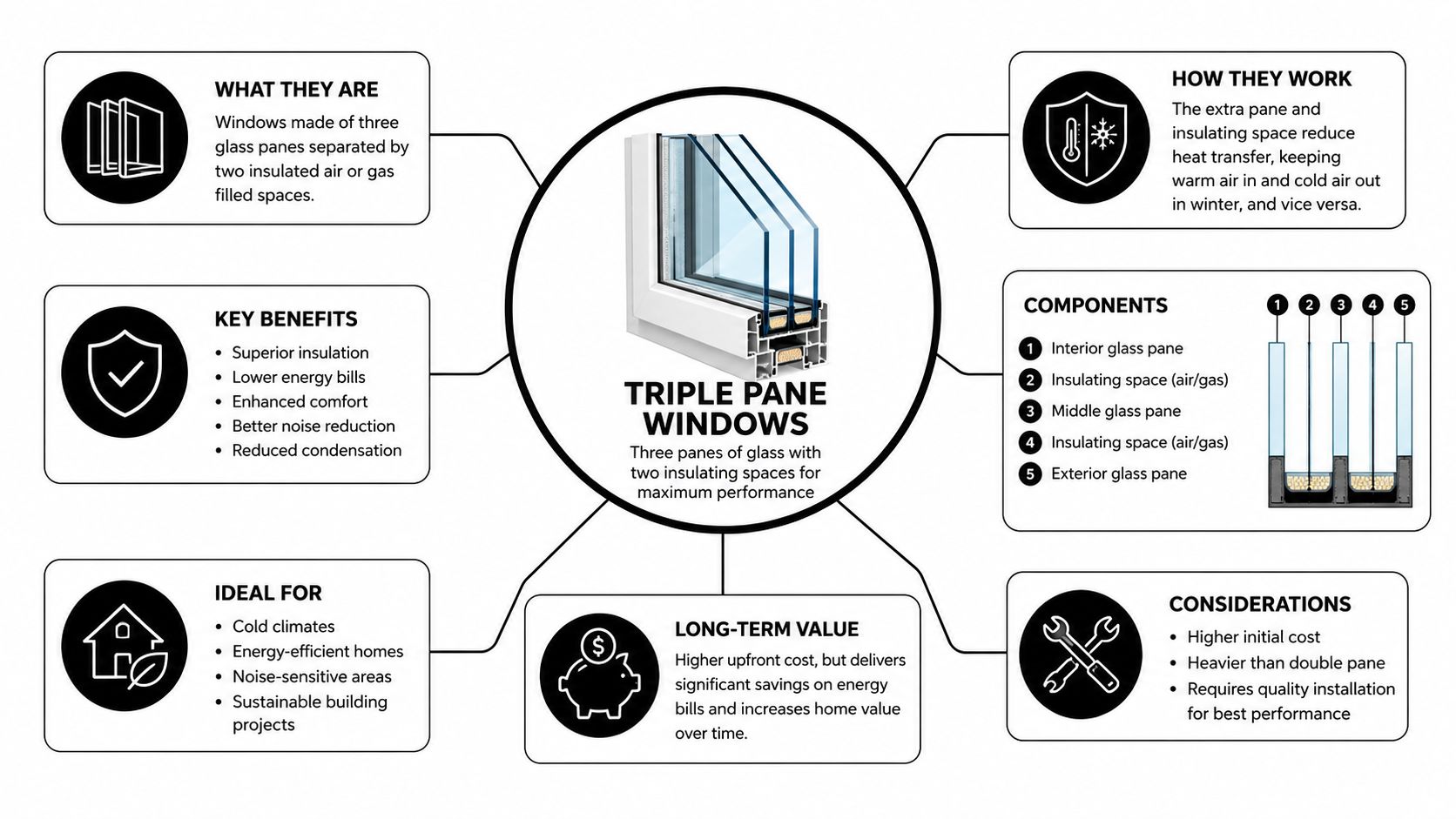
A triple-pane window uses three layers of glass and two insulating cavities. The cavities are usually filled with air or an insulating gas such as argon. A spacer system seals the perimeter and keeps the lites separated. Together, the glass, coatings, gas fill, spacers, and frame form one glazing assembly.
The third lite creates a second insulating pocket. It does not provide the full performance alone. Instead, it gives the manufacturer another barrier against heat transfer, helping the window outperform a comparable double-pane unit. A low-E coating, quality spacer, appropriate gas fill, and thermally designed frame determine how well the finished window performs.
The ratings that matter
U-factor measures how readily heat moves through the complete window unit. Lower is better. Many triple-pane units fall around 0.18 to 0.22, while comparable double-pane products typically have higher U-factors, according to the PNNL high-performance window guide.
Against a January night near Boise's 16°F design temperature, a lower-U-factor window keeps the interior glass warmer and slows heat leaving the room. That can reduce the radiant chill and cold downdrafts you feel beside large windows. It does not eliminate heat loss. It makes the glazing assembly resist that transfer more effectively.
Solar Heat Gain Coefficient, or SHGC, measures how much solar heat enters through the window. U-factor describes heat leaving the home, while SHGC describes sunlight entering it. In Idaho's heating-dominated climate, a south-facing window with a sensible SHGC can add useful winter warmth. East- and west-facing glass requires more attention to summer overheating.
The frame can change the result. A low-cost triple-pane unit with a conductive or poorly insulated frame may perform worse than a well-designed double-pane window with a stronger thermal frame. Review the whole-unit NFRC ratings, not only the center-of-glass value. Confirm the frame, spacer, low-E coating, and gas fill match Idaho's climate. A third pane is valuable only when the complete window is designed and installed as a high-performing system.
How Idaho's Climate Changes the Math
Idaho's climate makes triple pane relevant, especially in the Treasure Valley. ENERGY STAR's Northern zone sets a maximum U-factor of 0.27 for much of the state, while southern Idaho falls within a North/Central target of 0.30, according to Idaho-specific zone guidance. These benchmarks explain why stronger insulation fits Idaho better than a mild-climate recommendation.
Boise's heating design temperature is about 16°F. On nights near that temperature, the difference between indoor and outdoor conditions increases heat loss through the glass. Better-insulated windows can keep interior glass warmer, reduce cold radiant surfaces, and improve comfort near large windows.
Idaho climate data by region
| Region | ENERGY STAR Zone | Heating Design Temp | Annual HDD |
|---|---|---|---|
| Treasure Valley | Northern | About 16°F in Boise | Not specified in verified data |
| Southern Idaho | North/Central | Varies by location | Not specified in verified data |
| Eastern and northern Idaho | Cold-climate zones vary by location | Colder in many inland and northern areas | Not specified in verified data |
The table supports a regional recommendation rather than one statewide rule. Colder inland and northern locations can place greater value on heat retention and condensation resistance. In the Treasure Valley, foothill exposure, overnight inversions, and temperature swings can make poorly insulated glass feel uncomfortable even when the thermostat shows a normal indoor temperature.
Cooling also matters. Triple pane reduces conductive heat transfer in both directions, but the right glass package depends on window orientation, exterior shading, frame quality, and the home's heating and cooling equipment. Certified ENERGY STAR windows, doors, and skylights can reduce heating and cooling bills by up to 13% on average nationwide, according to the PNNL technical guidance. Treat that figure as national context, not a Boise-specific promise.
The starting condition of the windows determines the value. Replacing failed single-pane or aluminum units can address drafts, cold glass, and condensation while improving efficiency. Upgrading already-good double pane windows may improve comfort, but the added performance has less room to repay its premium.
Practical conclusion: Boise is cold enough for a third pane to provide a meaningful comfort benefit. The financial case depends on the windows being replaced, not Idaho's climate alone.
Energy Savings and Payback for Idaho Homes
The payback depends first on the window you are replacing. Failed single-pane or poor aluminum units represent an efficiency repair. Serviceable double-pane windows represent a performance upgrade. Applying one payback expectation to both projects gives Treasure Valley homeowners the wrong answer.
A 2024 field-and-lab validation study found that upgrading from double-pane to thin triple-pane windows produced average whole-home heating savings of 12% and cooling savings of 27%, as reported in the 2024 validation study. The same research cited a DOE estimate of roughly 2 quadrillion Btu in potential energy savings from triple-glazed windows at R-5 to R-7 performance levels. These results confirm that triple pane can reduce energy use, but they do not promise the same return in every Idaho home.
Scenario one, failed single-pane or aluminum windows
This is the clearest case for triple pane. If the existing units leak air, feel cold, show condensation, or use conductive aluminum frames, replacement improves more than the center-of-glass U-factor. New units can reduce drafts, make rooms more comfortable, and fix windows that are difficult to operate.
Compare the project with the full replacement cost, not only with the triple-pane premium. If the homeowner needs new windows regardless, spending more on triple pane can be sensible in a cold climate, especially in exposed rooms, bedrooms, and homes using electric heat.
Scenario two, serviceable double-pane windows
The financial case is weaker. A sound double-pane window already has an insulating cavity, a modern frame, and a functioning seal. Triple pane can improve interior-glass temperature and peak-load performance, yet the added utility savings may take a long time to recover the upgrade cost.
| Scenario | Starting Window | Heating Savings % | Annual $ Saved (Gas) | Project Cost (10 windows) | Payback Years |
|---|---|---|---|---|---|
| Failed-window replacement | Single-pane or poor aluminum | Qualitatively higher than a double-to-triple upgrade | Depends on home and fuel use | Must be quoted locally | Depends on baseline |
| Performance upgrade | Serviceable double-pane | Average whole-home heating savings of 12% in the cited validation study | Depends on usage and utility rates | Must be quoted locally | Depends on incremental cost |
Use this window savings guide for estimating replacement-window savings to separate savings from the entire replacement project from the smaller gain produced by upgrading one modern window package to another.
Do not base the decision on assumed fuel costs. Gas pricing, electric rates, furnace efficiency, heat-pump performance, insulation, air leakage, and window orientation all change the result. DOE-referenced research reported that moving a new home from double pane to triple pane can improve window energy efficiency by 40% or more, while reducing perceived noise by about half. That result supports the technical value of triple pane, but a new-home comparison does not equal replacement savings from an existing, well-performing window.
My verdict: choose triple pane confidently when failed windows already require replacement. If your double-pane windows are sound, buy triple pane for comfort, condensation resistance, or noise goals, not on the expectation of a short energy-only payback.
Triple Pane Versus Double Pane Side by Side
For Treasure Valley homeowners, the starting condition matters more than the pane count. Replacing failed single-pane or badly performing windows makes triple pane easier to justify. Upgrading sound double-pane windows is a different calculation, because the added performance comes from one modern package replacing another.
| Factor | Triple Pane | Double Pane |
|---|---|---|
| Thermal performance | Many technical summaries place qualifying units around 0.18 to 0.22 U-factor | ENERGY STAR Northern-zone target is 0.27 maximum |
| Winter comfort | Warmer interior glass and stronger resistance to conductive heat loss | Good performance when the unit is selected and installed correctly |
| Noise control | Can reduce perceived noise, but glass configuration determines the result | Can perform very well with laminated or asymmetric glass |
| Cost | Higher upfront price, with heavier sash and hardware requirements | Lower initial cost and simpler handling |
| Best use | Cold rooms, exposed façades, condensation concerns, and all-electric homes | Sound replacement projects where adequate performance and value lead |
| Resale | Can support a higher-performance package in newer construction | Practical, neutral choice when properly installed |
A technical comparison of double-pane and triple-pane windows for Idaho winters should begin with whole-unit ratings, not the pane count on a sales proposal. Check the ENERGY STAR label, NFRC U-factor, air-leakage rating, condensation resistance, and SHGC. Those details describe the window's actual performance more clearly than “premium triple pane.”
Where triple pane earns the premium
Triple pane is strongest in large picture windows, rooms with substantial exterior exposure, and bedrooms where cold interior glass affects comfort. It also fits homes where condensation resistance matters. In an all-electric home, reducing heat loss during winter demand can add value, although the savings still depend on the home and its heating system.
The heavier sash deserves attention. More glass increases hardware loads, complicates installation handling, and can limit the practical size of operable units. Older frames and wall openings may require more careful adjustment than a standard double-pane replacement.
Where double pane is the better buy
If existing double-pane windows operate properly, have intact seals, and do not create cold-room complaints, keep double pane at the top of the list. The incremental gain from triple pane is usually harder to justify than the improvement from replacing failed windows. Use the remaining budget for air sealing, attic insulation, exterior shading, or targeted laminated glass when those measures address the actual problem.
Treat replacement savings separately from the smaller gain produced by upgrading one modern window package to another. The window savings guide for estimating replacement-window savings helps frame that distinction without assuming fuel costs.
Resale value should not decide the project by itself. Triple pane may strengthen a newer home's performance package, but the full premium may not return at closing. Choose it for measurable comfort, condensation control, or a specific exposure problem, not for a guaranteed resale payoff.
When a Third Pane Does Not Fix the Noise Problem
Triple pane is not soundproof. The extra lite and gas space can reduce sound transmission, and some research has found a substantial reduction in perceived noise. That does not make traffic, aircraft, lawn equipment, or industrial noise disappear.
Glass geometry matters more than the sales label. Three lites with similar thicknesses can create resonance paths that a carefully specified double-pane unit avoids. The frame, sash, seals, installation gaps, and wall construction also determine how much outdoor sound reaches the room.
Noise control is a package
A homeowner near a busy Boise arterial may get better results from laminated glass than from a standard triple-pane unit. Lamination adds a sound-damping layer between glass sheets, while asymmetric glass thicknesses can disrupt resonance. An airtight frame and careful perimeter sealing keep sound from bypassing the glass through leakage paths.
Near a flight path, industrial area, or heavily traveled corridor, require a project-specific acoustic specification. Ask the installer for the complete STC rating of the proposed window and identify the glass configuration that produces it. “Triple pane is quieter” is not enough information to approve the job.
Noise rule: If sound reduction is your main reason for replacing windows, specify laminated glass and airtight frame sealing first. Then decide whether the thermal benefit of a third pane justifies the remaining premium.
A well-designed double-pane window with dissimilar glass thicknesses may outperform a basic triple-pane product for a particular noise source. The right choice depends on frequency, direction, glass area, and installation quality. Triple pane can help, but it is only one part of the acoustic assembly. For a Treasure Valley homeowner replacing failed single-pane windows, that added glass may improve comfort and noise control together. For someone upgrading already-good double pane, laminated or asymmetrical glass may target the noise problem more effectively.
Choosing the Right Idaho Installer for the Job
A high-performing window installed badly can feel like a cheap window. Poor shimming, incomplete insulation, weak perimeter sealing, or an incorrect replacement method can undermine the product's ratings and create drafts that no third pane can solve.
Use a written checklist before signing. The guide to choosing a window company in Boise can help organize the questions, but the proposal itself should contain the technical details.
Pre-signing vetting checklist
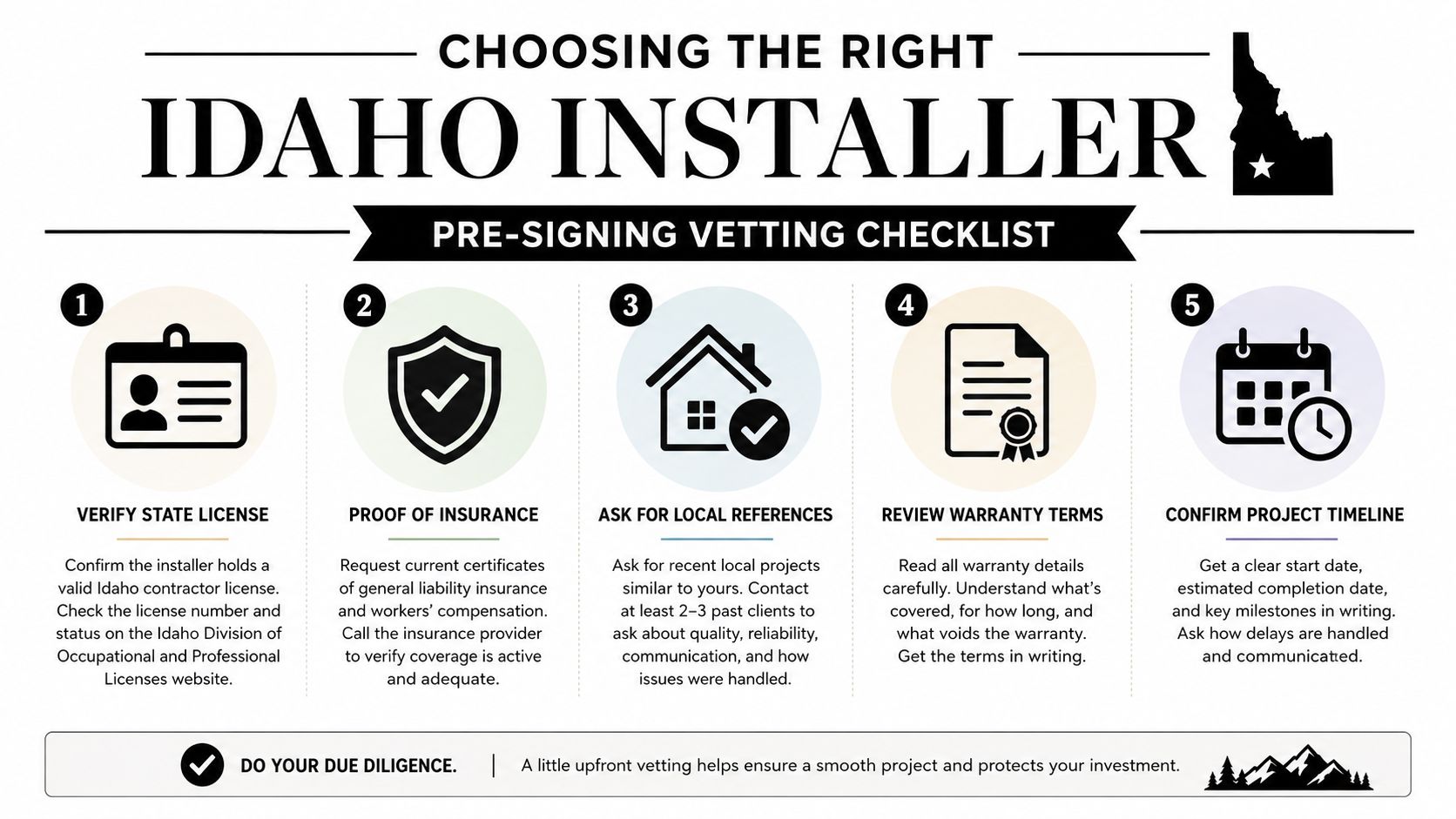
- Verify the Idaho contractor registration. Ask for the registration information and confirm the business identity before work begins.
- Request the NFRC label. Every proposed window should have ratings for the complete unit, including U-factor, SHGC, visible transmittance, and air leakage.
- Confirm the climate-zone qualification. ENERGY STAR says homeowners should identify their climate zone and select products labeled for that zone. The official ENERGY STAR window guidance explains how the label and product finder help match a product to its qualifying zone.
- Put the glass package in writing. The contract should identify low-E coatings, argon gas fill, spacer type when specified, frame material, and the exact product line.
- Clarify installation method. Confirm whether the job uses insert replacement or full-frame replacement, and document how the installer will handle trim, insulation, flashing, and interior finishes.
- Read the labor warranty. A glass warranty alone isn't enough. Ask whether installation labor, hardware, seal failure, water intrusion, and service calls are covered.
- Discuss the weight. Triple-pane sashes are heavier. Ask whether existing rough openings, frames, hinges, locks, and operating hardware need reinforcement or adjustment.
- Check local references. Look for comparable Boise, Meridian, Eagle, Nampa, Caldwell, or nearby Treasure Valley installations, not only general remodeling references.
Pressure pricing is a warning sign. So is a quote that omits installation details, provides no NFRC documentation, or treats every opening as a standard replacement despite older Boise-area wall depths and trim conditions.
Get three itemized quotes and compare the same window specifications across all of them. The lowest price isn't the lowest cost if it leaves you with unclear warranty coverage or an installation problem.
For most Treasure Valley homeowners, the recommendation is straightforward. Replace failed single-pane or conductive aluminum windows with a properly specified triple-pane package when comfort, condensation resistance, and winter performance justify the investment. Keep sound double-pane windows, or replace them with quality double pane, when the proposed upgrade is driven only by an uncertain energy payback.
C & C Windows & Doors offers climate-focused window and patio-door replacements, custom measurements, and meticulous installation for Treasure Valley homes. If you're comparing double pane with triple pane, visit C & C Windows & Doors for a free in-home consultation and a quote built around your existing window condition, comfort priorities, and Idaho climate.