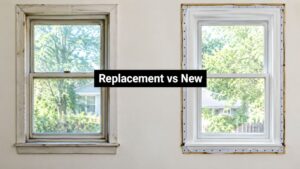

A January draft in a Boise living room can make a perfectly functional furnace feel inadequate. Then July arrives, and the same room absorbs afternoon sun until it feels like a greenhouse. If that pattern sounds familiar, your windows may be forcing your heating and cooling systems to work harder than necessary.
Choosing energy efficient windows in Boise, Idaho requires more than selecting a product labeled “efficient.” Boise homes need protection from winter heat loss and summer solar gain. The right replacement depends on the whole-window U-factor, the SHGC, the glass package, the frame, the room's orientation, and the quality of installation.
Table of Contents
- Why Boise Homeowners Are Rethinking Their Windows Right Now
- The Performance Metrics That Actually Matter
- How the Treasure Valley Climate Shapes Your Specs
- Window Styles and Glass Packages Worth Considering
- Matching Low U-Factor with the Right SHGC for Each Exposure
- Realistic Costs, Rebates, and Payback Timelines
- What Installation Looks Like From Consult to Final Walkthrough
- Putting It All Together and Choosing a Local Team You Trust
Why Boise Homeowners Are Rethinking Their Windows Right Now
A North End homeowner might notice the problem in small ways first. The chair beside the front window feels colder than the rest of the room, the furnace cycles frequently, and one bedroom never seems to match the temperature of the hallway. By mid-July, the living room has the opposite problem. Sun pours through clear glass, the floor warms, and the air conditioner runs while the rest of the house feels comfortable.
That seasonal swing reflects Boise's mixed heating and cooling demands. NOAA/NWS climate information shows Boise experiences substantial heating degree days as well as annual cooling degree days in the 800–1,200-plus range, depending on the reporting period and base temperature (Boise climate data from NOAA/NWS). The practical takeaway is simple: a window replacement project should address both heat escaping in winter and solar heat entering in summer.
The comfort problem is often room-specific
Older single-pane windows, clear glass, worn seals, and poorly fitted frames can create noticeably different conditions from room to room. A west-facing great room may overheat in the afternoon, while a north-facing bedroom loses warmth overnight. Drafts can also make homeowners raise the thermostat, even when the furnace itself is operating correctly.
Homeowners are also paying closer attention to window age when preparing a property for sale. A window that looks acceptable from the street may still raise questions about drafts, condensation, noise, operation, or future replacement costs during a buyer's inspection.
Practical rule: Treat window replacement as a whole-home comfort decision, not simply a glass upgrade.
The strongest Boise specifications balance insulation, solar control, air sealing, and installation details. That means comparing certified performance data rather than relying on broad claims such as “premium,” “weatherproof,” or “high efficiency.” Once those terms are translated into measurable characteristics, homeowners can request products that suit their actual elevations and rooms.
The Performance Metrics That Actually Matter
Start with the metric that addresses winter heat loss: U-factor. It measures heat flow through the entire window unit, including the glass, frame, edge-of-glass area, spacers, and sealants. A lower U-factor means the window allows less heat to pass through, similar to how a thicker sweater slows heat leaving your body. The technical explanation of fenestration performance makes clear why the whole-unit rating matters more than a glass-only claim.
SHGC, or solar heat gain coefficient, answers a different question. It measures the fraction of solar energy that enters through the window. Lower SHGC acts like a sun hat, reducing the amount of heat the glass admits. That can help on sunny south- and west-facing rooms, but an extremely low SHGC on every elevation may also reduce useful winter solar gain.
Build the glass package one layer at a time
Low-E coatings control how radiant heat moves through the glass. Standard Low-E products can reduce unwanted heat transfer, while spectrally selective coatings are designed to admit selected portions of daylight while limiting more solar heat. Boise's strong seasonal contrast makes that distinction useful, especially where afternoon sun creates overheating.
Inert gas fills, commonly argon and sometimes krypton, reduce convection inside insulated glass units. The gas doesn't replace a good seal or frame, but it can complement a well-designed double-pane or triple-pane package.
Double-pane construction remains a practical choice for many replacement projects. Triple-pane construction adds another insulating layer and may be appropriate where winter exposure, comfort, or outside noise deserves extra attention. The correct choice still depends on the opening, frame, orientation, budget, and whole-window rating. A certified window that seals properly can outperform a heavier package installed poorly.

Before approving a product, read the full NFRC label. Don't stop at an R-value-style marketing statement. Review the U-factor, SHGC, air leakage, visible transmittance, and condensation resistance where listed. Broader Idaho comfort guidance also emphasizes that drafts, fogging, and noise depend on the frame, spacer, seals, and installation, not just the coating (Idaho energy-efficient window guidance).
How the Treasure Valley Climate Shapes Your Specs
Boise's climate makes window selection a balancing exercise. Heating demand remains important during cold weather, while summer cooling demand and direct sun can create uncomfortable rooms even when the outdoor temperature seems manageable. Degree-day records from NOAA/NWS Boise climate reporting support treating windows as a year-round component of the home's envelope.
Boise is commonly placed in IECC Climate Zone 5, while nearby mountain areas can have different conditions. Idaho-specific guidance also notes that the state spans multiple climate zones, so homeowners shouldn't assume one Idaho-wide specification applies to every ZIP code. Idaho Power guidance recommends ENERGY STAR windows, double-pane construction, Low-E coatings, insulated sashes, spectrally selective coatings, and inert gas filling. That guidance identifies a U-value of 0.30 or less and an SHGC of 0.30 or less, with lower values performing better (Idaho window guidance for Boise's climate).
ENERGY STAR's current residential criteria are zone-specific. The Northern zone allows qualifying windows with a U-factor of 0.22 or lower, while the Central zone prescriptive path allows a U-factor up to 0.30 with an SHGC of 0.25 or lower (ENERGY STAR residential window criteria). Those figures shouldn't be copied blindly onto every Boise opening. Confirm the applicable zone and product path on the certification documentation.
| Metric | IECC Climate Zone 5 Target | ENERGY STAR 7.0 Most Efficient | Boise Practical Target |
|---|---|---|---|
| U-factor | 0.30 or lower in common Boise guidance | Zone and path specific | Choose a low whole-window rating suited to the opening |
| SHGC | Common guidance uses 0.40 or lower | Central prescriptive path uses 0.25 or lower | Tune by orientation rather than using one value everywhere |
| Construction | Double-pane is a common efficient option | Certified product requirements apply | Compare double-pane and triple-pane whole-window labels |
| Solar control | Important for sunny exposures | Zone-based | Give west-facing rooms special attention |
A window label is more useful than a generic sales description because it shows the actual tested product. Ask the installer to identify the rating for every proposed configuration, especially if different rooms will receive different glass packages.
Window Styles and Glass Packages Worth Considering
Window style affects both daily use and energy performance. A casement window closes against a gasket and can create a tight seal when properly fitted. A double-hung window suits traditional homes and allows controlled opening from the top or bottom. A picture window preserves an expansive view but doesn't provide ventilation, while a slider opens horizontally and can work well where exterior clearance is limited.
| Window Style | Best Room Match | Recommended Glass Package | Energy Strength |
|---|---|---|---|
| Casement | Bedrooms, kitchens, and rooms needing strong ventilation | Low-E double-pane with inert gas, or triple-pane where comfort demands it | Compression seal can limit air movement when installed correctly |
| Double-hung | North End bungalows and traditional bedrooms | Low-E double-pane with an insulated sash | Familiar operation and flexible ventilation |
| Picture | Living rooms and Foothills-facing views | Orientation-tuned Low-E package, with triple-pane considered for exposed rooms | Large uninterrupted glass area, so SHGC deserves close attention |
| Sliding | Basements, offices, and wide horizontal openings | Low-E double-pane with inert gas | Broad view and easy operation, with performance depending on seals |
| Fixed-plus-operating combination | Great rooms and kitchen walls | Coordinated glass ratings by elevation | Combines view, light, and ventilation |
Match the package to the room
An east-facing kitchen receives morning light, so a balanced SHGC can preserve daylight without treating the glass like a west-facing overheating risk. A living room looking toward the Foothills may benefit from a large picture unit with carefully selected solar control. A bonus room over a garage often deserves extra attention to winter comfort because it can sit near more exposed roof and wall areas.
Triple-pane glass shouldn't be selected because it sounds more advanced. It may make sense for a particularly cold bedroom, a heavily exposed elevation, or a room where outside noise matters. In other openings, a well-installed double-pane Low-E unit with argon, a warm-edge spacer, and a strong frame may provide the more sensible balance.
Warm-edge spacer systems reduce heat transfer at the glass edge and can support condensation control. The installer should evaluate the spacer, sash, frame, drainage path, and perimeter seal together. Glass upgrades can't compensate for an opening that isn't square, plumb, sealed, and properly flashed.
Matching Low U-Factor with the Right SHGC for Each Exposure
A single window specification across every side of a Boise home can leave comfort on the table. U-factor is the insulation decision, while SHGC is the solar-control decision. The practical strategy is to pursue a low whole-window U-factor, then tune SHGC according to the compass direction, room use, shading, and heating profile.
Boise-specific guidance places the city in a climate context where winter retention and summer solar control both matter. It also notes that east- and west-facing glass deserves special attention because those exposures can drive afternoon overheating. Lower SHGC reduces solar radiation entering the home, which can reduce cooling demand and peak room temperatures, but using the lowest possible SHGC everywhere can reduce winter passive gains (orientation-specific Boise window guidance).
Consider three common layouts:
- Harris Ranch two-story: A west-facing great room with large glass may need a low SHGC package to control late-day heat, while bedrooms on a shaded north side can use a different balance.
- North End craftsman: Deep front porches may shade some south-facing openings, but unshaded side windows can still need separate evaluation. Traditional double-hungs can retain the home's character while receiving modern insulated glass.
- Meridian new-build: Panoramic rear views often combine several orientations in one room. The glass package should follow the exposure, not the room's overall label.
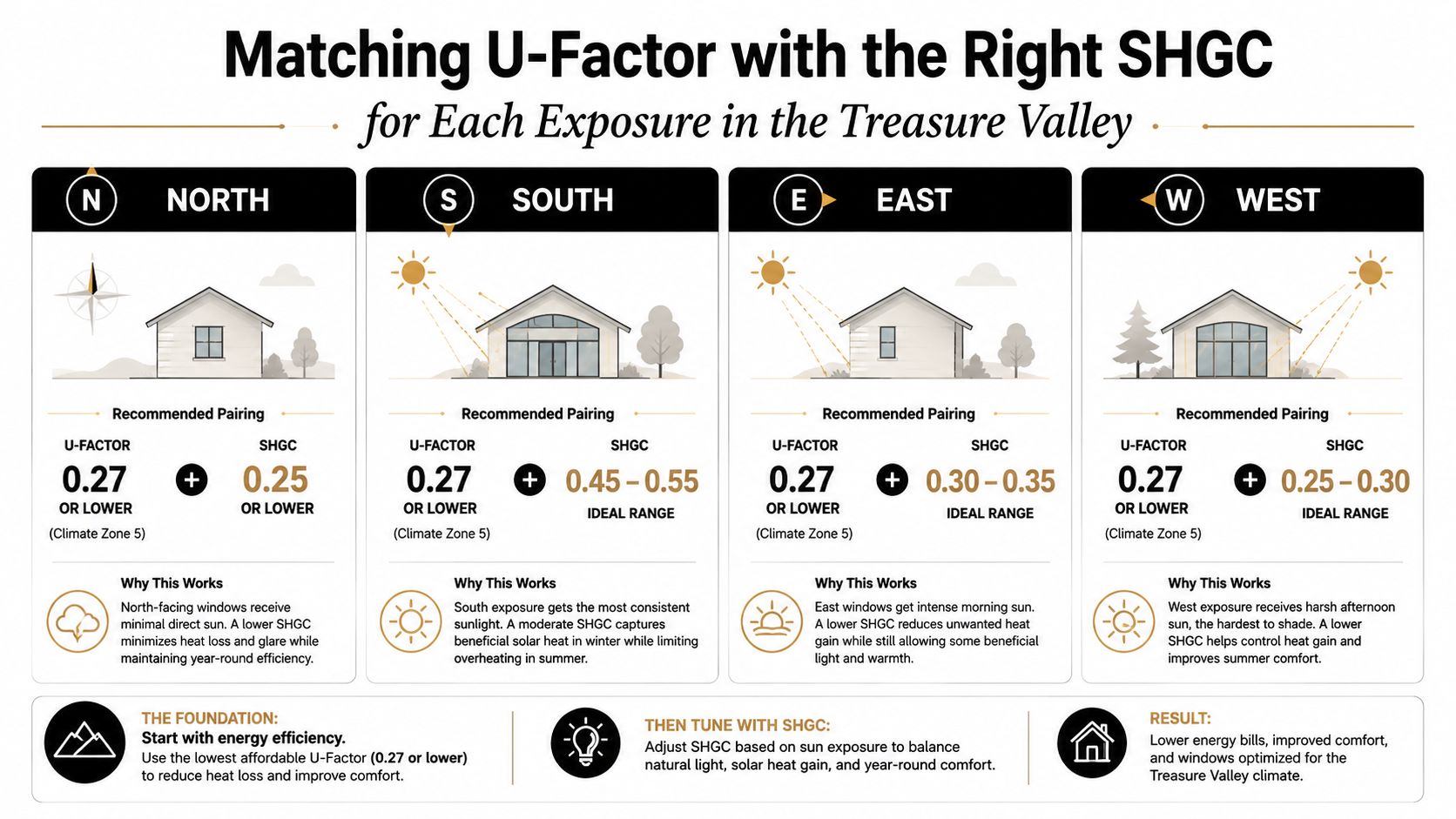
For a Boise replacement discussion, ask for the lowest practical U-factor available within budget and request orientation-specific SHGC options. Don't accept “all windows receive the same glass” as the default without asking why. The best specification may use one package on west-facing rooms, another on shaded north openings, and a balanced choice elsewhere.
Realistic Costs, Rebates, and Payback Timelines
Window efficiency has received dollar-based support in Idaho, but the available incentive depends on the program, property type, installation method, and exact rating. Idaho Power's multifamily program historically listed $0.25 per square foot for Tier 1 windows with a U-factor below 0.30 and above 0.27, $0.50 per square foot for Tier 2 windows at or below 0.27 and above 0.24, and $1.00 per square foot for Tier 3 windows at or below 0.24 (Idaho window rebate information).
For single-family homes, the same Idaho rebate reference identifies Avista contractor-installed rebates of $180 per window for electric-heated homes and $45 per window for natural-gas-heated homes when the replacement meets U-factor ranges from 0.29 to 0.23. Treat these figures as program-specific and verify current eligibility before ordering.
| Glass Package | Installed Cost Per Window | Idaho Power Rebate | Avista Rebate | Federal 25C Credit |
|---|---|---|---|---|
| Double-pane Low-E | Cost varies by opening and installation scope | Program and property specific | May apply under stated eligibility | Verify current product and tax rules |
| Double-pane with argon | Cost varies by frame, size, and configuration | Program and property specific | May apply under stated eligibility | Verify current product and tax rules |
| Triple-pane | Cost varies by design and opening | Program and property specific | May apply under stated eligibility | Verify current product and tax rules |
The safest payback calculation uses your own quote, heating profile, utility history, eligible incentives, and expected service life. Don't promise a fixed savings period from a generic window count. Utility savings can be meaningful, but they depend on the existing windows, air leakage, insulation, shading, thermostat settings, and how much glass faces direct sun.
The federal tax credit also requires current verification. Product qualification, installation details, tax liability, and annual limits can change, so homeowners should review the latest rules with a qualified tax professional. A dedicated guide to the Idaho energy-efficient window tax credit can help organize the questions to ask before signing.
What Installation Looks Like From Consult to Final Walkthrough
A good replacement project starts before anyone removes a sash. C & C Windows & Doors begins with an in-home consultation that records measurements and exposure on each elevation. That matters because a west-facing picture window and a shaded north-facing double-hung shouldn't automatically receive identical recommendations.
The specification stage
The written proposal should identify the proposed U-factor and SHGC for each window, along with the style, glass construction, gas fill, frame, spacer, and installation scope. Before the order is placed, the product details should be checked against the proposal so the certified configuration matches what the homeowner approved.
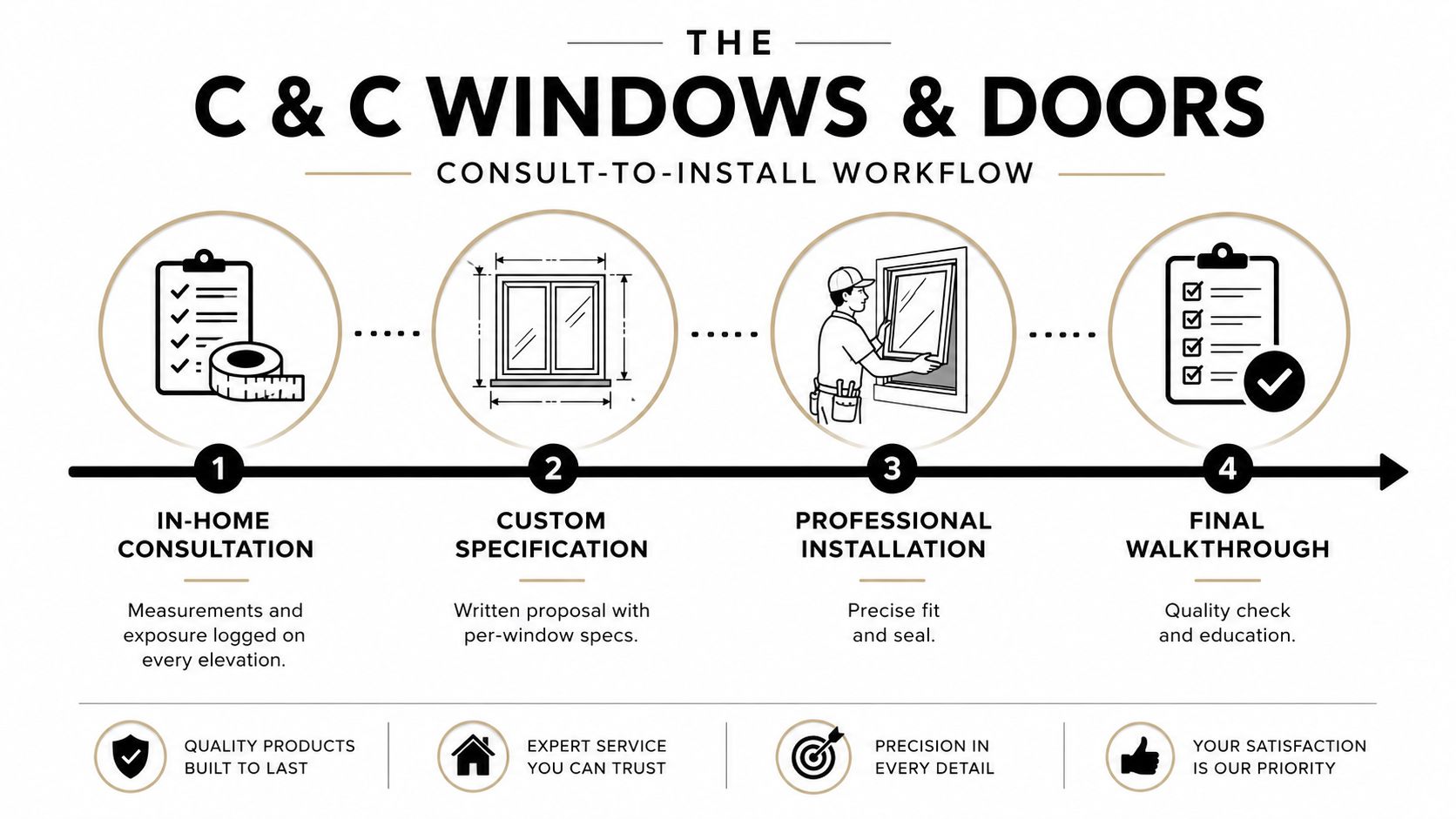
The installation team protects interior trim and manages debris as work progresses. A typical Treasure Valley home may be completed in one to two days, depending on the number and complexity of openings, but the contractor should explain the actual schedule for your property rather than treating that range as a guarantee.
Sealing and homeowner handoff
Climate Zone 5 performance depends on more than the window's label. Installers should address the rough opening with appropriate foam and backer-rod sealing, maintain drainage paths, and finish the exterior and interior trim carefully. A final walkthrough should cover operation, locking points, cleaning, warranty registration, and any curing time for caulk.
Financing through Synchrony involves an application and approval process, followed by the deposit and payment schedule stated in the contract. Ask when the balance is due and what happens if the project encounters concealed damage or a structural issue.
A lifetime limited warranty may cover the frame, glass seal, hardware, and labor for qualifying defects, but coverage depends on the written terms. If a replacement changes a structural opening, confirm Boise or local jurisdiction permit touchpoints before work begins. The project timeline should include ordering, installation, inspection where applicable, final adjustment, and caulk cure.
Putting It All Together and Choosing a Local Team You Trust
The right window isn't the one with the most impressive-sounding label. It's the product that fits the opening, matches the climate zone, controls the sun on that elevation, and gets sealed by an installer who documents the work.
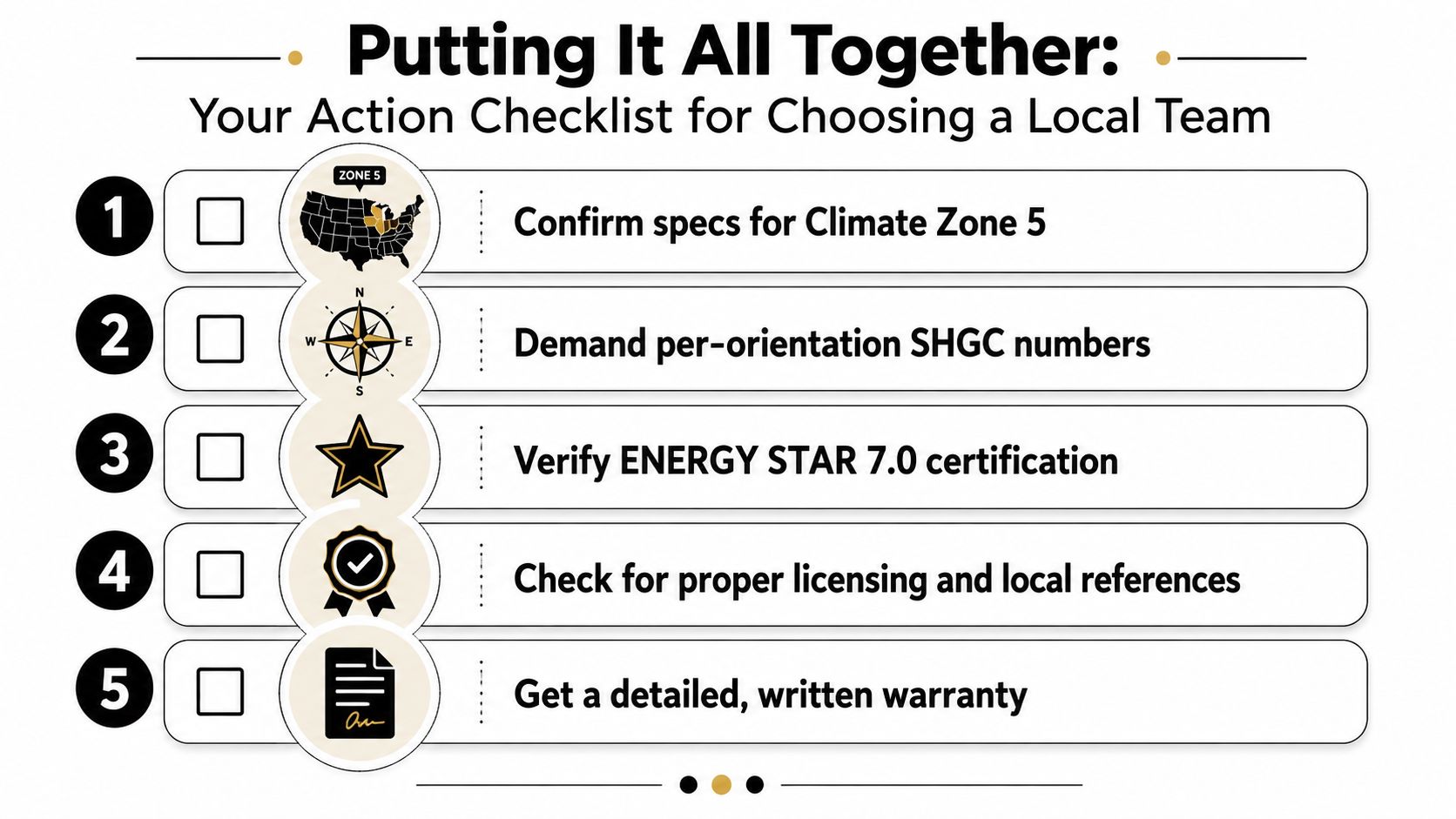
Use this checklist before approving a proposal:
- Confirm the climate zone: Verify that the proposed product and rating path apply to your Boise-area ZIP code and project type. ENERGY STAR advises buyers to determine the climate zone first and request products certified for that zone (ENERGY STAR residential window guidance).
- Demand orientation-specific SHGC values: Ask whether west, south, east, and north openings receive the same glass. If they do, ask the installer to explain the solar-control tradeoff.
- Verify certification: Review the complete label, including U-factor, SHGC, air leakage, visible transmittance, and condensation resistance where available.
- Get an itemized quote: The proposal should call out the window style, whole-window U-factor, SHGC, pane count, Low-E package, gas fill, spacer, installation method, trim, disposal, and permit responsibilities.
- Check installation and warranty terms: Ask who performs the work, what training they receive, how defects are handled, and whether labor is included for qualifying warranty claims.
- Schedule a pre-install walkthrough: Confirm measurements, opening changes, furniture protection, access, payment milestones, and the expected final walkthrough.
A Treasure Valley-based, factory-trained team can also bring practical familiarity with Boise, Meridian, and nearby communities. Local knowledge doesn't replace documentation, but it can make exposure reviews, scheduling, code questions, and post-install service easier to coordinate. Homeowner testimonials may describe comfort or utility-bill changes, but your own baseline and operating habits remain the best way to judge project results.
For more questions to ask before hiring, use this guide to choosing a window company in Boise.
If your Boise home has a cold north room, an overheated west room, or windows that create drafts throughout the year, C & C Windows & Doors offers free in-home consultations, custom measurements, orientation-based specifications, and professional replacement installation. Visit C & C Windows & Doors to schedule a consultation and map the right U-factor, SHGC, glass package, and installation plan for your home.