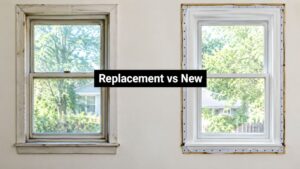

You're probably not shopping for replacement windows because everything is fine. Maybe a bedroom feels cold near the glass, a hazy pane has lost its seal, a casement no longer opens, or you're preparing an Eagle home for market. In the Treasure Valley, those problems usually trace back to aging original windows, poor installation details, or a product spec chosen from a generic national sales sheet.
Eagle Idaho window replacement should be planned around three decisions: the performance tier, the installer, and the total installed cost. Eagle's housing stock commonly includes homes built during the subdivision growth of the 1990s through the 2010s, where original aluminum-frame and early vinyl windows are frequent starting points. The right replacement isn't automatically the most expensive one. It's the window matched to Boise-area heating and cooling demands, the orientation of your home, and the performance thresholds that apply to this part of Idaho.
Table of Contents
- What Eagle Homeowners Need to Know Before Replacing Windows
- How Eagle's Climate Shapes the Right Window Choice
- Energy-Efficient Window Options That Fit Idaho Homes
- Realistic Costs and Payback for Window Replacement in Eagle
- Financing Your Window Replacement Project
- What to Expect During the Installation Process
- How to Choose a Trusted Window Installer in Eagle
- Eagle Window Replacement Questions Homeowners Ask Most
What Eagle Homeowners Need to Know Before Replacing Windows
Start by identifying the problem at the opening, not just the glass. A draft can come from the sash, frame, trim, or surrounding wall assembly. Condensation between panes usually points to failed insulating glass, while a window that binds may indicate hardware wear, frame movement, or an opening that was never installed square.
The three decisions that control the project
Product performance comes first. Ask for the whole-window U-factor and solar heat gain coefficient, not just the center-of-glass rating. The frame, spacers, seals, and installation method all affect what your home experiences.
Installation quality matters just as much. A high-performing window installed into a wet or poorly sealed opening can develop air leakage, moisture damage, and trim problems. The installer should explain how the sill, jambs, head, and exterior flashing will be managed before you sign.
Total installed cost includes more than the window unit. Confirm whether the proposal covers removal, disposal, interior casing, exterior trim, paint, permits if needed, and repairs to damaged framing. Two quotes can look similar until those items are separated.
Practical rule: Never compare window prices until you know whether both proposals describe the same installation scope.
Homes near open foothill areas may experience stronger wind exposure than protected properties closer to the river corridor. That difference can affect the value of stronger hardware, tighter weather seals, and more durable frame systems. A good measurement visit should examine room comfort, window orientation, exterior exposure, and the condition of the surrounding wall.
The local climate also makes a national “maximum efficiency” pitch incomplete. Idaho spans multiple ENERGY STAR climate zones, and the official ENERGY STAR climate-zone search lets homeowners check the requirements for their state and county. Eagle should be evaluated as part of the Boise and Treasure Valley climate context, not grouped with colder northern Idaho locations.
How Eagle's Climate Shapes the Right Window Choice
Boise's heating demand is substantial during winter. One climatological report recorded 967 heating degree days in a single month and 2,624 heating degree days since July 1 during its reporting period, while long-term station data show winter months such as January and December exceeding 1,000 heating degree days in some records. The Boise climatological report from the National Weather Service helps explain why a leaky window is more than a minor nuisance.
Treasure Valley guidance generally places Eagle in a milder North-Central-type band than northern Idaho. That doesn't mean insulation can be ignored. It means the window should balance winter heat retention with sensible solar control, especially on west-facing glass that receives strong afternoon sun.
Match the rating to the exposure
A lower U-factor reduces heat transfer through the whole window. A lower SHGC limits solar heat entering through the glass. ENERGY STAR's product guidance identifies U-factor ≤ 0.30 and SHGC ≤ 0.40 as typical whole-window performance targets for the North and Central Idaho guidance band, while field data from climate zones 5 and 6 show installed window U-factors ranging from 0.24 to 0.35. Review the ENERGY STAR residential window guidance before treating a marketing label as a complete specification.
| Climate Factor | Eagle / Boise Value | Window Spec Target |
|---|---|---|
| Winter heating demand | Boise records show heavy seasonal heating demand | Favor a low whole-window U-factor |
| Summer solar exposure | High-desert sun can overheat west-facing rooms | Use moderate SHGC for solar control |
| Local exposure | Foothill sites can face more wind than sheltered properties | Prioritize tight seals and durable hardware |
| Climate classification | Boise-area conditions differ from colder northern Idaho | Match the product to the county zone |
The local decision isn't “maximum insulation everywhere.” A very low SHGC can reduce unwanted summer heat, but it can also limit useful winter solar gain. For many Eagle homes, the best package depends on direction, shading, room use, and whether the glass sits beneath a roof overhang.
Use the label as a starting point, then inspect each opening. A shaded north-facing bedroom and an unshaded west-facing living room shouldn't automatically receive the same glass strategy.
Energy-Efficient Window Options That Fit Idaho Homes
The upgrades that matter most in Eagle are easy to name, but they don't all deliver the same value in every room. Start with the glass, then evaluate the coating, gas fill, frame, and installation details as one system.
Glass and coating choices
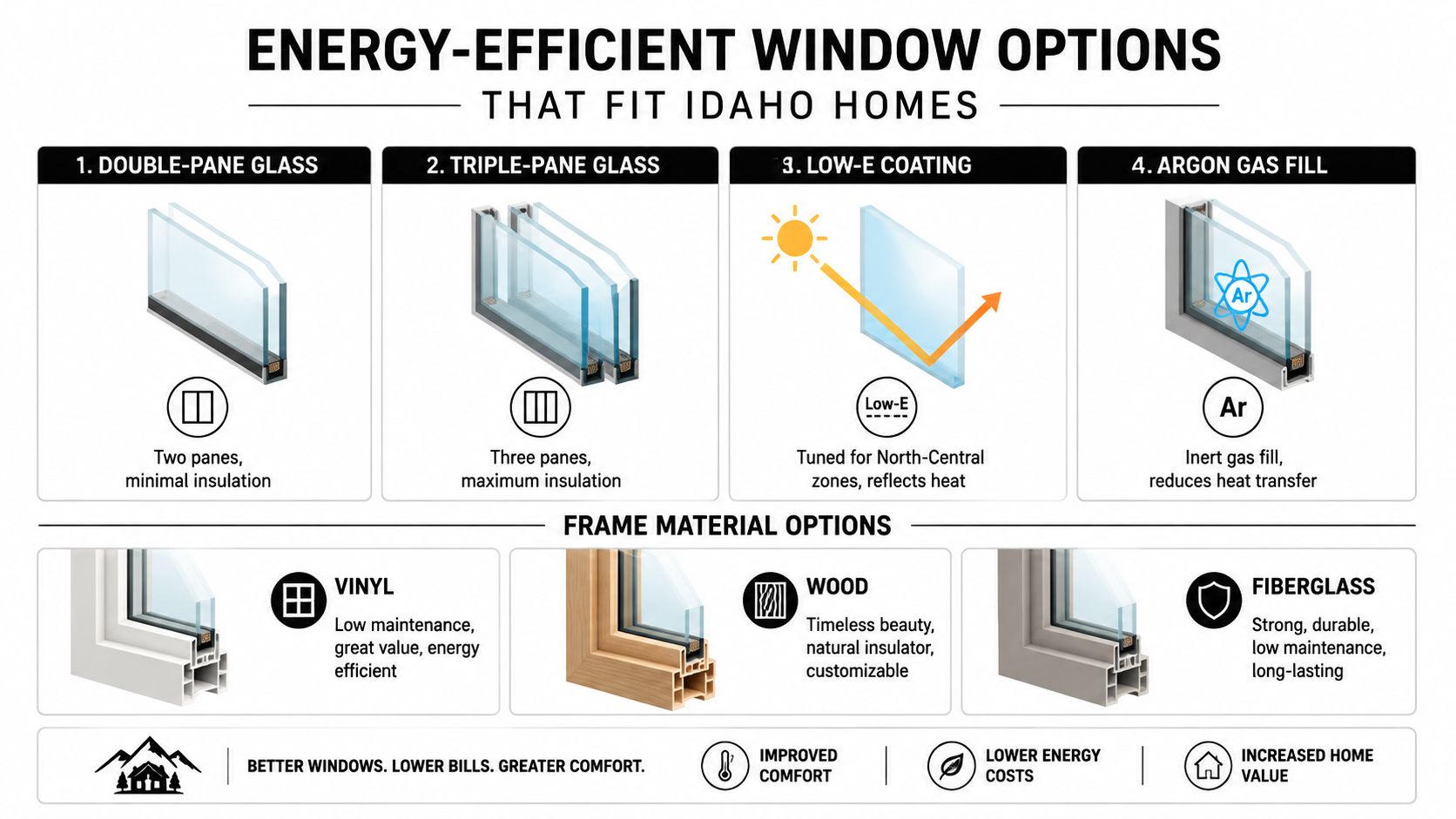
Double-pane glass remains a practical choice for many replacement openings. It provides two layers of glass and an insulating cavity, and it can make a clear improvement over older single-pane or poorly sealed units.
Triple-pane glass adds another pane and another insulating cavity. It usually makes the most sense in rooms with persistent winter discomfort, large exposed windows, or noise concerns. Don't assume every triple-pane package is automatically superior. Frame quality, spacer design, weight, hardware, and installation still matter.
Low-E coatings control heat transfer through the glass. The coating should be selected for the North-Central climate, the room's orientation, and the amount of shade. A west-facing Eagle room often needs stronger summer solar control than a shaded north-facing opening.
Argon gas fills replace ordinary air in the insulated cavity and reduce heat transfer. The fill is useful only when the seals and manufacturing quality remain sound, so ask for the complete NFRC label rather than relying on the word “argon” alone.
For a deeper product discussion, see energy-efficient windows for Eagle homes.
Frame materials change the feel and maintenance profile
Vinyl is usually the budget-conscious option and can provide solid thermal performance when the frame is well designed. Fiberglass handles temperature changes with less expansion and contraction than some other materials, making it attractive for homeowners focused on long-term stability. Clad wood delivers a warmer interior appearance and fits design-driven remodels where the window must complement substantial trim and millwork.
Use the federal threshold as a quote-screening tool. ENERGY STAR Version 7.0 requires North-Central windows to meet U-factor ≤ 0.24 and SHGC ≤ 0.40, while the Most Efficient 2025 North-Central tier tightens U-factor to ≤ 0.20, according to the ENERGY STAR Version 7.0 specification. Those are the verified federal thresholds. Put the exact product rating on the proposal, and don't accept a vague promise that a window is “energy efficient.”
Realistic Costs and Payback for Window Replacement in Eagle
Window replacement pricing depends on the unit, opening size, frame material, glass package, trim, access, and condition of the rough opening. A proposal should separate the product from labor, removal, disposal, interior finishing, exterior finishing, and any carpentry required after the old window comes out.
The most reliable local payback starting point comes from ENERGY STAR's climate-zone methodology. For the Boise climate region that includes Eagle, replacing single-pane windows is estimated to save homeowners about $125 to $340 per year, while replacing double-pane clear-glass replacement windows can still save about $20 to $70 annually. These are climate-zone averages, not a promise for a specific house, as explained in the ENERGY STAR methodology for window savings estimates.
Compare the quote, not just the sticker price
Ask whether the contractor is pricing a pocket replacement or a full-frame replacement. Pocket work may preserve existing trim when the frame is sound. Full-frame work exposes more of the opening and can address hidden deterioration, but it may require additional interior and exterior finish work.
A lower initial price can become a poor value if it excludes sill repairs, flashing, casing, haul-away, or final sealing. The installer should also explain whether the existing opening has water damage or an installation defect before covering it with new trim.
The useful payback question is not “How much will this save?” It's “What problem is the new window solving, and what part of the current loss will the replacement address?”
For resale planning, replacement windows can preserve a substantial share of project value. A 2026 summary reports estimated replacement returns of about 74% for vinyl and 71% for wood, based on the 2026 window replacement ROI summary. Treat that as a budgeting reference, not a guaranteed sale result. Curb appeal, installation records, condition, and buyer preferences still influence the outcome.
Financing Your Window Replacement Project
Financing should follow the home's condition and your ownership plan, not the salesperson's promotion. If the windows are failing, the opening is exposed to moisture, or the home is uncomfortable in several rooms, delaying work can preserve cash today while leaving the underlying problem in place.
Three practical paths
Cash or available savings keeps the project simple and avoids interest. It fits homeowners who have sufficient reserves and expect to remain in the property long enough to enjoy the comfort improvement. Don't use every emergency reserve for a remodel.
Home equity can offer a competitive structure when the homeowner has substantial equity and a stable repayment plan. Eagle's assessed values make equity-based borrowing worth comparing, but closing costs, variable terms, and the effect on future borrowing capacity deserve attention.
Contractor financing can speed up the decision and spread payments. C & C Windows & Doors references Synchrony financing, and window financing options in Boise can help homeowners review the available structure before committing.
Promotional offers need careful reading. Same-as-cash periods can work when you have a documented payoff plan. Deferred-interest arrangements can become expensive if the balance isn't cleared under the stated terms. Compare the full APR, minimum payment, promotional deadline, origination costs, and late-payment rules.
Choose based on how long you'll stay
If you're selling soon, prioritize visible condition, reliable operation, curb appeal, and documentation. If you'll remain for years, comfort and energy performance deserve more weight. If the home has obvious heat loss and you can pay without weakening your reserves, cash may produce the cleanest economics. If the project is necessary but savings are limited, a fixed repayment plan may be more sensible than postponing repairs.
Ask the lender how a new obligation affects mortgage underwriting if you're buying or refinancing. A window project can improve the home, but the financing payment still appears in your debt picture.
What to Expect During the Installation Process
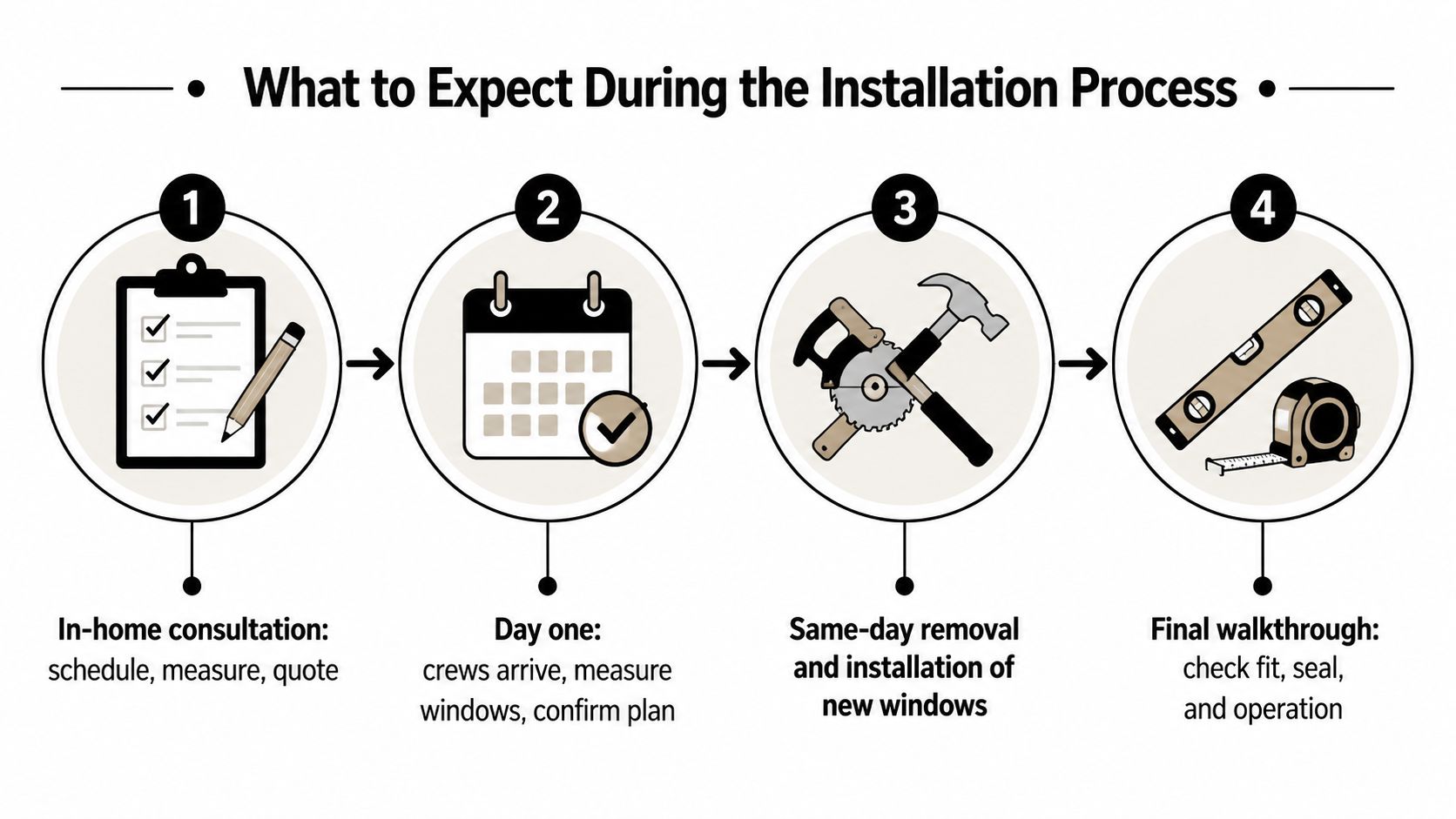
A professional project starts before the crew arrives. During the in-home consultation, the estimator should inspect each opening, take custom measurements, identify trim conditions, and provide a written estimate. Same-day pricing is useful only when the measurements and scope are clear.
Manufacturing commonly takes 3 to 6 weeks after the order is finalized. Before the installation date, confirm the window list, handing, grille pattern, glass package, interior color, exterior color, hardware, warranty registration process, and who is responsible for moving furniture.
Installation day should be controlled, not chaotic
For 10 to 15 windows, a standard installation may take 4 to 7 hours, while full-frame replacement can extend to two days, depending on access and opening repairs. Those figures are project planning ranges, not guarantees. Large picture windows, multi-story access, damaged framing, and complicated trim add time.
The crew should isolate work areas, protect flooring, remove debris continuously, and avoid leaving openings exposed longer than necessary. In Eagle's freeze-thaw conditions, the sill and perimeter seal must manage water while maintaining air-barrier continuity.
A proper final walkthrough checks three areas:
- Interior seal: Inspect the perimeter for gaps, uneven trim, and visible air leakage paths.
- Exterior flashing: Confirm that the sill, jamb, head, and drainage path were addressed according to the installation scope.
- Operation test: Open, close, lock, tilt, and ventilate every operable unit.
A rushed install often leaves trim unfinished, debris behind, inconsistent reveals, or windows that weren't individually tested. Don't sign the completion paperwork until each opening operates correctly and the crew documents unresolved items.
How to Choose a Trusted Window Installer in Eagle
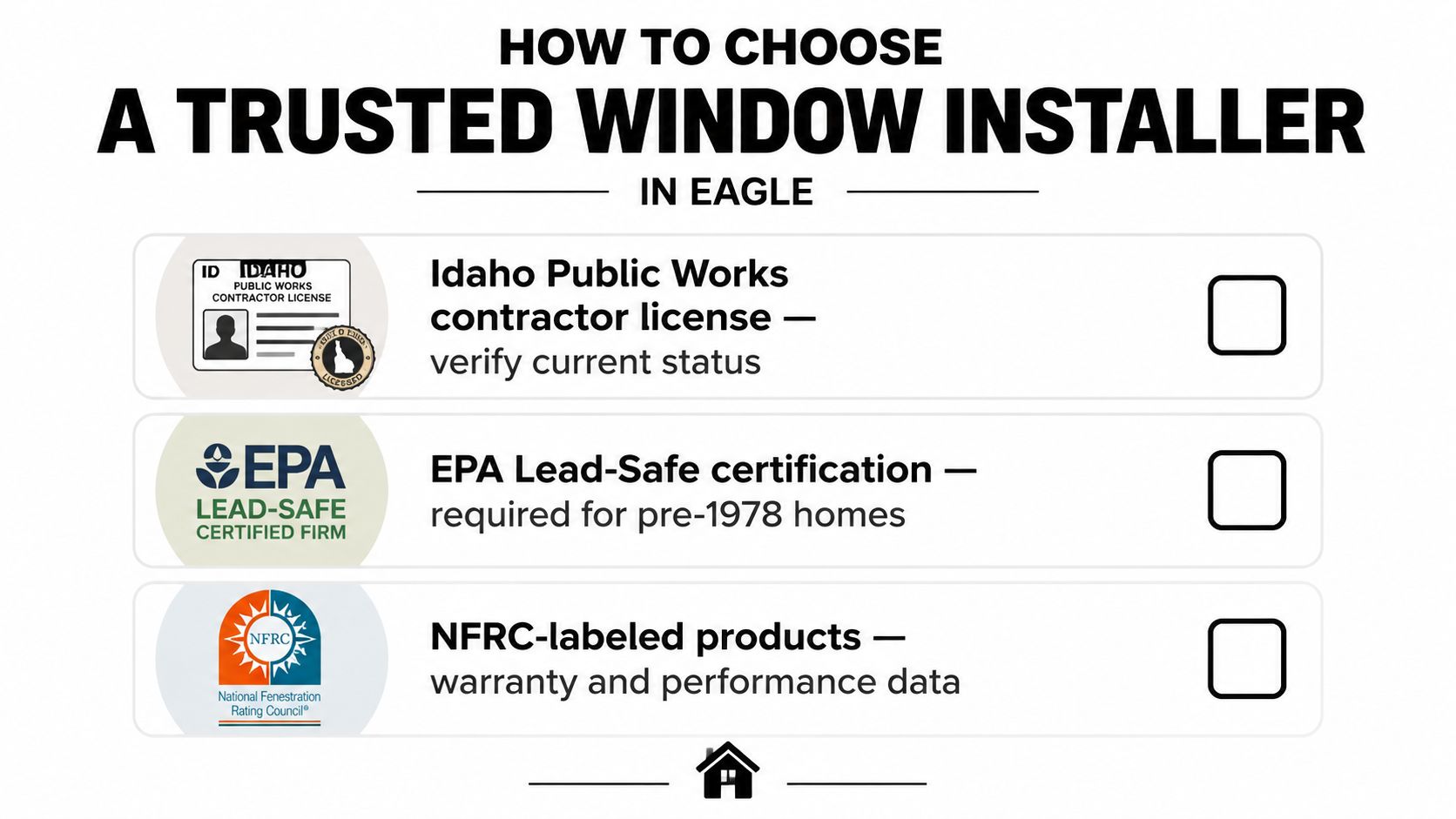
The installer should be judged by evidence, not a polished showroom. Ask for the company's Idaho contractor information, proof of liability insurance and workers' compensation coverage, and product documentation that identifies the actual performance ratings.
For homes built before 1978, confirm EPA Renovation, Repair and Painting lead-safe certification before disturbing painted surfaces. Ask to see NFRC labels for the proposed products. The label should identify U-factor, SHGC, visible transmittance, air leakage, and other product details relevant to the comparison.
Examine the water-management plan
Water management is where many replacement projects succeed or fail. The National Research Council Canada guidance on replacement-window installation describes a sill assembly with a back dam, sill flashing that turns up the jambs and over the sheathing membrane, a drainage gap behind the flange, and an air-barrier connection using sealant and backer rod. It also identifies a sill slope of at least 1/15 of the sill depth, approximately 1/4 inch rise over 3 3/4 inches of depth, to promote drainage.
Ask how the crew handles sill corners, self-adhered membrane, head flashing, and the nailing fin. A window can have an excellent rating and still fail if water becomes trapped around the opening.
Demand written accountability
The contract should identify the product, glass package, installation scope, labor warranty, product warranty, transfer terms, registration process, and exclusions. Written lifetime or 20-year transferable coverage may be available depending on the product and contractor, but the actual terms control.
Use this window-company selection guide for Boise homeowners as a checklist, then verify local references in Eagle, Boise, and Meridian. Be cautious with door-to-door bids, deposits exceeding 50%, and contractors who can't provide recent Treasure Valley addresses or explain who will perform the installation.
Eagle Window Replacement Questions Homeowners Ask Most
Do replacement windows return most of their cost at resale?
Replacement windows can support resale when the current units are fogged, damaged, hard to operate, or visibly below the home's finish level. Buyers also notice whether the project looks professionally managed. Keep the contract, product details, warranty, permit records when applicable, and completion photos. Those records give buyers evidence of what was installed and how the opening looked before and after the work.
Clean trim, consistent sightlines, smooth operation, and a dry-looking exterior often matter more during a showing than a broad return-on-investment figure. A well-installed window that improves perceived condition is easier to defend in a resale conversation than a product with impressive specifications but poor finishing.
Does Eagle require a permit for window replacement?
A one-for-one replacement may not require a building permit when the structural framing stays unchanged. Confirm the project with the City of Eagle permit information before work begins. Enlarging an opening, changing an egress condition, or converting a room can change the permit requirements.
Put permit research and inspection coordination in writing. The contractor should identify who handles each step, rather than leaving the homeowner to interpret whether “replacement window” applies to a project that changes the opening or room function.
What season works best?
Late spring through early fall is usually the practical installation window in the Treasure Valley. Moderate temperatures help crews protect the opening, apply sealants, adjust weather-stripping, and finish exterior work without fighting severe cold.
Winter installation can work, but the plan must address temporary protection, sealant cure conditions, exposed openings, and sudden weather changes. Ask for that plan before signing.
How can I verify an energy claim?
Check the NFRC label for the exact product. Compare the whole-window U-factor and SHGC with ENERGY STAR Version 7.0 requirements for North-Central products, the zone that fits Eagle and the Boise area. Do not compare a center-of-glass number from one quote with a whole-window number from another. Review independent product comparisons through efficientwindows.org.
Request the glass package, frame series, spacer, gas fill, and certification status in writing. The exact tested configuration matters. If a salesperson cannot identify it, the energy claim is too vague for a purchase decision.
C & C Windows & Doors provides Eagle homeowners with free in-home consultations, custom measurements, same-day estimates, and replacement windows and patio doors selected for Treasure Valley conditions. Visit C & C Windows & Doors to request a project evaluation and compare an installation scope built around comfort, drainage, appearance, and performance needs.