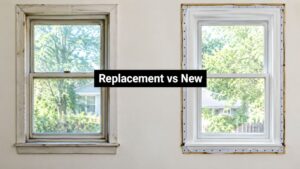

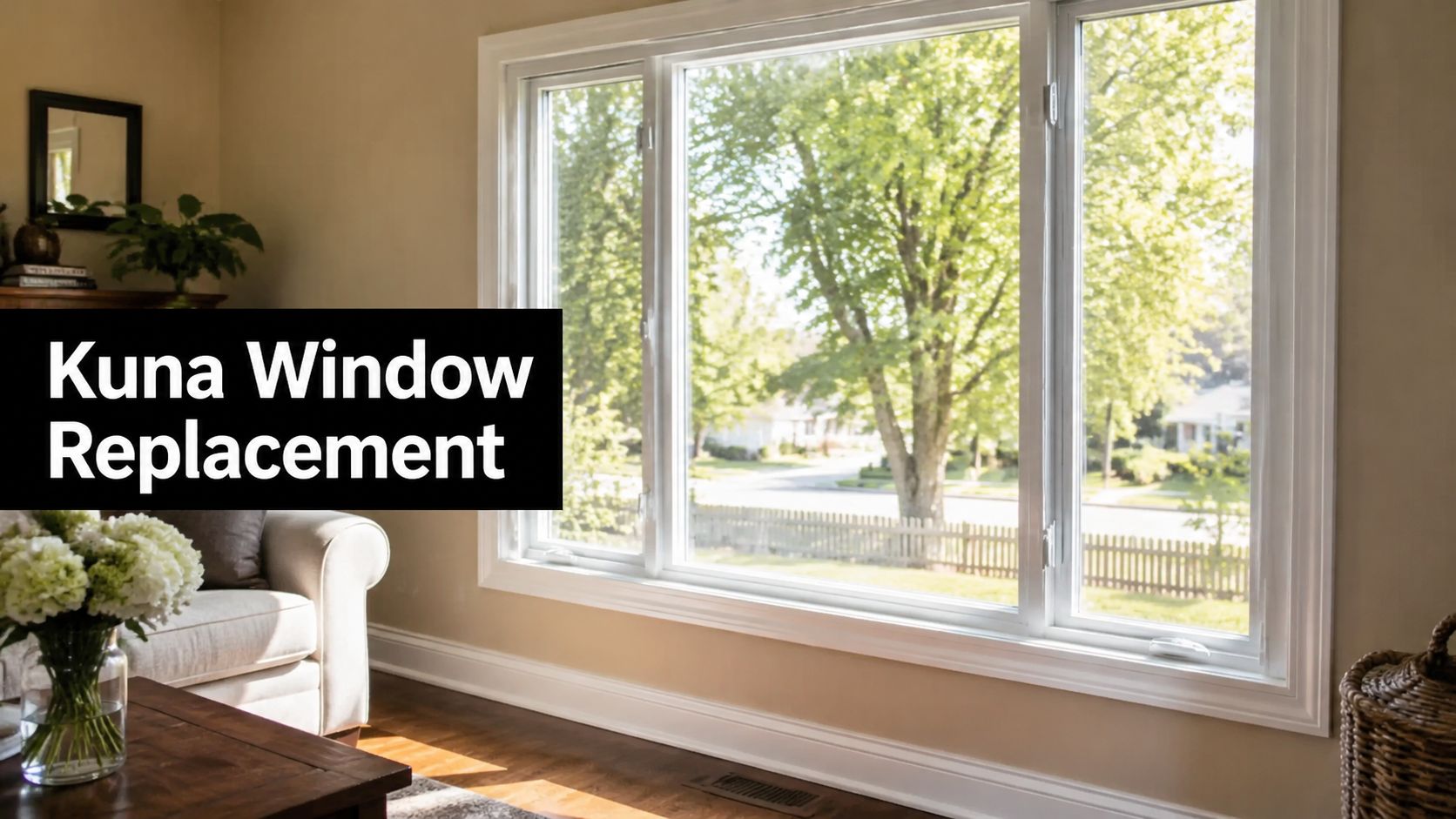
On a windy Kuna morning, a homeowner can feel the problem before seeing it. The living room feels colder near the glass, dust gathers on the sill, and a failed seal leaves one pane permanently foggy. The question isn't whether new windows look better. It's whether the new units will control drafts, withstand southern Idaho weather, qualify for available incentives, and earn their cost.
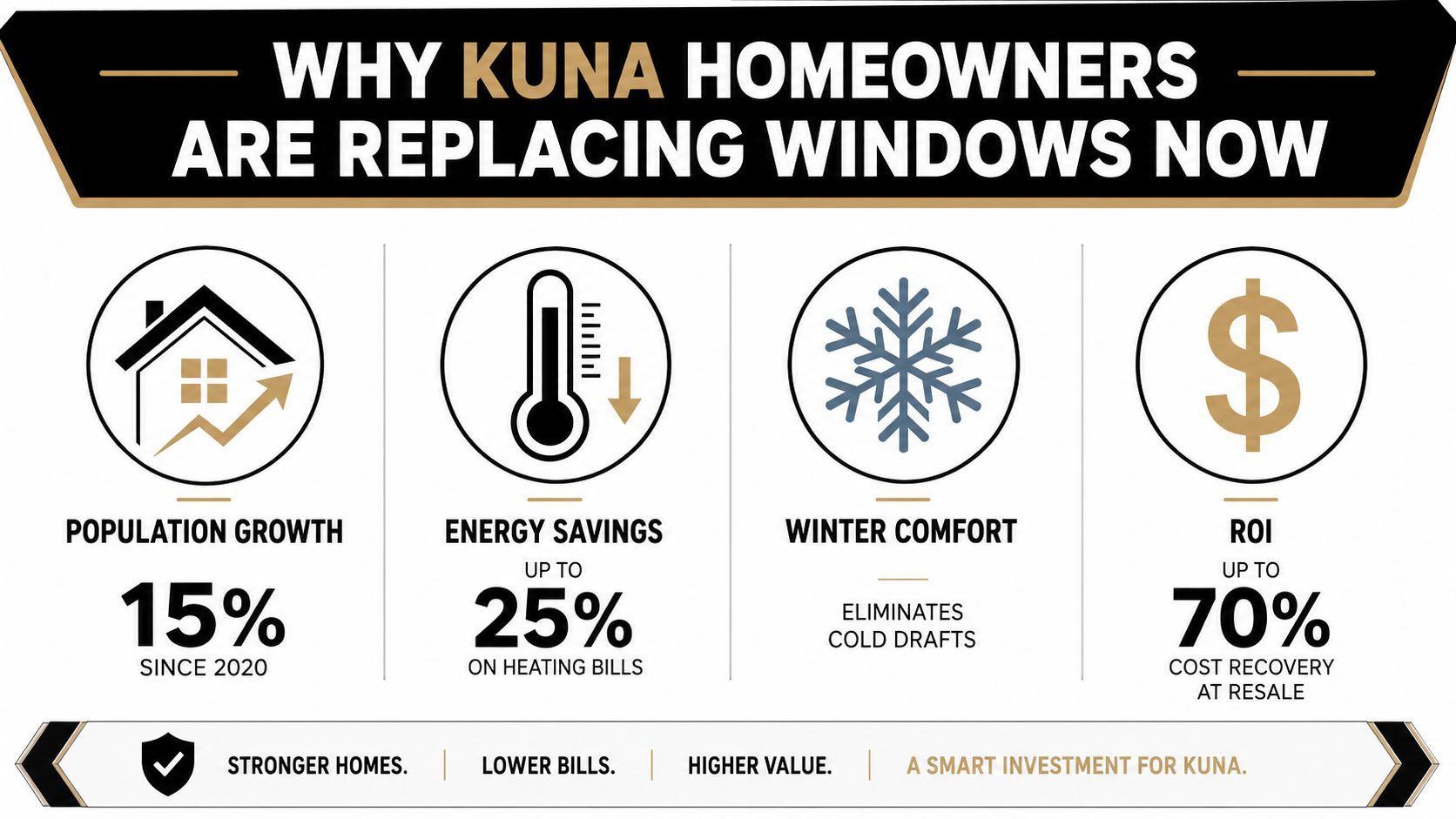
That decision matters in a fast-growing market. By May 8, 2026, Kuna had permitted 520 single-family homes and one multifamily project, while permits issued since 2021 covered 4,475 new homes and 22 multifamily developments. The city has an estimated 9,391 housing units, 82.5% owner occupancy, and a median year built of 2008, according to data reported by the Idaho Statesman. Many owners are now looking beyond original builder-grade windows toward better retrofit performance.
Table of Contents
- Why Kuna Homeowners Are Replacing Windows Right Now
- What Good Windows Actually Do in Kuna's Climate
- Matching Window Styles to Your Kuna Home
- Glass Packages That Earn the ENERGY STAR Label
- Real Costs, Rebates, and Payback for Kuna Projects
- What a Professional Installation Looks Like From Start to Finish
- What Treasure Valley Homeowners Say After the Upgrade
- Permits, Warranties, Financing, and Your Next Step
Why Kuna Homeowners Are Replacing Windows Right Now
Kuna's newer subdivisions can look modern while still carrying the original windows installed during construction. As those units age, worn weatherstripping, loose hardware, and failed insulated-glass seals become easier to notice. Wind turns a minor weakness into a daily comfort problem.
The signs usually arrive in a familiar order:
- Drafts near the frame: Cold air moves through gaps around worn seals or poorly adjusted sashes.
- Dusty interior sills: Air infiltration can carry fine dust into rooms, especially around exposed openings.
- Fogged glass: Moisture between panes indicates an insulated-glass seal failure.
- Uneven room temperatures: North-facing rooms and seating areas near windows often feel colder first.
- Higher utility frustration: Poorly performing windows make heating and cooling equipment work harder, although savings depend on the home's construction, equipment, fuel, and occupant habits.
Kuna's housing stock makes replacement a practical ownership decision, not just a cosmetic remodel. With single-family detached homes making up about 93% of units, homeowners generally control the window package and can choose upgrades room by room or across the entire house. Kuna's reported 2026 median home price, roughly $445,000 to $462,000, also means comfort and condition improvements affect a substantial household investment, as documented by the Idaho Statesman.
Four decisions that determine the outcome
First, choose performance specs for southern Idaho instead of accepting a vague “energy efficient” label. Second, match the operating style to each room, because a casement can solve a wind problem that a sliding unit won't. Third, calculate the installed price after any eligible rebate, not before. Fourth, vet the installer as carefully as the product.
Replacing windows in Kuna is less about curb appeal than controlling comfort through sharp seasonal swings. The right package can make the glass feel warmer, reduce infiltration, and quiet a room. The wrong package can leave you paying for attractive frames that don't solve the draft you called about.
What Good Windows Actually Do in Kuna's Climate
Start with the NFRC label, not the brochure. Three ratings tell you most of what matters: U-factor, solar heat gain coefficient, or SHGC, and air leakage.
U-factor measures heat transfer through the complete window assembly. A lower number means better resistance to conductive heat loss. ENERGY STAR guidance for southern Idaho places the U-factor target around 0.30, while colder Idaho areas use a tighter target around 0.27, as summarized in Idaho climate-zone window guidance. For a Kuna project, I'd treat 0.30 or lower as the baseline and look harder at lower U-factor options when the room has noticeable cold spots.
SHGC measures how much solar radiation enters as heat. Lower SHGC can help limit unwanted summer gain, but Kuna homeowners shouldn't choose a window on SHGC alone. Orientation, exterior shade, glass area, and cooling loads all matter. A west-facing room may benefit from more solar control, while a shaded north-facing opening needs stronger insulation first.
Air leakage measures how much air passes through the window assembly under test conditions. Lower leakage supports comfort because a tight window reduces drafts caused by pressure differences and wind. The Building America window measure guide explains the relationship among U-factor, SHGC, and air infiltration, and notes that tighter window assemblies reduce energy use more strongly in colder climates.
| Rating | What It Measures | Recommended Kuna Target | Why It Matters Here |
|---|---|---|---|
| U-factor | Heat flow through the complete assembly | 0.30 or lower, with lower options worth considering | Reduces winter heat loss and cold glass |
| SHGC | Solar radiation entering as heat | Select by orientation and shading | Helps manage west-facing summer exposure |
| Air leakage | Air passing through the unit | Choose the lowest verified rating practical | Limits drafts during windy weather |
Practical rule: If a salesperson talks about “premium glass” but won't show the whole-window U-factor and air-leakage rating, you don't have enough information to compare bids.
The current ENERGY STAR residential window standard is Version 7.0, and the program's savings methodology evaluates annual whole-home utility bills rather than treating appearance as the benefit. ENERGY STAR savings estimates were modeled for typical homes in 132 U.S. cities using Lawrence Berkeley National Laboratory simulations, according to the ENERGY STAR cost and energy savings material. Use those figures as a benchmark, not a promise for your particular house.
Matching Window Styles to Your Kuna Home
Window style should follow the room's job. Standardizing every opening on one design may simplify ordering, but it often creates awkward operation, difficult cleaning, or unnecessary cost.
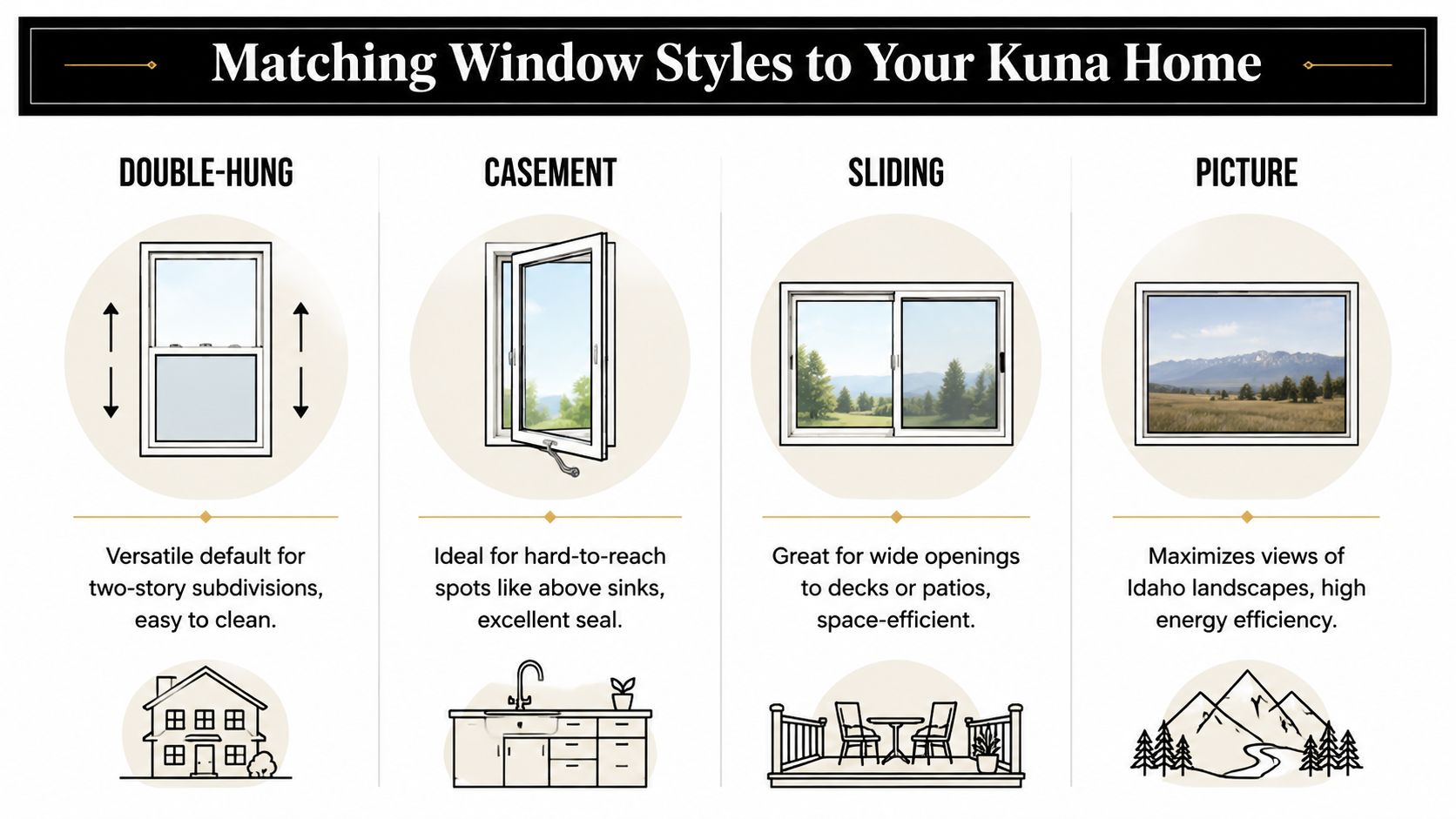
Double-hung windows remain the sensible default in many two-story Kuna subdivisions. Both sashes move vertically, and many units tilt inward for cleaning from inside. They also preserve the familiar look found across newer neighborhood streets. Use them in bedrooms, front elevations, and rooms where traditional proportions matter.
Casement windows operate with a crank and press the sash against weatherstripping when closed. That compression makes them a strong choice for openings exposed to wind, especially west-facing walls. They're also useful above counters and sinks because you can operate them without reaching across a wide sill.
Picture windows don't open, but their fixed construction can provide excellent insulation and expansive views. They fit great rooms, stair landings, tall foyers, and living areas facing open Idaho scenery. Pair one with an operable unit if the room needs natural ventilation.
Sliding windows move horizontally along a track. They work well above kitchen sinks, beside patios, and in wide openings where a vertical sash would feel out of proportion. Their operation is simple and space-efficient, although the meeting rail and sliding track deserve careful attention during the quote.
Use a mixed package
Specialty shapes can finish a stair landing or add architectural detail, but they shouldn't drive the project. Privacy glass makes sense in bathrooms, while an awning or fixed-transom combination may solve a high, narrow opening without sacrificing privacy.
For homeowners comparing operation and ventilation, this casement versus double-hung guide for Boise homeowners offers a useful style-level comparison. My recommendation is straightforward: use double-hung units where cleaning and familiar appearance matter, casements where wind control matters, picture windows where views matter, and sliders where the wall demands a horizontal opening.
Glass Packages That Earn the ENERGY STAR Label
A basic dual-pane window isn't automatically a high-performance window. The glass package, spacer, frame, and installation all contribute to the final result. Shop the complete NFRC-rated assembly and confirm that the product is listed for the applicable climate zone through the ENERGY STAR climate-zone product search.
Low-E coatings control radiant heat. Hard-coat Low-E is durable and can suit some applications, while soft-coat systems generally provide stronger insulating and solar-control performance. Single-silver and double-silver coatings adjust how much heat and sunlight pass through the glass. The correct selection depends on orientation, but southern Idaho homes usually need winter insulation first, with solar control added where the opening receives strong afternoon sun.
Argon gas fills reduce heat transfer between panes. Warm-edge spacers keep the perimeter of the glass warmer and help limit condensation at the edge. Neither feature rescues a poorly sealed frame or careless installation, so don't treat gas fill as a substitute for a complete performance rating.
Compare the package, not the label
| Glass Package | Panes | Low-E Coating | Gas Fill | Typical U-Factor | SHGC | ENERGY STAR 7.0 |
|---|---|---|---|---|---|---|
| Basic clear dual-pane | 2 | Basic or none | Air or standard fill | Verify on NFRC label | Verify on NFRC label | Not assumed |
| Low-E dual-pane | 2 | Low-E | Argon | Target 0.30 or lower | Select by exposure | Confirm product listing |
| Enhanced dual-pane | 2 | Higher-performing Low-E | Argon with warm-edge spacer | Lower than baseline options | Orientation-specific | Confirm product listing |
| Triple-pane | 3 | Advanced Low-E | Argon | Often lower than dual-pane options | Orientation-specific | Confirm product listing |
The table uses a decision framework rather than invented product specifications. Ask for the actual NFRC values for the exact size and configuration you're buying. ENERGY STAR's published materials estimate certified windows can save about $15 to $65 per year compared with double-pane clear-glass units, depending on climate and product configuration, as shown in its window savings documentation.
Triple-pane glass earns its place in rooms with persistent cold spots, large exposed openings, or a strong comfort priority. It won't always produce a sensible financial return on every opening. Spend first on a low whole-window U-factor, tight air control, quality spacers, and competent installation. Then add triple-pane where the comfort difference justifies the premium.
Real Costs, Rebates, and Payback for Kuna Projects
Window quotes in Idaho vary because contractors don't price the same scope. A replacement quote may include only the insert unit and labor, while another includes exterior trim, interior casing, drywall repair, disposal, flashing, and follow-up adjustments. Compare the scope line by line.
Verified Idaho market guidance places professionally installed windows at roughly $500 to $1,500 per window, while a whole-home triple-pane project for 10 windows may fall around $6,000 to $12,000 before rebates, according to the Avista Idaho window rebate information. Those ranges aren't a promise for a Kuna bid. Size, access, frame condition, glass package, trim, and full-frame versus insert installation can move the quote substantially.
| Project Component | Typical Range | Notes |
|---|---|---|
| Professionally installed window | $500 to $1,500 per window | Idaho market estimate, product and scope vary |
| Triple-pane project | $6,000 to $12,000 for 10 windows | Before rebates, based on recent market guidance |
| Avista contractor-installed rebate | $45 to $225 per window | Depends on heating fuel and U-factor |
| Avista self-install rebate | Lower than contractor-installed levels | Confirm eligibility before ordering |
| Trim, repairs, and disposal | Quote-specific | Require separate written line items |
Avista's qualifying contractor-installed rebates range from $45 to $225 per window for natural-gas or electric-heated homes, with lower levels for self-installation, according to its Idaho single-family energy rebate details. Eligibility depends on the installation method and window U-factor. Don't assume a product qualifies because the brochure uses the ENERGY STAR name.
Payback advice: Treat rebates as a reduction in project cost, not as proof that every premium upgrade pays back quickly.
A sensible payback comparison starts with your existing windows and heating fuel. Single-pane units or older failed dual-pane units offer more room for improvement than sound modern windows. ENERGY STAR's modeled savings range is a national baseline, not a personalized Kuna guarantee. Ask the installer to separate energy performance from comfort benefits, then decide how long you'll own the home and whether the rooms have draft or condensation problems worth solving.
For a broader specification and efficiency framework, review this Idaho energy-efficient window guide. The right financial question isn't “What has the highest rating?” It's “Which rating solves my home's actual problem at a price I can justify?”
What a Professional Installation Looks Like From Start to Finish
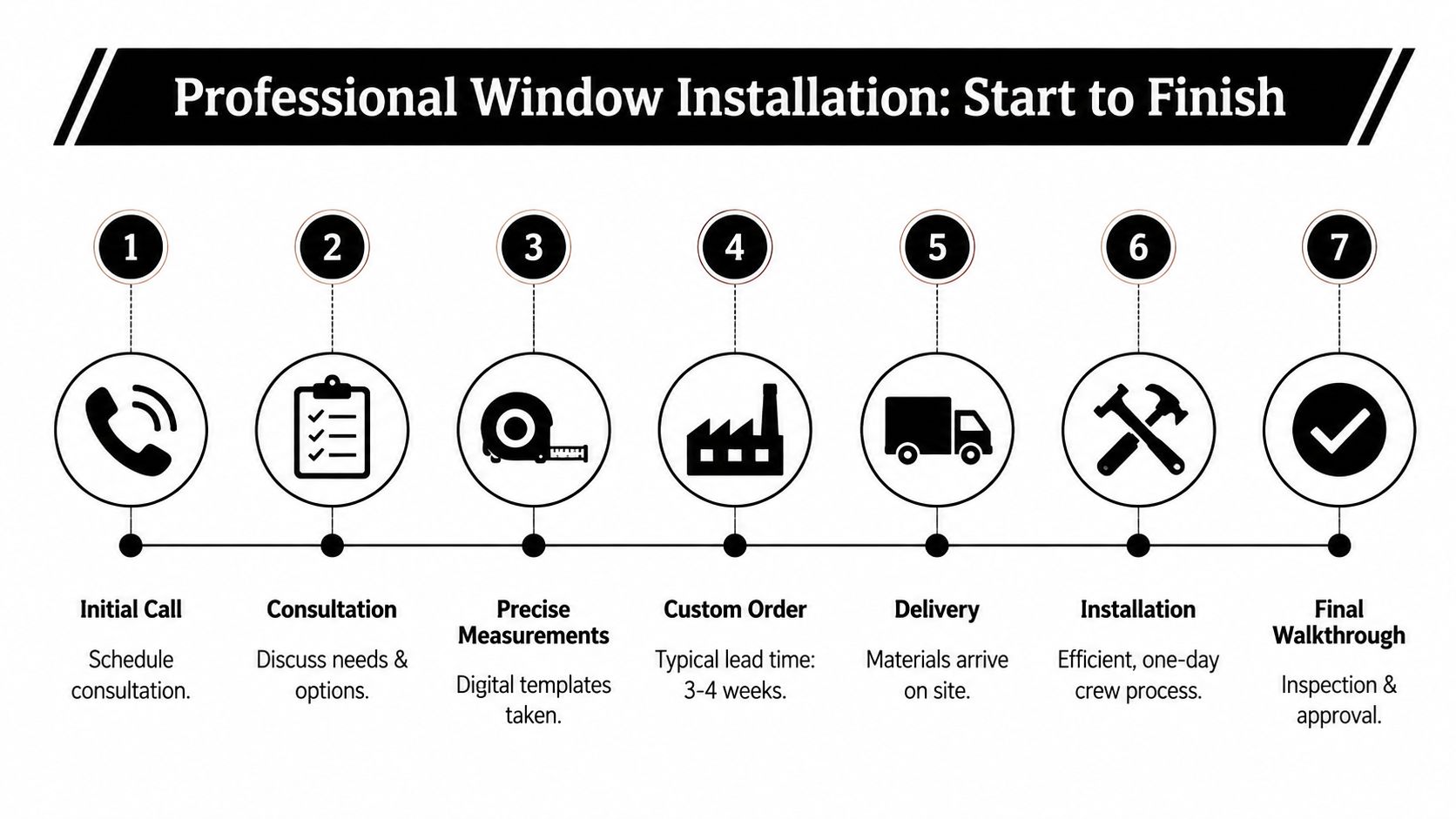
A good project begins before the crew arrives. During the in-home consultation, the installer should inspect the existing frames, identify water damage or out-of-square openings, discuss operation and glass performance, and explain whether the project is an insert replacement or a full-frame removal.
Measurements deserve more attention than a quick tape reading. The installer should measure each opening, confirm sill and jamb conditions, record trim details, and identify any opening that may need repair. Custom orders then move through manufacturing and delivery, so build the schedule around the actual product rather than a generic promise.
The jobsite standard
A replacement crew should protect floors and furniture with drop cloths, control dust around interior work, and remove old units without leaving nails or glass behind. Exterior cleanup should include a careful sweep and magnet pass for metal debris. Interior trim and drywall touch-ups should appear as explicit contract items, not vague verbal assurances.
Before signing, ask these questions:
- Who holds the contractor registration: Verify the business and any required Idaho contractor information.
- Who carries insurance: Request proof of liability and workers' compensation coverage.
- Who performs the work: Find out whether employees or subcontractors will install the windows.
- What does the warranty cover: Separate manufacturer coverage for glass and frames from the installer's labor warranty.
- How are problems handled: Ask who returns for adjustments, failed seals, trim issues, or water intrusion.
- What is excluded: Confirm disposal, interior finish work, exterior capping, permits, and structural repairs.
Prepare by clearing furniture, wall decorations, blinds, curtains, and fragile items near each opening. Keep pets and children away from the work zone. A clean path lets the crew protect the home and finish the installation without turning a focused project into a household disruption.
What Treasure Valley Homeowners Say After the Upgrade
The most useful homeowner feedback is specific. People notice where the room feels different, how the glass behaves in changing weather, and whether the crew respected the house. They don't need a sales pitch to recognize a draft that disappeared.
Consider a representative 1990s two-story home in south Kuna near Indian Creek. Wind-driven dust had worked past failing weatherstripping, and the family felt a cold patch near the kitchen table. A mixed package of tighter double-hung units in bedrooms and casements on exposed walls addressed different room needs. During the first week, the homeowners noticed less air movement and a quieter interior. They also noticed that installation involved more preparation and cleanup than expected, which made the drop cloths and final vacuuming important.
A Meridian single-level with strong west-facing afternoon glare needed a different answer. The homeowners chose casements with a solar-control Low-E package for the exposed rooms rather than using the same glass specification everywhere. Their first impression was reduced glare and a more comfortable room late in the day. The lesson is simple: orientation should influence the glass selection, not just the frame color.
An Eagle custom home had a picture window with a permanent seal failure. The replacement focused on a fixed high-performance unit sized for the existing opening and coordinated with the surrounding trim. The homeowner noticed clearer views immediately and fewer cold sensations near the glass. The installation surprise was that the replacement decision involved finish matching and perimeter detailing as much as the window itself.
These examples are representative scenarios, not verified customer case studies or guaranteed outcomes. Your result depends on the existing opening, the selected package, installation quality, and the rest of the building envelope. Ask for references that resemble your home, not just photos of finished windows.
Permits, Warranties, Financing, and Your Next Step
A direct replacement that uses the existing opening without structural alteration may fall under Idaho's replacement exemption. Idaho rules state that replacement of windows or doors can be exempt from certain permit requirements when there's no structural change, but the installation still has to comply with applicable code provisions, as explained in the Idaho building rules.
Don't assume every project has the same permit status. Full-frame work, structural changes, altered opening sizes, and egress enlargements can change the requirements. Ask the installer to identify the scope in writing and confirm whether City of Kuna or Ada County review or inspection applies. A responsible contractor should explain who handles that process.
Read the warranty before you compare bids
A solid warranty package has separate pieces:
- Product coverage: Understand what the manufacturer covers for glass, frames, hardware, and seal failure.
- Labor coverage: Confirm how long the installer covers workmanship, adjustment, air leakage, and water-management problems.
- Transfer terms: Ask whether the warranty transfers to a future owner and whether registration or fees apply.
- Exclusions: Look for limits involving misuse, alterations, settlement, maintenance, and installation conditions.
Financing can make sense when it preserves cash reserves and the payment terms are clear. Homeowners may compare qualifying utility incentives, federal energy provisions, a home-equity line, or a same-as-cash promotion. Read the interest rate, promotional deadline, minimum payment, and deferred-interest language before agreeing. Paying cash can be the cleaner choice when the project is fully funded and financing charges would outweigh the convenience.
For a local consultation and project discussion, visit this guide to a Kuna window contractor. Bring utility information, photos of problem openings, and your preferred timeline. Ask for a written quote that identifies the window style, whole-window ratings, installation method, finish work, disposal, warranty, and rebate assumptions.
C & C Windows & Doors offers free in-home consultations, custom measurements, energy-efficient replacement windows, and debris-conscious installation for Kuna homeowners. Schedule a written quote for your specific openings and compare the proposed U-factor, glass package, installation scope, and warranty before you commit by visiting C & C Windows & Doors.