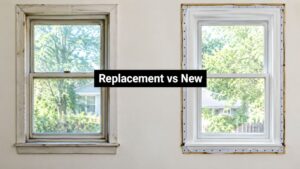

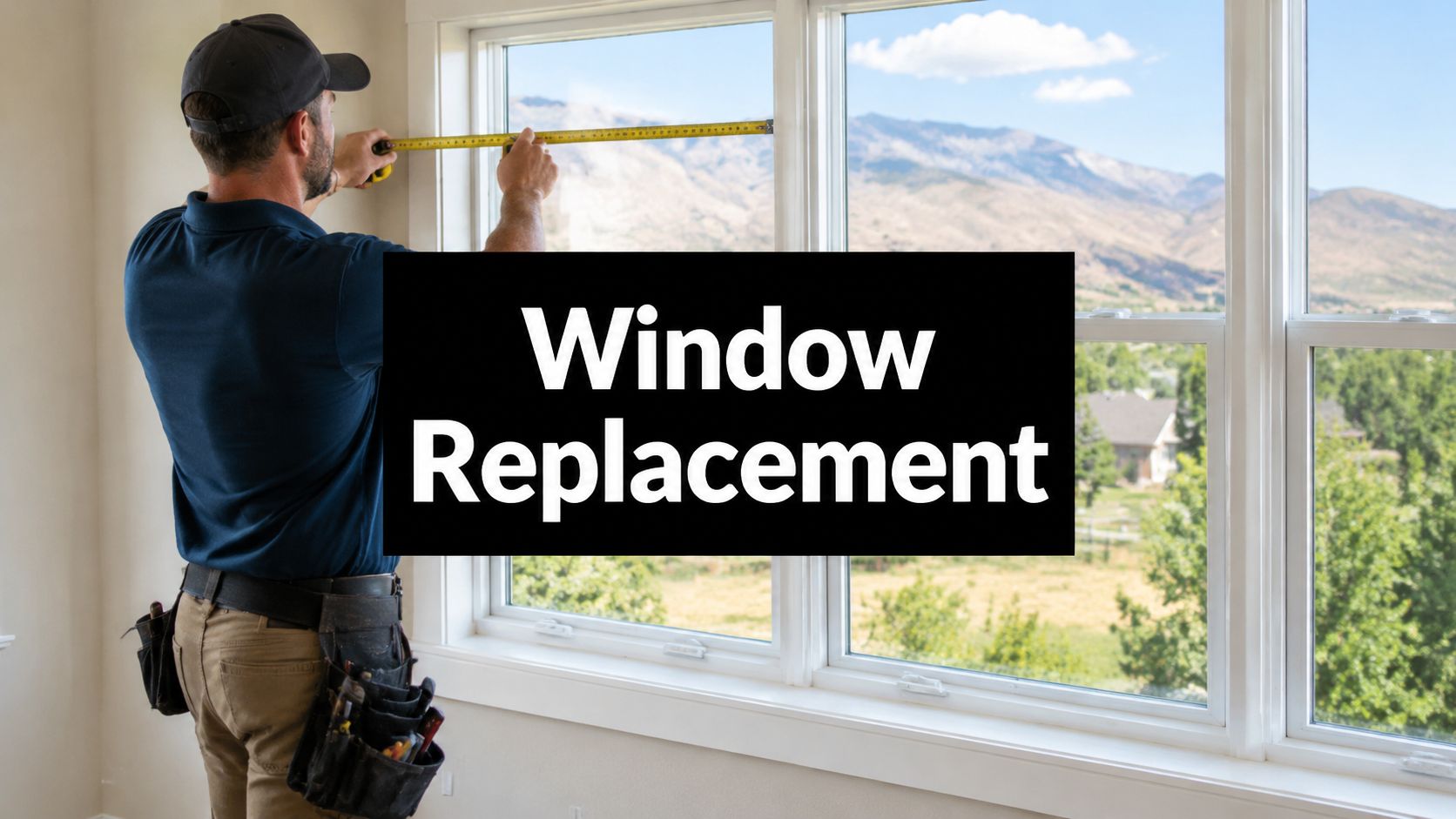
You notice it first in the room nobody uses much. The floor feels cold near the window, the curtains move when the furnace starts, and summer sun turns the glass into a heat source. By the time you're comparing Caldwell window replacement options, you're usually dealing with more than an outdated frame. You're trying to correct drafts, uneven temperatures, condensation, noise, and energy loss without paying for upgrades that don't fit your home or Idaho's requirements.
A good replacement project has to satisfy three tests: the window must have the right U-factor and SHGC, the project must qualify for any available incentives, and the installer must seal and flash the opening correctly. Brand names matter less than those fundamentals.
Table of Contents
- Why Caldwell Homeowners Are Replacing Their Windows
- Understanding Caldwell Window Replacement Costs and Financing
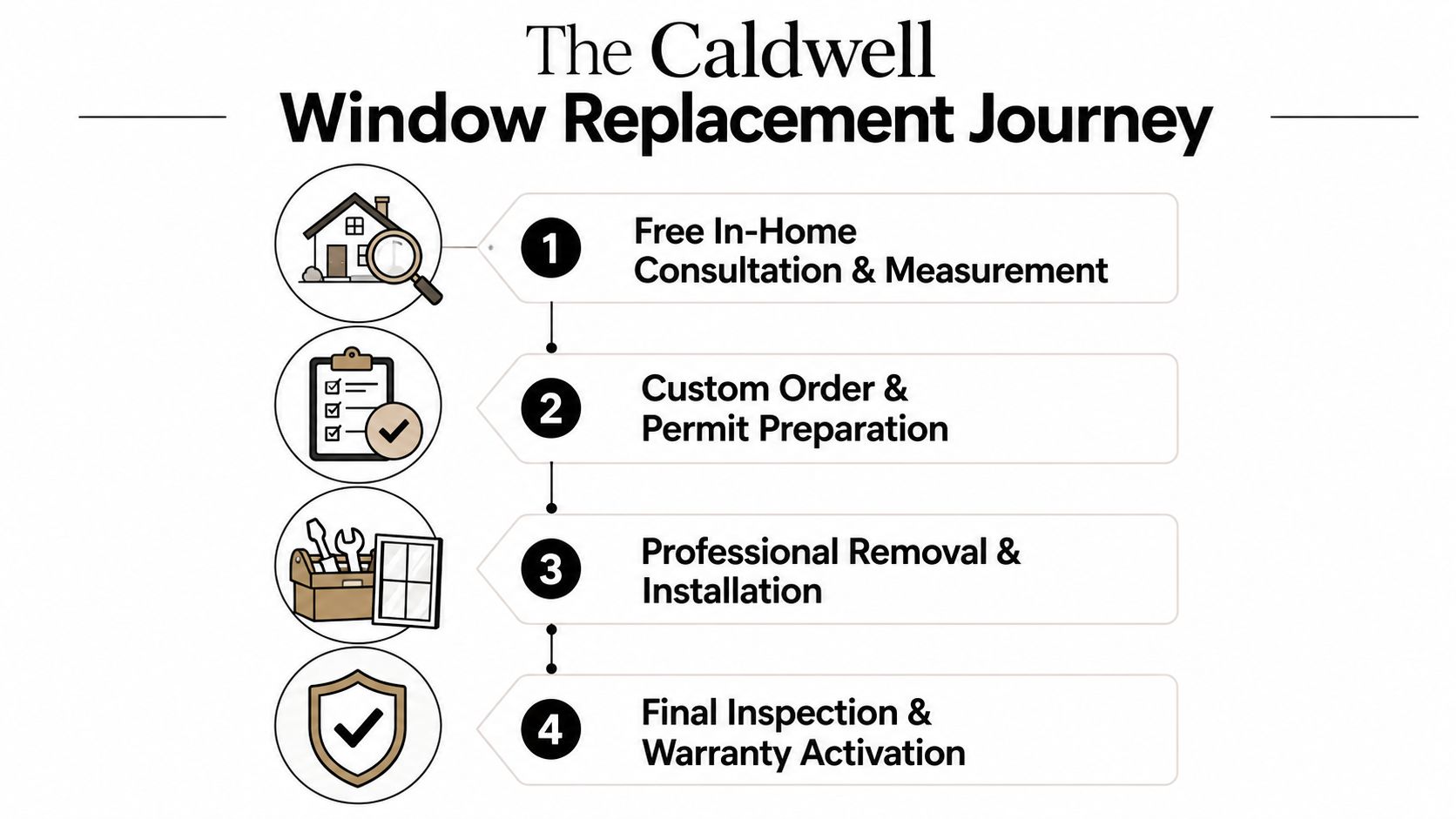
- The Step-by-Step Window Replacement Process
- Choosing the Right Window Types and Energy Upgrades for Idaho Climate
- Why Installation Quality Matters More Than Brand Name
- Key Questions to Ask Before Hiring a Window Installer
- Protecting Your Investment with Warranty and Maintenance
Why Caldwell Homeowners Are Replacing Their Windows
A Caldwell homeowner with older windows often notices the problem before seeing it on a utility statement. One bedroom stays colder than the rest of the house. A south-facing room becomes uncomfortable in the afternoon. The furnace or air conditioner runs longer, yet the room still feels inconsistent.
That pattern makes sense in the Treasure Valley. Caldwell sits in a four-season part of Idaho, with cold winters and hot, dry summers. A window has to limit heat loss during winter while controlling unwanted solar gain during summer. It also has to resist air leakage around the sash and frame.
Older homes face a measurable performance gap
Window efficiency standards have become more demanding. Idaho's energy-code field study tracks fenestration through U-factor and solar heat gain coefficient, and the Idaho Energy Conservation Code allows area-weighted average maximum vertical fenestration U-factors of 0.48 in Climate Zones 4 and 5 and 0.40 in Climate Zones 6 through 8, with skylights at 0.75 across Zones 4 through 8. Those requirements are documented in the Idaho energy-code field study.
That history matters because many older homes were built under looser window-performance expectations. Replacement windows are now judged by measurable thermal results, not merely by whether they open smoothly or look better from the street.
Independent Idaho research found that average window U-values moved from 0.63 to 0.74 in homes built before the 1990s to 0.53 in homes built in 2000 or later, representing about a 16% improvement in insulating performance as U-value declined. The Idaho residential energy-use report provides that historical comparison.
Practical rule: If a room is uncomfortable because the glass and frame are losing or gaining heat, replacing the window is an energy-control project, not a decorating project.
Caldwell decisions should start with climate fit
Canyon County and the Caldwell area are generally evaluated in the context of IECC Climate Zone 5. Idaho guidance emphasizes whole-window performance, including U-factor, SHGC, and air leakage, rather than a simple pane-count comparison. The Idaho climate-zone window guidance explains why the complete assembly matters.
That's why a well-designed replacement should combine low-emissivity glass, an insulated glass unit, a durable frame, and careful perimeter sealing. A window that looks premium but leaks around the opening won't deliver the comfort you paid for.
Understanding Caldwell Window Replacement Costs and Financing
Window replacement pricing depends on the opening size, frame material, glass package, installation conditions, trim work, and whether the project involves standard replacement or more involved construction. Regional guidance places premium triple-pane installations at roughly $500 to $1,500 per window, while whole-home replacements can range from $10,000 to $30,000, depending on material and glass package. Those ranges are reported in Idaho Power's home insulation and efficiency guidance.
Use the figures below as planning ranges, not a guaranteed proposal.
Caldwell Window Replacement Cost Breakdown
| Window Type | Glass Package | Installed Price Range | Potential Rebate |
|---|---|---|---|
| Standard replacement window | Double-pane Low-E | Varies by opening and installation conditions | Program-dependent |
| Premium replacement window | Double-pane Low-E with argon | Varies by opening and performance rating | Avista lists $180 to $225 per window for qualifying contractor-installed products |
| High-performance replacement window | Triple-pane Low-E | $500 to $1,500 per window in reported regional ranges | Eligibility depends on the product's certified ratings |
| Whole-home replacement | Mixed packages and sizes | $10,000 to $30,000 in reported regional ranges | May combine utility incentives with federal credit eligibility |
Avista's Idaho rebate structure lists $180 to $225 per window for contractor-installed products meeting U-factors from .29 down to .22. For natural-gas-heated homes, the listed incentive is $45 to $56 per window. Confirm current eligibility, fuel-type rules, and product documentation before signing, because the rebate depends on the exact rating and program terms. These figures come from the Idaho energy-efficiency and peak-reduction report.
Rebates change the buying decision
ENERGY STAR reports a federal tax credit equal to 30% of qualifying costs, capped at $600 for efficient windows. The program also notes that whole-home envelope upgrades may lead to additional rebates in some programs. Review the ENERGY STAR tax-credit guidance before assuming a product or installation qualifies.
The cheapest bid can become the expensive bid if the window misses the performance threshold, loses incentive eligibility, or requires repairs after installation. Ask for the full-window U-factor, SHGC, air-leakage rating, installation scope, disposal terms, and warranty in writing.
For homeowners who want to spread payments, C & C Windows & Doors financing options include Synchrony financing. Financing doesn't make a poor window a good purchase, but it can help you address failed or highly inefficient units without postponing necessary work.
The Step-by-Step Window Replacement Process
A professional replacement should feel organized before the first window comes out. The installer should explain the scope, identify problem openings, document measurements, and give you a written understanding of product, labor, cleanup, and warranty responsibilities.
Start with the opening, not the brochure
The first visit should include a free in-home consultation and precise measurements. The specialist should inspect the existing frame, sill, trim, surrounding wall, drainage path, and signs of rot or moisture. A window can be correctly manufactured and still fail if the opening is out of square or the surrounding materials are compromised.
A same-day estimate can be useful, but speed shouldn't replace inspection. The estimate should identify the window style, glass package, frame details, installation method, permits if applicable, and any conditions that could change the price.
Custom ordering requires accurate information
Once the measurements and product choices are approved, the windows move into custom ordering and permit preparation. The stated performance ratings need to be matched to the actual product, not a generic model family. Verify the U-factor, SHGC, air leakage, glass configuration, and color or finish before the order is finalized.
Use this step-by-step window installation guide to review the homeowner experience from planning through completion.
Installation day should protect the home
The crew should protect floors and nearby furnishings, remove the old unit carefully, inspect the opening, and install the replacement with proper shimming, insulation, flashing, and air sealing. The exterior perimeter needs a durable weather-resistant seal, while the sill and drainage details must direct water away from the wall assembly.
The final walkthrough should cover window operation, locks, screens, cleanup, visible sealant lines, and warranty activation. The crew should remove job debris rather than leaving the homeowner with a demolition pile.
Choosing the Right Window Types and Energy Upgrades for Idaho Climate
Window style affects ventilation, operation, appearance, and sealing. Glass performance affects heat transfer. Installation quality determines whether the rated product performs as intended. Treat those as separate decisions.
Match the style to the room
Double-hung windows offer controlled ventilation because the upper and lower sashes can open. They're practical for bedrooms, living areas, and traditional Caldwell homes, but the moving parts and meeting rail need a reliable seal.
Casement windows use a crank-operated sash that closes against the frame. Their compression seal can provide strong resistance to air movement when the hardware, gasket, and frame are properly aligned.
Picture windows don't provide ventilation, but they maximize glass area and natural light. They're a sensible choice for a view or a fixed opening beside an operable unit.
Sliding windows operate horizontally and can work well where exterior clearance or easy operation matters. Their performance depends heavily on the quality of the interlocking meeting rails and weather seals.
The supplied comparison identifies air-infiltration ratings of 0.10 cfm/ft² for double-hung, 0.05 cfm/ft² for casement, and 0.02 cfm/ft² for picture windows. Those figures illustrate the basic tradeoff. Fixed windows generally have fewer moving joints, while operable windows provide ventilation but demand better seals and hardware.
Glass upgrades should serve a purpose
Low-E coatings reduce unwanted radiant heat transfer. In Caldwell, that means helping retain winter heat while controlling summer solar gain. Argon gas fills add insulating value inside sealed glass units. They're useful, but they can't compensate for a leaking frame or poorly sealed opening.
Triple-pane glass is a premium option, especially where noise reduction, surface temperature, or maximum insulation matters. It isn't automatically the correct choice for every home. A well-specified double-pane Low-E unit may meet the project's code and incentive goals at a lower cost.
ENERGY STAR Version 7.0 sets climate-zone performance thresholds. Northern windows must meet U-factor ≤ 0.22 and SHGC ≥ 0.17, while North-Central windows must meet U-factor ≤ 0.25 and SHGC ≤ 0.40. The complete thresholds appear in the ENERGY STAR Version 7.0 data package.
The same specification sets maximum air leakage at ≤ 0.3 cfm/ft², a mechanical measure that directly relates to drafts and sealing. See the ENERGY STAR Version 7.0 final specification.
Don't buy pane count instead of performance
ENERGY STAR Version 7.0 raised efficiency benchmarks, and the Northern U-factor moved from ≤ 0.27 in Version 6.0 to ≤ 0.22 in Version 7.0. North-Central moved from ≤ 0.30 to ≤ 0.25, and Southern moved from ≤ 0.40 to ≤ 0.32, as summarized by Andersen's ENERGY STAR 7 update.
For a Caldwell project, ask for the certified ratings of the entire window. Narrowline frames, composite-reinforced sashes, secure low-profile locks, and true sloped sills can matter more than a flashy pane-count claim. A technical overview of energy-efficient options is available in this Idaho window efficiency guide.
Why Installation Quality Matters More Than Brand Name
A high-rated window can underperform when the installer leaves gaps around the frame. Low-E glass won't stop a draft entering through an unsealed perimeter, and an insulated unit won't prevent water damage caused by poor flashing or an improperly prepared sill.
The installer has to create a continuous transition from the window to the wall assembly. That means checking the opening, setting the unit square and plumb, using appropriate shims, insulating the gap without bowing the frame, and sealing the exterior against air and water. The details are hidden after trim goes back on, which makes documentation and installer reputation important.
Local code knowledge prevents avoidable problems
Caldwell projects sit in Canyon County's Climate Zone 5 context. The installer should know how local requirements affect fenestration ratings, air leakage, flashing, drainage, and permit preparation. The U.S. Department of Energy overview of ENERGY STAR Version 7.0 explains that the updated specification establishes higher efficiency benchmarks for certified residential windows, doors, and skylights.
Permitting also deserves a direct answer. Ask who prepares the paperwork, who schedules inspections, and what happens if the opening requires additional work. A contractor who handles those details reduces the risk of an incomplete project or expensive rework.
Factory training matters, but it isn't enough by itself
Factory training can help an installation team follow product-specific procedures, yet the crew still needs local experience with siding, trim, older framing, and Idaho weather. C & C Windows & Doors describes its team as factory-trained, local to the Treasure Valley, and experienced in the area for 13 years. The company offers products with narrowline frames, composite-reinforced sashes, low-profile locking, and sloped sills.
Those features only have value when the installer fits, seals, and flashes them correctly. Judge the contractor by the complete system, not the logo printed on the glass label.
Key Questions to Ask Before Hiring a Window Installer
Use the consultation to test the installer's process. A professional should answer clearly, provide documentation, and explain what happens if the existing opening contains rot, uneven framing, or moisture damage.
Ask these questions before signing
What are the whole-window ratings? Request the U-factor, SHGC, and air-leakage rating for the exact unit being proposed. Don't accept a glass-only rating when the project depends on whole-window performance.
How will you prepare and seal the opening? The answer should address shimming, insulation, flashing, exterior sealant, and interior air sealing. “We'll caulk it” isn't an installation method.
Who handles permits and inspections? Confirm whether the installer prepares the paperwork and coordinates any required inspection. Get that responsibility in writing.
What happens if you find rot or damaged framing? Ask for the process and pricing before work begins. A clear change-order procedure is safer than an attractive estimate that grows without explanation.
Are the installers factory-trained? Product-specific training can reduce installation errors, especially when the window uses specialized sash, locking, or drainage features.
Can you provide recent Caldwell references? References from Boise, Meridian, and Eagle homeowners can offer useful insight into punctuality, cleanup, communication, and post-installation support.
What exactly does the warranty cover? Separate product coverage from labor coverage, and ask how service requests are handled locally.
Red flags include vague estimates, pressure to sign immediately, missing performance ratings, unclear warranty language, and refusal to explain the installation method. A low price without a defined scope isn't a bargain. It's an incomplete comparison.
Protecting Your Investment with Warranty and Maintenance
The replacement decision doesn't end when the crew leaves. A window system needs occasional attention to keep tracks clear, seals intact, hardware aligned, and drainage paths open.
Read the warranty before you need it
A lifetime limited warranty on products and labor can provide meaningful protection, but the details control its value. Check what the warranty covers, whether labor is included, how glass seal failure is handled, and what exclusions apply to maintenance, accidental damage, or unauthorized alterations.
Keep the contract, product information, warranty registration, and installation notes together. If a sash becomes difficult to operate or condensation appears between panes, report it rather than forcing the hardware or ignoring the problem.
Simple maintenance protects performance
Clean tracks and weep paths so dirt doesn't interfere with drainage. Inspect weatherstripping and exterior sealant periodically, especially after severe weather or exterior remodeling. Operate each sash and lock, and address stiffness early before a small alignment issue becomes hardware or frame damage.
Condensation between panes usually points to a failed insulating-glass seal, while condensation on the room-side surface can relate to indoor humidity and surface temperature. Those conditions need different responses, so document where the moisture appears and contact the installer for guidance.
The practical recommendation is straightforward. Choose a window with ratings suited to the climate and incentive rules, confirm the complete installed scope, and hire a crew that understands Caldwell openings and sealing details. That combination protects comfort and efficiency better than choosing the most expensive brand alone.
C & C Windows & Doors provides Caldwell homeowners with free in-home consultations, custom measurements, same-day estimates, factory-trained installation, and a lifetime limited warranty on products and labor. Visit C & C Windows & Doors to discuss a climate-appropriate window package, review financing, and schedule an evaluation of your existing windows.