
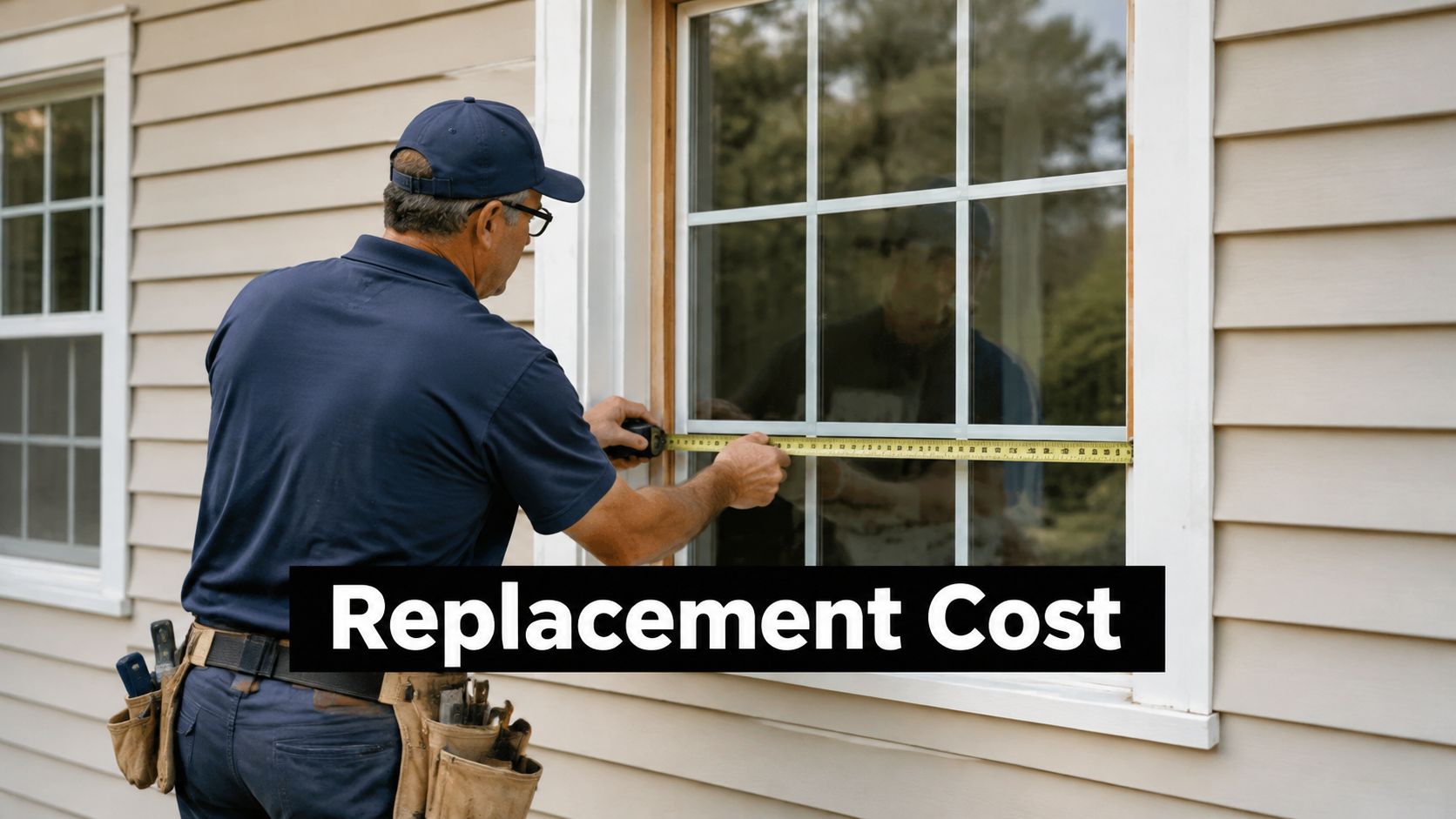
A Richland window replacement typically costs $450 to $1,200 per window installed, with the most common job landing near $600 per window. Treat that figure as a starting point, because your final Richland window replacement cost is controlled by three separate decisions: how many openings you replace, which glass and frame package you choose, and how difficult the installation will be.
A ten-window project can look affordable on a per-window basis and still produce a large contract total. Two homes with the same number of openings can also receive quotes that differ by thousands because one needs insert replacements while the other requires full-frame removal, new trim, custom sizing, or structural repair. The right way to evaluate a quote is to separate those variables instead of chasing a single headline price.
Table of Contents
- What Richland Homeowners Pay in 2026
- Window Style and Material Price Comparison
- Labor Versus Materials on a Real Quote
- Add-On Costs That Move the Final Number
- Sample Project Estimates by Home Size
- Energy Savings, Comfort, and Long-Term Value
- Getting an Accurate In-Home Estimate
What Richland Homeowners Pay in 2026
Replacement-window estimates for Richland, Washington, range from $300 to $1,000 per window, while a standard double-hung runs around $450 and higher-end or custom units can exceed $1,200. Labor commonly adds $100 to $300 per window, based on access, removal work, sizing, and finish requirements, according to this Richland replacement-window cost guide.
For an installed project, a practical budgeting range is $250 to $1,200 per window. The most common job is around $600, and many installations fall near $450 to $650 per window, according to this Richland, OH replacement-window pricing reference. Use that range to screen quotes, not to approve one. Product choices and site conditions determine the final contract.
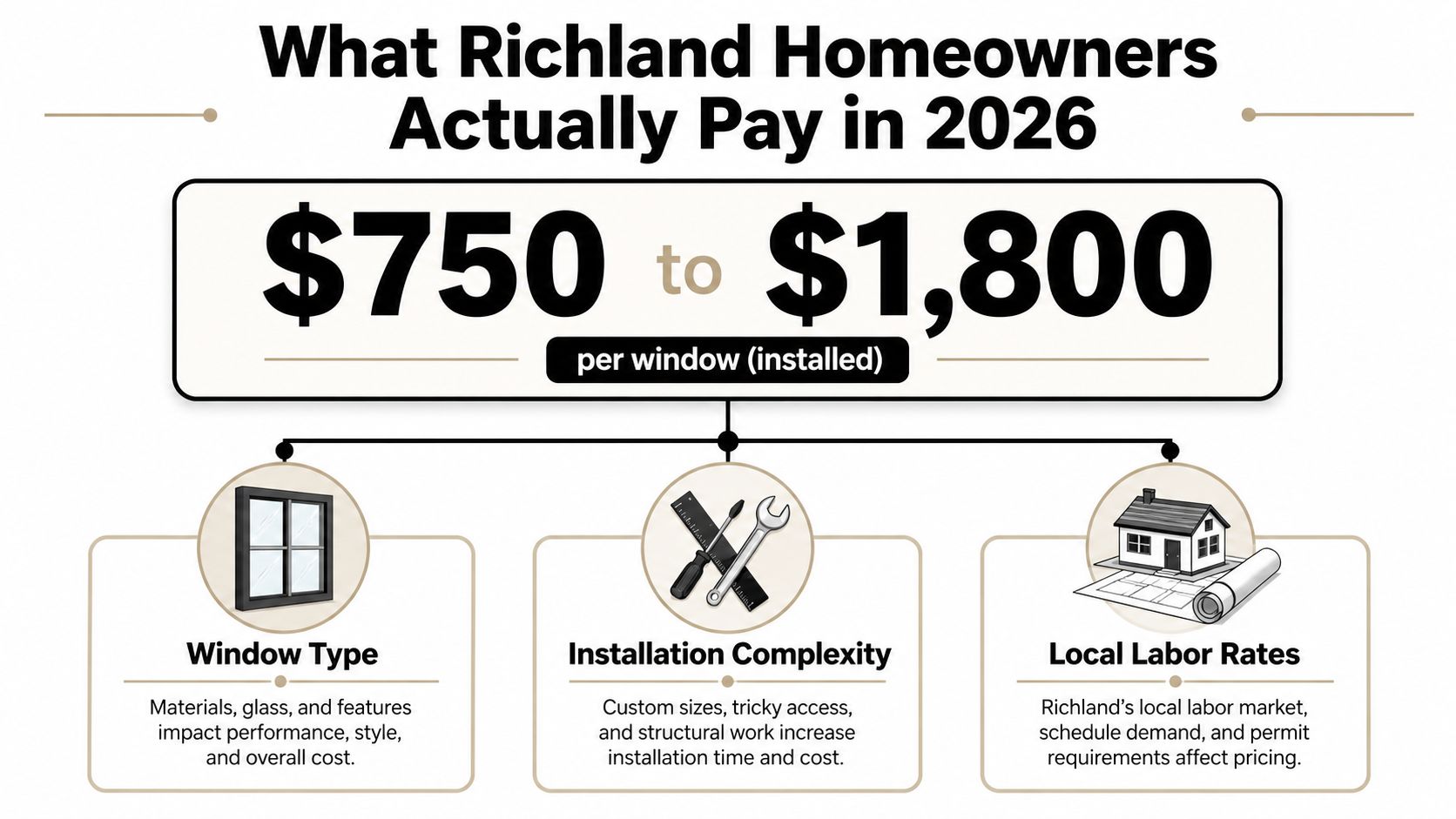
Three decisions control the quote
Window count and style set the project's base cost. Replacing several openings raises the total, even when the per-window price improves. Bay, bow, picture, and unusually shaped units cost more than standard windows because they require different products and installation steps.
The glass and frame package sets the product tier. Vinyl is usually the economical starting point. Fiberglass, wood-clad, composite, Low-E coatings, gas fills, and triple-pane systems raise the material price. Pay for upgraded glass where rooms overheat, feel drafty, or face heavy sun exposure. Otherwise, a standard double-pane package may be the better use of the budget.
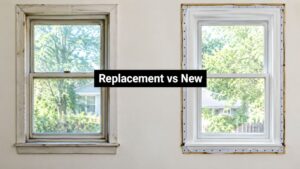
Installation complexity can move the number more than the brand. An insert replacement leaves much of the existing frame in place. A full-frame replacement removes the old unit, exposes the opening, and can require new flashing, trim, insulation, or repairs. Confirm which method the quote includes before comparing prices.
National guidance provides another reference point. Installed pricing commonly clusters around $750 to $1,047 per window, with many projects ranging from roughly $450 to $1,200, according to the Modernize replacement-window cost calculator. A ten-window U.S. project often falls between $7,000 and $12,000, while larger whole-home work can approach $18,000 or more, depending on materials and scope.
Practical rule: Compare installation scope before comparing window prices. A cheaper insert quote is not equivalent to a full-frame quote.
Window Style and Material Price Comparison
Window style affects the final quote through the amount of glass, operating hardware, access requirements, and fit within the existing opening. Material sets the product tier, maintenance needs, durability, and thermal performance. Treat those as separate decisions from the number of windows being replaced. A larger project can still cost less per opening, while a premium glass package or difficult installation can raise the total independently.
The table below gives a practical qualitative comparison. Exact installed pricing depends on opening size, glass specification, trim, removal work, and whether the installer uses an insert or full-frame method. Standard double-hung units generally sit near the lower end of the range, while custom units can exceed $1,200. Unusual shapes and assemblies require a separate quote rather than a standard per-window allowance.
Installed Cost by Window Type and Material
| Window Style | Vinyl | Fiberglass | Wood-Clad | Composite |
|---|---|---|---|---|
| Double-hung | Entry to mid-range, practical for common openings | Mid-range, rigid and low-maintenance | Premium, traditional appearance | Mid-range to premium, durable finish options |
| Casement | Mid-range, efficient seal and simple lines | Mid-range to premium, strong for larger sashes | Premium, excellent for architectural interiors | Mid-range to premium, suitable for performance-focused remodels |
| Picture | Mid-range for standard sizes | Mid-range to premium for broad openings | Premium, often selected for design impact | Mid-range to premium, useful where appearance and rigidity matter |
| Sliding | Entry to mid-range, familiar operation | Mid-range, better rigidity for larger panels | Premium and less common | Mid-range to premium, useful for upgraded patio-style openings |
| Bay | Premium because of projection, support, and finish work | Premium, strong for structural demands | Premium, favored for classic interiors | Premium, balances design and maintenance |
| Bow | Premium because multiple units form a curved assembly | Premium, useful where stiffness matters | Premium, high design and finish expectations | Premium, appropriate for custom remodeling |
Vinyl is the practical starting point for a clean, durable replacement without paying for a premium frame. It performs well through hot summers and cold winters when matched with properly specified insulated glass, and it keeps maintenance simple. Choose it for common openings where appearance and predictable cost matter more than a wood interior.
Fiberglass belongs on the shortlist for larger openings and rigid frames. It gives the project a more substantial product without the upkeep associated with painted wood. Wood-clad windows fit period homes, high-end renovations, and interiors where natural wood is part of the design. They also require regular attention to finish condition and moisture control.
Composite frames occupy the middle ground. They provide a refined appearance, dimensional stability, and less maintenance than traditional wood. The frame cannot compensate for poor installation. Weak flashing, incomplete insulation, or inadequate sealing can undermine any material choice.
Glass deserves its own line in the quote. Upgrade to Low-E coatings, gas fill, or triple-pane construction when a room overheats, feels drafty, or receives strong sun. For shaded rooms with comfortable temperatures, a standard double-pane package usually protects the budget better.
Custom sizes and non-standard shapes create the largest pricing surprises. Bay and bow assemblies need support and finish coordination, while oversized picture windows can require extra handling and interior or exterior repair. Ask for the product specification, glass package, and installation scope as separate quote lines. That breakdown shows whether the cost comes from the window count, the materials, or the complexity of fitting it into the home.
Labor Versus Materials on a Real Quote
A window estimate should tell you what you're buying, how the crew will install it, and what happens if the opening contains damage. The window itself is only one part of the project. Glass, frame, hardware, flashing, insulation, sealants, trim, removal, cleanup, and warranty coverage all belong in the conversation.
A useful planning model places materials at roughly 60% to 70% of the project and labor and overhead at roughly 30% to 40%, as represented in the required labor versus materials cost infographic. Treat that as a quote-review framework, not a fixed rule. A difficult opening can make labor a larger share, while premium glass and frame packages can make materials dominate.
What materials cover
Material lines should identify the frame, glass package, sash, hardware, screens, and exterior finish components. Look for the glass configuration rather than accepting labels such as “energy efficient.” A clear specification should identify whether the unit includes Low-E glass, an inert-gas fill, or a multi-pane upgrade.
What labor covers
Labor includes removal, preparation, setting, shimming, fastening, insulation, sealing, flashing, trim work, adjustment, and cleanup. Insert replacement usually costs less because the existing frame and surrounding finishes remain largely intact. Full-frame replacement costs more because the crew exposes the rough opening and takes responsibility for conditions behind the old unit.
Crew access also matters. A ground-floor opening with clear exterior access is simpler than an upper-level window above a slope, a tight side yard, or an opening blocked by interior cabinetry. Rotten sills, failed framing, old exterior capping, and damaged casing add time even when the replacement window itself is standard.
Bid test: Put both estimates into the same order: window style, frame, glass, removal, installation method, trim, repairs, disposal, warranty, and payment terms.
For more context on deciding between a targeted fix and a broader project, use this window replacement versus window repair cost comparison. The important distinction is scope. A quote isn't padded merely because labor is visible, and a low labor line isn't a bargain if it excludes preparation, sealing, or finish work.
Add-On Costs That Move the Final Number
The final Richland window replacement cost depends on three separate decisions: window count, glass package, and installation complexity. Add-ons should appear as separate line items so you can see which choice moves the total.
Low-E glass is one of the most practical upgrades for a Treasure Valley home. It limits unwanted heat transfer and helps manage solar exposure. ClimaTech glass packages belong in the same comparison. Require the estimate to identify the exact glass specification instead of hiding it under a broad “premium window” label.
Argon or krypton gas fills raise the insulated-glass package. They can improve thermal performance, but they cannot correct a leaking frame or weak perimeter seal. Confirm whether the gas fill is included and ask for the applicable glass warranty.
Triple-pane glass adds a larger product cost. I recommend considering it for rooms with persistent temperature swings, bedrooms facing traffic, or spaces where sound control matters. It is not the right upgrade for every opening. A well-installed double-pane Low-E package often delivers better value when the existing frame, window orientation, and comfort problem do not justify the added glass.
Finish work and opening repairs
Interior trim and casing repairs often appear after the installer inspects the opening. Exterior capping or color-matched cladding protects exposed trim and improves the finished appearance, but fabrication and labor increase the estimate.
Structural repairs deserve closer attention than cosmetic work. Rotten sills, damaged frames, and weakened rough openings must be corrected before the replacement can perform properly. New-construction wraps may also be required when removal exposes conditions that an insert installation would leave hidden.
Project logistics
Permits can apply based on the jurisdiction and project scope. Haul-away and disposal may also appear as separate charges. Do not assume either item is included because the quote says “installation.” Get every inclusion confirmed in writing.
A national cost overview places replacement projects between $300 and $2,500 per window installed. Energy-efficient mid-range units often fall around $800 to $1,400, while premium triple-pane systems can reach $1,500 to $3,000 or more, according to this replacement-window cost analysis. Use those figures as broad context, not a Richland bid. Your window count, glass package, and installation conditions determine the actual number.
For incentive planning, review this 2026 window replacement tax-credit guide. The federal Energy Efficient Home Improvement Credit under Section 25C no longer applies to qualifying property placed in service after December 31, 2025, as explained in this 2026 federal window-credit status guide. Do not subtract a historic federal credit from a 2026 estimate without verifying a current, applicable program.
Sample Project Estimates by Home Size
Per-window pricing becomes useful only after you multiply it by the actual scope and add the installation conditions. The following planning scenarios use the infographic's ranges and are best treated as budgeting brackets, not firm bids.
Small five-window upgrade
A five-window project often focuses on the rooms with the worst drafts, failed seals, or most direct sun exposure. A planning range of $3,750 to $9,000 installed appears in the required project estimate chart, with the lower end better suited to standard openings and the upper end more consistent with premium glass, higher-grade frames, custom sizing, or demanding finish work.
Build the request around a room-by-room scope. Replacing five ordinary openings is not the same as replacing five large casements or a bay assembly. Ask the installer to identify which portion is product, which portion is labor, and which portion covers repairs or trim.
Medium ten-window project
A ten-window whole-home job commonly budgets between $7,500 and $18,000 installed using the chart's planning range. National references also place many ten-window projects around $7,000 to $12,000, while premium materials, full-frame work, and custom conditions can push the total higher, as shown in the national replacement-window cost guide.
The practical advantage of this size project is consistency. You can standardize the glass package across most rooms, reduce mismatched sightlines, and compare bids using the same product schedule.
Larger custom scope
A fifteen-window or larger project can land around $11,250 to $27,000 or more, according to the required estimate chart. Patio doors, bay or bow windows, oversized picture units, and extensive frame repairs can move the final contract beyond the simple multiplication of a standard unit price.
For a nearby-market comparison, see this Kennewick window replacement cost guide. Use comparisons carefully. Local labor, access, permitting, home age, product selection, and installation method can all change the result, even within the same general region.
Budgeting advice: Request a total project price and a line-item schedule. The total tells you what you'll spend, while the schedule tells you why.
Energy Savings, Comfort, and Long-Term Value
A replacement window earns its cost by fixing a specific problem: drafts, uneven room temperatures, solar heat, or outside noise. In Treasure Valley homes, the result depends on three separate decisions, window count, glass package, and installation complexity. Better glass cannot compensate for a poorly sealed opening or damaged frame.
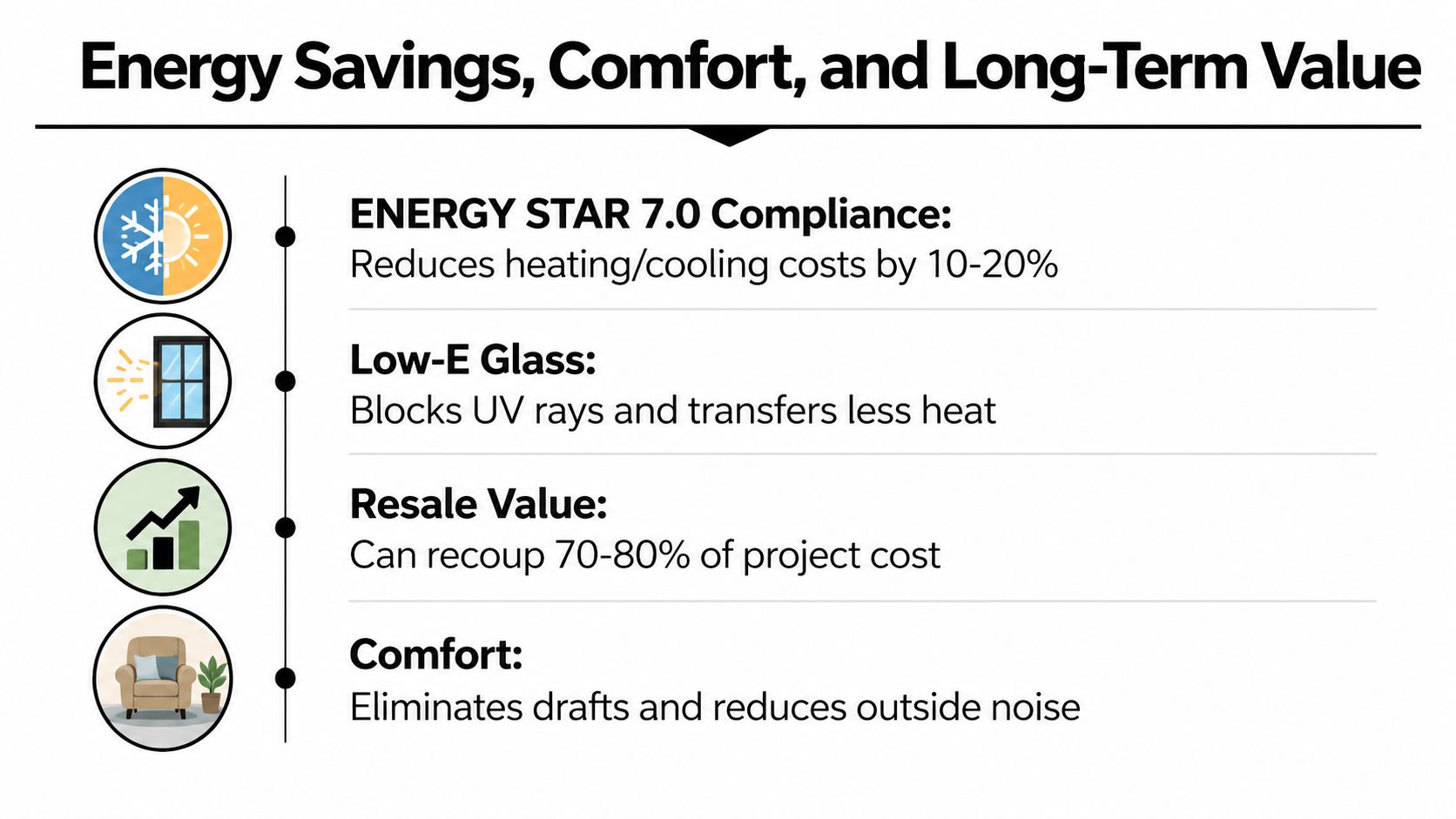
ENERGY STAR 7.0 compliance gives you a useful performance target when the product and climate-zone requirements fit the home. Low-E coatings reduce unwanted heat transfer and limit ultraviolet exposure. Argon fill supports the insulated glass system. Triple-pane glass adds insulation and sound control, but it also increases cost and weight. Specify it where the comfort or acoustic improvement justifies both.
Choose the upgrade that solves the room's problem
Room orientation and use should determine the package.
- Sunny living rooms: Choose glass that controls solar heat and protects furnishings from UV exposure.
- Bedrooms and offices: Prioritize stronger insulation and sound control, particularly near busy corridors.
- Cold or drafty rooms: Check frame condition and perimeter sealing first. Correct installation matters before a higher glass specification.
- Large openings: Confirm sash weight, frame rigidity, hardware, and structural support before choosing heavier glass.
The right question is not whether premium windows pay for themselves. Ask which upgrade addresses the cost and discomfort you already have. Mid-range energy-efficient units commonly run around $800 to $1,400 installed, while premium triple-pane systems can reach $1,500 to $3,000 or more, based on the previously cited replacement-window cost guidance. That premium makes sense in a frequently occupied room with noticeable heat gain, cold glass, or noise. It is not automatically justified for every opening.
A 2026 payback calculation should exclude the federal 25C window credit. Qualifying property placed in service after December 31, 2025 no longer qualifies under that credit, as noted earlier. Judge the project by comfort, utility use, maintenance, noise, appearance, and how long you expect to remain in the home.
A lifetime limited warranty covering products and labor can strengthen long-term value. Financing through Synchrony may spread the cost when the home needs a complete upgrade, but review exclusions, interest, and repayment terms before signing. Warranty coverage does not correct inaccurate measurements or poor installation.
Getting an Accurate In-Home Estimate
A phone quote can't reveal a hidden rotten sill, an out-of-square opening, difficult exterior access, or interior trim that won't survive removal. A reliable estimate begins inside the home, measures each opening, and records the installation method instead of applying one average price to every window.
What the consultation should include
A thorough visit should cover:
- Custom measurements: Each opening should be measured individually, especially in older homes or remodeled rooms.
- Frame assessment: The installer should check sills, jambs, trim, drainage, operation, locks, and signs of moisture.
- Installation review: Ask whether the proposal uses insert or full-frame replacement and what happens if concealed damage appears.
- Finish scope: Confirm interior casing, exterior capping, insulation, sealants, screens, and cleanup.
- Written pricing: The estimate should separate product, labor, repairs, disposal, warranty, and any financing terms.
A professional crew should protect the work area, remove debris, and leave the opening weather-tight. Same-day estimate delivery can be convenient, but speed matters less than accurate measurements and a complete scope.
Bring photos of problem windows, a list of rooms you want prioritized, and questions about glass performance. Ask for the exact frame material, pane configuration, Low-E specification, gas fill, color, hardware, warranty coverage, and installation method. Then compare proposals line by line, not by the largest discount.
C & C Windows & Doors offers free in-home consultations, custom measurements, same-day estimates, debris-free installation, and a lifetime limited warranty on products and labor for Treasure Valley homeowners. Visit C & C Windows & Doors to request an estimate and get a window replacement plan based on your home's openings, glass needs, and installation conditions.