
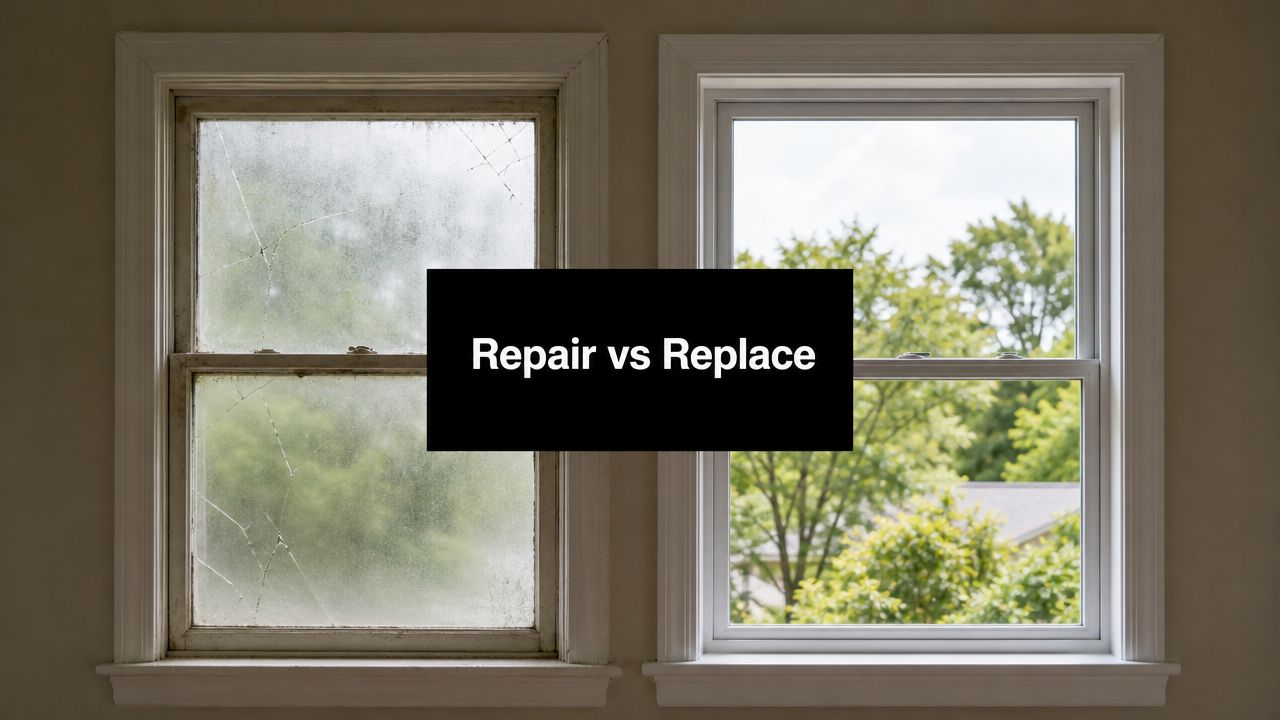
If you're staring at a foggy pane, a drafty bedroom, or a window that fights you every time you open it, you're probably asking the same question most Boise homeowners ask first. Should I fix this thing, or is it finally time to replace it?
Here's the straight answer. Repair is cheaper upfront. Replacement is often cheaper in the long run. The right call depends on the age of the window, the condition of the frame, and whether you're solving one isolated problem or trying to stop a pattern of failure.
In the Treasure Valley, that decision matters more than people think. Our homes take a beating from summer heat, winter cold, dry air, and a lot of sun. A small repair can absolutely be the right move. But I've seen plenty of homeowners spend money patching old windows that were already on borrowed time. That's usually the expensive way to save money.
Table of Contents
- The Upfront Cost Breakdown Repair vs Full Replacement
- Factors That Influence Your Final Price
- Beyond the Sticker Price The ROI of New Windows
- The Treasure Valley Difference Climate Considerations
- Real-World Scenarios When to Repair vs When to Replace
- Making the Investment Affordable With Financing and Incentives
- Your Next Step to a Comfortable and Efficient Home
The Upfront Cost Breakdown Repair vs Full Replacement
Let's answer the money question first. For a practical baseline, window repair typically runs about $100 to $600 per window, while replacement commonly starts around $300 to $1,500 per window, depending on frame material, installation method, and upgrades, based on 2026 homeowner cost data summarized here. That same source says the average U.S. replacement project is about $7,355 for roughly 10 windows, or about $750 per window.
That's the core of any honest window replacement vs window repair cost comparison. Repair usually wins on day one. Replacement often wins over the life of the home.
| Service | Typical Cost Range (Per Window) | Best For |
|---|---|---|
| Minor repair | $100 to $400 | Broken pane, hardware issues, weatherstripping, isolated problems |
| General repair baseline | $100 to $600 | Older windows with one fixable issue and a sound frame |
| Full replacement | $300 to $1,500 | Aging windows, failed seals, damaged frames, efficiency upgrades |
What those numbers mean in real life
A targeted repair makes sense when the problem is narrow. One cracked pane. One failed latch. One draft caused by worn weatherstripping. If the rest of the window is in good shape, spending a few hundred dollars can be the smart play.
Replacement is different. You're not just paying for new glass. You're paying for a new operating unit, a new seal system, updated materials, and a reset on an aging component of the house.
Practical rule: If the frame, sash, and seal are still solid, repair is usually worth trying first. If those parts are failing too, replacement is usually the cleaner answer.
Why homeowners get tripped up
They compare one repair invoice to one replacement quote and stop there. That's too shallow. The real comparison is this: are you buying a fix, or are you buying years of fewer problems?
In Boise-area homes, I've seen old windows get repaired once, then again, then recaulked, then adjusted, then patched around the trim. At some point, you're funding decline. If you want a clearer local pricing baseline, this guide on window replacement cost in Boise, Idaho is worth reviewing before you ask for estimates.
Factors That Influence Your Final Price
Two windows can look similar from the street and cost very different amounts to repair or replace. That's normal. Price follows complexity.
Window type changes everything
A simple fixed picture window is one thing. A casement window with hardware, crank components, and tighter sealing points is another. A slider has different wear points. A double-hung has moving sash components that can fail in their own way.
Repair costs rise when the issue involves parts that are harder to match, more labor-intensive to access, or tied to multiple moving components. Replacement costs rise when the unit is larger, the style is more complex, or installation access is difficult.
Frame material matters more than most people realize
Vinyl, wood, and composite frames don't age the same way. Wood can be beautiful, but it can also bring rot, swelling, paint failure, and more labor during repair. Vinyl is usually lower-maintenance, but lower-quality older vinyl units can warp or lose structural integrity over time. Composite and reinforced designs often hold shape better, but they may cost more upfront.
If you're weighing materials for an Idaho home, this breakdown of vinyl vs wood windows for Idaho is useful because the right material here isn't always the same as the right material in a milder climate.
The damage itself drives the quote
A broken pane is not the same thing as a rotten sill. A bad lock is not the same thing as a failed insulated glass unit plus a sagging sash.
Here's one way to view it:
- Small, isolated issue: Usually repair territory.
- Water damage in frame or trim: Usually more serious than homeowners expect.
- Repeated seal failures: Often a sign the window system is aging out.
- Operation problems across several windows: Usually points to replacement, not another round of service calls.
If more than one part of the window is failing, the quote starts looking less like a repair and more like a rescue mission.
Glass package and labor complexity add cost
Glass upgrades matter. Double-pane, triple-pane, Low-E coatings, and gas fills all affect replacement pricing. They also affect comfort and efficiency, especially in homes with heavy sun exposure.
Labor matters too. Ground-floor access is easier than upper-story work. A clean insert job is simpler than a project that exposes hidden damage. Homes with older trim details, settling, or signs of moisture intrusion can take more time to do right.
That's why online calculators only get you so far. The final price comes from what the installer finds once they inspect the actual opening, frame condition, and surrounding materials.
Beyond the Sticker Price The ROI of New Windows
The biggest mistake homeowners make is treating windows like a pure expense. That's not how this works. In many cases, replacement is an efficiency upgrade, a comfort upgrade, and a maintenance reset all at once.
Energy savings are real, but payback depends on the starting point
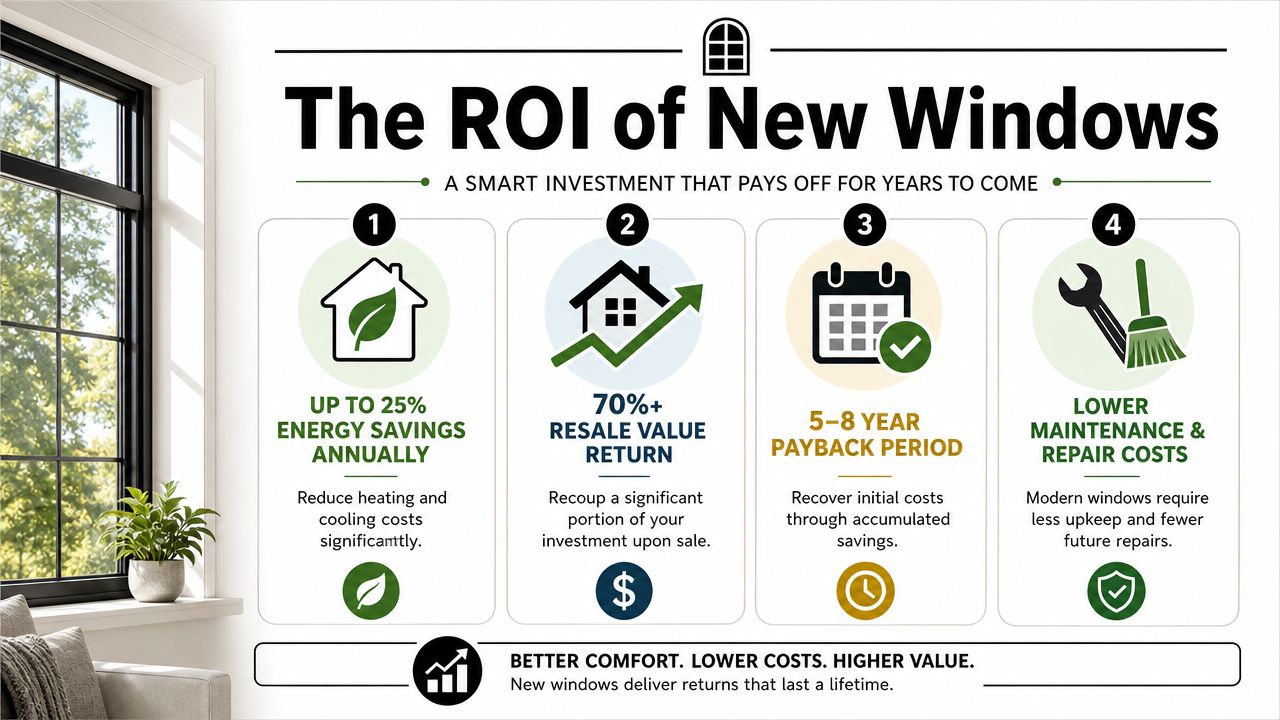
Consumer Reports says Energy Star estimates that installing new Energy Star certified windows can reduce the average homeowner's energy bills by about 13%, and the same Consumer Reports guide says a homeowner survey reported by This Old House found nearly 67% of respondents saved $25 to $100 per month after installing new windows, as covered in this Consumer Reports replacement window buying guide.
That's the upside. Here's the honest counterpoint. Not every replacement produces a fast payback. The same guide notes that some analyses of older wood windows found replacement payback could stretch far beyond what most homeowners expect.
So my opinion is simple. Don't buy windows based on fantasy payback math. Buy them when they solve multiple problems at once. If the house is uncomfortable, the windows are failing, and your energy use is high, replacement makes sense. If you have one minor issue on a relatively modern unit, repair may still be smarter.
ROI is bigger than the utility bill
Homeowners usually focus on heating and cooling savings because they're easy to understand. Fair enough. But ROI also shows up in places people forget to count:
- Less repeat repair work: Older windows tend to keep asking for attention.
- Better comfort: Rooms near old glass often become the rooms nobody wants to sit in.
- Easier operation: Newer windows open, close, lock, and clean better.
- Stronger resale appeal: Buyers notice old windows fast, especially when they look tired from the curb.
For a broader homeowner view, this article on window replacement ROI and home value is a good next read.
A window that still technically exists isn't always a window worth keeping.
The long-term view usually decides it
If you're planning to stay in your home, short-term thinking gets expensive. A cheap fix on an old, inefficient window can buy a little time. It rarely changes the bigger equation.
A replacement costs more because it solves more. You're addressing the glass, the seals, the hardware, the frame condition, and the day-to-day performance of the opening. That's why the best window replacement vs window repair cost comparison always looks past the invoice and asks what happens over the next several years.
The Treasure Valley Difference Climate Considerations
Generic advice falls apart fast in Boise. Our climate doesn't let weak windows hide for long.

Hot summers expose weak glass and weak seals
Treasure Valley summers hammer west-facing and south-facing windows. If you've got rooms that cook in the afternoon, old glass and tired seals are often part of the problem. Homeowners feel it first as glare, hot spots, and AC systems that seem to run forever.
That's where modern glass packages matter. Low-E coatings help manage solar heat gain. Argon-filled insulated units improve thermal performance. In this climate, those aren't luxury add-ons. They're practical tools.
Cold snaps punish old frames
When winter hits, marginal windows show their age fast. You feel drafts around the sash, near the stool, and along the meeting rails. Condensation becomes more obvious. Some windows get stiff. Others rattle when the wind picks up.
Repair can help if the issue is limited to weatherstripping or hardware. But if the frame is worn, the sash has lost alignment, or the insulated glass has already failed, patching it rarely restores real performance.
Dry air and sun speed up certain failures
The Treasure Valley's dry conditions and strong sun aren't gentle on exterior components. Caulk ages. Finishes break down. Materials expand and contract. Homes with older builder-grade windows often reach the point where several small problems show up together.
That combination matters. One issue is a repair conversation. Several issues at once usually mean the unit is nearing the end of its useful life.
Boise homeowners don't need windows that look decent on paper. They need windows that hold up through sharp seasonal swings.
That's why climate-specific features matter so much here. Narrow frames can improve glass area and views, but the full package matters more: reinforced sashes, durable seal systems, reliable drainage design, and glass options built for four-season performance.
Real-World Scenarios When to Repair vs When to Replace
Theory is fine. Real houses are better. These are the situations Treasure Valley homeowners run into all the time.
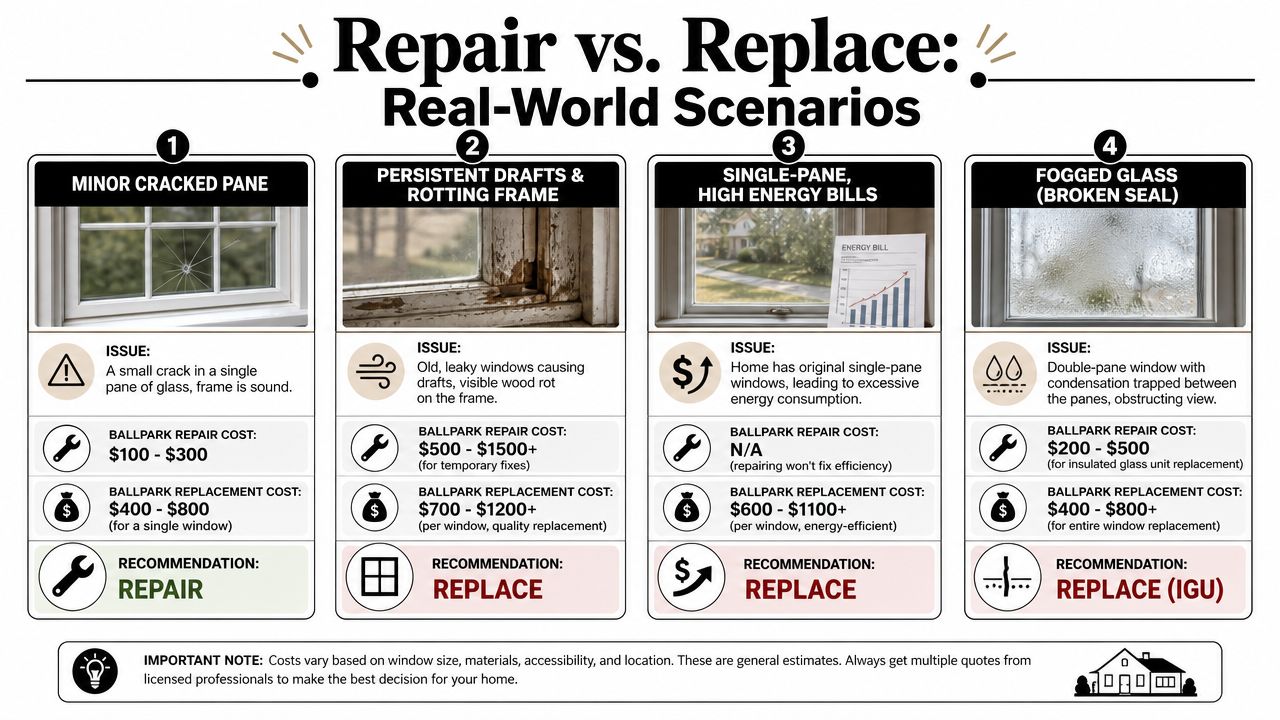
Published repair ranges for minor issues such as replacing a broken pane, fixing hardware, or adding weatherstripping often cluster around $100 to $400 per window, while full replacement commonly starts around $300 to $1,000+ per window with installation included, according to this summary on repairing windows versus replacing them. That source also notes replacement often costs roughly 3x to 10x more upfront than a targeted repair.
Scenario one with one bad pane and a solid window
You've got one cracked pane. The window is not old. The frame is square. It opens and locks properly. No visible water damage, no recurring condensation between panes, no draft around the perimeter.
My recommendation: repair it.
This is what repairs are for. Fix the isolated issue and move on. Replacing the whole window in this case is usually unnecessary.
Scenario two with foggy glass on one otherwise healthy unit
One double-pane unit has condensation trapped between the panes. The rest of the home's windows still operate well. The frames look good. No signs of rot or widespread air leakage.
My recommendation: repair the glass unit if the rest of the window is still healthy.
A failed insulated glass unit doesn't always mean the whole assembly needs to go. But if that fogged glass shows up on several windows, the conversation changes fast.
Scenario three with drafts, sticking sashes, and multiple old windows
This is the common Boise story. The windows are older. Several are hard to open. A few are drafty. One or two have moisture issues. The homeowner has already caulked around them more than once.
My recommendation: replace them.
At that point, you are not dealing with one repair. You're dealing with an aging system. Piecemeal fixes can drag the problem out, but they rarely make the home feel substantially better.
Scenario four with frame damage or soft wood
You press near the sill or lower frame and it feels soft. Paint is failing. Trim has dark staining. Maybe the sash still moves, maybe it doesn't.
My recommendation: replace it. No debate.
Water-related frame damage is where homeowners waste money trying to be conservative. If the surrounding components are compromised, a simple repair often turns into a temporary cosmetic fix.
A quick decision checklist
Use this before you spend a dollar:
- Choose repair if the problem is isolated, the frame is sound, and the window still operates correctly.
- Choose replacement if several windows show the same failure pattern.
- Choose repair if you're solving a pane, latch, or weatherstripping issue on a relatively newer unit.
- Choose replacement if you see frame deterioration, chronic drafts, seal failures, or repeated service needs.
- Choose replacement if your real goal is comfort, appearance, lower maintenance, and better efficiency, not just getting through one more season.
Making the Investment Affordable With Financing and Incentives
Even when replacement is the right move, the upfront cost can still sting. That's normal. Good windows are not a small-ticket home improvement.
Break the project into manageable payments
A lot of homeowners make better decisions when they stop thinking in total-project terms and start thinking in monthly-payment terms. Financing can make that possible. Instead of delaying the work and living with discomfort, they spread the cost out and fix the problem now.
That matters when old windows are affecting daily life. If rooms are too hot, too cold, too noisy, or too drafty, waiting another year isn't free. You're still paying in comfort, frustration, and often in higher utility use.
Check incentives before you sign
Energy-related incentives can shift the math in your favor, but you need to verify what applies to your specific products and timing. Rules change. Eligibility can depend on performance ratings and purchase dates. The smart move is to ask for documentation on the window package you're considering and then confirm the current requirements before the project starts.
Don't chase the cheapest payment
Homeowners can encounter difficulties. A low monthly number can hide a weak product, a stripped-down installation scope, or a quote that doesn't fully address what your home needs.
Focus on three things:
- The installation method: Ask what's being removed, inspected, and rebuilt.
- The window package: Confirm the frame, glass, and efficiency features you're getting.
- The warranty coverage: Make sure product and labor coverage are clearly spelled out.
The best financing plan is attached to the right project, not just the smallest payment.
If replacement is justified, financing can make it practical. If replacement isn't justified, financing doesn't magically make it wise. The diagnosis still comes first.
Your Next Step to a Comfortable and Efficient Home
The right answer is usually simpler than homeowners expect. Repair the window when the issue is small and isolated. Replace the window when age, performance, and condition all point in the same direction.
That's the cleanest window replacement vs window repair cost comparison I can give you. Don't overcomplicate it. If you're looking at one broken component on an otherwise healthy window, repair is often enough. If you're dealing with drafts, failed seals, stubborn operation, visible wear, or multiple windows showing the same symptoms, replacement is usually the smarter investment.
In the Treasure Valley, climate makes that decision sharper. Windows here have to deal with hard sun, hot summers, cold winters, and wide seasonal swings. Old or low-performing units don't just look dated. They make rooms less comfortable and homes more expensive to live in.
What to do before you decide
Don't guess from across the room. Get the windows inspected in person. A proper evaluation should look at frame condition, sash alignment, seal failure, glass performance, and signs of moisture damage around the opening.
Then ask one blunt question. “If this were your house, would you repair it or replace it?” A good answer should be direct, specific, and tied to what the window is doing today, not a generic sales script.
My honest recommendation
If you plan to stay in your home and your current windows are clearly declining, replacement is usually worth it. It gives you a better shot at improved comfort, cleaner operation, less maintenance, and stronger long-term value.
If your issue is minor and isolated, don't let anyone talk you into a full-house project you don't need. Good advice cuts both ways. Sometimes a repair is the right answer. But when a window is at the end of the line, another patch job is usually money thrown at a fading problem.
If you're ready for a direct, no-pressure opinion, C & C Windows & Doors offers free in-home consultations for Treasure Valley homeowners. Their local, factory-trained team brings more than 20 years of experience, custom measures every opening, and installs energy-efficient windows built for Idaho's climate. If repair is enough, you'll know. If replacement is the smarter long-term move, you'll get a clear path forward.