
If your Boise electric bill jumps every time the weather swings, you're not imagining it. Treasure Valley homes get hit from both sides. Summer heat pushes air conditioners hard, and winter cold finds every weak spot in your walls, attic, windows, and doors.
Most homeowners make the same mistake first. They chase the most visible upgrade instead of the biggest leak. If you want to know how to lower electric bills in Boise, start with the fixes that matter most in this climate, then move to the upgrades that hold value over time.
Table of Contents
- Find Your Energy Leaks with a Boise-Specific Audit
- Immediate Savings with Smart Habits and Rate Plans
- Tackle Boise's Biggest Energy Drainer Insulation and Air Sealing
- When to Upgrade to Energy-Efficient Windows and Doors
- Claiming Rebates and Fine-Tuning Your Home's Systems
- Your Path to a More Affordable and Comfortable Boise Home
Find Your Energy Leaks with a Boise-Specific Audit
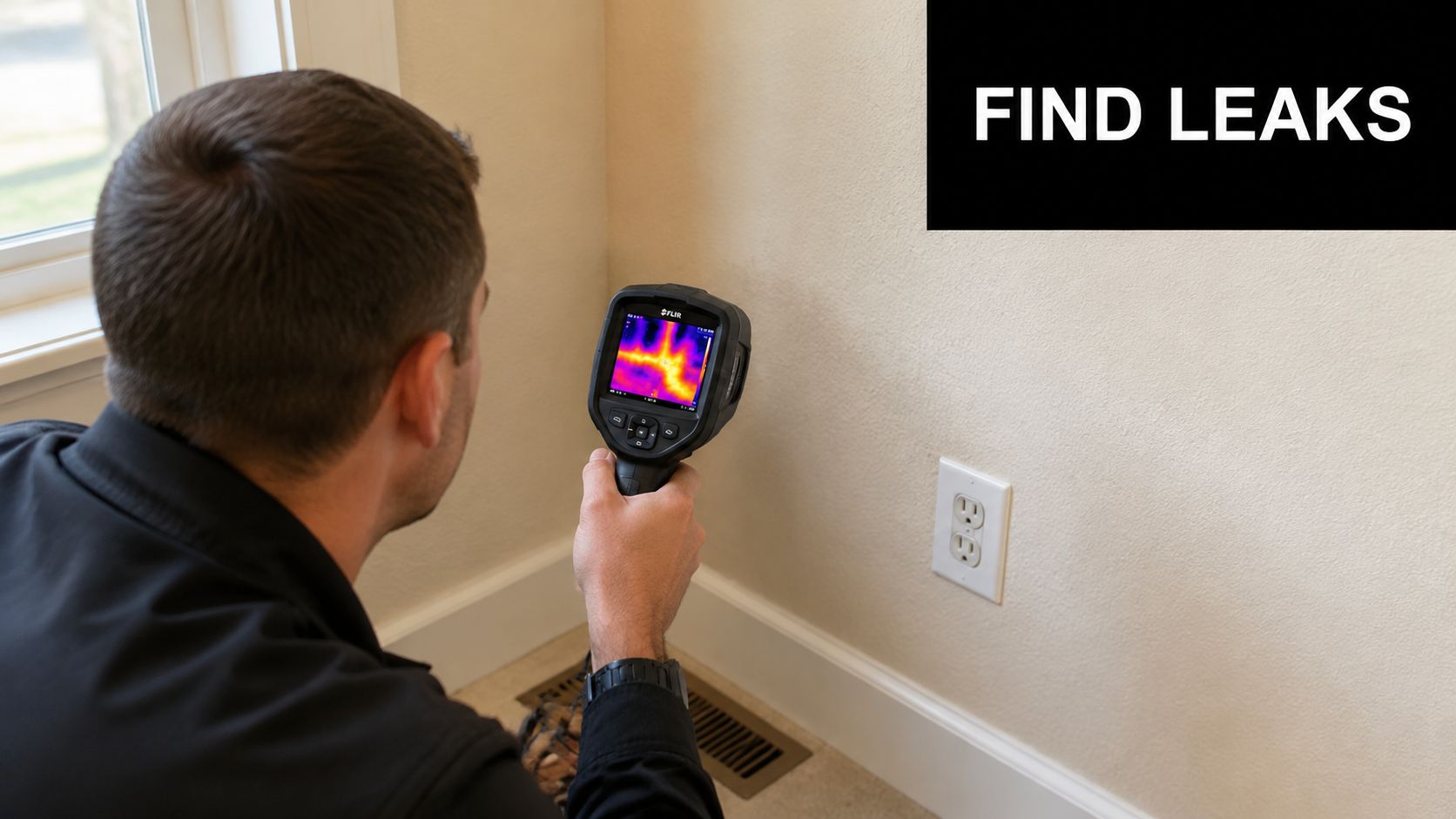
Before you spend a dollar, figure out where your house is bleeding energy. In Boise, the weak points are usually predictable. Drafts around windows and doors, attic insulation that's underperforming, and heavy power use during the hottest part of the day usually show up fast once you start looking.
Start with what you can feel and see
Walk the house on a hot afternoon and again early in the morning. Put your hand around window frames, door thresholds, baseboards on exterior walls, and attic access points. If you feel moving air, that spot goes on the list. If you see daylight under a door or cracked old caulk at a frame, that goes on the list too.
Use a simple process:
- Check windows first: Focus on older units that rattle, stick, or feel hot to the touch in direct sun.
- Move to doors: Pay attention to weather-stripping, sweep seals, and any visible gap at the jamb.
- Look at ceiling penetrations: Recessed lights, bath fan housings, and attic hatches often leak more than homeowners expect.
- Inspect the attic: You're looking for thin coverage, uneven depth, or areas where insulation has shifted away from problem spots.
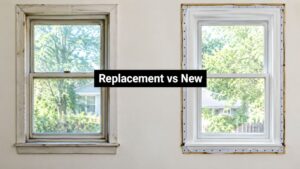
A lot of Boise homeowners jump straight to replacement windows, but old window condition matters more than age alone. If you want a useful checklist for identifying whether yours are costing you real money, this guide on signs your old windows are costing you money in Boise is a solid reference.
Practical rule: If a room is always harder to heat or cool than the rest of the house, treat it like evidence, not a mystery.
Read your bill like a diagnostic tool
Your electric bill can tell you when your house struggles, even before you touch a ladder. Compare summer and winter usage patterns. Then think about what changed. Did one floor stay hotter? Did the AC seem to run longer into the evening? Did a portable unit get added to one room because the main system couldn't keep up?
Also note the age and behavior of your biggest electrical loads. An older refrigerator in the garage, a second freezer, or a tired HVAC system can drive up the bill. You don't need lab-grade precision for this first pass. You need a prioritized punch list.
A useful Boise audit usually ends with three buckets:
- Cheap fixes now: Caulk, weather-stripping, door sweeps, curtain use.
- Mid-cost shell fixes: Attic air sealing and insulation improvements.
- Capital upgrades later: Windows, doors, and major equipment replacement.
That order saves people from spending big before they've handled the low-cost leaks.
Immediate Savings with Smart Habits and Rate Plans
Not every bill problem needs a contractor. Some of the fastest savings come from using power differently, especially during Boise's hottest stretch when cooling loads stack up in late afternoon and early evening.
Use timing to your advantage
Idaho Power's Time-of-Use plan can save money for households using more than 1,300 kWh monthly, and shifting just 5% of on-peak usage from peak to off-peak hours can begin generating savings. The same plan showed July 2025 off-peak pricing at about $0.15/kWh compared with about $0.188/kWh during peak hours, which is a 20%+ difference on that rate structure.
That matters because many homes concentrate power use at the worst possible time. The oven is on, the dishwasher gets loaded after dinner, laundry runs before bed, and the AC is already working hard. Instead of buying new equipment, shift the schedule.
Try this routine for a month:
- Run laundry later: Start the washer and dryer after peak pricing ends if your household schedule allows it.
- Delay dishwashing: Use the delay-start feature and let the machine run overnight.
- Pre-cool strategically: Cool the house earlier, then reduce strain during the most expensive hours.
- Charge devices and batteries off-peak: Small loads add up when they happen every day.
The easiest bill reduction is often behavioral. You keep the same house and the same appliances, but you stop using them at the most expensive time.
Adjust comfort without making the house feel miserable
Boise homeowners usually waste money by overcorrecting. They blast the AC to recover from afternoon heat, then swing too warm or too cool room by room. A steadier approach works better.
Use your thermostat, ceiling fans, and window coverings as a system:
- Curtains on east and west windows: Close them before sun exposure turns those rooms into heat traps.
- Ceiling fans in occupied rooms: Fans don't cool the air, but they do help people feel comfortable at a less aggressive thermostat setting.
- Night flushing when weather allows: Open windows in cooler hours if outdoor conditions cooperate and close things back up before the house starts gaining heat again.
- Zone your habits: Cook outside or use smaller appliances on the hottest evenings when possible.
A practical warning. These habit changes help, but they won't overcome serious air leakage or a badly under-insulated attic. If your upstairs feels like a different climate zone, the structure of the house is likely the bigger issue.
Tackle Boise's Biggest Energy Drainer Insulation and Air Sealing
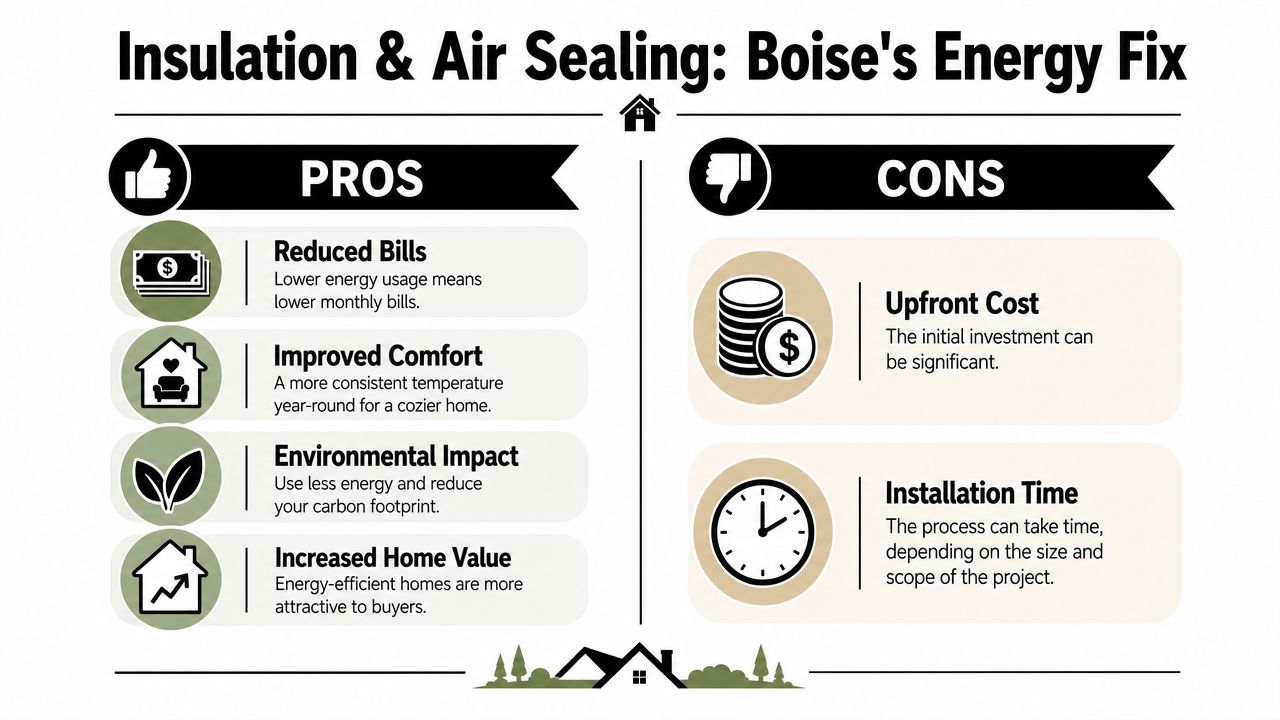
If I had to prioritize one category for many older Boise homes, it would be the attic and the air leaks around it. People notice drafty windows because they can see them. They miss top-of-house losses because they're hidden. That's often where the expensive waste starts.
Why attics deserve attention first
Boise homeowners talk about a familiar problem. The downstairs feels manageable, but the upstairs won't cool properly in summer. That pattern shows up in local Boise Reddit discussion about utility bills and attic insulation, where poor attic floor insulation is highlighted as a reason upper rooms struggle and where insulation supplements often make more sense before expensive window replacement.
That lines up with what many people see in the field. Heat collects at the top of the house, and a weak attic floor lets that heat push into living space. Once that happens, the AC chases the load for hours.
The City of Boise has also put a hard number behind one of the easiest fixes. Boise homeowners can reduce electricity bills by up to 30% through sealing windows and doors, according to the City of Boise's Empower Boise guidance on air leakage and energy savings.
Seal first then insulate
A lot of homeowners get this backward. They add more insulation without stopping the air movement underneath it. Insulation slows heat transfer. It does not fix a leaky shell by itself.
Focus on these areas first:
- Attic bypasses: Plumbing penetrations, wiring holes, and open framing gaps let conditioned air escape upward.
- Recessed lighting and fan housings: Older fixtures can leak badly if they weren't sealed properly.
- Attic access points: Hatches and pull-down stairs often need gasketing or weather-stripping.
- Window and door perimeters: Small gaps around trim and frames can have an outsized effect on comfort.
Once air sealing is handled, insulation becomes much more effective. That's why many homeowners see better results by treating the shell as a system instead of buying one isolated upgrade.
For a broader look at which improvements usually deliver the strongest return in this climate, see energy-efficient home improvements that make sense in Idaho.
Air sealing is the quiet work that makes everything else perform better. If your house leaks, every heating and cooling dollar has a shorter shelf life.
There are trade-offs. Attic work is dusty, awkward, and easy to underestimate. Good crews know where to seal without blocking ventilation paths or creating moisture issues. DIY can work for straightforward access, but complicated attics, older wiring, or questionable venting deserve experienced eyes.
When to Upgrade to Energy-Efficient Windows and Doors
Once the obvious leaks and attic issues are addressed, windows and doors move from “nice upgrade” to “strategic investment.” In Boise, that matters because glass has to deal with cold winters, strong summer sun, and big day-to-night swings.
Know when repair stops making sense
Some windows can be maintained for a while. Others are past the point where patching helps. If you've got original single-pane units, failing seals, frame movement, chronic drafts, or hot and cold spots right next to the glass, replacement becomes easier to justify.
For Boise's mixed climate zone, window savings estimates for Boise homes put the benefit in concrete terms. Replacing original single-pane windows with double-pane Low-E ENERGY STAR-certified windows saves $350 to $550 annually for a typical 2,000 sq ft home, while upgrading to triple-pane Low-E with argon gas increases savings to $450 to $700 per year.
Those numbers matter, but comfort is usually what homeowners notice first. Rooms feel less drafty in winter. West-facing spaces don't heat up as aggressively in summer. The HVAC system doesn't have to fight the envelope as hard.
What the glass package actually does
The label language can get confusing, so keep it simple.
Low-E coatings help reflect heat in the direction you want it to go. In winter, that helps keep interior heat inside. In summer, it helps reduce solar heat gain. Argon gas fill between panes reduces thermal conductivity compared with regular air. One consumer guide notes argon gas fills can reduce thermal conductivity by about 40% compared to standard air, and it also notes that replacing outdated windows with ENERGY STAR-certified double- or triple-pane models can reduce heating and cooling costs by an average of 13% annually when properly selected and installed, according to AAA's guide to cutting utility bills with better windows and insulation details.
Installation quality matters as much as the product spec. The same guidance warns that poor sealing around the window perimeter can negate up to 50% of potential energy savings. That's why details like proper caulk, weather-stripping, sloped sills, and stable sash construction matter in real homes, not just product brochures.
If you're comparing suppliers, focus on features that directly affect Boise performance:
- Low-E glass packages: Better control over heat transfer and solar gain.
- Argon-filled insulated glass: Improved thermal performance over basic air-filled units.
- Composite-reinforced sashes: Useful where long-term rigidity and seal performance matter.
- True sloped sills: Better drainage and less chance of moisture lingering where it shouldn't.
- Climate-appropriate selection: Not every glass package fits every exposure.
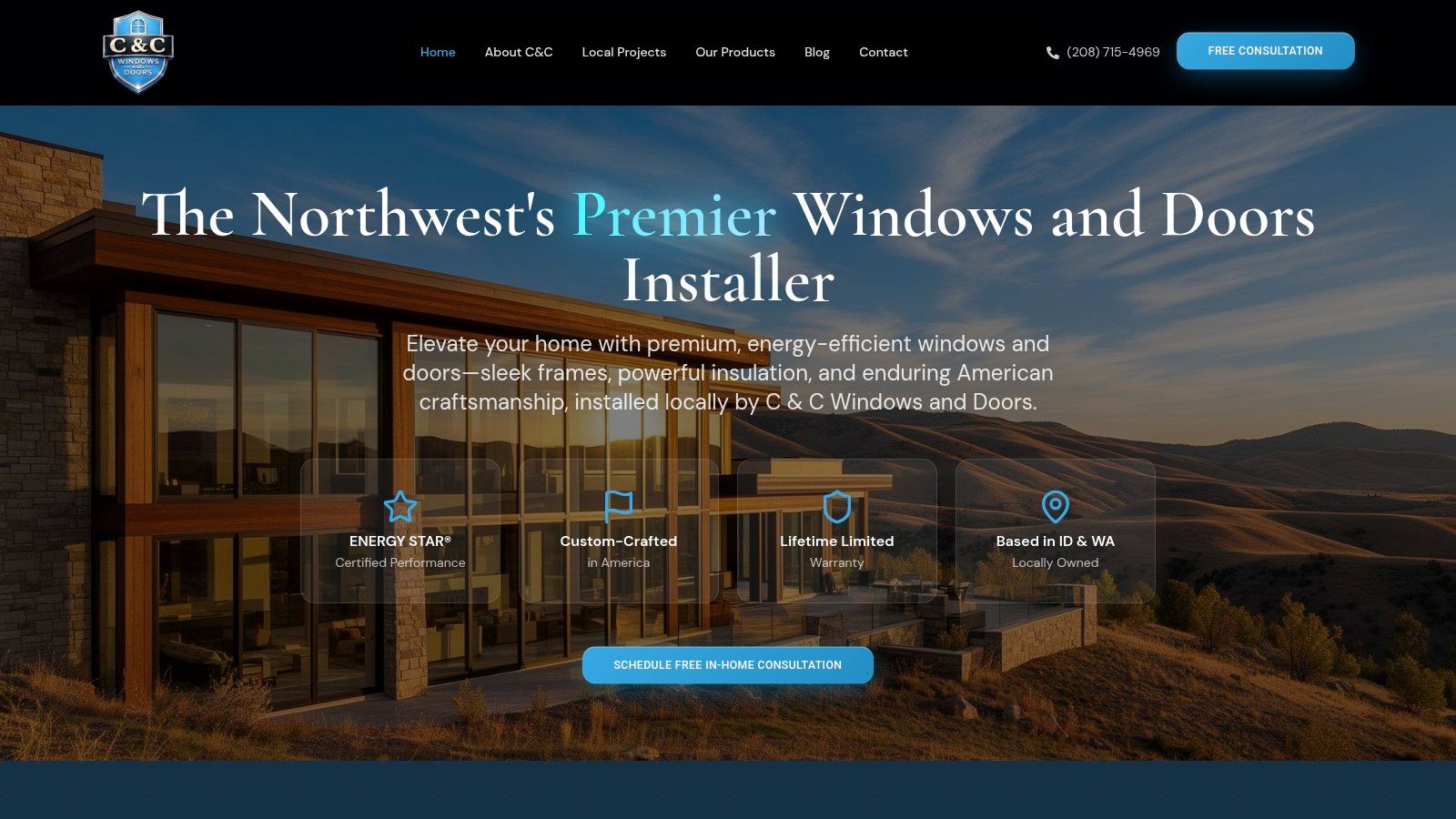
One local option in this category is C & C Windows & Doors' guide to energy-efficient windows for Idaho homes. Their product lineup includes ClimaTech Low-E coatings, argon gas fills, optional triple-pane glass, composite-reinforced sashes, and true sloped sills, which are all relevant details when the goal is reducing heat transfer and air leakage in Treasure Valley conditions.
Don't buy windows on appearance alone. In Boise, the right glass package and the right installation details decide whether the project pays you back in comfort and lower usage.
Boise window upgrade savings comparison
| Upgrade Type | Technology | Estimated Annual Savings |
|---|---|---|
| Replace single-pane with double-pane | Low-E, ENERGY STAR-certified | $350 to $550 |
| Replace single-pane with triple-pane | Low-E, argon gas | $450 to $700 |
Doors deserve a quick mention here too. A leaking front door or old sliding patio door can act like a permanent gap in the envelope. If the threshold leaks, the weather-stripping has failed, or the slab itself transfers heat badly, replacing the door can improve comfort in the surrounding room even if the biggest utility impact still comes from the broader shell.
The main trade-off is budget. Windows and doors aren't usually the first dollar I'd spend in a house with major attic and sealing issues. But once those foundational problems are handled, good replacements become one of the most visible and durable ways to lower electric bills in Boise while improving day-to-day livability.
Claiming Rebates and Fine-Tuning Your Home's Systems
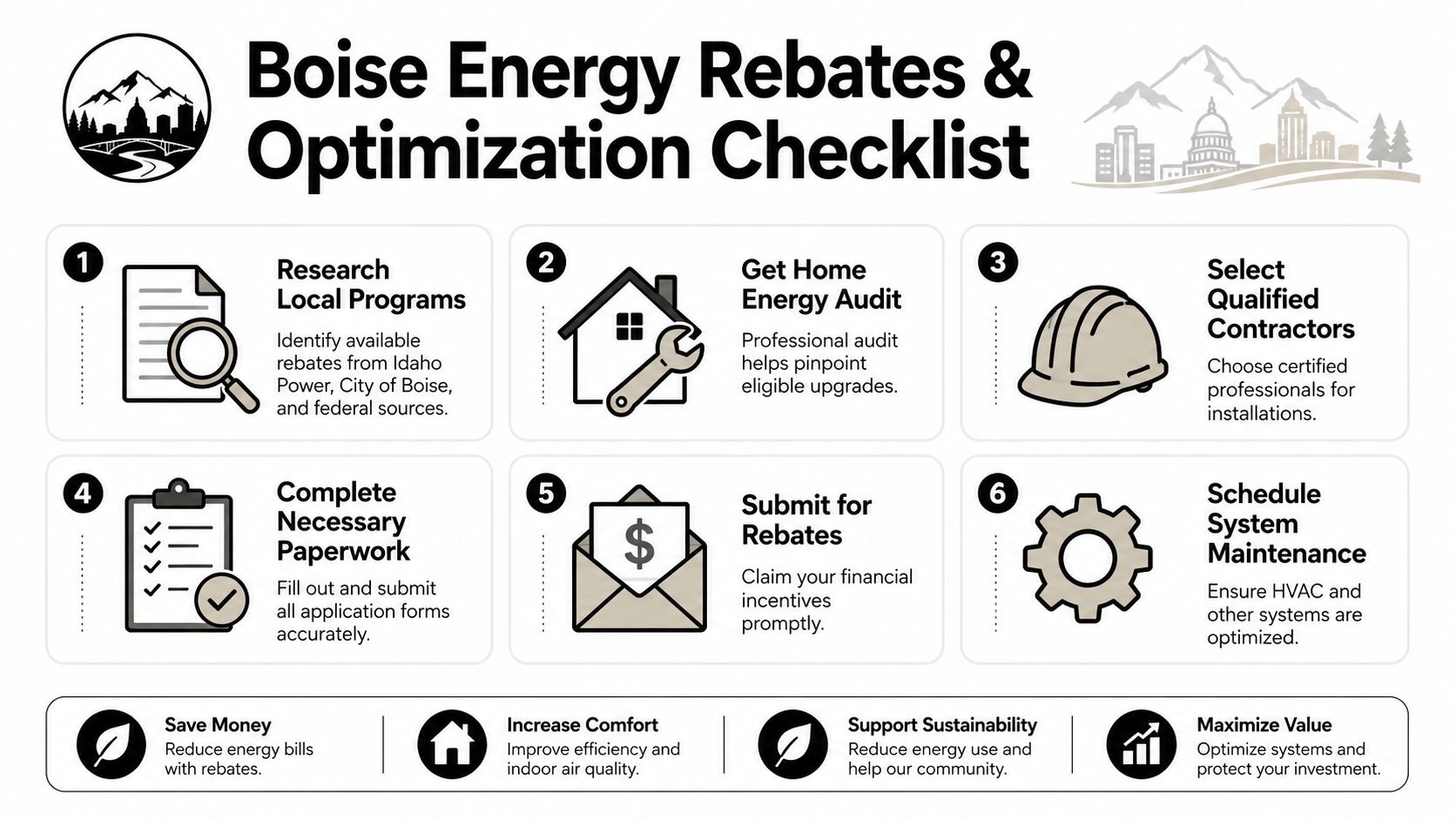
After you've identified the right upgrades, don't leave money on the table. Rebates, proper paperwork, and routine system tune-ups can make the difference between a project that feels expensive and one that feels measured.
Use incentives to shrink the real project cost
For qualifying windows, there may be meaningful utility incentives. As one Idaho-focused rebate overview explains, ENERGY STAR 7.0 windows with a U-factor of 0.22 or lower can qualify for utility rebates of $180 to $225 per professionally installed window in Idaho, and Boise residents should verify current details with Idaho Power through the latest program rules in this overview of Idaho window rebate eligibility.
That doesn't mean every product qualifies. It means you should confirm the exact performance package before signing. Ask for the specification details in writing and make sure the installer's documentation matches the rebate requirements.
A simple rebate workflow keeps things organized:
- Check program rules early: Don't assume the window or door package qualifies.
- Save every document: Proposal, invoice, model information, and installation records all matter.
- Submit promptly: Rebate programs often move on deadlines and documentation standards.
- Verify utility guidance: Idaho Power's current program details should be the final word for local eligibility.
Protect your savings with maintenance and financing choices
A tighter house still needs its mechanical systems to run properly. If your HVAC filter is dirty, the outdoor unit is clogged, or airflow is weak in key rooms, your system burns more electricity than it should. Regular service doesn't create dramatic before-and-after stories, but it helps protect the gains you've already paid for.
Keep the maintenance side simple:
- Change filters on schedule: Restricted airflow makes cooling and heating harder than necessary.
- Keep coils and outdoor units clean: Dirt blocks heat exchange and drags efficiency down.
- Watch for duct issues: Some comfort problems blamed on insulation or windows are really airflow imbalances.
- Test problem rooms after upgrades: If one room still lags badly, dig deeper instead of assuming the work failed.
If a larger project is clearly the right move but the upfront cost is the sticking point, financing can make sense when the scope is disciplined. The wrong time to finance is when you're guessing. The right time is after you've identified the main loss points, chosen the correct upgrade order, and matched the product to the house.
Your Path to a More Affordable and Comfortable Boise Home
Lowering electric bills in Boise usually isn't about one magic product. It's about sequence. Start by finding the leaks. Then fix the cheapest and most damaging problems first. That usually means air leakage, attic weaknesses, and wasteful usage habits before bigger-ticket upgrades.
From there, move into durable improvements that fit Boise's climate. Better windows and doors make more sense after the shell is under control. Rebates and maintenance help stretch every dollar and protect the work you've done.
The payoff isn't only on the bill. A house that stays steadier through Boise summers and winters is easier to live in. Rooms feel more even. Drafts settle down. The HVAC system doesn't have to fight the house all day.
If you've been trying to figure out how to lower electric bills in Boise, use a priority list, not a wish list. That's what gets results.
If old windows or patio doors are still a weak point in your home, C & C Windows & Doors is a Treasure Valley-based option for homeowners who want climate-appropriate replacement products, in-home consultation, custom measurement, and professional installation focused on better sealing, comfort, and long-term energy performance.