
On a cold Boise morning, the problem usually shows up in the same way. You walk past the living room window in socks, and one corner of the room feels noticeably colder than the rest of the house. Then August rolls around, the west-facing rooms heat up by late afternoon, and the AC seems to run nonstop. At that point, most homeowners start asking the same question: should this window be repaired, or is it time to replace it?
That decision matters more in the Treasure Valley than it does in a milder climate. Idaho homes deal with hot sun, dry summer heat, winter cold, and the kind of seasonal swings that expose every weak seal, worn crank, and failed glass unit. A minor issue can stay minor for years, or it can be the first sign that the whole window assembly is on borrowed time.
The good news is that not every bad window needs to be torn out. Some need a targeted fix. Others need to be replaced before you spend more money chasing a problem that won't go away. The smart call depends on what's failing: the hardware, the sash, the insulated glass, or the frame itself.
Table of Contents
- That Drafty Corner and Your Energy Bill
- Quick Decision Checklist Repair or Replace Your Windows
- When a Simple Window Repair is the Smart Choice
- The Tipping Points That Signal Window Replacement
- Cost and Energy Savings Analysis for Boise Homes
- Real-World Boise Scenarios Repair vs Replace
- Your Next Steps to Making a Confident Decision
That Drafty Corner and Your Energy Bill
A lot of Boise-area window decisions start with one room that never feels right.
In January, it's the breakfast nook where you can feel cold air near the glass even when the heat is on. In July, it's the upstairs bedroom that turns bright and hot by midafternoon. Homeowners often assume the answer is obvious. Old window means replace it. Stiff window means repair it. Real life isn't that clean.
The right answer depends on whether you're dealing with an isolated defect or a system failure. A bad crank on a casement window is one kind of problem. A rotted wood frame, failed insulated glass, and chronic draft are another. One can often be fixed without much disruption. The other usually keeps costing you money and comfort until the window is fully replaced.
In Boise and across the Treasure Valley, that distinction matters because our climate puts windows to work year-round. Summer sun beats on south and west elevations. Winter cold exposes weak weatherseals and tired frames. If a window is already marginal, Idaho weather usually makes that fact obvious.
Here's the fast side-by-side view most homeowners need first:
| Condition | Usually points to repair | Usually points to replacement |
|---|---|---|
| Broken lock or crank | Yes | No |
| Minor weatherstripping issue | Yes | No |
| One sash operating poorly but frame is sound | Often | Sometimes |
| Glass fogging between panes | No | Usually |
| Rot in wood frame | No | Usually |
| Frame or pane damage | No | Usually |
| Structural movement or failure | No | Yes |
Practical rule: If the problem is limited to a part that can be serviced, repair is often enough. If the problem involves the frame, panes, insulated glass unit, or structural integrity, replacement usually makes more sense.
Quick Decision Checklist Repair or Replace Your Windows
If you want the short answer before diving deeper, use this checklist. It won't replace an in-home inspection, but it will point you in the right direction.
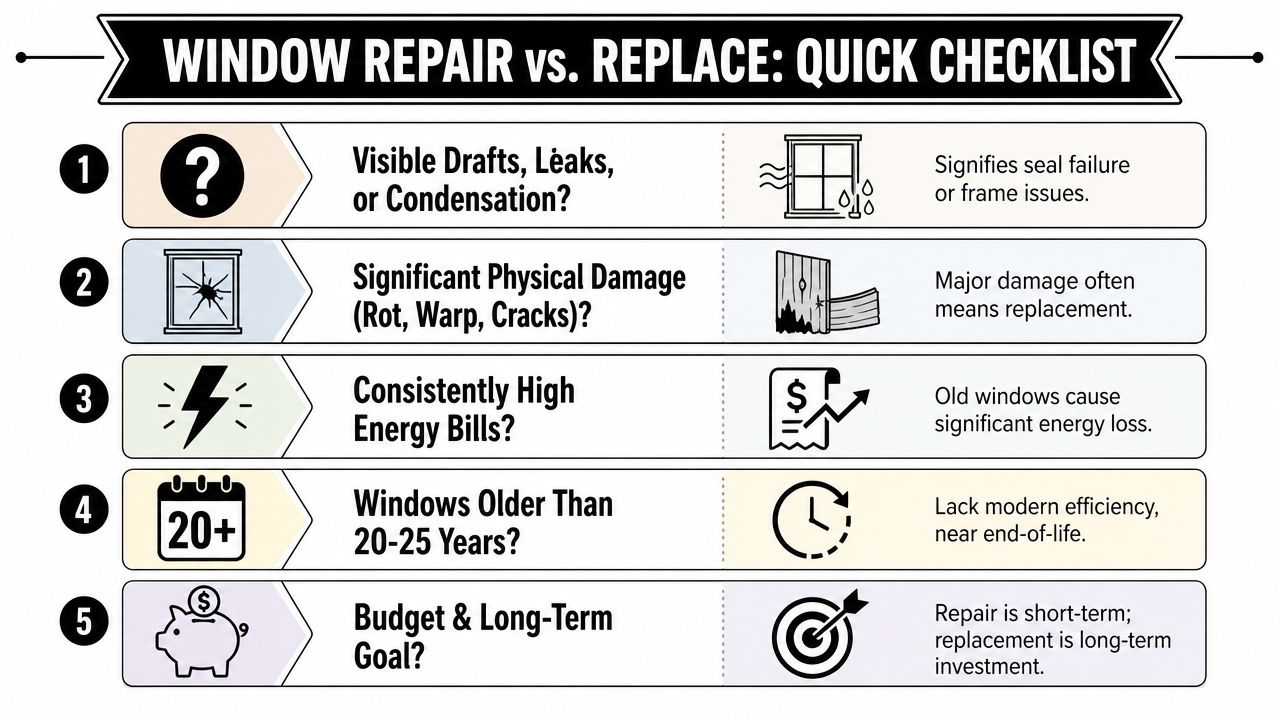
Start with what you can see and feel
Ask yourself these questions while standing at the window:
- Do you feel a minor draft around the edges? That can come from worn weatherstripping, loose hardware, or a sash that isn't pulling tight.
- Is the lock, crank, or handle broken? Hardware failure often looks worse than it is.
- Does the window still feel structurally solid? Push gently around the frame and sill. You're checking for softness, movement, or signs of decay.
- Do you see fog or moisture trapped between panes? That usually points to a failed insulated glass unit, not a simple surface-condensation issue.
- Is the wood soft, darkened, split, or crumbling? Those are signs you may be past the repair stage.
Use this quick sort
Likely repair
- Hardware is the main issue
- The sash is basically sound
- Drafts seem tied to seals or alignment
- Paint, finish, or small cosmetic wear is the main complaint
- The frame is solid and dry
Likely replacement
- The frame has rot
- The glass unit has failed
- The panes are damaged
- The window is warped and no longer operates correctly
- Multiple problems are showing up at once
A simple decision path
- Check the frame first. If the frame is compromised, that changes the whole conversation.
- Check the glass second. Failed glass units and pane damage often push the window into replacement territory.
- Check the hardware last. Broken operating parts can be frustrating, but they're often the easiest issue to fix.
If you have one annoying symptom, repair may be enough. If you have several symptoms on the same window, replacement is usually the better long-term move.
A lot of homeowners searching for when to replace windows vs repair them get stuck because they focus on age alone. Age matters, but condition matters more. A well-built older window with one bad part is different from a worn-out unit failing in several ways at once.
When a Simple Window Repair is the Smart Choice
Repair makes sense when the problem is specific, limited, and serviceable. That's the key. You're not trying to revive a failing window system. You're fixing one part of an otherwise workable window.
One industry source puts it plainly: windows with isolated hardware or sash issues are usually repair candidates, while damage to the frame, panes, or insulated glass unit, along with structural failure, points toward replacement. That same source specifically notes that broken locks and cranks are repairable, while rot in wood windows and frame or pane damage lean toward replacement, as outlined in this window repair versus replacement guide.
Repairs that are usually worth doing
These are the fixes I'd put in the practical category:
Broken locks or cranks
Casement and awning windows often fail at the operator before the rest of the window does. If the sash still seals properly and the frame is sound, replacing that hardware is a sensible repair.Worn weatherstripping
A minor draft doesn't automatically mean the whole window is shot. Weatherstripping compresses over time, especially on windows that get heavy sun exposure.Sash adjustment issues
Sometimes a window doesn't close tightly because it's out of alignment, not because the whole frame has failed. A service call can sometimes restore smooth operation.Surface finish problems
Peeling paint, dried caulk, and early finish breakdown can often be corrected before they turn into structural damage.
Boise homes where repair often wins
Older homes in Boise's established neighborhoods sometimes have windows with solid bones but obvious maintenance neglect. That's not the same thing as total failure. If the wood is still sound, the sash can be rebuilt, sealed, and put back into service.
That matters for homeowners who want to preserve original character or avoid replacing a window that still has years left in it.
A repair is smart when it solves the actual problem and doesn't postpone a bigger one by six months.
What repair does well, and what it doesn't
Repair works best when your goal is to restore operation, stop a minor draft, or extend the service life of a sound window. It doesn't work well when the complaint is broader. If you want a major comfort upgrade, quieter rooms, cleaner sightlines, and modern thermal performance, repair may not get you there.
That's also true when the window opening is part of a larger upgrade. Homeowners replacing patio doors or improving exterior access often discover that adjacent windows need to be evaluated at the same time. In those cases, it helps to look at the full opening package, including related work such as patio and entry door installation in Nampa.
The Tipping Points That Signal Window Replacement
There's a point where repair stops being responsible and starts becoming expensive procrastination. In Boise, that point often shows up after a couple of hard summers and winters have made the same weak window impossible to ignore.
Structural trouble is the big one
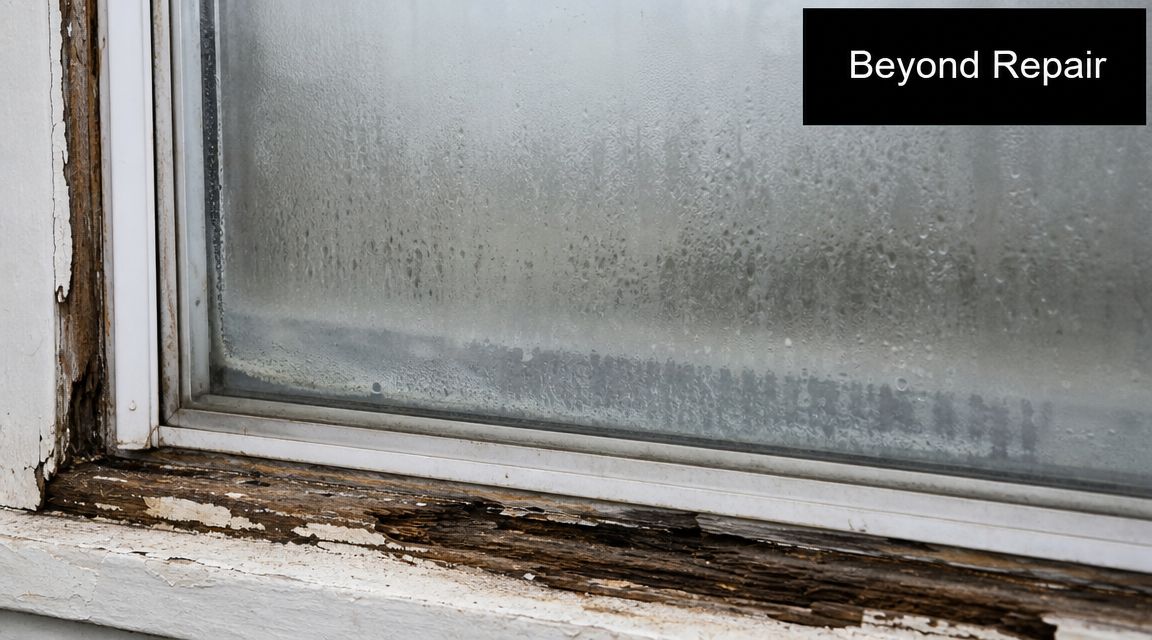
If the frame is rotting, moving, or losing shape, replacement is usually the correct call. Once the structure is compromised, you're no longer dealing with a tune-up problem. You're dealing with a window that can't support its own job.
Watch for these red flags:
- Soft wood at the sill or lower frame
- Visible warping
- Window movement when you press on the frame
- Sashes that bind because the opening is no longer true
- Repeated leaking that keeps coming back
Wood rot is especially serious because it rarely stays isolated for long. By the time you see it on the surface, moisture has often been working inside the assembly for a while.
Failed glass changes the equation
Condensation on the room side of the glass can be a humidity issue. Moisture trapped between panes is different. That usually means the insulated glass unit has failed.
Once that happens, the window loses one of its main performance advantages. In a climate with cold winters and hot summers, that matters. You feel it in comfort first, then in how hard the HVAC system has to work.
For homeowners focused on colder-weather performance, this is also where glass package choices become more important. If replacement is on the table, it's worth understanding how triple-pane windows for Idaho winters fit into the decision.
Repeated small fixes can cost more than one good replacement
A window that sticks, leaks air, shows fogged glass, and has frame wear is not a repair project. It's a replacement candidate wearing a repair disguise.
That's especially true in the Treasure Valley, where the exposure on one side of the house can be harsh. West-facing rooms take the brunt of summer heat. North-facing rooms reveal seal problems in winter. If the same window is uncomfortable in both seasons, the issue is usually deeper than hardware.
Replace when the window is failing as a unit, not just as a part.
The practical homeowner test is simple. If you're fixing the same window repeatedly, still not happy with how it performs, and noticing comfort problems year-round, replacement usually delivers the cleaner result.
Cost and Energy Savings Analysis for Boise Homes
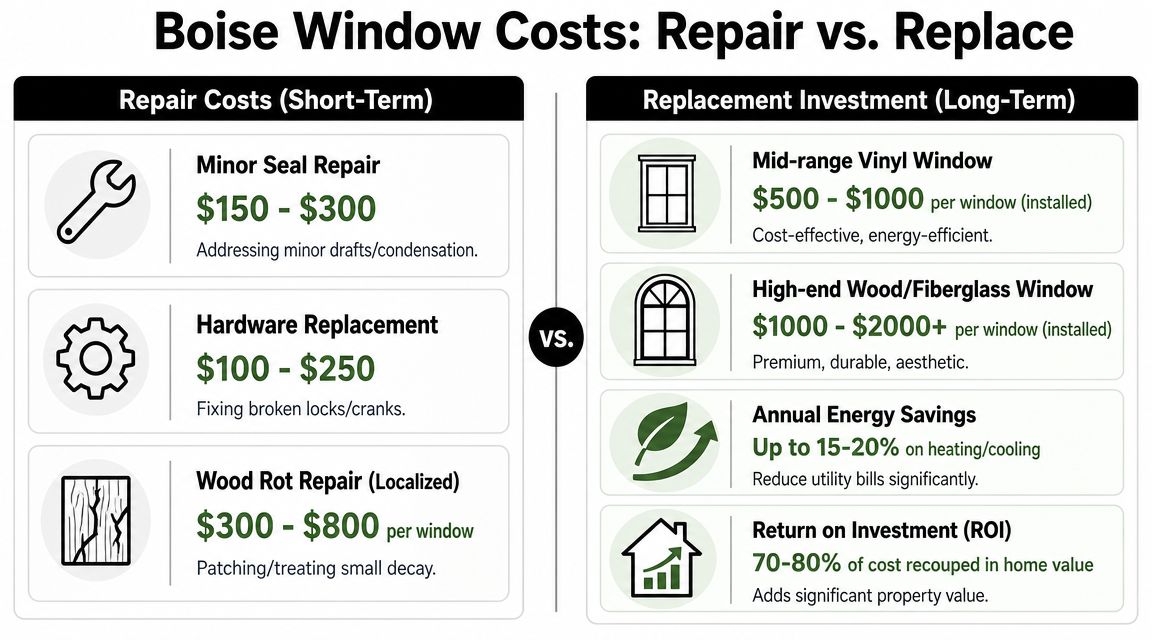
The decision becomes more nuanced. Repair is usually the smaller check today. Replacement is usually the bigger investment with broader benefits. The mistake is assuming the cheaper option is always the better value.
First, one important point that gets missed. Old windows are not automatically beyond repair. Restoration-focused coverage argues that many older or historic windows can be repaired, weather-sealed, and paired with storm windows to deliver strong energy performance while avoiding landfill waste. That same discussion also notes that some energy payback claims for replacement can take decades to offset upfront cost, which is a useful reality check in the restoration conversation, as explained in this analysis of common window replacement myths.
That said, Boise homeowners aren't making decisions in the abstract. They're living with afternoon heat gain, winter drafts, street noise, and rooms that never balance out.
Short-term cost versus long-term value
Repair usually makes sense financially when all of these are true:
- The defect is isolated
- The frame is still solid
- You don't expect more major issues soon
- Your comfort complaints are limited to one or two windows
Replacement usually makes more sense financially when:
- Several windows show the same failure pattern
- Comfort problems affect entire rooms
- You plan to stay in the home
- You want one project that solves operation, sealing, glass performance, and appearance at the same time
A repair can absolutely be the right spend. But it's a poor value when it only restores partial function and leaves the larger comfort problem untouched.
Boise-specific return you can feel
In the Treasure Valley, homeowners often notice the return from replacement in daily use before they think about resale. Rooms feel more even. Cold spots near the glass are reduced. Summer-facing rooms become easier to manage. Operation gets smoother. Noise control often improves too.
Those quality-of-life gains matter because Idaho's climate exposes weak windows in every season. You don't need a spreadsheet to notice that a bedroom no longer swings from chilly in January to overheated in August.
When replacement beats restoration
There are homes where restoration is the right path. Historic properties are the obvious example. If the window is architecturally significant and still structurally sound, careful repair and weather-sealing may be the smarter route.
But many Boise-area homes don't have that kind of window. They have aging builder-grade units with tired seals, bulky frames, worn hardware, and underwhelming glass. In that situation, a modern replacement often delivers a more complete result. Homeowners comparing options can look at local Boise window replacement services to understand what current products and installation methods involve.
A clean way to think about the money
Use this decision lens instead of chasing a universal rule:
| If your priority is… | Repair often fits | Replacement often fits |
|---|---|---|
| Preserving original character | Yes | Sometimes |
| Solving one specific defect | Yes | Rarely |
| Improving year-round comfort | Sometimes | Yes |
| Upgrading glass and overall efficiency | Rarely | Yes |
| Avoiding repeat service calls | Sometimes | Yes |
The honest answer for when to replace windows vs repair them is that repair offers the better short-term price when the window is structurally sound. Replacement offers the better long-term value when the whole unit is underperforming.
Real-World Boise Scenarios Repair vs Replace
General advice helps, but individuals decide faster when they can see their own house in the example.
The North End home that should be repaired
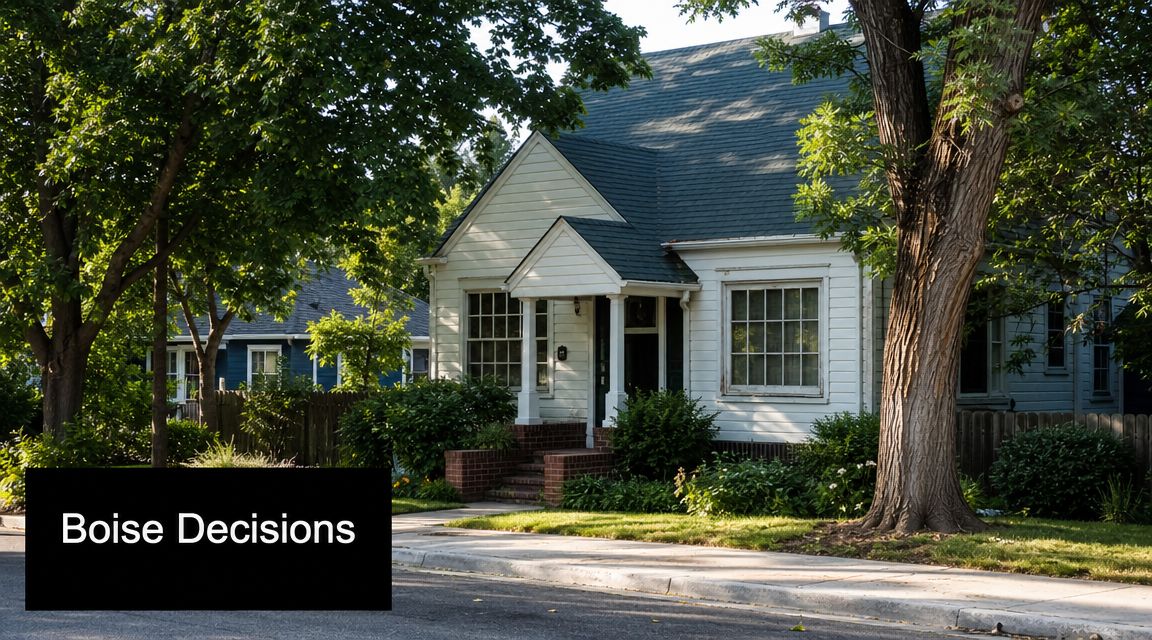
A homeowner in Boise's North End has original wood windows. They're draftier than modern units, and a couple of them rattle in winter wind. One lock is broken. Paint has failed on the exterior trim. But the sashes are still sound, the frame is holding shape, and there's no major rot.
That is a repair house.
The smart move is to service the hardware, address weather-sealing, refinish exposed areas, and tighten up operation. If the owner values the original look, replacement may solve one problem while creating another. The house loses some of its character, and the return may not justify that trade.
This is the kind of property where thoughtful repair can be the mature answer. Not the cheap answer. The right one.
Some older windows are worth saving because the window is still doing its job, just not at its best.
The Meridian home that should be replaced
Now take a subdivision home in Meridian with aging double-pane windows. Several units are fogged. One bedroom runs hot all summer. The living room window sticks. A back elevation window has visible frame wear, and the whole house feels drafty when winter sets in.
That is not a tune-up situation.
Even if you fix a lock, adjust a sash, and patch one area, the homeowner still has the same broader problem. The windows are underperforming as a group. In a home like this, replacement is usually the cleaner and more cost-effective long-term call.
The practical lesson from both
The first homeowner is protecting a solid asset with targeted work. The second homeowner is pouring effort into a declining one.
That's the difference people miss. The question isn't whether repair is cheaper than replacement. It usually is. The key question is whether the repair changes the outcome you live with every day.
If it does, repair is smart. If it doesn't, replacement is the better decision.
Your Next Steps to Making a Confident Decision
A good window appointment should answer one question clearly. Will a repair change how the window performs through a Boise summer and an Idaho winter, or are you spending money to delay replacement?
That answer should come from inspection, not pressure.
Questions worth asking any window professional
Bring these questions to the appointment and write down the answers:
- What part has failed? Ask for the specific part, such as the glass unit, balance, frame, sash, seal, or hardware.
- Is this an isolated problem or a house-wide pattern?
- If you repair it, what improves right away? Comfort, operation, air leakage, condensation, or appearance.
- If you replace it, what improves that a repair cannot fix?
- How will you measure the opening and handle installation?
- Who is doing the work? Ask whether the installers are trained on the product being put in your home.
Those questions matter in the Treasure Valley because our windows work hard. They face strong summer sun, cold snaps, and plenty of seasonal expansion and contraction. A vague answer like “these old windows need to go” is not enough. Neither is “we can patch that” if the bigger problem is still there.
Read the warranty like a homeowner, not a shopper
Windows are two things at once. A manufactured product and an installation job. If either side is weak, you feel it in the room.
Read the product warranty and the labor warranty separately. Check who stands behind service calls, what happens if glass fails later, and whether installation issues are covered. That is one reason some Boise homeowners choose companies with in-home measurement, factory-trained installers, and lifetime limited coverage on both product and labor. C & C Windows & Doors is one local company that offers that setup.
Match the decision to the result you want
Keep the final filter simple:
- Repair it if the issue is limited, the frame is still sound, and the fix will improve the way the window works.
- Replace it if the glass seal has failed, the frame is deteriorating, the window still leaks comfort after repairs, or several windows are showing the same age-related problems.
- Get a second opinion if the recommendation sounds bigger or smaller than what you are seeing in the house.
The right decision usually becomes obvious once someone explains what is failing, what can be fixed, and what Idaho weather will keep exposing year after year.
If you want a straight answer on whether your Boise-area windows should be repaired or replaced, C & C Windows & Doors offers in-home consultations, custom measurements, and replacement options built for Idaho's climate. It's a practical next step if you want someone to evaluate the frame, glass, operation, and overall performance without guessing from across the room.