

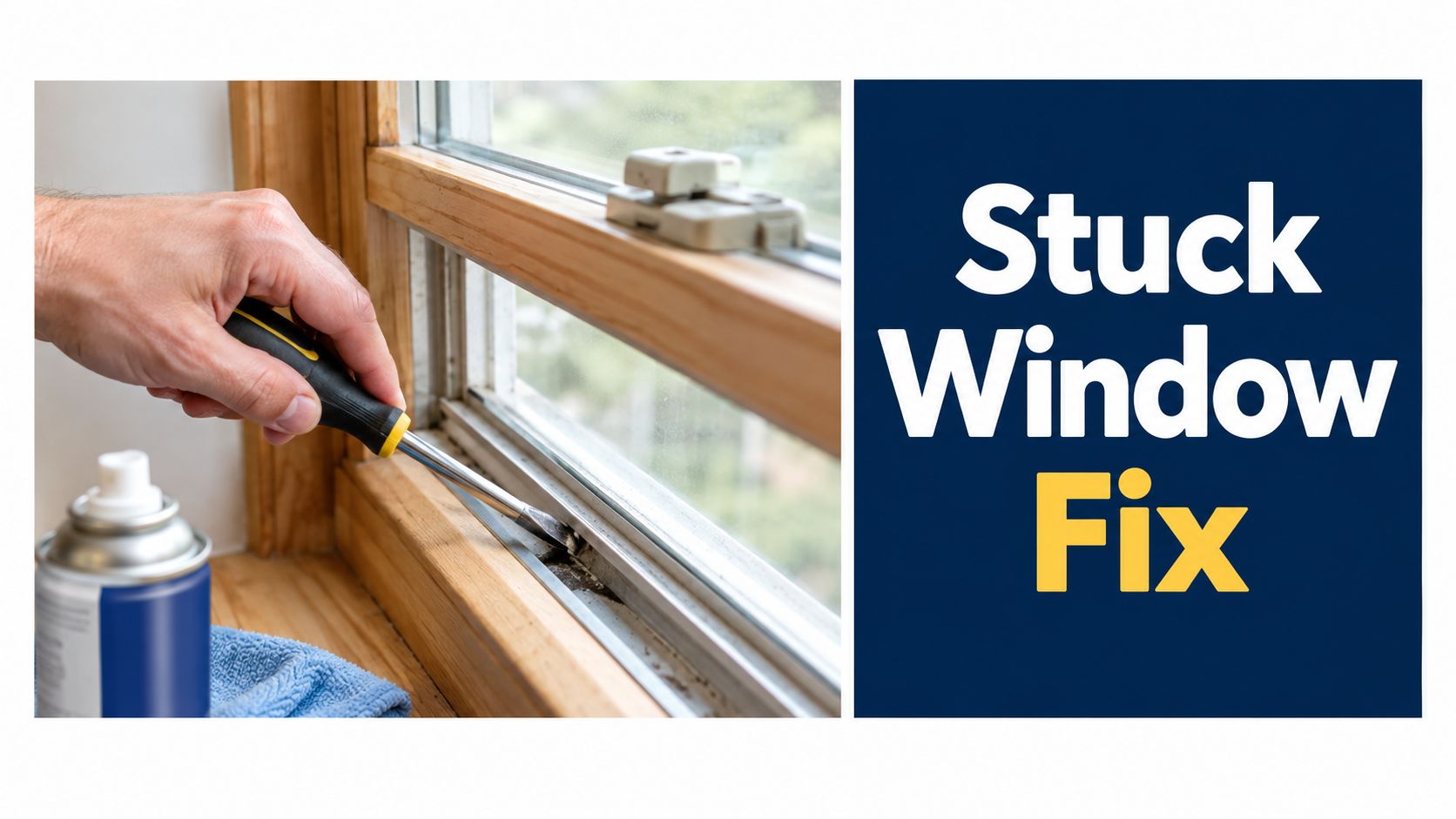
You pull the lower sash and it moves an inch before stopping. You try the lock, push from the opposite corner, and reach for lubricant, but the window still feels glued in place. A windows hard to open and close fix starts with identifying what is binding, because a dirty track, cured paint, failed balance, swollen wood frame, and shifted opening need very different repairs.
A stuck window can also reveal a broader problem. If it won't lock, leaves a visible gap, or shows moisture between panes, the issue may involve air sealing, security, comfort, and energy performance, not just inconvenient operation. Use the checklist below to separate a safe maintenance task from a repair that belongs with an experienced installer.
Table of Contents
- Why Your Windows Are Suddenly Sticking
- Inspecting the Frame Tracks and Hardware
- Step by Step DIY Window Repairs
- When to Repair Versus Replace the Window
- Preventative Maintenance and Professional Help
Why Your Windows Are Suddenly Sticking
A sash that worked last month can bind after rain, a humid spell, or a freeze. Wood absorbs moisture and expands, while temperature changes alter the fit between the sash and frame. Failed exterior caulk or flashing can let water behind the trim, and indoor humidity above 55% for extended periods can contribute to swelling. Even about 1/4 inch of diagonal racking from settling or frost heave may pinch the sash, as described in this guidance on moisture, swelling, and stuck windows.
The pattern matters. If the window operates during dry weather but sticks after wet weather, inspect the opening for movement and moisture before reaching for lubricant. A narrowing gap at one corner, rubbing along a single jamb, or a sash sitting diagonally points to alignment trouble. Lubricant may reduce friction for a short time, but it cannot square a shifted frame or correct water damage.
Paint can create a mechanical lock
Paint adhesion commonly affects older wood double-hung windows. Repeated coats can build up along the meeting rail, sash edges, and stops. Once cured, the layers bond the moving sash to the frame. Paint adhesion accounts for roughly 40% of stuck-window service calls, according to this stuck-window repair guide.
Do not start by prying. Find the sealed edge, score the paint line, remove loose buildup, and test the sash gradually. Force can split a stop, damage the sash, or bend hardware. If the paint seal will not release cleanly, stop before the repair turns into carpentry or glass work.
Installer's rule: A window that changes with weather deserves an alignment and moisture inspection, not another spray of lubricant.
Stiff operation can signal lost performance
A sash that no longer closes squarely may compress weatherstripping unevenly or leave the lock out of position. The result can be drafts, reduced comfort, and a room that feels colder near the opening. Moisture between panes or a lock that will not engage points to a wider performance problem involving comfort, security, and efficiency. See this discussion of window operation and home performance.
For winter-specific symptoms, use this guide to fix drafty windows in winter in Idaho. You can also review practical advice on stopping drafts around windows. Cleaning addresses contamination. Structural movement, failed seals, and damaged hardware require diagnosis at the frame or sash level.
Inspecting the Frame Tracks and Hardware
Start with the window closed and open. Don't put your full weight into the sash before you know where it is catching. Check the interior and exterior edges, then operate the unit only as far as it moves without force.
Find the friction point
Use a flashlight and inspect all four sides of the frame. On a slider, look for grit, paint chips, insect debris, bent track sections, and worn rollers. On a double-hung window, inspect the jamb liners, sash edges, meeting rail, and lower corners. Dirt and debris in tracks create drag, while blocked or damaged tracks can make the sash feel jammed, as explained in this overview of track-related window problems.
A vacuum with a narrow attachment is safer than digging at debris with a screwdriver. If the sash moves farther after cleaning one section, you've found useful evidence. Don't lubricate a track packed with dirt. Grease mixed with grit forms an abrasive paste and can make the drag worse.
Examine paint and frame alignment
Run a putty knife lightly along the seam between the sash and stop. Resistance at a narrow painted section suggests adhesion. A continuous rub along one jamb suggests alignment, swelling, or a warped component. Check whether the reveal, the visible gap around the sash, stays reasonably consistent from top to bottom.
Look at the sill and trim for water staining, soft wood, failed caulk, or swelling. A damaged exterior seal can allow moisture into a wood frame, where the resulting expansion affects operation from inside. Don't confuse a swollen sash with a track problem just because both feel stiff.
Check the balance system
Double-hung windows use balances to support the sash. If the sash falls immediately, the balance shoe or balance system may have released or failed. If it drops slowly, the balances may be weak rather than completely disconnected.
When the sash can be removed safely, inspect the pivot bars for bending or twisting. The balance shoes should sit roughly halfway up the jamb, with each U-slot locked upright before the sash is reattached. A shoe that's low, rotated, cracked, or unable to hold position is a hardware issue, not a lubrication issue.
Make notes before disassembling anything. Record which side catches, whether the sash drops, and whether the lock lines up. Those observations help an installer avoid replacing a sound window when the actual problem is a small adjustment.
Step by Step DIY Window Repairs
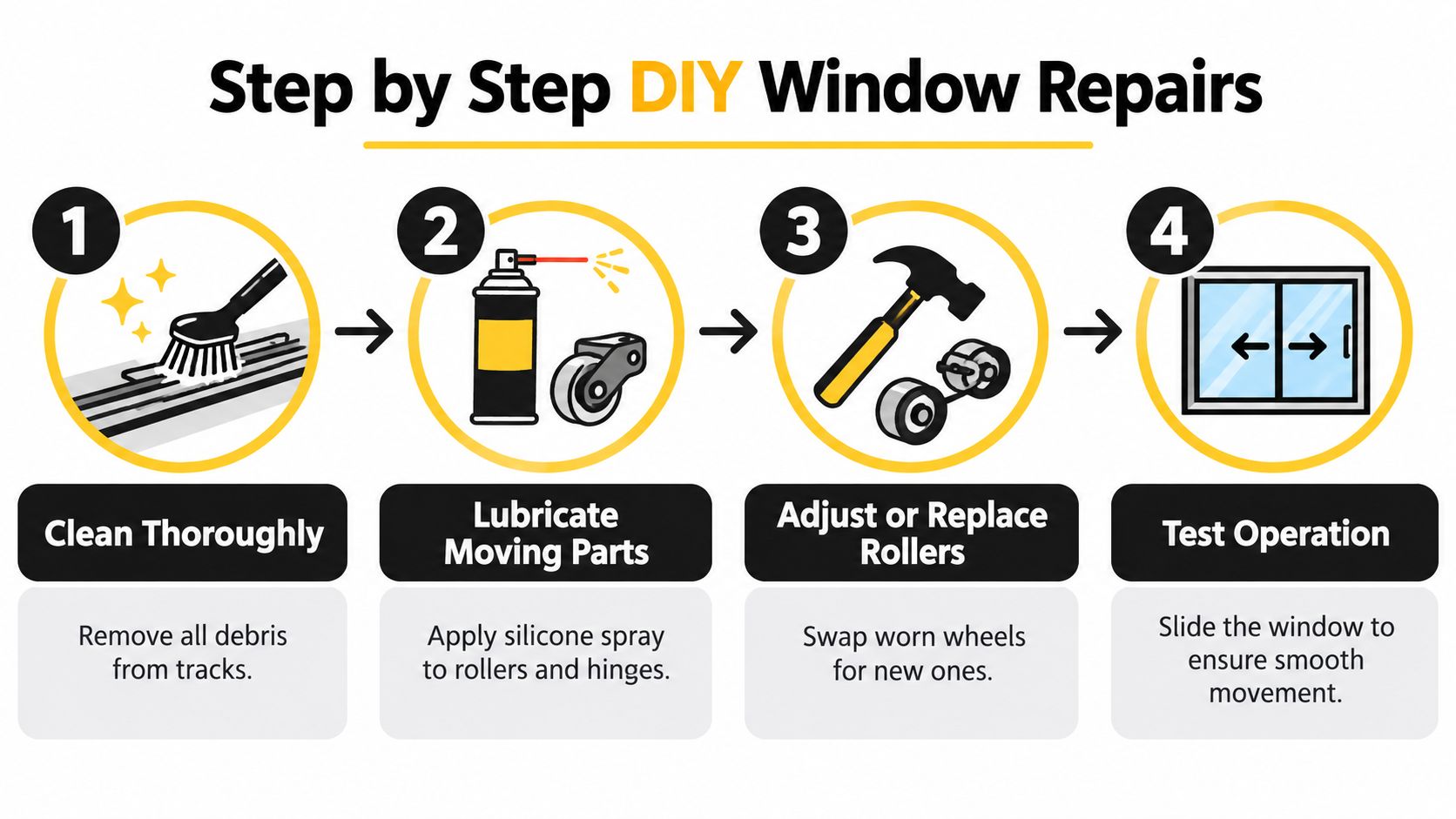
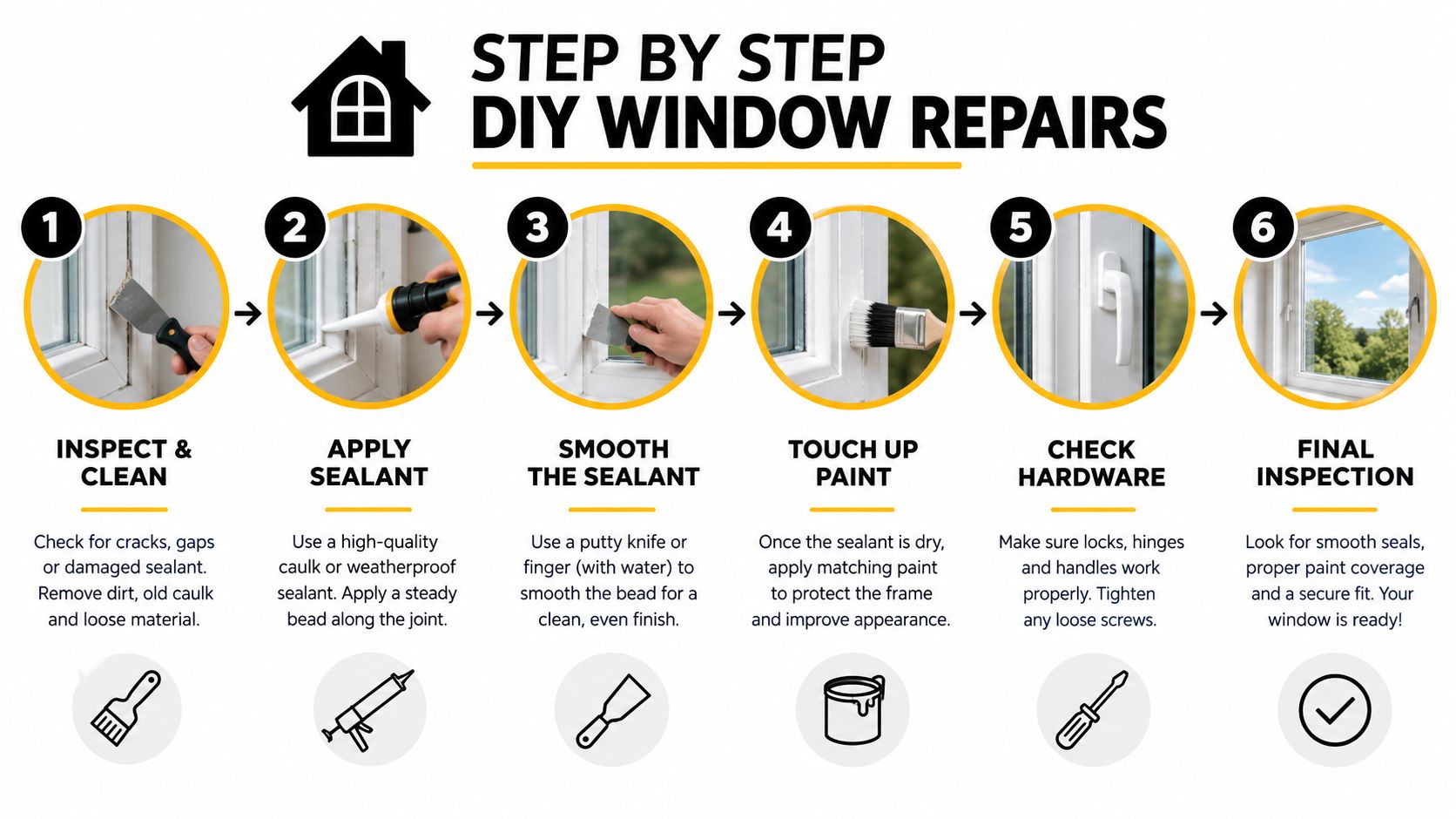
The safest repair sequence starts with the least invasive action. Clean first, release surface bonds second, adjust accessible hardware third, and lubricate only after the window moves freely enough to expose the moving points.
Clean before applying force
Vacuum the track, jambs, sill, and sash edges. Use a soft brush for corners and a damp cloth for residue, but don't saturate wood or leave water in the channel. On sliding windows, inspect rollers after cleaning. A roller that remains flat-spotted, cracked, or loose will continue to drag even when the track is clean.
For paint adhesion, score the seam with a sharp utility knife or putty knife. Keep the blade controlled and pointed away from your hand. Work around the meeting rail, side stops, and corners where repainting commonly bridges the moving surfaces.
If the seal remains stubborn, run a hairdryer along the sash and frame seam for 5 to 10 minutes, then retry the window gently. The recommended workflow of vacuuming all four sides, cutting paint lines, and using targeted heat is outlined in this stuck-window repair procedure. A hairdryer is preferable to an open flame or high-heat tool near paint, weatherstripping, and glass.
Release the sash without damaging it
Once the paint line is cut, tap the putty knife into the joint with controlled pressure. Alternate between sides instead of levering hard from one corner. If you must pry from the exterior, protect the wood with a thin scrap block and apply mild, even pressure.
Stop if the frame flexes, the glass shifts, or the sash begins to twist. A stuck sash can release suddenly, so keep your hands clear of pinch points and support the window's weight.
What doesn't work: Repeatedly yanking the handle, spraying lubricant into a sealed joint, or striking the sash with a hammer. Those actions can damage tracks, finishes, glass, and balance hardware while leaving the original cause untouched.
Adjust a slipped balance shoe
For a double-hung window with a sash out of alignment, remove the sash according to the manufacturer's design and set it on a protected surface. Inspect both pivot bars for bending or twisting. Then check that each balance shoe is positioned roughly halfway up the jamb and that its U-slot is upright and locked before reconnecting the sash.
If a shoe is low, use a flathead screwdriver to rotate the slot about 1/4 turn to disengage it. Slide the shoe to the correct height, rotate it back to the upright locked position, and reinstall the sash carefully. Don't adjust a cracked shoe or bent pivot bar and call it finished. Damaged parts need replacement.
Balance replacement requires matching the new balance to the removed part and winding the mechanism with the correct balance tool before connecting it to the shoe. If the internal mechanism has failed or the sash can't be safely supported, stop at inspection and arrange professional service.
Lubricate only after movement returns
Use a silicone-based lubricant sparingly on appropriate rollers, hinges, or moving hardware. Avoid coating wood tracks with heavy oil, and don't spray blindly into balance channels. Open and close the window several times, watching for uneven travel, new rubbing, or a lock that still misses its keeper.
A successful repair should produce smooth, controlled movement and a lock that engages without force. If operation improves only while you push the sash sideways, the opening may still be out of square.
When to Repair Versus Replace the Window
A repair makes sense when the frame is sound and the cause is local. Paint buildup, loose hardware, contaminated tracks, and an accessible balance shoe can often be corrected without replacing the whole unit. Replacement becomes more reasonable when the window has several connected failures, the frame is badly distorted, or the sash cannot maintain a seal or lock after adjustment.
The first decision is whether the problem follows the sash or the opening. If one sash rubs at a single point and the frame remains square, focus on paint, debris, rollers, pivots, or balances. If several windows in the same wall bind, gaps change diagonally, or trim shows movement, investigate the rough opening and surrounding structure before ordering hardware.
Use the symptoms to set the boundary
Moisture between panes indicates insulated-glass seal failure. A lock that won't engage may result from a shifted sash, failed hardware, or a frame that no longer sits correctly. A window that opens but won't stay up points more directly toward a balance problem, while a unit that barely moves at all may still have a paint seal or structural bind.
This repair-versus-replacement guidance can help homeowners organize the decision, but a visual inspection remains important. Measurements, sash weight, frame condition, and the cause of movement all affect the right answer.
| Issue Symptom | DIY Repair Viability | Replacement Indicator |
|---|---|---|
| Paint along the sash seam | Often reasonable after careful scoring and cleaning | Frame or sash is damaged after years of buildup |
| Dirt in a sliding or double-hung track | Reasonable if the track and rollers are intact | Track is bent, cracked, or repeatedly causes drag |
| Sash falls or won't stay up | Limited to accessible shoe adjustment | Balance mechanism or pivot components are damaged |
| One edge rubs after weather changes | Requires cautious inspection | Wood is swollen, rotten, or the opening is racked |
| Lock won't engage | Check alignment and hardware | Frame movement prevents secure closure |
| Moisture between panes | Not a surface repair | Insulated glass seal has failed |
| Several windows bind in one area | Professional assessment is advisable | Structural movement affects the rough opening |
Repair preserves the right window, replacement resets the system
Repair usually preserves the existing appearance and avoids disturbing sound trim, but it may not solve an aging frame, failed glass seal, or chronic moisture path. Replacement offers a chance to correct fit, improve weather sealing, and select glass and frame features suited to the home, yet it requires accurate measurement and careful installation.
Don't replace a window solely because it feels stiff until someone checks the frame. Conversely, don't keep adjusting a unit that repeatedly swells, leaks, fails to lock, or shows internal condensation. The long-term cost of repeated small repairs is not the only concern. A window that can't close and seal properly can continue to affect comfort and security.
Preventative Maintenance and Professional Help
A window that works in spring can bind after a wet season or a fresh coat of paint. Preventive maintenance should therefore check more than the track. Keep tracks free of grit, inspect weatherstripping for gaps or compressed sections, and confirm that locks engage without forcing the sash. Repaint carefully around moving joints, leaving the contact line clear so new coating does not glue the parts together.
Weatherstripping can lose compression after a heating season, leaving a window harder to seal even when it still opens and closes. Replace damaged seals rather than increasing latch pressure, which can distort the sash or frame. Regular checks also reveal early air leakage, rattling, or uneven contact before those signs become comfort and moisture problems.
Protect the opening and the seal
Inspect exterior caulk, flashing, sill drainage, and nearby trim after wet weather. Water management matters most on wood units, where swelling can change sash fit. Indoor humidity control can reduce repeated expansion, but it cannot repair a failed exterior seal or a rough opening that has shifted.
Energy loss is another useful diagnostic signal. Cold air around one corner, a draft that changes with wind, or condensation near the frame may point to failed weatherstripping, poor installation, or movement in the opening. Fixing the visible drag without checking the seal can leave the main problem untouched.
Know when local installation is the practical choice
Professional help is appropriate when the frame is out of square, the sash is heavy or unstable, balance parts are inaccessible, glass is damaged, or several windows show the same movement pattern. A qualified installer should inspect the opening, take custom measurements, identify the source of binding, and test the replacement by opening, closing, and locking it before finishing the work.
For Treasure Valley homeowners, C & C Windows & Doors can measure the opening, match the window style to its exposure, and install insulated glass and sloped sills suited to Idaho winters.
Do not accept a window that operates only when pushed into position. The finished unit should move smoothly, close evenly, lock securely, and maintain a dependable seal. If structural movement, failed glass, or repeated binding is involved, stop adjusting hardware and arrange an on-site assessment.
If your Boise or Treasure Valley windows stick, bind, fail to lock, or show signs of moisture, contact C & C Windows & Doors for a free in-home consultation and custom measurements. Their team can determine whether the opening needs a repair or a replacement window installed for reliable operation, drainage, comfort, and security.