
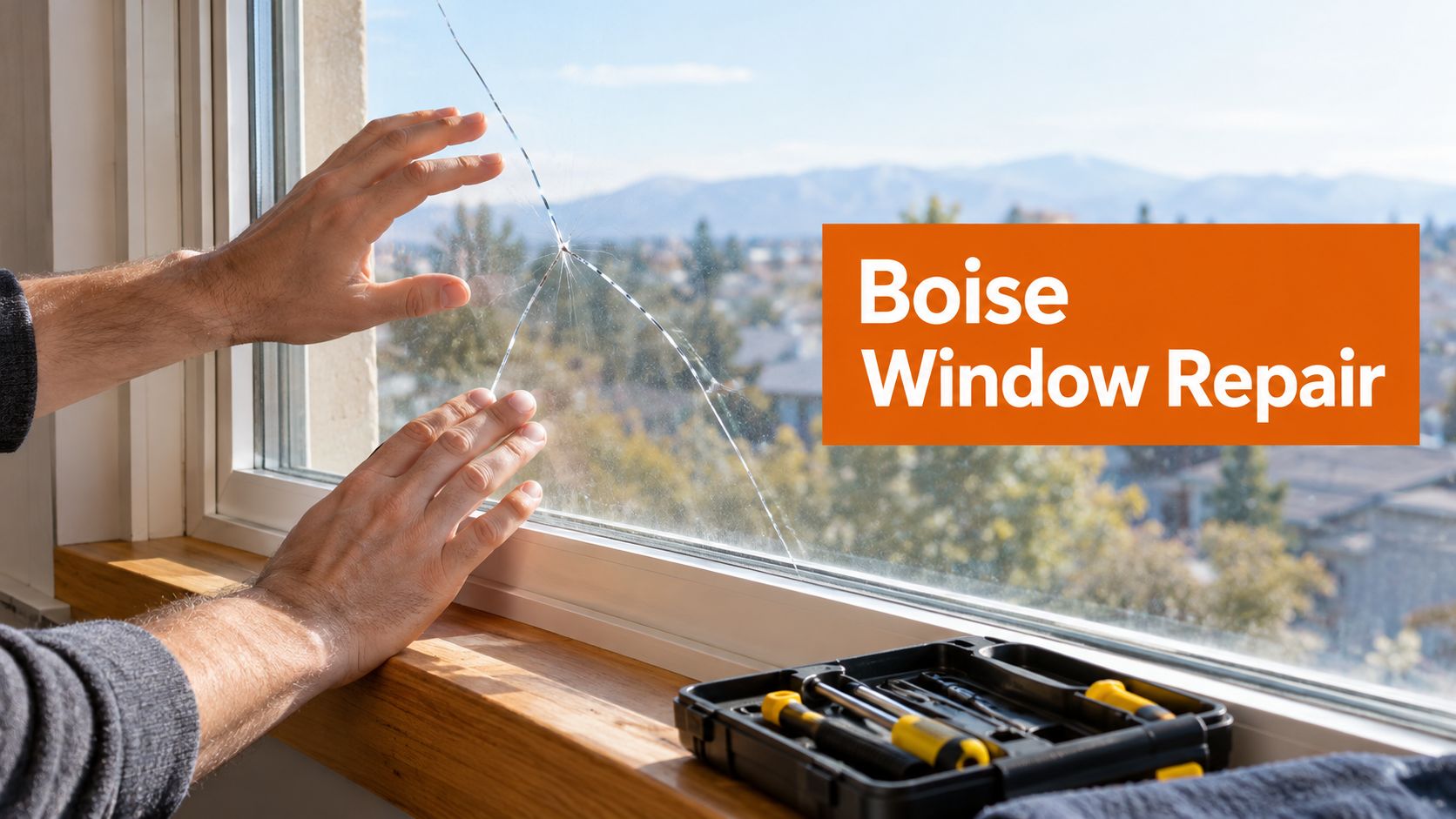
A basic single-pane glass swap in Boise often starts around $375 to $400, while full-window replacement usually ranges from $800 to $1,500, depending on size, materials, and performance upgrades. The right choice depends entirely on the condition of the frame and whether you only need intact glass or want better comfort and energy performance.
You notice the crack while walking past the window, usually after a cold night, a stray impact, or years of ordinary wear. The immediate instinct is to find the cheapest pane and get the job over with. That can be the right move, but only when the frame, seals, drainage, and glass specifications still make sense.
Boise homeowners need to look beyond the visible fracture. Older windows can leak heat, raise utility bills, and transmit outdoor noise even after the broken pane is replaced, particularly in growing Boise-area communities where comfort and operating costs matter. Local Boise window guidance makes the broader point clearly: a cracked pane can expose an upgrade opportunity, not just a repair task.
Table of Contents
- Why Your Cracked Window Pane Needs More Than a Quick Fix
- DIY Glass Swap Versus Hiring a Local Boise Professional
- Assessing Your Window Condition Before Calling for Service
- Understanding Replacement Costs and Timelines in Boise
- Energy Efficiency Upgrades That Pay for Themselves
- What to Expect During a Professional Installation Day
Why Your Cracked Window Pane Needs More Than a Quick Fix
A cracked window is frustrating because it feels like a small, contained problem. In practice, the crack may be the only visible sign of a window that has already lost its seal, developed frame movement, or started allowing water into vulnerable joints.
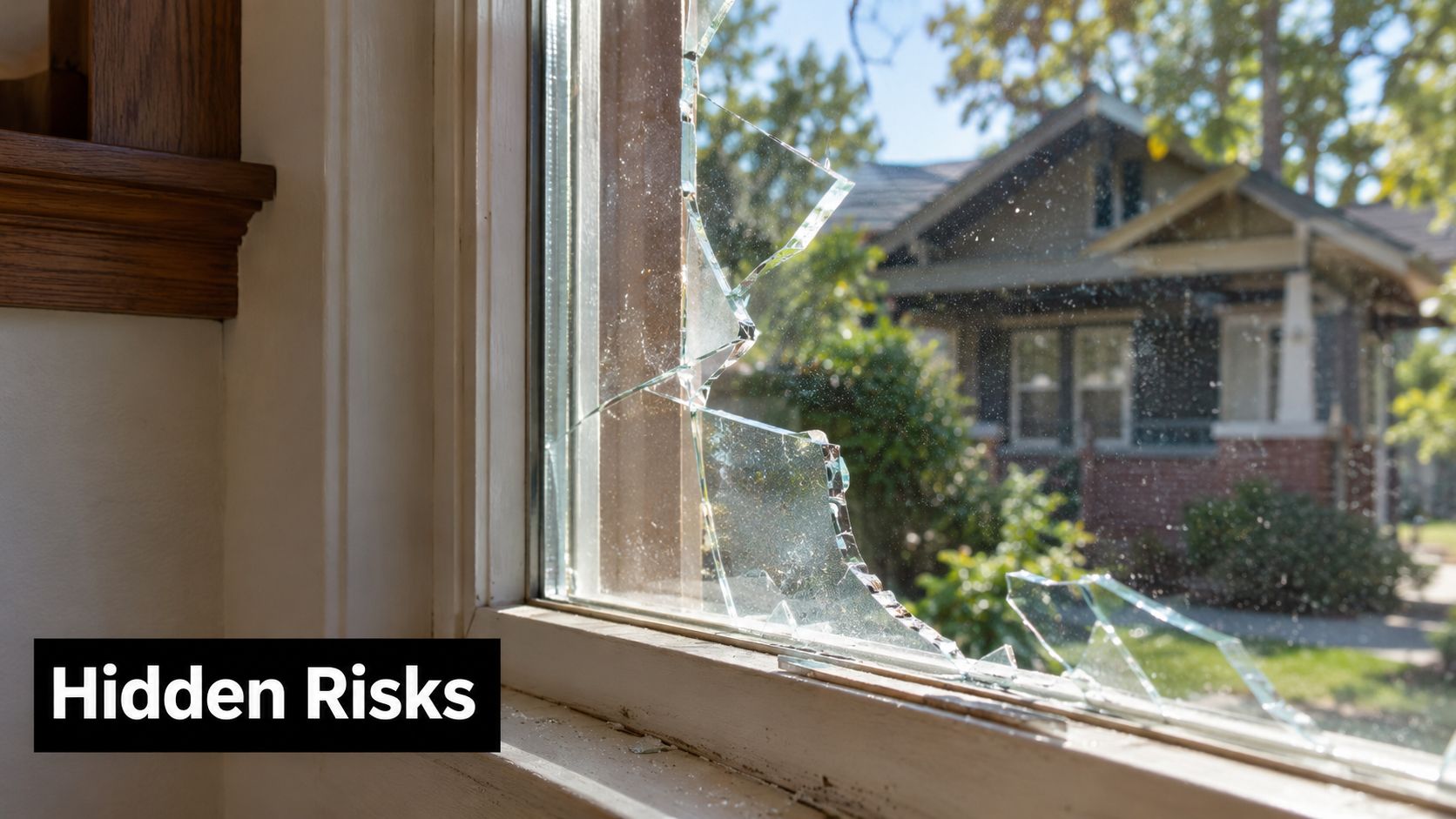
The frame decides whether glass-only repair makes sense
A recent crack in an otherwise sound insulated unit can often be handled with a glass-only replacement. The frame should sit squarely, operate correctly, drain water properly, and hold the replacement unit without distortion. If those conditions are present, replacing the glass can restore clarity without disturbing a serviceable window assembly.
Older single-pane windows deserve more scrutiny. Look for soft wood, separation at the corners, loose glazing, staining, gaps, and movement when the sash operates. A new pane can't correct a warped frame or a poor drainage path. It may just put fresh glass into the same failing opening.
Installer's rule: Repair the glass when the frame still does its job. Replace the window when the frame is the problem.
Treat the crack as a performance question
Ask what you want the repair to accomplish. If the goal is basic safety and weather protection, a correctly matched pane may be enough. If the goal is lower heating and cooling demand, less outside noise, easier operation, or better resale appeal, the original window may not deserve another pane.
A failed insulated-glass seal can leave the unit foggy and reduce its insulating performance. A frame that feels drafty can continue leaking around the new glass. Boise's seasonal temperature changes make those weaknesses noticeable, especially near bedrooms, living areas, and large sun-facing openings.
Use the window repair or replacement decision guide before accepting a glass-only quote. The important question isn't whether a pane can be replaced. It's whether that replacement solves the condition you live with.
DIY Glass Swap Versus Hiring a Local Boise Professional
DIY replacement is possible for a straightforward single-pane sash, but it isn't a casual afternoon project. You're handling sharp material, removing hardened glazing, preparing a precise bedding surface, and creating a weather-resistant seal that must tolerate movement.
A technical walkthrough for single-pane window glass replacement emphasizes removing the sash or pane, cleaning the rabbet completely, and sizing the replacement glass slightly undersized for thermal movement. The guide specifies subtracting about 1/8 inch from both width and height before bedding the pane in glazing compound and securing it with new glazing points.
Where DIY work commonly fails
Homeowners usually get into trouble at the measurement and cleanup stages. They measure the visible glass instead of the actual rabbet, order a pane that fits too tightly, or leave old compound in place because removing it takes longer than expected. Tight glass has no room to accommodate movement, while leftover compound can prevent a clean, stable bed.
The second failure happens at the exterior bead. Glazing compound should finish with a sloped surface that directs water away from the frame. A rough or flat bead invites moisture into the opening, where it can damage wood and undermine the repair.
DIY is reasonable when the window is accessible, the sash is removable, the frame is solid, and you already know how to work safely with glazing tools. It's a poor choice for second-story openings, large panes, insulated glass units, or windows near doors and walking surfaces.
What a professional adds
A local installer brings more than speed. The technician can identify frame movement, hidden deterioration, failed insulated seals, unsuitable glass, and code concerns before ordering the replacement. That matters when the crack is only one symptom of a larger assembly problem.
| Factor | DIY Approach | Professional Service |
|---|---|---|
| Measurement | You measure the rabbet and account for movement | The technician verifies the opening and replacement specifications |
| Frame inspection | Visible damage is easy to miss | The frame, sash, joints, and drainage paths receive a practical assessment |
| Glass selection | You must identify the correct pane and safety requirements | The installer matches performance and code requirements to the opening |
| Installation | You remove old material, bed the glass, and tool the exterior bead | The crew handles removal, installation, sealing, and cleanup |
| Access and safety | You carry the risk on ladders or around broken glass | The service is planned for height, weight, and hazardous locations |
| Best fit | Sound, accessible single-pane sash | Insulated units, older frames, complex openings, or performance upgrades |
If you're unsure whether the frame is sound, don't start by buying glass. Pay for an assessment or request a detailed quote that separates glass-only work from full-window replacement.
Assessing Your Window Condition Before Calling for Service
A useful service call starts with useful information. You don't need to diagnose the window, but you should document what the technician will need to evaluate.
Start with safety
Keep children and pets away from the opening. Don't operate a sash that has loose shards or pressure on the cracked pane. If glass is actively falling, avoid handling it yourself and use a temporary barrier only if you can do so without touching unstable material.
Take photos from inside and outside. Capture the full window, the crack, the frame corners, the sill, and any staining or visible gaps. Note whether the window is difficult to open, won't lock, feels drafty, or shows condensation between panes.
Check the frame and glazing
Run a visual inspection rather than pressing on damaged glass. On wood windows, look for soft or discolored areas at the sill, corners, and joints. On vinyl or composite units, check for bowing, separation, cracked components, and movement around the sash.
Glazing putty deserves special attention. Federal preservation guidance for broken window glass warns that cracked, loose, or missing putty lets water attack window components, especially at joints. Leaving degraded material in place can turn a pane replacement into a short-lived repair.
Water follows the weakest joint. If the old glazing is failing, replacing only the visible glass leaves the real entry point untouched.
Identify the existing glass
Look at the edge of the pane if it's safely visible. A single-pane window has one layer of glass. An insulated unit has separated layers and may show a spacer around the perimeter. Fogging or moisture between those layers points to a seal problem, not a surface cleaning issue.
Before calling, record:
- Window location: Identify the room, floor, and approximate access conditions.
- Opening type: Note whether it's fixed, sliding, double-hung, casement, or part of a patio door.
- Visible dimensions: Measure the rough visible area, but tell the technician these are estimates.
- Damage pattern: Photograph impact damage, edge cracks, starburst fractures, or a crack running from the frame.
- Frame condition: Mention rot, warping, drafts, loose hardware, staining, or operating problems.
Don't remove the broken pane to make the appointment easier. Let the technician confirm the dimensions and determine whether the opening requires safety glass or a different glazing specification.
Understanding Replacement Costs and Timelines in Boise
The price difference between glass-only work and full replacement is real, but it isn't arbitrary. A pane replacement preserves the existing frame and hardware. A full replacement addresses the window assembly, including the frame, sash, seals, drainage, and available performance features.
Why quotes vary
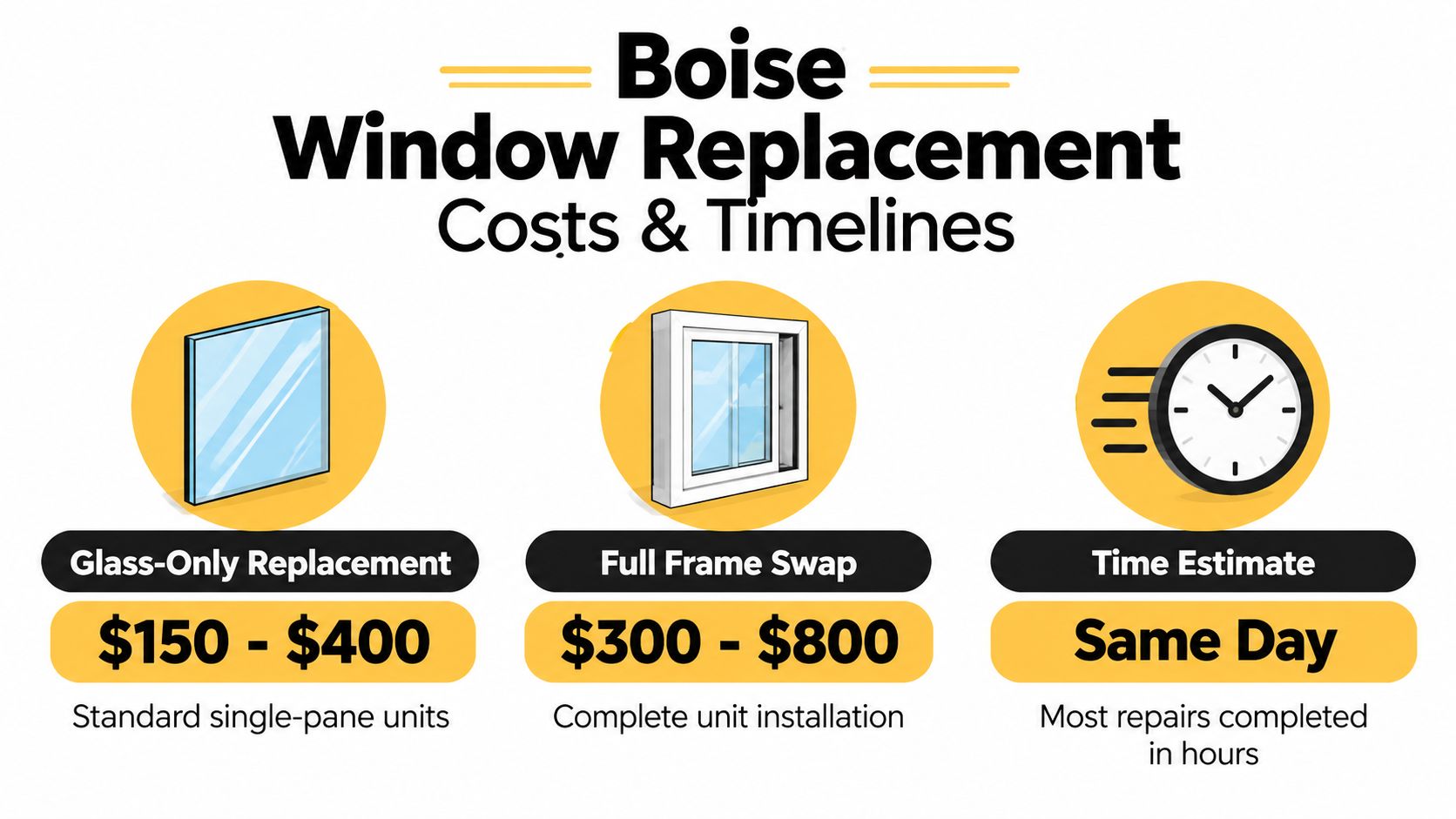
Recent Boise pricing information places glass-only replacement around $375 to $400, while full replacement commonly runs $800 to $1,500 per window, depending on size and materials. Boise glass replacement pricing guidance also notes the core decision rule: glass-only work can restore clarity and performance when the frame remains sound, but damaged, warped, or drafty frames justify full replacement.
That range reflects different scopes of work. A small, accessible opening with standard glass is not comparable to a large custom unit, a difficult second-story opening, or a replacement that adds Low-E coatings, argon fill, or additional panes.
The cheapest quote can become expensive if it preserves the reason the window failed. A new pane won't straighten a warped frame, rebuild damaged joints, or correct persistent drafts around the assembly.
Ask what the timeline includes
A contractor should tell you whether the quoted work is an on-site repair, a measured custom order, or a complete replacement installation. Availability depends on the glass type, opening dimensions, frame condition, access, and whether the selected unit is standard or custom.
Weather can also affect exterior work. A responsible installer protects the opening during removal, keeps the interior clean, and avoids rushing sealants or glazing materials just to finish the visit.
For planning purposes, separate the service into these stages:
- Assessment and measurement: The technician confirms the opening, glass type, frame condition, and code requirements.
- Ordering: Custom glass or a replacement unit is prepared to the verified specifications.
- Installation: The crew removes the damaged material, prepares the opening, installs the replacement, and seals it.
- Inspection and cleanup: Hardware, operation, drainage, finish work, and debris removal are checked before the job is closed.
Get the scope in writing. Ask whether the quote includes disposal, frame repairs, interior or exterior finishing, safety glass, and warranty coverage. If you're comparing complete replacements, the Boise window replacement cost guide can help you frame the conversation around the entire unit rather than the pane alone.
Energy Efficiency Upgrades That Pay for Themselves
A cracked pane creates a decision point. If the existing window is old, drafty, noisy, or difficult to operate, restoring the original specification may preserve a problem you were already planning to solve.
Boise homes sit in Idaho's Climate Zone 5, and the local energy target should influence the glass and frame you choose. Idaho's adopted residential energy code allows replacement windows up to a U-factor of 0.32, while ENERGY STAR Version 7.0 for the Northern zone covering Idaho uses a stricter target of 0.22 or lower, with specific solar heat gain coefficient pairings. These figures are summarized in Boise window performance guidance.
Choose performance features deliberately
U-factor measures how readily heat moves through the window. A lower value indicates better insulating performance. Don't approve a replacement based on appearance alone. Ask for the complete performance label and confirm whether the quoted number applies to the glass, the window unit, or the whole assembly.
Low-E coatings manage radiant heat transfer while preserving daylight. Argon-filled insulated units add another performance feature. Triple-pane configurations can improve comfort and reduce outside noise, but they also add weight, so the frame and operating hardware must be appropriate.
Match the upgrade to the house
A glass-only repair makes sense when the frame is strong and the existing assembly already meets your comfort goals. Full replacement deserves serious consideration when you feel drafts, hear traffic and neighborhood noise clearly, see recurring condensation, or struggle to operate the sash.
Don't chase a specification without checking the whole installation. A high-performing unit installed into a damaged opening won't deliver its intended result. Drainage, air sealing, shimming, flashing, and frame condition all matter.
If the crack is the reason you're finally examining the window, use that opportunity to decide whether you want intact glass or a better-performing opening.
For homeowners comparing upgrades, this Idaho energy-efficient windows guide covers the practical relationship between Low-E coatings, argon fills, triple-pane options, and local comfort goals. The right upgrade is the one that addresses the room's actual problem, whether that's heat loss, glare, noise, or an unreliable frame.
What to Expect During a Professional Installation Day
A competent crew starts with the home, not the broken glass. The technician confirms the scope, protects nearby flooring and furniture, and checks the opening before removing anything that could create additional damage.
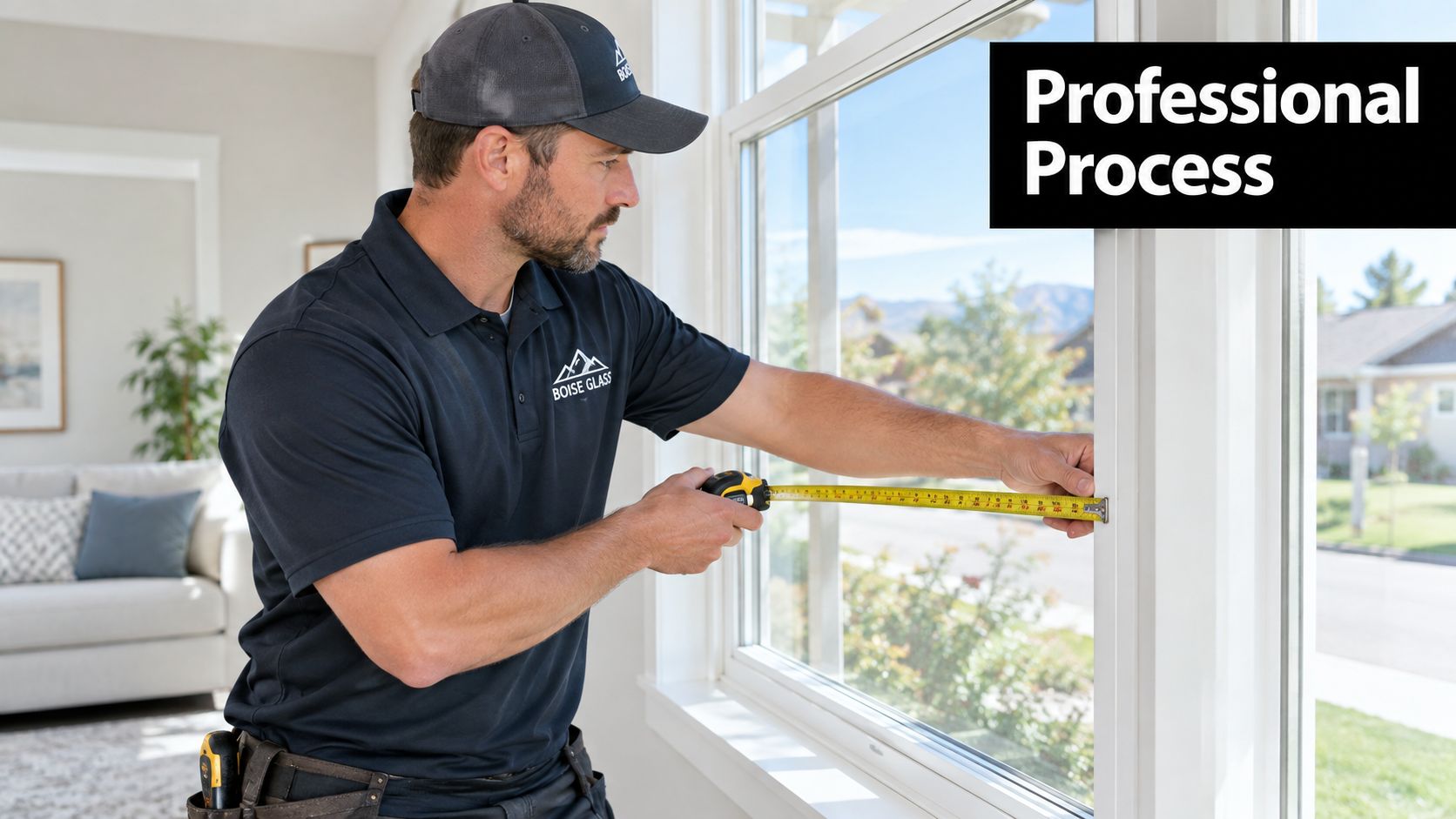
The removal stage should be controlled. For a single-pane sash, that means taking out the old pane, clearing glazing points and compound, and cleaning the rabbet. For an insulated unit or full replacement, the installer verifies the frame and support points before setting the new assembly.
The new glass or window should sit securely without being forced into the opening. The technician checks alignment, hardware operation, seals, and the exterior path that directs water away from the frame. Cleanup isn't an optional courtesy. Broken glass, old compound, fasteners, and packaging should leave with the crew.
Safety glazing also has to be addressed. Residential safety-glazing guidance explains that replacement glazing in hazardous locations must comply with International Residential Code safety-glazing rules designed to reduce injury where a person could impact the glass. A commonly cited trigger involves a window larger than 9 square feet, with its bottom edge less than 18 inches above the floor, its top edge more than 36 inches above the floor, and a walking surface within 36 inches horizontally. When all those conditions apply, safety glass is required, as described by the American Society of Home Inspectors safety-glazing explanation.
Before signing, verify the glass specification, installation warranty, product warranty, disposal terms, and any frame repair included in the scope. For a Treasure Valley homeowner who wants custom measurements and a performance-focused replacement, C & C Windows & Doors offers replacement windows and patio doors with professional installation, including Low-E, argon, and triple-pane options.
If your Boise window has cracked glass, start with a frame and performance assessment instead of automatically ordering a pane. Visit C & C Windows & Doors to request a consultation for custom measurements, code-conscious glass selection, and a clean installation that addresses comfort as well as the visible damage.