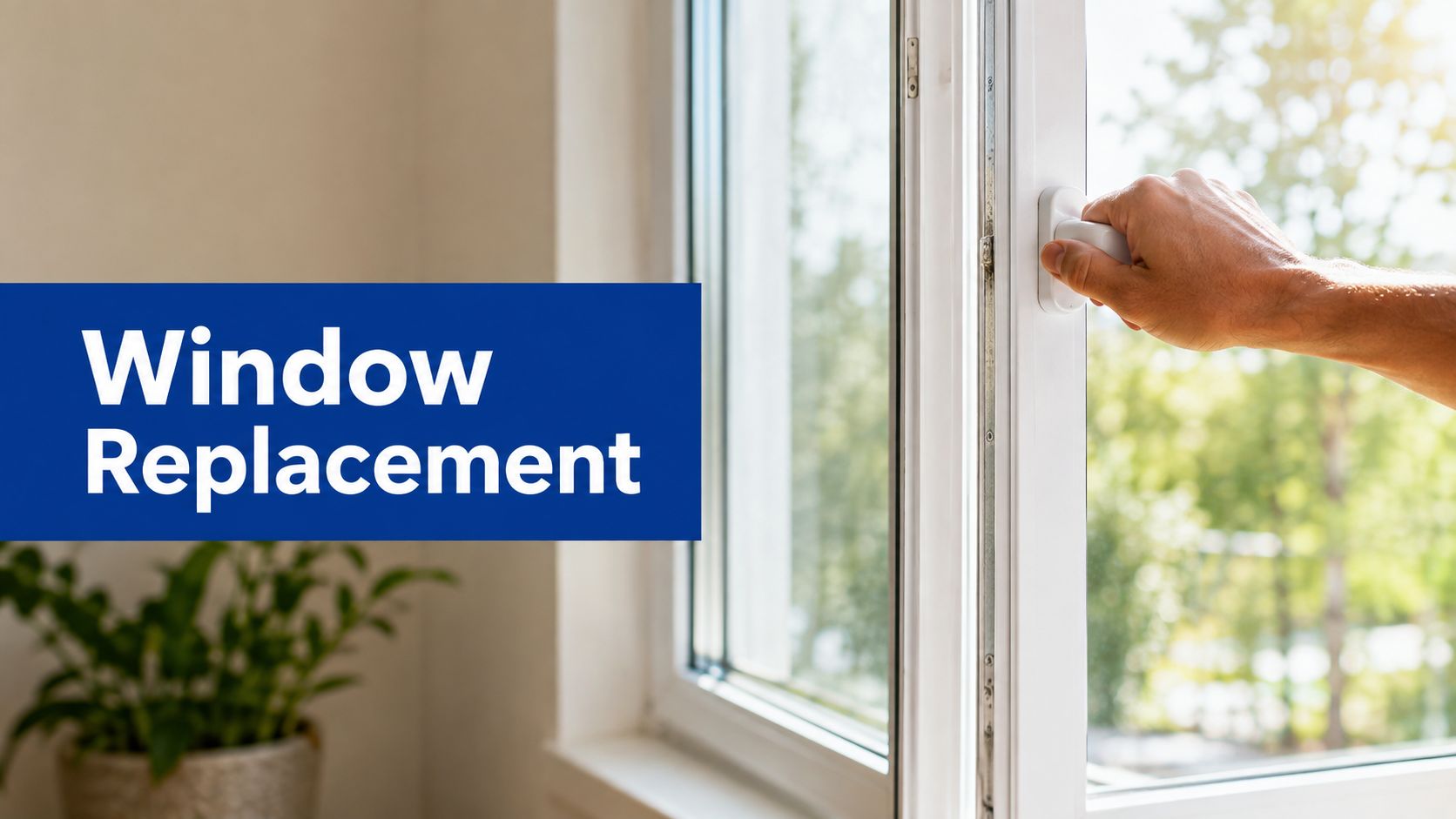
A typical Pasco window replacement project runs $600–$1,200 per window installed and takes 1–3 days for an average home, depending on window count and structural work. The right choice isn't just the cheapest glass package. In Pasco, you need a window that meets local code, handles winter heat loss, controls summer sun, and is installed with serious attention to air sealing.
You may be dealing with a cold bedroom, a living room that overheats by afternoon, or a rising electric bill that makes every draft more irritating. Pasco homes face both heating and cooling demand, so window replacement can improve comfort and energy performance rather than merely refresh the exterior. The key is matching the product and installation method to Climate Zone 5 requirements, the home's exposure, and the condition of the existing openings.
Table of Contents
- What Window Replacement Really Costs in Pasco
- Why Pasco's Climate Demands Better Windows
- The Replacement Process From Estimate to Final Walkthrough
- Choosing the Right Glass Package for Pasco Summers and Winters
- Permits, Code Compliance, and Local Utility Rebates
- Hiring a Window Contractor Without Getting Burned
- Financing, Warranty, and Long-Term Window Care
What Window Replacement Really Costs in Pasco
For a straightforward project, standard vinyl double-pane windows commonly land around $600–$900 installed, while premium vinyl, fiberglass, or composite units with Low-E glass can reach $1,000–$1,200 per opening. Those ranges are practical planning figures for homeowners considering window replacement Pasco WA, but the final proposal depends heavily on access, trim, frame condition, and whether the installer is replacing the window inside the existing frame or opening the wall for a full-frame installation.
A useful cost model separates the product from the work around it. The window itself, labor and trim, flashing and insulation, and the contractor's overhead all contribute to the final price. Don't judge a quote only by the glass package. A lower price may exclude exterior wrapping, interior casing, disposal, sensor reconnection, or repairs to concealed damage.
Practical rule: A quote should identify the product, installation method, insulation, flashing, trim, disposal, permit responsibility, and warranty. If those items aren't written down, the price isn't complete.
Typical project pricing
| Window Style | Standard Vinyl | Premium Vinyl/Fiberglass | Notes |
|---|---|---|---|
| Small bedroom window | $600–$900 | $1,000–$1,200 | Price changes with egress, trim, and frame condition |
| Standard living-room slider | $600–$900 | $1,000–$1,200 | Larger glass area and patio-style hardware affect labor |
| Picture window | $600–$900 | $1,000–$1,200 | Large units require careful handling and structural review |
These ranges should be treated as project-planning guidance, not a guaranteed bid. For a broader discussion of regional pricing factors, review this Tri-Cities window replacement cost guide.
Where Pasco budgets get hit
Older homes often reveal problems only after the trim comes off. Irrigation overspray can contribute to deteriorated sills, stucco may need repair around exterior trim, and security sensors can require careful rerouting. A contractor who refuses to discuss these possibilities before signing is leaving you exposed to change orders.
Whole-home work usually produces better pricing than a single opening because measuring, ordering, mobilizing, and cleanup are spread across more units. A project involving 10–15 windows may also allow the installer to standardize labor and trim details, something a one-window replacement can't do. Ask for both a single-opening price and a whole-project price so you can see the difference clearly.
Why Pasco's Climate Demands Better Windows
Pasco's window decision starts with the heating season. Franklin County design criteria list a mean annual design temperature of 50°F, 4,895 heating degree days, and 830 cooling degree days, while the yearly degree average is 53.9°F, according to the National Weather Service climate data for Pasco. Those figures show why insulation matters throughout the year, with winter heat retention carrying particular weight.
A window with a poor U-factor allows heat to move through the assembly more easily. A window with an unsuitable SHGC can admit excessive solar heat during bright summer afternoons. In Pasco, the right product must address both conditions instead of copying a generic specification from a milder market.
Read the performance label correctly
ENERGY STAR identifies U-factor as the measure most directly tied to conductive heat loss and SHGC as the measure of solar heat gain. Its guidance shows typical U-factor values ranging from 0.25 to 1.25 and SHGC values from 0.25 to 0.80. Certified products commonly need air leakage of 0.3 cfm/ft² or less, as described in ENERGY STAR's energy performance guidance.
Lower U-factor generally means better insulation. Lower SHGC generally limits unwanted solar gain, which can matter for west-facing rooms and large areas of glass. The important detail is that the rating applies to the window unit, while installation determines whether the opening performs as intended.
Franklin PUD data also show why this matters financially. Local cost information places average electricity at about $148.41 per month, with an annual estimate of $1,608 and average usage around 1,312 kWh per month. Another local source reports a median home value of $415,376 and median rent of $1,201, figures available through this Pasco cost-of-living reference. Those operating costs make comfort and efficiency legitimate parts of the replacement decision, not marketing extras.
The Replacement Process From Estimate to Final Walkthrough
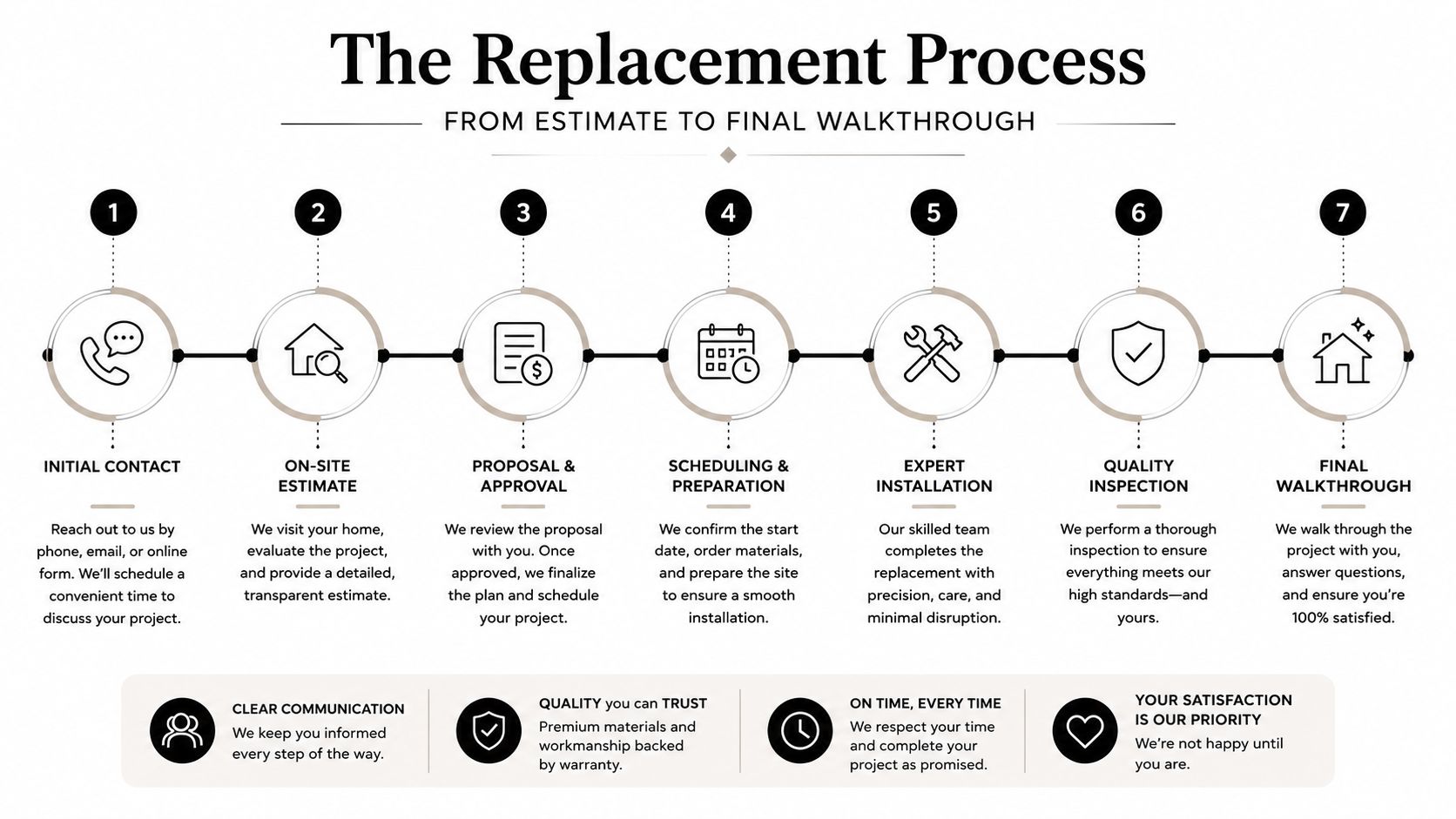
A professional installation begins before anyone removes a sash. The first visit should include measurements of every opening, an inspection for concealed rot, and a conversation about operation, glass exposure, egress, trim, and access. Measuring only the most visible dimensions is how homeowners end up with avoidable fit and finish problems.
The written proposal should then show each opening, the selected model, glass specifications, installation method, trim scope, disposal, and warranty. Manufacturing is often the scheduling bottleneck because custom sizes must be ordered before installation can be placed on the calendar.
What the schedule should look like
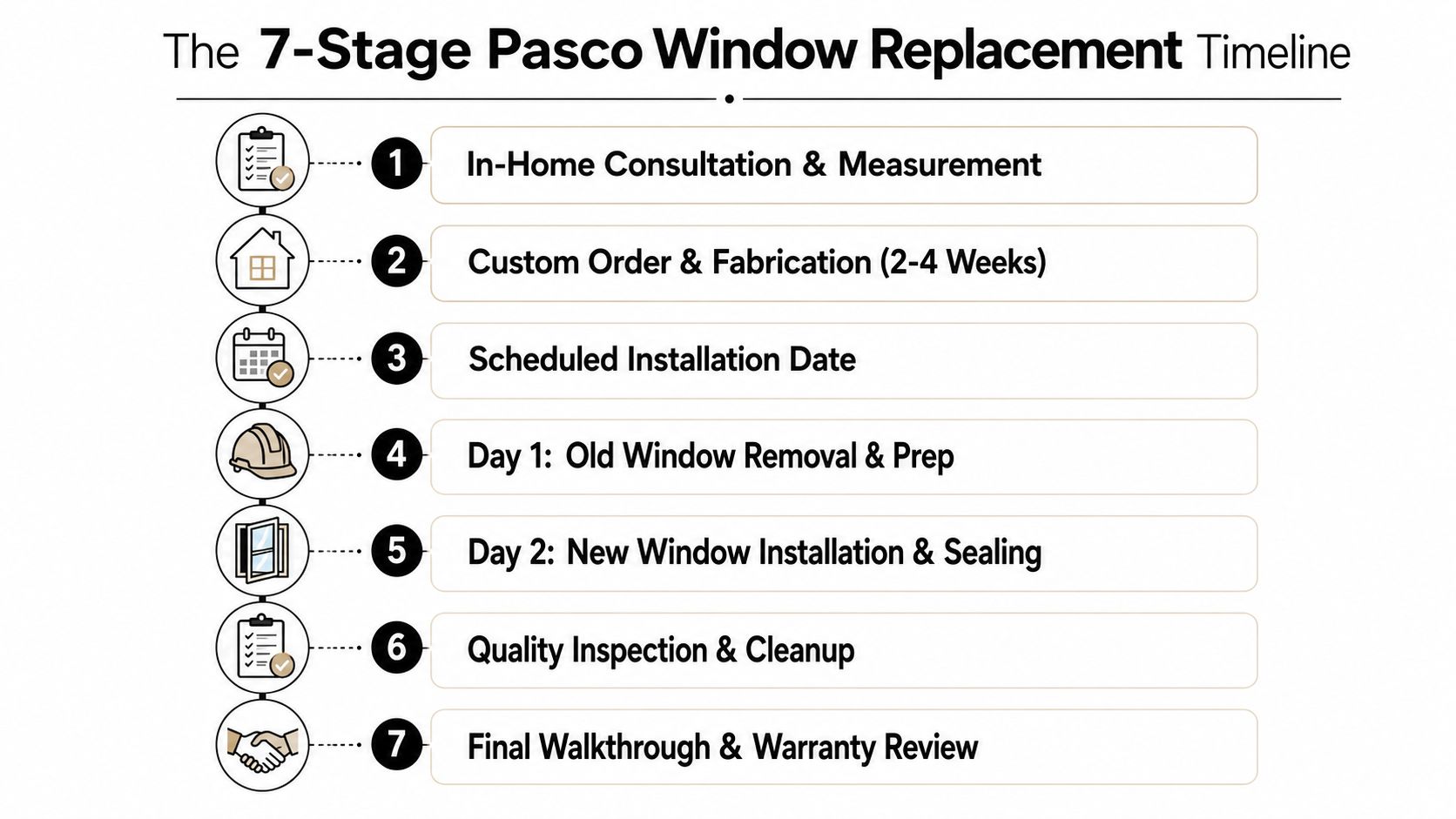
- Consultation and measurement: The installer records each opening and checks the surrounding wall, sill, casing, and exterior finish.
- Quote and contract review: You receive line-item pricing and confirm the product, installation scope, deposit, and permit responsibility.
- Ordering and fabrication: Custom windows are released after approval. Ask the contractor to explain what happens if a measurement changes.
- Removal and preparation: The crew protects floors, removes the existing unit, checks the opening, and prepares the sill and perimeter.
- Installation and sealing: The new window is set, shimmed, insulated, flashed where required, and sealed to reduce uncontrolled air movement.
- Trim and finish work: Interior casing, exterior trim, caulk, screens, and hardware are completed according to the contract.
- Inspection and walkthrough: The crew demonstrates locks, balances, operators, cleaning access, and warranty procedures.
A typical average-home project may take 1–3 days, depending on the opening count and structural work. Before the crew arrives, clear blinds and furniture several feet away from each opening, remove or arrange for removal of security sensors, and confirm that exterior access is available.
“Same-day installation” usually describes a simple single-window swap, not a full-home project involving custom fabrication, preparation, trim, inspection, and cleanup. Ask what the phrase includes before treating it as a scheduling promise.
Choosing the Right Glass Package for Pasco Summers and Winters
The sensible glass package for most Pasco homes is double-pane Low-E glass with an inert-gas fill, paired with a frame and installation system that support the unit's rating. Single-pane glass is inexpensive at the purchase point, but it offers weak insulation and poor comfort control. Triple-pane glass can perform well, but it adds weight, cost, and installation demands that aren't automatically justified in every home.
The federal ENERGY STAR climate-zone finder is the correct starting point for product qualification. Use the home's location and county to identify the applicable performance target, then compare the complete-window U-factor and SHGC rather than relying on a salesperson's glass-only description.
Compare the packages
| Glass Package | U-Factor | SHGC | Approx. Added Cost/Window | Best For |
|---|---|---|---|---|
| Single-pane | Higher heat transfer | Higher solar exposure | Lower initial cost | Temporary or highly limited repairs |
| Double-pane Low-E | Lower than single-pane | Controlled through coating selection | Moderate upgrade | Most Pasco replacement projects |
| Double-pane Low-E with Argon | Lower heat transfer than basic double-pane | Controlled through coating selection | Moderate to premium | Heating-dominant homes seeking balanced performance |
| Triple-pane | Potentially very low heat transfer | Coating-dependent | Highest upgrade | Cold, leaky, or noise-sensitive homes where structure supports the weight |
The exact U-factor and SHGC must come from the manufacturer's NFRC label. Don't accept a quote that says only “energy efficient.” Washington's code and ENERGY STAR qualification depend on specific performance values, and the entire unit matters.
Match the package to the room
A ranch with modest exposure may reach its practical value point with double-pane Low-E and Argon. A two-story home with large west-facing windows may benefit more from a lower SHGC coating than from adding another pane everywhere. A cold bedroom, a room with noticeable drafts, or a home with substantial noise may justify selective triple-pane use rather than a whole-house upgrade.
The installation baseline matters just as much. Technical modeling comparing a clear single-glazed metal-frame window with modern low-E, gas-filled designs shows how weak older assemblies can be. The Efficient Windows technical reference lists the older baseline at U = 1.29 and SHGC = 0.73. That comparison supports replacing poor windows, but it doesn't mean every premium option pays back equally.
Permits, Code Compliance, and Local Utility Rebates
Don't assume a same-size replacement is automatically permit-free. Pasco's official guidance says homeowners should contact Permitting to confirm whether a project needs a permit, and the city's window and door checklist states that replacement windows must meet the Washington State Energy Code U-value of .30. Structural changes, altered openings, and work affecting required emergency egress deserve particular attention.
Washington's energy code places Pasco in Climate Zone 5. The applicable code table lists maximum U-factors of 0.34 for Class AW fixed windows and 0.36 for Class AW operable windows, while other vertical fenestration allows U-0.26 fixed and U-0.28 operable or mulled units, as shown in the Washington State code table. Your contractor should identify which classification applies to the selected product and opening.
Protect the rebate opportunity
Franklin PUD's rebate sheet uses different payment levels based on window U-value and whether the property is single-family or multi-family. The program's window and heat-pump rebate document is the controlling reference for current tiers, documentation, and eligibility. Don't order windows based on a verbal promise that a rebate “should” apply.
Before signing, confirm:
- Performance threshold: The quoted unit meets the applicable U-factor requirement.
- Project eligibility: The property type and existing window condition qualify under the utility program.
- Documentation: The installer will provide invoices, model information, and required completion records.
- Inspection responsibility: You know who schedules any required city inspection.
- Egress compliance: Bedroom openings retain the required emergency escape function where applicable.
A rebate can improve the economics, but it shouldn't push you into a product that fails code or doesn't suit the room. For readers comparing incentive terminology across states, this window replacement tax credit reference offers additional context, but Pasco homeowners should rely on Franklin PUD and Washington requirements for their project.
Hiring a Window Contractor Without Getting Burned
The most expensive window mistake isn't choosing vinyl instead of fiberglass. It's hiring a crew that gives you a low opening price, then adds preparation, trim, flashing, or structural work after removal begins.
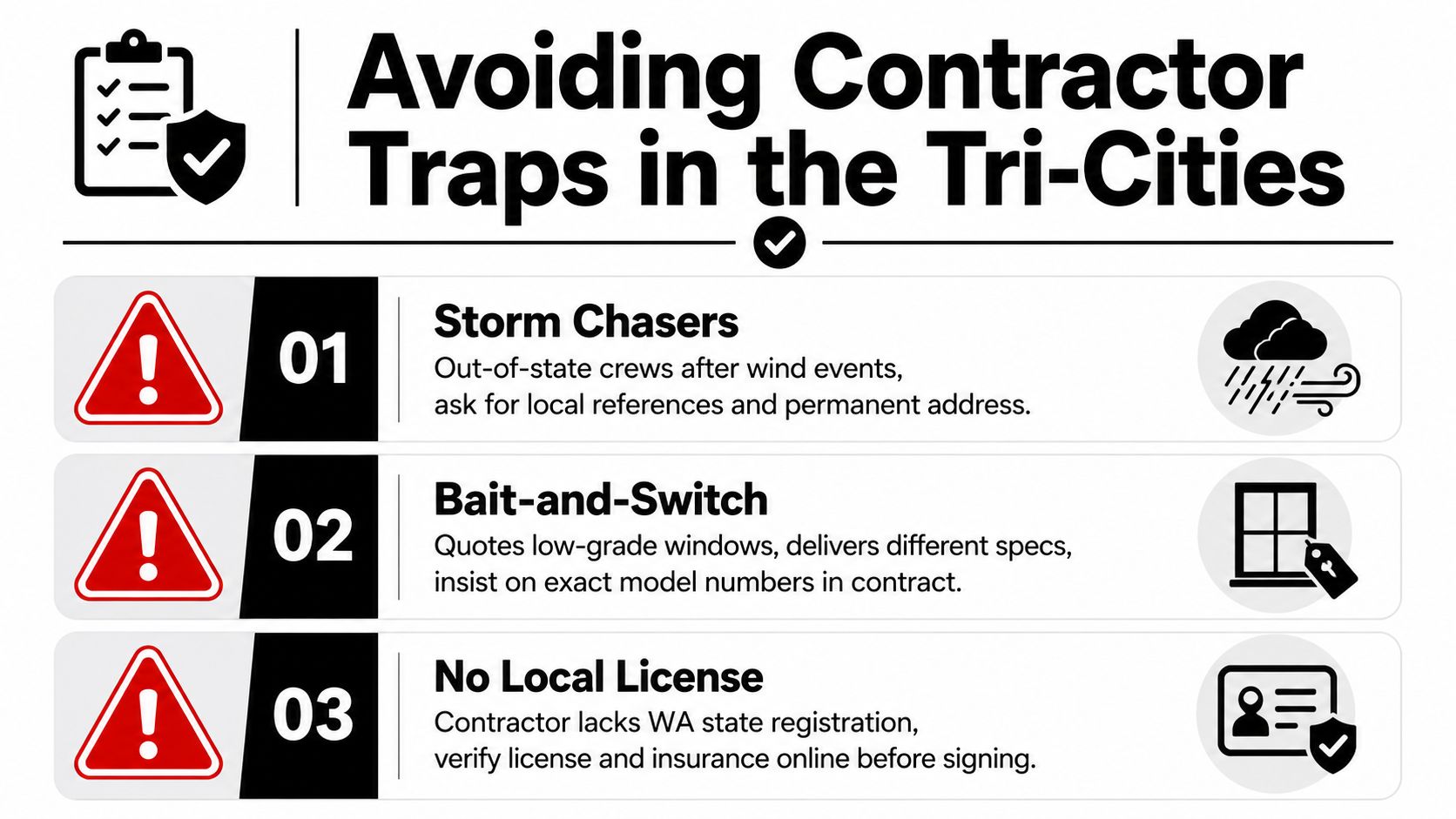
Storm chasers are a particular concern after regional wind events. A company that can't provide a permanent local address, Washington registration information, and recent nearby references deserves extra scrutiny. The same applies to bait-and-switch proposals that describe a premium product during the sales visit but list a vague or different model in the contract.
Use a hard-nosed vetting checklist
- Verify Washington registration: Ask for the contractor's Washington UBI information and confirm the business details.
- Check local standing: Confirm the company's Franklin County business status and insurance before work begins.
- Inspect recent work: Request three Pasco or Richland addresses from recent projects that you can view from the street.
- Identify the crew: Ask whether employees or subcontractors will install the windows and who supervises the work.
- Confirm qualifications: Ask about the lead installer's relevant training, including AAMA or EPA RRP credentials where applicable.
- Assign permit responsibility: Put in writing who contacts Pasco Permitting and schedules inspections.
- Demand model numbers: Every window should have a brand, series, configuration, glass package, and performance label.
- Review payment terms: The contract should state the deposit, progress payments, completion conditions, and cancellation rights.
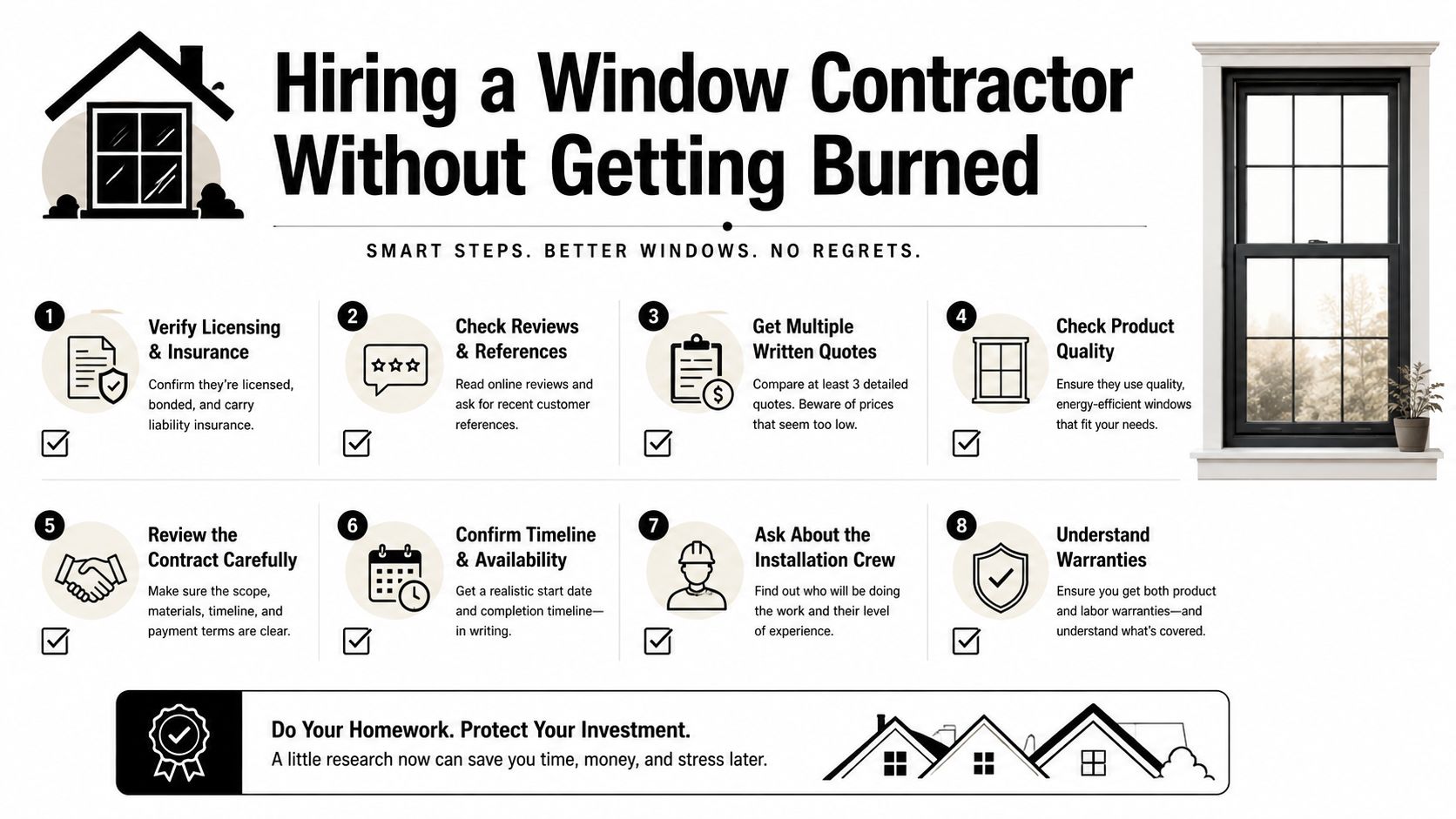
Ask five direct questions before accepting a proposal: Who performs the installation? Who is the lead installer? What happens when concealed rot appears? Who pulls the permit? What exact product model is included? Sales operations often answer around these questions. Serious installers answer them plainly.
A strong contract also addresses lien waivers, change-order approval, debris removal, finish repairs, warranty service, and the circumstances under which the deposit is refundable. C & C Windows & Doors is one option that offers replacement windows, custom measurements, and in-home consultation services, as described in its window companies serving the region resource. Compare any provider by documented scope and installation accountability, not by showroom language alone.
Financing, Warranty, and Long-Term Window Care
The right payment method depends on the project and your ability to manage the balance. Cash keeps the contract simple and may produce a contractor discount, but the discount must be written into the proposal. A HELOC or cash-out refinance can make sense for a larger renovation when the full borrowing cost is understood. Manufacturer-financed programs can be convenient, but promotional terms and deferred-interest rules require careful reading.
Never compare financing by monthly payment alone. Ask for the total repayment amount, the promotional expiration date, the interest treatment if the balance remains, and whether early payoff changes the cost. A window upgrade should improve the home without creating a payment surprise later.
Decode the warranty
A product warranty may cover insulated glass, frame components, hardware, and finish for different periods. A lifetime limited warranty may contain exclusions or prorating, while a separate labor warranty depends on the contractor remaining available to perform service. Get the warranty documents before installation, not after a problem occurs.
The contract should distinguish:
- Glass coverage: Seal failure, fogging, and glass defects may have separate terms.
- Frame and hardware coverage: Operators, locks, balances, and screens may carry different exclusions.
- Labor coverage: Installation-related service is usually the contractor's responsibility.
- Transfer terms: A future homeowner may or may not receive the same protection.
- Service process: The warranty should identify who receives the claim and how replacement parts are handled.
Keep a Pasco care schedule
Eastern Washington dust, irrigation residue, sun exposure, and seasonal temperature changes all justify routine inspection. A small maintenance routine can help you catch drainage, seal, and hardware problems before they become larger repairs.
| Timing | Maintenance |
|---|---|
| Twice yearly | Vacuum weep holes and inspect exterior seals |
| Quarterly | Rinse tracks and remove accumulated alkaline dust |
| Before summer | Check locks, operators, screens, and failed glass seals |
| Every 3–5 years | Inspect and renew exterior caulk where deterioration appears |
| After severe weather | Look for cracked sealant, loose trim, and water entry |
Don't use abrasive cleaners on Low-E glass, and don't block weep holes with caulk. If a sash becomes difficult to operate, address the hardware or alignment issue instead of forcing it. Proper care protects the air seal, drainage path, and everyday usability that you paid to install.
C & C Windows & Doors offers free in-home consultations, custom measurements, and replacement window and patio door installation for homeowners evaluating comfort, code compliance, and long-term performance. Visit C & C Windows & Doors to discuss your Pasco project, review suitable window options, and request a clear estimate.