

You clean the glass. The haze stays. You hit it with Windex again, then try the outside. Still there. If your window looks cloudy between the panes, you're not dealing with dirt. You're looking at a failed insulated glass unit, and that changes the decision fast.
Most homeowners get pushed into the wrong question. They ask, “Can this be repaired, or do I need a whole new window?” That's incomplete. The question is whether the window still has enough useful life left to justify replacing only the glass unit. If the frame, sash, and hardware are still solid, an IGU swap is often the smart spend. If the rest of the window is already wearing out, putting money into glass alone can be a short-term patch on a tired system.
In the Treasure Valley, that distinction matters. Boise-area homes deal with sharp seasonal swings, hot sun, dry stretches, cold snaps, and those damp inversion mornings that make weak windows show their age. Fog between panes usually isn't the first problem. It's the visible one.
Table of Contents
- Why Your Windows Fog Between the Panes
- Diagnosing the Fog in Five Minutes
- Quick Fixes and Temporary Solutions That Actually Help
- Replacing Just the IGU or the Whole Window
- Cost, Timeline, and the Honest Trade-Offs
- Warranty, Safety, and When to Call a Local Pro
Why Your Windows Fog Between the Panes
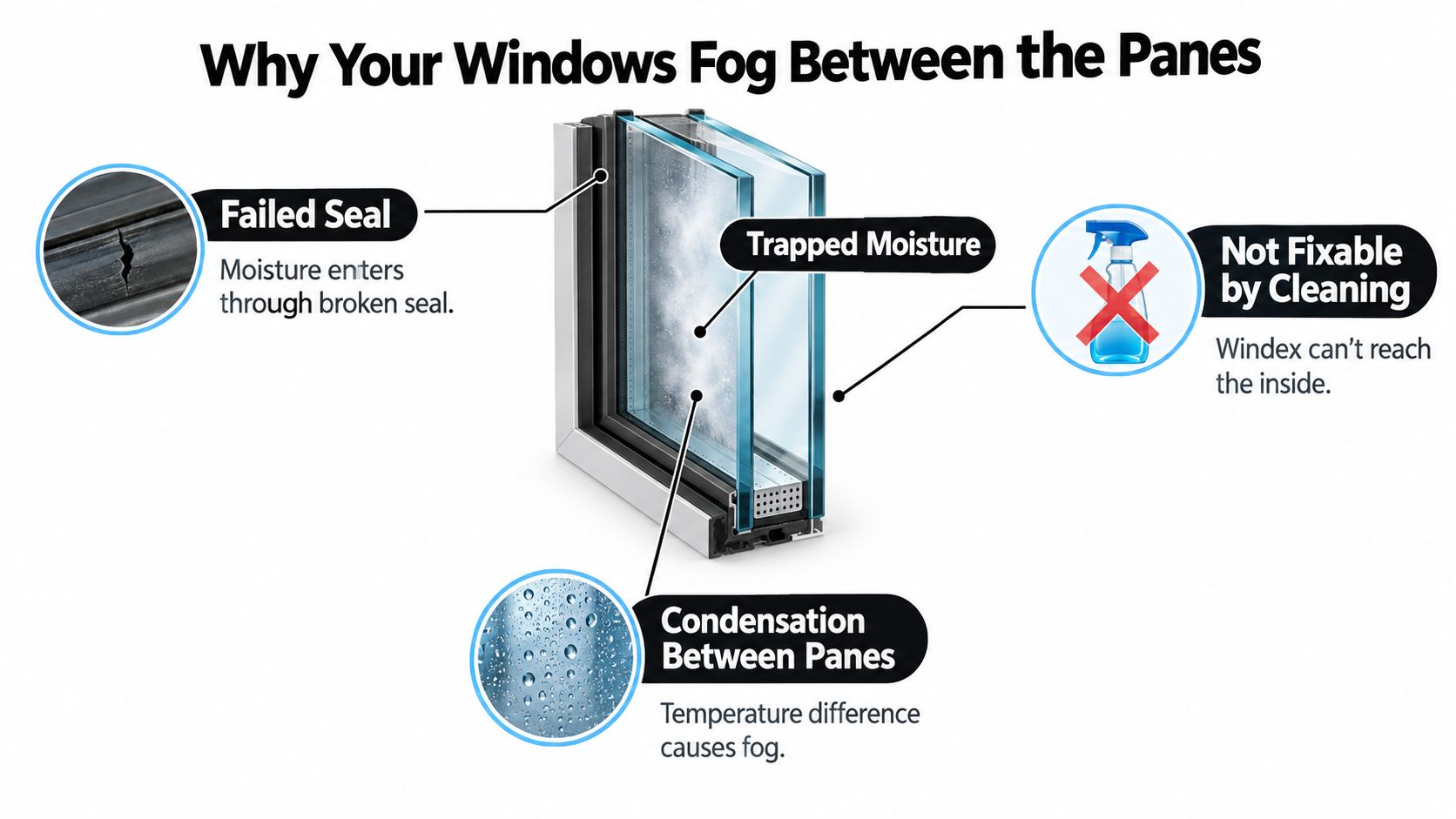
You noticed a cloudy film that won't wipe off. That's the classic sign. Fog between window panes usually means the insulated glass unit seal has failed, not that the glass needs better cleaning. When moisture shows up inside a sealed unit, the perimeter seal has been breached, the cavity takes on moisture, and the trapped haze can't be reached from either side of the glass. That's why it keeps coming back.
What's actually happening inside the glass
A double-pane window is built as an insulated glass unit, or IGU. Two panes are sealed together around the perimeter with a spacer between them. Once that seal breaks down, outside air and moisture work their way into the cavity. Then the desiccant saturates, and the unit can't keep that space dry anymore.
That's why a true window seal failure in Boise is a glass-unit problem, not a housekeeping problem.
Practical rule: If the haze is between the panes, no spray bottle on earth is going to fix it.
Why Treasure Valley windows show this problem
In this climate, windows get worked hard. Summer sun heats the glass. Winter cold pulls temperatures the other direction. Frames expand and contract, sealants age, and older units lose the battle. Morning moisture during inversion conditions can make the symptom easier to see, but the root issue is still the failed seal.
Industry guidance cited in 2026 says high-quality IGUs can still show a 1% failure rate after 10 years and a 3% failure rate after 15 years, while builder-grade units with aluminum spacers may fail in 5 to 10 years and premium warm-edge-spacer units can last 15 to 20 years according to this seal-failure reference.
Another useful benchmark is gas retention. One 2026 industry source cites FGIA guidance allowing up to 1% gas leakage per year, which means a properly sealed unit can still lose about 10% of its gas fill after a decade even without a major failure. Once the seal is compromised, moisture enters, the desiccant saturates, and permanent fogging follows, as explained in this overview of condensation inside windows.
What the fog tells you
A fogged cavity tells you the window is no longer performing as designed. It may still stand there and keep rain out, but it's not the same window it was when it left the factory. In many homes, that fog also shows up with mineral streaking or a milky film trapped inside the unit.
That's why any honest foggy windows between panes fix starts with one fact: the IGU has failed.
Diagnosing the Fog in Five Minutes
You can sort this out quickly without special tools. You're trying to answer one question. Is the moisture on the room side or outside surface, or is it trapped inside the sealed unit?
The five-minute check
Wipe both sides first. Clean the interior glass, then the exterior if you can safely reach it. If the cloudiness stays put, you're not dealing with surface grime.
Watch when it appears. If the fog shows up only on humid mornings and clears later, indoor humidity may be the issue. If it hangs there regardless of cleaning, that points toward a failed IGU.
Look for trapped residue. Chalky mineral haze, suspended droplets, or streaks that sit between the panes are strong indicators the seal is gone.
Check the glass edge and seal area. Run your eyes around the perimeter. Look for cracked glazing, separation at the edge, or a brittle-looking seal line.
Inspect the rest of the window. Open it. Close it. Check the sill and frame corners. Rot, peeling paint, or hardware that sticks matters because it changes the repair decision.
If you can't remove the haze from either side and you can see moisture or residue inside the unit, treat it like IGU failure until proven otherwise.
What points to condensation instead
Not every wet window means the glass unit failed. Bathrooms, kitchens, and bedrooms with poor ventilation can load the indoor air with moisture. That moisture can condense on the room-side glass, especially on cold mornings.
Look for these clues:
- Surface moisture you can wipe away: That's usually interior condensation.
- Fog tied to showers or cooking: That leans toward indoor humidity.
- Clear glass by afternoon: Often a humidity-management issue, not a failed seal.
- No mineral haze inside the unit: Another sign it may not be an IGU problem.
What pushes the decision toward replacement
If the window is hard to operate, won't lock correctly, or shows soft frame corners, don't stop your diagnosis at the glass. A failed seal in an otherwise healthy window is one thing. A failed seal in a worn-out window is a different job and a different budget.
Fog alone means one problem. Fog plus a failing frame means the whole window system is aging out.
Quick Fixes and Temporary Solutions That Actually Help
Temporary fixes have a place. They can reduce moisture, improve the view for a while, and buy you time. But let's keep the language honest. Temporary is temporary. None of these options restores the original sealed cavity once that seal has failed.
What helps around the window
Start with the simple stuff if you're not ready to replace anything this week.
- Run the bath fan and range hood: That cuts indoor moisture loads that can make a bad window look even worse.
- Use a dehumidifier nearby: Putting one close to the affected window can reduce visible moisture in the room.
- Set moisture absorbers near the opening: Desiccant tubs or packs can help the surrounding air, but they cannot dry out a sealed cavity and reverse a failed IGU.
These steps are worth doing anyway, especially in rooms that trap humidity. They improve comfort. They just don't qualify as a permanent foggy windows between panes fix.
If the room also feels drafty, this guide on how to stop drafts around windows can help you address the air-leak side of the problem while you decide on glass or full replacement.
Drilled defogging kits
This is the fix a lot of people find online. A small hole gets drilled in the glass, the cavity gets cleaned, moisture is removed, and a vented plug goes in. It can improve appearance. That's the appeal.
Here's the catch. Industry guidance says defogging-style interventions permanently vent the cavity to ambient air and do not restore the original argon or krypton fill, so thermal performance drops even if the glass looks better. The same guidance notes that roughly 75% of fogged double-paned units can be solved by glazing assembly replacement instead of full-window replacement, according to this condensation and defogging reference.
Clearer glass is not the same thing as a repaired window.
Temporary Fog Fix Methods Compared
| Method | Approximate Cost | How Long It Lasts | Warranty Impact |
|---|---|---|---|
| Lower indoor humidity with fans or dehumidifier | Low to moderate | Depends on room conditions | Usually none |
| Desiccant packs or moisture tubs near the window | Low | Short-term help only | Usually none |
| Drilled-hole defogging | Varies | Temporary cosmetic improvement | Can void IGU warranty |
| IGU replacement planning visit | Varies by provider | Leads to durable fix, not a temporary one | Depends on existing coverage |
One more hard truth. Once someone drills that glass, most manufacturers won't treat that unit as warrantable anymore. If there's any chance your seal failure is still covered, don't let anyone punch holes in it first.
Replacing Just the IGU or the Whole Window
Most homeowners need straight advice. If the fog is inside the unit, you're usually deciding between IGU replacement and full window replacement. The right answer depends less on the fog itself and more on the condition of everything around it.
When IGU replacement makes sense
IGU replacement means keeping the existing frame and sash, removing the failed insulated glass unit, and installing a new sealed unit in its place. This is the right move when the rest of the window still has real service life left.
Choose this route when:
- The frame is solid: No rot, warping, or movement at the corners.
- The sash still works: It opens, closes, and locks the way it should.
- The weatherstripping still has life: You're not fighting major air leakage from worn components.
- The look matters: Custom finishes or existing trim details are worth preserving.
One underserved point in this whole conversation is that the smartest choice often isn't full replacement. If the frame is sound, replacing only the insulated glass unit can preserve the existing system and avoid unnecessary disruption. That service-life logic is laid out well in this guide on fixing a foggy window with failed seal.
When full replacement is the smarter spend
If the frame is soft, the sash is out of square, the hardware is tired, or the window has bigger performance issues, stop trying to save one component. Replace the whole unit and be done with it.
Look for these signs:
- Soft wood or damaged corners
- Compressed or failing weatherstripping
- Balances that don't hold the sash up
- Locks that no longer line up
- Exterior cladding or sill problems
- Multiple symptoms beyond the fogged glass
That's where a side-by-side window replacement vs window repair cost comparison helps frame the decision properly.
IGU Replacement vs Full Window Replacement
| Factor | IGU Replacement | Full Window Replacement |
|---|---|---|
| Scope | Replaces sealed glass unit only | Replaces complete window system |
| Best use case | Frame and hardware are still sound | Frame, sash, or hardware are worn out |
| Disruption | Usually less invasive | More involved install |
| Appearance | Preserves existing frame and trim | New frame, new trim details possible |
| Energy outcome | Restores sealed glass performance | Upgrades the entire opening |
| Long-term value | Best when window still has life left | Best when whole unit is near end of life |
If the frame is healthy, don't pay for a whole new window just because the glass failed. If the frame is failing too, don't throw good money at old parts.
One practical option in the Treasure Valley is to have a local installer measure both paths and quote them separately. C & C Windows & Doors does that kind of in-home evaluation for replacement work, which is useful when you need to compare an IGU-only route against full replacement based on the actual condition of the opening.
Cost, Timeline, and the Honest Trade-Offs
This is the part homeowners care about most, and it's also where a lot of bad advice starts. You want the cheapest answer. Fair enough. But the cheapest answer today isn't always the cheapest answer over the life of the window.
What the work usually looks like
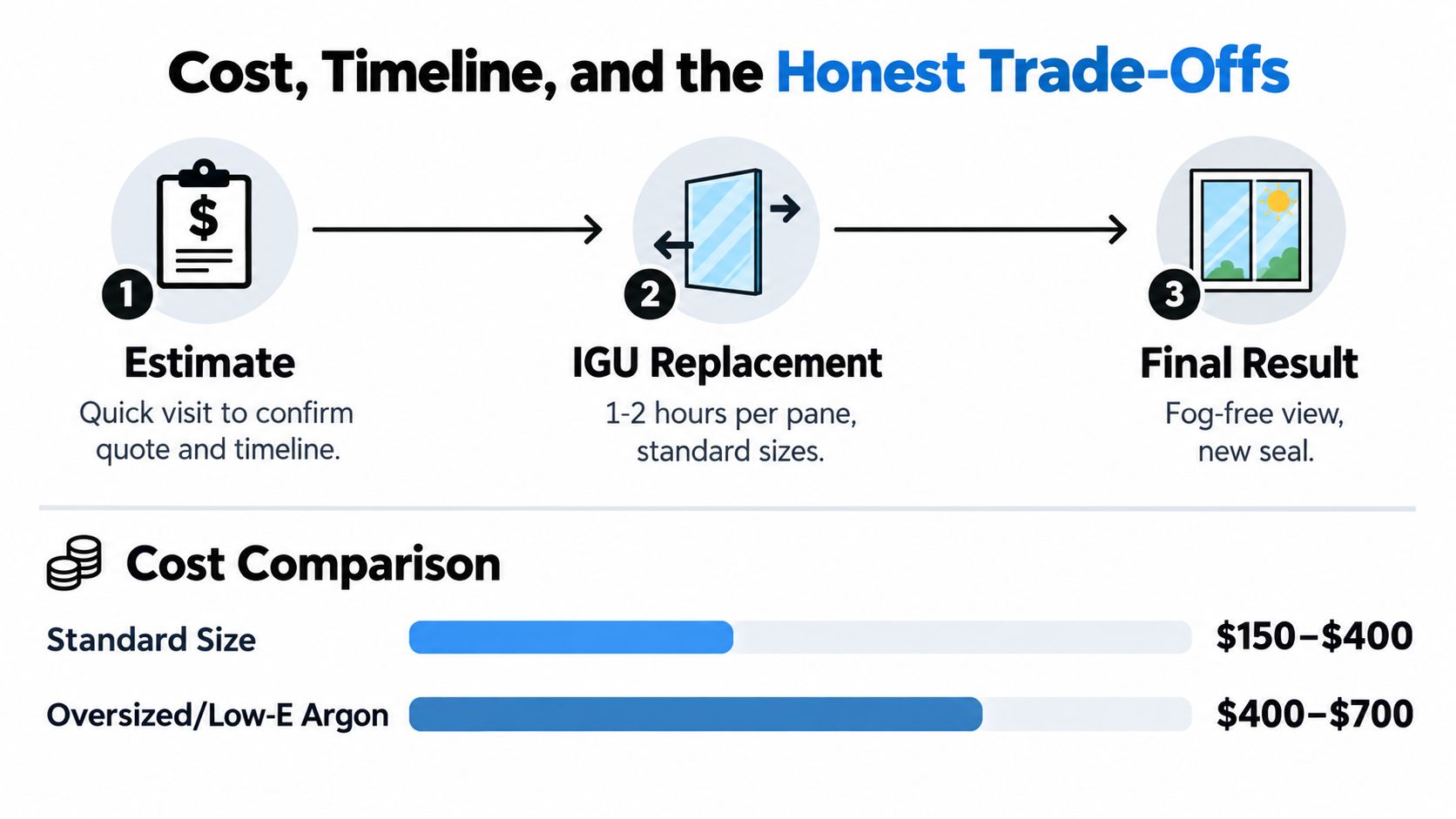
For a straightforward IGU replacement, the crew measures the glass unit, orders the sealed replacement, removes stops or glazing components, swaps in the new unit, and reseals the assembly. If the frame and sash are in good shape, it's tidy work and usually far less disruptive than replacing the whole window.
Full replacement is different. That means pulling the old unit, addressing the opening, installing the new window, sealing and trimming it properly, and checking operation across the entire assembly. More labor. More materials. More moving parts.
The trade-offs that matter
IGU replacement usually wins when one or two units have failed and the windows themselves still operate well. You restore clarity and preserve the frame you already paid for.
Full replacement starts to make more sense when multiple windows are failing, the operation is poor, or you're already dealing with frame issues. At that point, stacking labor into aging windows can get wasteful. A single failed IGU on an otherwise sound window is usually worth replacing. A cluster of aging windows with broader wear is where homeowners should seriously consider stepping back and replacing the system.
Here's the honest downside of cosmetic shortcuts. Defogging can make the glass look better, but it doesn't restore the sealed performance of the original unit. A durable fix generally requires replacing the insulated glass unit, because once the hermetic seal breaks, the unit cannot be reliably restored to original performance, as explained in this summary of why windows get foggy between glass.
Hidden costs people forget
A narrow quote doesn't always show the full cost of the decision. Watch for:
- Interior touch-up work: Older trim and paint can get disturbed during more invasive work.
- Damage from previous DIY attempts: Drilled defogging holes and rough handling can complicate replacement.
- Disposal and cleanup: Ask whether that's included.
- Lost efficiency from waiting too long: A failed unit doesn't perform like a healthy one, even if you can live with the view.
The right call isn't the one with the smallest invoice. It's the one that fits the remaining life of the window.
I won't throw out made-up savings claims. In Treasure Valley conditions, newer energy-efficient windows can improve comfort and reduce strain on your heating and cooling system. But the smartest financial move still starts with a window-by-window assessment, not a blanket rule.
Warranty, Safety, and When to Call a Local Pro
Before you approve any work, find your paperwork. If the window or home isn't that old, there may still be seal-failure coverage in play. Once the glass gets drilled or altered, that option often disappears.
Check the warranty first
Pull together these items before anyone touches the glass:
- Original install paperwork
- Manufacturer name on the window
- Any transfer documents from a prior owner
- Photos of the fog and affected windows
Fog between panes is widely treated as evidence of IGU failure because the moisture is trapped inside the sealed space and can't be cleaned from either side. That's the practical point made in this explanation of double-pane resealing and failed IGUs. If your warranty covers seal failure, that diagnosis matters.
Don't underestimate the safety side
Upper-story glass work isn't weekend-warrior stuff. Neither is removing brittle glazing components from older wood sashes. One slip on a ladder or one cracked pane turns a money-saving project into a mess fast.
Call a pro when you see any of these:
- Multiple fogged units in the same house
- Rotting frame corners
- Windows that won't stay open
- Visible glass cracks
- Old DIY defogging holes or vent plugs
- Uncertainty about whether the problem is condensation or seal failure
What a good in-home visit should give you
A worthwhile consultation should include measured openings, an opinion on frame condition, a clear recommendation on IGU replacement versus full replacement, and a written quote. If the installer can't explain why one path makes more sense for your specific windows, keep looking.
For Treasure Valley homeowners, this decision is rarely about fog alone. It's about whether the rest of the window still deserves investment.
If you've got cloudy glass between panes, C & C Windows & Doors can inspect the failed unit, evaluate the frame and hardware around it, and give you a written option for either insulated glass replacement or full window replacement. If you want a straight answer instead of a sales pitch, visit C & C Windows & Doors and schedule a free in-home consultation.