
A Boise homeowner can usually tell when a front door has given up before checking the energy bill. The lock starts dragging, the weatherstripping looks flattened, and the entry feels colder than the rest of the house. In Idaho, replacing the slab without addressing the frame, sill, glass, seals, and installation can leave the problem untouched.
A fiberglass entry door in Idaho can be an excellent upgrade, but only when you buy the whole assembly as a climate-performance system. The material matters. The details matter more.
Table of Contents
- What a Treasure Valley Morning Tells You About Your Front Door
- How a Fiberglass Entry Door Is Actually Built
- Fiberglass vs Steel vs Wood for Idaho Homes
- Energy Ratings That Matter in an Idaho Winter
- Styles, Glass, and Hardware Choices for 2026
- What a Fiberglass Entry Door Really Costs in Idaho
- Installation Timeline and What to Expect on Install Day
- Red Flags, Smart Questions, and Final Takeaways
What a Treasure Valley Morning Tells You About Your Front Door
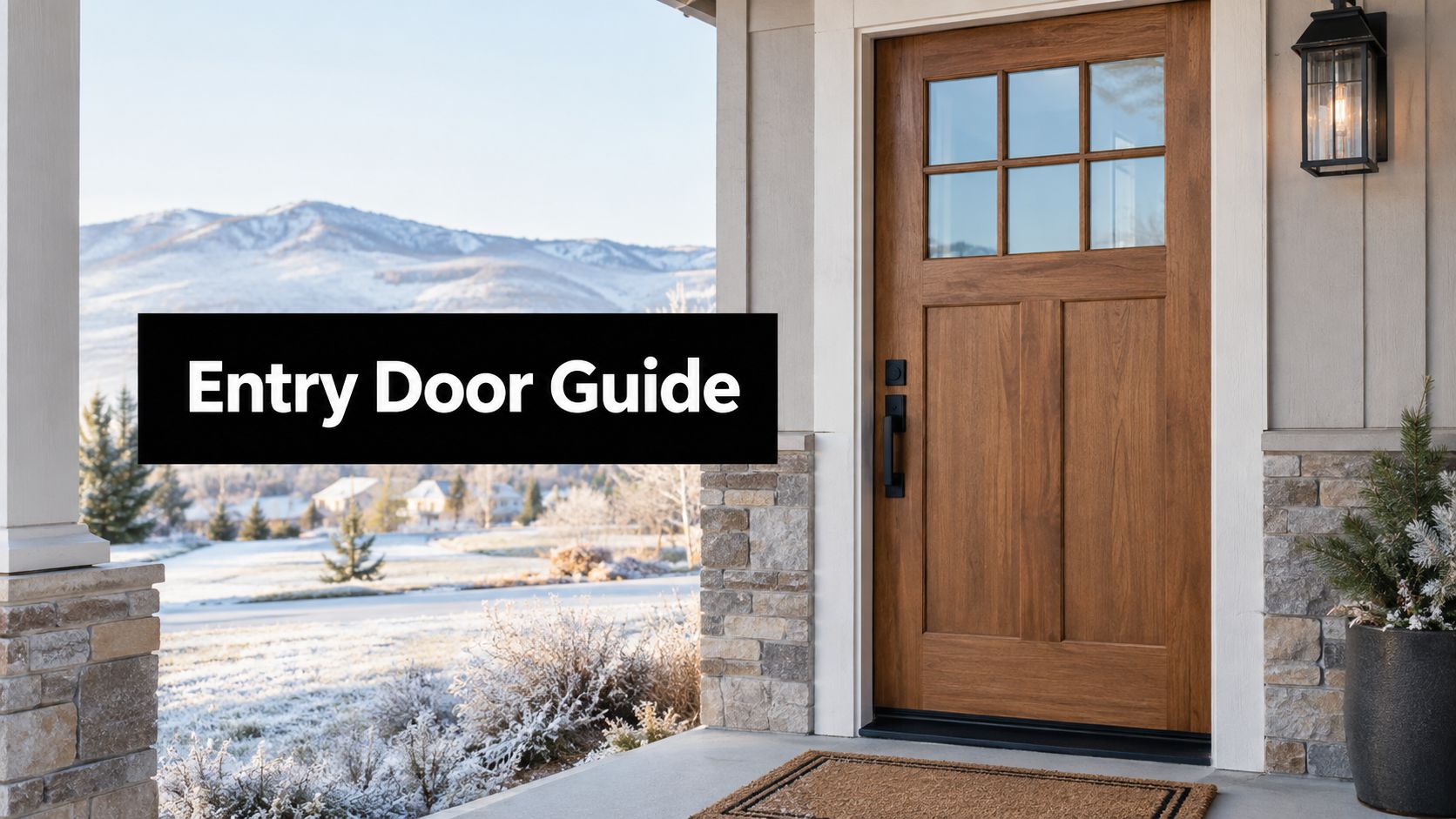
On a cold January morning in the Treasure Valley, a Boise homeowner steps onto a frosty lawn. The overnight temperature has settled near 8°F, and a thin layer of frost still clings to the grass. When the front door opens, cold air sweeps across the homeowner's ankles.
The walls aren't necessarily the problem. The draft may be coming through a builder-grade steel door whose polyurethane foam core has settled and whose weatherstripping has compressed into something closer to felt than a seal. The lock stile bows slightly. A narrow strip of daylight appears at the upper corner. Condensation trails down the sidelite glass, and a candle on the entry table flickers whenever the wind shifts.
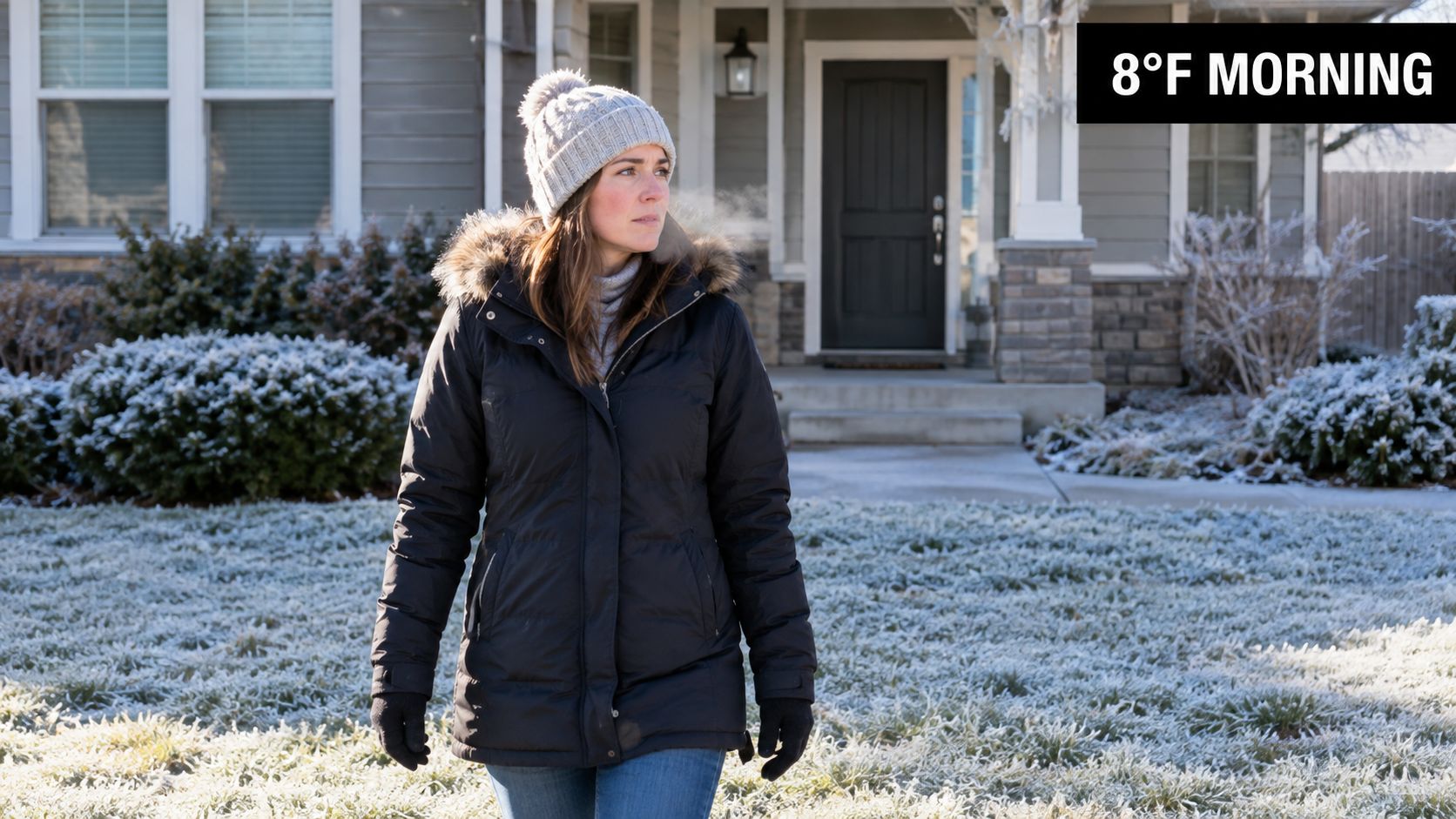
The draft is usually a system problem
That cold patch affects comfort first, but it can also point to bigger concerns. Air moving around the frame can carry moisture into wood jambs, especially during Idaho's freeze-thaw cycles. If the sill pan, exterior sealant, or rough-opening flashing is missing or failing, water can reach trim and framing where the damage stays hidden.
A door also affects the home's heating load. A well-rated assembly limits conductive heat loss through the slab, while tight perimeter seals limit uncontrolled air movement. The published fiberglass-door rating data includes models with U-factors as low as 0.22 and solar heat gain coefficients as low as 0.12, with other glazed configurations around 0.24 U-factor and 0.17 SHGC.
Installer's rule: If a quote talks only about a fiberglass slab and never identifies the frame, sill, weatherstripping, glass, or perimeter air-sealing method, it isn't a complete performance quote.
The right buying question isn't “Is fiberglass energy efficient?” It's “What whole-door assembly will keep this opening tight through a Treasure Valley winter?” Fiberglass earns its price when the core, frame, threshold, seals, glazing, and installation are specified together.
How a Fiberglass Entry Door Is Actually Built
A fiberglass entry door is closer to an insulated wall section than a decorative panel. The exterior skin is usually compression-molded from fiberglass reinforcement, with chopped and continuous strands providing rigidity without the weight associated with a solid steel construction. Manufacturers can press a wood-grain pattern into the surface and transfer that texture into the gel-coat finish, rather than relying on a painted imitation.
That outer skin is only the first layer. The core and edge construction determine how the door behaves when temperatures change.
The layers that control performance
Quality residential units commonly use a CFC-free polyurethane foam core poured into the slab cavity. The foam fills the space between the skins and provides much of the door's insulating value. The edge construction matters just as much, because the lock rail, hinge stile, and bottom rail carry hardware loads and form part of the thermal boundary.
A properly specified system may include:
- Reinforced stiles and rails: Composite material or laminated veneer lumber is preferable to exposed raw pine in areas vulnerable to moisture.
- Stable jambs: Composite or rot-resistant jamb materials reduce the risk of swelling and decay around the opening.
- Thermally improved sill: An adjustable sill with a thermal break helps reduce cold transfer at the threshold.
- Continuous weatherstripping: Head and jamb seals should compress evenly against the slab instead of relying on a thin, easily crushed strip.
- Insulated glazing: Low-E coatings, warm-edge spacers, and argon-filled glass can improve the performance of doors with lites. The glass must be evaluated as part of the complete assembly.
Read the performance sheet, not just the brochure
The NFRC-based fiberglass door data shows why the system label matters. Opaque assemblies can reach U-factors as low as 0.13, while a glazed fiberglass swinging entrance door in the same technical context may be rated around 0.41. Glass area and glass construction can change the result dramatically.
A Phius-certified fiberglass entry-door listing reports a whole-door U-value of 0.15 BTU/hr·ft²·°F for one configuration, with other fiberglass variants listed around 0.18 to 0.20. Those are whole-door values, not just skin or core values.
Ask for the tested rating of the exact door configuration. A blank slab, half-lite, full-lite, sidelite package, and transom shouldn't be treated as interchangeable products.
Fiberglass vs Steel vs Wood for Idaho Homes
Treasure Valley doors have to handle hot sun, dry winter air, temperature swings, hail, landscaping equipment, and repeated freeze-thaw exposure. That makes the material comparison practical rather than theoretical.
| Criterion | Fiberglass | Steel | Wood |
|---|---|---|---|
| Thermal performance | Strong when paired with an insulated core and complete sealed system | Can perform well with insulation, but steel conducts heat at exposed edges and weak details | Depends heavily on thickness, construction, seals, and maintenance |
| Dent and rust resistance | Resists ordinary dents and won't rust like exposed steel | Lower purchase price, but skins can dent and scratches can expose metal | Won't rust, but can swell, shrink, split, or decay |
| Finish longevity | Factory finishes can mimic wood grain and reduce repainting | Painted finishes may show damage after impacts | Requires ongoing coating and moisture management |
| Idaho maintenance | Usually the lowest-maintenance choice | Inspect dents, scratches, bottom edges, and seals | Expect regular inspection, adjustment, and refinishing |
| Best use | Most owner-occupied Idaho entry doors | Budget rentals and interior utility doors | Historic or architectural projects where maintenance is accepted |
Fiberglass is the practical default
Fiberglass gets the durability advantage for most exterior entries. It resists dents from ordinary impacts and avoids the rust pathway that begins when a steel skin gets scratched. A factory finish can deliver a convincing wood appearance without putting a vulnerable wood bottom rail directly in the weather.
Steel still has a place. It often wins on upfront price and makes sense for a rental where basic security and budget control outweigh finish longevity. It can also work well for an interior utility entrance that doesn't face the same moisture and appearance demands as a front door.
Wood is the beauty choice, not the low-maintenance choice. It moves with moisture and seasonal dryness. In Nampa or Meridian, that means the owner has to accept periodic adjustment, careful coating, and closer attention to the bottom rail and jambs.
My recommendation: Choose fiberglass for a set-and-forget exterior entry, steel when budget is the controlling factor, and wood only when the historic or architectural look matters more than maintenance.
Fiberglass also makes sense when comfort is the priority. A technical comparison of entry-door construction identifies premium fiberglass assemblies with whole-door U-factors around 0.10 to 0.15. Under the same temperature difference, a door near U-0.10 transmits roughly one-third less heat than one rated U-0.15. That comparison applies to the complete assembly, not the fiberglass face by itself.
Energy Ratings That Matter in an Idaho Winter
The NFRC label gives you the useful numbers, but only if you read it correctly. U-factor measures heat flow through the complete door assembly. Lower is better. A door rated at 0.15 generally resists conductive heat loss better than one rated at 0.30, assuming the ratings describe comparable assemblies.
For Idaho's heating-dominated season, U-factor deserves priority. Cold-climate entry-door guidance identifies 0.18 or better as a strong target for opaque fiberglass doors and around 0.25 or better for configurations with lite glass. The same guidance describes polyurethane-core fiberglass doors commonly delivering about R-5 to R-6.
The numbers homeowners should ask for
SHGC, or solar heat gain coefficient, measures how much solar heat the glazing admits. Lower values can help limit afternoon heat gain on sun-exposed entries, particularly on south- and west-facing elevations. Don't use SHGC as a substitute for U-factor. They answer different questions.
| Door Configuration | Typical U-Factor | Typical SHGC | Air Leakage | Best Use in Idaho |
|---|---|---|---|---|
| Opaque insulated door | Often the strongest option | Not applicable without glazing | Verify on the rating sheet | Maximum winter comfort and privacy |
| Half-lite door | Depends on the glass package | Depends on the glass package | Verify complete assembly | Daylight with controlled glass area |
| Full-lite door | Can be materially weaker than opaque designs | Depends on orientation and glazing | Verify complete assembly | High daylight and visual connection |
| Door with sidelites | Full system rating is essential | Depends on sidelite glass | Verify the complete entry system | Wide openings where daylight matters |
The exact configuration changes the result. NFRC data includes opaque fiberglass assemblies as low as 0.13 U-factor, while a glazed entrance configuration is listed around 0.41, so “fiberglass” alone doesn't tell you how warm the entry will feel. Manufacturer performance documentation-compressed.pdf) explains that thermal values are calculated under NFRC 100 and 200, and that ENERGY STAR-qualified fiberglass doors are independently tested and verified by NFRC.
Air leakage is the sleeper issue. A high-performing slab installed in a twisted frame, over a poor sill, or with uneven seals can still produce a cold entry. Ask for the air-leakage rating where available, then ask how the installer will square, shim, flash, and seal the frame.
For a full-lite design, require low-E, insulated glass and a complete tested rating. Glass can qualify for high-efficiency performance, but it never gets a free pass because the slab is fiberglass.
If you're comparing door options with an installer, this guide to energy-efficient front doors is a useful starting point for the questions to bring to the appointment.
Styles, Glass, and Hardware Choices for 2026
The strongest 2026 entry-door designs aren't the busiest ones. Treasure Valley homes usually benefit from a clean combination of door profile, color, glass texture, and hardware rather than a pileup of unrelated trends.
Smooth fiberglass gives a modern, painted look. Textured skins work better when you want a wood appearance without the upkeep. Factory-applied finishes generally offer more consistent coverage and curing than field painting, especially on edges and exposed surfaces. If you plan to repaint later, check the manufacturer's warranty and surface-preparation requirements first.
Make the glass choice serve the house
Clear glass brings daylight and visibility, but it gives up privacy. Decorative caming adds traditional character. Privacy textures soften views without making the entry feel closed off. Internal blinds provide convenience, though the added construction should still be evaluated through the door's performance sheet.
The safest energy choice is an insulated glass package with low-E coating, appropriate spacer construction, and a verified rating for the complete door. Larger lites, sidelites, and decorative assemblies can improve curb appeal while reducing thermal performance compared with an opaque slab. That isn't a reason to avoid glass. It is a reason to specify it intelligently.
Color trends cited in 2026 fiberglass front-door coverage include warm taupes, deep greens, and classic dark colors. Those families can look sharp in Boise subdivisions, but resale value usually benefits more from a coherent exterior palette than from the trendiest isolated color.
For hardware, basic handlesets work, but bargain hardware can become irritating when alignment changes with seasonal movement. A mid-grade handleset is the sensible choice for most owners. Multi-point locks can improve engagement along the door height when the frame and strike reinforcement are installed correctly. Smart locks add access control and convenience, but don't assume the electronics automatically make the door more secure.
Keep the combination restrained. A dark door, ornate glass, oversized hardware, and elaborate trim can compete with one another in listing photos. One strong design decision usually beats four loud ones.
What a Fiberglass Entry Door Really Costs in Idaho
Online bait pricing usually describes a slab, not a finished entry system. A realistic Idaho quote needs to identify the slab, frame, sill, glass, hardware, installation, disposal, flashing, trim, and any repairs discovered after removal.
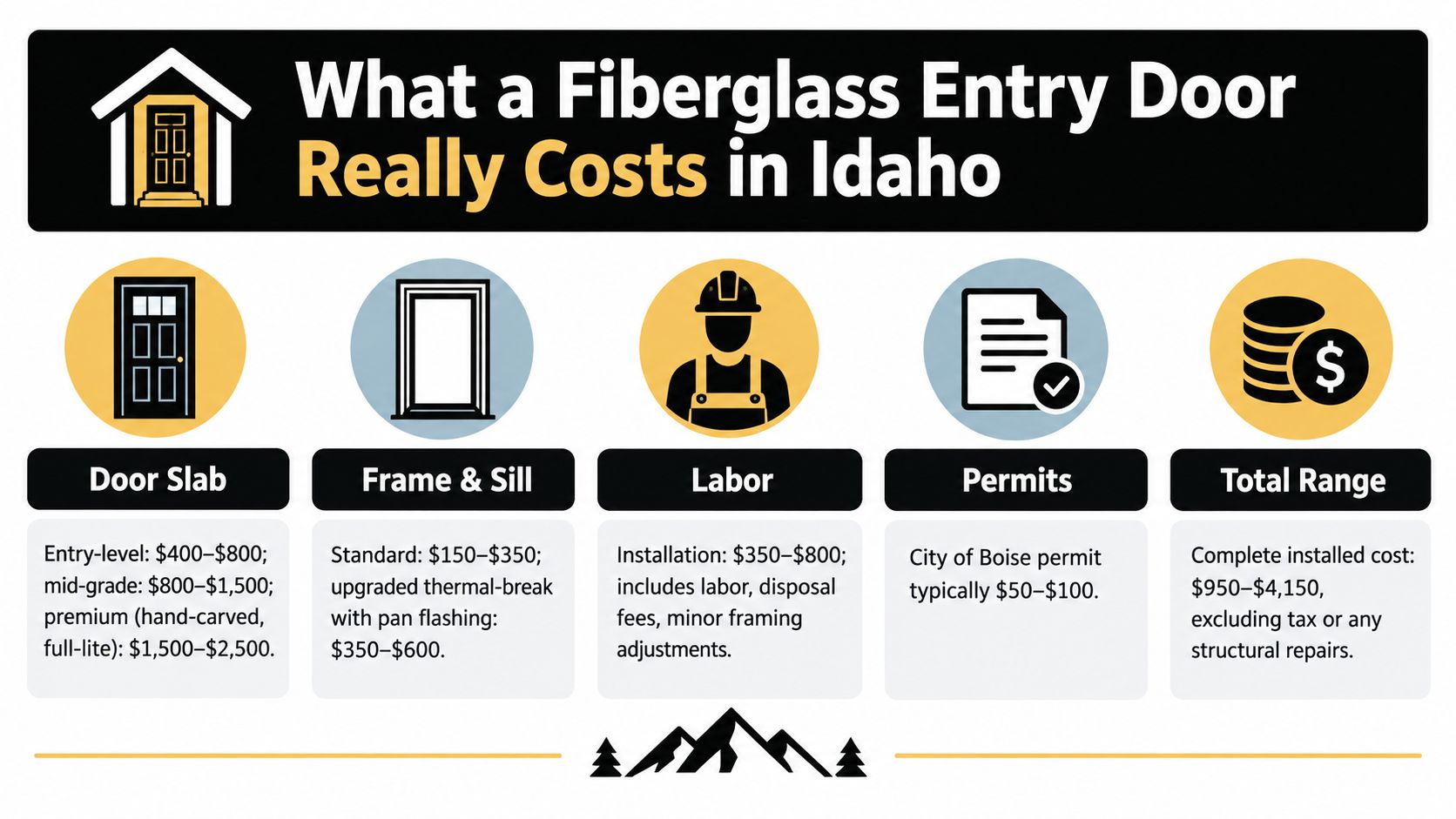
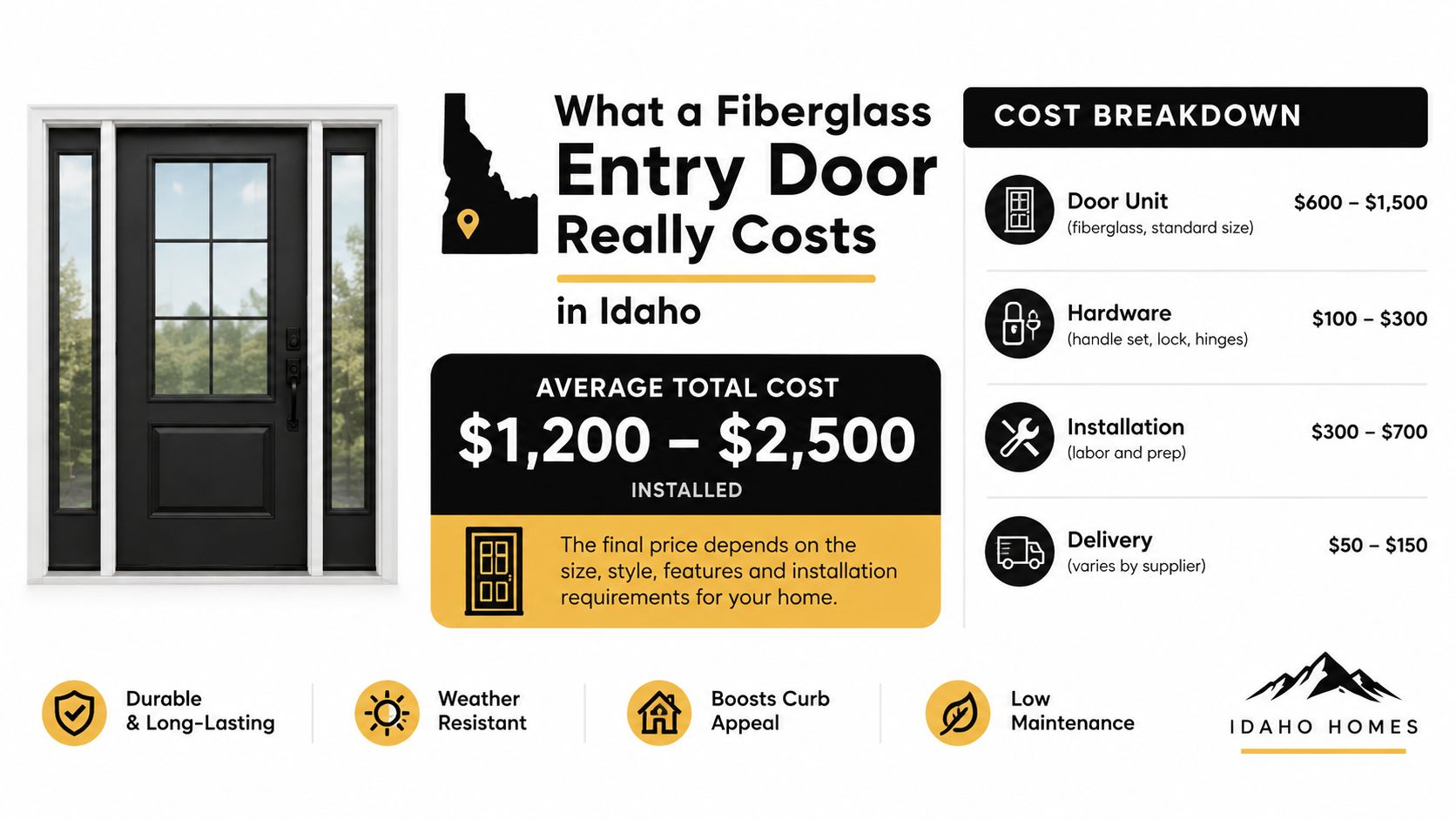
For many Treasure Valley homes, a practical installed range for a single fiberglass entry door is $1,800 to $5,500. A sidelite package can push the project toward $7,500 or more, depending on the opening, glass, hardware, and finish scope. The manufacturer's configuration matters, and so does the building around it.
Where the money improves the result
A low price is not automatically a good price. Spend first on the parts that affect comfort and service life:
- Insulated core: The core supports the slab's thermal performance.
- Weatherstripping: Quality seals maintain contact around the head and jambs.
- Adjustable threshold: A properly set sill helps manage the bottom seal and drainage.
- Flashing and air sealing: These details protect the rough opening and limit drafts.
- Professional alignment: A square frame keeps the lock, seals, and reveal working together.
The itemized cost visual below shows how slab, frame, sill, labor, permits, and total project scope can vary.
A contractor may offer financing through Synchrony or another contractor-supported plan. Read the interest terms, deferred-interest language, payment schedule, and eligibility requirements before ordering. Financing makes sense only when the project scope is already clear.
Tax and energy-efficiency treatment can change by property and program, so don't assume a door automatically qualifies for an Idaho property-tax or energy credit. Ask your tax professional and verify any current program requirements before counting a credit in your budget.
The Boise front-door replacement service should be evaluated the same way as any other quote. Confirm whether haul-away, minor framing adjustments, sill-pan flashing, exterior sealing, trim, and warranty coverage are written into the proposal.
The cheapest quote often leaves out the work that determines whether the door still seals after several winters. If two proposals differ substantially, compare their scope line by line before comparing the totals.
Installation Timeline and What to Expect on Install Day
A good door replacement starts before the door arrives. The first in-home measure should take enough time to inspect the rough opening, not just record the slab width. The estimator should check whether the opening is plumb and square, inspect the sill and jambs for rot, confirm the swing and handing, and document trim conditions.
From consultation to a working door
Stock sizes may ship the same week. Custom stain, unusual sizing, and full-lite glass can take 3 to 6 weeks through manufacturers such as ProVia and Therma-Tru. Confirm the lead time in writing because glass, finish, and hardware choices can affect the order.
Permit requirements depend on the city and the scope. Ask Boise, Meridian, Eagle, or Nampa whether a straightforward replacement requires a permit, and confirm who handles that responsibility. A reputable installer shouldn't make you guess.

On installation day, expect the crew to protect the floor and nearby finishes before removing the old unit. The work should then proceed through removal, opening inspection, sill-pan flashing, dry fitting, shimming, fastening, perimeter insulation, sealing, hardware installation, and final adjustment.
A single prehung door commonly takes 3 to 5 hours for a straightforward replacement. Double doors, sidelites, structural reframing, or hidden rot can extend the work to a full day.
Inspect before signing
Run the door through a complete swing and latch cycle. Then check:
- Latch-side reveal: Look for an even gap from top to bottom.
- Weatherstrip compression: The seal should contact evenly without an obvious loose corner.
- Threshold contact: The bottom sweep should seal without dragging excessively.
- Lock alignment: The deadbolt and strike should engage smoothly.
- Perimeter finish: Look for visible daylight, missing sealant, or uninsulated gaps.
- Cleanup: The crew should remove debris, packaging, and old-door material included in the scope.
The Boise entry-door installation service should be compared by these installation steps, not by speed alone. Fast work is useful only when the opening is still square, sealed, and properly flashed when the crew leaves.
Red Flags, Smart Questions, and Final Takeaways
The worst door purchases usually don't begin with a bad product. They begin with an incomplete quote and a rushed decision.
A door-knocker who gives a price without measuring hasn't priced your project. An estimate that omits haul-away, flashing, disposal, or opening repairs isn't cheaper until those items are accounted for. A vague “lifetime warranty” also deserves scrutiny, especially if it doesn't explain what is covered, who performs warranty labor, and whether coverage transfers to a future owner.
Questions that expose shortcuts
- “Is this a full prehung replacement?” This separates a complete system upgrade from a slab-only swap.
- “How will you verify the opening?” The answer should include plumb, square, sill condition, and rot inspection.
- “What foam and flashing materials do you use?” A subcontracted crew that can't name its air-sealing and flashing process deserves caution.
- “Is haul-away included?” Get removal and disposal in writing.
- “What does the warranty cover?” Ask about the product, labor, finish, glass, hardware, transferability, and exclusions.
- “Can I see the itemized line sheet before paying a deposit?” Pressure to sign before scope is clear is a reason to leave.
A professional quote should identify the exact door configuration and the installation standard. It should also explain what happens if the installer finds rot or a damaged rough opening after removal.
Quick answers for Idaho homeowners
How long should a quality fiberglass door last?
A well-maintained fiberglass entry system can serve for 20 to 30 years, according to the planning guidance supplied for Idaho homeowners. The actual result depends on UV exposure, finish maintenance, water management, hardware adjustment, and installation quality.
Can you paint a factory-stained door?
Sometimes, but don't assume it's harmless. Follow the manufacturer's preparation and coating requirements, and ask whether painting the factory finish changes warranty coverage.
Can a full-lite door meet ENERGY STAR expectations for Idaho?
It can, but the glass package and whole-door rating decide that outcome. Require low-E insulated glass, appropriate spacers, and documented NFRC-tested performance for the exact configuration. A fiberglass slab alone doesn't guarantee an efficient full-lite system.
Should you replace only the slab?
Only when the existing frame, sill, seals, and opening are already sound. If the problem includes drafts, daylight, moisture, or misalignment, replacing the complete prehung system is usually the more sensible repair.
Final recommendation: Buy fiberglass for most Idaho exterior entries, but don't buy it as a stand-alone material. Buy a tested door system with a sound frame, thermally improved sill, reliable weatherstripping, suitable glass, proper flashing, and an installer who can prove the work.
A fiberglass entry door pays you back only when those layers work together. Otherwise, you've purchased an expensive draft with a better-looking face.
C & C Windows & Doors provides Treasure Valley homeowners with in-home consultations, custom measurements, energy-efficient entry-door options, and debris-free installation focused on Idaho's climate. Visit C & C Windows & Doors to schedule a consultation and get a door-system recommendation based on your opening, glass needs, and comfort goals.