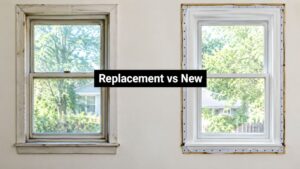

You're probably seeing the same thing many Nampa homeowners see after searching for window installers near me Nampa: a long list of contractors, polished websites, broad promises, and very little explanation of what protects your home. The quote may focus on the glass, frame, and price, while the details that determine whether the installation stays dry, performs properly, and complies with local requirements remain buried.
That's the problem with treating window replacement like a simple product purchase. A quality window installed badly can leak, feel drafty, underperform, or create warranty disputes. A professional installer evaluates the opening, drainage, flashing, structural changes, climate-zone performance, and finish work before putting a number on the project.
Table of Contents
- Why Finding the Right Window Installer Matters in Nampa
- How to Vet Window Installers Before You Commit
- Understanding Energy Efficiency Standards for Idaho Homes
- What Proper Window Installation Actually Looks Like
- Permits and Building Codes in the Treasure Valley
- Why C & C Windows & Doors Stands Out in Nampa
- Your Window Installer Decision Checklist
Why Finding the Right Window Installer Matters in Nampa
A Nampa homeowner may begin with a sticking bedroom window, fogged insulated glass, or discomfort near an older sliding door. The search for window installers near me Nampa then produces local specialists, regional contractors, remodelers, and crews with very different installation standards. The U.S. window installation sector generated an estimated $7.8 billion in revenue in 2026, with 28,247 businesses and about 46,562 employees, according to IBISWorld's window installation industry profile.
That broad choice makes the installation plan more important than the sales pitch. Nampa sits in the Treasure Valley's dry, temperature-swinging climate, yet older homes still face wind-driven rain and storm-related water intrusion where previous installers skipped sill drainage or installed flashing out of sequence. A highly rated window cannot correct a rough opening that was never prepared properly.
Practical rule: Compare the installation method, not just the window label and total price.
The market has become more specialized. Business counts in the trade grew at an average annual rate of 2.4% from 2021 to 2026, while employment increased 2.6% over the same period, as reported by IBISWorld. That competition gives Nampa homeowners more choices, including standard replacements, energy-efficient packages, different operating styles, and flexible scheduling. It also makes a low quote harder to judge. A price that excludes permits, structural work, flashing, trim, or disposal is not a real comparison.
A capable contractor will ask whether the replacement stays in the existing opening or changes its size and shape. Enlarging an opening can affect the header, wall framing, exterior weather barrier, and permit requirements. The installer should also identify the home's climate-zone performance needs, explain the window's rating label, and state exactly how water will drain from the sill.
Shortcuts usually appear in the paperwork before they appear around the frame. If the estimate says only “install windows,” ask what protects the opening, who handles permits, and how concealed moisture or framing damage will be documented. Proper preparation, clear documentation, and accountable workmanship protect the home long after the new glass is installed.
How to Vet Window Installers Before You Commit
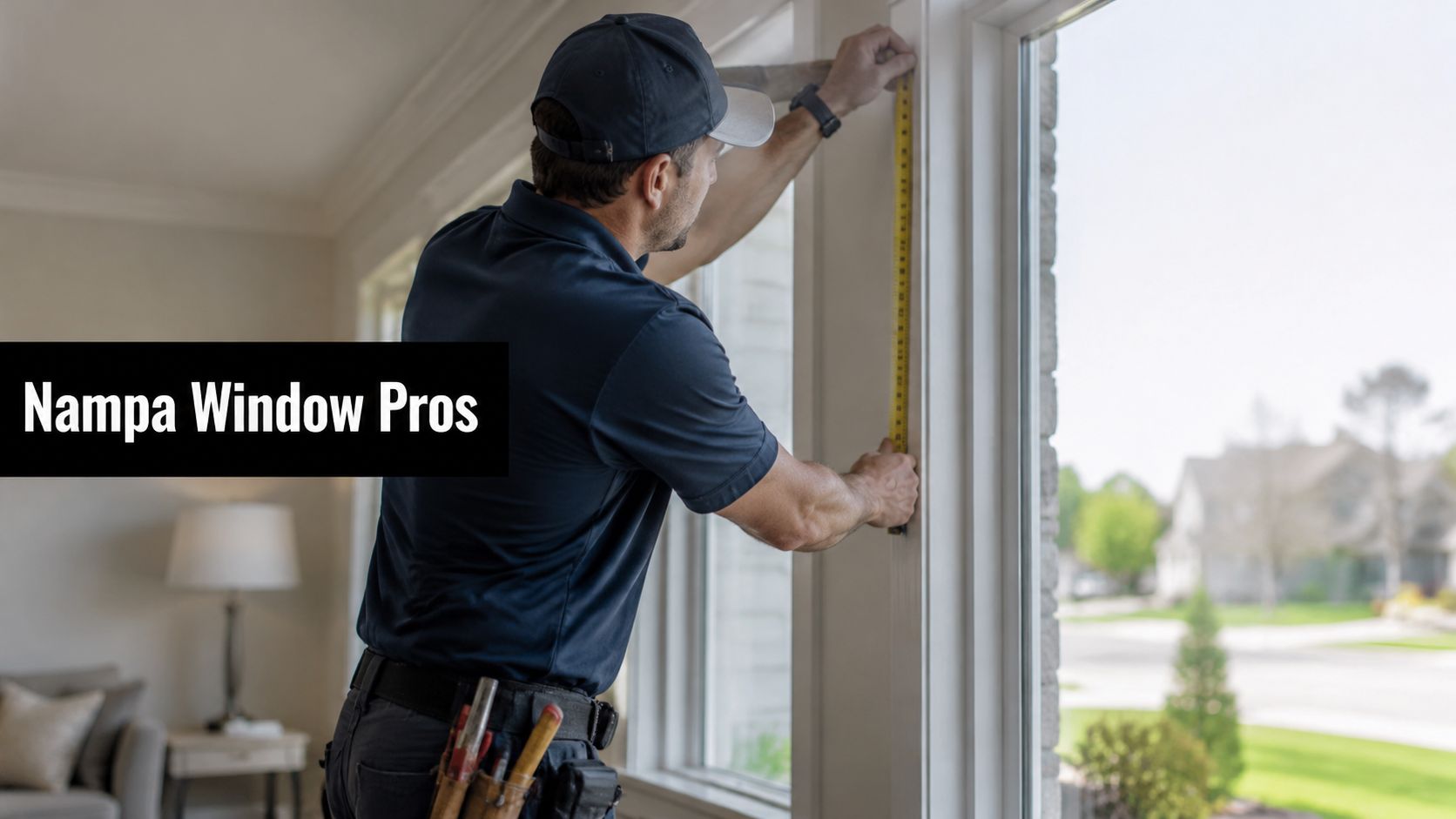
Start with the estimate, not the sales pitch. Ask each contractor to describe the project in writing, including window sizes, operating styles, glass package, removal and disposal, interior and exterior trim, flashing, sealing, permits if applicable, cleanup, and warranty administration. A lump sum with no scope gives you nothing useful to compare.
Ask questions that expose installation knowledge
Use direct questions during the consultation:
- Who performs the work? Find out whether the company uses its own installation team, subcontractors, or a combination. Ask who supervises the crew and who handles warranty concerns after completion.
- How will you protect the opening from water? A competent installer should be comfortable discussing sill pan flashing, jamb flashing, head flashing, the water-resistive barrier, and outward drainage.
- Will the opening change? If the project enlarges or reduces an opening, ask how the contractor will evaluate the header and permit requirements.
- Which performance values are on the NFRC label? Don't accept “energy efficient” as a specification. Ask for the actual U-factor and solar heat gain coefficient.
- What does the warranty cover? Separate product coverage from labor coverage, and ask who administers each one.
- What happens if concealed damage appears? The estimate should explain how the contractor documents and prices unexpected framing or moisture issues.
For a broader interview worksheet, use this guide to questions to ask a window contractor. The contractor's answers should be specific enough that you can picture the work, not vague enough to end the conversation.

Read the estimate for warning signs
A professional estimate gives you a defined product and defined labor. Be cautious when a contractor refuses to identify the window series, leaves glass performance blank, avoids explaining flashing, or pressures you to sign before reviewing the scope. A low price can become expensive when the contractor adds disposal, trim repair, structural work, or cleanup as change orders.
Verify active licensing and insurance before work begins. Ask for proof of liability coverage and workers' compensation where applicable, then confirm that the business name on the paperwork matches the company you're hiring. Don't rely on a verbal assurance that “everything is covered.”
References should also be local and recent enough to reveal how the company handles communication, cleanup, and follow-up. Ask homeowners whether the crew protected floors, explained the finished installation, and responded when questions came up. A contractor who welcomes detailed questions usually has a process behind the answer. One who dismisses them is giving you useful information too.
Understanding Energy Efficiency Standards for Idaho Homes
“Energy efficient” is not a complete specification. For Idaho homeowners, the relevant window must match the home's climate-zone needs and the performance values shown on its label. ENERGY STAR Version 7.0 tightened window requirements by climate zone, so older articles and generic sales materials may point to standards that no longer tell the whole story. Cardinal's ENERGY STAR 7.0 glass guidance summarizes the applicable performance criteria.
Read the numbers instead of the sales language
The U-factor describes how readily heat moves through the window. Lower is better for limiting heat transfer. The solar heat gain coefficient, or SHGC, describes how much solar heat enters through the glazing. Its ideal target depends on the climate zone and the home's heating and cooling priorities.
The ENERGY STAR Version 7.0 criteria listed in the guidance include:
| Climate zone | U-factor | SHGC |
|---|---|---|
| Northern | ≤ 0.22 | ≥ 0.17 |
| North-Central | ≤ 0.25 | ≤ 0.40 |
| South-Central | ≤ 0.28 | ≤ 0.23 |
| Southern | ≤ 0.32 | ≤ 0.23 |
Don't assume that a product qualifying in a warm southern market is the correct choice for a Nampa home. Ask the installer to identify the applicable climate-zone criteria and show how the proposed unit meets them. The NFRC label should support the conversation with actual values, not just a marketing phrase.

Choose upgrades for a reason
Energy performance has become a central replacement factor. 68% of new residential window installations in 2023 were energy efficient, compared with 52% in 2019, a 16-point increase, according to World Metrics' window installation industry statistics. The same source reports that ENERGY STAR certified windows can reduce household energy bills by an average of 12%, while replacing single-pane windows with ENERGY STAR versions can save roughly $101 to $583 per year on average. Those figures are averages, not promises for a particular Nampa house.
Glass construction explains why upgraded packages cost more. The U.S. Department of Energy says thin-triple windows add a third pane and two low-emissivity coatings, improving window energy performance by 40% or more compared with traditional two-pane windows. Federal guidance on new ENERGY STAR window specifications also references triple-pane units with two low-E coatings and argon-filled insulated glass units.
The federal 25C window tax credit ended for property placed in service after December 31, 2025, while ENERGY STAR Version 7.0 remains relevant in 2026, according to this 2026 explanation of the updated standard and tax-credit status. Don't let an outdated sales page make an incentive promise that no longer applies.
For a practical product comparison, review this Idaho energy-efficient windows guide for 2026. The right package balances glass performance, orientation, room comfort, budget, and the existing condition of the home.
What Proper Window Installation Actually Looks Like
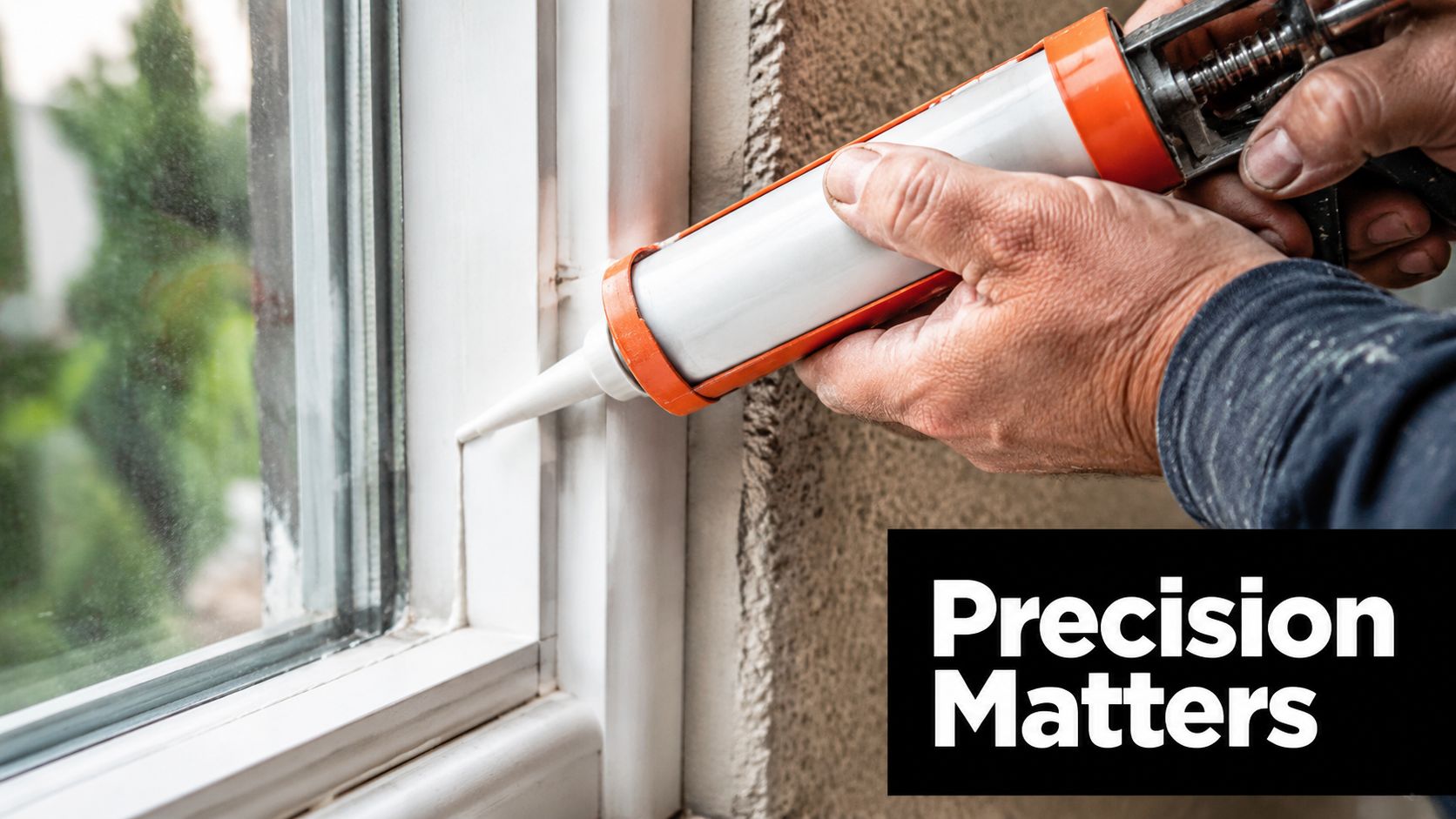
A proper installation manages water from the rough opening outward. The crew shouldn't set a unit in a hole, run a bead of caulk around the frame, and call the job finished. Sealant has a role, but it isn't a substitute for a coordinated flashing system.
Watch the drainage sequence
The work should proceed from the bottom upward:
- Prepare the rough opening. The installer checks the framing, removes debris, and corrects conditions that would prevent a stable, square installation.
- Install sill pan flashing first. The sill needs a drainage path that directs water toward the exterior.
- Add jamb flashing. The side layers should integrate with the sill protection.
- Install head flashing. The top layer should lap over the side layers and connect with the water-resistive barrier.
- Maintain shingle-style overlaps. Each upper layer should shed water over the layer below instead of sending water behind it.
Independent building guidance calls for a sloped sill and continuous drainage. The commonly cited target is at least 1/15 of the sill depth, or about a 5% slope, which is roughly a 1/4-inch rise over 3 3/4 inches of depth, according to NAHB window and door flashing guidance. Applied Building Technology's sill drainage details also identifies a back dam, sill flashing membrane, a drainage gap behind the flange, and correctly lapped flashing as important parts of the system.
Know what should happen on installation day
The crew should protect floors and nearby finishes, remove the old unit carefully, keep the opening free of loose debris, and explain any concealed condition that changes the scope. The new window should be set plumb, level, square, and securely fastened according to the manufacturer's requirements. Foam and sealant should be compatible with the window system and used without distorting the frame.
A clean finish includes operating every sash, lock, and screen, checking visible sealant lines, removing labels and debris, and walking you through the completed work. You should receive documentation for the product, warranty, and any permit-related records. This step-by-step guide to what to expect from window installation gives homeowners a useful reference for the process and final walkthrough.
Look below the trim: The quality of a window installation is often determined by flashing and drainage details you won't see after the finish work is complete.
Permits and Building Codes in the Treasure Valley
The key question isn't just, “Do replacement windows need a permit?” The better question is, does the project alter the opening or require structural modification?
A straightforward replacement that keeps the existing opening, framing, and general configuration may be treated differently from a project that changes the size of the opening. Nampa's official residential FAQ specifically identifies reduced or enlarged window and door openings that require structural modification to the header as a separate issue. That distinction is easy to miss when a contractor describes every project as a routine replacement.
Compare the two project types
| Project type | Main concern | What to ask |
|---|---|---|
| Existing unit replaced in the existing opening | Fit, drainage, flashing, and finish work | Is the opening staying unchanged, and what installation method is included? |
| Opening enlarged or reduced | Structural framing and city requirements | Will the header change, and who handles the permit and inspections? |
A contractor should identify the scope before quoting the job. If the crew needs to remove framing, alter a header, or change the opening dimensions, ask for a written explanation of the structural work and the permit plan. Don't accept “we've done this before” as a substitute for clear documentation.
Permits aren't just an administrative cost. They create a record of work that can matter during future inspections, insurance questions, remodeling, or a real estate transaction. They also force the project to account for structural and code-related issues that a shortcut operator may prefer to ignore.
The state's energy-code field study reports 40.51 kBtu/ft²-year in source-energy use for homes meeting Idaho's minimum prescriptive standard, as documented in the Idaho residential energy code field study. That benchmark doesn't tell you the exact performance of your replacement window, but it reinforces the larger point: window work belongs to the building envelope, not just the finish layer.
Get the permit answer before signing. If the contractor can't explain whether the opening changes, who applies for approval, and how the work will be documented, the proposal isn't ready.
Why C & C Windows & Doors Stands Out in Nampa
C & C Windows & Doors fits the criteria I'd want a Nampa homeowner to examine closely: a local Treasure Valley team with 13 years of experience, factory-trained installers, custom measurements, and debris-free installation practices. The company serves Nampa along with Boise, Meridian, Eagle, Caldwell, Kuna, Garden City, and Star, and its product approach focuses on windows and patio doors engineered for Idaho conditions.
That matters because the right product still needs the right installation. C & C offers narrowline frames, composite-reinforced sashes, low-profile locking, and true sloped sills designed to support reliable drainage. Homeowners can choose operating styles such as double-hung, casement, picture, and sliding windows, along with sliding and bi-fold patio doors.

Match the service to the risks
C & C provides free in-home consultations, custom measurements, and same-day estimates. Those services address a common failure point in window replacement, the vague quote based on rough dimensions and an assumed installation method. A proper consultation gives the homeowner a chance to discuss opening changes, drainage, glass performance, interior finishes, and the condition of the existing frame.
The company's performance options include ClimaTech Low-E coatings, argon gas fills, and optional triple-pane glass. Those features can support ENERGY STAR 7.0 compliance when the selected product configuration meets the applicable criteria. A contractor should still show the actual NFRC ratings for the proposed unit rather than treating the product name as proof of compliance.
C & C also states that it offers a lifetime limited warranty on products and labor, plus financing through Synchrony. Read the written terms carefully, especially exclusions, transferability, service procedures, and the difference between manufacturer coverage and installation labor.
The company's published customer feedback from Boise, Meridian, and Eagle emphasizes craftsmanship, punctuality, and noticeable comfort improvements. Those testimonials are useful as social proof, but your own consultation should still cover the structural, permit, flashing, and climate-zone questions outlined above.
The practical takeaway is simple. A Nampa installer should be able to connect the window specification to the building opening and the installation method. C & C gives homeowners a local option that combines product selection, measurement, installation, warranty administration, and financing in one project conversation.
Your Window Installer Decision Checklist
Before you hire a window installer in Nampa, keep this checklist in front of you:
- Define the opening: Confirm whether each window is a same-opening replacement or whether the size, shape, header, or framing will change.
- Get a detailed estimate: Require product names, glass specifications, labor, removal, disposal, trim, flashing, cleanup, and possible structural work in writing.
- Verify credentials: Check licensing, insurance, workers' compensation documentation where applicable, and the identity of the actual installation crew.
- Ask about drainage: The contractor should explain sill pan flashing, jamb and head flashing, water-resistive-barrier integration, and outward drainage.
- Check performance values: Review the NFRC label, U-factor, SHGC, and applicable ENERGY STAR Version 7.0 climate-zone criteria.
- Clarify incentives: Don't assume the federal 25C window credit applies to property placed in service after December 31, 2025.
- Review the warranty: Separate product coverage from labor coverage, and identify who handles service calls.
- Inspect the finished work: Operate every window and door, check locks and screens, review trim and sealant, and confirm the crew removed debris.
- Keep the records: Save the estimate, product labels, warranty documents, permit records, and final invoice.
Quick answers for common concerns
How long will the project take? The answer depends on the number of windows, access, opening conditions, and installation complexity. Ask for a written schedule rather than relying on a casual estimate.
What if a problem appears later? Contact the installer promptly, document the condition with photographs, and use the written warranty process. Don't alter the installation before the contractor evaluates it.
What should stop the hiring process? Refusal to explain the opening, missing insurance information, vague performance claims, pressure to sign immediately, or an estimate that excludes essential installation details.
Choose the contractor who can explain the hidden work as clearly as the visible product. That's how you protect comfort, structure, and long-term value.
C & C Windows & Doors offers free in-home consultations, custom measurements, same-day estimates, Idaho-focused window and patio-door options, and meticulous installation for Nampa homeowners. Visit C & C Windows & Doors to schedule a consultation and compare your project with a contractor who will address the opening, performance ratings, drainage, warranty, and permit questions before work begins.