

You wake up, walk into the living room, and the furnace is already running. The thermostat says the house is warm enough, but the couch still feels chilly, the floor bites at your feet, and the room near the windows never quite recovers. That's the kind of winter problem that sends people looking for a bigger furnace, when the issue is usually that the house is leaking heat, pulling in cold air, or bleeding comfort through cold surfaces.
Table of Contents
- A Cold January Morning in Your Living Room
- How a Heated House Can Still Feel Cold
- The Seven Reasons Heat Disappears
- A Simple DIY Diagnostic Walkthrough
- Quick Fixes You Can Do This Weekend
- Long-Term Upgrades That Actually Pay Off
- Why Idaho Winters Make These Problems Worse
- Your Next Steps and When to Call a Pro
A Cold January Morning in Your Living Room
The call I hear most often sounds simple. “The heat's on, but the house still feels cold.” In Treasure Valley homes, that usually means the heating system is doing some work, but the building around it isn't holding onto the warmth.
A cold house is rarely just one thing. A thermostat can be satisfied while people still feel uncomfortable because the warm air is slipping out, the cold air is sneaking in, or the room surfaces are so cold they pull heat off your body faster than the air can replace it. That's why one room can feel fine, while the one with the big window and the exterior wall feels like a different house.
Start with three questions
Practical rule: If the furnace is running and the room still feels cold, ask where the heat is going, where the cold air is entering, and why one room feels worse than the others.
Those three questions point you toward the diagnosis. The house may be heated, but it isn't necessarily retaining heat. That difference matters more than most people expect.
National and housing data back that up. The U.S. Department of Energy consumer guidance, as summarized by Sealed, identifies air leaks as a big cause of heat loss and recommends professional air sealing and insulation upgrades to keep heat inside the home. The UK's 2024 to 2025 English Housing Survey also found 3.1 million occupied dwellings were reported as unable to keep warm in winter, with the issue especially common in social rented homes (23%) and private rented homes (21%), compared with 8% of owner-occupied homes, which is a good reminder that comfort problems track with the condition of the building shell, not just the thermostat setting. Sealed's summary of heat loss and air sealing guidance
If you've been asking why is my house so cold in winter, start thinking like the house is a system. The furnace matters, but the envelope matters first.
How a Heated House Can Still Feel Cold
A warm air temperature does not guarantee comfort. People feel temperature in a more complicated way than a thermostat does, because the body also reacts to surface temperature and air movement. That's why a room with cold glass, cold drywall, or a drafty floor can feel miserable even when the air number looks fine.
Air temperature is only part of the story
Cold windows are a perfect example. If a pane is cold enough, it pulls heat from your body by radiation and conduction, so you sit there feeling chilled even though the furnace is maintaining setpoint. The same thing happens with exterior walls and floors that haven't been insulated or air sealed well. The room air might be warm, but the surfaces surrounding you still feel cold to your skin.
The second piece is stack effect. Think of a house like a chimney. Warm air wants to rise, so it escapes through the upper part of the building, especially around attic penetrations, ceiling fixtures, and top-floor leaks. As that warm air leaves, cold outdoor air gets pulled in lower down, through the basement, crawlspace, rim joist area, and lower wall leaks. The house ends up exchanging heated indoor air for cold outdoor air while you're trying to stay comfortable.
Why the same room can feel worse
One room often gets the worst of it because pressure and surface temperature stack together. A west bedroom with leaky windows, a cold slab, and a weak return path will feel colder than the thermostat suggests, while an interior room with better surfaces stays livable. That's also why cranking the furnace doesn't always solve the problem.
Cold indoor comfort is a balance of air temperature, surface temperature, and air movement. If one of those three is off, the room can feel wrong no matter what the thermostat says.
Once you look at comfort through that lens, the rest of the diagnosis gets easier.
The Seven Reasons Heat Disappears
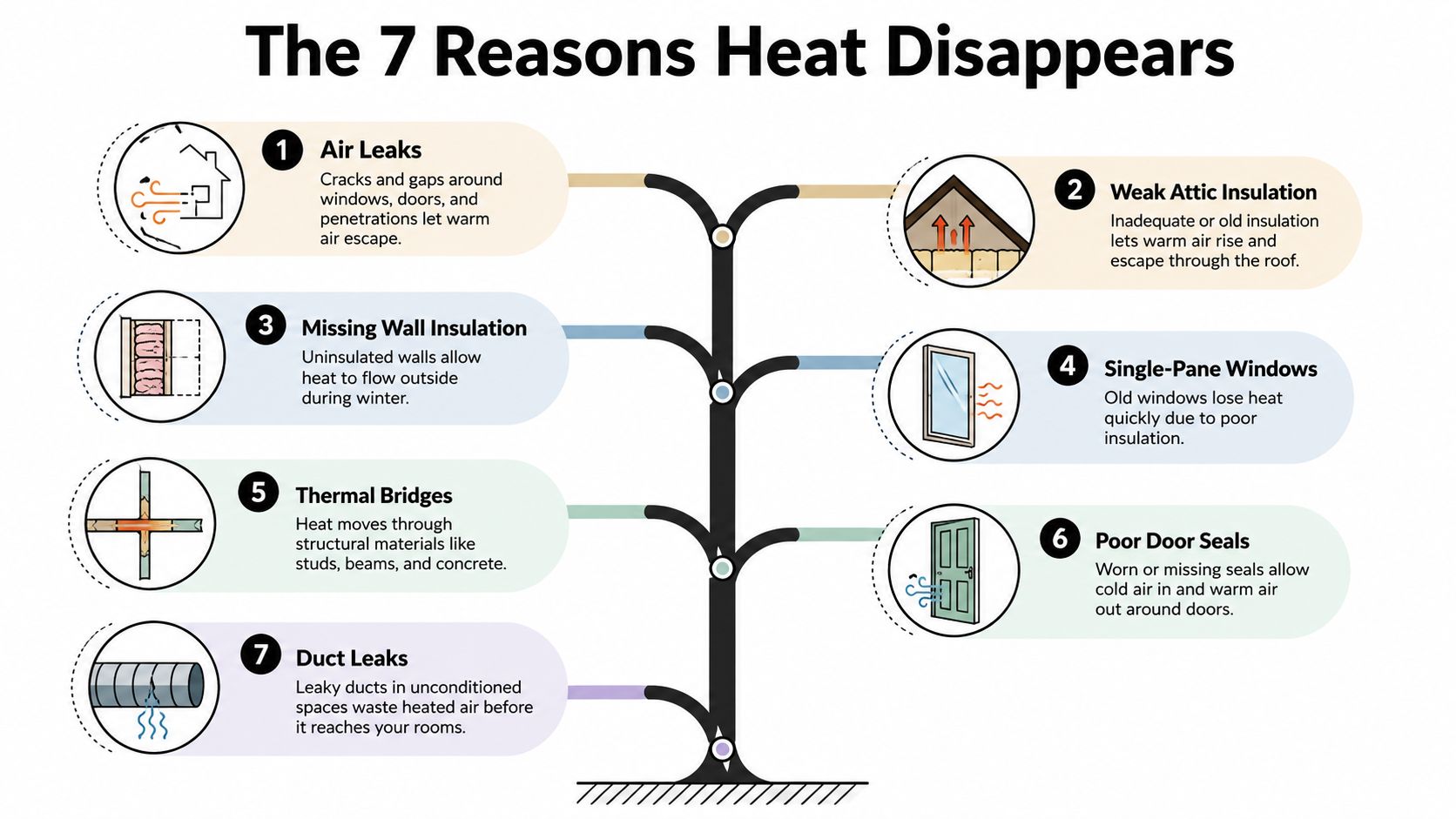
Most cold-house complaints trace back to a handful of building defects and system issues. In practice, the same seven problems show up again and again, and they usually overlap instead of appearing alone.
The usual suspects in order of how they show up
Air leaks. This is the one that shows up everywhere, around windows, doors, trim, ceiling penetrations, rim joists, and envelope joints. Air leakage can account for roughly 15% to 25% of winter heat loss, and some industry sources put infiltration as high as 35% of total home heat loss. Your Home sealing guidance
Weak attic insulation. If the top of the house is underinsulated, heat moves out fast. This is especially obvious in homes with cold ceilings, uneven upstairs temperatures, or icicles forming near the eaves.
Missing or compressed wall insulation. Walls that never got proper insulation, or lost effectiveness over time, leave rooms feeling stripped of comfort. The effect is stronger on exterior-facing walls and in older houses.
Single-pane or failing windows. Cold glass, worn seals, and poor frame performance make rooms feel colder than they should. Windows don't just leak air, they also lower the surface temperature around you.
Poor door seals. Exterior doors with tired weatherstripping or a bad sweep create a steady stream of cold infiltration at the floor line, which people feel right away.
Uninsulated rim joists and crawlspaces. These areas are easy to overlook, but they're part of the pressure path that feeds cold air into the house. They often explain cold floors and that “draft from nowhere” feeling.
HVAC problems that look like insulation problems. Dirty filters, starved returns, unbalanced ducts, and leaky ductwork can make a home feel cold even when the building shell is part of the issue. A bad return path can make one room struggle while the rest of the house seems normal.
Each one leaves a different clue. Leaks show up as movement, weak insulation shows up as temperature drop, and HVAC issues show up as uneven delivery. If you line those clues up with the room that feels worst, the diagnosis usually gets clearer fast.
A Simple DIY Diagnostic Walkthrough
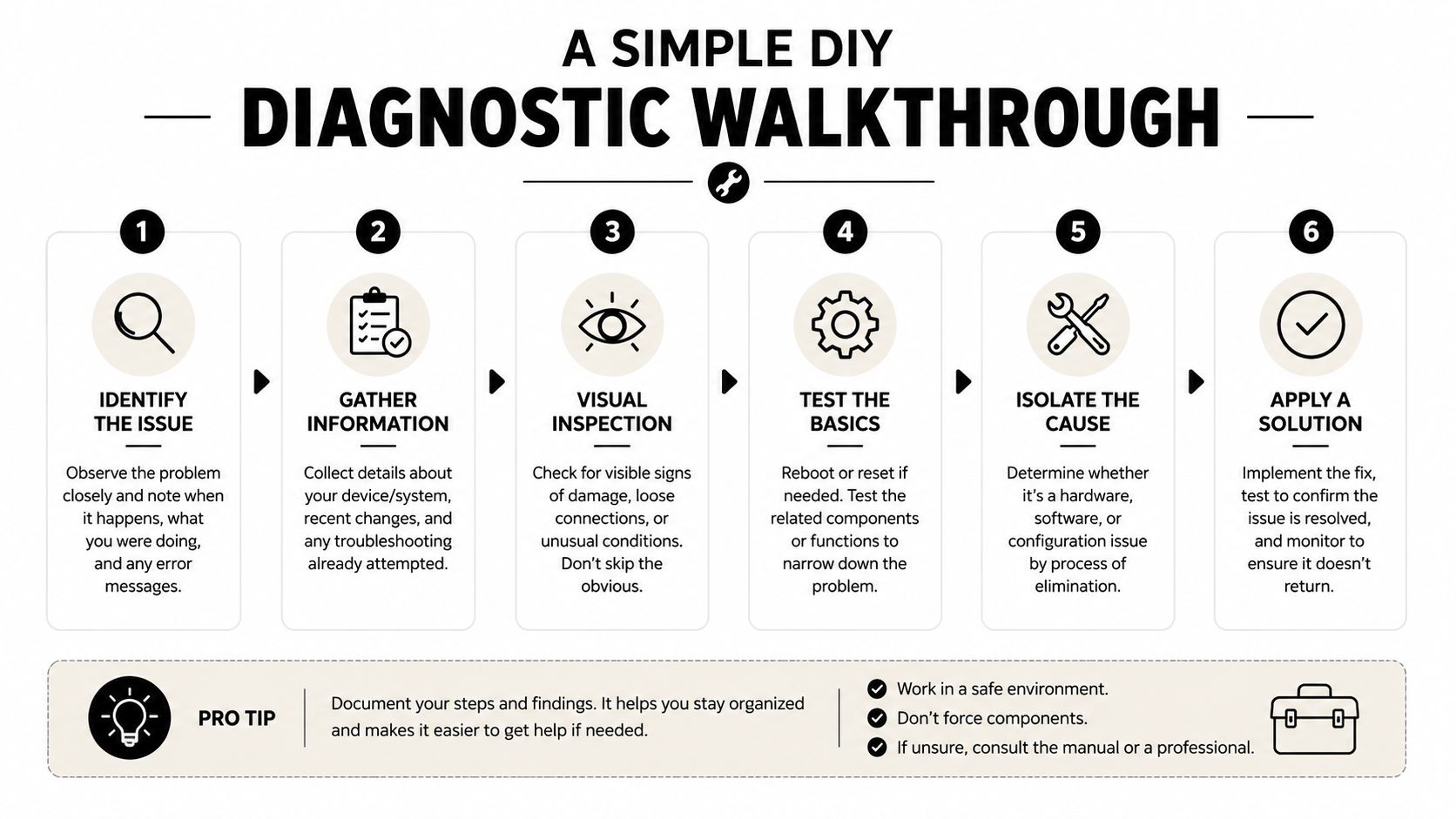
You don't need a truck full of tools to spot the first layer of trouble. A cold Saturday morning is enough, as long as the furnace has been running and you're paying attention to what your body notices.
Use your senses before your wallet
Start at the windows and doors. Hold an incense stick or a candle near the perimeter and watch for smoke movement or a flame that wavers. Then check whether you can feel cold air at the frame, sill, or sweep line. If you've got visible daylight around a door or a trim joint, that's a problem, not a cosmetic issue.
Next, move room by room and touch the surfaces. Exterior walls, baseboards, electrical outlets on outside walls, and the floor near rim joists can all feel much colder than interior surfaces. That doesn't prove one single defect, but it does tell you where the house is losing comfort.
Read what the thermostat is really telling you
If the thermostat satisfies quickly but the room still feels chilly, that can point to a surface or draft problem rather than a pure heating-capacity problem. If the furnace seems to run constantly and the house still doesn't settle down, the envelope may be leaking too much heat for the system to keep up. If one room is far colder than the rest, look for missing supply air, weak returns, or a severe pressure imbalance.
Don't self-diagnose gas appliance issues, hidden ductwork inside walls, or any sign of moisture, staining, or ice on interior surfaces. Those need a pro.
A quick visual check matters too. Look at attic access points, recessed lights, bath fan penetrations, and any place where wires or pipes disappear into the ceiling. Those are classic leak points that let warm air escape upward and cold air rush in from below.
By the end of a short walkthrough, you should have a shortlist. Not a full renovation plan, just the most likely sources of discomfort in your house.
Quick Fixes You Can Do This Weekend
The fastest comfort gains usually come from reducing air movement, not from making the furnace work harder. That's why weekend fixes should focus on sealing obvious leakage points before you spend money on bigger upgrades.
Small jobs that buy real comfort
Weatherstripping doors. This is usually a low-cost project and one of the first places I look. A tired door seal lets cold air spill in at floor level, and that's a discomfort problem you feel right away.
Caulking trim and frame gaps. This is a cheap, direct fix for small cracks around windows, baseboards, and casing. It won't solve a badly built wall, but it can calm down a room that leaks around the edges.
Outlet gaskets and switch plate sealing. On exterior walls, these are small openings with an outsized effect on drafts. The work is simple, and the comfort gain is often immediate.
Door sweeps. If you can see light or feel air at the bottom of a door, a sweep is a practical answer. It's a minor piece of hardware that closes off one of the easiest leak paths in the house.
Window insulation film. This is one of the quickest ways to reduce winter discomfort at marginal windows. It helps when replacement isn't on the table yet. This Boise winter window prep guide is a useful local reference for how homeowners can think about seasonal window prep.
Thermal curtains used correctly. Open them during the day for sun, close them at night to slow heat loss from cold glass. Curtains don't repair a bad window, but they can improve the feel of a room with hard-to-fix glazing.
Basic HVAC maintenance. Swap the filter, clear blocked supply registers, and make sure furniture isn't choking off a return. A starved system can make a cold room feel even worse.
These fixes help most when the problem is small to moderate. If the room still feels cold after you've sealed the easy leaks, the issue is usually deeper in the shell, and that's where upgrades start making more sense than another weekend project.
Long-Term Upgrades That Actually Pay Off
The bigger wins come from fixing the building itself, not just treating the symptoms. That means sealing the top and bottom of the house, strengthening insulation where it can do its job, and replacing failed windows when the old ones have stopped pulling their weight.
Start with the house, then move to the openings
Air sealing at the attic plane and rim joists is often the first serious step because those areas line up with the pressure movement described earlier. Once those leaks are under control, insulation performs more like it should. Cornell Extension's guidance puts it plainly, insulation does little for heat loss until leaks are sealed first, especially at the ceiling plane and lower levels. Cornell's whole-house energy upgrade guidance
After that, attic insulation can be brought up where the existing depth is weak, and wall insulation can be addressed where the construction allows it. In older homes, this often changes the feel of upstairs rooms and north-facing spaces more than homeowners expect.
Windows are the other big lever, especially in Treasure Valley homes. The right replacement window is not just about appearance, it's about reducing winter surface chill and controlling leakage at the opening. For a Boise-area home, look for Low-E coatings, argon fills, and a frame system built for real weather, not just brochure language. C & C Windows & Doors' energy-efficient window guide is one place to compare those features in local terms.
Matching upgrades to symptoms
| Symptom | Best Upgrade | Cost Tier | Comfort Impact |
|---|---|---|---|
| Drafts around windows and doors | Air sealing and replacement weatherstripping | Low | Fast |
| Cold upstairs or attic rooms | Attic air sealing plus blown-in insulation | Medium | Strong |
| Cold floors near exterior walls | Rim joist and crawlspace sealing | Medium | Strong |
| Rooms that feel cold near the glass | Energy-efficient replacement windows | High | Strong |
| Uneven whole-house comfort | Envelope sealing plus targeted HVAC correction | Medium to High | Strong |
A window built with composite-reinforced frames and true sloped sills gives water a clean path out and helps the unit perform in actual conditions, not just on paper. That matters in a climate where winter exposure is hard on older openings and the comfort penalty shows up every morning.
Why Idaho Winters Make These Problems Worse
Boise and the Treasure Valley do not give houses a gentle winter. Cold mornings, wind exposure, and sharp temperature swings expose every weak point in the envelope faster than a milder climate does. A home that feels acceptable in shoulder season can feel brutally drafty once the pressure difference and outside temperature get harsh.
Wind, pressure, and cold surfaces hit at the same time
Wind-driven infiltration is the big amplifier. A small leak that is barely noticeable on a mild day can become a major comfort problem when the wind starts pushing cold air through the shell. Stack effect keeps working at the same time, so the top of the house leaks warm air out while the lower level pulls cold air in.
That's why attic sealing matters so much here. The colder the winter, the more expensive uncontrolled heat loss becomes in terms of comfort. Older windows also have a shorter runway before they become a daily annoyance, because cold glass and weak seals make rooms feel worse even when the furnace is running.
The national numbers above help explain why this isn't just a Boise problem. Housing research in New Zealand found around a third of homes were too cold in winter, and in around a third of homes the winter temperature recorded was below 18°C, which the World Health Organization considers below its minimum healthy indoor temperature. The UK government has also estimated roughly 25,000 excess winter deaths each year in England, with cold, damp, energy-inefficient housing identified as a major contributing factor. Stats NZ winter comfort data
If you live here, “good enough” means more than passing a quick comfort test. It means the envelope can hold steady during wind, cold snaps, and overnight temperature drops without turning the living room into a draft zone.
Your Next Steps and When to Call a Pro
Start with the easy fixes, then rerun the same test on the cold room. If the drafts are quieter, the surfaces feel less punishing, and the room warms up more evenly, you've found part of the problem. If not, the next move is a deeper look at the envelope, the windows, or the duct system.

Signs it's time to bring in a specialist
- Persistent cold rooms after sealing. If you've handled the obvious drafts and the room still feels wrong, the problem is likely deeper than a few gaps.
- Moisture, staining, or ice on interior surfaces. That points to a condition that needs professional attention, not another tube of caulk.
- Suspected duct leaks or weak returns. Hidden duct issues can look like insulation failure from the living room side.
- Windows that still feel cold after film, curtains, and basic sealing. At that point, the glazing or frame is probably the limiting factor.
- A house that heats unevenly from room to room. That usually means the shell and the HVAC system need to be evaluated together.
A quality home energy audit or in-home consultation should trace the leakage points, check the worst rooms, and separate shell problems from mechanical problems. That matters because you want the fix that matches the symptom, not a bigger bill for the wrong layer of the house. A Boise home energy audit overview is a useful starting point for homeowners who want to understand what that process looks like locally.
If your house still feels cold after the weekend fixes, stop guessing and get the envelope evaluated. The sooner you identify whether the issue is air leakage, cold glazing, or a system imbalance, the sooner the house starts feeling like one home again.
C & C Windows & Doors helps Treasure Valley homeowners address winter comfort problems with energy-efficient replacement windows and patio doors built for local conditions. If your rooms still feel cold because of drafts, cold glass, or aging openings, visit C & C Windows & Doors to explore options, book a consultation, and get a clearer answer on what's driving the discomfort in your home.