
If you're reading this in the Treasure Valley, there's a good chance you've felt the problem already. In January, the room near the old windows feels chilly even when the heat is running. In July, that same side of the house turns bright and hot by midafternoon. You can sense the draft, but the confusing part is figuring out which replacement windows will fix it.
That's where most homeowners get stuck. Every brochure says “energy efficient,” but that phrase only matters if the window is built for Idaho's four-season climate and installed correctly. The best windows for energy efficiency aren't just “good glass.” They're a full system that manages heat loss, sun gain, air leakage, and comfort through winter inversions, windy spring days, hot summer afternoons, and cold fall nights.
Table of Contents
- The Anatomy of an Energy Efficient Window
- How to Read the NFRC Label and Evaluate Performance
- Choosing the Right Window for Idaho's Climate
- Double Pane vs Triple Pane and Modern Frame Materials
- The Full Value of High-Performance Windows
- Your Guide to Replacing Windows in the Treasure Valley
The Anatomy of an Energy Efficient Window
On a January morning in Boise, you can stand near one window and feel comfortable, then walk to another room and notice that familiar cold wash on your face and ankles. Same house. Same thermostat. The difference is usually not one magic feature. It is how the whole window is built and how those parts work together through Idaho's hot summers, cold snaps, wind, and strong sun.
Why the whole window matters
Homeowners often start with the glass, and that makes sense. Glass is the part you see. But heat does not care what catches your eye. It moves through the glass, the frame, the sash, and the outer edge where the glass unit is held together.
That is why window performance has to be judged as a system. A well-built glass package inside a weak frame can still leave you with chilly interior surfaces, more condensation at the edges, and rooms that never feel quite settled.
A good winter coat is a useful comparison here. The insulation matters, but so do the zipper, cuffs, outer shell, and fit around your neck. If one part leaks, your comfort drops fast. Windows behave the same way.
If you're comparing styles for a remodel, browsing custom window options for Boise homes can help you connect appearance, operation, and performance instead of treating them as separate choices.
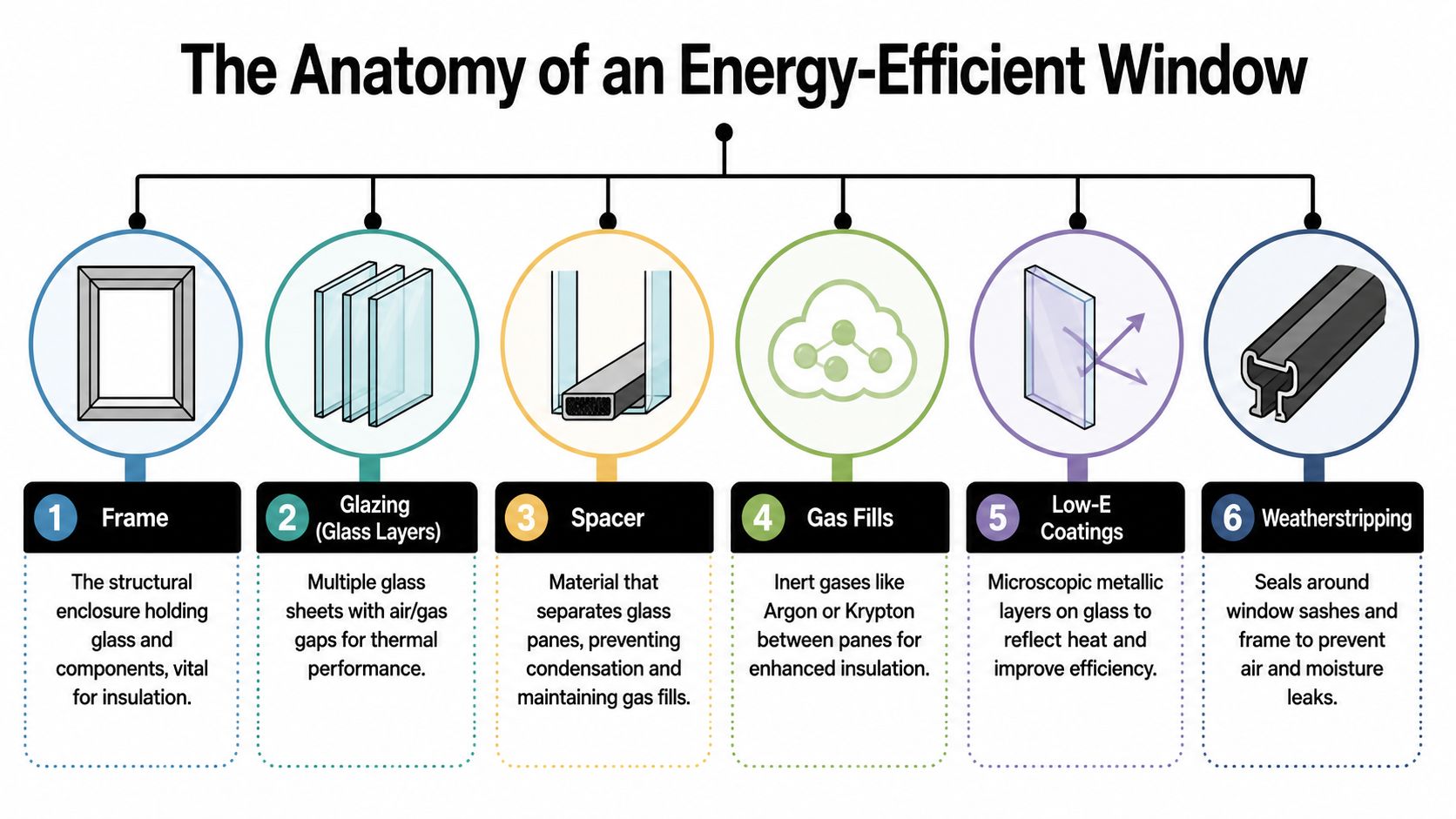
The six parts doing the work
Here are the parts that carry most of the energy-efficiency load.
Frame
The frame is the window's structure. It supports the glass, holds the weatherstripping, and affects how much heat moves in and out. A poorly insulated frame can undercut a good glass package.Glazing
Glazing means the glass assembly itself. Double-pane windows have two layers of glass. Triple-pane windows have three. The extra layers and the sealed space between them slow heat flow and help indoor temperatures stay more even.Spacer
The spacer sits around the perimeter between the panes. It is easy to overlook because it is thin, but it has a big job. The spacer helps maintain the seal and affects how cold the glass edge gets, which is one reason edge condensation often shows up before trouble appears in the center of the glass.Gas fills
Many high-performance windows use argon or krypton between the panes instead of plain air. These gases slow heat transfer better than air, which helps in both winter and summer.Low-E coatings
Low-E coatings are microscopically thin layers on the glass that manage radiant heat. In plain English, they help keep unwanted heat from moving through the window too easily. That matters in Boise, where you want to hold heat indoors during winter but also reduce summer heat gain, especially on west- and south-facing sides.Weatherstripping
Weatherstripping seals the moving parts of the window. If those seals are flimsy, worn out, or poorly aligned, outside air sneaks in and conditioned air slips out. That is often the difference between a room that feels calm and one that feels drafty even with the furnace running.
For Treasure Valley homeowners, that system approach is what turns national efficiency standards into real daily comfort. The best window for this climate is not just one with extra panes. It is one with the right glass package, a stable frame, durable edge details, and tight seals that can handle all four Idaho seasons.
How to Read the NFRC Label and Evaluate Performance
The NFRC label is a frequently overlooked part, even though it's the one piece of paper that tells you how a window performs. If you learn four items on that label, you can compare windows with a lot more confidence.
Start with U-Factor
U-Factor measures how quickly heat moves through the whole window. Lower is better.
I explain it like a golf score. In golf, a lower number wins. U-Factor works the same way. A lower number means the window is better at keeping indoor heat from slipping outside.
In Idaho, this matters a lot because winter comfort isn't only about the thermostat setting. It's also about whether the inside glass stays warm enough that the room feels stable instead of drafty and cold near the wall.
Then check SHGC light and air leakage
The next number is SHGC, or Solar Heat Gain Coefficient. This is your window's sunscreen rating. It tells you how much solar heat gets through the glass.
For cold climates, an SHGC of 0.55 or higher helps maximize passive solar heating, while hot climates generally want under 0.40 to reduce unwanted heat gain, according to the UMass guide to window performance. That same guide notes that visible transmittance should remain at least 0.60 for good visibility, and air leakage should be 0.30 cfm/ft² or less to protect the thermal envelope.
Here's the plain-English version:
| NFRC item | What it means | What to remember |
|---|---|---|
| U-Factor | Heat loss through the window | Lower is better |
| SHGC | Solar heat coming in | Higher can help in cold climates |
| Visible Transmittance | Daylight coming through | Higher means a brighter room |
| Air Leakage | Draft potential around the unit | Lower means tighter seals |
People often get tripped up on SHGC because they assume “lower is always better.” In Arizona, maybe. In Boise, not always. We want windows that insulate well in winter but can still work with our sunny climate rather than fighting it.
A window can have excellent insulation and still be wrong for your house if it blocks useful winter sun or leaks air around the sash.
Why window style changes the rating
Style affects performance before you even get to the glass package. That surprises a lot of homeowners.
Fixed picture windows and casement windows deliver the highest energy efficiency among window styles due to their permanent airtight seals, which minimize air leakage. Among operable windows, casement and awning designs press the sash firmly against the frame when locked, creating a tighter compression seal that reduces air leakage compared to double-hung or sliding windows, as explained in this guide to choosing energy-efficient windows.
That's why two windows with similar glass can still feel different in real life. A tighter-operating design usually means fewer drafts and steadier room temperatures.
If you want a practical shortcut, compare windows in this order:
- Look at U-Factor first for insulation.
- Check SHGC second for how the sun will affect the room.
- Review air leakage if the label provides it.
- Consider the style because a casement or picture window often seals tighter than a slider or double-hung.
Choosing the Right Window for Idaho's Climate
A January morning in Boise can start below freezing, then a sunny afternoon warms the south side of the house enough that you crack a blind. By July, that same home may have one west-facing room that turns stuffy by 5 p.m. Good window choices in the Treasure Valley have to handle both.
What matters most in Boise and the Treasure Valley
Start with U-Factor. It works like the insulation rating for the whole window. A lower number means heat moves through the window more slowly, so indoor warmth stays inside longer during winter.
For Idaho homes, that matters every time you sit near the glass in January. Lower U-Factor usually means the interior glass surface stays warmer, which reduces that cold-radiating feeling people often call a draft even when no air is leaking. Comfort improves, and your heating system runs less often.
SHGC, or Solar Heat Gain Coefficient, answers a different question. It tells you how much of the sun's heat the window lets in. That can confuse homeowners because low SHGC is not automatically the best fit here. Boise is not Phoenix. We get real winter sun, and in the right room, that sun can help.
The practical answer is to match the window to the side of the house.
South-facing glass often benefits from a balanced SHGC that allows useful winter sunlight without letting summer heat take over. West-facing rooms usually need tighter solar control because late-day summer sun is harsh and hard to shade. North-facing rooms get little direct sun, so insulation usually matters more than solar gain there.
Frame and glass package choices affect this too. If you are comparing materials, this guide on vinyl vs. wood windows for Idaho homes can help you connect frame choice to our dry summers, cold snaps, and maintenance demands.
A simple target list for local homeowners
Use this checklist to narrow the field without getting lost in the specs:
Put whole-window U-Factor near the top of the list.
That is your best quick read on winter insulation performance.Choose SHGC by orientation, not by one house-wide rule.
South and east exposures often want a different approach than west-facing glass.Pay attention to comfort complaints room by room.
A cold north bedroom and an overheating bonus room may need different glass packages.Ask how the window is built as a full unit.
Glass matters, but spacer system, frame design, and air sealing all affect how the window performs in real life.
A local example makes this easier. Say you have a west-facing family room in Meridian that gets blasted by afternoon sun. In that space, lower solar gain may matter almost as much as insulation because the problem is overheating and uneven comfort. Now switch to a north-facing bedroom in Eagle that always feels chilly on winter mornings. That room usually benefits more from a lower U-Factor and a tighter overall unit.
That is the Idaho mindset. You are not buying a window for a lab test or a national average. You are choosing for four seasons, strong sun, freezing nights, and the way each room in your house feels.
Double Pane vs Triple Pane and Modern Frame Materials
A lot of Treasure Valley homeowners get to this point and want one clean rule. Buy triple pane if you care about efficiency. Buy double pane if you want to spend less. Real houses in Boise, Meridian, Eagle, and Nampa rarely work that neatly.
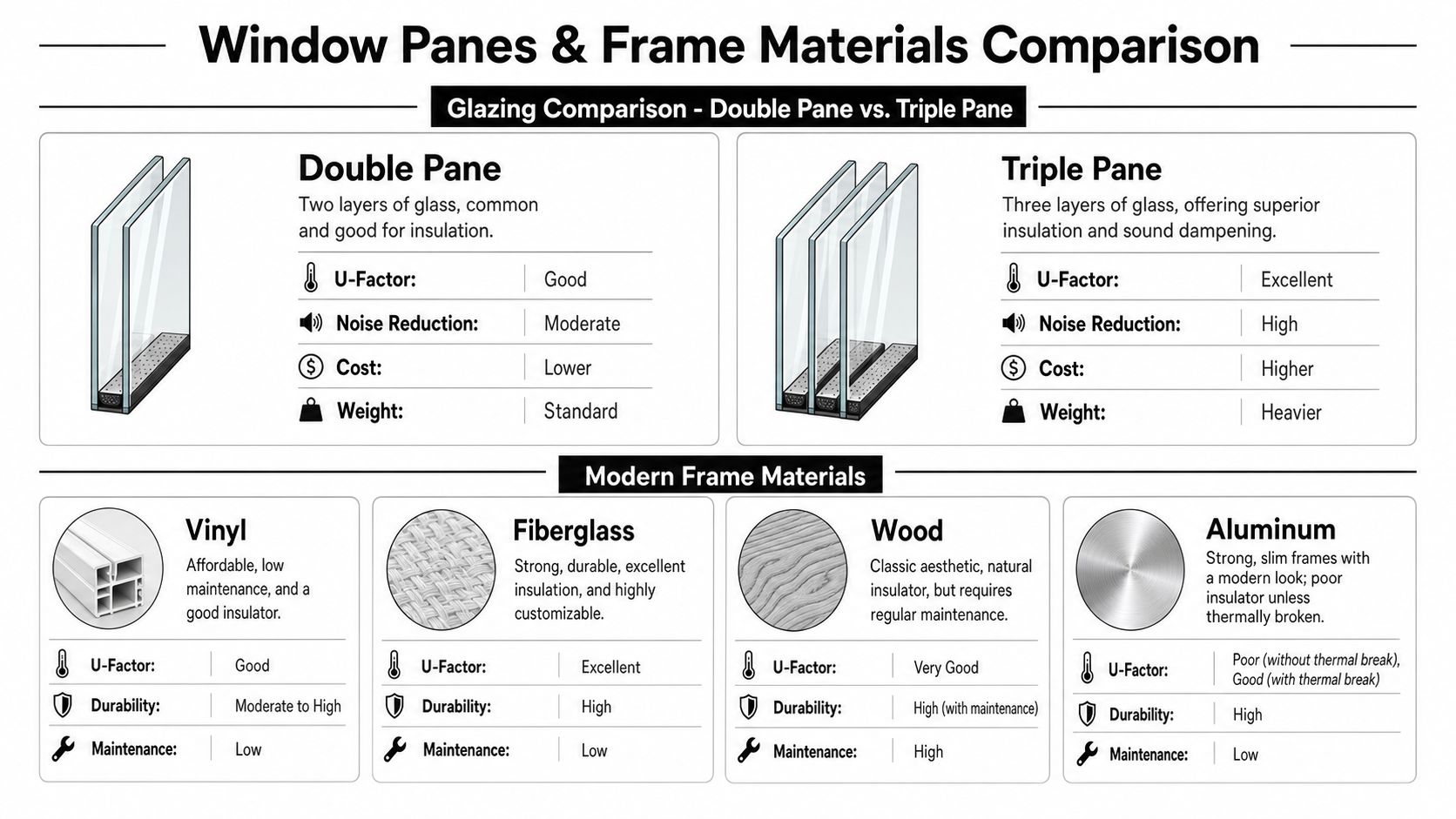
Our climate splits the decision. January cold pushes you to care about insulation. July sun, especially on west-facing glass, pushes you to care about solar gain and room comfort. That is why pane count matters, but it is only part of the story.
When triple pane earns its keep
Triple pane usually makes the most sense when you are trying to solve a specific problem, not just check a premium upgrade box. A north-facing bedroom that always feels cold. A bonus room over the garage. A house near a busy road where quieter interiors matter. In those cases, the extra pane and gas fill can improve comfort in ways you notice every morning and evening.
The U.S. Department of Energy explains in its window efficiency document that triple-pane can be harder to justify financially in moderate or mixed climates because the added cost does not always pay back quickly. For many Idaho homes, a well-built double-pane window with a strong Low-E coating and inert gas fill gets you much of the performance benefit at a lower price.
That makes high-end double pane the practical sweet spot for a lot of homes here.
| Option | Best fit | Tradeoff |
|---|---|---|
| High-end double pane | Many Boise-area homes with balanced heating and cooling needs | Lower upfront cost, but not the very lowest insulation numbers |
| Triple pane | Cold rooms, north exposures, comfort-focused upgrades, noise-sensitive spaces | Higher cost and a heavier unit |
A simple way to picture it helps. Double pane is like upgrading from a light jacket to an insulated coat. Triple pane is like adding a thermal liner on top of that. The liner helps most when conditions are harsher or when comfort is the top priority.
If you are replacing old single-pane windows, even a quality double-pane unit can be a dramatic improvement in winter comfort, summer heat control, and condensation resistance. Triple pane is often the next step for homeowners who want to push performance further in selected rooms or throughout the house.
For homeowners comparing frame types at the same time, this Idaho window material comparison for vinyl vs. wood windows is a helpful companion because the frame affects insulation, upkeep, and long-term durability.
Why frame material can make or break performance
The frame is the part homeowners often underestimate. The glass gets the attention, but the frame is the skeleton of the whole unit. If that skeleton conducts heat easily, flexes too much, or struggles to hold seals tight over the years, the window will not perform as well in real life as the brochure suggests.
A simple comparison makes this easier. A good glass package in a poor frame works like putting high-quality insulation into a wall with gaps around the edges. The insulation is still good, but the assembly is weaker than it should be.
Here is how the main frame materials usually shake out for Treasure Valley homes:
- Vinyl offers good insulating value, low maintenance, and strong value for the price.
- Wood insulates well and looks great, but it needs regular maintenance in our dry summers and changing seasons.
- Aluminum is durable and slim, but without a thermal break it transfers heat too readily for homeowners focused on efficiency.
- Fiberglass and composite frames are known for staying stable through temperature swings, which helps the window keep its shape and its seals.
That stability matters in Idaho. We get hot summer afternoons, cold winter nights, and enough seasonal swing to expose weak materials over time. A frame that expands and contracts less is more likely to stay square, keep weatherstripping working properly, and support the glass unit the way it was designed to perform.
In plain language, pane count tells you part of the efficiency story. Frame quality tells you whether that performance is likely to hold up year after year.
The Full Value of High-Performance Windows
Energy savings are often what gets people interested. Daily comfort is what makes them glad they replaced the windows.
Savings are real but comfort is what people notice first
Replacing single-pane windows with energy-efficient models can reduce annual heating and cooling energy use by 12% to 33%, and the Department of Energy estimate cited in this energy-efficient window overview puts annual savings at $253 to $568 for homeowners who install energy-efficient windows throughout the home.
Those are meaningful numbers, but they still don't capture what most families mention first after a good replacement job. They talk about the room finally feeling even. They notice they can sit near the glass in winter. They stop fiddling with blinds and fans to tame one hot spot in the afternoon.
The benefits you feel every day
High-performance windows improve home life in ways that don't always fit neatly on a utility bill.
More even room temperatures
Better insulating glass and tighter seals reduce the cold-wall effect in winter and the hot-glass effect in summer.Fewer drafts
Air leakage is one of the fastest ways a room starts feeling uncomfortable, even when the thermostat says everything is fine.Quieter interiors
Multi-pane glass packages and tighter frames generally do a better job softening outdoor noise from traffic, lawn equipment, and neighborhood activity.Less fading stress indoors
Modern Low-E coatings help protect flooring, fabrics, and furniture by limiting the harsh side of solar exposure.
A lot of homeowners expect dramatic change only in the coldest months. In reality, shoulder seasons can be the biggest surprise. Spring and fall are when poorly sealed windows show their age because windy days and cool nights expose every weak spot.
Good windows don't just lower heat loss. They make the whole perimeter of the house feel more livable.
There's also the resale side. Buyers may not ask for the U-Factor on a tour, but they do react to quiet rooms, smooth operation, clean sightlines, and a home that feels solid instead of drafty. That's part of the value even before anyone talks about utility costs.
Your Guide to Replacing Windows in the Treasure Valley
Picking the right specification is only half the job. The replacement process determines whether those specs show up in daily life.
Use ENERGY STAR as the floor not the ceiling
For Idaho homeowners, ENERGY STAR is a practical screening tool. Under ENERGY STAR Version 7.0, effective October 23, 2023, Northern zone windows must meet a U-Factor of 0.22 or lower and a minimum SHGC of 0.17 according to the ENERGY STAR Version 7.0 residential windows specification.
That gives you a clean starting point when you compare products. But don't stop at “meets ENERGY STAR.” Ask whether the window is merely passing the line or whether it's well suited to your particular home, orientation, and comfort goals.
Some homeowners in the Treasure Valley benefit from going beyond basic compliance, especially on large glass openings or colder exposures. Others may do very well with a more balanced package. The point is to treat certification as a baseline, not the whole decision.
Installation decides whether the window performs
A high-performance unit can underperform if the installer leaves gaps, skimps on flashing, or doesn't seal the rough opening correctly. Proper installation matters enough that the Pacific Northwest National Laboratory guide to high-performance ENERGY STAR windows stresses following manufacturer instructions, air sealing around rough openings, and fully flashing openings to prevent air and moisture infiltration. That same guide notes that some warranties require certified installers.
This is the part homeowners can't afford to treat casually.
A solid replacement process usually looks like this:
In-home evaluation
Someone measures the actual openings, checks the condition of the surrounding structure, and asks how each room performs in different seasons.Product selection by room
Not every opening needs the same style or glass package. Bedrooms, west-facing living spaces, and hard-to-reach areas often call for different choices.Careful removal
Old units come out without damaging surrounding trim, siding, or interior finishes.Air sealing and flashing
Air sealing and flashing protect long-term performance. The installer needs to manage both air movement and water.Final adjustment
A good crew checks operation, lock alignment, weatherstripping contact, and finish details before calling the job done.
Local insight: In the Treasure Valley, the install details matter just as much as the label because wind, dust, heat, and winter cold all exploit small gaps.
If you want to work with a team focused on this region, a Treasure Valley window replacement specialist should be able to explain how they handle sealing, flashing, cleanup, and warranty support in plain language.
Questions worth asking before you sign
You don't need to become a window engineer. You just need to ask smart questions.
Ask for whole-window ratings
Don't accept center-of-glass numbers if you're trying to compare real performance.Ask who installs the product
If subcontractors are involved, find out how training and warranty responsibility are handled.Ask how the opening will be sealed
“Installed to code” is too vague. You want to hear how they handle flashing and air sealing.Ask which rooms need different specs
A thoughtful contractor won't give every wall of the house the same answer.Ask what warranty covers labor as well as product
Product coverage matters. Labor coverage matters too, because service calls cost time and money.
The best windows for energy efficiency are the ones that fit Idaho's climate, your house layout, and your budget, then get installed with discipline. That combination is what brings the payoff: lower energy loss, steadier comfort, and a home that feels better in every season.
If you're ready to compare options for your home, C & C Windows & Doors offers Treasure Valley homeowners free in-home consultations, custom measurements, and factory-trained installation focused on Idaho performance. Whether you're replacing drafty old windows in Boise, upgrading a west-facing living room in Meridian, or planning a full-home remodel in Eagle, their team can help you choose a window package that matches your comfort goals, style, and budget.