
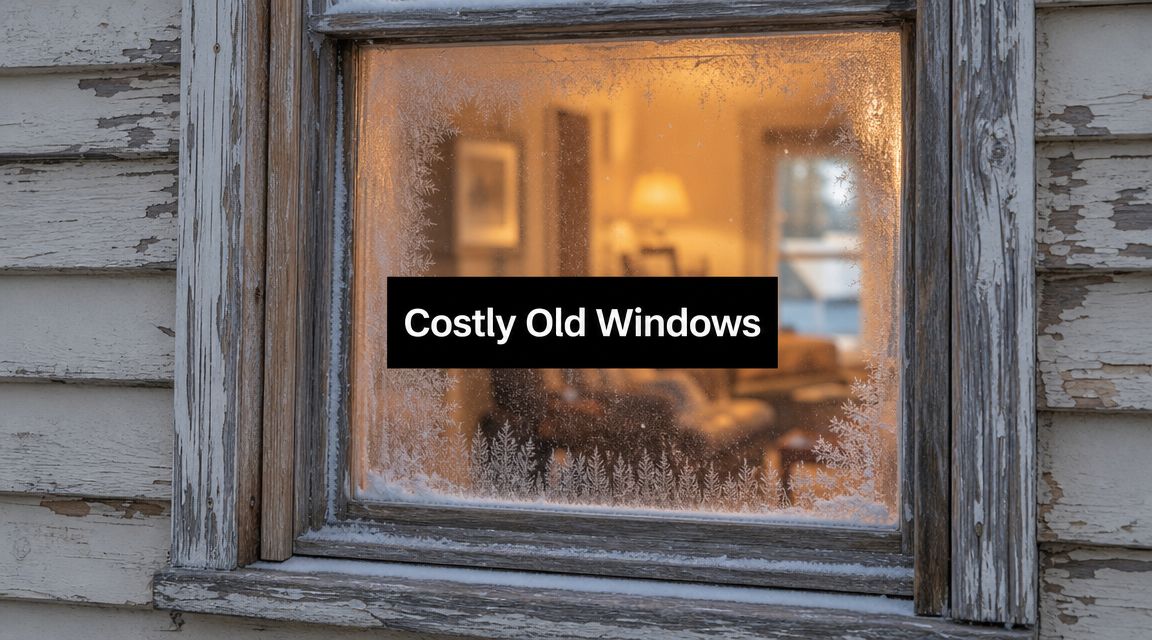
You notice it first on a cold Boise morning. The room feels fine until you walk past the living room window and catch that thin ribbon of cold air on your hand. In summer, the same spot turns into a heat lamp by late afternoon. Then the utility bill shows up, and you start wondering whether the problem is the furnace, the AC, or the windows you've been meaning to deal with for years.
That's usually where the main conversation starts. Old windows don't just look dated. They affect comfort, HVAC workload, maintenance demands, and the total cost of owning the house. In Boise's four-season climate, windows that were merely “not great” a decade ago can become an ongoing expense.
Table of Contents
- Why Your Old Windows Are a Financial Drain
- A Homeowners Guide to Window Diagnostics
- Repair or Replace Weighing Your Options
- Decoding Energy Efficient Window Features
- Boise Window Replacement Costs and Considerations
- Creating Your Window Upgrade Action Plan
Why Your Old Windows Are a Financial Drain
A lot of Boise homeowners assume old windows only matter if they're visibly broken. That's not how it works. A window can still open, still lock, and still be costing you money every season.
Older single-pane units and aging double-pane windows often act like weak points in the home envelope. The wall may be insulated. The attic may be dialed in. But if the glass, frame, and seals can't control heat transfer and air movement, the HVAC system has to keep correcting for that weakness all day.
For a closer look at how that shows up on monthly bills, see high heating bills in Boise and whether windows are to blame.
Old glass leaks comfort in three directions
The first problem is conduction. That's heat moving directly through the glass and frame. A basic older pane in winter works a lot like touching a cold metal handrail. Indoor heat moves toward the colder outdoor side. In summer, the direction flips and outside heat pushes inward.
The second problem is convection. Air moves. Drafts around worn weatherstripping, loose sashes, and aging frames let outside air slip in and conditioned air leak out. Even when the leak feels small, the furnace or AC keeps paying for it.
The third problem is radiation. Sunlight and solar heat pass through glass and warm interior surfaces. That's why a room with older west-facing windows can feel noticeably hotter than the rest of the house, even when the thermostat says everything should be even.
Practical rule: If a room is consistently colder in winter or hotter in summer than the rest of the house, don't start by blaming the HVAC equipment. Check the windows first.
Why Boise homes feel it more
Boise asks a lot from windows. Winter nights can expose weak insulation fast, while summer sun punishes glass that doesn't control heat gain well. Add dry air, seasonal wind, and older housing stock in many neighborhoods, and window problems tend to show up as a daily comfort issue before homeowners realize they're also a budget issue.
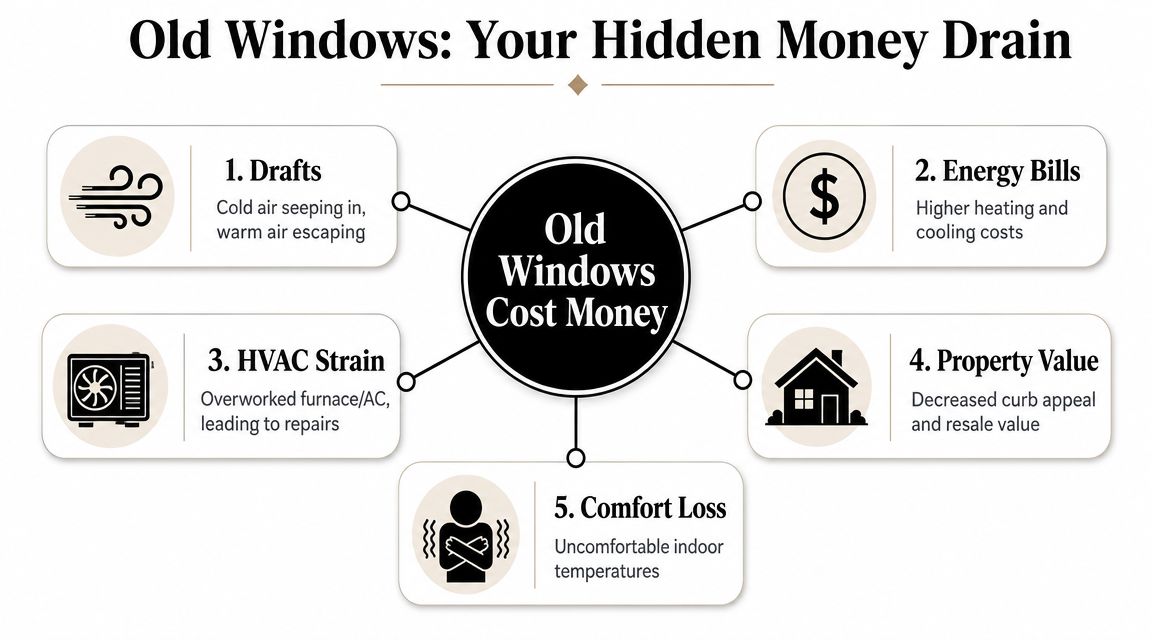
That's why the old windows costing you money Boise homeowner guide isn't really about one symptom. It's about the stack of costs that come from one failing part of the house. You may pay through higher utility use, rooms nobody wants to sit in, more strain on heating and cooling equipment, and repeated small repairs that never fully solve the problem.
Here's what old windows commonly cost you in real life:
- Higher seasonal utility pressure because the house loses heated or cooled air more easily.
- Uneven room temperatures that push people toward space heaters, fans, or constant thermostat changes.
- More HVAC runtime because the system has to compensate for leaks and poor glass performance.
- Ongoing maintenance when wood components swell, paint fails, or hardware gets harder to operate.
- Delayed capital planning because homeowners patch the problem for years, then face a bigger project later.
Old windows rarely fail in one dramatic moment. Most of them drain money a little at a time, month after month.
A Homeowners Guide to Window Diagnostics
You don't need specialized tools to get a clear read on window condition. Most homeowners can identify the main warning signs with a slow walkthrough, a windy day, and a little attention to detail.
Start with what your house is already telling you
Begin room by room. Stand near each window in the morning and again later in the day. You're looking for patterns, not just one bad opening. One drafty bedroom may mean a localized seal issue. Several rooms with the same symptoms usually point to aging windows across the house.
If you're seeing fogging or moisture trapped between panes, that often signals a failed insulated glass seal. This guide on window seal failure in Boise gives a useful breakdown of what that issue looks like in practice.
Simple checks that reveal real problems
Use this checklist and write down what you find. That matters because homeowners often remember the worst window and forget the rest.
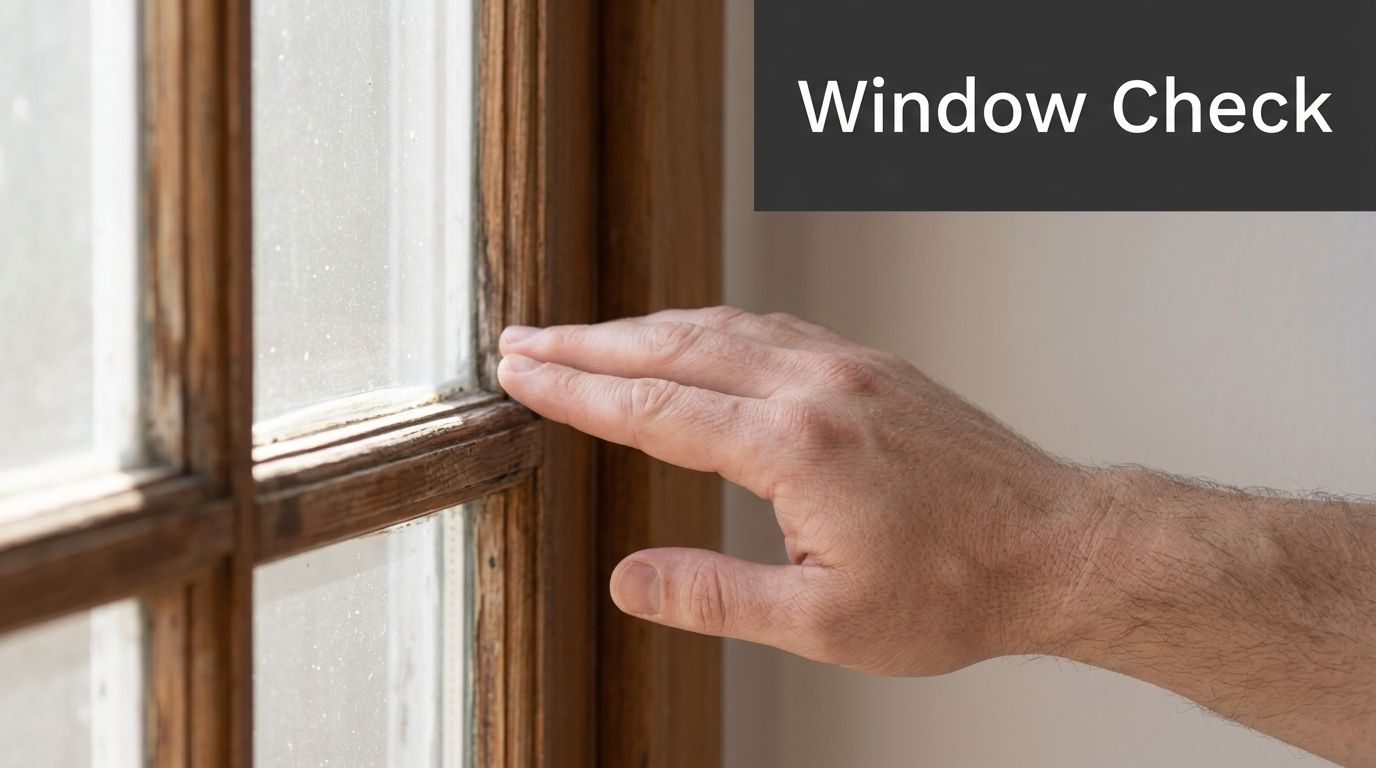
Do the hand test on a windy day
Move your hand slowly around the sash, stool, and side jambs. If you feel moving air, that's not normal. Even a subtle leak can create a comfort problem when temperatures swing.Use a smoke test carefully
A candle or incense stick can help show air movement near the frame. Watch the smoke, not the flame. If smoke pulls sideways or wavers sharply near a closed window, air is moving through or around that assembly.Check the glass itself
Look for condensation between panes, haziness, or distortion. Clean both sides first. If the cloudiness stays, the issue is inside the unit.Inspect the frame and sill
Press gently on suspicious wood areas with a small tool. Soft spots, flaking material, or paint that keeps peeling in the same place can point to moisture damage.Operate every window fully
A window that sticks, won't stay up, won't lock correctly, or requires force to open is telling you something. Poor operation often goes hand in hand with frame movement, wear, or hidden deterioration.Look at the trim and drywall nearby
Staining, hairline cracking, or bubbling paint around the opening can suggest air leakage or moisture entry.
If the problem shows up in the same place every season, it's usually a building issue, not your imagination.
A useful way to sort your findings is by urgency:
| Condition | What it usually means | Typical next step |
|---|---|---|
| Mild draft, no visible damage | Air sealing issue or worn weatherstripping | Consider targeted repair |
| Fogging between panes | Seal failure in insulated glass | Evaluate replacement value |
| Soft wood or visible decay | Moisture intrusion and frame deterioration | Get a closer inspection |
| Hard-to-open sash or failed lock | Hardware wear, frame shift, or swelling | Assess repair versus full replacement |
| Repeated comfort complaints in several rooms | Systemic age-related performance issue | Compare whole-home options |
The point of diagnostics isn't to talk yourself into replacement. It's to stop guessing. Once you know whether you have isolated defects or house-wide performance problems, the next decision gets much easier.
Repair or Replace Weighing Your Options
Most window decisions go wrong because homeowners ask the wrong question. They ask, “What's cheaper today?” The better question is, “What fixes the problem without forcing me to pay for it twice?”
When repair still makes sense
Repair can be the right move when the window is basically sound and the issue is limited. Worn weatherstripping, minor air leaks, hardware replacement, reglazing, or small trim and caulk corrections can buy useful time.
That's especially true if you have only one or two problem windows, the frames are in good shape, and the glass units haven't failed. In that situation, repair can be a reasonable stopgap while you budget for larger upgrades later.
A more detailed decision breakdown is in when to replace windows vs repair them.
When replacement is the better investment
Replacement usually becomes the smarter path when the problems stack up. Failed seals, recurring drafts, rotted components, poor operation, and broad comfort issues across multiple rooms all point in the same direction. You can keep fixing pieces of an old system, but at some point you're paying to preserve a weak performer.
The financial side matters too. Consumer Reports cites a professional replacement cost of around $800 per window, with an average one-story house totaling about $8,000. Another industry guide puts the average at $477 per window, with most projects between $232 and $740, which shows why full replacement is usually a four- to five-figure project for homeowners (window replacement buying guidance from Consumer Reports).
That number can feel high until you compare it to years of patchwork repairs, uneven comfort, and windows that still don't perform the way a Boise house needs them to.
| Factor | Repair | Replacement |
|---|---|---|
| Upfront cost | Lower in the short term | Higher initial investment |
| Best use case | Isolated defects in otherwise sound windows | Widespread age, seal failure, frame issues, comfort problems |
| Energy performance | May improve drafts slightly | Can materially improve overall window performance |
| Maintenance outlook | Often ongoing | Usually lower if the old units were high-maintenance |
| Appearance consistency | Can be uneven across the house | Creates a uniform result |
| Long-term value | Limited if base window is outdated | Stronger when the old assemblies are at end of life |
A few rules of thumb help:
- Repair first if the frame is solid, the glass is intact, and the problem is localized.
- Replace sooner if you're seeing the same issue in room after room.
- Don't overinvest in temporary fixes when the window has multiple failure points.
- Think in ownership costs, not just invoice totals.
Spending less today isn't savings if the same window still leaks air, sticks, and needs more work next season.
One more point homeowners often miss. Good products won't rescue bad installation, and weak old openings can undermine even careful repairs. That's why the decision isn't just glass versus frame. It's whether the whole assembly still deserves more money.
Decoding Energy Efficient Window Features
Once you start shopping for replacement windows, the language gets technical fast. Homeowners hear Low-E, argon, U-factor, ENERGY STAR, NFRC, spacer systems, and glazing packages, then try to compare bids that don't explain any of it clearly.
The labels that actually matter
Two labels deserve your attention. ENERGY STAR tells you a window meets recognized efficiency criteria for a region. NFRC labels provide standardized ratings so you can compare products on whole-unit performance, not just glass claims.
The U.S. Department of Energy advises homeowners to check for air leaks, use caulk and weatherstripping where appropriate, and consider replacement when those upgrades aren't enough. DOE also recommends gas-filled windows with low-e coatings and low U-factors for colder climates, and notes that whole-unit ratings are more accurate than center-of-glass ratings. It also states that ENERGY STAR-rated replacements can save homeowners in cold climates 7–15% on annual heating and cooling costs (DOE guidance on updating or replacing windows).
What each feature does in a Boise climate
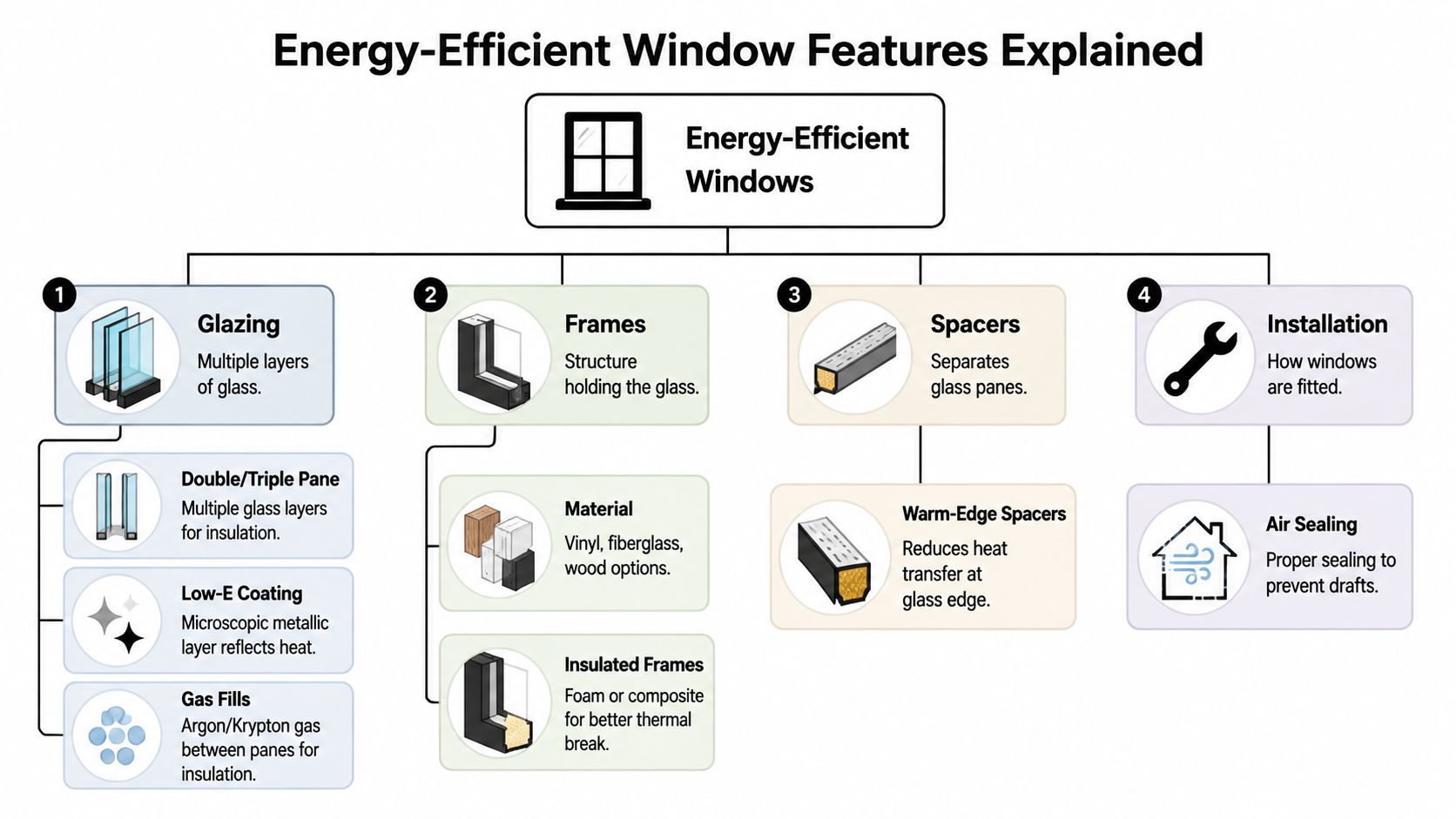
Here's the plain-English version of the features that matter most.
Low-E coating
This is a thin coating on the glass that helps control heat transfer. In Boise, that matters in both directions. It helps keep indoor heat from escaping in winter and reduces unwanted solar heat gain during hot weather.Gas fills
Many efficient windows place argon or another insulating gas between panes. That space slows heat movement better than ordinary air.Low U-factor
U-factor measures how readily a window lets heat pass through. Lower is better when you want stronger insulation performance in a climate with real winter demands.Multiple panes
Double-pane windows are common because they improve insulation over old single-pane units. Some homeowners also look at triple-pane options when they want stronger thermal performance or better sound control.Frame material and insulated construction
Glass gets most of the attention, but the frame matters. A poor frame can still create thermal weak spots and air leakage.Installation and air sealing
This isn't a feature on the brochure, but it decides whether the window performs as advertised. If the opening isn't prepped and sealed correctly, the upgrade won't deliver what it should.
A practical way to evaluate options is to match the feature to the problem you're trying to solve:
| Feature | Solves for | Why it matters in Boise |
|---|---|---|
| Low-E glass | Excess heat transfer | Helps with winter retention and summer sun |
| Gas fill | Weak insulation between panes | Improves thermal resistance |
| Low U-factor | Cold-weather heat loss | Useful in a four-season climate |
| Better frames | Air leakage and thermal bridging | Supports whole-window performance |
| Careful installation | Drafts and underperformance | Prevents the opening from wasting the upgrade |
For homeowners looking at Boise-specific installation options, C & C Windows & Doors installs replacement windows with features such as Low-E coatings, argon gas fills, and custom-fit measurement for Treasure Valley homes. The product sheet matters, but the fit and air sealing matter just as much.
Boise Window Replacement Costs and Considerations
National averages help frame the decision. Local conditions decide the actual budget. Boise homeowners deal with a mix of post-war homes, older subdivisions, and newer builds, and the cost difference between a clean retrofit and a complicated removal can be substantial.
What Boise homeowners are really budgeting for
In the Boise market, quality vinyl replacement windows typically run about $400 to $800 per window installed, while a 15 to 20 window whole-home project often lands around $10,000 to $22,000 (Boise window replacement cost guide).
That range tells you two important things. First, window replacement is a real capital project, not a casual maintenance item. Second, the per-window number never tells the whole story because installation conditions drive a big part of the final total.
Material choices also affect where a project lands. Some homeowners prioritize value and low maintenance. Others want a different look, stronger rigidity, or a package that fits a higher-end remodel. The right choice depends on the house, your ownership timeline, and whether your goal is immediate relief, long-term efficiency, or both.
Older homes create the biggest pricing surprises
Many budgets veer off course when the old window comes out and the crew discovers deteriorated framing, previous water intrusion, out-of-square openings, trim issues, or air sealing that was never done correctly. The invoice doesn't rise because the new glass got fancier. It rises because the opening wasn't ready for a clean install.
For older homes in Boise, a contingency matters. The same Boise guide notes that older homes often need a contingency reserve of 10% to 15% for hidden issues discovered during removal. That reserve is one of the smartest parts of a window budget because it reflects what happens in the field, not just what looks good on paper.
Use this as a planning lens:
Newer home with straightforward openings
The estimate is more likely to track closely with the quoted window and labor package.Older home with original windows
Expect more uncertainty. Removal may expose repair needs that weren't visible from inside.Historic or heavily modified home
Trim details, prior remodel work, and nonstandard openings can slow installation and complicate finish work.
The biggest pricing mistake isn't choosing the wrong glass package. It's assuming every old opening will behave nicely once the window comes out.
A few practical budgeting habits help:
- Ask what the quote includes. Removal, disposal, interior trim touch-up, exterior finish details, and cleanup should be clear.
- Discuss contingencies early. You want to know how hidden damage is handled before work starts.
- Compare scope, not just totals. A lower quote can mean fewer included tasks.
- Think whole-house if several windows are failing. DOE notes that replacing all windows at once can improve economics, and one installer guide cited there says large projects with 15 or more windows are often 10–15% more cost-effective than phasing the work. That point was covered in the earlier DOE reference.
Boise homeowners also sometimes ask about rebates or utility incentives. Those programs can change, so the practical move is to check current local utility and manufacturer offers before you sign.
Creating Your Window Upgrade Action Plan
The best window projects don't start with a sales pitch. They start with a clear diagnosis, a realistic budget, and a scope that matches the condition of the house.
A smart order of operations
Start with your problem rooms. Walk the house, note which windows have drafts, failed seals, operation issues, or visible damage, and decide whether the problem is isolated or broad. If you already know several windows are at the end of their life, ask for a full-home assessment instead of pricing one opening at a time.
Then get an in-home consultation with exact measurements. Window work shouldn't be priced like a rough appliance swap. The installer needs to see the existing units, the condition of the openings, and any signs of trim, frame, or moisture concerns.
After that, narrow your product decisions around three things:
Performance needs
Focus on comfort, insulation, and sun exposure, not just appearance.Installation method
Ask whether your house is a good fit for insert replacement or whether the condition of the opening points toward more extensive work.Budget structure
Decide whether you're doing the whole house now or phasing carefully because only some windows are urgent.
How to move forward without getting overwhelmed
Homeowners often stall because they think the next step means committing on the spot. It doesn't. A good consultation should leave you with better information, not pressure.
Financing can also matter when windows are no longer a cosmetic want but a comfort and efficiency problem you need to solve. Some Boise installers, including the publisher, offer financing through Synchrony, which can help homeowners spread out a larger project instead of delaying it through more winters and summers.
Set your expectations clearly. Custom-sized windows usually need lead time, and installation schedules vary with project scope, weather, and how much hidden work the crew finds once removal starts. What helps most is having the sequence explained before the order is placed.
Use this short decision checklist before you sign anything:
- Confirm the scope so you know exactly which windows are included.
- Review the efficiency package and make sure you understand the labels and ratings.
- Ask how hidden damage is handled in writing.
- Check warranty terms on both product and labor.
- Make sure the timeline feels realistic for your home and season.
A window upgrade is easier to manage when you treat it like a planned building-envelope project, not a rushed retail purchase. Done well, it reduces the daily annoyances first. The long-term financial benefit follows from that.
If your home has drafty rooms, failed window seals, or aging frames, C & C Windows & Doors offers free in-home consultations for Boise and the Treasure Valley. A measured site visit can help you sort out whether repair still makes sense, what replacement scope fits your home, and what the project is likely to involve before you commit.