A lot of Treasure Valley homeowners start looking for new windows the same way. In January, the couch by the front window feels colder than the rest of the room. In August, the AC keeps running, but the west-facing side of the house still gets hot by late afternoon. Then the utility bill shows up, and the old windows stop feeling like a cosmetic issue.
That's usually the point when people search for a local window company Treasure Valley and get flooded with generic advice that could apply anywhere. The problem is that Boise, Meridian, Eagle, Nampa, and the surrounding valley don't have generic conditions. Homes here deal with hot summers, cold winters, strong sun exposure, and plenty of day-to-night temperature swing. The right window package for this area has to handle all of that at once.
The good news is that you can narrow the decision down fast when you know what matters. The wrong windows leak comfort. The wrong installer wastes a good product. The wrong warranty leaves you paying twice. The right combination gives you a home that feels tighter, quieter, and easier to heat and cool.
Table of Contents
- Your Guide to a Warmer Quieter Treasure Valley Home
- Why Your Windows Must Handle Idaho's Climate
- Decoding High-Performance Window Technology
- How to Vet Your Local Window Installer
- Understanding Warranty Financing and True Value
- Make the Right Choice with C & C Windows & Doors
Your Guide to a Warmer Quieter Treasure Valley Home
Most window projects don't begin with excitement. They begin with irritation.
A homeowner in Meridian notices condensation at the glass edge in winter, then hears more road noise than they used to. Another family in Boise keeps adjusting blinds and thermostats because one room heats up faster than the rest of the house. Someone in Eagle is getting ready to sell and realizes buyers notice fogged panes and tired frames immediately. Different situations, same root issue. The existing windows aren't performing for the house or the climate anymore.
What works in this market is a practical approach, not a showroom pitch. You need windows built for Idaho conditions, installed by people who measure correctly, seal correctly, and understand drainage, air leakage, and long-term service. You also need to know which features are worth paying for and which ones are just brochure language.
The problems homeowners usually want solved
Some concerns come up again and again across the valley:
- Drafts near seating areas: Older units often let cold air settle near floors and furniture in winter.
- Uneven room temperatures: South and west exposures tend to show problems first during summer heat.
- Outside noise: Traffic, neighborhood activity, and busy roads become more noticeable when the glass package is weak.
- Fogging and wear: Failed seals, aging frames, and hard-to-operate sashes usually mean the window system is at the end of its useful life.
- Curb appeal before listing: Buyers notice windows because they affect both appearance and comfort.
Practical rule: If you're feeling the problem every day, repairing around the edges usually won't fix the actual cause. Comfort issues often trace back to the full window system, not just a bead of caulk.
What a good replacement plan looks like
A solid project starts with the house itself. Orientation matters. Sun exposure matters. Street noise matters. A shaded north side and a west-facing family room often need different priorities, even in the same home.
That's why the best advice is always specific. Look at how the current windows are failing, then match the replacement package to those conditions. In Treasure Valley homes, the winning formula usually comes down to four things: better thermal control, tighter air sealing, cleaner installation, and a warranty that still helps years from now.
If you keep those four in view, the choices get simpler fast.
Why Your Windows Must Handle Idaho's Climate
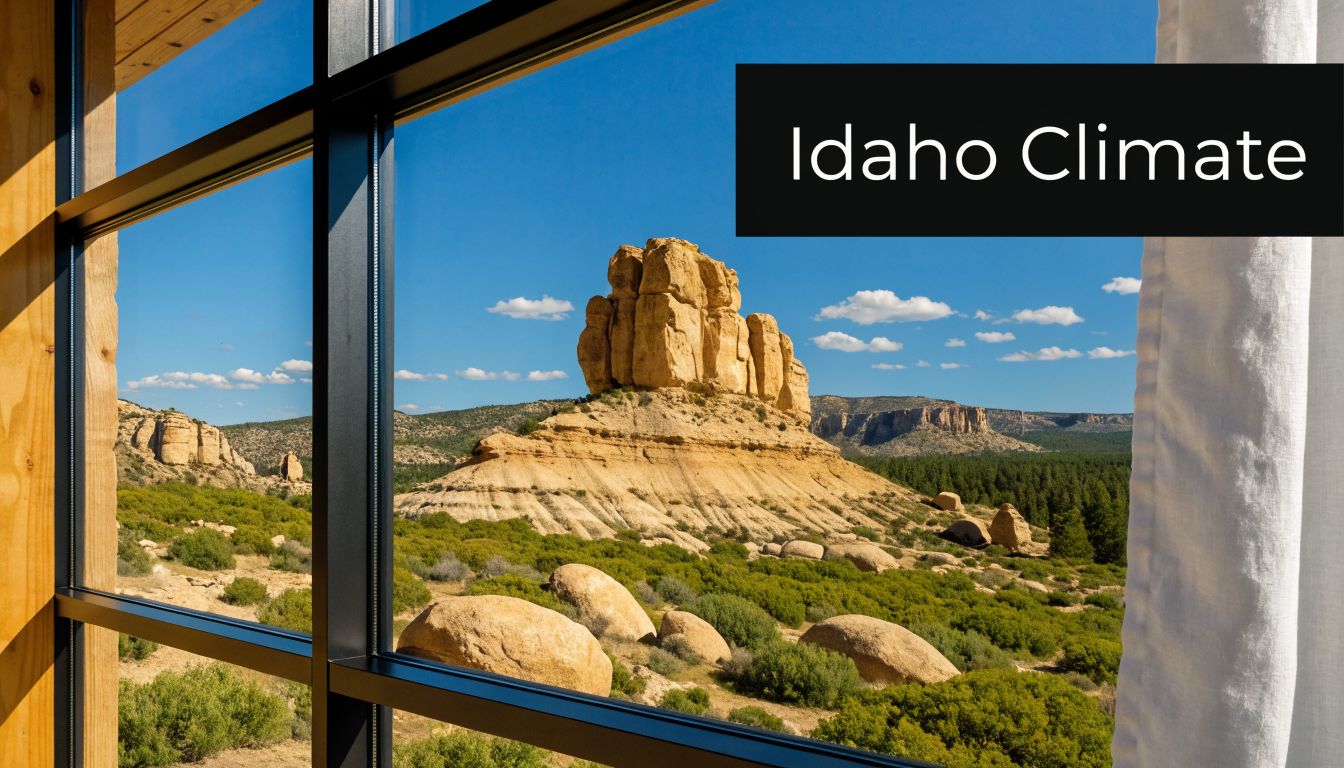
Treasure Valley weather asks a lot from a window. It has to hold heat inside during winter, resist solar load in summer, stay sealed through temperature swings, and keep moisture moving in the right direction when weather turns.
What Treasure Valley weather does to average windows
In this region, up to 25% of a home's heat loss occurs through windows, which is a major reason homeowners replace older units with climate-specific products, according to Treasure Valley window guidance for local homes. That number tells you something important. Windows aren't a small detail in overall comfort. They're one of the biggest weak points in the building shell.
Hot summers expose poor solar control. Cold winters expose weak insulation and air leakage. If the frame, glass, and install details aren't working together, homeowners feel it quickly. The room by the window gets colder first in winter and hotter first in summer.
A lot of generic products are designed to sound efficient without being tuned for places like Idaho. The label may look fine until the house goes through a full year of valley weather. That's when low-grade spacers, loose installation, or weak glass packages start showing themselves.
Windows in Idaho don't get to specialize in one season. They have to perform in both.
The numbers that matter in real houses
Homeowners don't need to become lab technicians, but they should know how to read a few specs. The first is U-factor, which measures how well a window resists heat flow. Lower is better for holding warmth inside during cold weather. The second is SHGC, or Solar Heat Gain Coefficient, which helps control how much solar heat the glass lets in.
For Treasure Valley conditions, the useful conversation isn't just "Is it energy efficient?" It's "Does it balance winter insulation with summer sun control?" That's why local projects should be built around real performance targets and not just frame color or style options.
When homeowners ask where to start, I usually tell them to start with climate fit, not brand familiarity. A company that handles window replacement in Boise should be talking about orientation, sun exposure, air leakage, sill design, and local installation details. If they aren't, you're probably getting a generic sales script.
Decoding High-Performance Window Technology
Window technology sounds complicated until you break it down into parts that affect daily life. You don't need every premium add-on on the market. You do need the features that matter in Idaho homes.
Start with the glass package
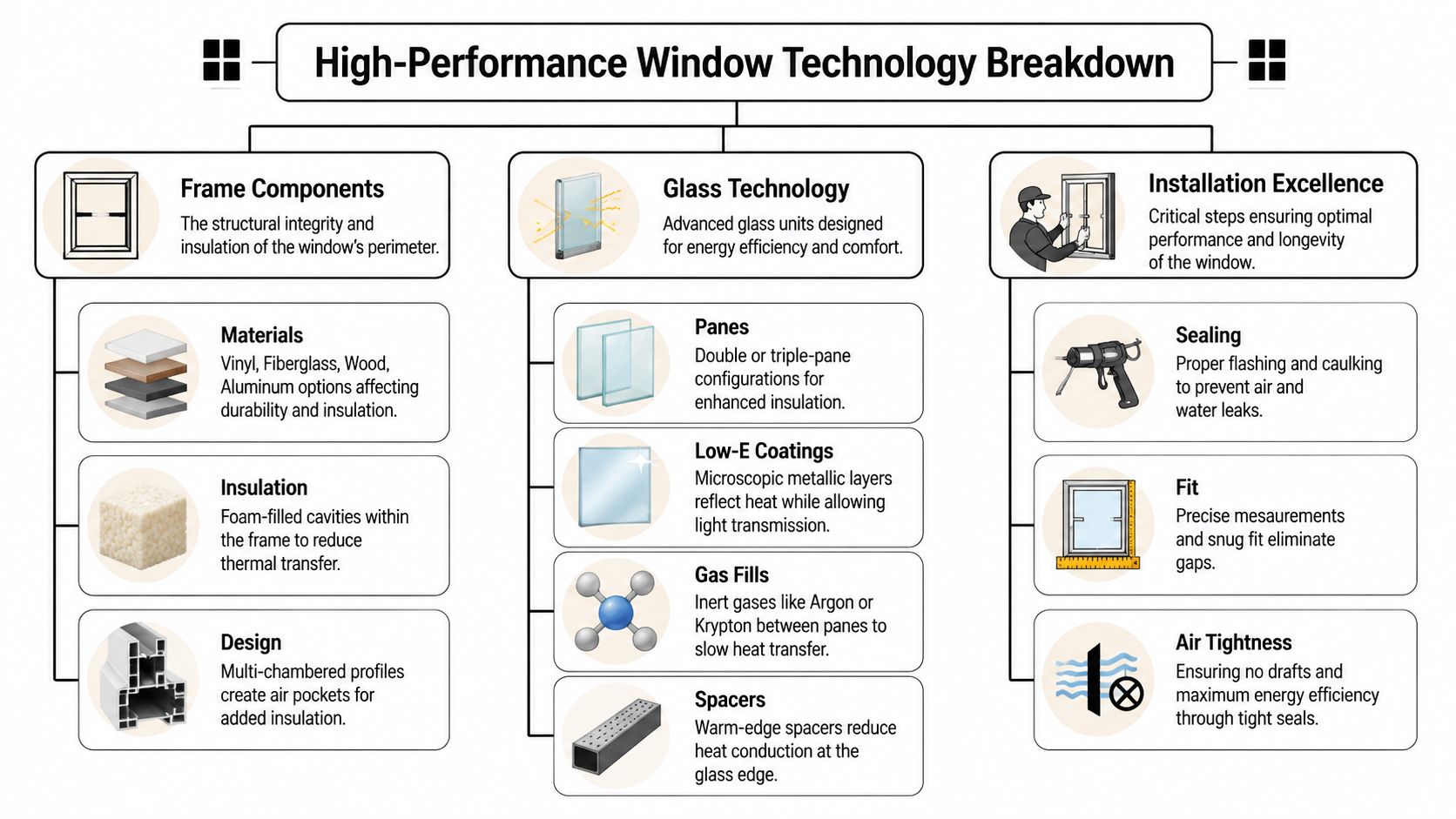
For local conditions, the baseline should be ENERGY STAR 7.0 compliant windows installed from a process that includes custom laser measurements, a U-factor below 0.27, and ClimaTech Low-E coatings that reflect 70-80% of infrared heat. Proper installation can also deliver immediate energy bill reductions of 12-15%, based on the methodology described in this Idaho energy-efficient window guide.
That one sentence covers most of what homeowners need to know, because the glass package does the heavy lifting.
- Low-E coatings: These microscopic coatings help reflect heat where you don't want it. In summer, they help reduce solar heat gain. In winter, they help retain interior warmth.
- Argon gas fills: Gas between panes slows heat transfer better than plain air. That's one reason modern insulated glass feels different when you stand near it.
- Double-pane or triple-pane options: The right choice depends on the home, the opening, and the comfort goal. Triple-pane can make sense where homeowners want more insulation and better sound control.
- Warm-edge details: The glass edge is often where lesser units lose ground first. Better edge construction helps reduce cold spots and edge-related discomfort.
For homeowners comparing options in nearby markets, a window replacement service in Star should be discussing those performance details plainly, not burying them under style brochures.
Frame design matters more than most homeowners think
The frame is not just a border around the glass. It controls structural stability, air sealing, drainage, and long-term operation.
Stronger designs separate themselves from commodity products in this way. Composite-reinforced sashes help keep the unit square and operating smoothly. Narrowline frames can preserve more glass area and natural light. A true sloped sill is one of those details homeowners rarely ask about, but installers care about it because water management is not optional.
A frame also has to handle repeated expansion and contraction without loosening up over time. That matters in a valley climate where windows regularly cycle through hot and cold extremes.
If a salesperson can't explain how the sill drains or how the sash stays stable, they probably don't understand the product past the brochure.
Installation is part of the window system
A high-performance window can still underperform if the opening is measured or sealed poorly. Good installers treat replacement as a system. They measure precisely, prep the opening correctly, insulate around the frame, flash the sill, and verify the result.
The process that gets the best outcomes usually includes:
- Custom digital measurement: Tight tolerances matter because a loose fit creates recurring air problems.
- Full-frame attention: Sill pan flashing, rigid foam insulation, and weatherstripping all affect the final result.
- Verification after install: Blower door testing and infrared thermography tell you whether the promised performance is present.
That's also why product and installer can't be separated. In practice, the homeowner isn't buying glass alone. They're buying the finished performance of the opening in their wall.
One local example is C & C Windows & Doors, which installs Mezzo windows with composite-reinforced sashes, ClimaTech Low-E coatings, Argon gas fills, and true sloped sills as part of a factory-trained replacement process designed for Treasure Valley homes.
How to Vet Your Local Window Installer
A polished sales appointment doesn't tell you much by itself. The essential question is whether the installer can deliver a window that performs the same way in February and August, not just on installation day.
What separates a serious installer from a sales operation
Good installers talk about the opening, not just the unit. They inspect condition, check for signs of prior water issues, explain whether a full-frame approach is warranted, and discuss how they'll handle insulation and trim details. Weak installers rush to price before they understand the house.
This matters even more if your home sits near traffic corridors or other noise sources. Expert local companies use multi-pane technology with mismatched glass thicknesses to reach STC ratings of 35-42 and reduce external noise by 30-50%, using acoustic assessments and specialized sealants as described in this Treasure Valley noise-reduction window overview. That kind of detail is a strong signal that the installer understands performance, not just replacement volume.
Ask direct questions and listen for direct answers. If a company gets vague when you ask about measuring tools, gas-fill verification, sill pan flashing, or cleanup, that usually means those details aren't tightly controlled in the field.
Installer Vetting Checklist
| Qualification Category | What to Ask or Verify | Why It Matters |
|---|---|---|
| Licensing and insurance | Ask whether the company is properly licensed and insured for residential window replacement work in your area | It protects the homeowner and shows the business operates like a real contractor |
| Local experience | Ask how often they install in Boise, Meridian, Eagle, Nampa, Kuna, and nearby communities | Local crews understand valley climate demands, common home styles, and regional install issues |
| Measurement process | Ask who measures, what tools they use, and whether they custom-measure each opening | Precision at the front end prevents gaps, binding, and avoidable air leakage later |
| Installation method | Ask whether they use full-frame replacement when needed, and how they handle flashing, insulation, and sealing | The install method affects longevity, comfort, and moisture management |
| Product knowledge | Ask them to explain U-factor, Low-E coatings, Argon fills, frame design, and drainage in plain English | A contractor who understands the system can match the product to the house |
| Noise control capability | Ask what they do for homes near roads or high-traffic areas | Better glass configurations and sealants can make a noticeable comfort difference |
| Crew training | Ask whether technicians are factory-trained and whether subcontracting is involved | Training and accountability affect consistency from opening to opening |
| Cleanup standards | Ask what “debris-free installation” means on an actual jobsite | Respect for the home usually reflects discipline in the work itself |
| Reviews and testimonials | Ask for local, verifiable homeowner feedback from nearby projects | You want evidence of follow-through, not just sales promises |
| Service area support | Ask how warranty service is handled if an issue shows up later | A local company should have a clear process for follow-up work |
For homeowners in south Ada and Canyon County communities, it also helps to compare contractors who regularly handle window installation projects in Kuna and similar nearby markets. Local familiarity shows up in the questions they ask before they ever quote the job.
A reliable installer doesn't rush past the ugly details. They talk about drainage, fit, sealant, and service because those are the details that decide whether the project still looks good years later.
Understanding Warranty Financing and True Value
Homeowners often focus on the proposal total first. That's normal. But window replacement gets expensive when a low price hides weak labor coverage, unclear service responsibility, or a product package that won't solve the problem you hired it to solve.

Cheap bids often get expensive later
A warranty should answer two separate questions. First, what does the manufacturer cover on the product itself? Second, who pays for labor if something needs adjustment, service, or replacement later?
That distinction matters more than homeowners expect. A product warranty without meaningful labor coverage can leave you arguing over service calls at exactly the moment you thought you were protected. A better agreement is straightforward and written in plain language, especially around glass issues, operation issues, and installation-related concerns.
Financing belongs in the same conversation. Flexible financing can make sense when it lets homeowners buy the right package now instead of cutting critical features to hit a short-term budget target. In this market, that often means not stripping out the upgrades that matter for comfort, like stronger glass packages, better frame construction, and a cleaner install scope.
Value includes resale flexibility
Window replacement is one of those home projects that you feel while you live there and can still benefit from when you sell. A 2025 Boise-area home sales analysis found that homes with ENERGY STAR-certified window replacements sold 12% faster and for 4.2% more on average, with a median uplift of $18,000, according to Boise market data summarized by Expertise.com.
That doesn't mean every project should be treated like a flip calculation. It means buyers notice the same things owners notice. Clean sightlines. Smooth operation. Better comfort. A home that feels maintained rather than deferred.
Here's the trade-off in plain terms:
- Lowest price today: You may get a basic product, narrower coverage, and more risk of paying later for details that should've been included.
- Better long-term value: You get a window package and warranty structure that supports comfort, appearance, and resale confidence.
If you're planning to stay, value shows up in day-to-day livability. If you're planning to list, value shows up in buyer response and reduced objections during showings.
Make the Right Choice with C & C Windows & Doors
By the time you narrow down a local window company Treasure Valley homeowners can trust, the decision usually comes back to a few essential requirements. The windows need to match Idaho's climate. The installer needs to measure and seal with discipline. The warranty needs to cover more than marketing language. The whole project needs to make sense for how you live in the house now, not just how it looks on paper.
That standard is higher than “good enough,” and it should be. Window replacement affects comfort, noise, appearance, and how confidently you can maintain or sell the home later. A lot of disappointment in this industry comes from homeowners choosing on price before they've compared process.
C & C's approach lines up with what works here. The company is Boise-based, serves the wider Treasure Valley, brings 13 years of factory-trained experience, installs climate-appropriate Mezzo windows, offers debris-free installation, and backs projects with a lifetime limited warranty on products and labor. That combination matches the practical checklist homeowners should use in this region.
If your current windows are drafty, loud, hard to operate, or out of step with the rest of the house, the next move isn't guessing. It's getting a measured, in-home evaluation from a team that knows how Treasure Valley homes behave in real weather.
If you're ready to compare options without the usual pressure, schedule a free consultation with C & C Windows & Doors. You'll get a clearer read on what your home needs, which upgrades are worth paying for, and what a properly planned replacement project should look like.