Most Treasure Valley homeowners spend roughly $500 per window installed and about $9,000 for a 10-window project. For a full-house job, a realistic budget often lands somewhere in the $9,000 to $25,000 range depending on window count, frame material, and performance package.
A Meridian family usually starts asking this question after the first cold snap. The draft shows up at the picture window, the gas bill looks worse than last winter, and one fogged-up vinyl unit keeps staring back from the living room. That's the moment cost stops being a general curiosity and becomes a planning decision.
Table of Contents
- What Treasure Valley Homeowners Actually Pay for Window Replacement
- Understanding the Building Blocks of a Replacement Window
- What Really Drives the Cost in a Treasure Valley Project
- Example Budgets for Common Treasure Valley Homes
- Energy Savings and Resale ROI in the Treasure Valley Climate
- Financing and Warranty Options Worth Asking About
- How to Get an Accurate On-Site Estimate in Treasure Valley
- Why a Local Treasure Valley Installer Often Wins on Value
What Treasure Valley Homeowners Actually Pay for Window Replacement
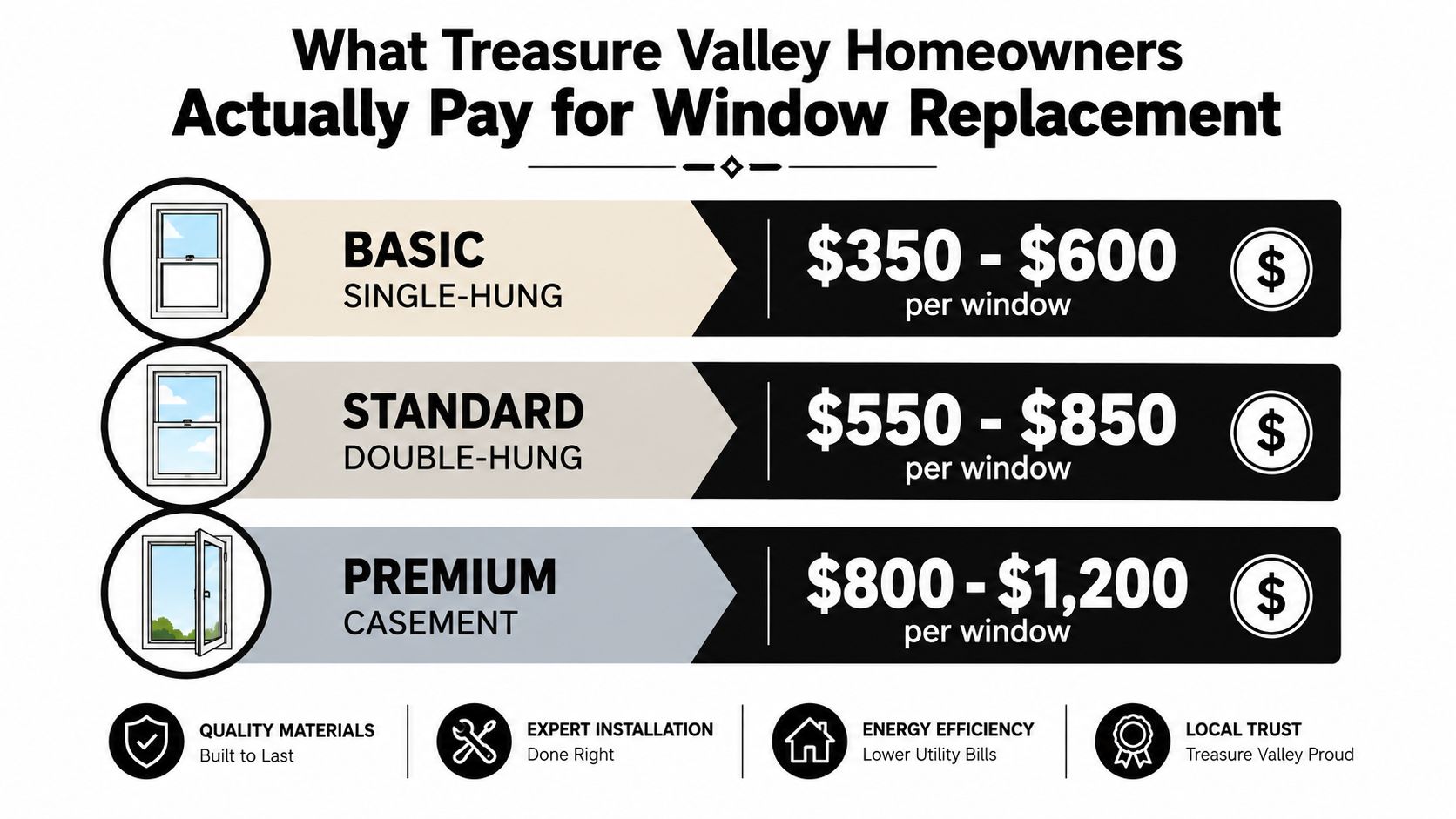
A homeowner in Meridian or Boise often notices the same pattern every winter. One window feels cold to the touch, another has condensation between the panes, and a few older units don't shut as tightly as they used to. That's usually when the budget question comes up, and in Treasure Valley the answer is less about a single sticker price and more about the mix of window types in the house.
The local benchmark is straightforward. One Idaho cost guide puts average installed replacement cost at about $500 per window, and the same source says a 10-window project lands around $9,000 (Idaho pricing benchmark). Another Idaho guide shows a statewide range of $5,196 to $16,007, with a mid-range estimate of about $8,323, which is a good reminder that “average” doesn't mean “final” (Idaho cost range guide).
What drives the local range
Treasure Valley homes don't all use the same openings. A bungalow in Boise may have a mix of standard windows and a few larger or more complex units, while a newer home in Meridian may lean toward a cleaner, more uniform layout. That mix matters because one Idaho guide shows per-window pricing from about $600 to $900 for single-hung windows, $840 to $1,320 for casement or awning windows, and $1,800 to $2,400 for patio sliders (Idaho window cost calculator).
Practical rule: the more styles in one project, the less useful a single “per window” average becomes.
That's why a quote can look reasonable on paper and still climb fast once the house includes a big picture window, a slider, or a few openings that need more involved installation. A broad Idaho cost guide also shows project-level pricing from $400 to $1,540 for just one window depending on scope and style, which makes the spread easier to understand (Idaho window cost calculator).
For homeowners comparing bids, the main takeaway is simple. The final bill usually reflects window type, installation complexity, and the total number of openings, not just the frame itself. If you want a local reference point for how a professional estimate is usually framed, this window replacement cost guide for Idaho homeowners is worth comparing against any quote you receive.
Understanding the Building Blocks of a Replacement Window
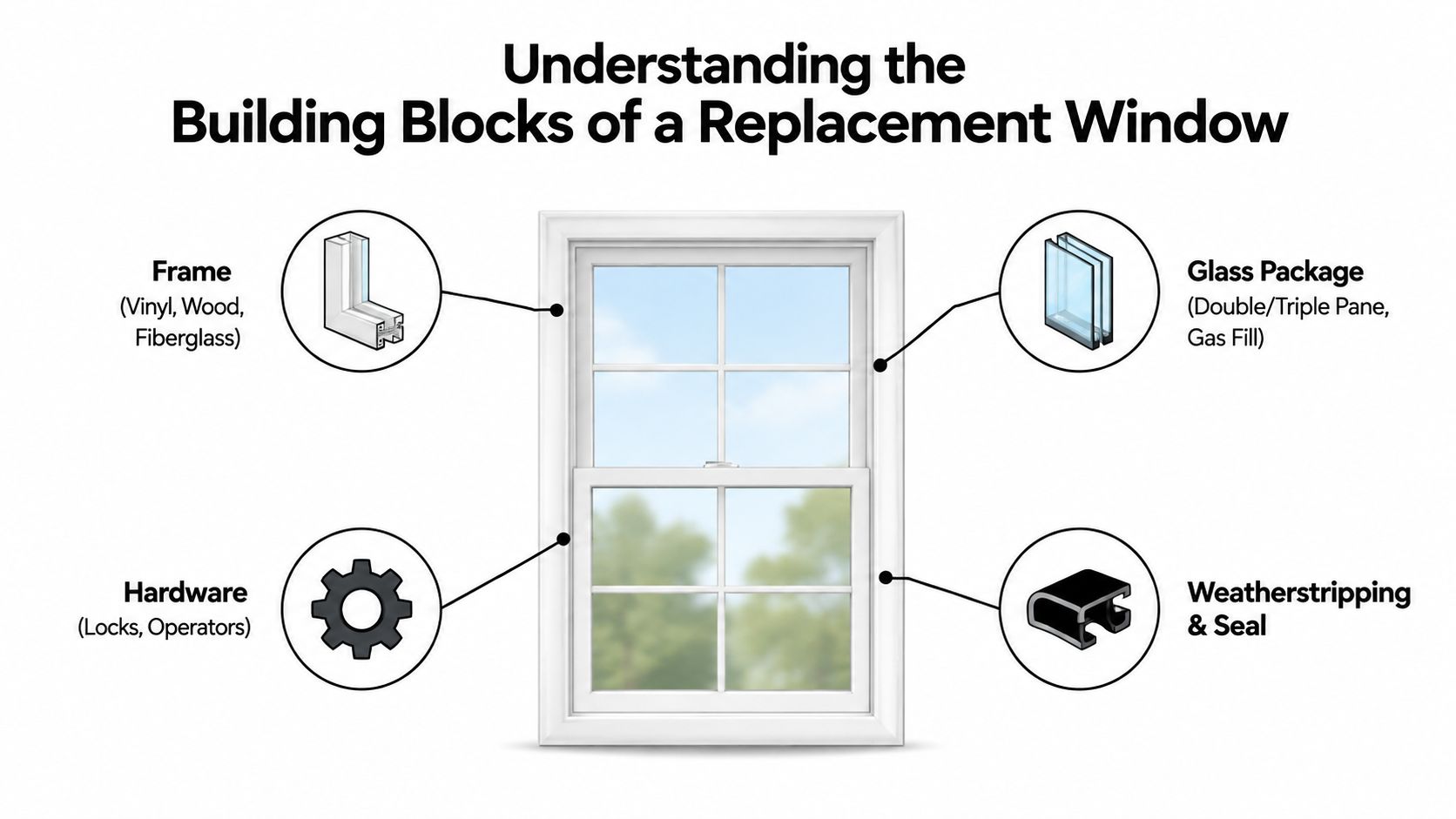
A replacement window isn't one item, it's a bundle of choices that stack together. Frame material, glass package, hardware, and installation method all affect the final number, and each one affects comfort in a different way. That's why two quotes that both say “new windows” can still land in very different price brackets.
Start with the frame
Vinyl is the dependable commuter car of the window world. It keeps maintenance low and usually keeps the price in a manageable range, which is why it shows up so often in Treasure Valley homes. Fiberglass costs more, but it gives you a stronger frame that handles Idaho's temperature swings better, especially when the homeowner expects to stay put for years.
Wood-clad is the luxury option. It looks right on many older Boise homes, especially where curb appeal matters, but it comes with more upkeep and a higher initial cost. That trade-off matters because the frame is only part of the project, and a prettier frame doesn't automatically mean a better buy.
Then look at the glass package
Most homeowners hear “double-pane” and assume that covers the whole story. It doesn't. The glass package can include Low-E coatings, argon gas fill, and sometimes triple-pane construction, and each upgrade changes both the performance and the cost.
Low-E glass helps control heat transfer, argon adds insulation between panes, and triple-pane pushes performance further for homes that feel every winter cold snap. In Treasure Valley, that can matter a lot more than people expect, because the climate punishes weak glazing and sloppy installation at the same time.
A low quote that skips meaningful glass upgrades can be cheap for the wrong reason.
Don't ignore the installation method
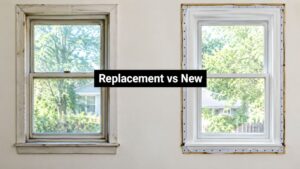
Insert replacement and full-frame tear-out are not the same job. An insert is usually simpler, while a full-frame replacement takes more labor, more finishing, and often more time dealing with trim or rough opening issues. That's why one bid may seem lower at first and then balloon once the installer adds the work needed to do it correctly.
If you're trying to decode line items, read them in this order, frame, glass, hardware, then installation scope. That's usually where the differences hide.
What Really Drives the Cost in a Treasure Valley Project
The bill on a Treasure Valley window project usually breaks down into a few real drivers, not one mysterious total. A simple opening with standard sizing and easy access stays on the lower end, while larger units, specialty shapes, and full-frame tear-outs push the project higher. That's especially true in Boise-area homes where the openings aren't all identical.
Here's the part homeowners miss most often. Independent cost modeling found that hardware and product costs average about 55% of installed cost, while labor, permitting, shipping, and other soft costs make up the rest, with invoices clustering around $600 per window and spanning roughly $200 to $980 per opening (installed-cost modeling). That means the glass and frame matter, but the work around them matters too.
Treasure Valley window replacement cost drivers
| Cost Driver | Typical Add to Project | Notes |
|---|---|---|
| Frame material | Lower to higher depending on vinyl, fiberglass, or wood-clad | Heavier-duty materials usually raise both product and labor cost |
| Window type and size | Modest to significant premium | Picture windows, casements, and sliders cost more than basic openings |
| Glass package | Adds cost as performance rises | Low-E, gas fill, and triple-pane all move the quote upward |
| Labor and installation complexity | Often the biggest swing | Full-frame tear-outs and difficult access take more time |
| Removal and disposal | Small but real project add-on | Old windows have to come out and be hauled away |
| Permitting and inspection | Varies by job | Required paperwork and scheduling add overhead |
The other thing that adds up is finish work. Exterior repair, interior trim adjustments, upgraded caulking, and protecting floors or landscaping all take time. If the house has rotted sill sections, hidden rot, or damaged trim, the quote should reflect that before the crew starts.
Practical rule: the cheapest bid is often the one that assumes the fewest surprises.
Labor matters more than many homeowners expect. A straightforward insert replacement is not the same as a full tear-out that exposes the rough opening and demands careful re-sealing. Bigger windows and specialty shapes also take more manpower and more attention, which is why a quote on a larger Boise home can jump even when the opening count doesn't change much.
If two quotes are far apart, compare the removal method, the trim scope, and whether permitting is included before you compare the bottom line.
Example Budgets for Common Treasure Valley Homes
A lot of homeowners don't need a theory lesson, they need a house that looks like theirs. The easiest way to make sense of the cost to replace windows in a house Treasure Valley is to compare a few realistic layouts side by side. These examples aren't promises, but they do mirror the way projects usually scale.
A smaller Boise-area home with 10 windows
A starter retrofit with 10 quality vinyl double-hung windows often sits near the local Idaho benchmark of about $500 per window installed, or around $9,000 for the project as a whole (local Idaho benchmark). That kind of job suits a homeowner who wants to fix drafts and improve comfort without jumping straight into premium materials.
The total can move up if one or two openings are larger, if the crew needs to remove old frames, or if the home has older trim that needs repair. A typical whole-house guide from Idaho also shows a $3,800 to $11,000 range for 10 windows, with a mid-range average of $6,600 (whole-house Idaho guide). Those two guides together show how quickly the mix of materials and scope can change the final number.
A mid-range 15-window upgrade
A 15-window project in a place like Meridian or Kuna often mixes double-hungs, casements, and a larger picture window. That combination usually costs more than a uniform vinyl swap because the casement and picture units carry a larger material and installation burden.
This is the kind of job where homeowners often move from “replace what failed” to “upgrade the home.” A better glass package, more consistent finishes, and a few performance upgrades can turn a basic retrofit into a more comfortable house, but the quote reflects that step up.
A premium whole-house package with 20 openings
A larger home with 20 windows and a sliding patio door can move into premium territory fast, especially if the project uses fiberglass frames and higher-performance glass. One Idaho pricing guide shows whole-house replacement commonly ranging from $13,800 to $20,700 overall, with $1,800 to $2,400 for patio sliders and $840 to $1,320 for casement or awning windows (Idaho window cost calculator).
Another Idaho guide shows whole-house projects can also run about $10,000 to $25,000 for 15 to 20 windows when homeowners move into better frame materials and higher-performing packages (Treasure Valley pricing guide). That spread is wide, but it's honest. Premium energy-efficient projects cost more because they include more than just glass in a hole.
Energy Savings and Resale ROI in the Treasure Valley Climate
Treasure Valley homeowners don't buy windows for savings alone, but the energy case is real when the house has old or failing units. Idaho sits in an ENERGY STAR-relevant climate zone where whole-window performance matters, and the guidance points toward a U-factor around 0.30 or lower for southern Idaho (ENERGY STAR climate zone guidance). Lower U-factor means less conductive heat loss, which matters most when winter lingers.
What the energy math actually says
The U.S. Department of Energy is commonly cited as saying that replacing old single-pane windows with energy-efficient windows can save 7% to 15% on energy costs, or roughly $71 to $501 annually (energy-savings benchmark). That range is broad because it depends on what the house has now, how leaky the old units are, and how many windows are being replaced.
That's why older single-pane windows and tired double-pane units usually offer the clearest payback. A house that already has decent windows won't see the same upside. In Treasure Valley, the savings case gets stronger when the home has many openings, older glazing, or obvious comfort problems near the glass.
Resale matters, but not equally for every project
Industry reporting based on Cost vs. Value data shows vinyl replacement windows returning about 67% of project cost at resale, with a 10-window vinyl project averaging $21,264 in cost and $14,270 in added resale value (resale value summary). That doesn't mean every homeowner gets the same return, but it does show that windows can support value in a way many purely cosmetic upgrades don't.
Best use of the math: compare annual utility savings with the amount of time you expect to stay in the home.
A practical way to think about it is this. If a home needs major comfort help, the savings and resale value both matter. If the house already performs well, the decision leans more toward comfort, appearance, and long-term maintenance than a fast financial payback.
For a deeper value discussion, this window replacement ROI guide for Boise homeowners lines up well with the local market math.
Financing and Warranty Options Worth Asking About
Most homeowners care about monthly cash flow just as much as the total project cost. Paying cash is the simplest path if you've set the money aside, but many Treasure Valley projects are funded through a home-equity line or a structured payment plan that spreads the expense out. The key is not the method itself, it's whether the terms are clear before the contract gets signed.
What financing usually looks like
Structured payment plans can make a higher-quality package easier to absorb, especially when the job includes multiple windows and a patio door. Some providers, including Synchrony-style financing, offer promotional terms that can help bridge the gap between wanting the upgrade now and paying for it over time. The catch is simple, if you don't know when the promotional window ends, you don't know what the project really costs.
That's why financing should be discussed alongside the bid, not after it. A small monthly number can hide a larger obligation if the deferred-interest or promotional period is misunderstood. If you're comparing quotes, ask for the finance terms in writing, not just the monthly payment.
Warranty coverage matters more than most people think
A lifetime limited warranty that covers both product and labor is materially different from a product-only warranty. If the installation fails, the glass warranty won't solve a drafty frame or a leaking seal at the wall. That difference matters because the way the window is installed is often what determines whether the system holds up.
Read the warranty like a repair bill, not a sales brochure.
Before signing, get these answers in writing:
- Who backs the warranty: manufacturer, installer, or both.
- What transfers at resale: some warranties change hands, some don't.
- What's excluded: trim, paint, misuse, and weather damage are common carve-outs.
- How service calls work: who shows up, and how fast they respond.
If you want a local example of how financing is presented for homeowners, this window financing page for Boise is a useful reference point. It's also a reminder that the lowest quote isn't always the lowest-risk choice when service and coverage are part of the deal.
How to Get an Accurate On-Site Estimate in Treasure Valley
An online calculator can get you in the ballpark, but it can't tell you what's behind your trim or whether the opening needs more than a basic insert. The best way to get a real number is to turn the on-site visit into a comparison tool, not a sales conversation.
Use the estimate like an inspection
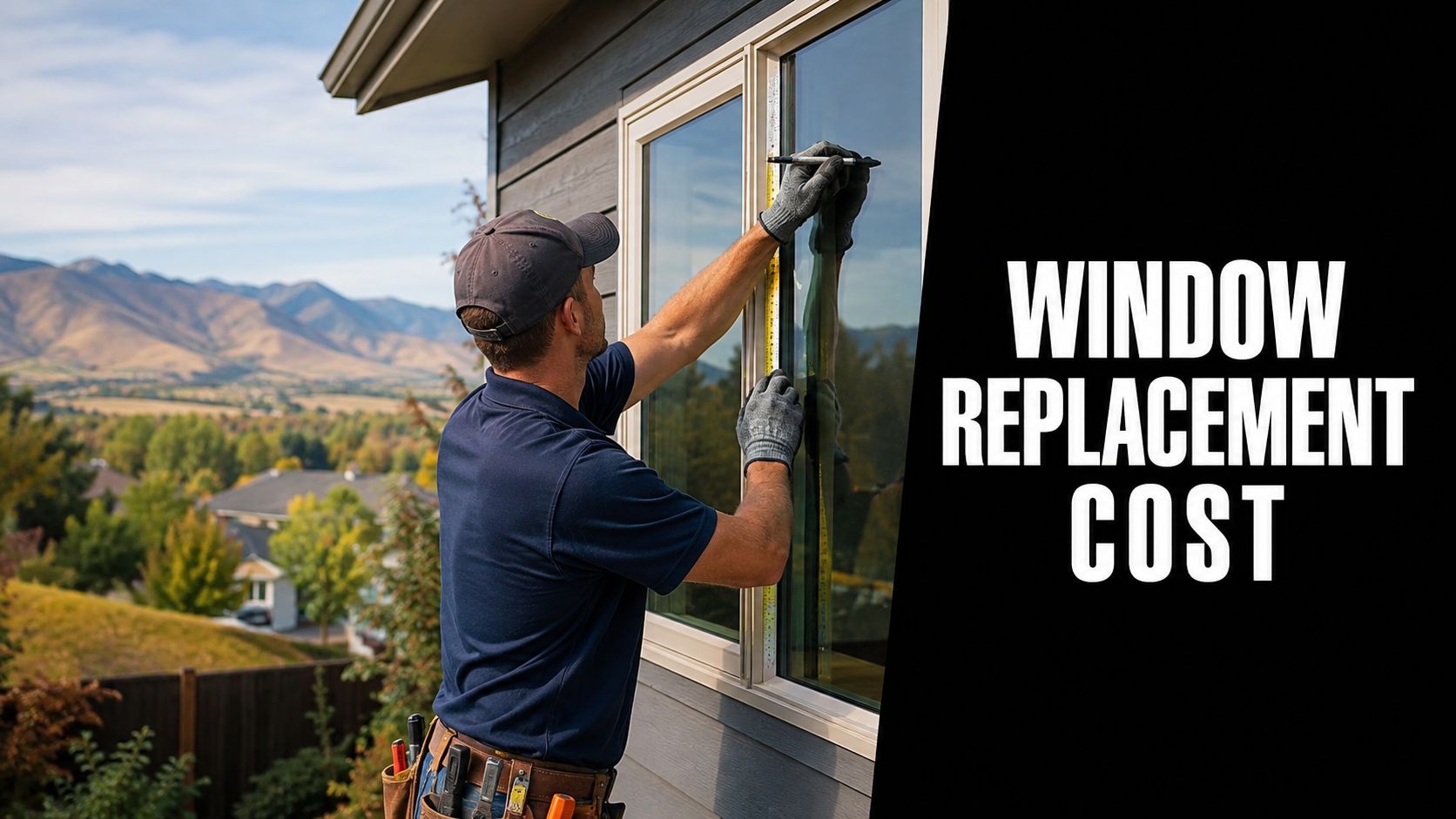
- Confirm every opening is measured individually. A serious installer doesn't quote from a builder's plan alone.
- Ask who is doing the installation. The person selling the job and the crew doing the work aren't always the same.
- Ask how the old windows come out. Insert replacement and full-frame tear-out are not interchangeable.
- Ask whether exterior trim stays or gets replaced. That choice changes labor and finish work.
- Ask how floors and landscaping are protected. Clean jobs usually stay clean from start to finish.
- Ask when debris leaves the property. Same-day haul-away is worth knowing before the crew arrives.
- Ask for a line-item bid. Glass package, frame material, and install scope should be visible, not buried.
- Confirm the permit and inspection plan. If the project needs one, the installer should handle it.
Read the red flags early
A bid that skips the patio door or a larger picture window because it's “priced separately later” is not an apples-to-apples estimate. The same goes for vague talk about “builder-grade” glass without a spec sheet. If the contractor won't explain the difference between window types, the quote usually isn't detailed enough to trust.
Another thing to watch for is pressure. Same-day-sign discounts can be real, but they can also hide a rushed sales process that leaves out important details. A better estimate gives you time to compare the openings one by one and understand what you're really buying.
When the estimate is done right, the homeowner leaves with a written scope, comparable specs, and a clearer sense of where the budget goes. That's the difference between a number and a plan.
Why a Local Treasure Valley Installer Often Wins on Value
A local installer usually has a better read on Treasure Valley homes than a one-size-fits-all sales crew. Older Boise bungalows, Meridian subdivisions, and Eagle homes don't all fail in the same way, and the right crew knows what to look for before the first window comes out. That knowledge saves time, avoids surprises, and keeps the quote closer to the actual job.
One advantage shows up immediately in the estimate. A local company that measures on-site, installs its own work, and services its own warranty can keep the process tighter than a setup that hands pieces of the job to different companies. C & C Windows & Doors is one local option that provides free in-home consultations and custom measurements for Treasure Valley homeowners, which fits the kind of estimate process that makes a real budget possible.
What value looks like in practice
The cheapest bid often trims something important. Sometimes it's the removal method, sometimes it's the warranty, and sometimes it's the installation detail that keeps the window performing well through winter. A slightly higher quote can be the better deal if it includes proper measuring, debris-free installation, and a warranty the same company stands behind.
Local crews also work faster when they already know the housing stock. They've seen the common rough-opening issues, the trim details, and the installation headaches that show up in this region. That familiarity matters because it reduces the chance of change orders after the job starts.
Common questions homeowners ask
How long does installation take?
It depends on the number of openings and whether the job is an insert replacement or a full-frame tear-out. More complex windows take longer.
Do permits matter?
Yes, when the project requires them. A reputable installer should tell you upfront who handles the paperwork.
Can windows be installed in winter?
Yes, in most cases, if the crew plans the work properly and protects the opening during installation. Weather affects scheduling more than the feasibility of the job.
Can a project be phased by budget?
Absolutely. Many homeowners start with the worst windows first, then finish the rest later as budget allows.
The smartest purchase isn't just a window, it's a clean installation, a clear warranty, and a crew that understands Idaho weather. That's what usually protects value long after the invoice is paid.
If you're comparing bids for a Treasure Valley home, C & C Windows & Doors can help you line up the measurements, glass specs, and installation scope before you commit. Visit C & C Windows & Doors to request a free in-home consultation and get a written estimate that fits your house, not a generic average.