30% of qualifying window product costs, up to a $600 annual cap for windows and skylights, is the federal tax credit for replacement windows. It only applies to ENERGY STAR Most Efficient windows in an existing primary residence, so if you're holding a quote for a full replacement project, the first question is simple, not decorative, does the window package qualify?
You're probably staring at a number that feels too high, wondering whether the credit changes the math enough to matter. In most real projects, it won't pay for the whole job, and that's the point, it's a modest credit with strict rules, not a blank check. Used correctly, though, it can still take the edge off the budget and keep you from buying the wrong product for the wrong house.
Table of Contents
- What the Tax Credit for Replacement Windows Actually Means in 2026
- How the 30 Percent Federal Credit Works
- Which Windows Qualify for the Credit
- Who Qualifies and Who Is Excluded
- Documentation and Timing for Filing
- Stacking the Federal Credit with State, Utility, and Manufacturer Savings
- How Local Installers and Tax Pros Lock In Eligibility
- Next Steps and Common Questions
What the Tax Credit for Replacement Windows Actually Means in 2026
A homeowner in Boise gets a replacement quote, looks at the total, and asks the right question, “What does the tax credit do to this bill?” My answer is blunt. It helps, but it doesn't rescue a bad purchase, and it doesn't make every window on the market a bargain.
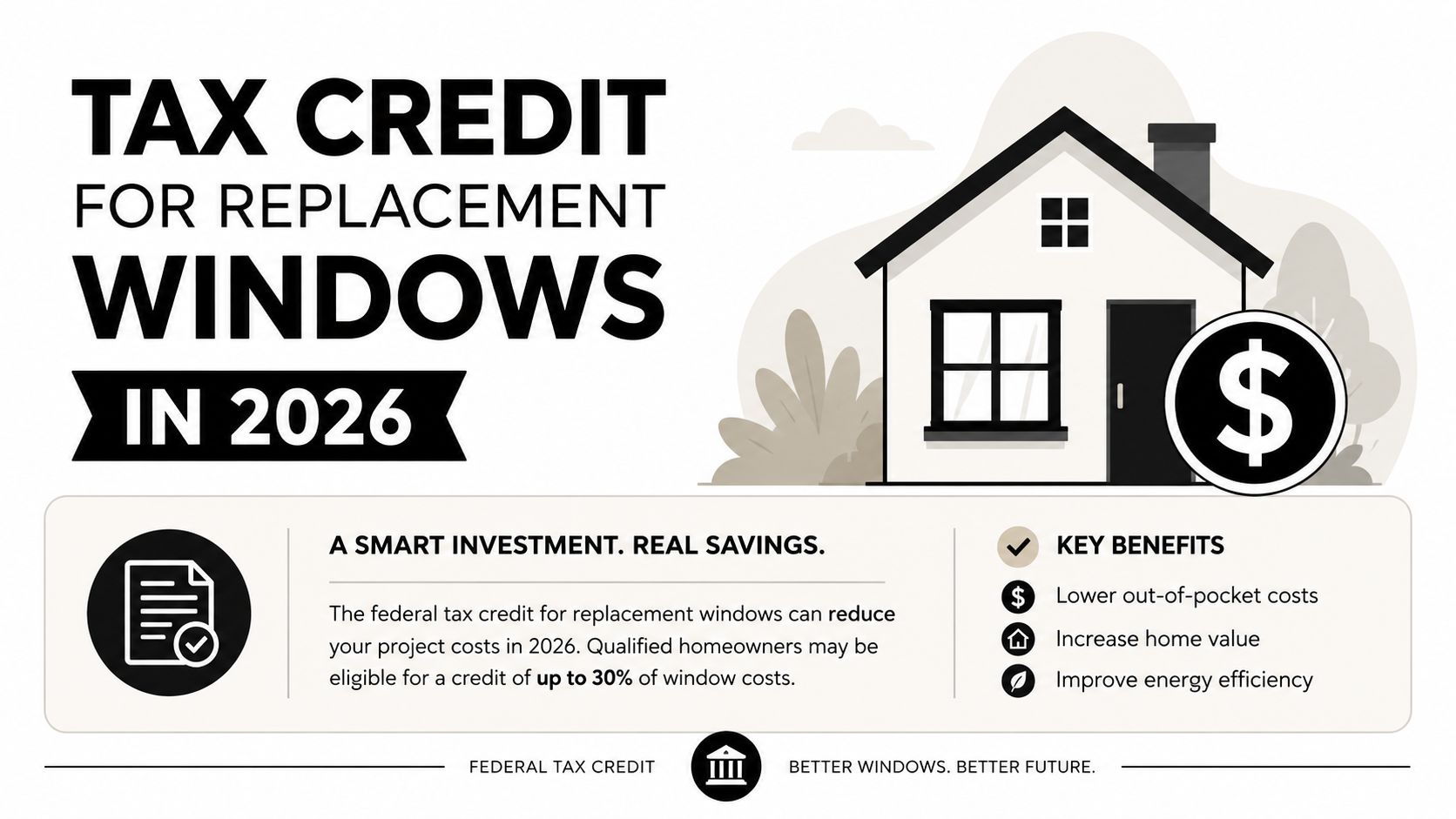
The federal Energy Efficient Home Improvement Credit under Section 25C is now a mainstream policy tool, with taxpayers claiming credits for 694,450 windows-and-skylights returns in 2023 and more than $2.1 billion in total energy-efficient home improvement credits that year, according to IRS return data and program guidance (IRS credit page). That's real uptake, but the incentive stays intentionally small relative to a full replacement project because the benefit is capped.
What that means in plain English
If your window package qualifies, the credit can reduce the pain of the purchase. It won't change the fact that the biggest cost is still the project itself, especially if you're upgrading multiple openings or dealing with custom sizing. The federal program is best treated as a planning signal, it rewards you for choosing efficient products, but it does not replace good product selection.
Practical rule: buy the right window first, then treat the tax credit as a rebate after the fact. If you shop backward, you'll end up optimizing for the credit instead of the house.
The way I tell homeowners to think about it is simple. If the quote is already strong on comfort, durability, and performance, the credit is a welcome bonus. If the quote only works because of the credit, the project is probably too expensive or the product line is too weak for the home.
How the 30 Percent Federal Credit Works
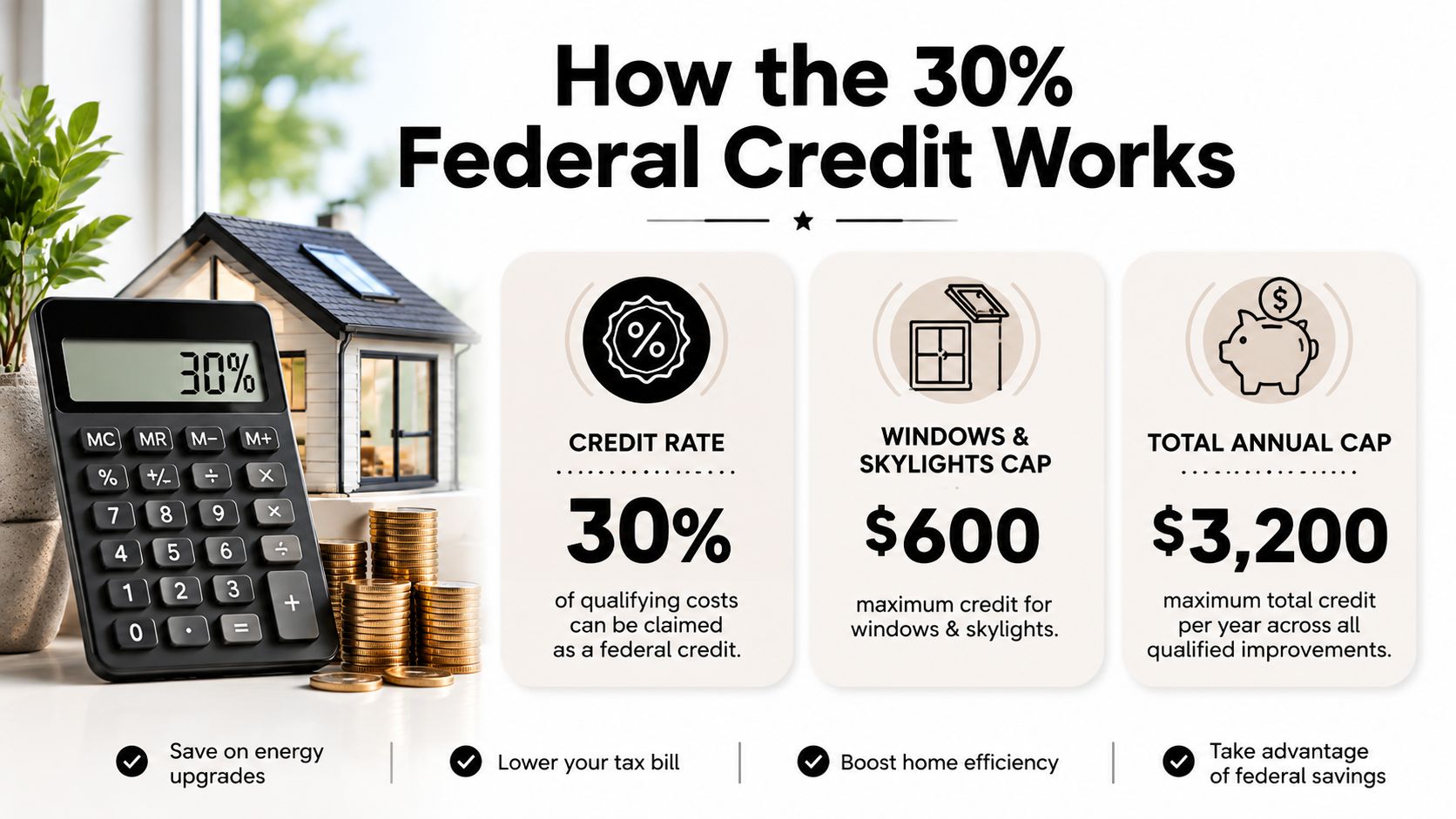
The math is simple, and homeowners should treat it that way. The credit generally equals 30% of qualifying costs, but windows and skylights are capped at $600, and the broader annual household cap for eligible home-efficiency improvements is $3,200 (IRS energy efficient home improvement credit). That structure matters because window projects usually hit the sub-limit first.
The number you should expect
If your qualifying window materials cost enough to reach the cap, the window credit tops out at $600 for the year. If your qualifying costs are lower, the credit is 30% of the product cost. The credit is based on product cost only, not labor, so installation charges do not increase the credit amount (ENERGY STAR windows and skylights guidance).
Here's the cleanest way to read it:
- Qualifying product cost is the base. The credit is calculated from the window package itself.
- Labor doesn't count. A higher installation bill does not raise the tax benefit.
- The cap matters. Larger projects still run into the ceiling fast.
If a homeowner buys qualifying windows with enough material cost to reach the cap, the federal benefit is still only $600 for windows and skylights. That is useful, but it is not project-changing money on its own. It works best when the windows already fit the home and the credit just trims the total.
Don't confuse the window cap with the household cap
The annual household limit for all eligible improvements is broader than the window sub-limit, but it does not make the window credit bigger. It only means a family may have room to claim other qualifying upgrades in the same tax year under the larger program structure, as noted on the IRS credit page. For replacement windows, the number to remember is still $600.
The cap is a ceiling, not a target. If the paperwork or product specs are weak, you do not get the credit just because you spent the money.
Which Windows Qualify for the Credit
A contractor can talk up a window all day, but the credit starts with the product label and the paperwork behind it. For exterior windows and skylights, the federal credit is tied to ENERGY STAR Most Efficient criteria, or the IRS-required performance standard, and the homeowner needs a qualifying product package, not a vague “energy-efficient” claim.
Read the quote like a tax preparer would
A good installer should tell you whether a specific window SKU qualifies before you sign. If they can't, treat that as a warning sign. The credit is not based on the brand name alone, it depends on whether the exact product line meets the federal standard and whether the manufacturer can document it.
The product-versus-labor rule also matters here. The credit is based on product cost only, so homeowners should separate the qualifying window material from installation on the invoice whenever possible. That detail affects the after-tax math, especially on jobs where labor makes up a large share of the total.
What to compare on a quote
A homeowner does not need to read every line of a spec sheet, but a few questions are worth asking before the contract is signed:
- Is this exact window line ENERGY STAR Most Efficient? If not, stop there.
- Is the quote showing the product cost separately from labor? If it is not, ask for a clean breakdown.
- Can the installer provide the manufacturer certification? Without it, filing gets messy.
Those questions matter more than marketing language. Two windows can look similar on paper and still lead to very different credit results if only one meets the qualifying standard. The better comparison is simple: which one qualifies, and can you prove it?
Who Qualifies and Who Is Excluded
The taxpayer rule is just as narrow as the product rule. The credit applies to an existing home that serves as the taxpayer's principal residence in the United States, and the IRS says it does not apply to new construction (IRS exterior doors, windows, skylights, and insulation guidance).

The short version
If you own the home and live there as your main residence, you are in the right lane. Renters do not qualify. Second homes do not qualify. Investment rentals do not qualify unless you live there as your principal residence.
Homeowners with vacation properties or rental units are the group that misunderstands this rule most often. They see a house they own and assume the credit follows the deed. It does not. The federal rule is narrower, and that narrow rule controls the claim.
The principal-residence test keeps the credit tied to owner-occupied housing. The existing-home requirement keeps it out of new construction. Those two limits do the gatekeeping, and they rule out more claims than most sales conversations admit.
Who should slow down and ask a tax pro
If the property has mixed use, a recent title change, or a messy occupancy history, do not guess. If you are buying a home and scheduling window work before closing, do not assume the tax benefit will follow automatically. If the home is used as a vacation place part of the time, that is not the same thing as a principal residence, and homeowners should have it reviewed before they rely on the credit.
This is the point where a local installer's paperwork matters. A good crew should be able to show how the job file matches the home, and if you want a clean early check on the property side, a home energy audit in Boise can help you sort out whether the project belongs on the right house before you sign the contract.
The smartest move is to treat eligibility like a yes-or-no question. If the answer is not obvious, get the file checked before you commit to the contract.
Documentation and Timing for Filing
Paperwork is where good projects go sideways. The credit itself is straightforward, but the file has to prove the right product, the right home, and the right timing. If those three pieces do not line up, the return can fall apart when it gets prepared.
The best records connect the window SKU to the invoice, and the invoice to the house. Keep the contractor proposal, the final invoice, the manufacturer certification paperwork, and any product labels or spec sheets that show the window qualifies. If the installer bundles product and labor into one line, ask for a cleaner breakdown before you pay.
What to keep and why
A tax preparer needs evidence, not memory. The paper trail should show:
- The product details. This proves the window is the one you installed.
- The cost allocation. This separates the qualifying product amount from labor.
- The installation dates. Timing matters because the current program covers qualifying products purchased and installed through the end of 2032, according to Constellation's summary of federal home tax credits.
If the project crosses tax years, do not guess. The year you can claim depends on when the qualifying improvement is completed and what your records show. Keep the documents together from the start, because reconstructing a paper trail later is a headache nobody needs.
Installer habit that saves time: ask for the manufacturer certification at the same time you approve the final order. Waiting until tax season is how homeowners discover a missing document after everyone has moved on.
For local homeowners who want to pressure-test a project before signing, a pre-install energy review can be smart. A useful starting point is this home energy audit resource in Boise, especially if you are trying to decide which openings deserve the upgrade first.
Stacking the Federal Credit with State, Utility, and Manufacturer Savings
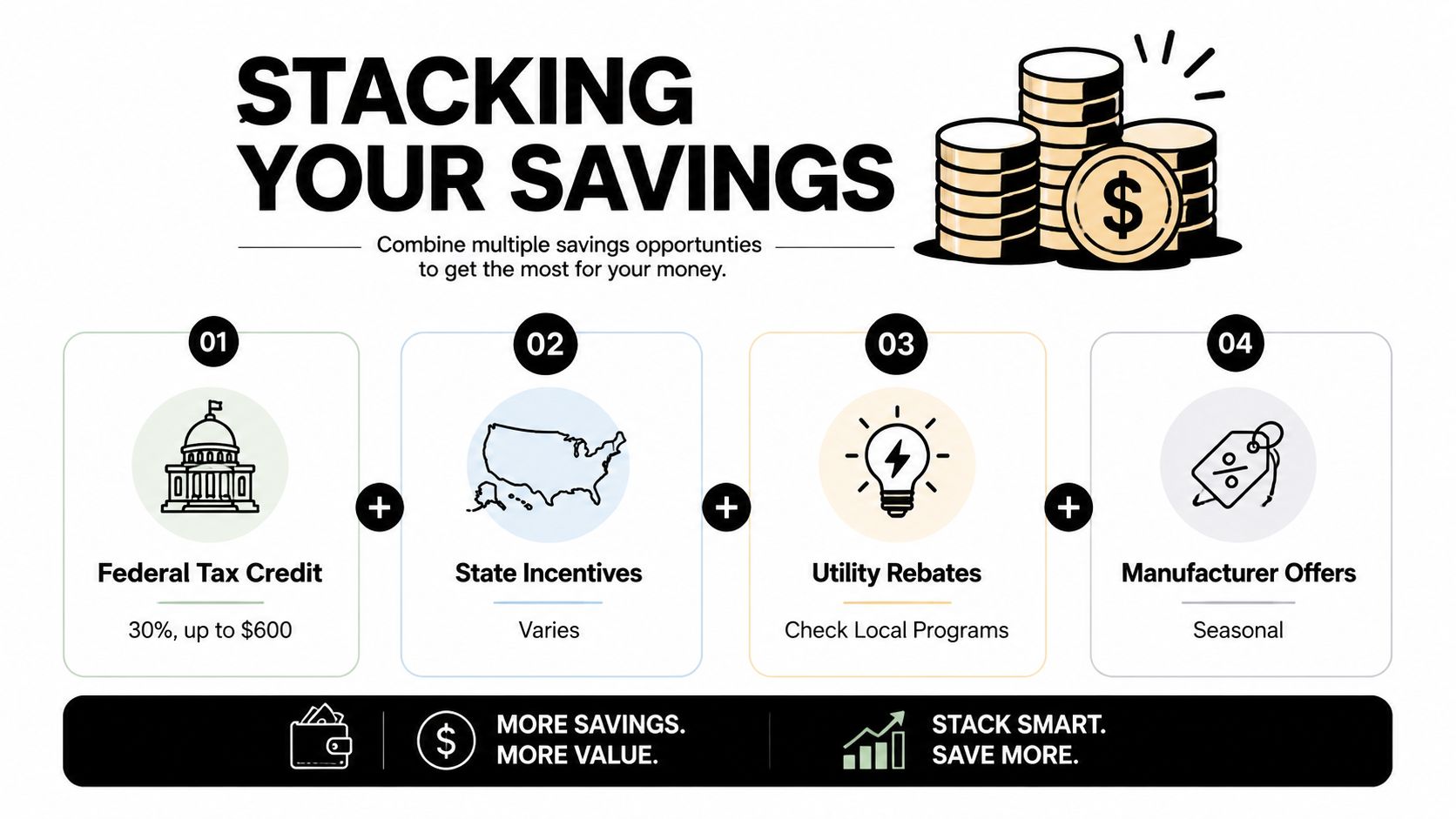
The federal credit is only one lever. Smart homeowners stack it with other discounts where they exist, and that's where the planning happens. The mistake is thinking every program has equal weight. They don't.
What usually moves the price and what doesn't
The federal credit has a hard cap, so it's predictable. State incentives vary by place and can disappear, change, or come with narrow conditions. Utility rebates depend on local program rules and whether the product is verified the way the utility wants. Manufacturer offers are usually seasonal and promotional, which means they're helpful when they line up, but you shouldn't base the whole project on them.
A homeowner should ask for all four layers of savings in writing:
- Federal tax credit. This is the one with the clearest rule set.
- State incentives. Availability depends on location and program design.
- Utility rebates. These often require specific product verification.
- Manufacturer offers. These can change without much notice.
The key point is sequencing. A rebate often gets applied differently than a tax credit, and financing can change how the savings feel month to month. If you're comparing options, the best quote is the one that shows the net effect of every available incentive, not just the prettiest sticker price.
The federal rules themselves don't make other savings impossible. They just set the floor and the ceiling for what you can claim federally. If your installer knows the local incentive options, that's useful. If they don't, you need a tax preparer or rebate specialist in the loop before you rely on any extra savings. For Idaho homeowners, a good second step is this Idaho window efficiency guide.
How Local Installers and Tax Pros Lock In Eligibility
I'm opinionated about this because I've seen the mistakes. Homeowners lose credits because they sign a contract with vague product descriptions, they assume every “efficient” window qualifies, or they wait until tax time to discover the certification paper never showed up. That's preventable.
A factory-trained installer should be able to pre-screen the SKU before the order goes in. They should know whether the exact product line qualifies, how the invoice should be structured, and what paperwork the tax preparer will ask for. If they can't answer those questions clearly, keep shopping.
What to ask before you sign
Use these questions, and don't accept hand-waving:
- Which exact window line is being quoted? Generic labels are not enough.
- Will the invoice separate product from labor? That makes the qualifying amount easier to document.
- Do you provide the manufacturer certification statement? You need it for the file.
- Have you handled tax-credit paperwork for principal residences before? Experience matters.
The tax professional's job is different. They verify the claim on the return, confirm the home qualifies, and make sure the timing lines up with the tax year. The installer's job is to make sure the product and paperwork are clean before the windows ever arrive.
If you want a checklist for choosing the right company, this Boise window-company guide is a useful place to start. I'd still recommend you verify the tax-credit details with your preparer before you sign anything, because the wrong assumption costs more than the credit ever returns.
Next Steps and Common Questions
The next move is simple. Get the quote, identify the exact qualifying product, confirm the home is your principal residence, and make sure the invoice will show the product cost separately from labor. If any one of those pieces is fuzzy, stop and fix it before the contract is signed.
A few edge cases come up all the time. For a multi-year project, the timing has to match the qualifying purchase and installation window, so don't assume you can split the benefit across random calendar dates. For a second home, the answer is generally no under the principal-residence rule. If the manufacturer certification statement is missing, don't file blindly, because that paper is part of the proof file and you'll want it before anyone finalizes the return.
The homeowner who wins this credit is usually the one who documents first and buys second. That's the habit that keeps the tax benefit clean and keeps the project from turning into a tax-season scramble.
C & C Windows & Doors helps Treasure Valley homeowners choose qualifying replacement windows, document the right paperwork, and avoid the mistakes that kill a clean tax-credit claim. If you're planning a project and want a straight answer on fit, performance, and filing readiness, visit C & C Windows & Doors and start with a consultation that's built around your home, not a generic sales pitch.