
Are Your Windows Costing You More Than You Think?
Boise homeowners usually notice window problems in small ways first. A room feels cooler in the morning, the furnace runs longer than it should, or a pane looks a little hazy when the temperature swings hard between day and night. In the Treasure Valley, that's not just a comfort issue, it can be a clue that your windows are no longer doing their job.
Windows are one of the few parts of a home that affect comfort, security, noise, and monthly energy use at the same time. When they start failing, the symptoms can stay hidden long enough that people normalize them. The good news is that the most common warning signs are easy to spot if you know what to test for.
Table of Contents
- 1. Visible Condensation Between Window Panes
- 2. Drafts and Air Leakage Around Frames
- 3. Difficult or Stuck Windows That Won't Open or Close Smoothly
- 4. Visible Rot, Decay, or Water Damage on Window Frames and Sills
- 5. Increased Heating and Cooling Bills Without Explanation
- 6. Single-Pane Windows or Extremely Outdated Window Technology
- 7. Audible Noise Intrusion and Reduced Sound Insulation
- Comparison of 7 Signs You Need New Windows
- Upgrade Your View, Comfort, and Efficiency
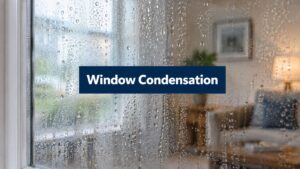
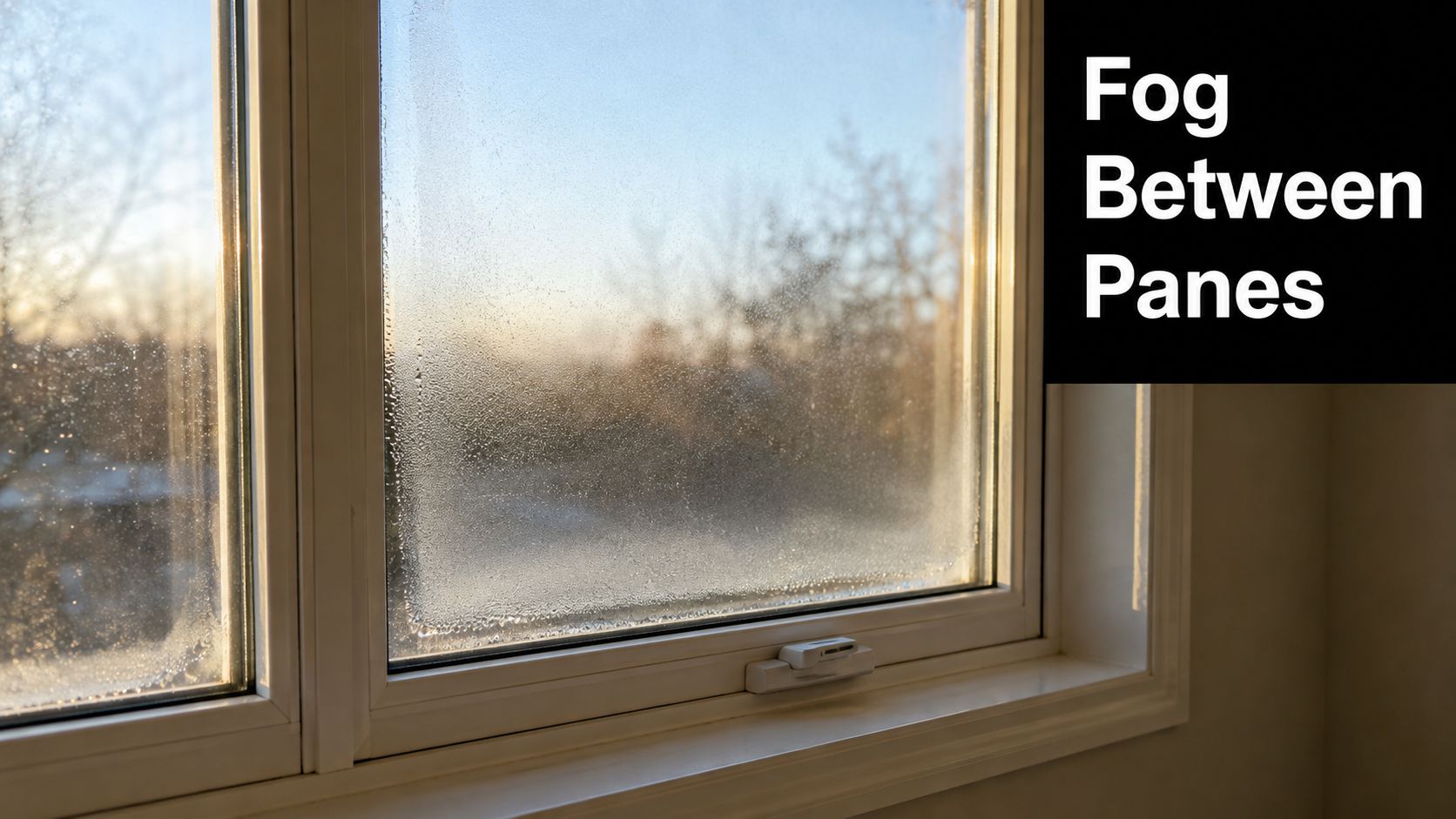
1. Visible Condensation Between Window Panes
Fog trapped between the panes is one of the clearest signs you need new windows. Surface moisture on the room side can happen on a cold morning, but moisture sealed inside the glass assembly points to insulated glass unit seal failure, which means the window has lost part of the performance it was built to provide. That's the difference between a temporary weather effect and a hardware problem that won't clean off.
In Boise, this often shows up during winter temperature swings or in spring and fall, when day and night conditions change fast. A homeowner may notice a south-facing window looking cloudy at sunrise, then clearing only to fog again later. If the same pattern keeps returning on older double-hung windows, replacement usually makes more sense than trying to chase the seal.
Practical rule: If the moisture is trapped inside the glass, treat it as a replacement-level problem, not a cleaning issue.
A quick home test helps separate normal condensation from seal failure. Look at the glass from an angle in bright daylight, especially after a cold night. If you can see haze, droplets, or mineral-looking residue between panes, that's a strong clue the insulating barrier has failed.
The longer you wait, the more you live with reduced visibility and weaker thermal performance. If you want a local assessment of whether the seal has failed, C&C Windows & Doors' Boise window seal failure page is a useful place to start, especially if you're comparing repair versus replacement on older windows.
2. Drafts and Air Leakage Around Frames
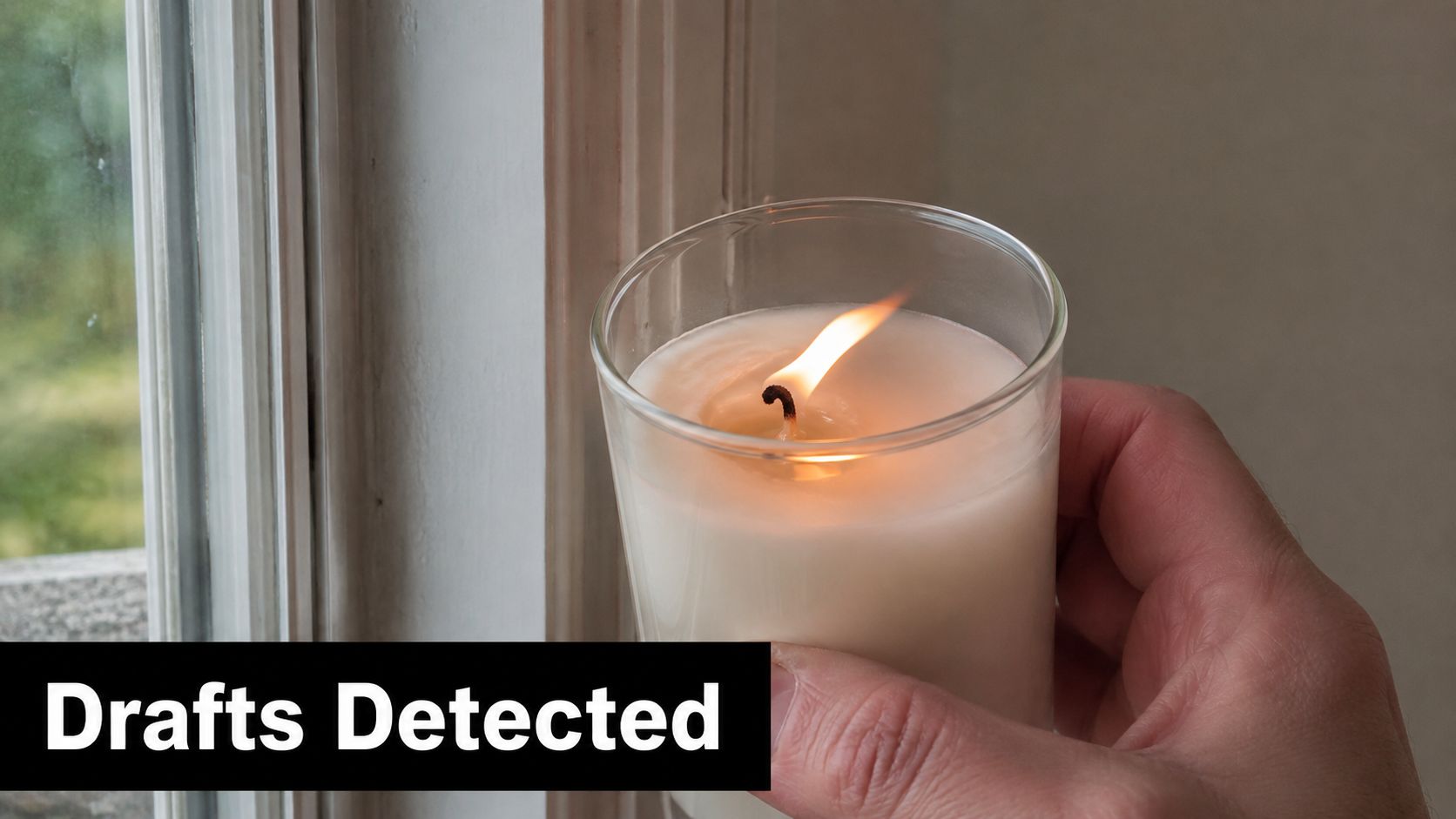
A closed window should feel still. If you feel cold air moving around the frame, the window is leaking air through worn weatherstripping, frame gaps, or a seal that no longer fits tightly. In a climate like Boise's, where winter cold and summer heat both push on the home shell, that kind of leakage makes the HVAC system work harder than it should.
The simplest field test is a candle or lighter test, done carefully and away from curtains or trim. Hold it near the frame and watch the flame. If it flickers or bends, air is moving through the opening. That doesn't just mean a little discomfort, it suggests the window is no longer acting like an effective barrier.
For Treasure Valley homeowners, drafts often show up first on north-facing or older sliding windows. An Eagle family may feel the chill most on winter mornings, while a Meridian homeowner may just notice the house never quite settles at one temperature. Those are the moments when a quick patch stops being enough.
Practical rule: Temporary weatherstripping can buy time, but repeated drafts usually mean the frame or sash has reached the point where replacement is the better fix.
A few signs point toward a more serious air-leak problem:
- Flame movement at the frame: The candle test shows leakage at one or more edges.
- Temperature mismatch near the glass: The room feels noticeably cooler or warmer beside the window.
- Recurring discomfort: You keep adjusting the thermostat, but the same rooms stay drafty.
If you want to stop the guesswork, a focused inspection like C&C Windows & Doors' guide to stopping drafts around windows can help you separate a minor seal issue from a window that's past its service life. In many Boise homes, that's the moment replacement starts making more financial sense than another round of patches.
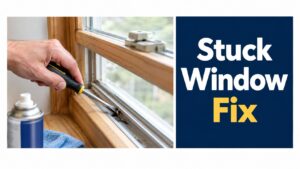
3. Difficult or Stuck Windows That Won't Open or Close Smoothly
A window that fights you every time you use it is sending a clear message. Sticking, binding, or refusing to latch usually means the sash, frame, or operating hardware has worn enough that normal movement isn't reliable anymore. In Idaho's dry climate, wood can warp with seasonal moisture changes, and older mechanisms wear down until opening the window takes real force.
That matters for more than convenience. A bedroom window that won't open properly can become a safety issue, especially if it's supposed to serve as an emergency escape route. A window that won't close all the way also weakens security and leaves a gap for drafts.
The real-world test is simple. Open and close every window in the house, not just the ones you use daily. Pay attention to windows that stick at the same point every time, or that need a second hand and a hard pull to move. Those problems usually get worse, not better, with age.
A stuck window often points to one of a few conditions:
- Warped frame: The sash no longer sits squarely in the opening.
- Worn balances or hardware: The operating parts can't support smooth movement.
- Paint buildup or swelling: The window has been sealed or distorted over time.
If you've tried to coax the window back into service and it still catches, C&C Windows & Doors' page on hard-to-open windows is a practical next step. Replacement tends to be the right move when multiple windows are sticking, or when the same window keeps failing after small repairs.
Windows should open, close, and lock without a struggle. If they don't, the problem is usually structural or mechanical, not cosmetic.
4. Visible Rot, Decay, or Water Damage on Window Frames and Sills
Soft wood is never just a cosmetic issue. If a frame feels spongy, shows peeling paint, or has dark discoloration at the sill, water has already gotten where it shouldn't. In homes around Boise, Caldwell, Kuna, and Star, that often happens where snow melt, spring rain, or poorly managed runoff repeatedly hits the same window.
A simple finger press can tell you a lot. Healthy wood should resist pressure. If your fingernail leaves a dent or the surface crumbles, the rot has started, and repair patches are only a short-term delay. Once moisture reaches the frame, it can move into surrounding wall materials and insulation.
That's why this sign deserves urgency. Water damage around windows can hide behind trim long before it becomes obvious indoors. A homeowner may first notice a stain on interior paint, a soft sill, or a musty smell near the corner of a room. By then, the assembly has already lost integrity.
A careful inspection should focus on three places:
- Exterior sill edges: Look for soft spots, swelling, or cracked paint.
- Interior trim joints: Check for stains, separation, or bubbling finish.
- Nearby drywall: Watch for discoloration, especially after rain or snow melt.
If you can see rot, replacement is usually the safer choice because the damage is rarely limited to the visible spot. The issue isn't just the window, it's the water path the window allowed in. In that situation, a local installer who can assess both the opening and the surrounding structure is worth calling quickly.
5. Increased Heating and Cooling Bills Without Explanation
A utility bill that keeps creeping up without a change in your habits deserves attention. Windows can be a major part of that problem because the U.S. Department of Energy has been widely cited as estimating that windows account for 25%–30% of a home's heating and cooling loss. That means a failing window can become a persistent operating-cost problem, especially in a place like Boise where the seasons swing hard.
One of the strongest replacement triggers is financial, not visual. If the house feels mostly fine but your bills keep rising, compare the same months across multiple years and look for a pattern. A warmer-than-usual summer or a colder winter can explain some change, but a steady climb often points to aging windows losing performance.
The 2025 This Old House survey reinforces that replacement is often driven by efficiency concerns, with energy-efficiency cost savings at 42.9% as the top reason homeowners replaced windows, ahead of damaged frames or sills at 27.9% and homes being too hot or too cold at 12.3%. The same survey reported an average replacement cost of $554 per window, which explains why many people wait until the performance loss becomes hard to ignore. This Old House's window replacement survey makes the economics clear.
A few practical steps help you confirm the pattern:
- Compare like with like: Review 2 to 3 years of bills for the same months.
- Track symptom overlap: Note whether the highest bills line up with drafts or hot and cold rooms.
- Ask for an audit: A home energy audit can show whether windows are the main loss point.
If you're considering new windows in the Treasure Valley, modern ENERGY STAR certified products can reduce energy bills by an average of 12% nationwide according to guidance summarized by the U.S. Department of Energy in Milgard's replacement guide. Milgard's overview of replacement signs and ENERGY STAR savings is a useful reference when you're weighing the cost against comfort and monthly savings.
6. Single-Pane Windows or Extremely Outdated Window Technology
Sometimes the sign isn't failure, it's age. A window can still open and close while performing far below modern standards. Single-pane windows are the clearest example, and older double-pane units from decades ago often lack the coatings, gas fills, and frame design that help today's windows perform in Boise's temperature extremes.
A lot of homeowners get stuck here. The window technically works, so it gets ignored. But “still works” doesn't mean “efficient,” and in older homes that gap can be huge in daily comfort. Rooms near old glass tend to feel colder in winter and hotter in summer because the assembly doesn't resist transfer well.
Age also matters on its own. Industry guidance commonly puts vinyl and aluminum window life at about 15 to 25 years, and windows over 20 years old with multiple symptoms are usually due for replacement. That milestone comes up often in Treasure Valley homes that were built before modern efficiency standards became normal.
Practical rule: If your windows are original to a pre-2000 home, treat them as candidates for replacement even if they're not visibly broken.
Older technology often shows up in these ways:
- Single-pane construction: Minimal insulation value and weak comfort performance.
- Outdated double-pane units: Functional, but still behind modern efficiency standards.
- Weather-exposed sides of the house: South, west, and north elevations usually show the problem first.
You don't need to replace every window at once if budget is tight. Many Boise homeowners start with the most exposed sides first, then move through the rest of the house over time. For homes that need a higher-performance solution, triple-pane options and climate-specific packages can make sense, especially when comfort, quiet, and winter warmth matter as much as appearance.
7. Audible Noise Intrusion and Reduced Sound Insulation
If the house has started to sound louder than it used to, the windows may be part of the reason. Traffic noise, neighbor activity, construction, and general street sound move more easily through older or poorly sealed windows, especially in homes near busy corridors in Boise, Eagle, Meridian, and along major routes like I-84. That kind of noise intrusion affects sleep, focus, and the way the whole home feels.
Modern replacement windows reduce sound transmission through better sealing, thicker glass options, laminated glass, and multi-pane designs. That doesn't mean every outside sound disappears, but it does mean the home can feel noticeably calmer. For families who work from home or keep irregular hours, that change can be immediate and obvious.
A quick way to judge whether noise is a window problem is to stand in a quiet room and listen at different times of day. If traffic rush hour, construction hours, or neighborhood activity seems strongest at the window line, that's a sign the assembly isn't insulating acoustically the way it should. The problem is often worse on street-facing rooms and sleeping areas.
If noise is your biggest complaint, prioritize the noisiest exposures first. You can also ask about rating differences between window packages, including options that emphasize sound reduction. In homes where comfort and quiet matter as much as energy use, that becomes a meaningful part of the replacement decision.
A quieter room isn't a luxury when outside noise affects sleep. It's a legitimate home-performance upgrade.
Comparison of 7 Signs You Need New Windows
| Warning Sign | 🔄 Implementation Complexity | ⚡ Resource Requirements | ⭐📊 Expected Outcomes | 💡 Ideal Use Cases | ⭐ Key Advantages |
|---|---|---|---|---|---|
| Visible Condensation Between Window Panes | Moderate, replace sealed unit or full sash; professional installation recommended | New insulated glass units, Argon fill, labor; few hours per window | Restores clarity and thermal barrier; eliminates interior fogging | Persistent, non-wipeable fog between panes; older sealed units | Definitive long‑term fix; improved efficiency and visibility |
| Drafts and Air Leakage Around Frames | Low–Moderate, can be temporarily sealed; best resolved by replacing frames/sashes | Weatherstripping/caulk for short term; full replacement for permanent fix; energy audit | Eliminates drafts; lowers HVAC load; measurable bill reduction | Detectable drafts with candle test; rising heating/cooling discomfort | Quick comfort gains; clear energy‑saving ROI |
| Difficult or Stuck Windows That Won't Open or Close Smoothly | Low (repairable) to Moderate (replacement), depends on cause (paint, swelling, balances) | Lubricants, hardware/balances or new window units; technician time | Smooth operation, restored safety/egress, reduced maintenance | Windows that require force, stick seasonally, or prevent escape routes | Improves safety and daily usability; reduces future damage |
| Visible Rot, Decay, or Water Damage on Frames and Sills | High, urgent replacement plus possible wall/structural repairs | New windows, flashing, trim, possible mold remediation and carpentry | Stops structural spread; restores integrity and indoor air quality | Soft wood, crumbling sills, mold, water stains near windows | Prevents costly structural damage; health protection (mold prevention) |
| Increased Heating and Cooling Bills Without Explanation | Moderate, diagnostic (energy audit) then phased replacement as indicated | Energy audit, ENERGY STAR windows (Low‑E, Argon), possible HVAC/insulation checks | Quantifiable energy savings (typically 15–30%); improved comfort | Year‑over‑year bill increases with older windows; inefficient performance | Clear, documentable ROI; long‑term utility cost reduction |
| Single‑Pane Windows or Extremely Outdated Window Technology | Moderate–High, large‑scale replacement often needed; can be phased | New double/triple‑pane units, Low‑E coatings, gas fills; higher upfront cost | Major efficiency gains (up to ~40–50%); noise reduction; higher home value | Homes with original single‑pane or pre‑2000 windows | Biggest efficiency/comfort improvement; future‑proofs home |
| Audible Noise Intrusion and Reduced Sound Insulation | Moderate, upgrade to laminated or thicker insulated glass and sealing | Laminated/triple‑pane glass, optimized frames and seals; higher material cost | Significant noise reduction (typically 30–50%); better sleep and comfort | Homes near highways, airports, busy streets or construction | Immediate quality‑of‑life improvement; enhanced resale appeal |
Upgrade Your View, Comfort, and Efficiency
Recognizing the signs of failing windows is the first step toward a more comfortable, secure, and energy-efficient home. If you're seeing condensation between panes, persistent drafts, stuck operation, rot, higher utility bills, outdated glass, or too much outside noise, those problems usually get harder to ignore, not easier to fix on their own. In Boise and across the Treasure Valley, the dry air and wide seasonal swings make weak windows show their age faster.
A professional evaluation helps you avoid guessing. Sometimes a repair can solve an isolated issue, especially if one unit is the only problem. When multiple windows show the same symptoms, or when age and performance issues stack up, replacement is usually the smarter long-term move, especially with modern ENERGY STAR 7.0-aligned products designed for better comfort and lower energy loss.
That decision also affects daily life in ways people notice right away. Rooms feel more even, cold spots fade, and the house is quieter. For homeowners comparing options, that's often the difference between living with a problem and solving it.
If you're ready to find out whether your windows are still doing their job, reach out for a local assessment before the next season puts more stress on them. A clear inspection now can save you from bigger repairs later and help you choose the right window package for your home, climate, and budget.
C & C Windows & Doors helps Treasure Valley homeowners evaluate drafty, foggy, hard-to-open, or damaged windows and decide whether repair or replacement makes more sense. Visit C & C Windows & Doors to request a free in-home consultation and get a practical plan for improving comfort, efficiency, and noise control in your Boise-area home.