

Heating and cooling account for a large share of home energy use, which is why the projects that tighten the house first usually produce the clearest savings. In Boise, that matters because homes have to handle cold winter mornings, hot summer afternoons, and plenty of dry air movement that exposes weak windows, doors, attic insulation, and duct leakage.
Many homes built before 2000 across Boise, Meridian, Eagle, Nampa, and Caldwell still lose conditioned air through drafty openings, underinsulated attics, and aging equipment that runs longer than it should. I see the same pattern across the Treasure Valley. Homeowners spend money on the wrong upgrade first, then wonder why the utility bill barely moves.
The better approach is to rank improvements by payback, house condition, and climate fit. That usually means looking at the building envelope before jumping to major mechanical replacements, then comparing each project against local rebates and tax credits. If windows are part of that decision, this Boise-area guide to energy-efficient window replacement is a useful starting point.
This article breaks the options down in the order that tends to make the most financial sense for Treasure Valley homeowners. You'll see where the savings are strongest, where the payback is slower, and where a local installer such as C&C Windows & Doors can help you get the work done correctly without wasting money on upgrades your house does not need first.
Table of Contents
- 1. Energy-Efficient Window Replacement with Low-E Coating
- 2. Attic Insulation Upgrade
- 3. Patio Door Replacement with Thermal-Efficient Frames
- 4. Air Sealing and Weatherstripping
- 5. Smart Thermostat Installation
- 6. Water Heater Upgrade to Energy-Efficient Model
- 7. Roof and Attic Ventilation Optimization
- 8. HVAC System Upgrade to High-Efficiency Model
- 8 Home Energy Upgrades: Cost-Savings Comparison
- Your Next Step to a More Efficient Treasure Valley Home
1. Energy-Efficient Window Replacement with Low-E Coating
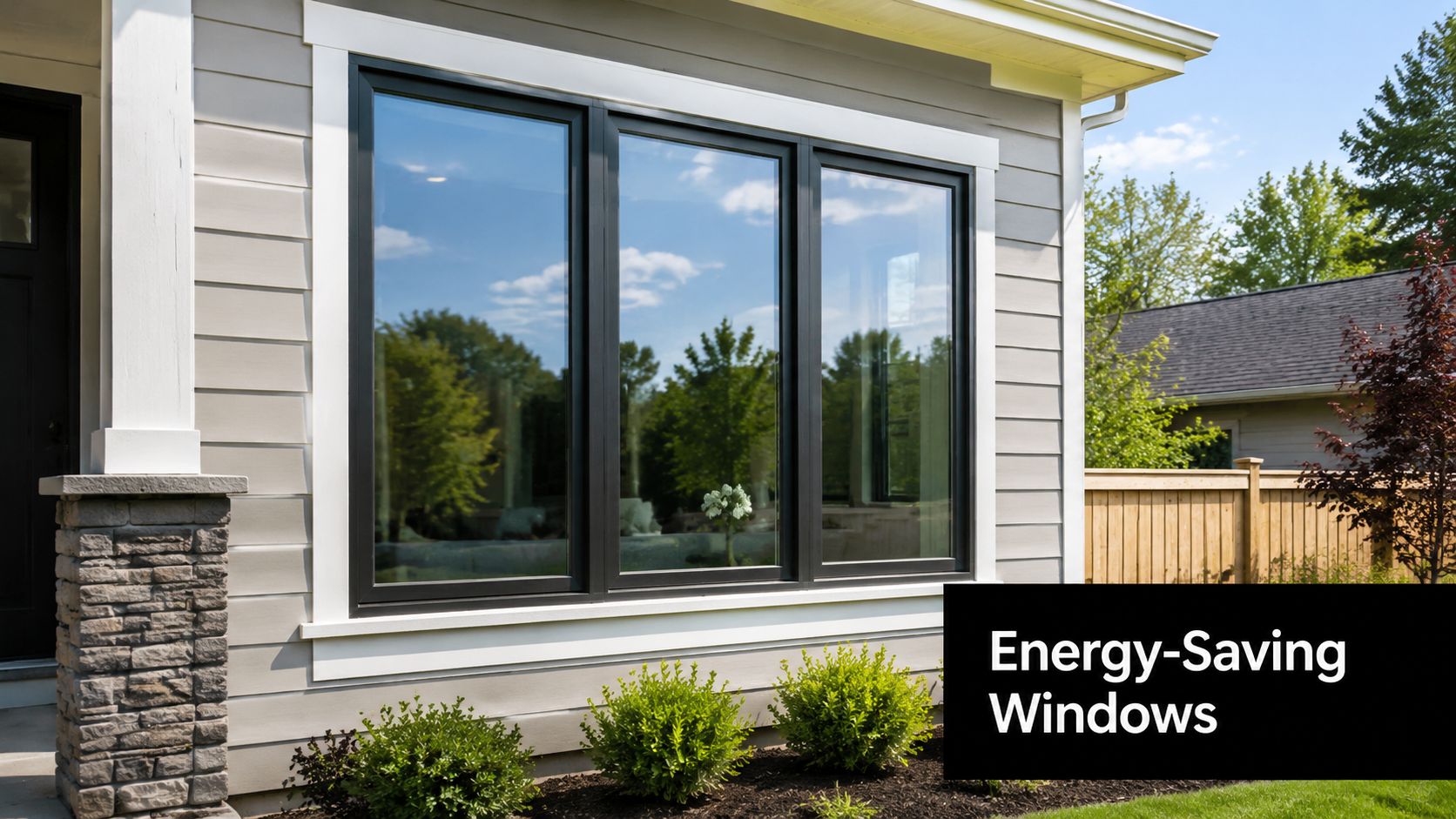
If your home still has single-pane windows, this is one of the clearest money-saving upgrades you can make. Replacing old single-pane windows with energy-efficient models reduces annual energy costs by an average of 12%, or about $101 to $583 per year, based on Sealed's summary of energy-efficient home improvements. In Boise, that shows up as fewer cold spots near the glass in winter and less heat pouring in during late afternoon sun.
Low-E glass matters because it reflects infrared heat while still letting visible light through. Pair that with Argon gas fills and, in some homes, triple-pane glass, and you get a noticeable improvement in comfort. That's especially useful in the Treasure Valley, where a window has to handle both freezing snaps and high summer sun.
Why windows rank so high in Boise
The best return usually comes from replacing the worst windows first, not automatically doing the whole house on day one. Older bedrooms on the north side, living rooms with west-facing glass, and large front windows that catch winter wind tend to deserve attention first.
Practical rule: If a room is always colder in January and hotter in August, start there before replacing windows that already perform reasonably well.
C & C Windows & Doors builds a lot of these Boise-area projects around climate-specific features homeowners feel: ClimaTech Low-E coatings, Argon gas fills, and frame designs built for tight installation. If you want a local breakdown of glass packages and Idaho-specific performance, their guide to energy-efficient windows in Idaho is a useful starting point.
What to prioritize first
If budget is limited, focus on the windows that take the most abuse.
- Start with single-pane units: They deliver the strongest immediate return compared with upgrading decent double-pane windows.
- Target harsh exposures: North and west-facing windows often create the biggest comfort complaints in Boise.
- Seal the install properly: Even a premium window underperforms if the installer leaves gaps around the frame.
The trade-off is upfront cost. Installed replacement windows typically run between $500 and $1,400 per window, depending on material and customization, according to this breakdown of top energy-efficient home improvements. For many homeowners, that means phasing the project is smarter than waiting years to afford a full-house replacement.
2. Attic Insulation Upgrade
Heat loss through the attic is one of the most common problems I see in Boise homes, especially in older ranches and split-levels with uneven bedroom temperatures. In the Treasure Valley climate, that usually makes attic work a better dollars-first upgrade than jumping straight to new mechanical equipment.
The reason is simple. Insulation at the top of the house supports everything below it. When the attic floor is under-insulated, or the existing material has settled and thinned out, the furnace runs longer in winter and the AC loses ground faster on hot July afternoons. Homeowners feel that as rooms that never quite stay comfortable overnight or during peak sun.
Why attic upgrades often pay back well in Boise
A house with a weak attic boundary keeps bleeding conditioned air, so every other efficiency upgrade has to work harder. Tightening and insulating the attic reduces that waste at the source. In many Boise homes, that means lower heating and cooling demand, more even temperatures, and less strain on the HVAC system.
The trade-off is that insulation alone is not the full fix.
Attic projects save the most money when crews air seal first. Recessed can lights, plumbing penetrations, wiring holes, top plates, and attic hatches are common leakage points. If those stay open, adding more insulation helps, but part of the budget is going on top of a problem that is still active.
What to check before spending money
Blown-in insulation is often the best fit for existing homes because it can be added over old material in many attics without a full tear-out. Cellulose and fiberglass are both common choices. The better option depends on access, current insulation depth, moisture history, and whether the attic has clean, serviceable conditions.
A few Boise-specific checks matter before any crew starts:
- Air seal before adding depth: Following this approach improves the financial return. You stop heat loss first, then add R-value.
- Protect ventilation paths: Soffit baffles need to stay open or the attic can trap moisture and heat.
- Inspect older materials carefully: Some older homes have attic products that should be identified by a qualified professional before disturbance.
- Prioritize comfort complaints by room: Cold back bedrooms and bonus rooms over garages often point to attic deficiencies, not just window issues.
Cost, payback, and where it ranks
For many Treasure Valley homeowners, attic insulation lands in the sweet spot between affordability and noticeable savings. It usually costs far less than a full HVAC replacement, and the comfort improvement shows up quickly if the attic was poorly insulated to begin with. Payback is often better when the project includes air sealing and when the house still has obvious weak spots at the ceiling plane.
I usually rank it near the top of the list for homes with:
- uneven temperatures between floors
- older or visibly thin attic insulation
- high winter gas bills without a clear equipment problem
- rooms that improve only slightly after thermostat changes
If the home also has drafty large glass openings, combining attic improvements with targeted exterior upgrades can produce a stronger overall result. Homeowners comparing envelope priorities can also look at Boise patio door replacement options for draft-prone living areas if the family room or rear elevation still has major comfort issues.
What wastes money is treating attic insulation as a cure-all. It will not fix major duct leakage, failed window seals, or air pouring in around worn exterior doors. In Boise, the best financial result usually comes from sequencing the work correctly. Seal leaks, verify ventilation, add insulation to the right depth, then decide whether bigger equipment upgrades are still necessary.
3. Patio Door Replacement with Thermal-Efficient Frames
Patio doors get overlooked because people think of them as a design feature first. In reality, older sliding doors are often one of the weakest points in the envelope. Worn rollers, poor weatherstripping, thin glass, and conductive frames let in drafts and outdoor heat far more than most homeowners realize.
That's especially true on south and west elevations in Boise, where sun exposure can turn a family room into the hottest space in the house. If the door sits near your main living area, even a moderate performance improvement can make the room feel completely different.
Where patio doors leak money
The frame matters as much as the glass. Older aluminum frames are notorious for transferring outdoor temperatures indoors, while modern thermally efficient frames do a much better job resisting that transfer. Add Low-E glass and Argon fills, and you reduce both heat gain and heat loss without making the room dark.
For homes with a backyard entertainment layout, replacing the patio door can improve comfort and usability at the same time. A drafty slider usually means people avoid that room in winter. After replacement, that space becomes livable year-round.
The right patio door for Treasure Valley homes
C & C Windows & Doors installs sliding and bi-fold patio doors designed around local use, not just showroom looks. For many homes, the best move is replacing the biggest, worst-performing glass opening before touching smaller windows that aren't causing complaints. Their local page on sliding patio door replacement in Boise shows the kinds of configurations Treasure Valley homeowners usually compare.
A few trade-offs are worth keeping in mind:
- Sliding doors save space: They fit tighter patios and simpler remodels.
- Bi-fold systems open wider: They can improve indoor-outdoor flow, but the opening, budget, and installation complexity need to make sense.
- Orientation changes the payoff: South and west-facing doors usually deserve priority because they deal with the strongest solar load.
If your existing patio door is hard to lock, whistles in the wind, or has visible condensation issues, replacement tends to be easier to justify than trying to nurse an aging unit along with repeated repairs.
4. Air Sealing and Weatherstripping
Air leaks are one of the cheapest energy problems to fix, and in Boise they show up fast. Cold winter wind, summer dust, and big day-to-night temperature swings put weak seals around doors, windows, attic hatches, and utility penetrations to work year-round.
This upgrade usually pays off in comfort first, then in lower HVAC runtime. I recommend it early because it supports everything else. If a house is still leaking around trim, top plates, plumbing penetrations, and exterior doors, higher-cost upgrades cannot perform at their full value.
A small job with a strong return
You can often feel a leak before you can see it. Stand by an older back door during a windy day in the Treasure Valley, and the draft is usually obvious.
Caulk fixes stationary gaps. Weatherstripping fixes moving contact points like door slabs, operable sashes, and attic access panels. The trade-off is durability. Cheap foam products are inexpensive and easy to install, but they wear out faster and often compress unevenly. Better materials cost more up front and hold their seal longer.
For many Boise homeowners, this is a practical first-dollar upgrade because the cost is low, the disruption is minimal, and the benefit shows up quickly in the rooms that feel hardest to heat or cool.
Best places to seal first
A blower door test is still the best way to find the biggest leaks, especially in older homes with several layers of past repairs. Without testing, these areas are usually the best place to start:
- Exterior doors: Flattened weatherstripping and worn sweeps are common failure points.
- Window perimeters: Trim can hide air leakage between the frame and rough opening.
- Attic penetrations: Recessed cans, hatch covers, bath fan housings, and wiring holes often leak more than expected.
- Utility penetrations: Pipe entries, cable lines, and hose bibs are frequent trouble spots.
The financial case is straightforward. Air sealing costs far less than replacing major equipment, but it can reduce wasted conditioned air that your furnace and AC already paid to heat or cool. In Boise homes with obvious drafts, I would usually address these leaks before spending on controls or sizing new HVAC equipment.
A tighter house feels calmer, cleaner, and easier to keep comfortable.
If window drafts are part of the problem, seasonal prep matters too. C & C Windows & Doors walks through the local basics in its guide on how to prepare Boise home windows for winter.
5. Smart Thermostat Installation
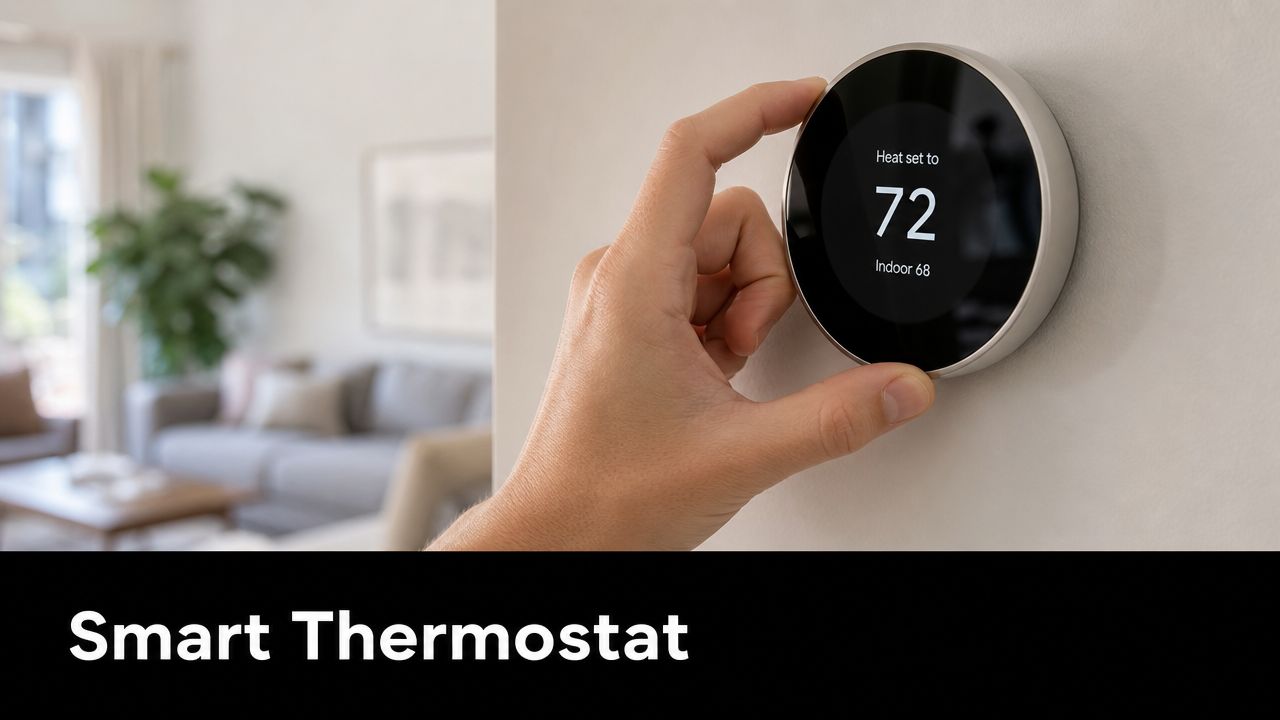
A smart thermostat usually falls into the low-cost, mid-value category for Boise homeowners. Installed cost is often modest compared with windows, insulation, or HVAC equipment, and the payoff can be reasonable if the house sits empty on a regular schedule during work hours, school days, or weekend travel.
The local climate is what makes this upgrade worth considering. Boise's heating season is long, summer afternoons get hot, and spring and fall can swing enough in a single day to leave a manual thermostat set higher or lower than needed for hours. A well-programmed smart thermostat cuts some of that waste by tightening schedules and reducing unnecessary runtime.
Where the savings usually come from
The value is less about the device itself and more about behavior it automates. Households that leave the system at one constant setting all day often spend more than necessary, especially in homes that are empty for predictable blocks of time.
Savings tend to come from a few practical features:
- Scheduling: Lowers heating or cooling during work and school hours.
- Geofencing: Adjusts settings when the house is empty, if occupants reliably carry their phones.
- Vacation settings: Prevents conditioning an empty house at normal comfort levels.
- Runtime and maintenance alerts: Helps homeowners catch long run cycles, dirty filters, or service issues earlier.
Payback is good, but not in every house
In the Treasure Valley, this upgrade makes the most financial sense after the house stops wasting conditioned air through bigger problems. If rooms heat up fast in the afternoon because of poor windows, or if the HVAC system runs constantly to overcome insulation and leakage issues, a new thermostat will improve control more than it will cut bills.
I usually put smart thermostats in the "do it after the basics" category. They are affordable, they add convenience, and they can trim operating cost, but they rarely outperform envelope upgrades on pure dollar savings.
A few trade-offs matter here. Some households hate app-based controls and end up overriding schedules constantly. Some older HVAC systems need a compatible common wire or adapter. Thermostat location matters too. If it sits near a drafty entry, direct sun, or a supply register, the readings can be off and the schedule will not perform as intended.
Best fit for Boise homeowners
A smart thermostat is a strong choice if your home already has decent insulation, limited drafts, and an HVAC system that is working properly. In that situation, the thermostat can do what it is supposed to do. Fine-tune runtimes, cut back when nobody is home, and improve comfort without much disruption.
For homeowners comparing upgrades strictly by return, this is usually not the first dollar I would spend. It is often a solid second- or third-tier improvement because the upfront cost is low and installation is simple, but the best results show up in houses that already hold temperature well.
6. Water Heater Upgrade to Energy-Efficient Model
A water heater upgrade can save money, but it's not always the first move I'd recommend if a house still has major envelope problems. Hot water is a steady energy load, though, and once an aging unit starts nearing the end of its life, replacing it with a more efficient model is usually smarter than waiting for an emergency failure.
For Treasure Valley homeowners, the practical decision often comes down to usage pattern. A large family with back-to-back showers needs a different solution than a small household that mainly wants lower operating cost and better reliability.
When replacing the water heater makes sense
Heat pump water heaters, efficient storage tanks, and tankless systems each solve a different problem. Heat pump units are attractive when homeowners want lower energy use. Tankless units appeal to households that hate running out of hot water. High-efficiency tank models make sense when simplicity and lower disruption matter most.
The money-saving angle improves if the replacement is planned instead of rushed. Emergency installs tend to narrow your choices and raise the odds of accepting whatever is available fastest, not what fits the home best.
How to avoid the wrong replacement
A few mistakes show up over and over:
- Oversizing the unit: Bigger isn't automatically better if your usage doesn't justify it.
- Ignoring electrical or gas capacity: Some efficient models require service upgrades or venting changes.
- Skipping pipe insulation: Even a better heater loses some advantage if hot water lines shed heat immediately.
- Buying on sticker price alone: Installation details often shape true value.
If your existing unit is old, noisy, slow to recover, or showing signs of leakage, replacement becomes easier to justify. Just don't expect it to outperform envelope upgrades on comfort. Water heating matters, but draft reduction and temperature stability are what most Boise homeowners feel first.
7. Roof and Attic Ventilation Optimization
Ventilation is one of those upgrades people notice only after it's been done right. In summer, a poorly vented attic traps heat, which makes upstairs rooms harder to cool and forces the AC to work longer. In winter, poor airflow can contribute to moisture issues that reduce insulation performance and create bigger roofing headaches later.
This matters in Boise because attics see both heat load and winter cold. A house that's merely insulated but not ventilated properly can still perform worse than expected.
Comfort, moisture control, and roof life
Good ventilation helps the attic behave like an outdoor buffer zone instead of a heat reservoir. It also protects the roof system by reducing the moisture accumulation that can build up when warm indoor air reaches cold attic surfaces.
You don't need gimmicks here. Balanced intake and exhaust are what matter. Soffit vents have to stay open, ridge or other exhaust paths have to function, and insulation can't choke the system.
What good ventilation actually looks like
Ventilation work is often most worthwhile when homeowners are already improving insulation or reroofing. That's the easiest time to correct blocked intake, add baffles, or rebalance exhaust.
If the attic can't breathe, insulation won't deliver its full value.
In practical terms, Boise homeowners should pay attention to:
- Blocked soffits: Insulation often drifts or gets installed over intake paths.
- Patchwork vent systems: Mixed vent types can work against each other if not planned well.
- Moisture signs: Frost, staining, or musty attic air usually means something is off.
- Top-floor comfort complaints: Hot bonus rooms and stuffy upstairs bedrooms often point toward attic issues.
This isn't usually the flashiest project on the list, but it protects the work you do elsewhere. Insulation, roofing, and HVAC all benefit when attic airflow is functioning the way it should.
8. HVAC System Upgrade to High-Efficiency Model
Heating and cooling usually make up the biggest share of a Boise home's energy bill, so HVAC replacement gets a lot of attention. The catch is cost. A high-efficiency system is often one of the most expensive upgrades on this list, and the savings depend heavily on what shape the house is in before the equipment goes in.
I put HVAC later in the order for a reason. If the attic is under-insulated, the ducts leak, or old windows and doors are still driving heat gain and heat loss, the new system has to work around those problems. Homeowners then pay for premium equipment before they have reduced the home's actual heating and cooling load.
The better approach in the Treasure Valley is straightforward. Tighten the shell first, then replace the equipment based on the lower load. That usually leads to a smaller, better-matched system, lower operating costs, and fewer comfort complaints in July and January.
Why timing matters on an HVAC upgrade
A high-efficiency heat pump or furnace can absolutely cut utility costs, especially if the existing unit is older, noisy, struggling in extreme weather, or nearing the end of its service life. But HVAC savings are not automatic. Oversized equipment short-cycles. Leaky ducts waste conditioned air. Poor airflow leaves certain rooms uncomfortable even after a full system replacement.
That is why load calculations matter more than brochure ratings. In Boise, I would rather see a correctly sized system in a well-sealed house than a top-tier unit dropped into a house that still leaks energy from every side.
There is also a tax credit that improves the math. The federal Energy Efficient Home Improvement Credit includes up to $2,000 for qualifying air-source heat pumps, with annual availability through 2032, according to Consumer Reports' summary of major energy upgrades.
Where high-efficiency HVAC makes the most financial sense in Boise
This upgrade usually pencils out best in a few situations:
- The current system is old or failing: Replacement is coming anyway, so efficiency gains matter more.
- The home uses propane or oil: Fuel switching can improve operating costs enough to shorten payback.
- The envelope work is already done: Air sealing, attic insulation, and better windows or doors help the equipment perform closer to its rated efficiency.
- The duct system is serviceable or can be repaired: New equipment connected to bad ducts rarely delivers the savings homeowners expect.
For Boise-area homeowners, the payback period is often moderate rather than fast. A basic maintenance issue or duct repair may produce quicker savings than a full replacement. But if the system is at the end of its life, replacing it with a high-efficiency model after envelope improvements is usually the smarter financial move than installing another low-efficiency unit and living with higher bills for the next decade.
What to check before signing a replacement quote
A good HVAC proposal should answer a few practical questions clearly:
- Was the system sized with a real load calculation? Rule-of-thumb sizing causes expensive mistakes.
- Were ducts inspected for leakage, insulation, and airflow problems? Equipment cannot fix poor distribution on its own.
- Is the installer accounting for Boise's hot summers and cold winter mornings? Local climate should shape system selection.
- Will the thermostat and controls match the equipment? Variable-speed systems need compatible controls to deliver their full value.
- Are rebate and tax-credit paperwork requirements spelled out up front? Missing documentation can wipe out part of the savings.
This is also where local coordination helps. If you replace HVAC after improving windows and doors, the numbers get more accurate because the home's load has changed. In older Boise homes, that sequencing can be the difference between buying the right system and paying too much for capacity you no longer need.
8 Home Energy Upgrades: Cost-Savings Comparison
Boise homeowners usually get the best financial return by fixing air leaks and insulation problems before replacing major equipment. The table below keeps the numbers consistent with the savings ranges already cited earlier in this article. Where a dollar range is not tied to a cited source, it is labeled as a local cost estimate based on typical Treasure Valley project pricing.
| Upgrade | Implementation Complexity 🔄 | Typical Boise-Area Cost ⚡ | Expected Outcomes ⭐ 📊 | Best Fit in the Treasure Valley 💡 | Key Advantages ⭐ |
|---|---|---|---|---|---|
| Energy-Efficient Window Replacement with Low-E Coating | High. Professional measurement, flashing, and air sealing matter. | Local estimate: often $400-$1,200 per window installed, depending on size, frame, and glass package | Annual heating and cooling savings in the range already cited earlier: $101-$583, plus better comfort near glass and less summer solar heat gain | Older single-pane windows, failed seals, rooms with strong west sun, and homes where comfort complaints are tied to the windows | Improves comfort, reduces UV exposure, lowers outside noise, and can add resale appeal. A good local installer such as C&C Windows & Doors can also reduce the risk of poor fit and air leakage |
| Attic Insulation Upgrade | Medium. Air sealing should happen before adding insulation. | Local estimate: often $1,500-$3,500 for many single-family homes | Can reduce heating and cooling demand meaningfully, especially in homes with underinsulated attics. Exact savings vary with existing insulation levels and air leakage | Homes with settled insulation, uneven room temperatures, and high winter heating use | Usually one of the better cost-to-savings upgrades when the attic is deficient |
| Patio Door Replacement with Thermal-Efficient Frames | High. Proper alignment, sill pan work, and weather sealing are important. | Local estimate: often $1,500-$4,000+ installed | Lowers draftiness around large glass openings and can reduce heating and cooling loss. Comfort improvement is often more noticeable than bill reduction | Older aluminum or loose-fitting patio doors, especially on south and west exposures | Improves comfort, security, operation, and glass performance in one project |
| Air Sealing and Weatherstripping | Low to medium. Basic weatherstripping can be DIY. Whole-house air sealing is better with a pro. | Local estimate: about $50-$1,500, depending on scope | Can deliver some of the fastest savings in the house by cutting uncontrolled leakage. Savings depend heavily on how leaky the home is before the work | Drafty homes, older Boise houses, attic bypasses, recessed lights, plumbing penetrations, and worn door seals | Low cost relative to impact. Often improves comfort right away and supports every other upgrade |
| Smart Thermostat Installation | Low. Often a short install if the HVAC system is compatible. | Local estimate: about $200-$400 with device and possible install | Earlier in the article, cited savings were percentage-based rather than a fixed dollar amount. Real results depend on schedule, setback habits, and system compatibility | Households with regular away periods or inconsistent thermostat use | Useful control upgrade with modest cost, but it works best as a supporting measure rather than a standalone fix |
| Water Heater Upgrade to Energy-Efficient Model | Medium to high. Plumbing, venting, drain, or electrical changes may be required. | Local estimate: often $1,200-$3,500+ installed, with heat pump models sometimes higher | Earlier sections cited percentage savings rather than a fixed annual dollar figure. Savings depend on fuel type, hot water use, and whether the replacement is heat pump, standard tank, or tankless | Aging water heaters, larger households, and homes pursuing electrification | Can cut water-heating energy use substantially. Incentives can improve the economics on heat pump units |
| Roof and Attic Ventilation Optimization | Medium. Requires inspection of intake and exhaust balance, not just adding vents. | Local estimate: about $500-$2,000+ depending on roof design and access | Helps attic moisture control and can reduce summer heat buildup. Energy savings are usually secondary to durability and comfort | Homes with hot attics, blocked soffits, moisture issues, or signs of poor airflow | Supports roof life, attic performance, and summer comfort when paired with proper insulation and air sealing |
| HVAC System Upgrade to High-Efficiency Model | High. Correct sizing and duct inspection are necessary. | Local estimate: often $4,000-$10,000+ installed, depending on equipment and ductwork | Earlier in the article, cited benefits were percentage reductions in HVAC energy use rather than guaranteed monthly savings. Results improve after envelope work is done first | Older systems near end of life, high utility use, comfort complaints, or households considering a heat pump | Strong long-term savings potential, better comfort, and access to rebates or tax credits in many cases |
A few practical notes matter here. Windows and doors usually have higher upfront costs, so homeowners should buy them for a mix of reasons: lower energy use, better comfort, lower noise, and fewer draft complaints. Air sealing and attic insulation usually move up the priority list when the goal is pure payback.
Boise climate changes the order too. West-facing glass, cold winter mornings, and hot summer afternoons punish weak window and door systems. That is why local pricing, local installation quality, and local climate judgment matter more than generic national averages.
Your Next Step to a More Efficient Treasure Valley Home
The best answer to which home energy upgrades will save you money isn't the same for every house, but the pattern is consistent. Start with the envelope. Drafts, weak windows, underperforming doors, attic deficiencies, and uncontrolled air leakage force every other system to work harder. Once those issues improve, equipment upgrades make more sense and tend to perform better.
For most Boise-area homeowners, that means putting windows, doors, air sealing, and insulation near the top of the list. Old single-pane windows are usually one of the easiest places to justify action because the comfort problem is obvious and the financial return is easier to see. Patio doors come next more often than people expect, especially when a big glass opening is baking the main living space in summer or leaking cold air in winter.
After that, the smart money usually goes toward controls and equipment. A smart thermostat is a good supporting upgrade, not a miracle fix. Water heater replacement makes sense when the existing unit is aging or inefficient, but it usually won't change day-to-day comfort the way envelope work does. HVAC replacement can deliver strong savings, especially with heat pump incentives, but it should be matched to a tightened home whenever possible.
The local climate matters here. Treasure Valley homes have to handle winter cold, summer sun, dry air, and plenty of seasonal temperature swings. Products and installation details that work well somewhere else don't always deliver the same result in Boise. That's one reason local guidance matters, especially for window and patio door projects where orientation, frame performance, and installation quality can make or break the outcome.
If you want the biggest financial impact with the least guesswork, start by identifying the rooms that feel uncomfortable first. Cold back bedroom. Hot west-facing family room. Drafty patio door. Upstairs area that never settles down. Those problem spots usually point directly to the upgrade that should come first.
For Treasure Valley homeowners, tackling drafty, inefficient windows is often the strongest first move. C & C Windows & Doors offers free, no-obligation in-home consultations for windows and patio doors built for Idaho conditions. If you want a clearer picture of what your home needs, that kind of room-by-room assessment is the fastest way to avoid overspending and start making upgrades that pay you back in comfort and lower utility bills.
C & C Windows & Doors helps Boise-area homeowners make smart upgrades without turning the process into a full remodel. If your home has drafty windows, an aging patio door, or rooms that never stay comfortable, schedule a free in-home consultation with C & C Windows & Doors for custom measurements, same-day estimates, and climate-specific recommendations for the Treasure Valley.