You know the moment. You release the window, lift the sash, and it stops halfway like it's glued in place. So you shove a little harder. It grinds, tilts, or drops back down. In a Boise or Treasure Valley home, that's rarely just a small irritation.
A hard-to-open window usually means something has changed. Tracks get packed with dirt. Paint seals a sash shut. Hardware wears out. But in this climate, with hot summers and cold winters, windows also swell, warp, loosen up, and lose their seal over time. What starts as one sticky bedroom window can point to a bigger issue with energy loss, moisture, or frame failure.
Homeowners asking about hard to open windows when to replace usually want a straight answer. Here it is. Some windows need a tune-up. Some need a part. Some are telling you the unit is at the end of the road.
Table of Contents
- Why a Stubborn Window Is More Than Just an Annoyance
- Finding the Real Reason Your Window Won't Budge
- The Core Decision Repairing vs Replacing Your Windows
- Scenarios Where Repairing Your Window Is the Smart Move
- Five Unmistakable Signs You Need New Windows
- Your Next Steps for a Safer More Efficient Treasure Valley Home
Why a Stubborn Window Is More Than Just an Annoyance
If you have to shoulder a window open in July or fight it shut in January, the problem is already bigger than convenience.
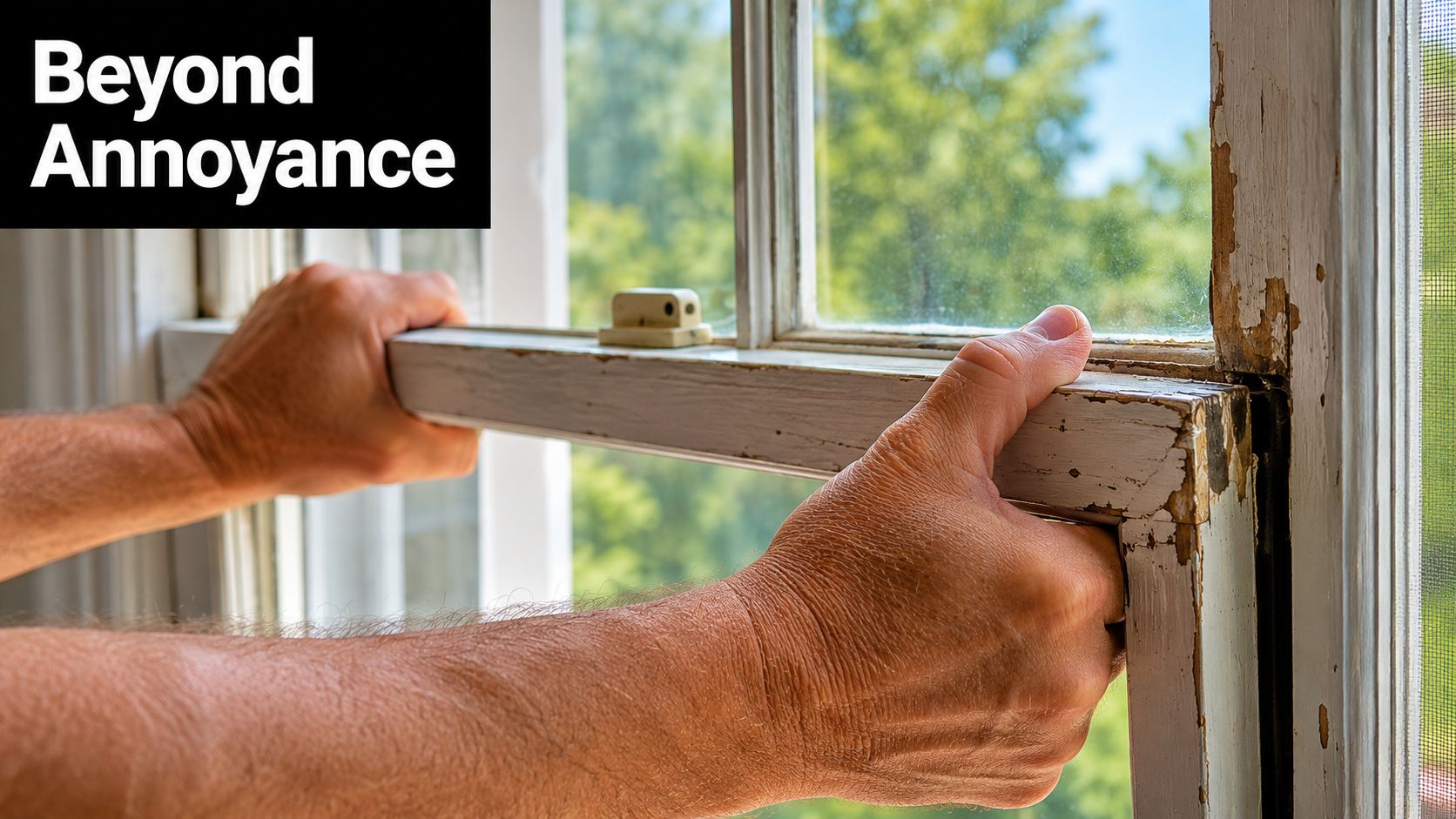
In real homes, a stubborn window often shows up alongside other symptoms. The room feels drafty. Outdoor noise seems louder than it used to. The lock doesn't line up cleanly. You may even notice a sash that won't stay up once you finally get it moving. Those signs usually travel together because the same wear that affects operation also affects fit, seal, and performance.
According to Pella's replacement warning signs guide, windows that are hard to open are a primary replacement warning sign because they often indicate warped or failing operating parts, and most windows last 15–50 years depending on material. That lifespan range is broad for a reason. Material, maintenance, and climate all matter.
Why this matters more in Idaho
Treasure Valley homes go through real seasonal swings. Heat bakes exterior surfaces in summer. Cold snaps tighten everything up in winter. That repeated expansion and contraction exposes weak seals, old hardware, and frames that are no longer square.
Practical rule: If a window is hard to use and the room also feels uncomfortable, treat it like a performance problem, not a nuisance.
A stuck window also changes how you use your home. People stop opening it for ventilation. They avoid cleaning it. They leave it shut when they should be airing out a bathroom, kitchen, or bedroom. Over time, the window becomes dead space in the wall.
The bigger issue behind the symptom
When homeowners search for answers on hard to open windows when to replace, they're usually deciding between one more repair call and a real fix. That decision should come down to the source of the problem. If the issue is minor and isolated, repair makes sense. If the window is fighting you because the frame, sash, or seal system is failing, replacement is usually the smarter long-term investment.
Finding the Real Reason Your Window Won't Budge
A stuck window needs diagnosis before it needs a verdict. The trick is separating a basic maintenance problem from a window that's physically wearing out.
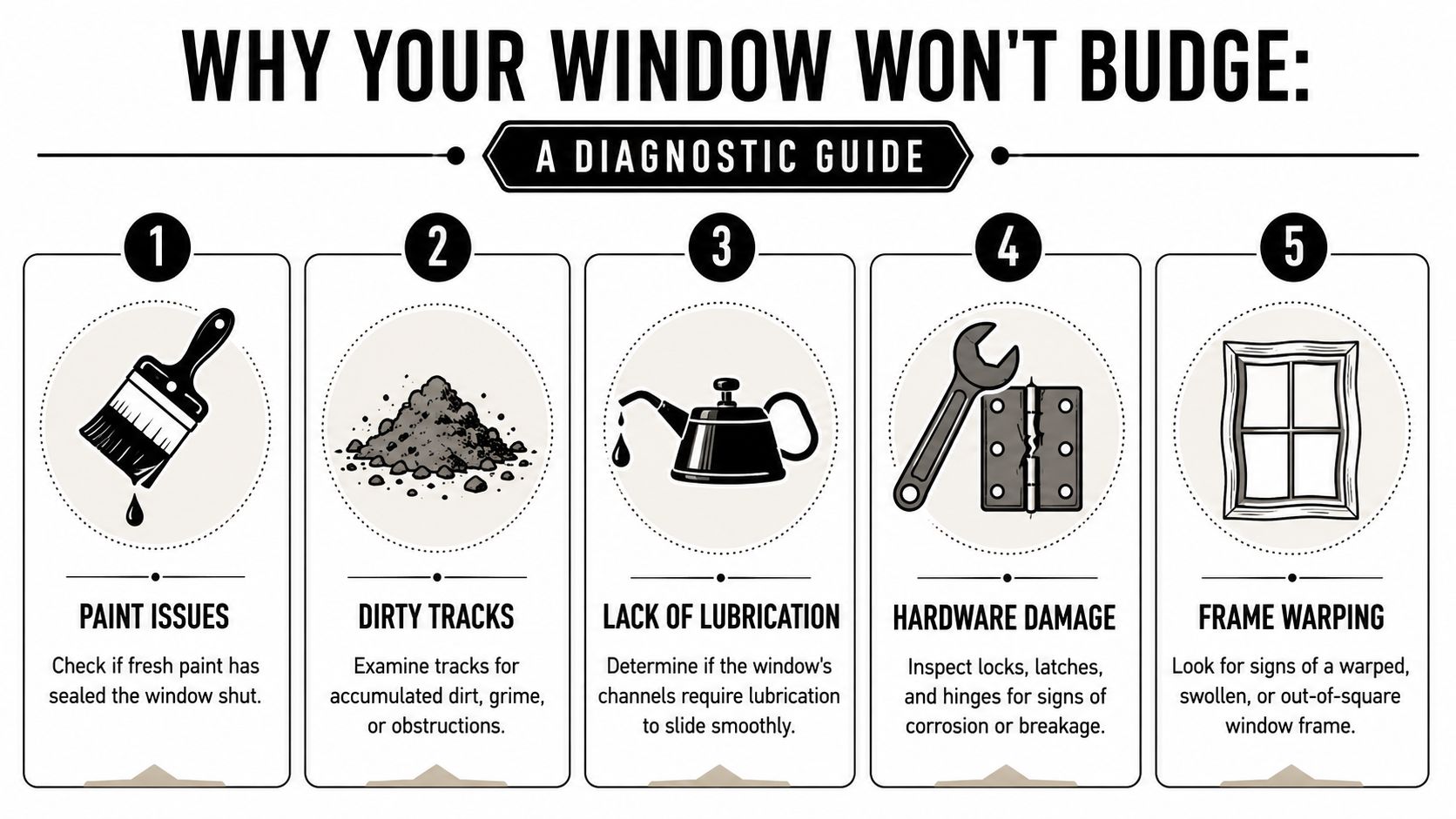
Start with the easy checks
Before anyone talks about replacement, check the simple stuff first:
- Paint buildup: Older wood windows often get painted shut at the meeting rail or along the side stops.
- Dirty tracks: Sliders and single-hung windows collect dust, insect debris, and grit that creates drag.
- Dry channels: Some windows require only cleaning and the right lubricant on moving contact points.
- Misaligned locks: A lock that won't line up can make the sash feel jammed even when the actual issue is hardware position.
These are worthwhile checks because they're cheap, fast, and sometimes they solve the problem. If the window opens smoothly after cleaning or freeing paint, you probably don't need a full replacement conversation yet.
Then inspect the hardware
When easy fixes don't help, move to the operating parts. Balances wear out. Cranks strip. Rollers flatten. Operators loosen up. A lot of these failures are repairable if the rest of the window is still in good shape.
Quality Window & Door's explanation of hard-to-open windows makes the key point clearly: cleaning tracks and lubricating rollers can restore some windows, but if the window still binds, worn hardware or a warped frame is the likely cause. It also notes that older or discontinued window lines can force replacement when parts are no longer available.
If the sash still drags after cleaning and lubrication, stop assuming it just needs muscle. Windows shouldn't need force to work.
For entry points and adjacent openings, this same logic often shows up in patio access areas too. If you're comparing window and opening issues around the same part of the house, a local door installer in Nampa, Idaho can be relevant for evaluating nearby door performance and frame movement.
Know the signs of frame trouble
Homeowners waste money when they replace a crank, then a balance, then a latch, yet the window still binds because the frame itself has moved or swollen.
Look for these clues:
- The reveal is uneven: Gaps around the sash aren't consistent.
- The lock no longer meets cleanly: You have to push or lift the sash into place.
- The sash rubs at one corner: That usually points to out-of-square geometry.
- Moisture exposure is obvious: Rot, swelling, or soft wood often means the structure has changed shape.
When the window's geometry is off, parts won't solve it for long. That's the line between repairable and spent.
The Core Decision Repairing vs Replacing Your Windows
Most homeowners don't need more theory. They need a practical way to decide. Use the matrix below the same way an installer would.
| Factor | Window Repair | Full Window Replacement |
|---|---|---|
| Best use case | One isolated problem, such as a failed crank, balance, or roller | Multiple symptoms, recurring operation issues, or frame-related failure |
| Upfront scope | Smaller job, limited to the faulty part or maintenance item | Larger project, but addresses the whole unit at once |
| Energy performance | May improve function, but usually won't solve an aging glass or seal system | Better option when comfort, drafts, and thermal performance matter |
| Part availability | Works if the hardware is still made and the window line is serviceable | Necessary when replacement parts are discontinued |
| How it holds up in Idaho weather | Good if the frame is sound and the issue is minor | Better if seasonal expansion, seal wear, and age are affecting the whole unit |
| Long-term value | Smart for younger windows with one mechanical problem | Smarter when you're tired of repeated fixes and uneven performance |
When repair makes sense
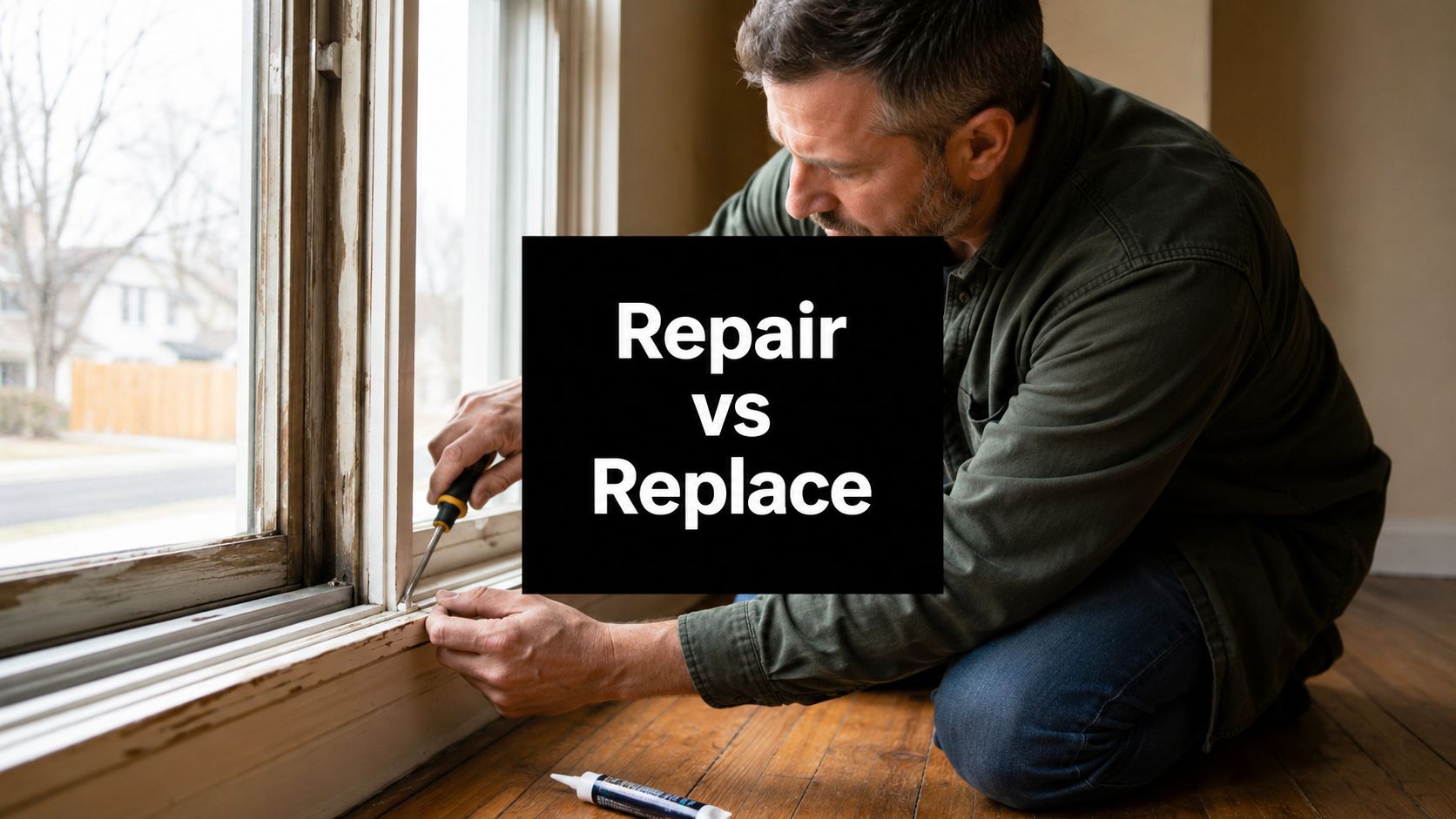
Repair is usually the right move when one part failed and the rest of the window is still square, tight, and weatherworthy. A balance spring that won't hold a sash up. A casement operator that stripped out. A sliding window with rollers that need replacement. Those are service calls, not replacement projects.
This is especially true if the window is relatively modern, the glass is still clear, the frame isn't soft or warped, and the lock still lines up once the part is fixed.
When replacement becomes the better investment
The U.S. Department of Energy advises homeowners in climates with cold winters and hot summers to consider gas-filled windows with low-e coatings and to compare products by low U-factor and low SHGC for energy performance in those conditions. That guidance appears in the DOE's update or replace windows resource.
In Treasure Valley homes, that matters. If the window is old, stiff, drafty, and no longer sealing well, fixing operation alone doesn't restore the window's overall performance. You may make it move again, but it still won't insulate or seal like it should.
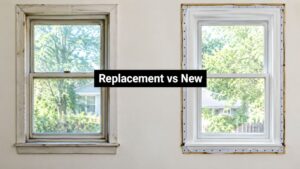
If you want a broader breakdown of the trade-off, this guide on when to replace windows vs repair them is useful for comparing short-term fixes against longer-term value.
The climate factor Boise homeowners feel
Boise isn't a mild-climate market. Windows here deal with strong sun, dry heat, cold snaps, and year-round movement in materials. That means the repair-or-replace decision isn't just about whether the sash moves today. It's about whether the window can still do its job through the next heating season and the next summer.
A repaired window that still leaks air, struggles to lock, and shows age on the frame is usually just buying time.
One practical example is product selection. Some local homeowners evaluating replacement options look at systems built for regional performance, including offerings from C & C Windows & Doors that use low-e coatings and gas-fill options designed for Idaho conditions. What matters isn't the brand name. It's choosing a replacement unit that matches the climate and solves more than one problem at once.
Scenarios Where Repairing Your Window Is the Smart Move
Not every stubborn window needs to be torn out. A lot of them need a clear diagnosis and a disciplined repair.
Good candidates for repair
Expert guidance on hard-to-open windows confirms that many operational problems come from hardware like balance springs, crank mechanisms, and roller assemblies. Those parts can often be fixed without replacing the full unit.
Repair is usually the smart move in situations like these:
- One failed component: The crank snapped, the balance failed, or the roller is worn, but the frame is still solid.
- The problem is limited to one window: The rest of the house operates normally, which suggests an isolated issue rather than widespread age-related decline.
- The sash and frame are still square: Locks align, weatherstripping contacts properly, and there's no obvious warping.
- You're preserving an original look: Some homes benefit from targeted repair when maintaining the existing appearance matters.
Cases where repair is just stalling
A repair stops making sense when you're fixing a symptom instead of the cause. If the sash drags because the frame swelled out of shape, new hardware won't correct the geometry. If you've got repeated service calls on the same opening, that's the window telling you it's done.
Here's another bad repair candidate. An older window can be made to move, but it still rattles, drafts, and feels loose in the opening. Technically operational. Functionally worn out.
The simplest test
Open and close the window after the repair issue is addressed. Then look at the whole unit, not just the moving part.
Ask three questions:
- Does it operate smoothly without force?
- Does it close, lock, and seal correctly?
- Does the room feel normal afterward, not drafty or overheated?
If the answer is no, the repair may have fixed the mechanism without fixing the window.
Five Unmistakable Signs You Need New Windows
There are cases where the debate is over. The window has crossed from serviceable to replacement territory.
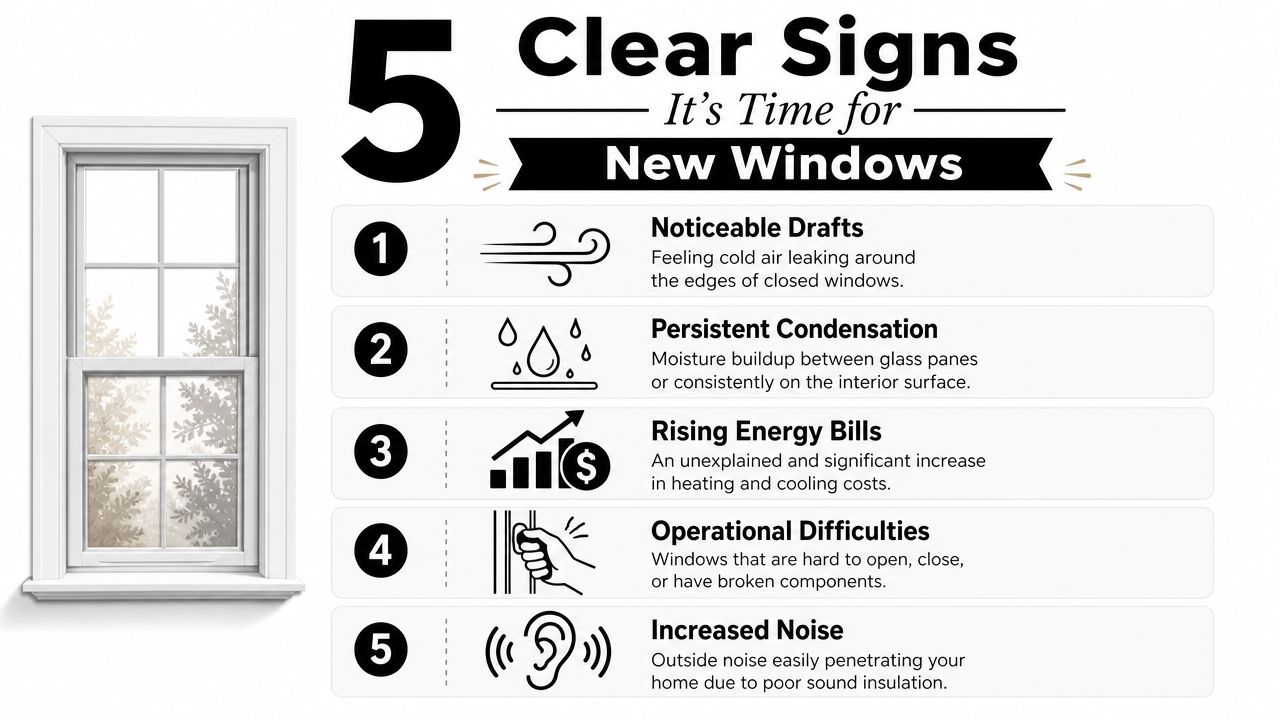
The red flags that settle the question
- The frame is warped, swollen, soft, or visibly deteriorated. This is the big one. Once the frame changes shape, everything else follows.
- You see condensation between panes. That points to seal failure in insulated glass.
- The room feels drafty or hard to keep comfortable. That usually means the window is underperforming, not just sticking.
- More than one window is acting up. Multiple failures across the home usually mean age and system-wide wear, not random bad luck.
- The window won't reliably open for ventilation or emergency exit. That turns the problem into a safety issue.
Safety gets ignored too often
One of the biggest mistakes homeowners make is forcing a stuck window over and over. According to this discussion of hard-to-open replacement windows and related risks, applying excessive force can break glass or damage the frame, and a window that won't open reliably may not function as a required emergency egress point.
That matters in bedrooms, basements, and any room where a window may need to serve as a way out.
A window that only opens when you slam it, pry it, or lean your weight into it is not a working window.
What repeated failure really means
One sticky window can be a maintenance item. Several hard-to-open windows in the same house usually signal broader age, movement, or seal problems. In Boise-area homes, I'd pay close attention if the worst windows are on the sun-beaten side of the house or in rooms that run hotter and colder than the rest. That pattern often points to wear that's already beyond spot repair.
If you're still weighing hard to open windows when to replace, this is the cleanest answer. Replace when operation problems come with poor comfort, visible deterioration, failed seals, or safety concerns. At that point, the window isn't just inconvenient. It's failing at its basic job.
Your Next Steps for a Safer More Efficient Treasure Valley Home
Start with the window that's giving you trouble and assess it carefully. Clean the tracks. Look for paint binding. Check the hardware. See whether the sash is square and whether the lock meets cleanly. If the issue is isolated, a repair may buy you years of normal service.
If the window still binds, drafts, won't lock right, shows moisture damage, or matches problems you're seeing elsewhere in the house, stop treating it like a one-off nuisance. In Treasure Valley weather, those symptoms usually don't improve on their own.
A professional in-home assessment is the fastest way to separate a repairable window from one that's costing you comfort and reliability. For local homeowners comparing options, this page about a Treasure Valley window company is a practical starting point for understanding local replacement services and what an in-home evaluation should include.
Bring a short list when you schedule that visit:
- Which windows stick most often
- Which rooms feel drafty or noisy
- Whether condensation appears between panes
- Whether any bedroom or basement window has egress concerns
That gives the installer a clear picture of whether you need a part, a repair plan, or a full replacement strategy.
If you're dealing with hard-to-open windows in Boise, Meridian, Eagle, Nampa, or anywhere in the Treasure Valley, C & C Windows & Doors can inspect the problem in person, identify whether repair or replacement makes more sense, and walk you through energy-efficient options for Idaho homes without guesswork.