

A homeowner in the Treasure Valley may notice the problem one room at a time. The living room feels chilly near the glass, a bedroom gets unusually warm in the afternoon, and the heating or cooling system seems to run longer than it used to. The windows still open, so replacement can feel premature.
That's where many homeowners get stuck. A window doesn't have to be visibly broken before its performance has declined. Drafts, condensation, noise, difficult operation, and rising utility bills can reveal problems that aren't obvious from the curb.
The practical question isn't, “How old are my windows?” It's when to replace windows in your home based on measurable performance loss. Age helps establish a starting point, but the better decision combines age with frame condition, glass performance, seal integrity, comfort, and the needs of each room.
Table of Contents
- Introduction Why Window Timing Matters More Than You Think
- How Windows Control Comfort and Energy in Your Home
- Warning Signs Your Windows Are Telling You It Is Time
- How Long Windows Last by Material and What Age Really Means
- Repair or Replace Making the Smart Financial Choice
- Best Time to Replace Windows and Benefits You Will Notice Right Away
- Choosing a Trusted Installer Warranties Financing and Next Steps
Introduction Why Window Timing Matters More Than You Think
A Treasure Valley home can feel comfortable in the morning, then turn cold near one window by evening. You may raise the thermostat, move a chair away from the glass, or lower the blinds against afternoon sun. Those adjustments can point to declining window performance, even when the unit still opens and closes.
Windows form part of the home's insulation and air-sealing system. The U.S. Department of Energy reports that heat gain and heat loss through windows account for about 25% to 30% of residential heating and cooling energy use, as summarized in its window guidance on heat gain and heat loss. Older windows can also contribute substantially to winter heat loss, depending on the climate and the building. These figures do not call for automatic replacement. They show why a window can affect comfort and utility use before visible structural failure appears.
Treasure Valley homes place several demands on the same glass and frame. Windows may need to slow winter heat loss, limit strong summer sunlight, reduce air leakage, and soften outside noise. A unit that works adequately in a shaded room may struggle on a west-facing wall or beside a busy road.
Base the replacement decision on measurable performance loss, using window age as a starting point for inspection.
Start with basic operation and comfort. Check whether the frame, glass, and seals still perform together. Then identify symptoms, determine whether the issue affects one window or several, and compare a targeted repair with full replacement. Rooms with persistent drafts, failed seals, intense afternoon heat, or frequent noise may deserve attention first.
This process supports a clearer decision. A sound window does not need replacement solely because it is old, while an aging unit may no longer justify repeated repairs once its insulation or seal performance has declined.
How Windows Control Comfort and Energy in Your Home
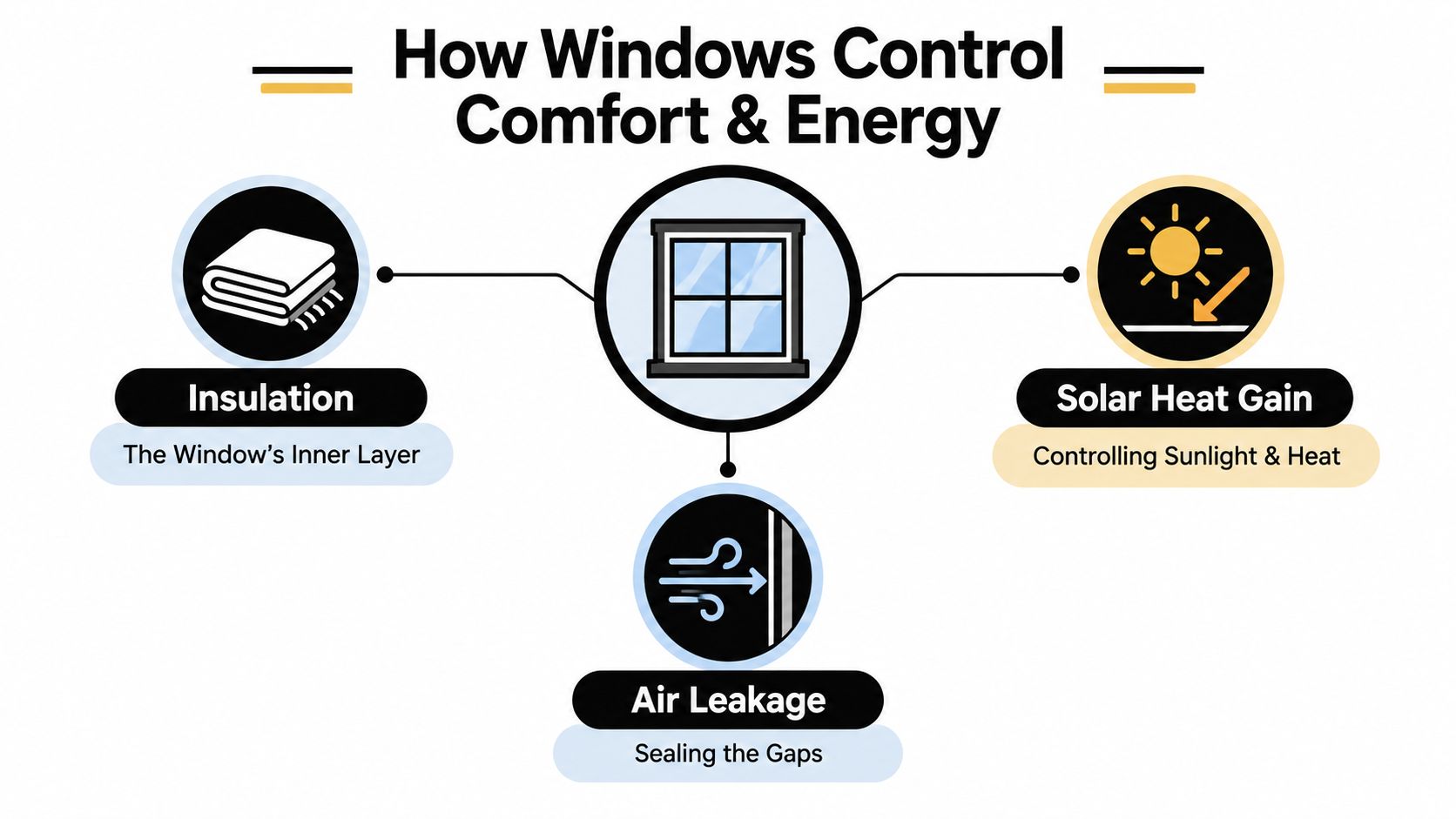
A window forms part of your home's thermal envelope. Glass, coatings, frame, air spaces, and seals share one job: slow heat movement and limit unwanted air exchange. If one component loses performance, the whole assembly can allow more heat through or more outdoor air inside.
Three properties explain most comfort differences:
- Insulation: Slows heat movement through the glass and frame.
- Solar heat gain: Controls how much sunlight and heat enter the room.
- Air leakage: Keeps conditioned air inside and outdoor air outside.
U-factor in plain language
U-factor measures how well a window insulates. It works like a heat-flow rating. A lower number means heat passes through more slowly, which generally improves winter comfort. The Department of Energy lists the full residential scale at 0.20 to 1.20 in its guide to energy-efficient windows. Efficient products for colder northern climates commonly fall near the lower end, rather than across that entire range.
Window labels let you compare products using U-factor and related measures, including solar heat gain coefficient, visible transmittance, air leakage, and condensation resistance. ENERGY STAR window guidance identifies U-factor as the primary insulation measure. Its independent energy-performance guidance also explains how lower values indicate stronger resistance to heat flow, with the most efficient products reaching 0.20 or below.
Why glass packages matter
Double-pane and triple-pane units use sealed spaces to slow heat transfer. Argon fills add resistance, while Low-E coatings manage radiant heat and sunlight. These parts work together, so a replacement decision should consider the complete glass package, not one feature alone.
Idaho homes need climate-specific choices. The ENERGY STAR climate-zone guideline lists maximum U-factors of 0.30 for the Northern zone, 0.32 for North Central, 0.35 for South Central, and 0.60 for South. Your location still matters, and so does orientation. A west-facing room may need stronger solar control, while a cold bedroom may benefit most from lower U-factor performance. These comparisons help identify which rooms to prioritize when performance has declined.
Warning Signs Your Windows Are Telling You It Is Time
A symptom becomes more useful when you connect it to a likely cause. Don't treat every draft, foggy pane, or sticking sash as proof that the entire window must be replaced. Instead, inspect the window as a system and ask whether the problem is limited to one component or appears throughout the home.
Start with air movement and temperature
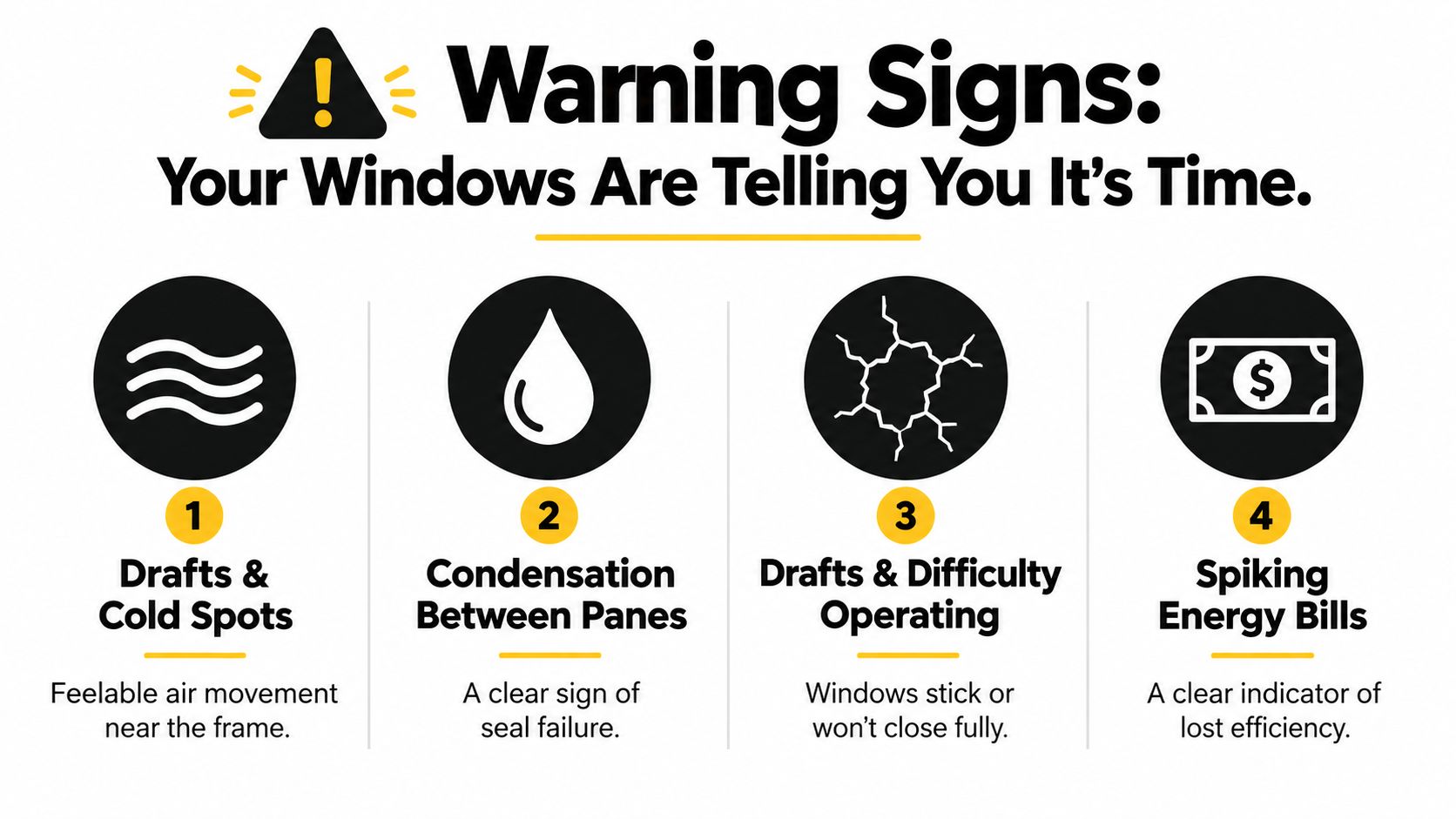
Stand near the closed window on a windy day. If you feel moving air around the sash, frame, or trim, the weatherstripping, operating hardware, frame, or installation may no longer be sealing properly. Cold spots near the glass can also indicate weak insulation, especially when the room feels comfortable elsewhere.
Temperature swings provide another clue. A south- or west-facing room may overheat from solar gain, while a shaded bedroom may stay cold because the glass and frame allow too much heat loss. These conditions point toward a performance issue rather than a purely cosmetic concern.
Read condensation correctly
Condensation on the room-side surface can result from indoor humidity and a cold glass surface. It doesn't automatically mean the insulated glass unit has failed.
Condensation or fogging between panes is different. It indicates that the seal around the insulated glass unit has failed. Moisture can enter the cavity, saturate the desiccant, and allow the insulating gas layer to escape. Industry guidance on window condensation explains why a failed sealed unit generally needs replacement rather than a durable surface repair.
Check movement, structure, and sound
A sash that sticks, won't close fully, or requires repeated force may have a hardware problem, frame distortion, or balance failure. Peeling paint, soft wood, visible rot, or warping suggests moisture has affected the frame. Those issues deserve closer inspection because a hardware repair won't restore a compromised structure.
Outside noise can also reveal weak performance. If traffic, wind, or neighborhood activity enters more easily than it should, a different glass configuration may improve the room even when the window still operates correctly. Rising energy bills can reinforce the diagnosis, but bills alone don't prove that windows are the cause because HVAC condition, insulation, and thermostat habits also matter.
Use a room-by-room checklist:
- Drafts: Feel around the perimeter with the sash closed.
- Glass: Look for persistent fogging between panes.
- Operation: Test locks, handles, balances, and closing pressure.
- Frame: Inspect for rot, warping, leaks, or damaged finishes.
- Comfort: Note rooms that are consistently colder, hotter, or noisier.
- Pattern: Record whether one unit or many windows show the same symptoms.
For a localized Idaho-focused symptom list, review these seven signs your windows may need replacing. The important distinction is whether a technician can isolate one repairable component or finds declining performance across the full assembly.
How Long Windows Last by Material and What Age Really Means
Window age is a screening clue, not a verdict. Materials, installation quality, weather exposure, maintenance, moisture, and the original glass package all affect how long a unit performs well. A 20-year-old window may still work reliably, while a younger one can lose comfort if its seals fail or its frame transfers too much heat.
Expected Window Lifespan by Frame Material
| Frame Material | Typical Lifespan | Common Failure Mode |
|---|---|---|
| Aluminum | 15 to 30 years | Conducts heat readily, frame wear, seal or hardware problems |
| Wood | 15 to 30 years | Rot, paint failure, swelling, moisture damage |
| Vinyl | 20 to 40 years | Seal failure, frame movement, hardware wear |
| Fiberglass | 30 to 50 years or longer | Glass seal failure, hardware wear, localized component damage |
These service-life ranges come from the window replacement statistics and lifespan guidance. They show when homeowners often begin evaluating performance, not when every window must be replaced.
A separate This Old House survey and window lifespan summary reported that 47% of homeowners replaced windows in homes older than 20 years, compared with 28% in homes between 10 and 20 years old and 9% in homes five years old or less. That pattern makes 20 years a useful point for a closer inspection, but age alone cannot identify the right solution.
Why Idaho exposure changes the conversation
Treasure Valley homes face temperature swings, seasonal sunlight, wind, and dry conditions. These forces can stress seals, finishes, hardware, and frames. A window may still open and close while allowing more heat transfer or air movement than it once did.
Glass performance provides another age check. A high U-factor acts like a thin winter coat, allowing more heat to pass through. A lower U-factor slows that transfer, so rooms near older, poorly rated windows may feel colder in winter and hotter in summer.
The 15-to-25-year range is often an inspection window, especially for older single-pane units or products installed before modern energy expectations. A newer fiberglass window with an intact frame may merit repair. An older unit with recurring fogging, drafts, or poor insulation may justify replacement sooner.
For a closer look at material, installation, and Idaho conditions, see how long replacement windows last in Idaho. Connect the age estimate to evidence: comfort differences, the labeled U-factor, visible damage, and whether fogging points to a failed insulated-glass seal. Prioritize rooms where performance loss is most noticeable.
Repair or Replace Making the Smart Financial Choice
A window can be old without being ready for replacement, while a newer unit can lose performance after seal or frame problems appear. The financial choice depends on what has failed, how many windows are affected, and whether the repair restores comfort rather than postponing the same problem.
Choose targeted repair when the problem is isolated
Repair is a reasonable choice when the frame remains square, the glass is clear, and the window closes tightly after service. A damaged sash, worn lock, failed balance, or deteriorated weatherstripping can often be replaced without disturbing the entire opening.
The same applies to one failed insulated glass unit. Fogging between panes usually points to a broken seal, much like a thermos that no longer keeps its insulating air space intact. Replacing that glass unit can restore appearance and insulation when the surrounding frame and hardware remain sound.
Check whether the problem is contained. Fogging across many windows, recurring seal failure, or drafts in several rooms points to broader performance loss.
Replacement becomes stronger when performance is system-wide
Full replacement deserves closer consideration when multiple components have failed, frames are warped or deteriorated, drafts are widespread, or the glass has a high U-factor. U-factor measures how readily heat passes through the glass and frame. A higher value works like a thinner winter coat, allowing more heat to move through the window.
A new sash cannot correct a damaged frame, and fresh weatherstripping cannot restore a failed insulated-glass cavity. Replacement may also make more sense when comfort problems continue after earlier repairs, especially in rooms that are cold in winter or hot during Idaho summers.
Use this decision logic:
- Repair first: One sash, lock, balance, or weatherstrip is damaged, while the frame and glass remain sound.
- Replace the glass unit: Fogging is isolated between panes, and the frame, hardware, and opening still operate reliably.
- Replace the full window: Several components have failed, the frame is warped or deteriorated, or comfort problems extend across the home.
- Compare the long view: Weigh maintenance, comfort, HVAC runtime, noise, appearance, and future resale against the project cost.
A repair should restore performance, not postpone the same failure.
Start with the coldest or draftiest room, then compare how other windows perform. A professional assessment can show whether you are paying for a contained fix or repeatedly maintaining a window that has lost too much performance.
Best Time to Replace Windows and Benefits You Will Notice Right Away
A window that leaves one bedroom cold or lets afternoon heat build in a living room may not need replacement because of its age. Its performance loss gives you a better starting point. Compare drafts, glass temperature, condensation, operating problems, and U-factor. A higher U-factor allows heat to pass through more readily, like a thinner winter coat, so those windows may deserve attention first.
Idaho weather does not create one perfect replacement season. Winter work can make sense when drafts, failed seals, or severe comfort problems are already affecting the home. Spring and fall often provide comfortable working conditions and make indoor temperature changes easier to evaluate. Summer may fit a larger renovation planned before the most demanding cooling period. An experienced installer can protect the opening and complete the project in stages.
Prioritize rooms instead of replacing everything at once
A room-by-room plan directs money toward the clearest performance problems:
- Start with the coldest room. A bedroom or family room with drafts and cold glass usually provides the fastest comfort improvement.
- Address the sunniest room. A west-facing space with strong afternoon heat may benefit from Low-E glass and solar-control features.
- Target noisy rooms. Bedrooms, offices, and living areas near roads or neighborhood activity may benefit from glass packages designed to reduce sound.
- Group repeated failures. Windows with fogging, frame wear, or similar operating problems can be replaced together for a more consistent result.
Homeowners are showing interest in triple-pane glass, Low-E coatings, argon fill, and slimline or minimal-sightline frames. A 2026 Pella trends report reported slimline or minimal-sightline frames at 63% and floor-to-ceiling or wall-to-wall glass at 54% in its cited trends coverage. Those figures describe design interest, not a requirement for every Idaho home.

Match upgrades to the room
ClimaTech Low-E coatings can help manage heat movement and sunlight. Argon fills increase insulated glass resistance to heat flow, while triple-pane glass adds another separating layer. C & C Windows & Doors offers these options, including products described as meeting ENERGY STAR 7.0 requirements, for homeowners weighing comfort, noise, and Idaho climate performance together.
The first improvements may be felt before they appear on a utility statement. Rooms can feel steadier, HVAC equipment may run less often, exterior noise may soften, and new frames can improve curb appeal. Prioritizing the rooms with the greatest performance loss often makes more sense than replacing every window based only on age.
Choosing a Trusted Installer Warranties Financing and Next Steps
A good window can still perform poorly if installation leaves gaps or allows water intrusion. Begin with an in-home consultation, accurate measurements, an explanation of the existing window's failure, and a recommendation tied to the room's exposure and comfort problem.
Ask how the installer checks the sill, manages water, handles trim and insulation, protects your home, and disposes of old materials. Confirm who will do the work, whether the crew is factory-trained, and whether the estimate separates product and labor coverage. Review this window contractor question checklist before signing.
Evaluate the warranty carefully
A lifetime limited warranty may cover different parts of the project. Confirm coverage for glass, frame, hardware, labor, transferability, and installation-related problems. Ask about exclusions and the process for requesting service.
Review the proposal, not just the product
The proposal should identify window style, glass package, performance ratings, installation steps, interior and exterior finishes, cleanup, and payment terms. If financing uses Synchrony, read the actual schedule and conditions instead of judging the offer by its monthly payment alone.
C & C Windows & Doors provides free in-home consultations, custom measurements, same-day estimates, debris-free installation, and a lifetime limited warranty on products and labor. The company serves Boise, Meridian, Eagle, Nampa, Caldwell, Kuna, Garden City, and Star, giving Treasure Valley homeowners a local evaluation of their repair, replacement, and room-priority needs.
If drafts, fogging, noise, or uneven temperatures continue, schedule a free in-home consultation with C & C Windows & Doors for custom measurements and a same-day estimate. Ask which windows need repair, which rooms should come first, and which energy-efficient glass package fits your Idaho home.