Nampa window replacement cost usually runs about $270 to $410+ per window for a basic swap, but whole-home projects with better materials and energy upgrades can climb into the $10,000 to $30,000+ range. If you're shopping by online averages alone, you'll get misled fast.
The number swings because a window quote is never just about glass. It changes with the frame material, the installation scope, the condition of the opening, and whether the job includes disposal, trim work, or efficiency upgrades that make sense in Idaho's climate.
Table of Contents
- What Nampa Homeowners Pay for Window Replacement
- Window Material Costs and How They Shape Your Budget
- Energy Efficiency Upgrades That Impact Your Bottom Line
- Labor, Permits, and Timeline Factors That Shift Your Final Cost
- Financing Options and Warranty Coverage for Nampa Projects
- Sample Window Replacement Estimates for Common Nampa Projects
- How to Get an Accurate In-Home Quote From a Trusted Local Installer
What Nampa Homeowners Pay for Window Replacement
Nampa pricing starts with a wide spread, and that's the honest answer. A commonly cited local estimate puts the average installed cost at about $410.52 per window, built from $263.25 for the replacement window, $124.83 for labor, and $22.45 for materials and supplies, while other Nampa pricing sources come in closer to $280 or $270 per window (homeyou's Nampa window replacement cost guide). That gap tells you the whole story, window replacement is not one fixed price.
The baseline for a basic single-window job in Nampa sits in the low hundreds per unit, but the number climbs fast once the job is more than a simple swap. Disposal, trim repair, interior touch-up, and specialty sizing all push the final bill higher. If a quote looks too clean, it probably left something out.
Practical rule: Compare what's included, not just the headline number. A lower quote that skips disposal or uses thinner materials can end up costing more once the extras show up.
Statewide Idaho pricing puts the local numbers in context. One Idaho guide says typical replacement runs $3,800 to $11,000 for a whole project, with a 10-window average of $6,600, or about $380 to $1,100 per window (Idaho window replacement pricing). That range matches what homeowners see on the ground, because labor, access, and product choice move the price around fast.
That is why Nampa homeowners should think in tiers, not one number. A one-window repair-like replacement and a whole-home upgrade are different jobs, with different labor economics and different material expectations. For Nampa window replacement cost, the smart move is to treat the first quote as a starting point, then pressure-test what's being installed and what's being left out.
Window Material Costs and How They Shape Your Budget
Material choice drives most of the spread in Nampa window quotes. Vinyl sits at the low end, fiberglass lands in the middle, and wood-clad moves into premium territory because you are paying for performance, appearance, and more complicated manufacturing. That is the reason one bid looks fair and another looks inflated.
The installed ranges that matter
Independent Nampa market estimates put quality vinyl at $400 to $800 per window installed, fiberglass at $700 to $1,400, and wood-clad at $900 to $1,800+ (Nampa material pricing guide). For bigger projects, the same guide places 15 to 20 window replacements around $10,000 to $22,000 for vinyl and $15,000 to $30,000+ for fiberglass or wood-clad.
| Frame Material | Cost Per Window Installed | 15–20 Window Project Range |
|---|---|---|
| Vinyl | $400 to $800 | $10,000 to $22,000 |
| Fiberglass | $700 to $1,400 | $15,000 to $30,000+ |
| Wood-clad | $900 to $1,800+ | $15,000 to $30,000+ |
Vinyl is the practical choice for homeowners who want a solid upgrade without wasting money. It works well if you are replacing several tired windows and care more about value than premium appearance. Fiberglass makes sense when you want stronger durability and a frame that handles Idaho temperature swings better. Wood-clad belongs in projects where appearance and finish matter enough to justify the higher spend.
Why triple-pane changes the tier
Glass package changes the price inside every material category. Idaho pricing data shows vinyl often quoted around $350 to $550 per window, fiberglass around $600 to $1,000, and wood around $700 to $1,100 or higher, with triple-pane options pushing cost up further. That is the part homeowners miss, the frame is not the only expensive piece. Better glass and better sealing drive a lot of the premium.
What Each Upgrade Does
Low-E coating should be the default choice for most Nampa homes. It reflects heat, helps block UV exposure, and improves glass performance in both summer and winter. Argon gas fill improves insulation between panes, which helps steady indoor temperatures and lets your HVAC system work less. Triple-pane glass adds another barrier, which matters when you want better comfort, better sound reduction, and a stronger insulation package.
The logic is simple. Low-E handles radiant heat. Argon improves the insulating space between panes. Triple-pane adds a third layer of protection. Each one helps, but none of them does the same job.
For homeowners comparing options, this local guide on energy-efficient windows in Idaho is worth a close look.
A solid contractor should explain where your money is going. If they cannot tell you why one frame is priced far above another, they are guessing or padding the margin.
Energy Efficiency Upgrades That Impact Your Bottom Line
Idaho windows aren't bought for looks alone. They have to handle hot summers, cold winters, and the kind of seasonal swing that punishes weak glass. The right upgrade package reduces heat transfer, controls glare, and cuts the drafty feel that makes older windows so annoying.
What each upgrade actually does
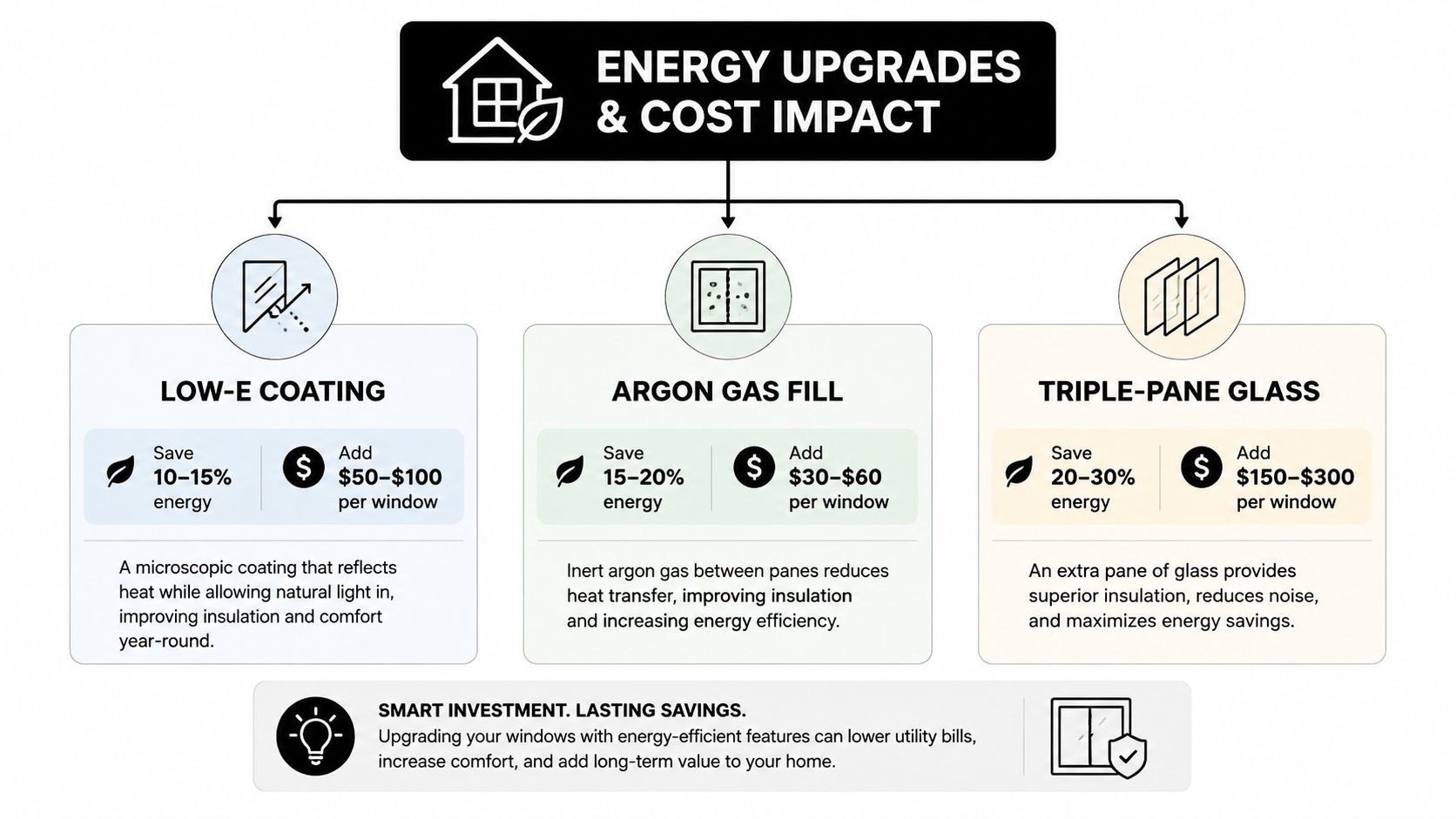
Low-E coating is the baseline upgrade I'd recommend almost every time. It reflects heat, helps block UV exposure, and makes the glass perform better in both summer and winter. Argon gas fill improves insulation between panes, which helps stabilize indoor temperatures and makes the window work less against your HVAC system. Triple-pane glass adds another barrier, which matters when you want better comfort, better sound reduction, and a stronger insulation package.
The internal logic is simple. Low-E handles radiant heat. Argon improves the insulating space between the panes. Triple-pane adds a third layer of protection. Each one helps, but they're not interchangeable.
For homeowners comparing options, this local guide on energy-efficient windows in Idaho is worth reading because it focuses on the performance side, not just the sales pitch. You want a window that fits the climate, not a pretty frame that looks good on paper and underperforms in January.
A cheap window that leaks heat isn't a bargain. It's a deferred cost with nicer trim.
What to prioritize in Nampa
If your budget is tight, start with Low-E and argon before you chase premium finishes. If you're replacing a whole house and plan to stay put, triple-pane earns a stronger look because the comfort gain is more noticeable across multiple rooms. If you only do one upgrade, make it the package that improves both insulation and durability, not the one that merely sounds advanced.
Labor, Permits, and Timeline Factors That Shift Your Final Cost
A window quote can look fair until labor gets involved. In Nampa, the installer isn't just hanging a unit, they're dealing with the existing opening, trim conditions, disposal, and whatever surprise the old frame has been hiding. That's where budget projects get expensive.
What labor really covers
The labor line should cover measurement, removal of the old window, installation of the new unit, sealing, and cleanup. If the opening is square and the frame is sound, the job moves quickly. If the installer has to correct rot, rebuild part of the opening, or resize the fit, the labor rises because the work stops being a simple swap.
That's why a quote based only on the product price is incomplete. A lower-end product installed poorly costs more in the long run than a better unit installed correctly the first time. Window replacement is one of those jobs where the quality of the crew matters as much as the quality of the frame.
Permits and timing
Permits can come into play when the project changes the structure of the opening or goes beyond a like-for-like replacement. Homeowners should ask the installer directly whether the job needs one, because “no permit needed” and “not required for this scope” are not the same thing. If the installer shrugs, keep looking.
Timeline also affects cost. A few windows may be handled in a day, while a whole-home replacement takes longer and requires more coordination. Seasonal demand in the Treasure Valley can tighten scheduling, and tighter schedules usually mean less flexibility on pricing and start dates.
Straight answer: The cheapest quote isn't the one with the lowest per-window number. It's the one that includes the actual work your house needs, with no hidden rebuild surprises.
If a company offers debris-free installation, custom measurements, and a written estimate after the in-home visit, that's a real service package. That kind of approach is exactly what homeowners should expect from a local installer such as C & C Windows & Doors, because the estimate should reflect the house in front of you, not a generic template.
Financing Options and Warranty Coverage for Nampa Projects
Most homeowners don't lose on windows because they picked the wrong style. They lose because they compared upfront price and ignored the financing and warranty terms that decide whether the project feels manageable five minutes after signing. Smart buyers read those terms like adults.
Financing should make the project easier, not fuzzier
Installers that offer financing through Synchrony give homeowners a way to spread the cost over time instead of draining cash reserves at once. That matters when the project is bigger than a single room and the quote lands in the four- or five-figure range. Financing doesn't make windows cheaper, but it can make the timing workable.
Ask a direct question, what are the monthly terms, what happens after any promotional period, and whether the estimate changes if you add more windows later. If the answers are vague, the financing is being used as a sales tool, not a planning tool.
Warranty terms need real scrutiny
A manufacturer warranty covers the product, while an installer warranty covers the labor. You need both. A strong frame with weak installation is still a headache, and a strong installation on a flawed product doesn't solve anything.
Read what the warranty includes. A lifetime limited warranty sounds broad, but the details matter, especially around glass seals, frame finish, labor coverage, and what voids the protection. Poor maintenance, misuse, and unauthorized modifications can all affect coverage, so homeowners should ask for the warranty in writing before they sign.
The reason this matters is simple. Window replacement is a long-term buy, not a quick cosmetic fix. You're paying for fewer drafts, better comfort, and lower operating headaches over time, so the paperwork should support that goal. For homeowners considering payment plans, this window financing guide is a useful place to start before comparing quote structures.
Sample Window Replacement Estimates for Common Nampa Projects
Window quotes in Nampa swing hard because scope drives the bill. A single replacement can stay manageable, while a whole-house project picks up costs fast from material choices, frame repairs, glass upgrades, and the condition of each opening. The local climate matters too, since homeowners who want better draft control and steadier indoor temperatures usually end up paying for better glass and tighter installation details.
Small project with 3 to 5 windows
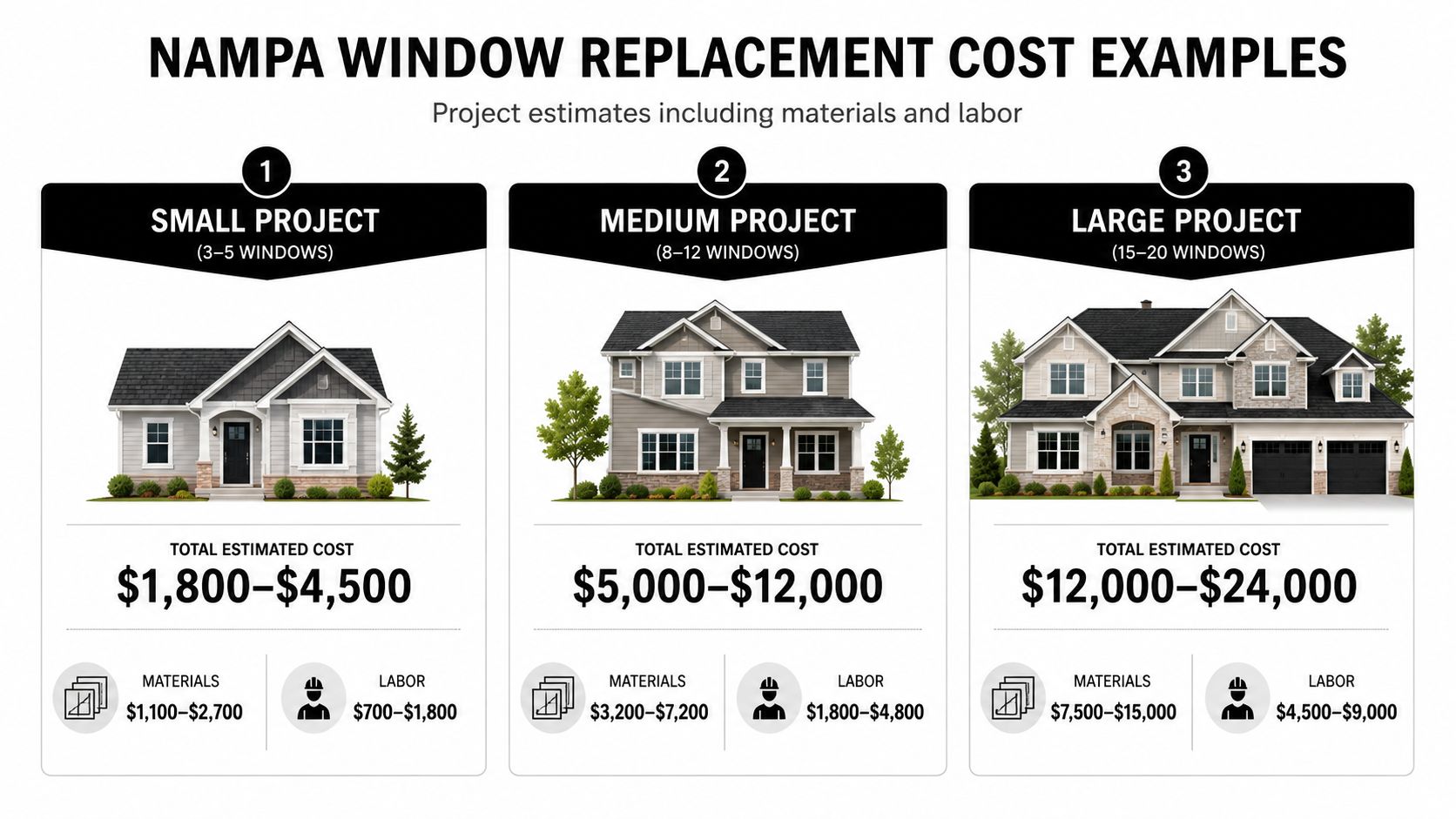
A starter-home project replacing 3 to 5 windows usually makes sense when you are fixing the worst openings first. If you stay with solid vinyl and keep the upgrade list tight, a realistic planning range lands around $1,800 to $4,500. That covers product, labor, and a modest amount of installation complexity without pushing the job into premium territory.
Small jobs get expensive when homeowners let every opening turn into a custom upgrade. If the goal is comfort and draft control, start with the leakiest windows and keep the package consistent. That is the smart move, and it keeps the quote from drifting for no good reason.
Mid-size project with 8 to 12 windows
A 8 to 12 window project in a typical ranch-style home often falls around $5,000 to $12,000. That range fits a mix of material upgrades, standard installation, and a few efficiency improvements that help the house feel more even from room to room. It also lines up with Idaho planning figures, including the 10-window average of $6,600 in the Idaho pricing guide.
At this size, material choice starts to move the total in a noticeable way. Vinyl usually keeps the quote lower. Fiberglass and more advanced glass packages raise the price quickly. The mistake is paying for one premium feature and then trying to match it everywhere else, because that often wastes money without improving the whole house in a meaningful way.
Large whole-home replacement
A 15 to 20 window replacement is where Nampa homeowners start seeing the five-figure reality clearly. A solid estimate often lands around $12,000 to $24,000, depending on the frame class and how many openings need extra work. Larger homes with older framing, trim repairs, or access issues can climb fast, which is why two houses with the same window count can produce very different quotes.
The best value at this scale usually comes from consistency. Pick a performance level that fits the home, then apply it across the project instead of cherry-picking upgrades room by room. Mixed packages look flexible, but they often create uneven comfort and uneven cost. If you want a local installer to price the job the right way, start with a Nampa window company that measures every opening and explains the upgrade choices in plain language.
How to Get an Accurate In-Home Quote From a Trusted Local Installer
A real quote starts with a real visit. If someone gives you a serious window price without measuring the openings, checking the frame condition, and discussing the upgrade package, you're not getting a quote, you're getting a guess.
What the consultation should cover
A proper in-home consultation should include custom measurements, a check of the existing frames and openings, a discussion of material choices, and a written estimate that reflects your actual home. It should also make clear whether the installer is handling removal, disposal, sealing, trim finish, and cleanup. Those details are what keep the final invoice from drifting.
You should also ask about warranty coverage, financing, and the exact window features being priced. If you can't identify the product spec from the estimate, the quote isn't ready for a decision. Good installers make the comparison easy.
Questions worth asking before you sign
- What is included in the installation price? Ask about removal, disposal, sealing, trim, and cleanup.
- Which frame material and glass package are you pricing? Don't accept vague labels.
- Does the opening need repairs? Rot or resizing changes the job.
- What warranty covers the product and the labor? Get both in writing.
- How long will the project take? A real installer can give you a practical timeline.
Get the quote in writing, and make sure it matches the house, not a generic sales sheet.
If you want a local team that handles free in-home consultations, custom measurements, and detailed installation planning for Treasure Valley homes, C & C Windows & Doors serves that need in the Nampa market. Use the estimate to compare scope, not just price, and don't sign until every line item makes sense.
If your windows are old, drafty, or just priced all over the map, stop guessing and get a real in-home estimate from C & C Windows & Doors. They'll measure your openings, explain the material and energy-efficiency options that fit your home, and give you a clear price you can compare.