On a cold Eagle evening, the problem usually shows up in the same spot. You're sitting near the living room window, the furnace is running, and there's still a chill coming off the glass. In July, it flips. The sun hits the west side of the house, the AC keeps cycling, and that one room never feels settled.
That's when window replacement stops being a cosmetic upgrade and starts looking like a house-comfort project. In Eagle, old windows affect temperature, noise, operation, and how hard your heating and cooling system has to work. Good replacement windows change all of that. They also change how the home feels every day, which matters just as much as the product label.
Table of Contents
- Your Guide to Window Replacement in Eagle
- Seven Signs It Is Time for New Windows
- Choosing the Best Windows for the Idaho Climate
- Understanding Window Replacement Cost and ROI in Eagle
- Your Window Replacement Process from Start to Finish
- How to Choose a Reliable Eagle Window Installer
- Invest in Your Eagle Home's Comfort and Value
Your Guide to Window Replacement in Eagle
A lot of Eagle homeowners start with one bad window and discover the whole house has the same issue. A bedroom window won't lock cleanly. A family room picture window feels cold in winter. A double-hung unit painted shut years ago never opens when you want fresh air. Those small frustrations usually point to a bigger pattern.
New windows are one of the few upgrades that affect comfort, appearance, and daily function at the same time. They can tighten up drafty rooms, reduce glass temperature swings, improve operation, and sharpen curb appeal from the street. In a place like Eagle, where winter mornings and hot summer afternoons both matter, that combination makes window replacement a practical upgrade, not a luxury decision.
What works best is a full-house plan, even if the project happens in phases. Start by identifying the hardest-working sides of the home, usually west-facing rooms, street-facing openings, and older windows with failing seals or worn frames. Then match the replacement choice to how that room is used.
Practical rule: The right window for an Eagle home isn't just the one that fits the opening. It's the one that fits the sun exposure, wind exposure, and how you live in that room.
Window replacement in Eagle, Idaho should feel straightforward once you know what to look for. Key decisions come down to three things. Whether the old windows are at the end of their life, which style and glass package fit Idaho's climate, and whether the installer will protect your home as carefully as they install the product.
Seven Signs It Is Time for New Windows
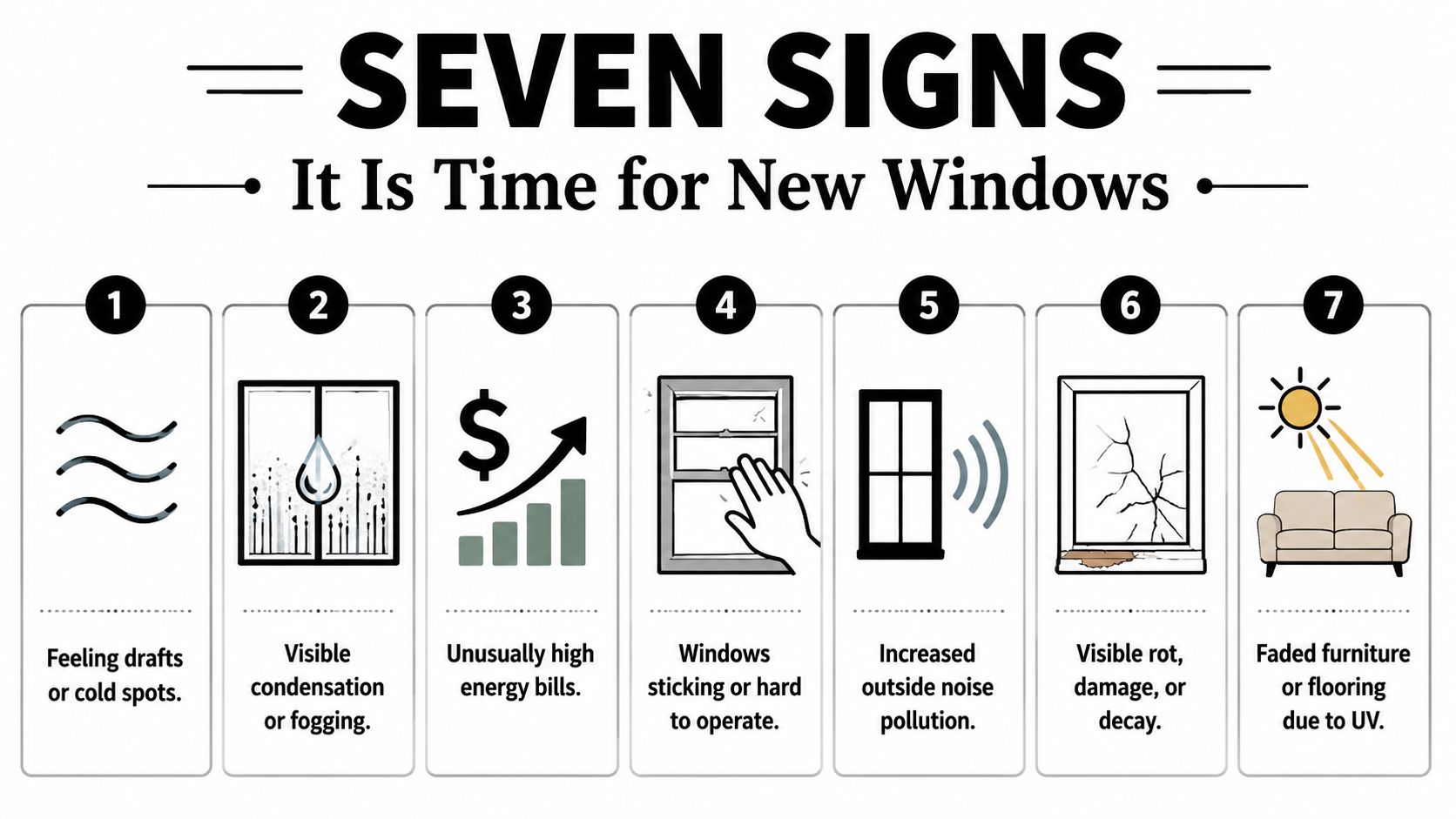
The clearest sign is usually comfort. If you can feel the window before you touch it, the unit isn't doing its job well anymore. Eagle's temperature swings expose weak seals, aging hardware, and underperforming glass pretty quickly.
This checklist helps separate minor annoyance from real replacement need.
Comfort and performance warning signs
- Cold drafts near the sash or frame. If you sit near the window and feel moving air in winter, air infiltration is likely part of the problem.
- Rooms that heat up too fast in summer. West and south exposures usually reveal weak glass performance first.
- Outside noise sounds sharper than it should. Good windows won't make a house silent, but aging units often let in more road, neighborhood, and yard noise than homeowners expect.
Visible signs the window is failing
Some failures are easy to spot.
- Fogging or condensation between panes usually means the insulated glass seal has failed.
- Rot, swelling, peeling finish, or soft trim often points to long-term moisture exposure.
- Cracked glass or worn weatherstripping can turn into larger comfort and water issues if left alone.
A practical homeowner checklist helps. If you want a second opinion on what to watch for in Idaho homes, this guide on signs your windows need replacing in Idaho is a useful companion.
Functional issues homeowners should not ignore
Windows should open, close, lock, and stay aligned without a fight. If they stick, drift, slam shut, or require force, the issue may be warped components, worn balances, frame movement, or age-related hardware wear.
Here are the signs that push a home from “watch it” to “replace it”:
- Operation has become unreliable. You avoid opening the window because it's too hard to move.
- Locking no longer feels secure. The sash doesn't meet squarely, or the lock won't engage cleanly.
- Sunlight is fading flooring or furniture. That can point to outdated glass performance.
- You've already repaired the same window more than once. Repeated patchwork rarely fixes an old unit for long.
A window doesn't have to be shattered to be worn out. If it's uncomfortable, unreliable, and visibly aging, replacement is usually the cleaner long-term move.
Choosing the Best Windows for the Idaho Climate
Idaho rewards the right glass and punishes the wrong shortcuts. In Eagle, homeowners need windows that can handle cold-season heat loss, summer sun, and regular seasonal swings without becoming a maintenance project. That means looking at style, glass package, and frame material as one system.
Style matters more than most homeowners expect
Window style isn't just an appearance choice. It changes how tightly the unit seals, how much ventilation you get, and how the room feels during windy weather.
According to Andersen's Energy Star 7 update overview, casement, awning, and picture windows are 10–15% more energy efficient than double-hung designs because their compression seals resist wind pressure better. In practical terms, that matters in Eagle. A casement pulled tight against its weatherstripping generally feels more controlled than an older sliding or hung design.
Here's a simple comparison.
| Feature | Casement | Double-Hung | Picture |
|---|---|---|---|
| Seal against wind | Very strong compression seal | More moving parts and air paths | Strong because it doesn't open |
| Ventilation | Excellent | Good | None |
| Cleaning convenience | Good, depends on location | Familiar for many homeowners | Very easy glass maintenance |
| Best use | Bedrooms, living areas, windy exposures | Traditional elevations, balanced ventilation | Great rooms, view corridors, stairwells |
If energy performance is the top priority, casement and picture windows usually deserve a close look. If traditional operation matters most, double-hung can still work well, but the glass package and installation quality become even more important.
For a deeper look at Idaho-specific performance options, this article on energy-efficient windows in Idaho for 2026 is worth reviewing.
Glass package and ENERGY STAR 7.0
The glass package does the heavy lifting. Homeowners often focus on frame color and style first, but Low-E coatings, gas fill, and climate-zone compliance are what shape year-round comfort.
Under ENERGY STAR Version 7.0 requirements for Northern climate zones, which includes Idaho, windows must meet a minimum SHGC of ≥ 0.17 and a U-Factor threshold of ≤ 0.30. That standard took effect on October 23, 2023. The point isn't paperwork. It's performance. Windows built to that target do a better job reducing winter heat loss while still allowing useful passive solar gain.
Low-E glass is especially useful here because it helps manage heat gain during warmer months. Argon-filled dual-pane units are a common sweet spot for many homes because they improve comfort without pushing every project into a premium glass package.
Double-pane or triple-pane
In this context, homeowners in Eagle often need the most honest guidance. Triple-pane isn't automatically the right answer for every opening. It is, however, a serious option for people who care about winter comfort, quieter interiors, and premium whole-home performance.
The key trade-off is cost versus added comfort. In Treasure Valley homes, the available market discussion around triple-pane upgrades points to 15–20% higher energy savings compared with standard double-pane options in the local climate context. That makes triple-pane worth considering for large fixed glass, west-facing rooms, new high-end builds, and houses near traffic or neighborhood noise.
Choose double-pane with Argon and Low-E when you want strong value. Choose triple-pane when comfort at the glass line and noise control matter enough to justify the upgrade.
For many Eagle homes, the best answer isn't “all one type.” It's mixing solutions by room. Use higher-performance glass where the house needs it most, then keep simpler openings practical and cost-aware.
Understanding Window Replacement Cost and ROI in Eagle
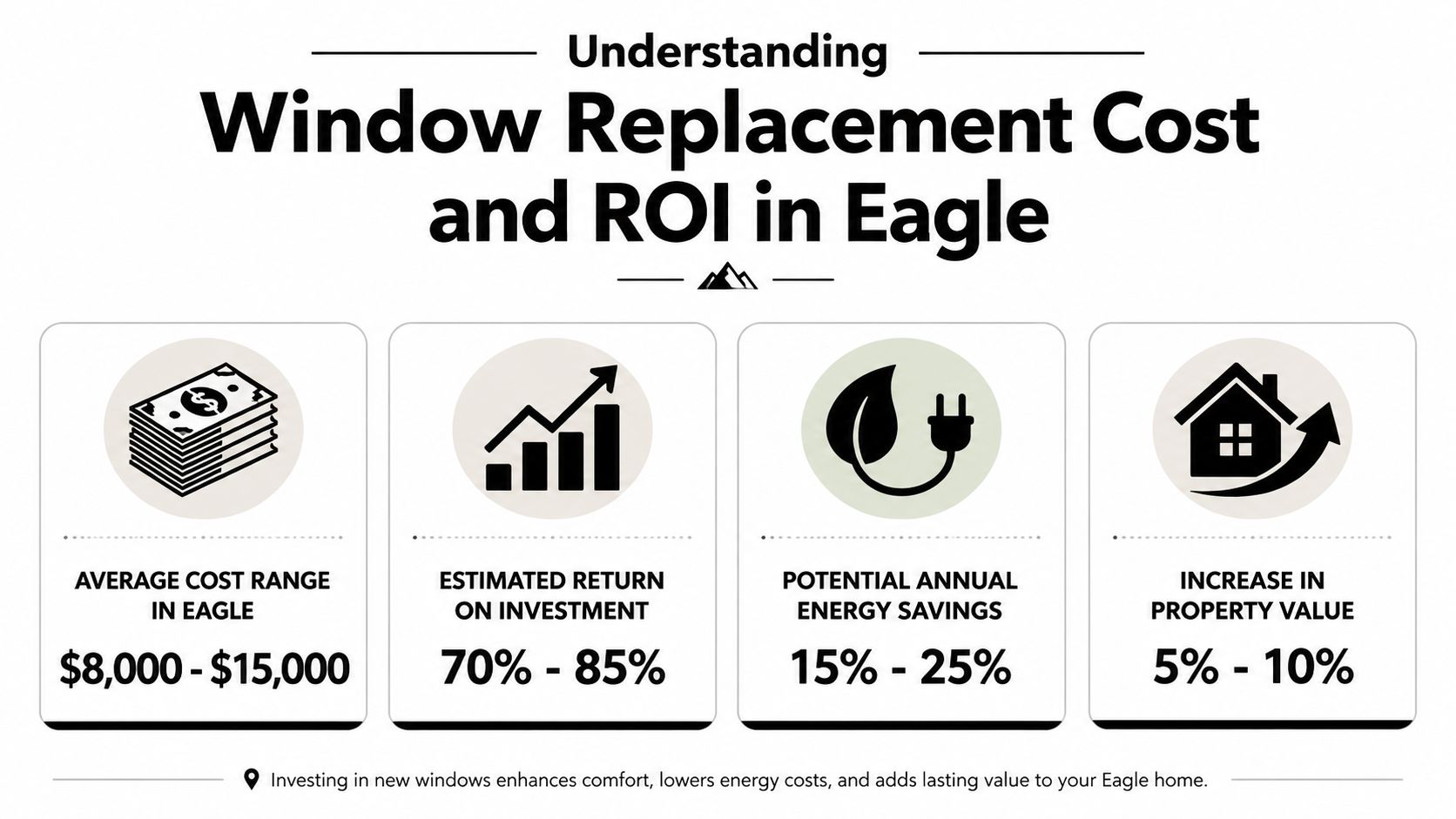
A lot of Eagle homeowners start with one question. What will this cost me? The better question is what the project changes over the next 10 to 20 years, because window replacement affects comfort, maintenance, curb appeal, and how the house handles Idaho heat, cold, and wind.
What Eagle homeowners are paying
According to Modernize's Eagle window replacement pricing overview, homeowners commonly see pricing from $150 to $800 per window for replacement, with an average new window installation cost around $962. Actual pricing depends on the opening size, window style, glass package, and labor involved.
On real projects, the gap usually comes down to scope. Replacing failed glass in an otherwise sound frame is one budget. Full-frame replacement with new insulation, trim work, and upgraded glass is another. Custom shapes, larger living room units, and patio-area windows also push pricing higher because both manufacturing and installation get more involved.
What changes the budget
A few decisions have the biggest effect on cost.
- Frame material. Vinyl usually gives Eagle homeowners the best balance of price, efficiency, and low upkeep. Fiberglass costs more, but it handles temperature swings well and tends to be a good fit for homeowners planning to stay put for a long time.
- Glass performance. Standard dual-pane Low-E glass covers a lot of homes well. Triple-pane, sound-control glass, and higher-performance coatings raise the price, but they can make sense in harsher sun exposures or rooms that never seem comfortable.
- Installation scope. Insert replacements cost less than full-frame work, but only if the existing frame is still in good shape. If there is water damage, framing movement, or trim failure, cutting corners on the install usually costs more later.
Homeowners comparing cost against resale should also look at how window replacement can affect home value and return on investment.
Where the return actually comes from
ROI is not just a resale number.
In Eagle, the return usually shows up in several places at once. Rooms feel more even in January. West-facing spaces stay more usable in summer. Windows open and lock correctly. The home looks maintained from the street, which matters if old frames are chalking, seals have failed, or glass is fogged.
I also tell homeowners to weigh the parts of the experience that do not show up on a basic price sheet. A lower bid is not automatically the better value if the installation leaves drywall damage, paint touch-up, trim gaps, or a pile of debris in the yard. Good crews protect floors, remove old units carefully, insulate properly, and leave the home clean. That work matters just as much as the label on the glass.
Warranty should be part of the value discussion too. A strong manufacturer warranty helps, but the labor warranty matters just as much because installation problems are what homeowners feel first.
The best return usually comes from fitting the product to the house. In many Eagle homes, that means choosing stronger glass packages only where the climate exposure or comfort problem justifies the extra cost, instead of paying for every upgrade on every opening.
Your Window Replacement Process from Start to Finish
A clean project starts well before installation day. The smooth jobs are the ones where the crew measures carefully, confirms the scope clearly, and protects the home before a tool comes inside. Homeowners feel the difference immediately.
Before installation day
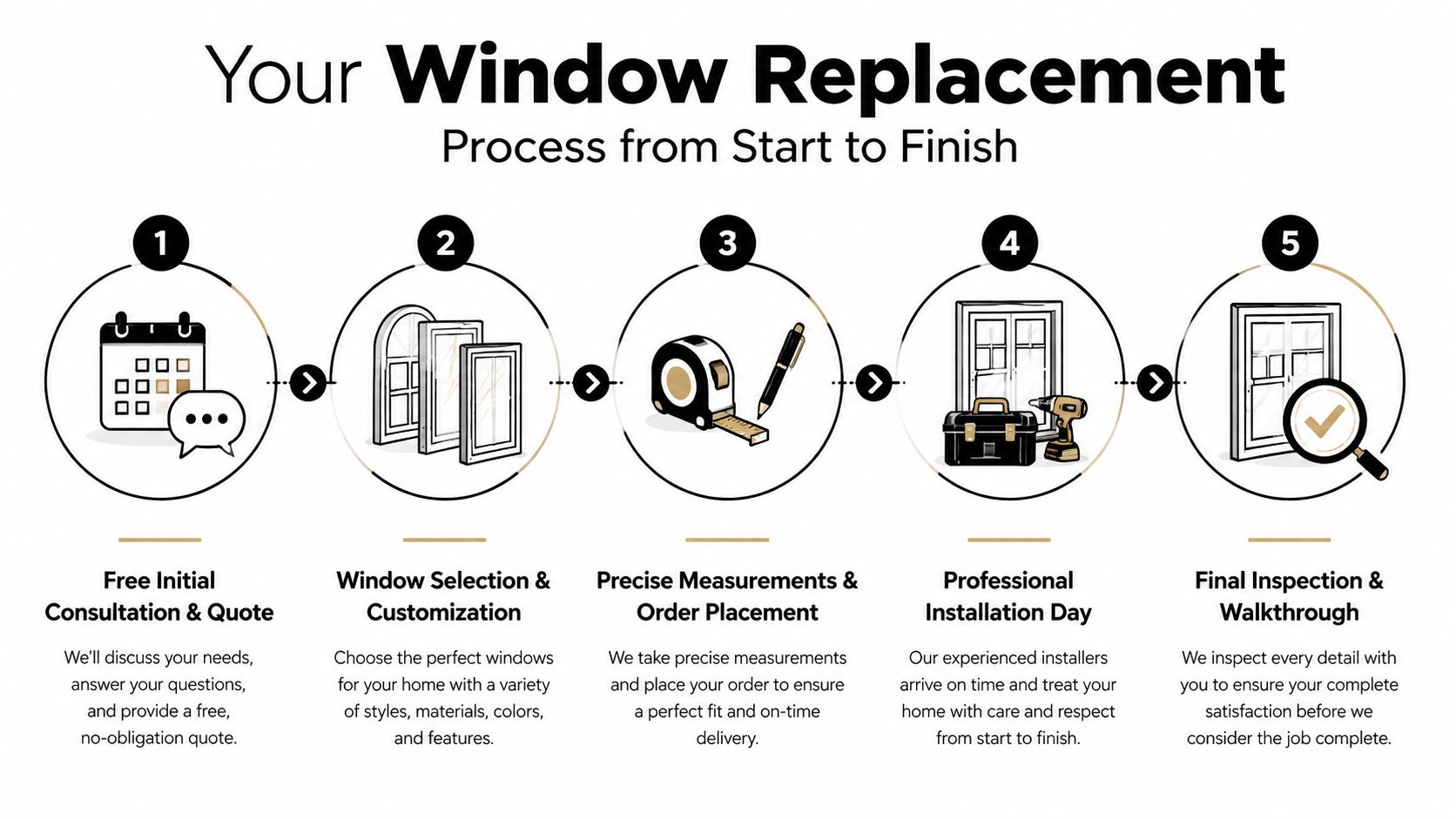
Most projects follow a straightforward sequence.
- Consultation and inspection. The installer looks at existing windows, identifies any condition issues, and confirms what type of replacement makes sense.
- Selection and specification. At this stage, style, frame material, color, hardware, and glass package get finalized.
- Field measurements and order. Exact sizing matters. Small errors at this stage create big headaches later.
One design choice that often comes up during selection is style efficiency. As noted earlier, casement, awning, and picture windows are tighter performers than double-hung designs in windy conditions, which is one reason they fit Idaho homes so well.
What a professional install should look like
Installation day should feel organized, not chaotic. A strong crew protects floors, manages dust, removes old units carefully, installs and insulates the new windows correctly, and checks operation before moving on.
A reliable process usually includes:
- Interior protection first. Drop cloths, floor covering, and care around trim, paint, and furnishings.
- Controlled removal. Old sashes, frames, and glass should come out without unnecessary damage to surrounding finishes.
- Final walkthrough. Every window should be operated, locked, inspected, and reviewed with the homeowner.
Good installation isn't only about getting the new window in. It's about leaving the room intact, the trim clean, and the homeowner confident in what was done.
Permits can vary depending on project scope, home type, and whether structural changes are involved. For a standard replacement project, a seasoned local installer should tell you early if any permit or inspection step applies, rather than leaving you to guess after the order is placed.
How to Choose a Reliable Eagle Window Installer
The installer matters as much as the product. A great window installed poorly won't perform the way it should. A solid window installed carefully, sealed correctly, and finished cleanly usually performs better over the long run than homeowners expect.
In Eagle, one process detail deserves more attention than it gets. According to this local discussion of debris-free installation concerns in Eagle, homeowners often want to know whether a so-called debris-free job includes full interior floor protection and immediate cleanup. That question matters, especially in older homes, custom remodels, and houses with high-end interior finishes.
Questions worth asking before you sign
Ask direct questions and listen for direct answers.
- Who measures the windows? The salesperson, the installer, or a dedicated field measure technician?
- What protection do you use inside the house? Floors, furniture, adjacent trim, and traffic paths all need a plan.
- What does cleanup include? You want old materials removed and work areas left tidy the same day.
- What warranty covers labor as well as product? Product-only coverage and full installation backing are not the same thing.
If the company can't explain its process clearly, that usually shows up later in the project.
Red flags that deserve caution
Some warning signs are obvious. Others are subtle.
- High-pressure pricing tactics should make you pause.
- Vague contracts create problems when scope, glass package, or finish details get disputed.
- Loose answers about installation crews can signal inconsistent workmanship.
- No clear discussion of service after install often becomes a problem when adjustments are needed.
A professional installer should be able to explain what happens if a unit needs service, how punch-list items get handled, and who the homeowner calls after the job is complete.
Why warranty and cleanup matter
A long-term warranty says something important about confidence. If a company stands behind both product and labor, the homeowner isn't left sorting out blame between manufacturer and installer when something needs attention.
Cleanup standards tell you just as much. “Debris-free” should mean more than hauling away old windows. It should mean protecting interior finishes, keeping dust under control, and leaving the house in good condition when the crew leaves.
The best installers don't treat cleanup as a courtesy. They treat it as part of the job.
Invest in Your Eagle Home's Comfort and Value
A lot of Eagle homeowners start this decision the same way. One bedroom stays too hot on August evenings, the front room feels cold in January, and a few windows no longer open without a fight. At that point, window replacement stops being a cosmetic upgrade and becomes a house-comfort project.
The long-term value comes from how the full job is planned and executed. The right frame and glass package need to hold up through hot, dry summers, winter cold snaps, strong sun exposure, and smoke season. ENERGY STAR 7.0 standards have also raised the bar, so it makes sense to choose windows that are built for current performance requirements rather than yesterday's minimums.
Material choice still matters, but it should be matched to the house and the homeowner's priorities. Vinyl is often a practical fit for Eagle homes because it keeps costs in line and performs well when the unit is built correctly. Fiberglass usually costs more, but it handles expansion and contraction well and can be a smart choice on exposed elevations that take a lot of sun.
Good replacement work should improve daily living in ways you notice right away. Rooms feel more even. Outside noise drops. Windows open, lock, and clean the way they should. From the curb, the house looks cared for. From inside, it feels tighter, quieter, and easier to live in.
That total experience matters. A strong project is not just about the quote. It is about accurate measurements, clean installation, protection of floors and trim, haul-away of old materials, and a warranty that still means something years from now.
If your current windows are drafty, fogged, hard to operate, or worn out, get clear answers based on your home, not a generic price sheet. A good in-home consultation should help you decide what to replace now, what can wait, and which options will hold up best in Eagle's climate.
If you're ready to talk through options for your home, C & C Windows & Doors offers free in-home consultations, same-day estimates, financing through Synchrony, and a lifetime limited warranty on products and labor. Their factory-trained Treasure Valley team specializes in energy-efficient replacement windows and patio doors designed for Idaho homes, with meticulous debris-free installation and custom measurements that help the finished job look and perform the way it should.